How to Prevent Mold and Moisture Damage in Bags During Ocean Shipping
Bags can leave a factory looking clean and dry but arrive weeks later with musty odors, damp cartons, water stains, corroded hardware, or visible mold. The problem is rarely caused by one factor alone. Moisture may already be present in the bags or packaging, enter during loading, leak through a damaged container, or condense when temperatures change during transit.
To reduce the risk, pack only bags and packaging materials that are acceptably dry; allow adhesives, prints, coatings, and cleaned areas to cure fully; use a packaging barrier and desiccant plan suited to the product and route; inspect and load the container under cover; and retain moisture, inspection, and loading records.
The practical goal is not to promise that moisture will never occur. It is to control the main sources of moisture at the product, carton, and container levels and to keep enough evidence to investigate the cause if a problem is found after arrival.
Bags, foam, linings, reinforcement materials, and cleaned areas are acceptably dry before packing
Adhesives and printing
Required drying or curing time has been completed
Individual packaging
Polybags, moisture barriers, and desiccants are suitable for the product
Cartons and pallets
Packaging materials are dry, clean, undamaged, and protected from rain
Container condition
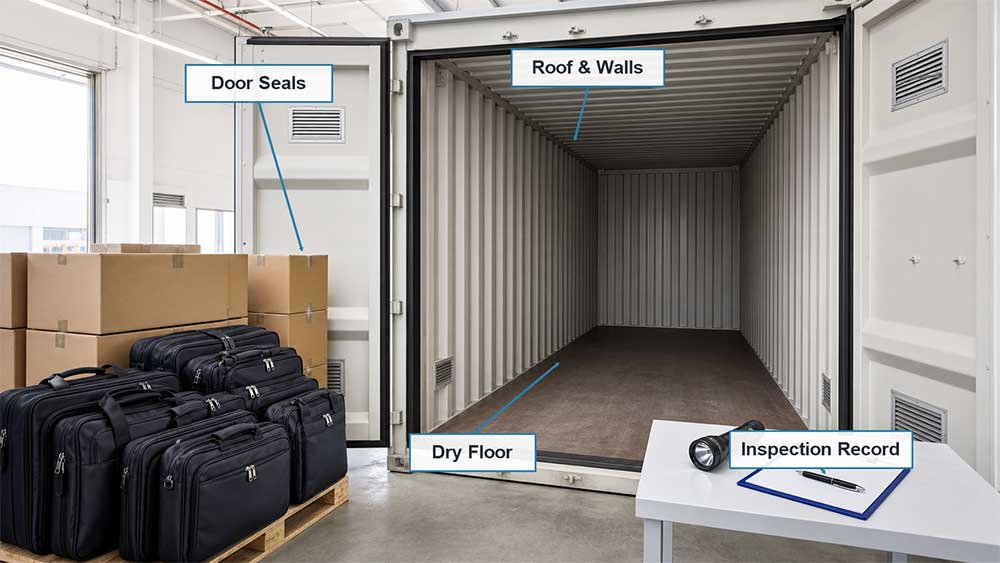
Roof, walls, floor, doors, seals, vents, cleanliness, and odor have been checked
Loading
Cartons are loaded under cover and protected from rain and wet surfaces
Container desiccants
Absorption capacity is calculated for the cargo, route, season, and transit time
Records
Inspection photos, measurements, lot details, container number, and seal number are retained
Why Do Bags Develop Mold During Ocean Shipping?
Mold needs suitable conditions to grow. During a long shipment, moisture, organic contamination, limited airflow, and changing temperatures can create those conditions inside a bag, polybag, carton, or container.
The IMO/ILO/UNECE Code of Practice for Packing of Cargo Transport Units identifies approximately 75% relative humidity as the point at which mold-growth risk begins to increase. It also uses equilibrium with roughly 60% relative humidity as a reference for “container-dry” cargo.
These figures help explain the risk, but they are not universal acceptance limits for every bag material. Textile fabric, leather, foam, cardboard, wood, cartons, and complete bags cannot all be evaluated using the same moisture-meter reading.
Moisture already present in the product
A bag may feel dry on the surface while moisture remains inside:
Foam padding
Folded seam allowances
Bound edges
Thick webbing
Laminated fabric
Paperboard reinforcement
Multi-layer handles
Recently cleaned areas
Adhesive-bonded components
If the bag is sealed too soon, that moisture remains trapped close to the product throughout the voyage.
Wet or insufficiently cured production processes
Adhesives, printing inks, coatings, lamination, spot cleaning, and stain removal can introduce moisture or solvents. Completing sewing does not automatically mean that the bag is ready for sealed packaging.
The correct drying or curing period depends on the process, materials, temperature, humidity, and supplier instructions. A fixed waiting time should not be applied to every product.
Moisture in cartons, pallets, and packing materials
The bag is only one possible source. Export cartons, paper inserts, tissue paper, shape-retaining cardboard, wooden pallets, and dunnage can also carry moisture into the container.
A dry bag packed with damp cardboard is still exposed to risk.
Rain during storage or loading
Cartons can absorb water quickly when left near an open loading bay, stored on a damp floor, or moved through rain without adequate cover. Damage may not be obvious when the carton surface dries before shipment.
Container leakage and condensation
Holes, damaged seals, poor repairs, wet floors, and door leaks can allow water to enter. Even when the container does not leak, temperature changes may cause water vapor to condense on the roof or walls. This is often called container condensation or container rain.
Which Bag Materials Need More Attention?
Material risk should be assessed at the level of the complete bag, not only by looking at the face fabric.
Material or component
Why it may require attention
Cotton and other natural fibers
Can absorb moisture and provide conditions that support mold growth
Leather and suede
Sensitive to moisture, staining, odor, and unsuitable chemicals
Polyester and nylon
Fibers are relatively resistant, but finishes, dirt, oil, foam, linings, and other components may still support visible mold
Foam padding
Can retain moisture internally even when the outer fabric feels dry
Paperboard reinforcement
Absorbs moisture and may deform, stain, or develop mold
Laminated or coated fabric
May slow drying by trapping moisture between layers
Metal hardware
High humidity may contribute to corrosion, discoloration, or surface marks
Adhesives
Incorrect curing can contribute to odor, trapped moisture, or bonding problems
When selecting materials, buyers should consider the complete construction and intended use rather than relying on a single fabric name. This is also important when comparing the materials used in business bags and laptop bags.
Control Moisture Before the Bags Reach the Packing Area
The most effective place to control moisture is before the product is sealed.
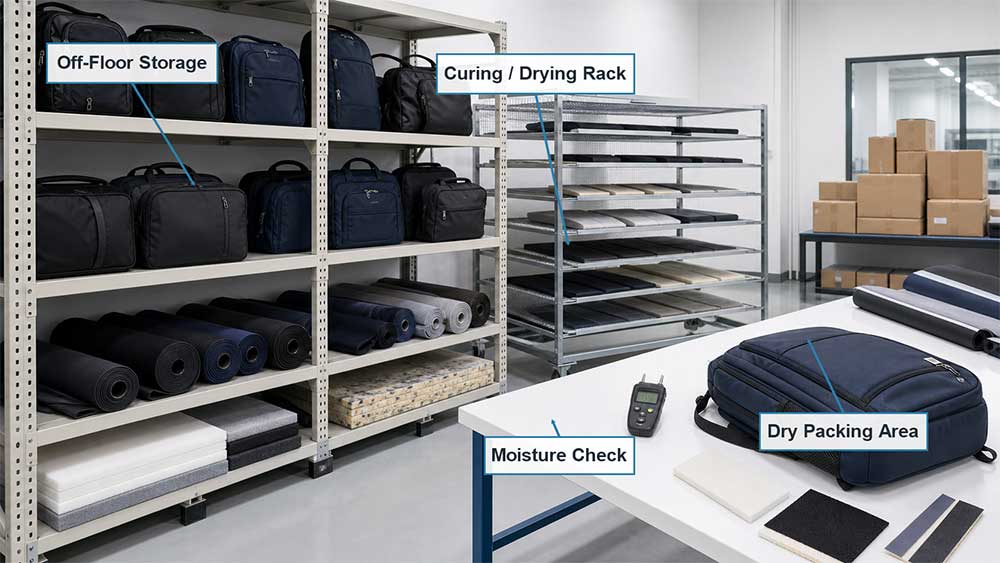
Store materials and finished bags correctly
Materials and finished products should be:
Stored off the floor
Kept away from damp walls, windows, and leaking roofs
Protected from rain and floor splash
Separated from wet cartons, timber, or cleaning materials
Kept in a clean area with suitable ventilation
Rotated so that old or exposed stock does not remain unchecked
Production and packing areas should not have visible mold, standing water, persistent condensation, or unexplained musty odors.
Keep handling and packing areas clean
Dust, food residue, dirty worktables, oils, and other organic contamination can increase the chance of visible mold developing.
Sewing stations, racks, inspection tables, packing areas, and reusable handling equipment should be kept clean. Finished bags should not remain uncovered for long periods in humid or contaminated areas.
Allow enough drying and curing time
There is no single waiting time suitable for every bag. Before releasing products for packing, consider:
Adhesive type and quantity
Printing, coating, or lamination process
Recent cleaning or stain removal
Temperature and relative humidity
Foam and reinforcement thickness
Time spent in high-humidity production areas
Material supplier instructions
Customer-specific packaging requirements
Cleaned areas must be fully dry. Adhesives, inks, coatings, and other chemical processes should complete their specified curing period.
A strong chemical smell, damp odor, or musty odor should be investigated before packing. Fragrance or deodorizer should not be used to conceal an unexplained odor.
Do not rely on touch alone
The outer fabric may feel dry while foam, folded seams, binding, cardboard reinforcement, or laminated areas still contain moisture.
Moisture meters, environmental readings, approved reference samples, or material-specific test methods may help, but the procedure and acceptance criteria must suit the material being checked.
Do not apply one reading or moisture-content limit to textiles, leather, foam, paperboard, wood, cartons, and complete bags.
Build Protection at Three Levels
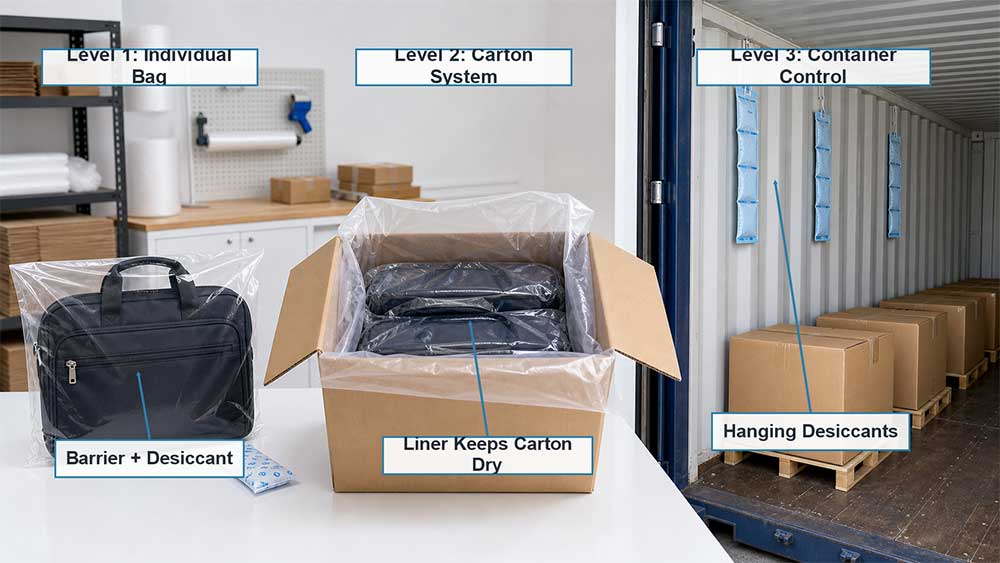
A reliable export packaging plan controls moisture at the individual bag, carton, and container levels.
Level One: Protect the individual bag
An individual polybag protects the product from dust, handling contamination, and direct contact with external water droplets. It is not, by itself, a drying system.
If a damp bag is sealed inside, the polybag may keep moisture close to the product for the entire journey.
A desiccant inside the individual package is more likely to work as intended when:
The product is acceptably dry before packing
The desiccant is compatible with the bag materials
The package provides a suitable moisture barrier
The quantity reflects package volume, material moisture, barrier performance, and expected storage time
The desiccant cannot leak, stain, scratch, or become trapped in a pocket
Its location is defined in the packaging instructions
For bags containing leather, coated fabrics, sensitive metal finishes, electronic components, or other special materials, compatibility between the product, desiccant, and desiccant packaging should be verified before bulk packing.
Level Two: Protect the carton
Carton-level controls may include:
Dry, undamaged export cartons
A suitable carton liner or moisture-barrier material
Desiccants positioned where they cannot damage the bags
Separation from damp floors and pallets
Correct carton sealing
Defined storage and handling conditions
Limited exposure in humid loading areas
A carton liner may reduce moisture entering from outside. However, it can also trap moisture if damp bags, inserts, dividers, or cartons are sealed inside it.
The bags, individual polybags, carton liners, cartons, internal dividers, and desiccants should therefore be evaluated as one packaging system.
Level Three: Protect the container
Container desiccants are intended for the larger air volume and moisture load inside a shipping container. They should not be confused with the small silica-gel packets commonly used in individual retail packages.
A container-desiccant plan should consider:
Container size and type
Cargo volume and loading density
Moisture carried by the bags, cartons, pallets, and dunnage
Actual container condition
Climate at origin, destination, and transshipment points
Season and expected temperature changes
Direct or transshipment service
Total door-to-door transit and storage time
Water-vapor transmission of the packaging
Tested desiccant performance under expected conditions
Placement, secure attachment, and leak protection
The required absorption capacity should be calculated from documented technical data by a qualified packaging specialist or desiccant supplier.
“Put ten desiccant bags in every container” is not a reliable packaging specification.
Inspect the Container Before Loading
If a container presents an unacceptable moisture or contamination risk, it should be replaced or corrected before loading.
Check the following:
Roof and walls: No holes, visible light, active leaks, or serious damage
Doors and seals: Intact, flexible, and able to close correctly
Floor: Dry, clean, and free from standing water or suspicious damp areas
Odor: No musty, chemical, or previous-cargo odor
Cleanliness: No visible mold, oil, pests, residue, or loose debris
Vents: Structurally intact and not incorrectly blocked
Overall structure: No damage likely to allow water entry or affect the cargo
Loading conditions: Cartons can be protected from rain, ground water, and splash
Checking for incoming light after closing the doors can reveal some holes. It does not replace a full inspection of the seals, floor, roof, repairs, and signs of water entry.
Keep photographs of the empty container, roof, walls, floor, doors, seals, container number, loading arrangement, and final seal.
Keep Cartons, Pallets, and Dunnage Dry
Packaging materials need protection from rain and humidity while in storage and while being moved to the loading area.
When wooden pallets are used:
Confirm the destination’s phytosanitary requirements
Use correctly treated and marked wood packaging when required
Do not treat phytosanitary compliance as proof that a pallet is dry
Reject pallets that are visibly wet, stained, moldy, discolored, or recently exposed to rain
Prevent pallet moisture from transferring to bottom-layer cartons
Protect pallets from rain during storage and loading
The ISPM 15 international standard addresses the spread of pests through wood packaging material. Its approved treatments and official marks are not moisture-content acceptance criteria.
Paperboard, paper fillers, and dividers used to help bags retain their shape must also be dry and suitable for the expected transit time.
Do Not Introduce New Moisture During Loading
Even dry products can be placed at risk by poor loading practices.
During loading:
Keep cartons under cover
Do not load in rain without effective protection
Avoid direct contact with known wet walls or floors
Install container desiccants according to the approved instructions
Prevent desiccants from leaking or rubbing against the cargo
Distribute moisture-control devices instead of concentrating them in one area
Do not block the container’s original vents
Secure cartons to prevent movement and packaging damage
Close and seal the container promptly after loading
Ventilation is not automatically beneficial. Virginia Tech’s guidance on moisture in sea containers explains that airflow can move moisture in either direction. If the outside air is more humid, ventilation may introduce additional moisture.
The decision should reflect the cargo, route, climate, packaging system, and container design.
What Should Buyers Include in a Bag Packaging Specification?
“Use desiccant” is not a complete packaging instruction. A workable specification should define both the controls and the evidence the supplier must retain.
Control point
What the specification should define
Product release
Drying or curing conditions required before packing
Measurement
Approved moisture or humidity method and acceptance criteria, where applicable
Individual packaging
Polybag type, sealing, perforation or barrier requirements, and individual desiccants
Cartons
Grade, condition, liners, sealing method, and maximum environmental exposure
Pallets
Material, phytosanitary requirements, acceptable condition, and rain protection
Containers
Inspection standard and rejection criteria
Container desiccants
Approved type, required absorption capacity, calculation method, placement, and attachment
Loading
Weather protection, carton arrangement, loading sequence, closure, and sealing
Records
Photos, measurements, production lot, container number, and seal number
Arrival response
Inspection and escalation procedure for moisture or mold findings
These requirements should be agreed before production and included in the packaging instructions, inspection checklist, or purchase-order attachments. Waiting until bulk production has finished may leave fewer practical options.
Include Moisture Control in Bag Quality Inspection
A typical bag inspection covers appearance, dimensions, sewing, materials, hardware, logos, function, quantity, and packaging.
Where the product, season, route, or packaging creates a higher moisture risk, the inspection should also cover:
Visible mold or suspicious spotting
Musty, damp, or otherwise unexplained odors
Damp cartons, dividers, and paper fillers
Moisture or humidity data obtained with an approved method
Correct individual packaging
Desiccant type, quantity, and placement
Carton condition and sealing
Pallet condition
Container inspection records
Loading-area photographs
For laptop bag orders, these checks can be incorporated into a broader laptop bag quality inspection checklist. Other bag categories should use inspection criteria appropriate to their materials and construction.
Humidity indicator cards or electronic temperature and humidity data loggers may be considered for higher-risk shipments. Before shipping, define their location, accuracy, recording interval, data-access method, and acceptance criteria.
Pre-Shipment Mold-Prevention Checklist
Before packing
Store raw materials and finished bags off the floor
Check that fabrics, linings, foam, webbing, paperboard, and reinforcement materials are not visibly damp
Allow cleaned areas to dry fully
Complete the specified curing period for adhesives, printing, coatings, and lamination
Investigate musty, damp, or otherwise unexplained odors
Confirm that packing materials are clean and dry
Complete approved moisture or humidity checks where required
During individual packing and cartoning
Do not seal damp products in polybags
Use approved polybags and moisture barriers
Confirm the correct type and quantity of individual desiccant where required
Position desiccants so they cannot leak, stain, or damage the product
Keep cartons, shape-retaining materials, fillers, and dividers dry
Seal cartons correctly and store them away from damp floors and walls
Before and during container loading
Record the container number and condition
Check the roof, walls, doors, seals, vents, and floor
Confirm that the container is clean, dry, and free from unusual odors
Check that pallets and dunnage are dry and acceptable
Protect loading from rain and standing water
Confirm the required desiccant absorption capacity and quantity
Install and secure desiccants correctly
Keep cartons away from known wet surfaces
Retain loading photographs and seal details
What Should You Do If Mold Is Found After Arrival?
Do not immediately clean all affected products or discard the original packaging. Doing so may destroy evidence needed to investigate the source.
Isolate and document the shipment
Separate affected cartons from apparently unaffected stock and record:
Container and seal numbers
Arrival and opening dates
Actual container condition
Location of each affected carton inside the container
Whether damage is concentrated near the doors, walls, roof, floor, or pallets
Condition of polybags, carton liners, cartons, and desiccants
Odors, water marks, corrosion, and visible mold
Available temperature and humidity records
Photograph the overall container interior and pallet arrangement before taking close-up photographs of individual products.
Review the damage pattern
The location of the damage may provide useful clues:
Damp top cartons or downward water marks may suggest roof condensation or leakage
Damage near the doors may be associated with seal leakage or rain during handling
Damp bottom cartons may indicate a wet floor, pallet, dunnage, or water entering from below
Mold inside an intact polybag may indicate that moisture was sealed inside during packing
Similar damage in several container areas may point to a wider cargo, packaging, or humidity-control issue
These are investigative clues, not proof of responsibility. More than one moisture source may be involved in the same shipment.
Preserve samples and records
Retain representative affected and unaffected bags, cartons, desiccants, packing records, inspection reports, and loading photographs.
Notify the supplier, freight forwarder, insurer, inspection company, and other relevant parties within the applicable claim periods.
For substantial losses, an independent cargo survey or laboratory assessment may be needed before cleaning, reworking, or disposing of the goods.
Decide carefully whether products can be reworked
Whether a mold-affected bag can be cleaned, reworked, and released for sale depends on:
Material type
Depth and extent of contamination
Persistent odor
Water marks and mold staining
Effects on coatings, leather surfaces, foam, paperboard, and hardware
Customer requirements
Applicable chemical and safety restrictions
Risk of recurrence after repacking
Surface cleaning may improve appearance without removing contamination from foam, seams, linings, and internal reinforcement.
Although OSHA’s mold remediation guidance addresses workplaces and building materials rather than finished bags, it helps explain why mold can penetrate porous materials and be difficult to remove completely. A product that looks clean after surface treatment is not automatically suitable for sale.
Mistakes That Commonly Increase Mold Risk
Several mistakes account for many avoidable moisture problems:
Packing bags before cleaned areas and chemical processes have dried or cured
Assuming nylon or polyester construction eliminates mold risk
Treating the individual polybag as a complete moisture-control system
Using the same desiccant quantity for every product, route, and season
Inspecting the container while ignoring damp bags, cartons, pallets, or dunnage
Applying anti-mold chemicals without approval or material-compatibility checks
Failing to retain measurements, photographs, and loading records
Anti-mold treatments can create odor, discoloration, material-compatibility, worker-exposure, and destination-market compliance concerns. Any treatment should be specifically approved, supported by technical information, compatible with the product, and compliant with applicable requirements.
Without loading photographs, environmental data, material records, and container inspection evidence, it becomes difficult to distinguish factory moisture from packaging moisture, container leakage, transit condensation, loading exposure, or destination storage conditions.
Conclusion
Preventing mold and moisture damage during ocean shipping starts with reducing the moisture introduced into the shipping system. Bags, foam, linings, reinforcement materials, cartons, pallets, and other packaging components should reach an acceptable condition before they are sealed.
Protection must then work at three connected levels: the individual bag, the carton, and the container. The container should be inspected, loading should be protected from rain, and desiccant capacity should be based on the actual shipment rather than a fixed bag count.
For custom bag orders, Vancharli Outdoor can work to mutually agreed moisture-control, inspection, packaging, and container-loading requirements from product development through bulk production. These requirements are most effective when agreed before approval of the pre-production sample and packaging plan.
No polybag, moisture reading, desiccant, or container inspection can eliminate every risk by itself. A documented and repeatable control system provides stronger protection and better evidence if a problem is discovered after arrival.
Frequently Asked Questions
Can container desiccants prevent every mold problem?
No. Desiccants can help control humidity, but they cannot correct damp bags, wet cartons, unsuitable packaging, container leakage, or incorrect placement and absorption capacity.
Does every bag need a silica-gel packet?
Not necessarily. The decision depends on the materials, packaging barrier, route, season, storage time, and customer requirements. The desiccant type and quantity should be validated rather than added automatically.
Is a sealed polybag better than a perforated polybag?
There is no universal answer. A suitable sealed moisture-barrier package can protect a properly dried product, while a perforated polybag exchanges moisture with the carton and container air. The choice should be made as part of the complete packaging system.
Is a dry container enough to prevent moisture damage?
No. Moisture may also come from the bags, foam, paperboard reinforcement, cartons, pallets, dunnage, or humid air introduced during loading.
How much desiccant does a shipping container need?
The required capacity depends on the container size, moisture carried by the cargo and packaging, loading density, route, season, transit time, and the desiccant’s tested absorption performance under the expected conditions. Use a documented calculation or qualified technical recommendation rather than a fixed bag count.
Who is responsible if mold is found after arrival?
Mold alone does not establish responsibility. Moisture may enter during production, packing, loading, sea transit, port storage, customs inspection, inland transport, or destination warehousing. Inspection records, loading evidence, damage distribution, container condition, and—where needed—an independent investigation should be reviewed together.






Comments are closed