


- Home
- Products
- FAQ
- Blog
- Services
- About Us
- Contact
- (+86) 187 5041 0800
- service@vancharli.com
- Within 24 hours response from our salesman
Custom Storage Inside the Frame Triangle
Vancharli Outdoor is an OEM & ODM factory producing custom bike frame bags for brands, wholesalers, procurement teams, and importers. Choose a reference style or bring your own design. We develop the shape, mounting, materials, and branding around your target bicycles.
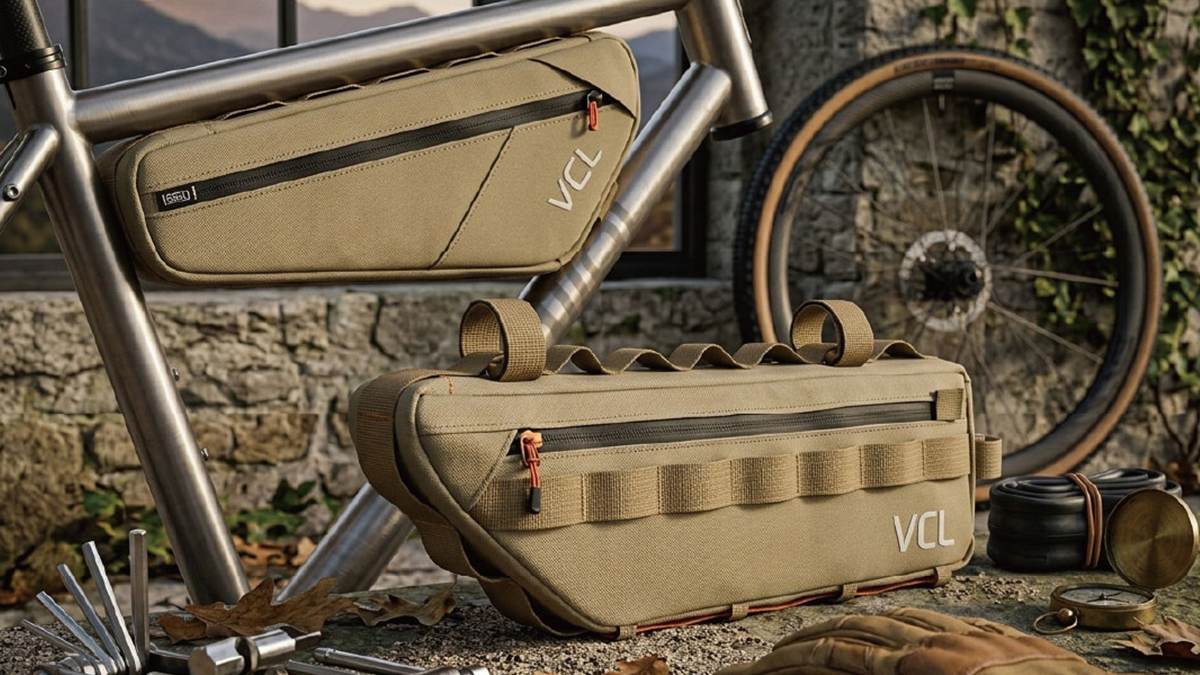
Six reference styles for custom development.
These bicycle frame bags offer different shapes, openings, and attachment layouts for storage inside the main frame triangle. Compare the six references for your wholesale or private label collection, then adapt the selected design around your target bicycles and intended contents.
You can modify a reference or submit technical drawings, sketches, reference product photos, or a physical sample to develop your own style. Dimensions, capacity, and fit are confirmed during development. For products at other mounting positions, explore our bicycle bag range.
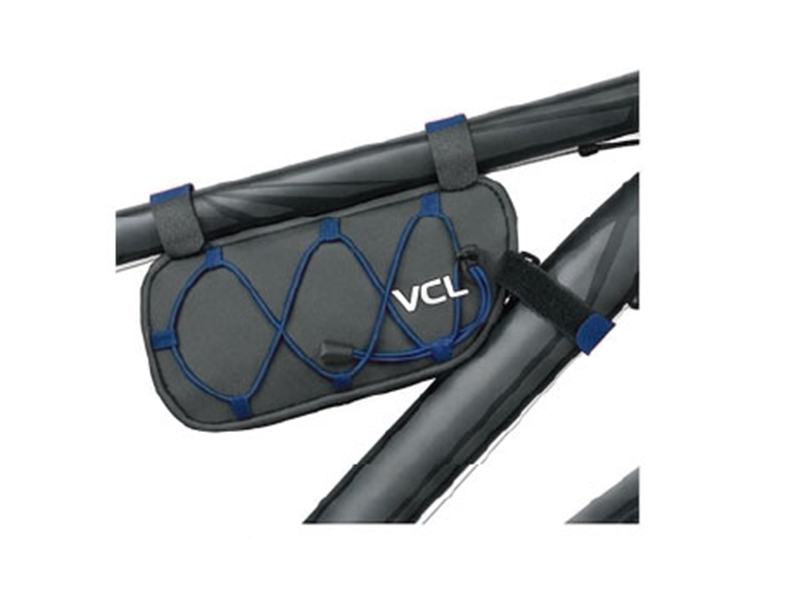
A rounded rectangular frame bag with crisscross external cord and contrasting attachment details. Upper and end straps position the bag within the frame triangle. Body proportions, cord layout, colors, and branding can be customized.
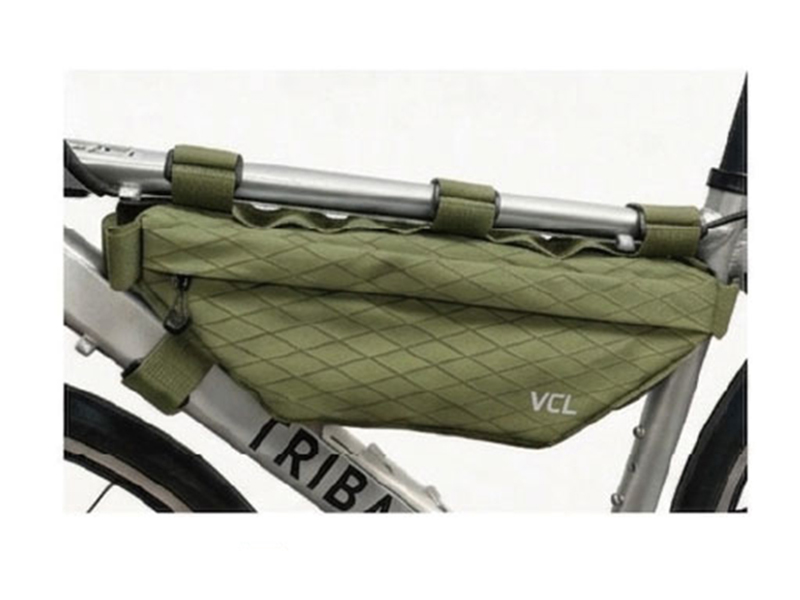
An elongated frame bag with a tapered lower edge and a fabric flap over the side zipper. Several upper straps attach it beneath the top tube. The outline, flap coverage, and strap positions can be adapted to the intended frame.
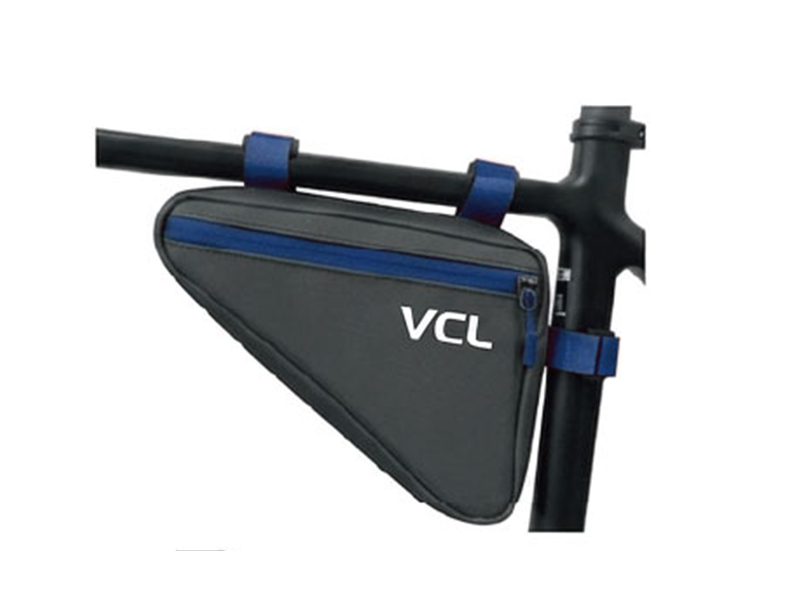
A triangle bike bag with rounded corners and a long zipper near the upper edge. Two upper straps and an end strap provide attachment points around the frame corner. The broad side panel offers space for custom colors and logo placement.
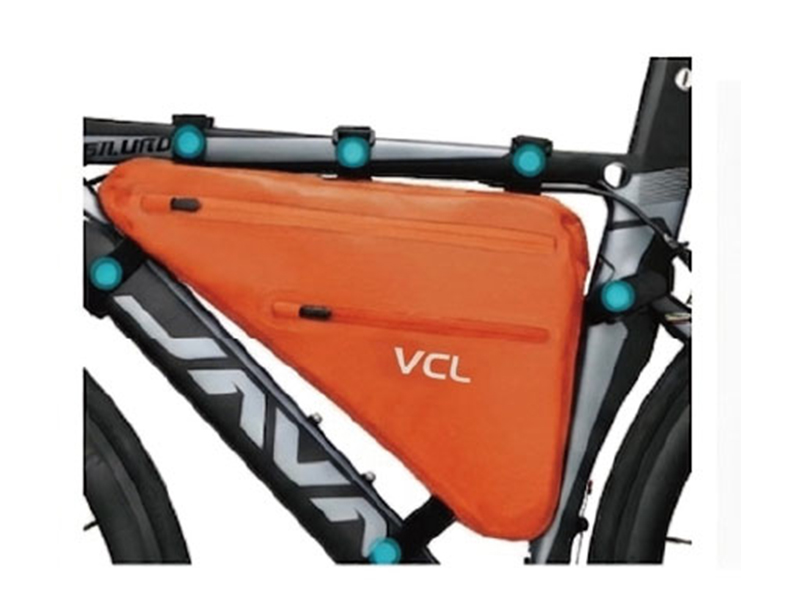
A deep triangular body with two zipper openings on the visible side and attachment points around its edges. The openings provide a starting point for different access layouts. Their function and the internal arrangement can be defined during development.
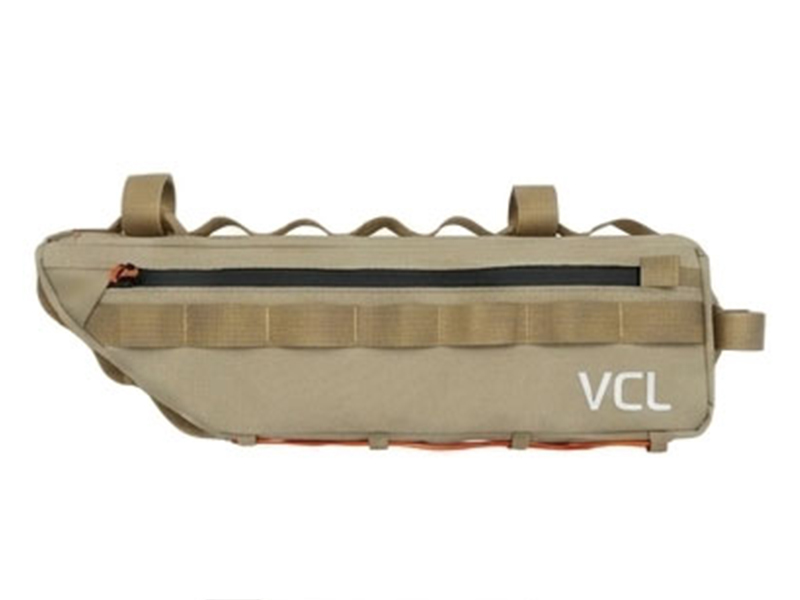
An elongated body combines a long side zipper with a row of stitched webbing loops. Its shallow profile offers a starting point for a half frame bag design. Body depth, loop placement, mounting details, and branding can be adjusted.
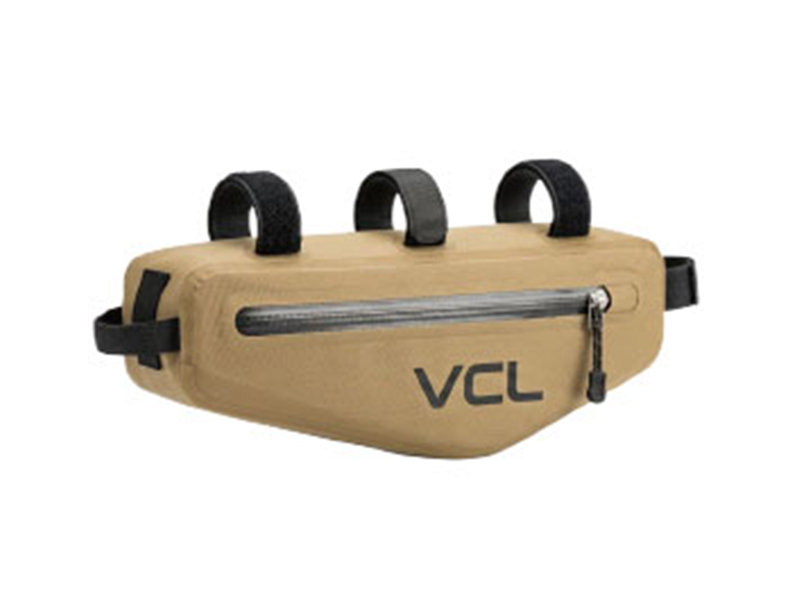
A compact frame bag with a gently tapered base, side zipper, and upper and end attachment straps. The uncluttered side panel leaves room for branding. Its proportions and mounting layout can be adapted around the target bicycle and contents.
Choose the fit, attachment, access, and finish.
Start with the usable frame triangle and the items the bag needs to hold. We can adjust length, front and rear heights, the lower contour, and body width. Full frame bag and half frame bag layouts can be compared around your requirements. Target capacity is assessed within the available space and confirmed during sampling.
Choose attachment positions around tube shapes, cable routing, and the intended load. Strap lengths, fastening areas, and frame contact panels can be adjusted. Bolt-on or lace-up systems require a separate review of mounting dimensions and frame compatibility. Send the relevant measurements and bicycle information before the attachment layout is finalized.
Select the opening side, zipper length, and access layout around how riders pack their kit. Pockets, dividers, and retaining straps can be included where needed. A pump, spare tube, and compact tools have different shapes, so the layout should accommodate the actual contents without adding unnecessary bulk or restricting the main compartment.
Compare nylon, polyester, and suitable coated fabrics against your target price, appearance, and construction. Water-resistant designs need appropriate seams and closures; waterproof development requires an agreed construction and test specification. Private label bike frame bags can include custom colors, logos, labels, zipper pulls, and packaging, with artwork arranged around openings and mounting points.
Factory support from frame measurements to production.
Established in 1995, Vancharli Outdoor provides bag manufacturing and OEM & ODM development. For frame bag projects, we help brands and sourcing teams bring bicycle measurements, storage requirements, and commercial priorities into one product specification.
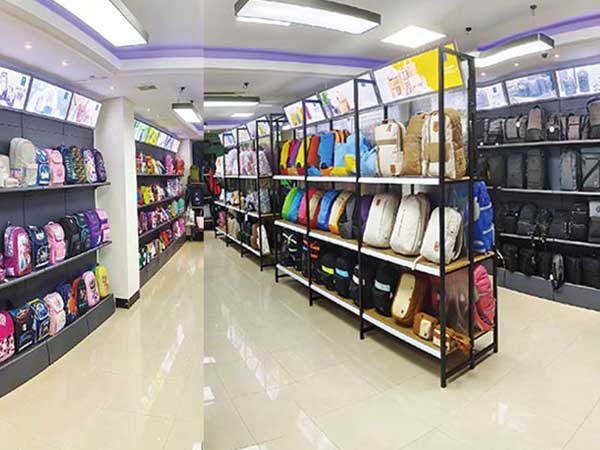
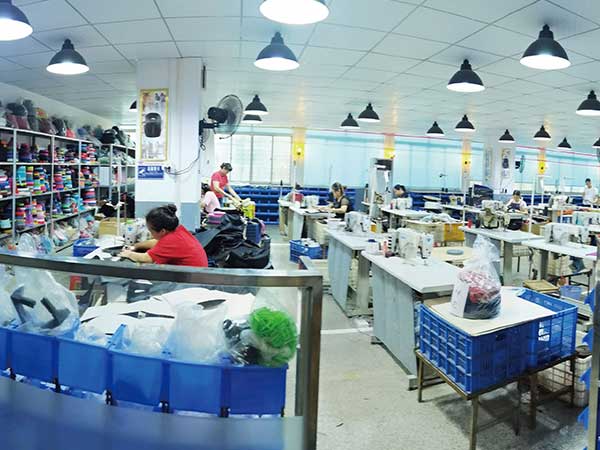
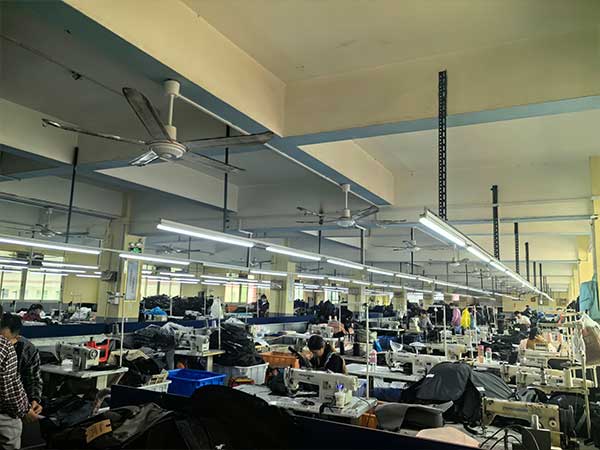
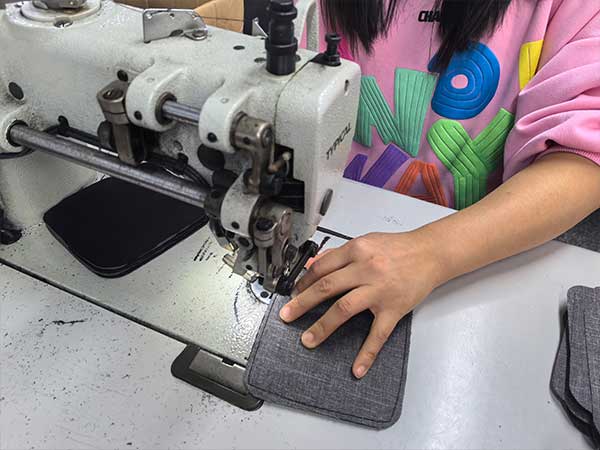
A frame outline needs to become a workable pattern with space for seams, openings, and attachments. We help organize the supplied dimensions into a development brief. Your team can review the proposed shape and construction before sampling, with the intended bicycle and contents clearly identified.
A wholesale frame bag collection may need several sizes to cover its intended bicycles. We can compare proposed outlines and discuss which differences call for another version. This gives buyers a clearer basis for deciding the size range, ordering quantities, and fit information needed for launch.
An extra pocket, shaped support panel, or more involved fixing system changes material use and assembly work. We review these choices against your target price and market position. You can compare specifications and decide which features justify their cost before approving the production version.
A loaded sample fitted to the intended bicycle can reveal problems that a flat drawing misses. These may include outward bulging, restricted bottle access, or an awkward opening. Your feedback can guide revisions before the shape and specification are approved for bulk production.
Two frame bags can look alike while using different panel shapes or mounting positions. We can record dimensions, attachment details, colors, and labels for each approved version. These records help your team distinguish products and communicate any changes when placing a repeat order.
Our production resources in China and Southeast Asia support project-based manufacturing arrangements. The proposed production location and material requirements are confirmed for each order. Share your destination market, quantities, and sourcing requirements early so they can be considered alongside the design and quotation.
Make better use of the space inside the bicycle.
The benefits below depend on the selected shape, mounting, and finished specification.
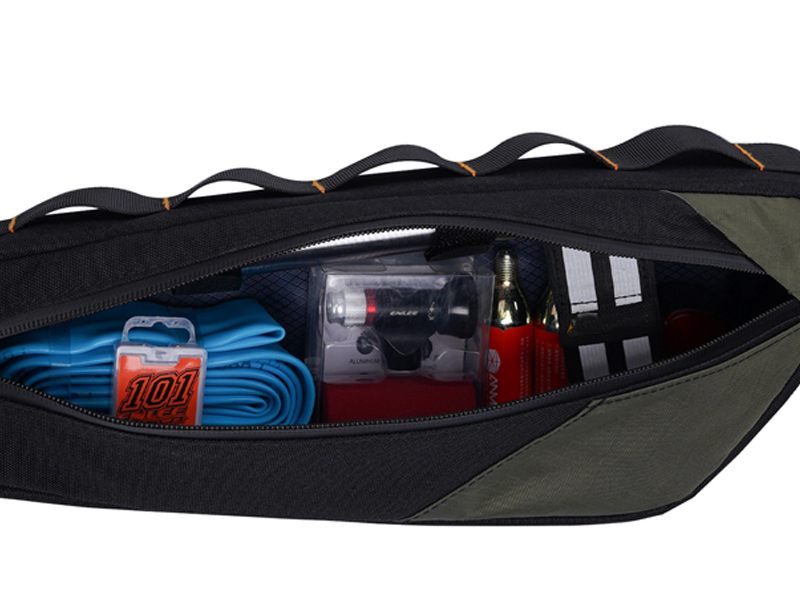
A bag suited to the available outline turns part of the frame triangle into storage. Depending on its size, it can carry repair items, food, or a packable layer. This gives suitable essentials a place on the bicycle while leaving other luggage available for larger or differently shaped equipment.
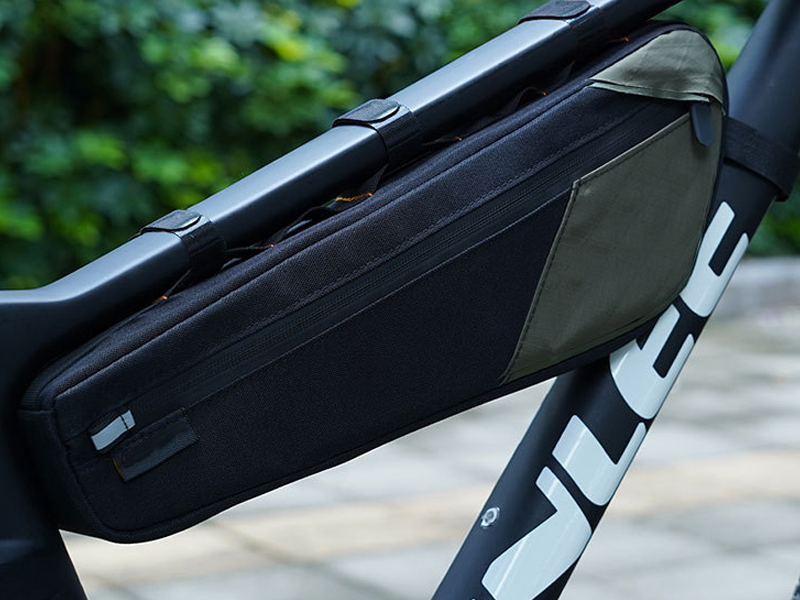
The main triangle provides a central position for part of the riding kit. Compact, heavier items can be placed here as part of the overall packing plan. A secure fit and sensible loading help keep the contents contained when riding over uneven surfaces.
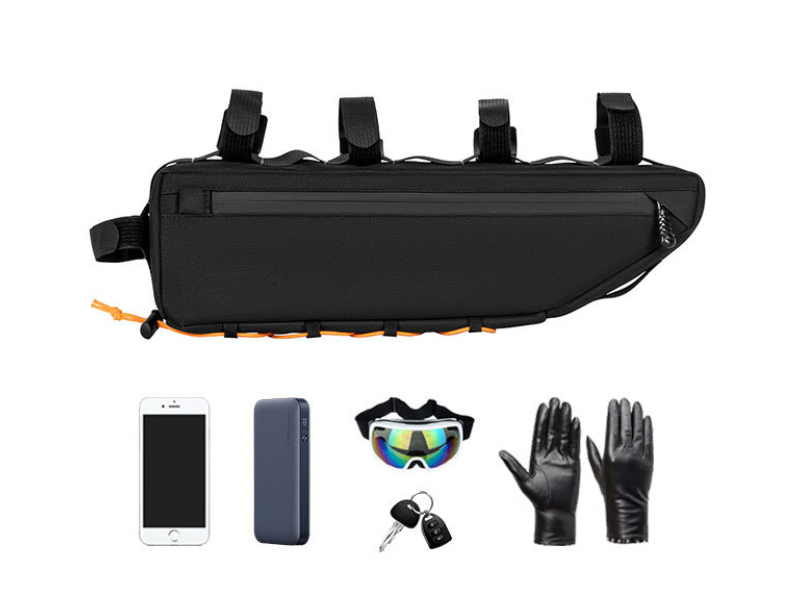
Moving suitable items into a frame bag frees room in jersey or jacket pockets. A basic repair kit can stay together on the bicycle, while personal belongings remain with the rider. This is useful when pocket space is limited or several small essentials need a regular storage place.
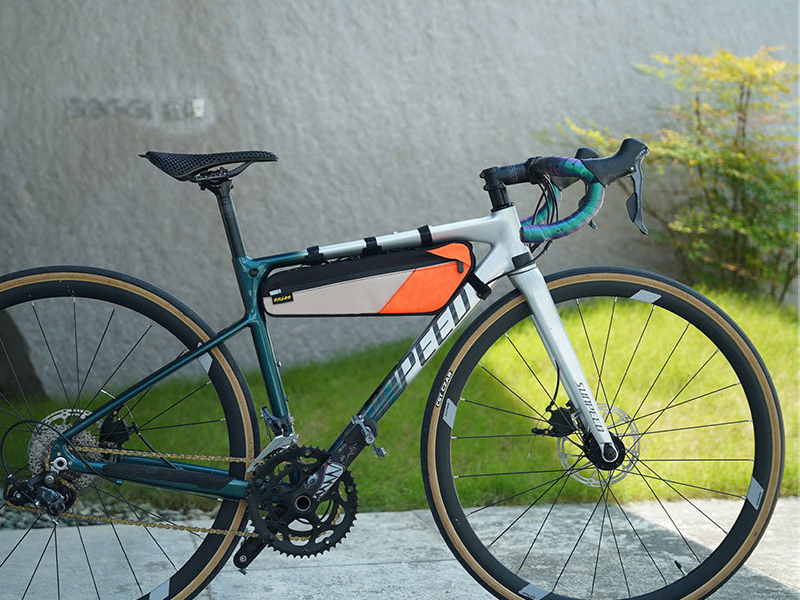
A shallower bag can leave room beneath it for selected bottles and cages. When the loaded bag, bottle position, and removal path are compatible, riders can combine frame storage with their chosen water setup. This depends on the complete bicycle and bag combination.
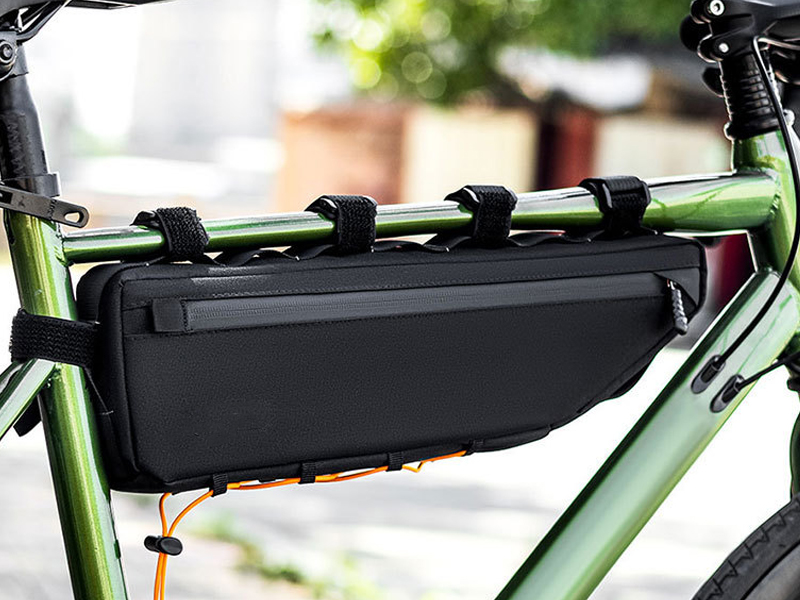
A slim loaded profile leaves room beside the bag for the rider’s legs. Keeping the side panels from spreading too far helps reduce unwanted knee contact. Bag width and packing arrangement both matter, particularly when rigid tools or bulky objects are carried inside.
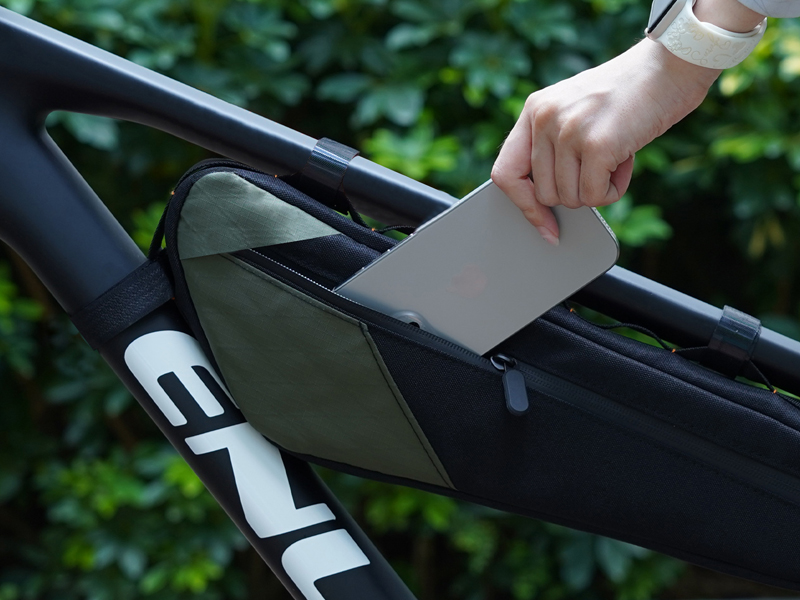
On versions with a side zipper, riders can open the bag at a stop while it remains attached to the frame. An opening matched to the intended contents makes repair items easier to remove without releasing the mounting straps.
Choose the storage around the trip.
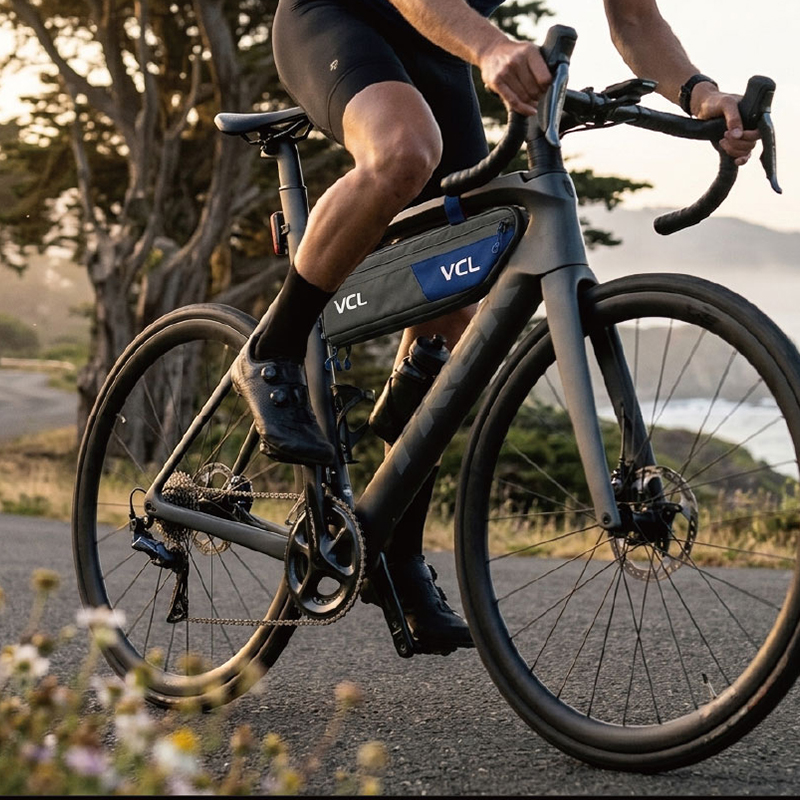
A road bike frame bag can carry a spare tube, compact tools, and food when its dimensions suit the kit. A shallower body may work alongside frame-mounted bottles. For longer seated efforts, the loaded bag also needs to leave comfortable clearance beside the rider’s knees.
A gravel bike frame bag gives repair supplies and route essentials a place inside the bicycle. On rides away from services, the opening should accommodate the actual tools and spares being carried. Secure attachment and controlled loaded width matter as the surface becomes rougher.
A bikepacking frame bag can take part of the load otherwise carried in front or rear luggage. A fuller outline provides another storage option, while a half frame bag may suit a setup retaining bottles below. Selection should follow the complete equipment list and water-carrying plan.
An MTB frame bag needs to suit the space the bicycle provides. Hardtails and full-suspension frames may require different outlines and attachment positions. On suspension bikes, the bag must remain clear of the shock, linkage, and their movement. A compact repair kit can be a useful starting point for development.
Agree on the checks for the finished design.
Quality checks are agreed for each project. Depending on the design, they can cover the following seven areas. Sample fit is reviewed against the supplied bicycle, a full-size template, or another agreed reference.
Compare outer fabric, lining, webbing, zippers, and supporting layers with the approved specification. Review colors, surface finish, and material direction where relevant. Confirm that frame contact panels and attachment components correspond to the selected version before cutting and assembly.
Check the upper edge, lower contour, front and rear heights, and corner positions against the pattern. Differences along the outline can affect how the bag sits within the triangle. Review matching panel pairs and the marked positions of openings and mounting points.
Inspect seam alignment, lining placement, corner assembly, and specified reinforcement around attachments. Welded versions require checks suited to the agreed material and construction. Review frame contact areas for unwanted bulk, exposed components, or hard edges that could create rubbing points.
Measure attachment positions, usable strap lengths, and fastening overlap against the mounting plan. Alternative fixing systems require checks of the selected hardware and surrounding support. Holding performance is assessed using the load and method agreed for the relevant bag size and construction.
Pack the sample with the agreed contents and review width, sagging, and side-panel bulging. Check relevant knee space, cable contact, and bottle removal. For suspension-specific projects, review clearance through the required movement range using an appropriate bicycle or agreed reference.
Operate zippers and other closures with the sample packed and mounted as intended. Check for caught lining and difficulty inserting or removing reference items. Where water protection is specified, agree on the procedure for assessing the relevant fabric, seams, openings, and attachment details.
Review finished dimensions, visible workmanship, logos, labels, and supplied accessories against the order. For multiple sizes, confirm that identification matches the correct bag outline. Check packaging, quantities, and any approved fit or installation information before shipment.
Answers for development and bulk purchasing.
Our typical MOQ is 300 pieces per style. If your collection includes several sizes or colorways, provide the proposed quantity breakdown. We will confirm how the versions are counted and whether selected materials or components introduce separate minimums before you finalize the order.
Yes. The six references are starting points for development. You can request changes or provide drawings, sketches, reference product photos, or a physical sample. We support OEM production to your specifications and ODM development, including the shape, mounting, openings, materials, and private label details.
Provide the usable inner triangle outline, relevant tube dimensions, and clear side-view photographs. Mark bottle cages, cables, mounting bosses, and suspension components. A full-size template or a drawing with key measurements is useful for a close-fitting design. Specify the bicycle models and frame sizes the bag needs to cover.
Start with the equipment list and water-carrying plan. A full frame bag occupies more of the triangle, while a half frame bag generally has a shallower body beneath the top tube. If bottles need to remain on the frame, check both their installed position and removal path with the bag loaded.
We can assess either as a target capacity for custom development. Available frame space and acceptable loaded width determine what is practical. External dimensions alone do not establish usable volume. Capacity is confirmed during sampling before it is used as a specification for the finished product.
Not necessarily. Triangle shapes, tube angles, bottle positions, and suspension layouts vary. A bag that fits one frame size may not fit another in the same bicycle range. Full-suspension projects also require clearance around moving parts through the intended travel.
We can review a waterproof construction for your project. Provide the intended conditions and any required test method. Materials, seams, closures, and mounting points need to work together. A reference design may require structural changes, and a specific protection claim needs verification on the finished construction.
Send your preferred reference or design, target frame measurements, intended contents or capacity, quantities by version, branding, and packaging requirements. Include the destination market and requested delivery date. For sample approval, agree on the bicycle or fit reference and the checks needed before bulk production.
✅ Submit an inquiry for:


WhatsApp us