




How to Stop a Hydration Backpack from Bouncing
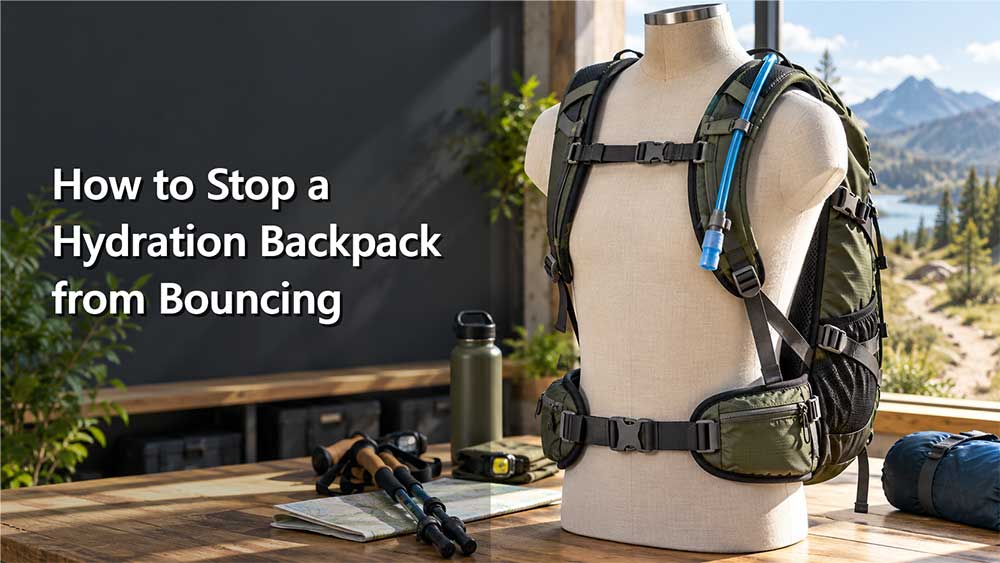
To stop a hydration backpack from bouncing, load it with the water and gear you actually plan to carry, secure the reservoir, and adjust the straps so the pack follows your torso without restricting your breathing. Then compress loose space inside the bag and test it while moving. Removing trapped air can reduce water sloshing, but it will not fix a backpack that fits poorly.
A hydration backpack, often called a hydration pack, can bounce for several different reasons. Before pulling every strap tighter, work out what is moving. The whole backpack may be lifting off your back, the reservoir may be shifting inside its compartment, or a loose hose may simply be tapping your shoulder. Each problem needs a different fix.
First, Find Out What Is Moving
A short walk or easy jog with your normal load can help you identify the problem.
| What you notice | What to check first |
|---|---|
| The whole pack moves up and down | Harness fit, shoulder straps, and any chest or waist straps |
| The pack swings from side to side | Uneven loading, loose side straps, or unsecured gear |
| Something thumps inside while the harness stays in place | Reservoir attachment and loose items |
| You hear water sloshing without much pack movement | Trapped air in the reservoir |
| The hose or bite valve keeps hitting you | Hose routing and retention clips |
| Bounce develops after you have been drinking | Changed load volume and compression adjustment |
There can be more than one cause. Make one adjustment at a time, then move again so you can tell whether it helped.
Adjust the Pack With Your Actual Load
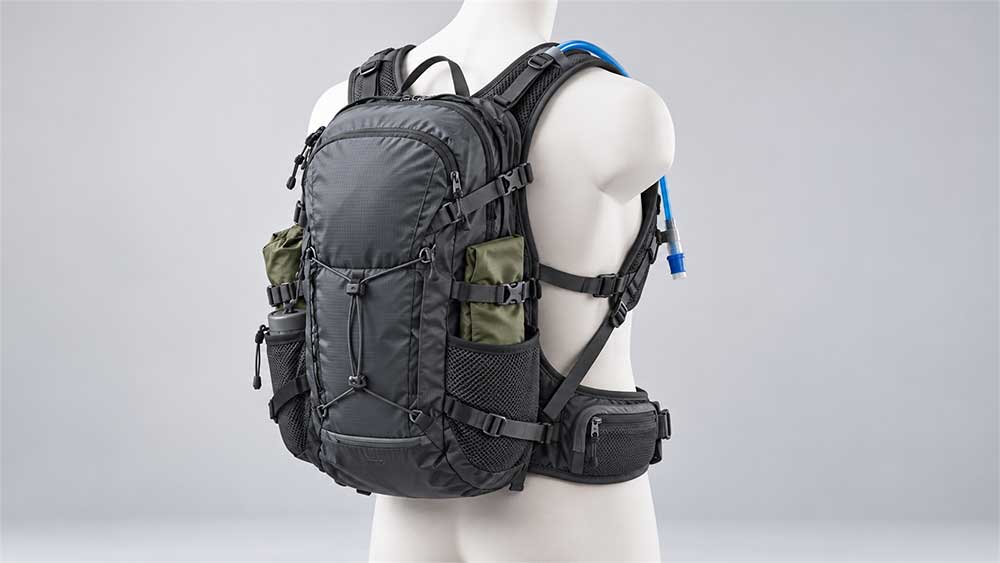
An empty backpack is a poor fit test. Water changes its weight and shape, while clothing and food affect how the load sits against your back.
For perspective, 1 liter of water weighs approximately 1 kilogram (2.2 pounds). A 2-liter fill adds about 2 kilograms (4.4 pounds), before counting the reservoir, backpack, or equipment.
Fill the reservoir with your planned amount of water and pack your usual essentials. Wear the clothing you expect to use, including a rain shell if you are checking fit over one.
For a conventional hydration backpack, work through the following adjustments. Follow the manufacturer’s instructions where they specify a different sequence.
Set the hip belt or waist strap, if fitted
A padded, load-bearing hip belt should sit around your hip bones as directed by the pack maker. A thin waist strap usually provides stabilization rather than substantial weight support.
Fasten the appropriate belt or strap without digging into your abdomen. Do not assume every running pack needs one.
Adjust the shoulder straps evenly
Take up slack until the pack sits close to your back and the straps rest comfortably on your shoulders.
Avoid pulling so hard that the straps create pressure points or drag the bag into your neck. If you need extreme tension to control movement, check the pack’s size and load placement.
Position and adjust the sternum strap
The sternum strap connects the shoulder straps across your chest. If its height is adjustable, choose a position that feels comfortable and keeps it away from your throat.
Take a full breath after fastening it. The strap should help stabilize the harness without squeezing your chest.
Adjust side straps or cords, if provided
Some packs use side adjustments to bring the harness closer around your torso. Tighten these gradually and evenly.
A hydration vest may have fixed shoulder panels and adjustable chest cords instead of conventional shoulder straps. Use the adjustments built into that design rather than trying to fit it like a hiking backpack.
REI’s running hydration vest fitting advice recommends checking fit under load and keeping enough adjustment available for a comfortable, secure fit.
Secure the Reservoir Inside Its Compartment
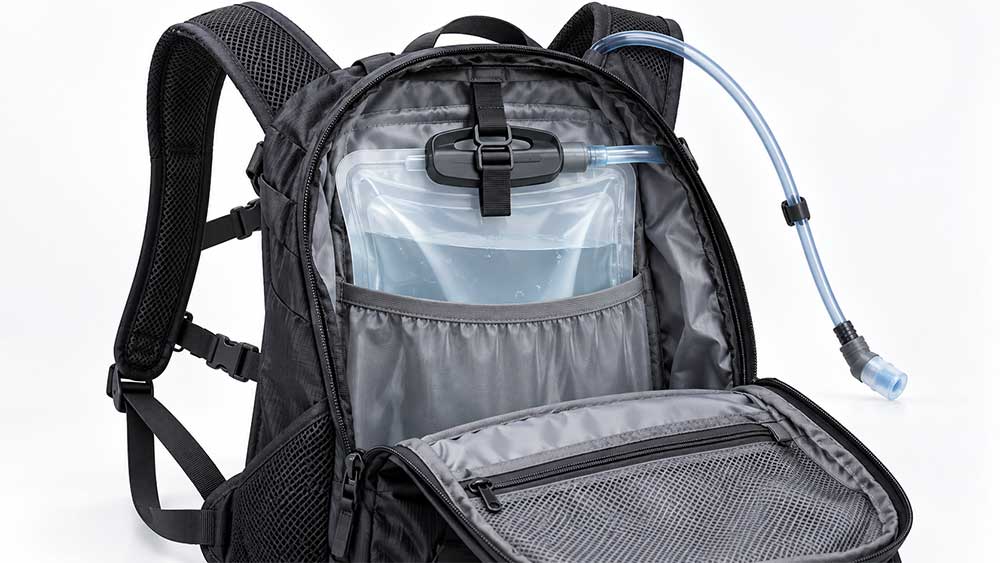
A snug harness cannot fully control a reservoir that is free to slide around inside the bag.
Place the reservoir in its intended sleeve or compartment. If the pack has a hanger, loop, or retaining strap, connect it to the reservoir’s compatible attachment point.
Check that:
- The reservoir sits inside the sleeve without folding awkwardly.
- Its closure does not press uncomfortably into your back.
- The attachment supports it in the intended position.
- The hose has enough slack to avoid pulling on the reservoir.
- Other equipment is not forcing it out of place.
Capacity alone does not establish compatibility. A reservoir can hold the right amount of water yet be the wrong shape for the compartment.
If the reservoir repeatedly drops toward the bottom of the pack, inspect the attachment before tightening the shoulder straps again.
Reduce Sloshing by Removing Excess Air
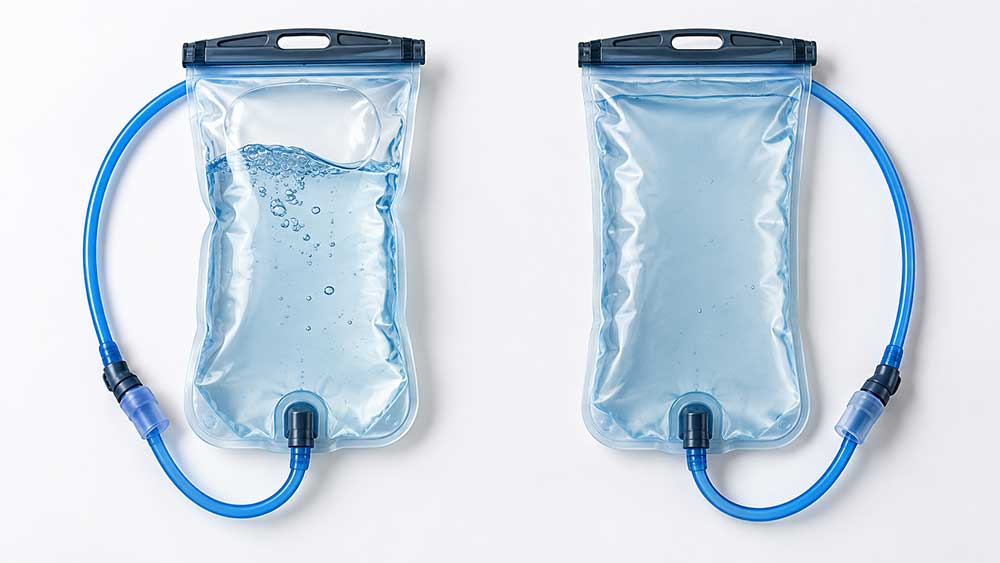
Water noise can make the pack feel more unsettled than it is. Removing excess air is worth trying when the reservoir is secure but you still hear sloshing.
For a flexible reservoir with a drinking tube:
- Fill it with your planned water volume and close it securely.
- Turn it upside down so the air moves toward the hose connection.
- Keep the reservoir upside down, unlock the valve if needed, and bite and sip through the mouthpiece until the trapped air is removed and water begins to flow.
- Return it upright and reinstall it in the pack.
Check the reservoir maker’s instructions if your system uses a different valve or internal structure. REI describes this air-removal technique in its reservoir guidance.
Less sloshing does not necessarily mean less backpack bounce. If the bag still lifts away from your back, return to harness fit and load security.
Keep Gear Close and Control Empty Space
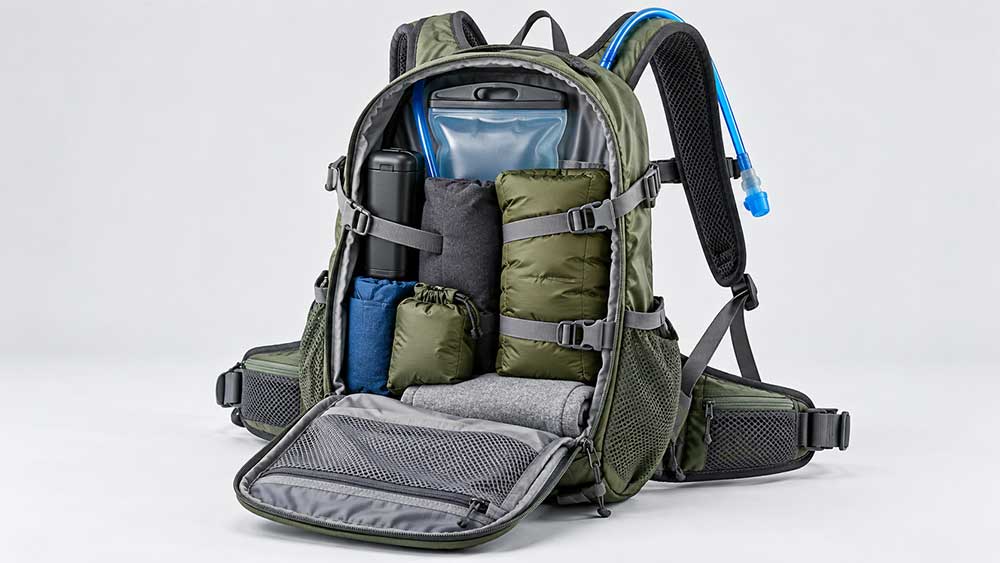
Loose equipment can move even when the backpack itself fits well.
Keep dense items close to your back and secure them in suitable compartments. Avoid placing a heavy object in an outer pocket where it can pull away from your torso. Check that the load is reasonably balanced from left to right.
Use the pack’s compression straps to reduce unused space and hold the contents together. They should contain the load without crushing the reservoir closure or kinking the hose.
An extra layer you already need can help separate hard items and occupy gaps. Carrying unnecessary equipment just to fill the bag adds weight without solving a poor fit.
If your usual load leaves a large amount of space that the compression system cannot control, a smaller pack may suit it better. For hiking loads, our day-hike hydration pack size guide explains how to assess gear space separately from reservoir capacity.
Stop the Hose and Loose Straps From Flapping
Sometimes the repeated tapping comes from the hose or spare webbing rather than the bag.
Route the drinking tube through its intended guides and clips. Leave enough length to reach the bite valve comfortably, but avoid a large loose loop.
Store excess strap length in the supplied elastic keepers or retaining loops. Also check any externally carried jacket or equipment: a loose attachment can swing even when the main compartment is stable.
After securing the hose, take a drink to confirm that you can still reach it and that the tube has not bent sharply.
Recheck the Fit as You Drink
The load changes during an outing. Drinking 500 milliliters removes approximately 0.5 kilograms (1.1 pounds) of water, and a flexible reservoir takes up less space.
If movement develops later, check the compression straps and reservoir position before tightening the chest strap. You may only need to take up space inside the pack.
Test adjustments on safe, familiar ground at the pace you intend to use. A pack that feels stable while standing still may behave differently during a jog or descent.
The pack should stay close to your back without repeatedly thumping, rubbing, or restricting your breathing. A small amount of motion does not automatically mean the pack is unsuitable, but repeated thumping or rubbing deserves another adjustment.
When Adjustment Is Not Enough
Consider a different size or design when:
- The straps reach their tightening limits and the harness remains loose.
- You can only control movement by restricting your breathing.
- The reservoir cannot be secured in the intended compartment.
- Your normal load moves around despite careful packing and compression.
- The pack works comfortably for walking but repeatedly bounces while running.
A larger hiking hydration backpack can carry equipment well without being the best match for regular running. Our hydration vest vs. hydration pack comparison explains the different carrying approaches.
Before replacing the pack, check for webbing slipping through an adjuster, a damaged buckle, or a disconnected reservoir hanger. A hardware problem will not be solved by repacking.
Developing a hydration pack for your outdoor brand? Explore custom hydration pack options from Vancharli Outdoor.
FAQ
Should I fill the reservoir completely to stop bouncing?
Not solely for that reason. Carry the water your route requires, remove excess air where appropriate, and secure the reservoir. Adding water increases weight and will not correct a loose harness or an unsuitable reservoir compartment.
Can a half-full reservoir work without excessive movement?
Yes, if it is supported securely and the pack contains the load effectively. Check the hanger or retaining system, remove excess air, and adjust compression as the reservoir gets smaller.
Will adding a sternum strap fix a bouncing backpack?
It may help stabilize the shoulder straps if the pack supports a compatible attachment. However, it cannot correct every sizing or loading problem. Check the manufacturer’s guidance before adding one.
Why does my pack bounce more when I run downhill?
A descent can expose movement that you did not notice while walking or jogging on level ground. Stop somewhere safe and check harness slack, reservoir security, and loose equipment. Retest on familiar terrain rather than making your first fit check on a technical descent.
Should I size down if the backpack keeps bouncing?
Only after checking the model’s sizing guidance and trying it with your normal load. A smaller size may help if the current harness remains loose at its adjustment limit, but it should still accommodate your clothing and allow unrestricted breathing.
Do I need to buy an anti-slosh reservoir?
Not necessarily. First check reservoir attachment, air removal, and packing. An internal baffle may help manage water movement, but it cannot compensate for a poorly fitting backpack. Check compatibility before replacing the reservoir.
What if the straps loosen again while I am moving?
Check that the webbing is threaded correctly through the adjusters and that the buckles are undamaged. Follow the maker’s instructions. If an adjuster keeps slipping, contact the manufacturer about repair or replacement instead of repeatedly pulling the strap tighter.





Comments are closed