How to Choose the Perfect Size for Your Gym Bag Collection
Ever tried to stuff your shoes, towel, and water bottle into a bag that just won’t zip? Maybe you end up carrying extra bags or leaving things behind. You want a gym bag that fits your routine and keeps everything organized. Think about your workout gear, your commute, and how often you hit the gym. > Picking the right gym bag sizes means less stress and more focus on your fitness goals.
Assess your daily routine to determine what you need in a gym bag. Consider how often you go to the gym and what essentials you carry.
Choose the right size based on your workout style. Small bags work for quick sessions, while larger bags are better for sports or travel.
Look for bags with compartments to keep your gear organized. Separate pockets for shoes and tech can save you time and hassle.
Prioritize comfort when selecting a gym bag. Padded straps and adjustable features make carrying easier, especially with heavy gear.
Match your gym bag to your lifestyle. A versatile bag can serve multiple purposes, from workouts to travel or work.
Assess Your Gym Bag Needs
Choosing the right gym bag starts with knowing what you actually need to carry. Take a moment to think about your daily routine and how often you use your bag. Do you hit the gym before work, after school, or squeeze in a session during lunch? Your answers will help you figure out the best fit.
Daily Essentials
You want a bag that holds all your must-haves without feeling stuffed or too empty. Here are some common items people pack every day:
Clean gear: Fresh clothes, socks, and shoes kept separate from dirty items
Dirty laundry: A breathable laundry bag to keep odors away
Essentials kit: Water bottle, headphones, ID, and keys for quick access
Extras: Snacks, supplements, or post-workout skincare products
Packing these items means you need enough space and smart compartments. If you forget to plan for these, you might end up with a bag that is either too big or too small, which can be frustrating.
Workout and Sports Gear
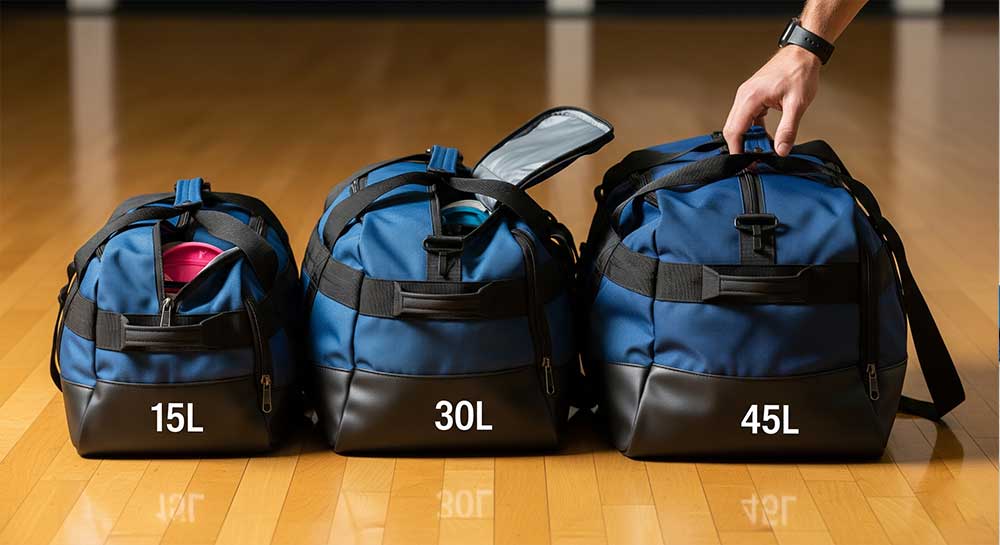
Your workout style matters a lot. If you only bring shoes, gloves, and a towel for lifting weights, a small gym backpack (15–20L) works well. If you play sports or do cross-training, you’ll need more room for extra gear and clothing. In that case, a larger bag (30L or more) makes sense. Think about what you use most often and match your bag size to your routine.
If you commute or travel a lot, look for gym bag sizes in the 25 to 30-liter range. This size lets you carry shoes, clothes, towels, and bottles without feeling weighed down. If you need to bring meal prep or several outfits, you might want a bigger bag. For light packers, a smaller bag keeps things simple and easy to carry.
Tip: Fitness experts suggest you also consider material quality, compartments, comfort, ventilation, water resistance, unique features, style, and price when picking your bag.
Taking time to list your essentials and think about your routine helps you avoid the common mistake of picking a bag that’s too big or too small. The right gym bag sizes make your day smoother and your workouts easier.
Understanding Gym Bag Sizes
Choosing the right gym bag sizes can feel tricky. You see so many options in stores and online. You want a bag that fits your gear, your routine, and your style. Let’s break down the main size categories so you can pick the best one for your needs.
Small, Medium, and Large Options
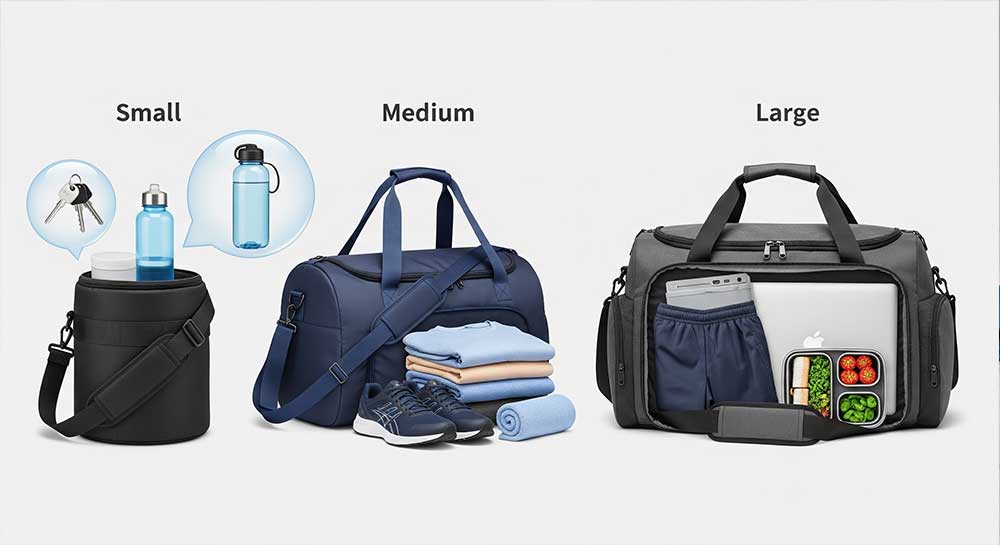
Manufacturers sort gym bags into size groups based on volume. You can use this table to compare the most common categories:
Size Category
Volume (liters)
Intended Use
Small
5-20
Short outings and gym sessions
Medium
21-35
Full-day adventures
Large
36-50
Overnight trips
Extra-Large
51-100+
Extended travel
Small bags work well for quick workouts or when you only need a few items. Medium bags fit a full day’s worth of gear, like clothes, shoes, and snacks. Large and extra-large bags are great for overnight trips or when you need to pack extra equipment.
You also want to think about your packing style. Some people like to bring everything, while others pack light. If you travel for the weekend or need to carry lots of accessories, a bigger bag makes sense. If you only bring the basics, a smaller bag keeps things simple.
When to Choose a Larger Size
Sometimes, you need more space. If you do different workouts or play sports, you might want a larger bag. Multi-purpose gym bags, like hybrid or duffle bags, have bigger main compartments. These bags let you carry shoes, clothes, tech, and even meal prep containers. You get more flexibility and can use the bag for travel or other activities.
Men’s duffle bags usually offer more volume, around 35 liters. They often have water-resistant materials and special compartments for wet items. Women’s gym bags tend to be medium-sized, about 25 liters, with extra pockets for shoes and accessories. The main differences are in style and organization, not just size.
If you’re not sure which gym bag sizes to pick, it’s smart to go a little bigger. You get comfort, flexibility, and room for extras. You won’t have to squeeze everything in or leave things behind.
Tip: If you plan to use your gym bag for more than just workouts, choose a size that fits your lifestyle. A larger bag can double as a travel or work bag.
No One-Size-Fits-All
There isn’t a perfect gym bag size for everyone. Your needs change based on your workout, commute, and personal style. Some people want a small, single-purpose bag for gym essentials. Others need a multi-purpose bag for sports, travel, or work.
Here are a few things to think about when picking your bag:
How much gear do you carry most days?
Do you need space for shoes, tech, or meals?
Will you use the bag for travel or just the gym?
Do you prefer lots of pockets or a simple design?
You want a bag that matches your routine. If you pack light, a small or medium bag works. If you carry lots of gear or travel often, a large or extra-large bag is better. There’s no universal answer, so focus on what fits your life.
Note: Gym bag sizes are about your comfort and convenience. Pick a size that helps you stay organized and ready for anything.
Match Gear to Bag Size
Gear Checklist
You want to make sure your gym bag fits everything you need. Start with a simple checklist. Write down what you pack for each workout. This helps you see if your bag is too small or too big. Here’s a quick list to get you started:
Workout clothes
Shoes
Towel
Water bottle
Headphones
Lock for your locker
Snacks or protein bars
Extra shirt or jacket
Personal care items (deodorant, wipes, hairbrush)
Phone and charger
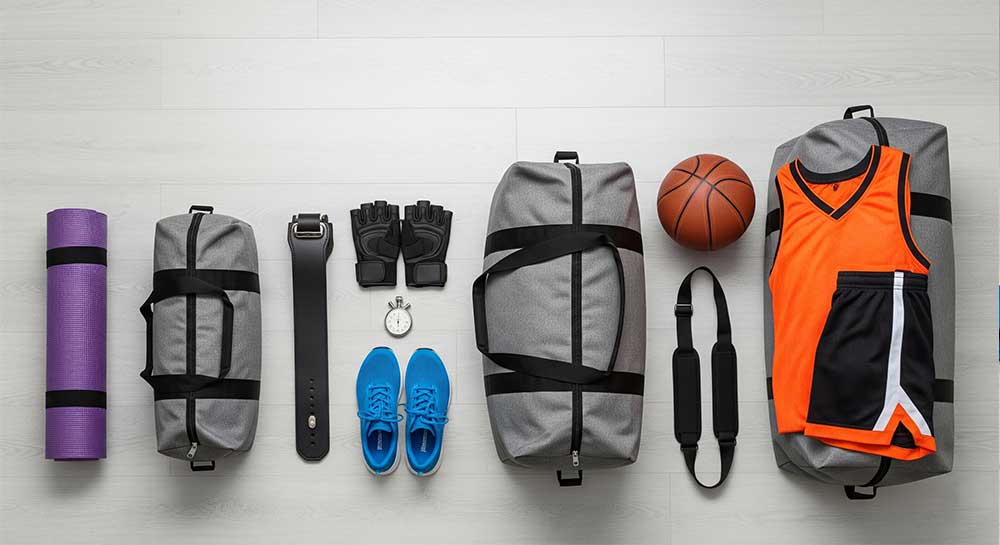
Tip: Lay out your gear before you pack. This makes it easier to see if your bag can hold everything.
Packing for Different Workouts
Your workout style changes what you need to bring. If you do yoga, you might only need a mat, towel, and water bottle. For weightlifting, you may want shoes, gloves, and a change of clothes. Cardio sessions often mean extra socks and a sweat towel. Sports like basketball or soccer need more space for uniforms and equipment.
Workout Type
Must-Have Gear
Suggested Bag Size
Yoga
Mat, towel, water bottle
Small (5-20L)
Weightlifting
Shoes, gloves, clothes
Medium (21-35L)
Cardio
Clothes, towel, snacks
Medium (21-35L)
Sports
Uniform, shoes, ball
Large (36-50L)
Choose gym bag sizes based on your main activity. If you switch workouts often, pick a bag that can handle your biggest gear list.
Special Items (Shoes, Tech, Meals)
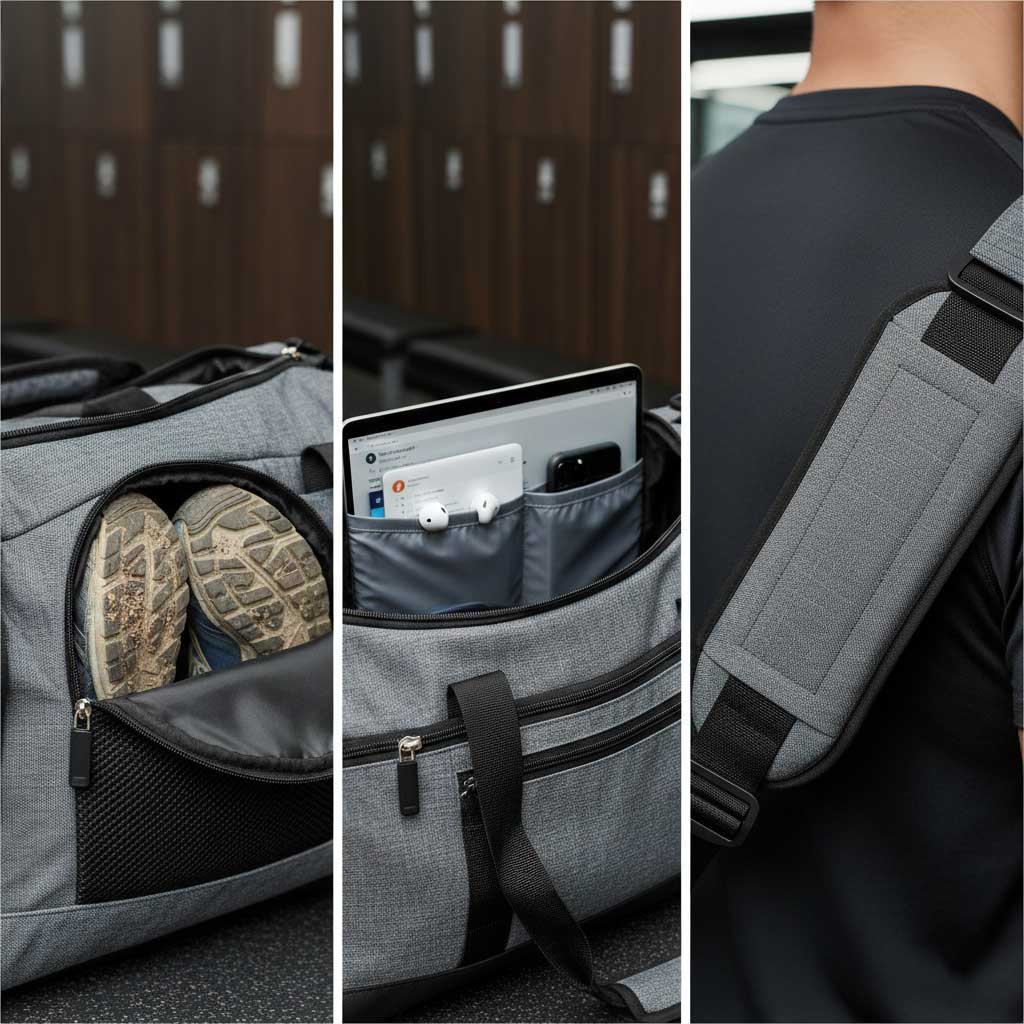
Some items need extra space or special compartments. Shoes can get dirty, so look for a bag with a shoe pocket. Tech like laptops or tablets need padded sleeves. If you bring meals, you want a section that keeps food fresh and separate from your clothes.
Note: Bags with extra pockets help you stay organized and keep your gear clean.
Check your gear and your routine. Pick a bag that fits your needs and makes your day easier.
Features That Impact Size Choice
Compartments and Organization
You want a gym bag that keeps your stuff neat and easy to find. Compartments help you stay organized. Look for bags with separate pockets for shoes, water bottles, and dirty clothes. Some bags have mesh pockets for small items like keys or headphones. When you use a bag with good organization, you spend less time digging for things. You can grab your towel or snack without emptying the whole bag. If you carry tech or meal prep, pick a bag with special sections for those items. A well-organized bag makes your gym routine smoother.
Tip: Bags with labeled or color-coded pockets help you remember where you put everything.
Comfort and Fit
You carry your gym bag almost every day. Comfort matters. Choose a bag with padded straps or handles. This helps your shoulders and hands feel better, especially if you pack heavy gear. Try the bag on before you buy it. Make sure it fits your body and does not bump against your side or back. Adjustable straps let you change the fit for your height. If you walk or bike to the gym, a comfortable bag makes your trip easier.
Style Preferences
Your gym bag shows your style and fits your lifestyle. People pick different sizes based on what they like and need. Here are some common trends:
Urban professionals often want compact, stylish bags that work for the gym and the office.
Athletes usually need bigger bags with lots of compartments for gear and shoes.
Casual gym-goers like smaller bags for quick workouts and simple packing.
Pick a bag that matches your look and your daily routine. You might want a bold color, a classic design, or a bag that blends in with your work clothes. When you feel good about your bag, you feel more confident heading to the gym.
Remember: The best gym bag fits your needs, feels comfortable, and matches your style.
You want a gym bag that fits your life, not just your style. Review your routine and use the checklist before you buy. The right size gives you:
Better organization for your gear
More convenience with less bulk
A smoother workout experience
Bags with smart features like shoe compartments and ventilation show that function matters more than trends. Choose a bag that matches your needs. The perfect size is personal and helps you stay ready for anything.
FAQ
How do I know if my gym bag is too small?
If you struggle to zip your bag or leave gear behind, your bag is too small. Lay out your essentials before packing. If everything fits with room to spare, you have the right size.
Can I use my gym bag for travel or work?
Yes, you can! Pick a medium or large bag with extra compartments. You get space for clothes, shoes, and tech. This makes your bag work for gym, travel, or office days.
What size gym bag should I choose for team sports?
You need a large bag, usually 36–50 liters. Team sports require uniforms, shoes, and equipment. A bigger bag helps you carry everything without feeling cramped.
Do I need a special compartment for shoes?
A shoe pocket keeps dirty shoes away from clean clothes. If you bring shoes to the gym, look for a bag with this feature. You stay organized and your gear stays fresh.
How do I keep my gym bag organized?
Use bags with separate pockets for clothes, shoes, and small items. Try mesh pockets for quick access. Make a checklist before packing. You find things faster and keep your gear neat.






Comments are closed