13-Inch vs 15.6-Inch vs 17-Inch Laptop Bag Size Guide
Choosing a laptop bag by screen size alone often leads to mistakes. A 13-inch laptop, a 15.6-inch laptop, and a 17-inch laptop do not just differ in screen size. They also differ in body width, depth, thickness, weight, charger size, and how comfortable they are to carry. That is why the right laptop bag size is not simply “buy a 13-inch bag for a 13-inch laptop.”
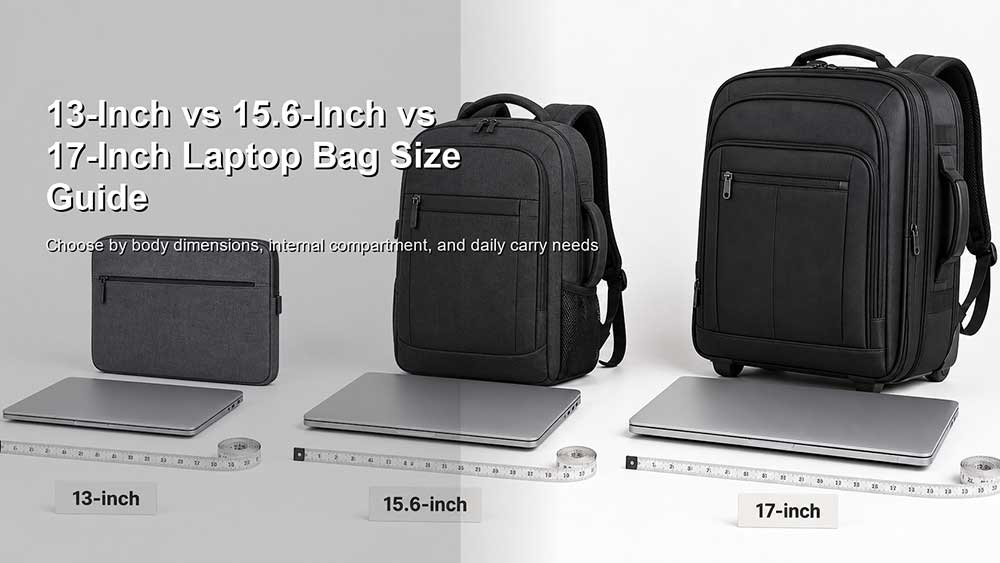
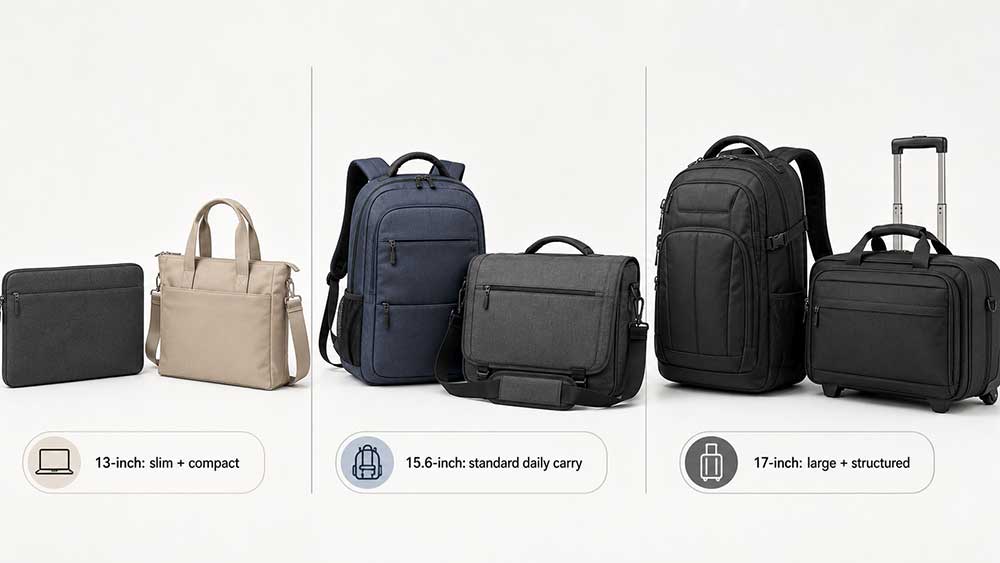
The better way is to start with your closed laptop dimensions, then choose a bag with a padded laptop compartment that gives a little extra room for easy access and protection. A 13-inch laptop usually works best in a slim sleeve, compact laptop bag, or small laptop backpack. A 15.6-inch laptop usually needs a standard laptop bag or backpack with a properly sized compartment. A 17-inch laptop usually needs a larger, more structured bag because the device is wider, heavier, and often thicker.
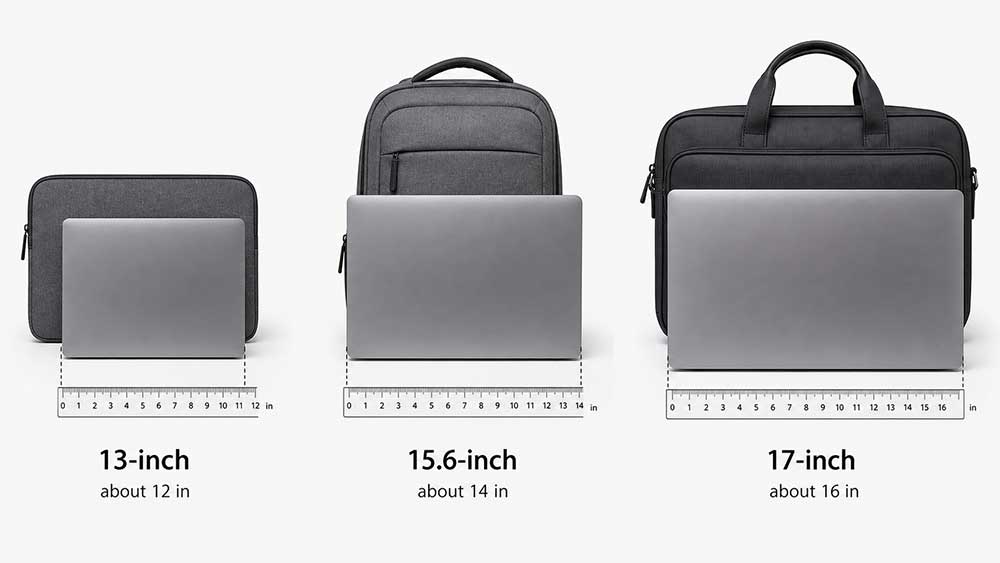
A 13-inch laptop usually fits best in a slim laptop sleeve, compact laptop bag, or 13–14 inch laptop compartment. A 15.6-inch laptop usually needs a standard laptop bag that clearly supports 15.6-inch devices and leaves enough room for padding and easy access. A 17-inch laptop usually needs a large laptop backpack, rolling laptop bag, or structured work bag with stronger support.
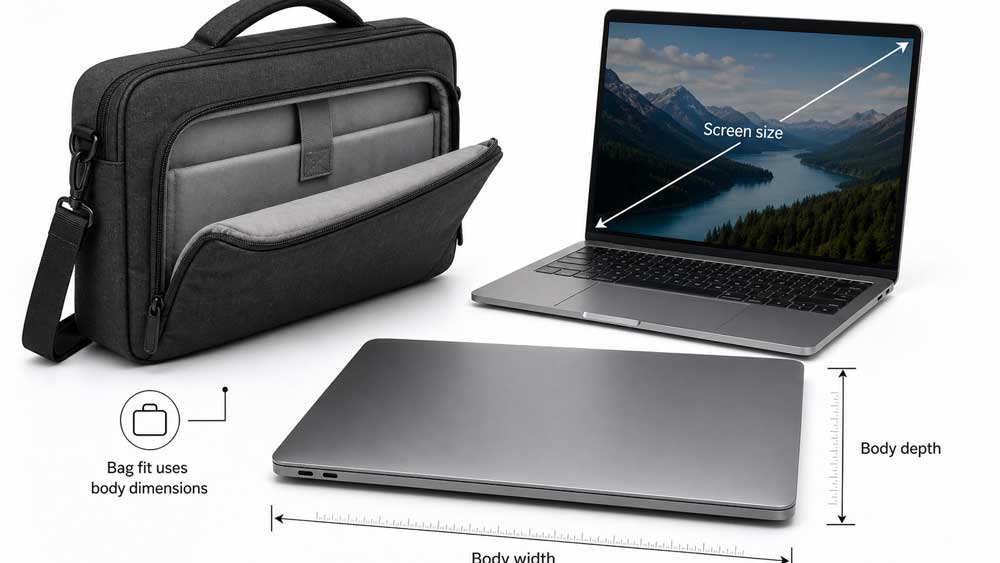
The most important rule is this: do not choose a laptop bag by screen size alone. Screen size is measured diagonally, but bag fit depends on the laptop’s actual width, depth, and thickness.
Laptop Bag Size Is Not the Same as Screen Size
This is where many buyers get confused.
When a laptop is described as 13-inch, 15.6-inch, or 17-inch, that usually refers to screen size. It does not mean the full laptop body has the same measurement. The body may be much wider and deeper than the screen itself. Thin bezels, thick bezels, 16:10 displays, 16:9 displays, different hinge designs, and protective shells can all affect the actual size.
For example, Apple lists the 13-inch MacBook Air at about 11.97 inches wide and 8.46 inches deep, while the 15-inch MacBook Air is about 13.40 inches wide and 9.35 inches deep in its official MacBook Air specifications. Dell lists the Inspiron 15 5515, a 15.6-inch laptop, at about 14.02 inches wide and 9.01 inches deep in its official dimensions and weight specifications. HP also lists some 17.3-inch laptop models at around 15.78 inches wide in its official product specifications. These examples show why the real body size matters more than the screen label when choosing a bag.
The screen-size label does not show the full laptop body size. These model examples show how body width can change across common screen classes. Always check the actual laptop dimensions before choosing a bag, sleeve, or padded laptop compartment.
Screen Class
Example Model
Approx. Body Width
13-inch
MacBook Air 13-inch
11.97 in
15.6-inch
Dell Inspiron 15 5515
14.02 in
17.3-inch
HP 17.3-inch laptop example
15.78 in
These are example devices, not universal size rules. They show why laptop bag sizing should be based on the real machine dimensions, not only the screen label.
What Size Bag Do You Need for a 13-Inch Laptop?
A 13-inch laptop usually works best with a slim laptop sleeve, compact laptop bag, compact tote, or small laptop backpack. This size is often preferred by people who want light daily carry, office mobility, travel convenience, or a minimalist work setup.
A 13-inch laptop bag should feel close-fitting, but not tight. If the compartment is too large, the laptop may slide inside. If it is too small, the zipper and seams may press against the corners.
A 13-inch size setup is usually best for:
Light office carry
Desk-to-meeting movement
Commuting with a small daily load
Coffee shop work
Lightweight business travel
Users who prefer slim bags
For many people, a 13-inch laptop also works well with a sleeve inside a tote or day bag. If you are deciding between a sleeve and a full bag, this guide to laptop sleeve vs laptop bag can help you choose.
What Size Bag Do You Need for a 15.6-Inch Laptop?
A 15.6-inch laptop is one of the most common sizes for work, campus use, and general daily carry. It usually needs a laptop bag or backpack that clearly states it supports 15.6-inch laptops, and ideally it should also provide actual compartment dimensions.
This is the size where many buyers make a mistake. A bag labeled for a “15-inch laptop” may not always fit a 15.6-inch laptop comfortably. Some 15-inch bags are designed around slimmer devices, and once padding is added, the usable space may be smaller than expected.
A 15.6-inch laptop bag is usually best for:
Daily commuting
Office work
Hybrid work
Campus use
General travel
Users carrying a charger, notebook, and accessories
This size works especially well in a padded laptop backpack because a backpack usually distributes weight more comfortably while still giving enough space for accessories. If you are comparing carry styles, laptop backpack vs laptop messenger bag is a separate decision after you confirm the correct size.
What Size Bag Do You Need for a 17-Inch Laptop?
A 17-inch laptop usually needs a larger and more structured bag. Slim sleeves, compact totes, and small messenger bags often feel too tight or unbalanced for this size.
This matters even more because many 17-inch laptops are not just bigger — they are also heavier. Gaming laptops, mobile workstations, and performance-focused models often have thicker bodies and larger chargers. That means the bag needs stronger bottom support, a larger opening, better shoulder comfort, and more room for accessories.
A 17-inch laptop bag is usually best in these forms:
Large laptop backpack
Rolling laptop bag
Structured travel work bag
Large business backpack
Heavy-duty laptop messenger bag with clear size support
This size is often best for:
Gaming laptops
Workstation laptops
Travel with larger tech gear
Users carrying a charger, mouse, and accessories together
People who need a mobile office setup
For 17-inch devices, a bag should not only fit the laptop. It should also protect the weight and bulk of the laptop during real movement.
How Much Extra Room Should a Laptop Bag Have?
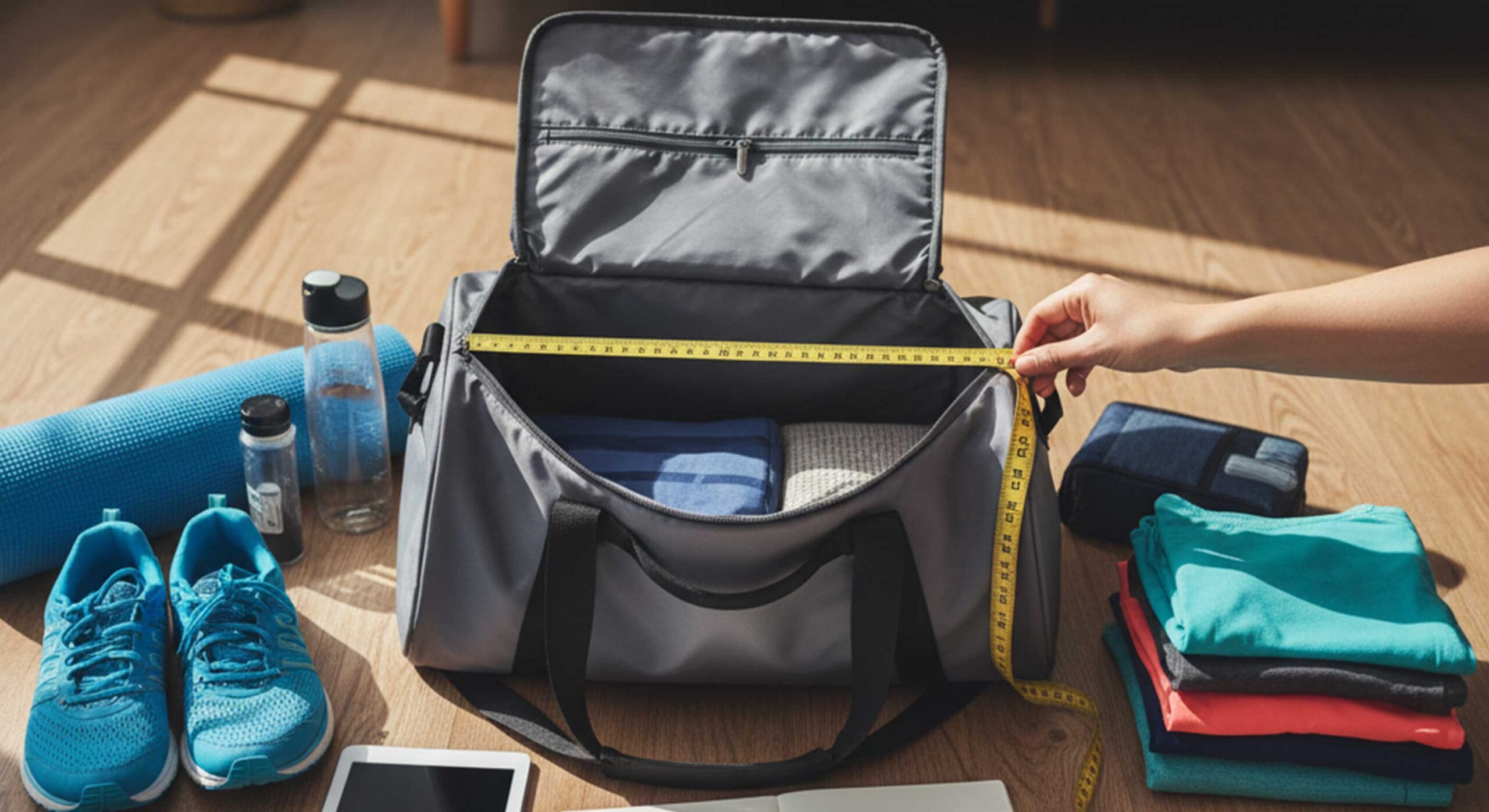
A laptop bag should be slightly larger than the closed laptop, but not so large that the device slides around. The best fit allows easy insertion, enough padding, and stable positioning.
Too little room can create pressure on the corners, zipper, and seams. Too much room can let the laptop move inside the compartment, which reduces protection.
As a general rule:
The laptop should slide in without force
The laptop should not wobble excessively inside the compartment
The compartment should still leave room for padding
If you plan to use a sleeve inside the bag, you need extra allowance
This is one reason what makes a good laptop bag is not only about materials or style. Correct compartment fit is one of the most important protection features.
Internal vs External Laptop Bag Dimensions
This is another common mistake.
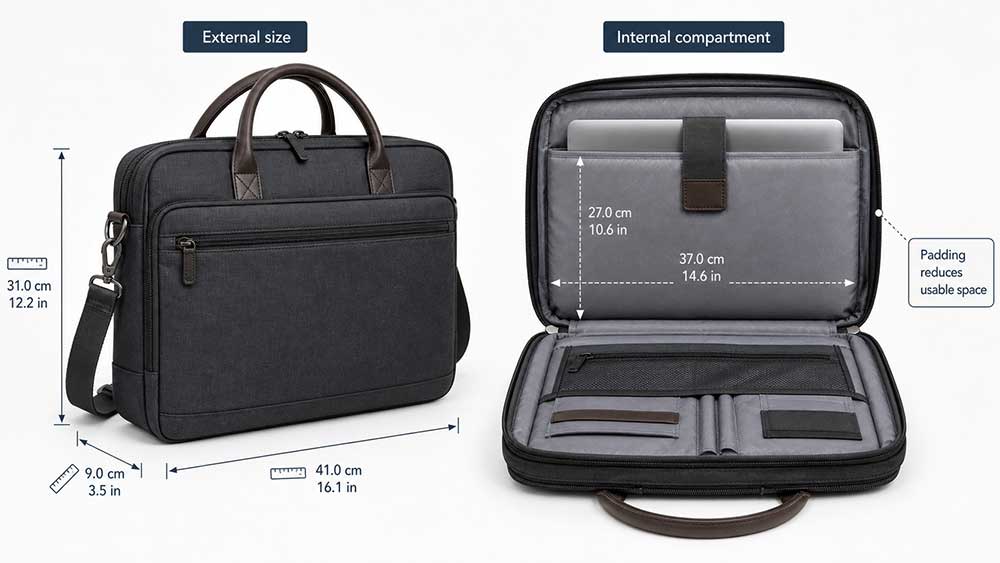
Many buyers only check the outer dimensions of the bag. But the most important measurement is the internal laptop compartment size. Padding, lining, structure, and organizer panels all reduce the usable internal space.
That means:
A bag may look large on the outside
But the internal laptop sleeve may be much smaller
A padded compartment may fit tightly even if the bag looks roomy
A “15.6-inch” label still needs to be checked against actual internal dimensions
When comparing laptop bags, always prioritize:
Internal laptop compartment size
Padding thickness
Bag opening shape
Laptop thickness allowance
Whether you are using a sleeve inside the bag
Best Laptop Bag Types by Size
Different laptop sizes often work better with different bag types.
Laptop backpack, messenger bag, business bag, briefcase
Small 15-inch sleeves without exact dimensions
17-inch
Large backpack, rolling laptop bag, travel work bag
Slim tote, small messenger, soft sleeve only
This does not mean a 13-inch laptop cannot go into a backpack or a 17-inch laptop cannot go into a messenger bag. It simply means some bag types are naturally better matched to certain size classes.
Which Laptop Bag Size Is Best for Work, Campus, and Travel?
The best laptop bag size also depends on how the laptop is used.
Use Case
Usually Better Size Direction
Light office carry
13-inch
Daily work commute
15.6-inch
Hybrid work
15.6-inch
Campus use with books and charger
15.6-inch
Minimalist work setup
13-inch
Gaming laptop use
17-inch
Travel with larger workstation
17-inch
Business travel with light gear
13-inch or 15.6-inch
This is not a rule that says everyone should buy a smaller or larger laptop. It simply shows that smaller laptops often pair more easily with lighter bags, while larger laptops usually need more structured carry solutions.
Common Laptop Bag Size Mistakes
The most common size mistakes are easy to avoid:
Choosing only by screen size
Assuming 15-inch and 15.6-inch are the same
Ignoring laptop thickness
Ignoring protective shells or sleeves
Checking only bag exterior dimensions
Choosing a 17-inch laptop but a slim bag
Choosing a very large bag for a 13-inch laptop, which lets the device slide
If you want the bag to protect the laptop properly, the fit must be intentional, not approximate.
For Brands and Product Buyers
For product buyers, laptop bag sizing is a product line decision. A 13-inch laptop bag usually targets lightweight office carry and minimalist users. A 15.6-inch laptop bag targets mainstream work, commuting, campus use, and hybrid work. A 17-inch laptop bag targets gaming laptops, mobile workstations, and users who need larger padded compartments.
A balanced product line may include:
Compact 13-inch sleeves and slim bags
Mainstream 15.6-inch laptop backpacks and work bags
Structured 17-inch travel or performance laptop bags
Different padding thicknesses by size class
Different handle and shoulder-strap structures by load class
For custom laptop bag development, the most important work often happens in laptop compartment planning, internal dimension development, padding structure, material selection, carry design, sampling, and fit testing. For OEM/ODM projects, Vancharli Outdoor can support these steps based on target size class and user type.
Final Thoughts
A 13-inch laptop usually works best in a slim, compact bag. A 15.6-inch laptop usually needs a standard laptop bag or backpack with clear size support and enough room for padding. A 17-inch laptop usually needs a larger and more structured bag because the device is wider, heavier, and often used with more accessories.
The best laptop bag size is not determined by screen size alone. It is determined by the real size of the closed laptop, the amount of padding needed, the style of carry, and how the user moves through the day.
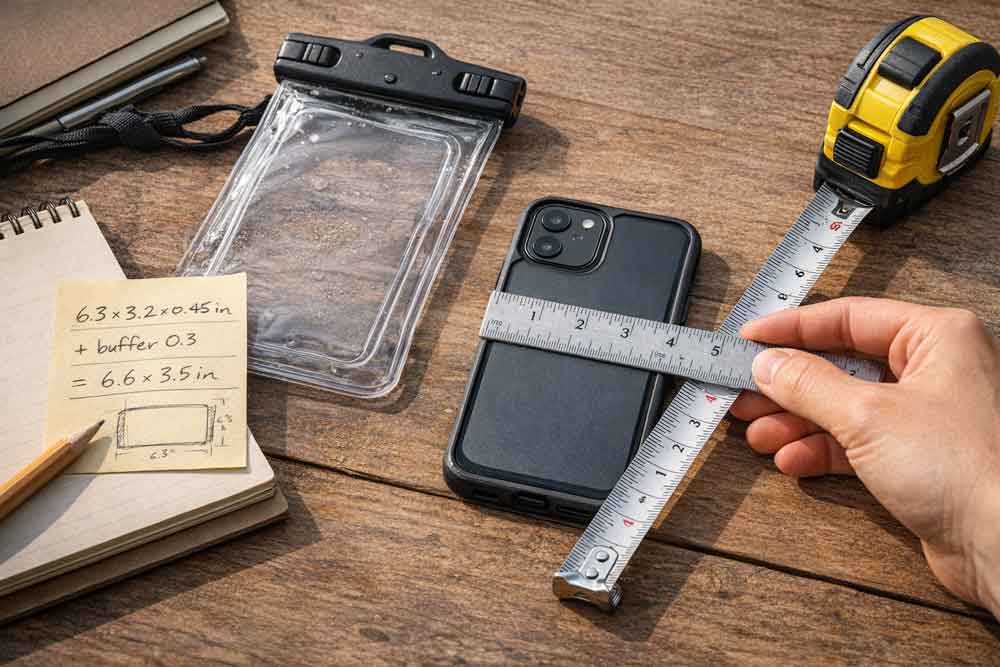
If you remember one rule, make it this: measure the laptop first, then choose the bag.
FAQ
What size laptop bag do I need for a 13-inch laptop?
A 13-inch laptop usually fits best in a slim laptop sleeve, compact laptop bag, or 13–14 inch compartment. Just make sure the bag matches the actual laptop body size, not only the screen label.
Will a 15.6-inch laptop fit in a 15-inch bag?
Sometimes, but not always. A 15-inch bag may be too small if it is designed around slimmer 15-inch devices. Always check the actual internal dimensions before buying.
Is a 17-inch laptop bag too big for daily carry?
A 17-inch laptop bag can feel bulky for light daily carry, but it is often necessary if the laptop is large, heavy, or thick. The better question is whether the bag gives enough support and comfort for the weight.
Should a laptop bag be bigger than the laptop?
Yes, slightly. A laptop bag or laptop compartment should be a little larger than the closed laptop so the device can fit comfortably with padding, but it should not be so large that the laptop slides around.
What is the difference between laptop screen size and bag size?
Laptop screen size refers to the diagonal measurement of the display. Laptop bag fit depends on the laptop’s actual body width, depth, and thickness.
Can I use a laptop sleeve inside a laptop bag?
Yes. This is useful if the bag has a thin laptop compartment or if you want extra scratch protection. Just make sure the sleeve does not make the fit too tight.
What laptop bag size is best for commuting?
For many commuters, a 15.6-inch laptop bag or backpack is the most practical balance of size and function. A 13-inch setup is lighter, while a 17-inch setup usually needs more structure and support.
What should brands consider when developing laptop bags in different sizes?
Brands should consider internal laptop compartment size, padding thickness, zipper opening, laptop thickness, carry comfort, accessory storage, and how load changes from 13-inch to 17-inch products.







Comments are closed