The global fitness and athleisure market continues to expand rapidly, and gym bags have transformed from simple accessories into high-margin retail products. Whether you are sourcing duffel bags, hybrid work–gym backpacks, waterproof sports packs, or structured premium designs, your manufacturing strategy will determine:
Final cost
Product durability
Market positioning
Supply-chain resilience
This guide offers a complete factory-level sourcing framework for importers preparing for the 2025–2026 purchasing season. It combines multi-country manufacturing insights with sourcing patterns that many buyers have learned over time in real projects.
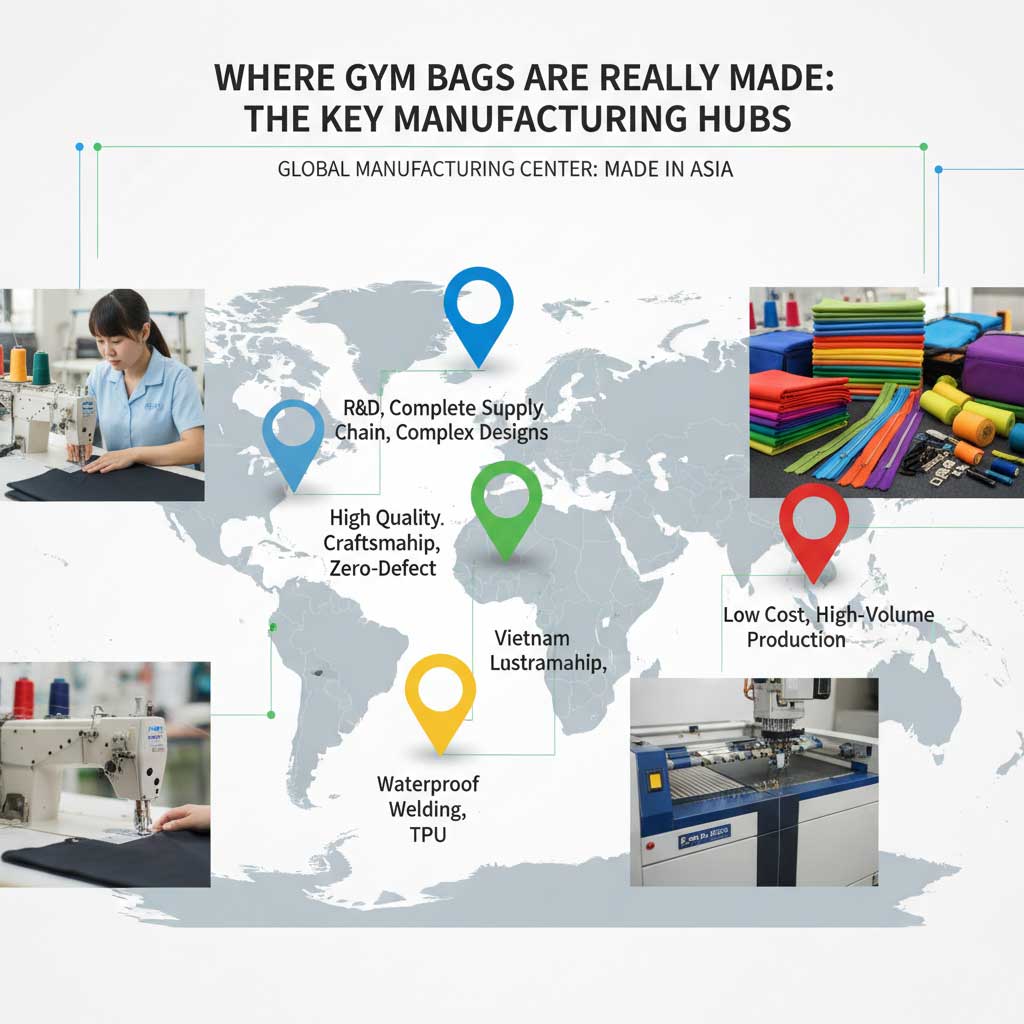
2. Where Gym Bags Are Really Made: The Key Manufacturing Hubs
Although gym bags may look similar on the retail shelf, the country of origin determines about 70% of final quality and production scalability. Below is a detailed analysis of the four primary gym bag manufacturing hubs.
2.1 China – Fastest R&D, Complex Construction, Complete Supply Chain
Best for: Premium gym bags, multi-pocket designs, hybrid work–gym backpacks, and complex constructions.
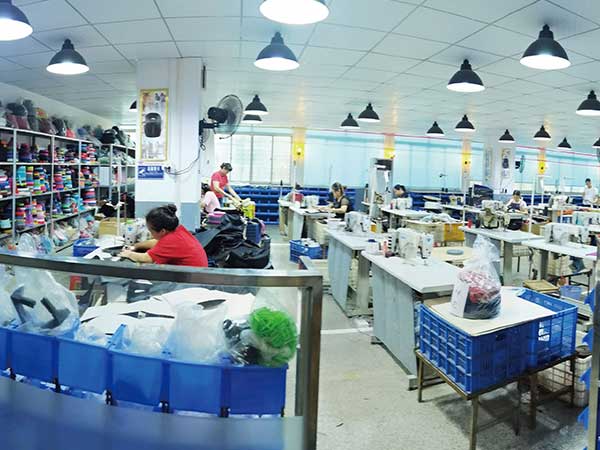
China is the global leader for gym-bag manufacturing and offers:
TIP: If you’re testing a new market, ODM is a great option to minimize risk. Transition to OEM once you’ve validated the design’s success.
4. Key Specifications to Define Before You Source Gym Bags
Before you request quotes, it’s crucial to define at least the following specifications clearly. Here are the key details to consider:
4.1 Materials
Common materials include:
Material Type
Description
600D/900D Polyester
Durable, cost-effective, commonly used for gym bags
1680D Polyester or Nylon
High-end, abrasion-resistant
210D / 420D Nylon
Lightweight, suitable for hybrid gym bags
TPU Laminated Fabrics
Ideal for waterproof sections
Mesh Panels
For breathable shoe compartments
TIP: If you’re creating a mid- to high-end gym bag line, 1680D polyester is a great choice for durability and premium feel.
4.2 Structure and Load Management
Important features include:
Feature
Description
PE Board or Foam Inserts
Prevents the bag from sagging
EVA Foam
Used in shoulder straps and back panels
Reinforced Stitching
Ensures durability at high-stress points
TIP: Using PE board reinforcement will prevent your gym bag from sagging over time, especially when carrying heavy equipment.
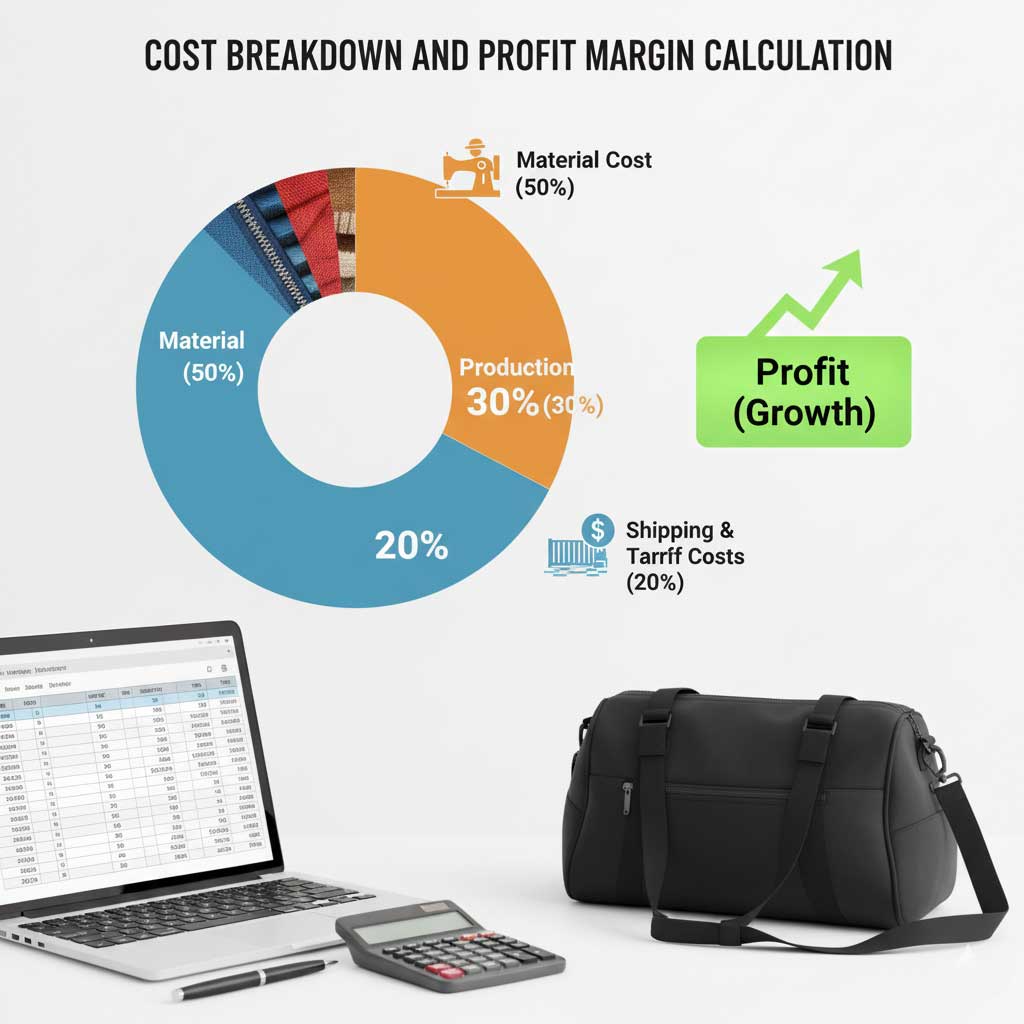
5. Cost Breakdown and Profit Margin Calculation
Understanding cost breakdown is crucial for importers, as it helps you determine the optimal selling price and profit margin. Here’s how to break down costs for a typical gym bag.
5.1 Material Cost
Material costs are typically the largest expense in gym bag manufacturing. Key factors that impact material cost include:
Factor
Impact on Cost
Example
Fabric Type
Higher-grade fabrics are more expensive
600D polyester vs 1680D nylon
Lining Type
Waterproof lining increases cost
TPU coating vs plain polyester
Trims and Hardware
Custom hardware increases costs
YKK zippers vs generic
Reinforcements
Reinforced areas cost more
PE board, foam inserts, molded parts
TIP: Always negotiate fabric pricing based on order volume; larger orders often get better rates.
5.2 Production Cost
Production cost includes labor, sewing time, and factory overhead. It can vary significantly based on the region you choose.
Region
Labor Cost
Lead Time
Production Speed
China
Higher labor cost, fast turnaround
7-10 days
High-volume, complex designs
Vietnam
Lower labor cost, higher craftsmanship
10-14 days
High-quality sewing, precise stitching
Indonesia
Lowest labor cost, slower time
10-14 days
Specialized in waterproof products
Myanmar
Cheapest labor cost
14+ days
Simple designs, large volume
TIP:Indonesia offers the best value for waterproof bags due to its low labor costs and specialization in high-frequency welding.
5.3 Shipping and Tariff Costs
When importing gym bags, consider the cost of shipping (based on weight, size, and distance) and tariffs. Countries like Vietnam and Indonesia offer tariff advantages for U.S. buyers compared to China.
Region
Tariff Advantage
Shipping Distance
Typical Shipping Cost
Vietnam
Tariff advantages for U.S. imports
Shorter shipping distance to U.S.
$2–$4 per kg
Indonesia
Tariff advantages for U.S. imports
Longer distance to U.S.
$3–$6 per kg
China
Higher tariffs on U.S. imports
Longest shipping time
$4–$8 per kg
Myanmar
Lower cost but inconsistent logistics
Longest shipping distance
$2–$5 per kg
TIP:Vietnam and Indonesia are more cost-effective for U.S. buyers due to favorable tariff rates and shorter shipping times.
6. Sampling and Development Process
A smooth sampling process helps you reduce delays and avoid unexpected issues during mass production. Here’s an overview of the typical sampling stages.
6.1 Tech Pack Creation
The first step is to create a tech pack, which outlines every detail of your design:
Component
Description
Importance
Measurements
Exact dimensions of the bag
Ensures accurate sizing
Materials
Fabric and trim details
Affects look and feel
Functionality
Pocket and compartment layout
Determines utility
Branding
Logo, tags, and patches
Affects market positioning
TIP: Work with a factory that can help you refine the tech pack, especially if you’re unsure about technical details.
6.2 Prototype Development
Once the tech pack is approved, the factory creates a prototype. This step allows you to review:
The overall structure
The material quality
Functional layout
Branding application
TIP: Always perform a fit test to make sure the bag is functional, especially for things like shoulder straps and zippers.
6.3 Pre-Production Sample (PPS)
The final step before mass production is the pre-production sample, which uses the same materials and trims as the bulk order. This sample ensures everything is aligned and ready for production.
TIP: Take the opportunity to test the sample under real conditions (e.g., wear it on a trip or to the gym) to spot any potential flaws.
For gym bags, durability and performance are key. Testing ensures your product can withstand everyday use and meet your quality standards. Here are the most common tests:
7.1 Fabric Durability Tests
Tests ensure the fabric can endure regular wear and tear. These may include:
Test Type
Purpose
Standard Testing Method
Abrasion Resistance
Ensures fabric holds up to wear and tear
Martindale Method
Tear Strength
Measures fabric strength when pulled apart
ASTM D2261
Colorfastness
Ensures color stays consistent
AATCC 61/8 test
TIP: Choose abrasion-resistant fabrics like 1680D nylon for premium gym bags, as they resist fraying and tearing.
7.2 Zipper and Hardware Tests
Zippers and hardware must be tested for:
Hardware Test
Purpose
Test Method
Zipper Pull Strength
Ensures zippers will not break or wear out easily
Pull Test
Buckle Fatigue
Checks how the buckles perform over time
Durability Test
TIP: Invest in YKK zippers for durability. They are the industry standard for reliable, long-lasting performance.
7.3 Functional Testing
Test the main features of the bag under real-life conditions, such as:
Feature
Test Method
Purpose
Load Testing
Filling bag with weight to check stress points
Ensures the bag can hold weight
Water Resistance
Waterproof sections tested with water sprays
Ensures waterproof functionality
Strap Strength
Tests strap durability under weight
Prevents breakage during use
TIP: For heavy-duty gym bags, perform high-load testing to ensure the bag doesn’t tear or stretch when carrying heavy items.
8. Sustainability in Gym Bag Manufacturing
Sustainability is increasingly important in the production of gym bags. Many consumers are looking for eco-friendly products. As an importer, it’s important to know your options for sustainable sourcing.
8.1 Materials
Consider using recycled fabrics, such as rPET (recycled PET), which can be sourced from recycled bottles.
Material Type
Description
Example
Recycled Polyester
Reduces the need for virgin materials
rPET made from recycled bottles
C0 PFAS-Free Coatings
Avoids harmful chemicals in water-resistant coatings
Safe for both user and environment
TIP: Using recycled polyester (rPET) will not only help reduce waste but also appeal to eco-conscious consumers.
8.2 Eco-Friendly Trims and Packaging
Look for factories that offer eco-friendly options for:
Component
Eco-Friendly Option
Example
Zipper Tapes
Recycled material
Recycled PET zippers
Buttons
Made from sustainable materials
Recycled metals
Packaging
Biodegradable or plastic-free
Biodegradable bags or paper wrapping
TIP: Partner with suppliers who offer plastic-free packaging. It’s a strong selling point for eco-conscious consumers.
9. Common Pitfalls in Gym Bag Sourcing
Avoid these common mistakes to ensure your gym bag sourcing process runs smoothly.
9.1 Choosing the Cheapest Supplier
Selecting a supplier based solely on price can lead to poor-quality products, late shipments, and unforeseen costs. Always assess suppliers based on total value, not just cost.
9.2 Ignoring Quality Control
Skipping quality checks or failing to test samples properly can lead to high defect rates and returns. Always inspect the first batch of gym bags before mass production.
TIP: A thorough quality check is crucial for products that will face wear and tear, such as gym bags. Use third-party QC agents if necessary.
9.3 Underestimating Lead Times
Do not underestimate production lead times. It can take several weeks to get your bags right, and rushed orders often lead to poor results.
TIP: Plan ample buffer time for production and shipping, especially during peak seasons.
10. Why Importers Choose Vancharli for Gym Bag Manufacturing
Vancharli is one of the Top 10 bag manufacturers in China, and we specialize in gym bag production for OEM/ODM brands. Here’s why you should consider us:
10.1 Multi-Country Production
With production facilities in China, Vietnam, Indonesia, and Myanmar, we offer flexible options to mitigate tariffs and shipping delays.
10.2 Strong OEM/ODM Capabilities
We offer full-service OEM and ODM support, including:
Custom tech pack development
Fast-turnaround samples
Access to advanced features like waterproofing and welding
10.3 Proven Track Record
Vancharli has years of experience working with major global brands and delivering high-quality gym bags that meet retail requirements.
TIP: Work with Vancharli to streamline your gym bag production and ensure that your products meet the highest standards of quality, functionality, and sustainability.
Gym bags are a competitive product category, and sourcing the right supplier is key to creating a successful product line. With the information provided in this guide, you are now better equipped to make informed decisions about materials, suppliers, and cost structure.
For your next gym bag collection, explore Vancharli’s OEM/ODM manufacturing services and let us help you create high-quality, durable gym bags that will stand out in the market.
FAQ
Q1. What is the minimum MOQ for custom gym bags?
MOQ generally starts at 300 pcs per color, but we offer flexibility depending on the order.
Q2. How long do samples take?
Samples usually take 7-10 days, depending on the complexity of the design and materials.
Q3. Do you support recycled materials?
Yes, rPET, recycled trims, and PFAS-free coatings are widely available.
Q4. Can you help me design a new gym bag?
Yes — Vancharli offers full OEM support including tech packs, sketches, and sampling.
Q5. Which country is best for waterproof gym bags?
Indonesia is ideal due to strong HF welding capabilities.





Comments are closed