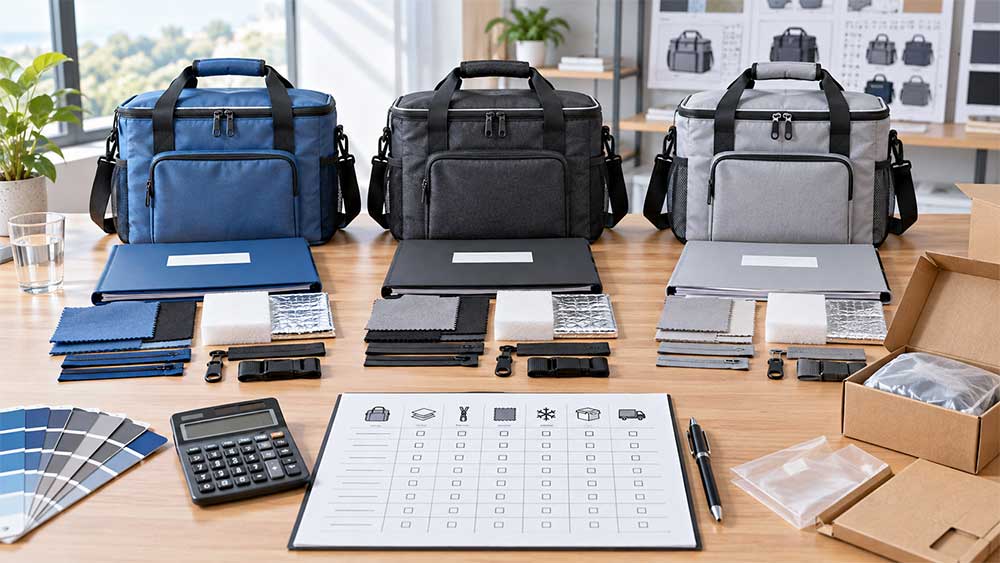
A useful custom cooler bag RFQ should tell the manufacturer what the bag must do, how it should be built, how many units are required, and what the quoted price must include.
The most important early decision is whether you need a conventional sewn cooler bag or a radio-frequency (RF), also called high-frequency (HF), welded waterproof cooler bag. They may look similar in a reference image, but they require different materials, equipment, closures, tests, and cost structures.
For an initial OEM quotation, provide at least the intended use, construction type, dimensions or capacity, material direction, insulation target, closure, quantity by color, logo requirements, packaging, destination, and required delivery date. Details that are still open should be marked “supplier to recommend” instead of being left unstated.
This checklist is intended for brands, importers, wholesalers, retailers, promotional product buyers, and procurement teams sourcing custom cooler bags.
What Information Does a Cooler Bag Manufacturer Need to Quote?
You do not need a finished tech pack before contacting a factory. However, the supplier needs enough information to select the correct construction and clearly state the assumptions behind its price.
RFQ item
What to provide
Product and use
Lunch bag, picnic cooler, delivery bag, backpack cooler, fishing cooler, or another format; where and how it will be used
Construction route
Sewn insulated bag or RF-welded waterproof cooler
Size and capacity
External dimensions, target liters, can or bottle count, and expected load
Materials
Exterior, liner, insulation, reinforcement, zipper, buckles, and webbing, where known
Performance
Cold-retention goal, leak-resistance or waterproof requirement, and load-bearing needs
Order quantity
Total units and quantity per style, size, color, and logo version
Branding
Logo method, artwork, colors, dimensions, location, labels, and hangtags
Packaging
Individual packing, inserts, barcodes, carton requirements, and folding restrictions
Sampling
Type of sample required, approval process, and testing expectations
Commercial terms
Currency, Incoterm, named place or port, destination, and payment expectations
Schedule
Required sample-completion date and the date finished goods must arrive
References
Drawings, reference photos, an existing sample, or a marked-up specification
A complete RFQ does not mean every detail must already be final. It means confirmed requirements, open decisions, supplier recommendations, and quotation assumptions are clearly separated.
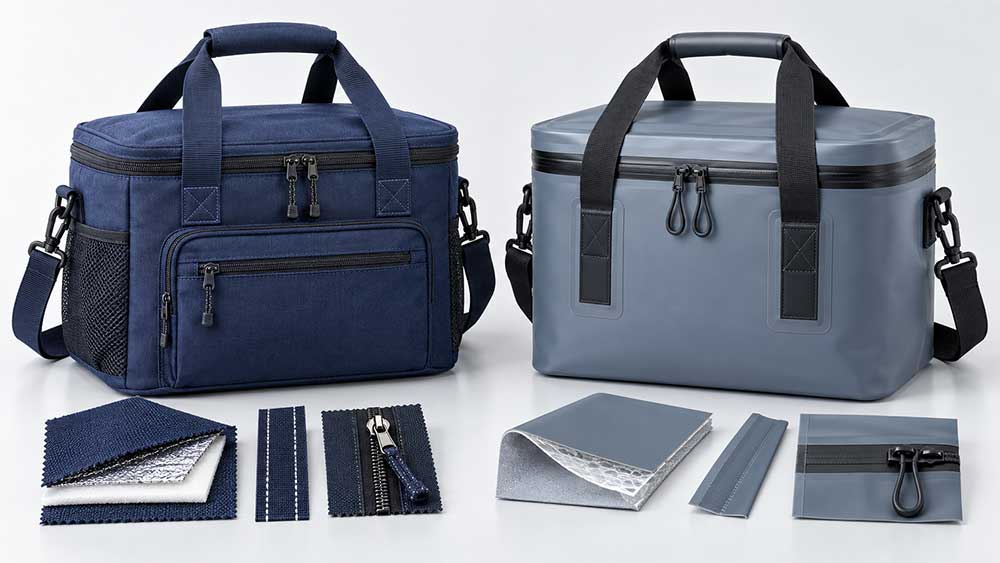
First Decide Between Sewn and RF-Welded Construction
The term “soft cooler” does not describe one manufacturing method. State the required construction in the RFQ or ask the supplier to quote the two options separately.
Point
Sewn cooler bag
RF-welded waterproof cooler bag
Typical applications
Lunch, grocery, promotional, picnic, delivery, and general retail programs
Fishing, boating, beach, camping, and premium wet-environment products
Typical exterior direction
Polyester, nylon, Oxford fabric, or coated textile
TPU- or PVC-laminated thermoplastic fabric suitable for RF welding
Seam construction
Components are joined mainly by stitching
Main waterproof panels are joined by RF welding; some straps or accessories may still be sewn separately
Liner
PEVA, aluminum foil, coated fabric, or another easy-clean lining
Weldable liner or integrated waterproof shell, depending on the design
Closure
Standard coil or molded zipper is common
A standard airtight zipper or higher-grade airtight resin zipper selected for the agreed waterproof target
Realistic performance wording
Insulated, easy-clean, water-resistant, or leak-resistant under defined conditions
Waterproof or leakproof only when the complete construction passes an agreed test
Main quotation drivers
Fabric, sewing complexity, foam, pockets, logo, and packaging
Waterproof fabric alone does not make a finished cooler waterproof. Sewn needle holes, bound seams, zipper tracks, and attachment points can still allow water to pass.
Conversely, RF-welded seams do not make the entire bag waterproof if the zipper, closure, or attached components do not meet the same performance target. If the closure has not been selected, see this guide to choosing a waterproof zipper for a soft cooler.
1. Describe the Product and Its Intended Use
Start with the commercial purpose of the product, not only its appearance. A lunch cooler used with ice packs has different requirements from a fishing cooler that may hold loose ice on a wet boat deck.
Include:
Product format and target sales channel
Intended user and use environment
What the bag will carry
Whether it will use ice packs, loose ice, or both
Expected maximum load and carrying distance
Indoor, vehicle, delivery, beach, boating, or other wet-use conditions
Target retail price or market position, if available
Whether food will touch the liner directly or remain in separate packaging
Reference images are useful, but explain what you are referencing: capacity, opening, carry method, structure, appearance, or performance.
A reference image should not be treated as a complete specification. It does not reveal the liner, insulation thickness, hidden reinforcement, seam structure, or testing requirements. Buyers should also avoid asking a factory to reproduce another brand’s protected design or artwork exactly.
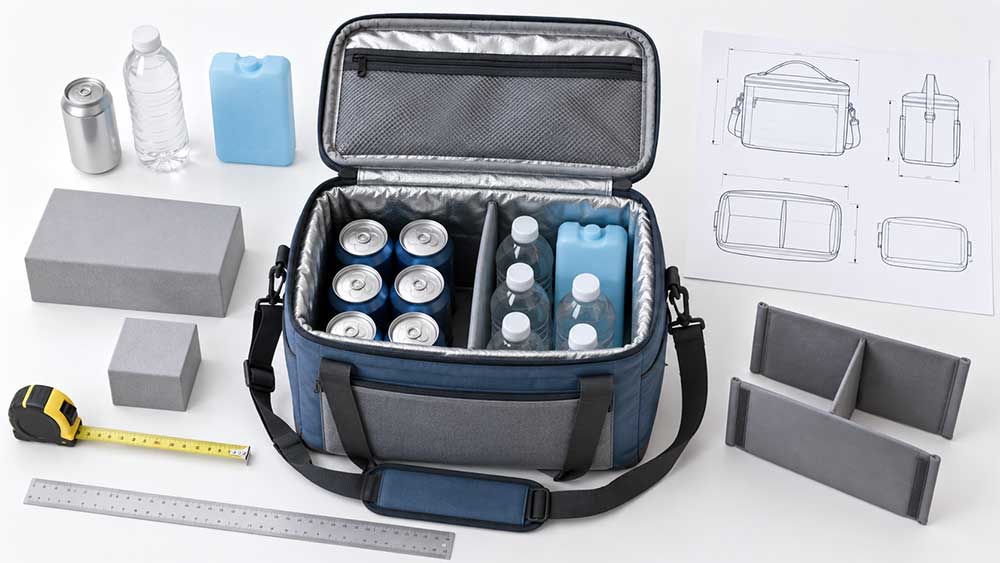
2. Define Dimensions, Capacity, and Layout
“20-liter cooler” is not enough for a production quotation because suppliers may calculate nominal capacity differently. Pair the capacity target with dimensions and a real loading example.
Provide:
External width × depth × height, with units
Required usable internal dimensions if product fit is critical
Target capacity in liters
Can or bottle size and quantity, where relevant
Expected ratio of contents to ice or ice packs
Main opening size and opening direction
Number and location of internal and external pockets
Removable dividers, drain plugs, bottle openers, tie-down points, or other features
Preferred handle, shoulder strap, backpack strap, or multi-carry configuration
State which measurements are fixed and which may be adjusted to accommodate insulation, production requirements, or packing efficiency.
Final tolerances can be agreed during development, but the quotation should always refer to a clearly identified drawing or specification version.
3. Provide a Clear Material Direction
If you know the exact materials, list their supplier codes, thicknesses, weights, coatings, colors, and performance requirements.
If you do not know the exact specification, describe the end use and ask the factory to recommend a base option and one alternative. Each option should be clearly identified in the quotation.
Component
Useful RFQ details
Exterior
Base fabric, denier or weight, coating or lamination, surface finish, color, printing, and abrasion expectations
Inner liner
PEVA, aluminum foil, TPU, coated fabric, or supplier recommendation; color, cleanability, weldability, and food-contact intent
Insulation
Foam type, thickness, density if specified, number of layers, rigidity, and cold-retention target
Structural support
PE board, EVA panel, foam reinforcement, removable insert, or collapsible construction
Zipper or closure
Type, size, color, puller, brand or performance level, opening path, and ease-of-use expectations
Extra layer, abrasion panel, feet, reinforcement patch, bartack, box stitch, or welded reinforcement
Avoid descriptions such as “high-quality material,” “premium zipper,” or “thick foam.” These terms do not create a measurable quotation basis, and different suppliers may interpret them differently.
The final RFQ should still identify which material option each supplier has priced.
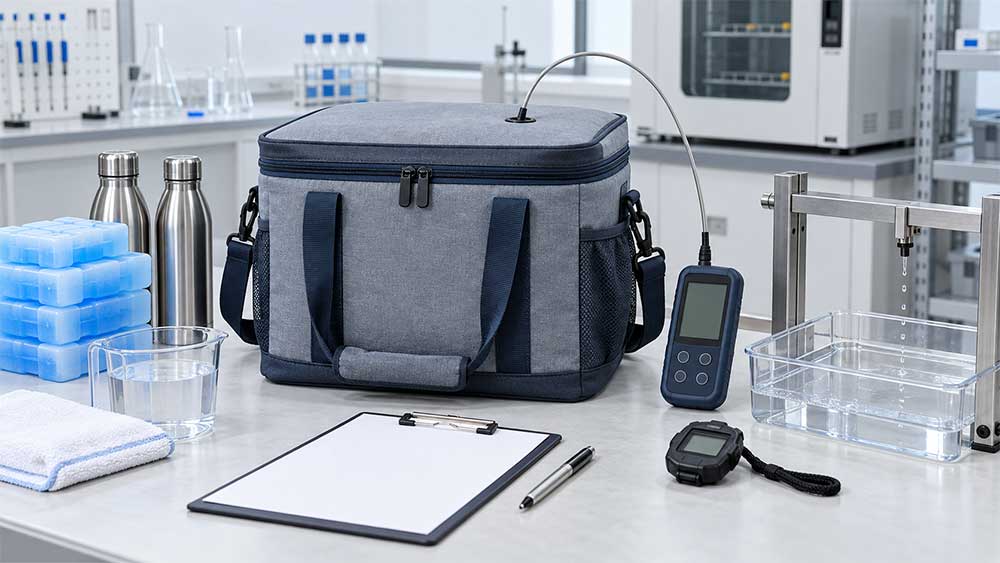
4. Turn Performance Claims Into Test Conditions
Cold retention, leak resistance, and waterproof performance depend on how the product is tested. Ask for results under defined conditions rather than broad claims such as “keeps ice for 48 hours.”
Cold-Retention Requirements
Define, as far as practical:
Ambient temperature and test location
Starting temperatures of the cooler and its contents
Type and amount of ice or ice packs
Product load, fill ratio, and empty space
Whether the bag remains closed or is opened on a schedule
Test duration
Temperature measurement position and interval
Passing temperature or remaining-ice criterion
Two factories can quote different insulation systems for the same claimed number of hours. A shared test method is necessary if the results are expected to be comparable.
The amount of ice, packing arrangement, empty space, opening frequency, and ambient conditions all affect the outcome. The guide to maximizing ice retention in a waterproof cooler bag explains the variables that buyers can convert into a repeatable test protocol.
Internal Leakage and External Water Ingress
Water leaking out of a cooler and water entering from outside are two separate performance questions. The RFQ should state which one matters.
For an internal leakage test, specify:
Water volume or fill height
Water temperature
Test duration
Upright, tilted, side, or inverted orientation
Whether the zipper or closure is included
Acceptable leakage result
For an external spray, rain, or immersion test, define:
Exposure method
Water pressure or immersion depth, where relevant
Test duration
Product orientation
Whether the zipper is exposed
Permitted water ingress
A sewn cooler may only need its liner to contain minor spills while standing upright. An RF-welded waterproof cooler bag may require a more demanding test covering welded seams, corners, zipper ends, and other structural transitions.
Do not use “100% leakproof” as the only acceptance criterion. The test conditions and permitted result must also be recorded.
Carrying and Durability Tests
Depending on the product and its risk level, the RFQ may also request:
Static or repeated load testing for handles and straps
Zipper cycling and pull-force checks
Abrasion checks for the bottom and high-contact surfaces
Drop testing with a defined load
Inspection of liner wrinkles, gaps, contamination, and sharp edges
Weld appearance, width, continuity, and leak checks for RF-welded products
The test method, sample quantity, timing, pass/fail criteria, and responsibility for the testing cost should be confirmed before the purchase order is approved.
5. State the Target Market and Compliance Requirements
Do not ask only for a generic “food-grade certificate.” Tell the supplier where the product will be sold, whether the liner is intended for direct food contact, and which materials or components require supporting documents.
The applicable requirements depend on the material, intended use, contact conditions, product claims, and destination market.
Also identify any:
Buyer-specific restricted-substance list
Retailer testing protocol
Labeling requirement
Recycled-content claim
Chemical testing requirement
Third-party laboratory requirement
Required report format or validity period
Ask whether existing reports cover the exact material, color, coating, and supplier proposed for your product. A report for another liner or an earlier material source may not cover the production material.
6. Specify Branding and Artwork
Logo cost and feasibility depend on the material, location, finished size, number of colors, and application method.
Main label, care label, country-of-origin label, and size label
Hangtags, inserts, barcodes, and retail stickers
Branded zipper pullers, webbing, lining print, or custom hardware, if required
For an RF-welded design, confirm whether a logo patch will be welded, bonded, or applied using another method. Its placement should not interrupt a critical weld or create an uncontrolled leakage path.
Artwork placement should be confirmed on a marked drawing and checked again on the sample or first production unit.
7. Break Down Quantity, Colors, and Price Levels
State the total quantity and the quantity for every style, size, color, and logo version.
“1,000 pieces in assorted colors” is incomplete if the factory does not know the SKU breakdown.
Ask for:
Unit price at the intended order quantity
Optional price tiers for realistic future quantities
MOQ per style
MOQ per color
MOQ per material
MOQ per logo version
MOQ per packaging version
Material or component minimums that exceed the finished-product MOQ
Sample, tooling, mold, printing plate, testing, and packaging setup charges
Reorder conditions
Treatment of unused custom materials
MOQ depends on construction, material availability, color selection, custom components, and production setup. The guide explaining why custom bag manufacturers have MOQs shows why a factory may be able to produce one development sample but still be unable to manufacture a very small bulk order economically.
A target price can help the supplier recommend a workable structure. However, state the currency, quantity, packaging, performance level, and trade term included in the target. Without those conditions, the target price may create more confusion than guidance.
8. Include Packaging Requirements
Packaging affects both unit cost and product condition. Cooler bags with thick insulation, structured panels, welded bodies, or airtight zippers may be damaged or permanently creased by unsuitable compression.
Clarify:
Whether the bag may be folded, flattened, nested, or compressed
Required zipper position during packing
Shoulder strap and accessory placement
Tissue paper, inserts, shape supports, dust bags, or individual polybags
Suffocation warnings and recycling marks where required
Hangtags, instruction sheets, warranty cards, or retail sleeves
Barcode type, content, size, and placement
Units per master carton
Carton dimensions or weight limits
Shipping marks
Pallet requirements
If retail packaging has not been finalized, ask the supplier to quote standard export packaging separately from optional retail packaging. This keeps the product and packaging costs visible.
9. Define the Sample and Approval Process
Tell the supplier what the first sample must prove. It may be:
An appearance prototype
A construction sample
A functional waterproof sample
A logo sample
A sample made with substitute materials
A pre-production sample made with intended bulk materials
The RFQ should request:
Sample type and quantity
Sample charge
Courier cost
Estimated sample schedule
Materials or colors that will be substituted
Number of revisions included, if applicable
Test results or records required with the sample
Whether a pre-production sample is required
Approval method
Who retains the approved reference sample
The specification should be updated after every approved revision. A physical sample is valuable, but it should be supported by controlled material references, dimensions, tolerances, artwork, test requirements, and packaging instructions.
The approved sample and written specification should also define how first production units will be checked before the complete order proceeds. The guide to keeping bulk production aligned with the approved sample explains how to control these references.
10. State the Inspection and Defect Requirements
A quotation should not assume that “standard inspection” means the same thing to every supplier.
Define the inspection approach according to the order size and product risk. This may include:
Incoming material checks
First-off or first-production-unit approval
In-process inspection
Functional testing during production
Final random inspection
Full inspection for a small order when appropriate
For a small order of around 100 pieces, a full inspection may be more practical. Larger bag orders are usually checked through an agreed sampling plan, with AQL 2.5 commonly used as a reference. The exact inspection level, defect classification, and acceptance criteria should still be confirmed for each project.
The RFQ or quality agreement should identify:
Critical, major, and minor defect definitions
Applicable AQL level for sampled inspections
Measurement tolerances
Functional test sample quantities
Appearance standards
Approved reference sample
Reinspection procedure
Responsibility for sorting or rework
Procedure if the order fails inspection
Conditions for shipment approval
For an RF-welded cooler, inspection should pay particular attention to weld continuity, corners, material overheating, incomplete bonding, zipper ends, attachment transitions, and functional leakage.
If the defect standard is not available during the first quotation, tell the supplier that it will be confirmed before the purchase order. Do not leave it until final inspection.
11. Make the Commercial Scope Comparable
A unit price has little value if each supplier includes a different scope.
State the requested currency and Incoterm together with the named place or port. The ICC Incoterms® 2020 rules define how responsibilities, costs, and risks are allocated under each term.
Ask the quotation to show:
Price basis and named place or port
Included standard packaging
Tooling and mold charges
Logo setup charges
Testing charges
Sample and courier costs
Freight, insurance, duties, taxes, or other excluded costs
Payment terms
Quote validity
Sample lead time
Production lead time
The point from which the production lead time is calculated, such as deposit receipt, artwork approval, or pre-production sample approval
Estimated carton quantity, dimensions, net weight, and gross weight when available
Plan backward from the required warehouse-arrival date. Allow time for sample revisions, testing, production, inspection, possible rework, and transportation. This custom bag production timeline guide explains how to plan from the required delivery date rather than from the date of the first inquiry.
Copy-and-Paste Custom Cooler Bag RFQ Template
Use the following template for the first factory inquiry. Attach drawings, reference images, artwork, packaging files, and test protocols where available.
Subject: RFQ – Custom [Product Type] Cooler Bag – [Quantity]

1. Buyer and market
Company/brand:
Destination market(s):
Sales channel:
Target retail position:
Target purchase price, if applicable:

2. Product overview
Product type:
Intended use and environment:
Items to be carried:
Ice packs or loose ice:
Expected maximum load:

3. Construction
[ ] Sewn insulated cooler bag
[ ] RF-welded waterproof cooler bag
[ ] Please quote both as separate options
Required leak-resistance or waterproof performance:

4. Size and layout
External dimensions (W × D × H):
Required internal dimensions:
Target usable capacity:
Can/bottle loading reference:
Compartments and pockets:
Carry method:
Other features:

5. Materials
Exterior material:
Inner liner:
Insulation type and thickness:
Structural support:
Zipper or closure:
Webbing, buckles, and hardware:
Color/Pantone:
Supplier recommendations allowed for:

6. Branding and labels
Logo method:
Logo size and location:
Artwork file attached:
Main/care/origin labels:
Hangtags, inserts, and barcodes:

7. Performance and compliance
Cold-retention target and test method:
Internal leakage test:
External water-ingress test:
Load and durability tests:
Direct food contact intended: Yes / No
Destination-market requirements:
Required test reports or buyer RSL:

8. Quantity
Total order quantity:
Quantity by style/color/size/logo:
Requested price tiers:
Estimated annual or reorder volume, if known:

9. Sampling and approval
Required sample type and quantity:
Required sample date:
Required sample tests or records:
Pre-production sample required: Yes / No
First production unit approval required: Yes / No

10. Inspection
Inspection method:
AQL or full-inspection requirement:
Critical measurement tolerances:
Defect classification:
Rework and reinspection requirements:

11. Packaging
Individual packaging:
Folding or compression restrictions:
Retail packaging:
Units per carton or carton limits:
Carton marks and pallet requirements:

12. Commercial and delivery
Quotation currency:
Requested Incoterm and named place/port:
Delivery destination/postcode:
Required warehouse-arrival date:
Payment-term request:

Please state all quotation assumptions, substitutions, MOQs, exclusions,
sample charges, tooling or mold charges, testing charges, packaging charges,
quote validity, sample lead time, and production lead time.
How to Compare the Quotations You Receive
Move each supplier’s response into one comparison sheet. Do not compare the headline unit prices until the following points match.
Comparison point
What to check
Design version
Are all suppliers pricing the same drawing and revision date?
Construction
Is the bag sewn, liner-welded, or primarily RF-welded?
Materials
Are composition, weight or thickness, coating, color, and supplier assumptions stated?
Insulation
Are foam type, thickness, structure, and test target comparable?
Closure
Is the zipper or closure type and performance level identified?
Performance
Are the same cold-retention, leakage, load, and durability tests included?
Quantity
Is the same SKU and color breakdown being used?
Branding
Are logo method, size, colors, labels, and setup fees included?
Packaging
Is the same individual and master-carton packing included?
Quality control
Are first-off approval, inspection, tolerances, and defect handling included?
One-time charges
Are samples, molds, tools, printing plates, and tests separated?
Trade terms
Is the same Incoterm and named place used?
Timing
Do the lead times start from the same approval point?
Exclusions
Which materials, tests, documents, freight charges, duties, or taxes are excluded?
If one quotation is much lower, identify the changed assumption before treating it as a saving.
The difference often comes from construction, insulation, zipper type, material grade, testing, packaging, inspection, or SKU allocation—not factory efficiency alone.
Which Details Can Be Confirmed During Sampling?
An RFQ can contain open points, but they must remain visible. Separate decisions that control the quotation from details that can be refined after the first sample.
Confirm before quotation
May be refined during sampling
Sewn or RF-welded construction
Minor pocket dimensions
Intended use and required level of water protection
Handle or strap length within the agreed structure
Approximate size and capacity
Small trim and zipper-puller details
Main material and insulation direction
Exact internal organizer layout
Closure performance level
Final logo position after reviewing a marked sample
Quantity and SKU breakdown
Final Pantone match from approved swatches
Destination, price basis, and deadline
Non-critical appearance adjustments
When an open detail can change material consumption, tooling, production method, testing, packaging, or MOQ, the supplier should price it as an option or issue a revised quotation after it is confirmed.
Common Cooler Bag RFQ Mistakes
Writing only “waterproof cooler bag.” This does not define whether the buyer expects coated fabric, a spill-resistant liner, welded seams, a sealed zipper, rain resistance, or immersion protection.
Requesting a firm quotation from one photograph. A photograph does not reveal dimensions, liner construction, insulation, reinforcement, hidden panels, or performance requirements.
Combining sewn and RF-welded versions in one price line. They should be treated as separate quotation options with separate specifications.
Providing the total quantity without an SKU breakdown. Small color or logo batches can change material minimums and setup costs.
Asking for a cold-retention claim without a test method. The result cannot be compared or used as a clear acceptance criterion.
Treating the liner as automatically suitable for food contact. The exact material, intended contact, conditions of use, and destination market matter.
Leaving packaging until after the unit price is agreed. Bulky, structured, or welded cooler bags can have significant packing and freight implications.
Failing to define inspection and rework responsibilities. Finding defects is not enough if no one has agreed who will sort, repair, reinspect, or replace the affected products.
Comparing different Incoterms as if they were the same price. EXW, FOB, CIF, and DDP quotations can include very different costs and responsibilities.
Conclusion
A good custom cooler bag RFQ does not need to answer every engineering question before the first supplier conversation. It does need to define the product’s use, construction route, approximate size, material direction, performance target, quantity, branding, packaging, quality expectations, destination, and delivery requirement.
The biggest mistake is treating every soft cooler as the same product. A conventional sewn cooler bag and an RF-welded waterproof cooler may require different materials, closures, equipment, tests, MOQs, and quality controls. If both options are being considered, request separate quotations and make each supplier state its assumptions.
Once those assumptions are visible, buyers can compare genuine product and commercial differences instead of comparing prices calculated for different bags.
Discuss Your Cooler Bag RFQ With Vancharli Outdoor
Vancharli Outdoor supports both conventional sewn cooler bags and RF-welded waterproof cooler bags for OEM and ODM programs.
Buyers developing lunch, picnic, grocery, delivery, promotional, or general outdoor products can review the broader cooler bag manufacturer range. Projects requiring weldable thermoplastic materials and defined waterproof performance can be directed to the waterproof cooler bag manufacturer range.
If some materials remain undecided, provide the intended use, performance target, quantity, destination, and target price point. This allows the factory to recommend clearly labeled options instead of making silent assumptions.
Frequently Asked Questions
What does RFQ mean in custom cooler bag manufacturing?
RFQ means request for quotation. It is the document or inquiry package a buyer sends to suppliers so they can price a defined product and commercial scope.
Do I need a complete tech pack before requesting a quote?
No. A factory can usually prepare an initial estimate from a reference image or sample together with the use case, construction type, approximate size, material direction, quantity, branding, destination, and packaging.
A firm production quotation requires more details to be confirmed.
Can I request prices for both sewn and RF-welded cooler bags?
Yes. Ask for two separately identified options. Each option should state its materials, seam method, closure, performance level, test scope, MOQ, and one-time charges.
Should I include a target price?
Include it when the target is commercially realistic and explain what it covers. State the currency, quantity, Incoterm, packaging, quality level, and required performance so the supplier can recommend a suitable structure.
Why can two cooler bag quotations be very different?
The suppliers may have assumed different sizes, materials, liner structures, foam thicknesses, zipper systems, reinforcement, testing, packaging, inspection requirements, quantities, or Incoterms.
Compare their written assumptions before comparing unit prices.
Should tooling and testing be included in the unit price?
Ask suppliers to list one-time tooling, mold, printing setup, sample, and third-party testing charges separately. This makes the repeat-order unit price easier to understand and compare.
Can a supplier recommend materials if I only have a product concept?
Yes, but provide the use environment, required performance, target quantity, destination market, retail position, and preferred construction. Ask the supplier to identify every material and assumption used in the quotation.







Comments are closed