What Documents Should Buyers Request From a Custom Bag Factory Before Shipment?
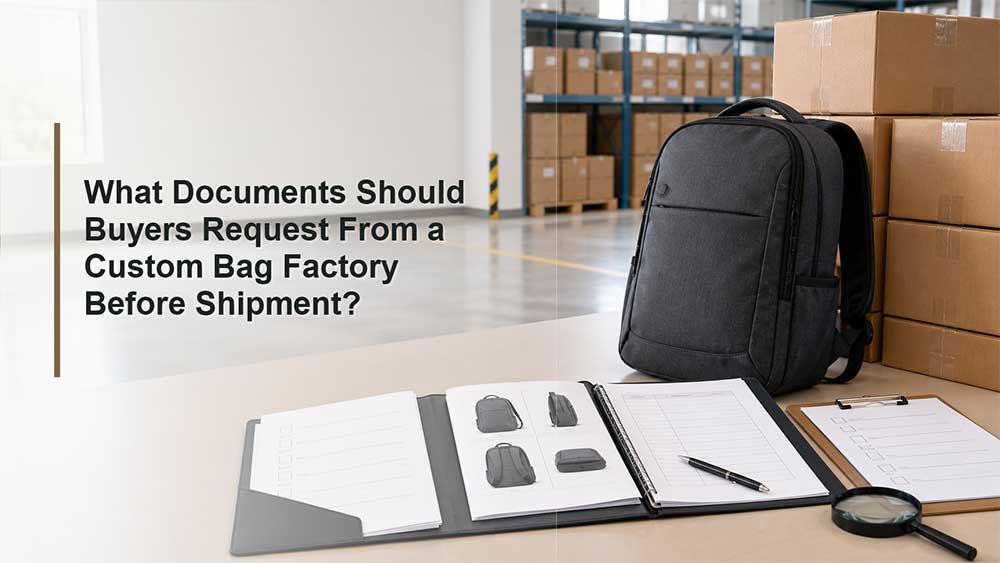
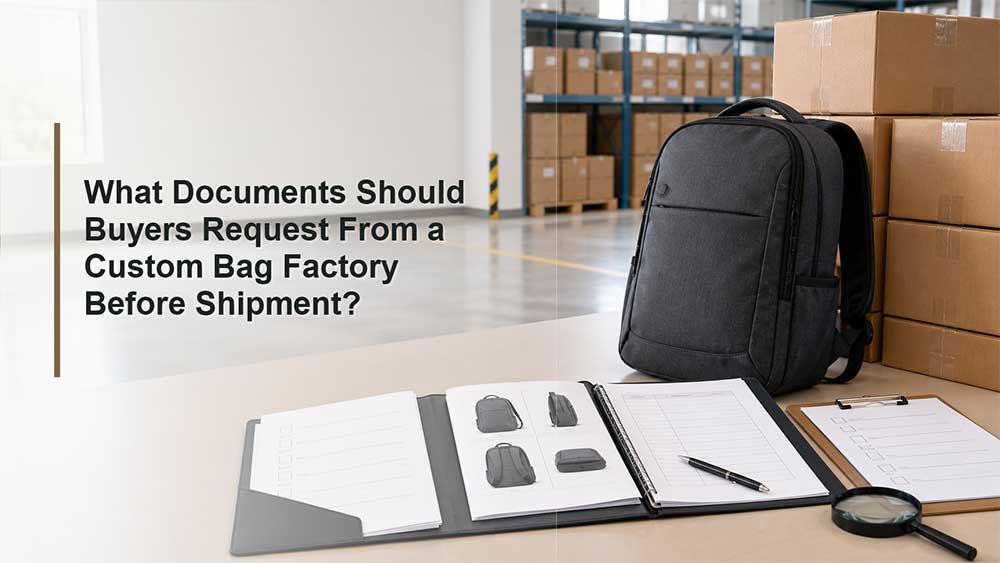
Before releasing a custom bag order for shipment, buyers should normally request the final packing list, available factory quality records, any agreed third-party inspection report, corrective-action records, applicable test or compliance documents, approved product-version references, and clear evidence of the finished goods and packaging.
The exact file depends on the purchase order and quality agreement. A simple repeat order using an approved bag may need fewer records than a new style with several colors, custom packaging, regulated materials, or certified recycled content.
The purpose is not to collect paperwork for its own sake. The documents should help the buyer confirm that:
The correct bags were produced
Quantities, colors, and SKUs are complete
The finished goods passed the agreed checks
Inspection problems were properly resolved
The product matches the approved version
Required test and compliance records cover the order
Packaging, labels, barcodes, and carton marks are correct
The goods are ready for collection
These requirements should be agreed upon before production. Asking for an unplanned certificate after the order is packed may delay shipment, especially if testing, inspection, or certification was not included in the original price and schedule.
Finished quantity, SKU allocation, carton count, weight, dimensions, and CBM
Before shipment release
Factory QC report
The factory completed the agreed final checks
Before shipment release, when required
Third-party inspection report
An independent inspector checked the agreed sample and scope
When required by the purchase order
Corrective-action record
Reported defects were contained, corrected, and rechecked
Before releasing a failed or conditional inspection
Approved-deviation record
The buyer knowingly accepted a stated difference
Before shipment
Final product reference
The goods follow the correct specification and approved sample
Confirmed during inspection and release
Test and compliance records
Applicable requirements or product claims are supported
According to the agreed document schedule
Finished-goods evidence
Styles, colors, logos, labels, and overall appearance are traceable to the order
Before release
Packaging evidence
Individual packing, barcodes, carton marks, and carton sequence are correct
Before collection
Ready-to-ship confirmation
Production and agreed corrections are complete and the cargo is available
When collection can be arranged
Commercial invoice
Actual transaction details, when the factory or its export entity is the seller
According to the payment and export arrangement
Not every order needs every item in the table. The buyer should define the required documents according to product risk, order complexity, destination market, payment terms, and contractual requirements.
In practice, for many small or straightforward orders, a factory may provide only a basic pre-shipment file. This commonly consists of finished-product photographs or videos, a commercial invoice when the factory or its export entity is the seller, and basic shipment information such as the final quantity, carton count, weight, carton dimensions, packing details, and collection date.
Detailed factory QC reports, third-party inspection reports, corrective-action records, laboratory reports, or certification documents may not be prepared automatically for a small order. If the buyer requires them, the scope, format, cost, sample requirements, and delivery date should be agreed upon before production.
A small order does not automatically need an extensive document package. However, order value alone should not determine the requirements. Testing or additional records may still be necessary when the product carries a regulated or certified claim, enters a market with specific requirements, presents a higher quality risk, or must comply with a retailer’s protocol.
1. Final Packing List and Quantity Summary
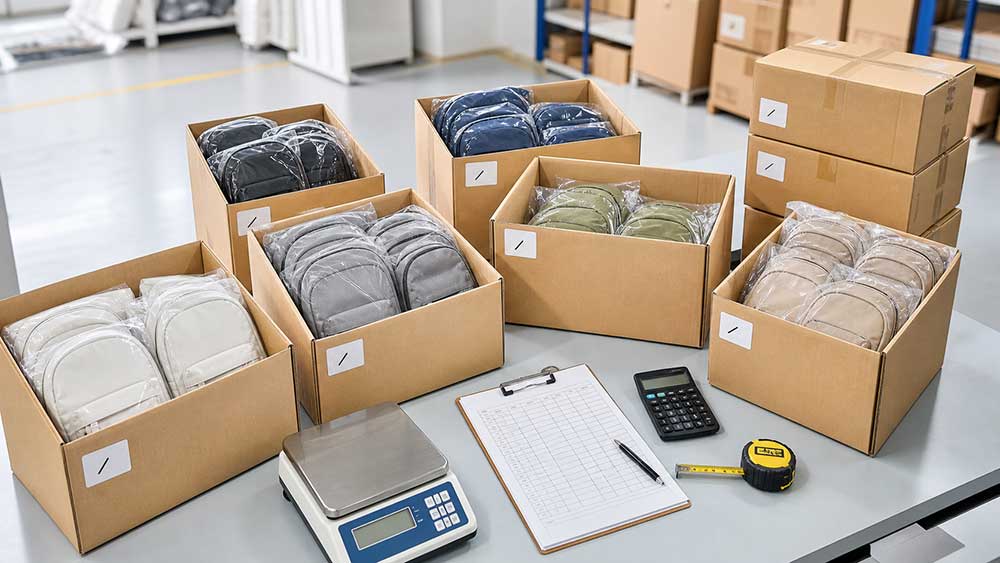
The final packing list is one of the most useful documents a factory can provide before shipment. It should describe the goods that have actually been produced and packed—not the quantities originally planned.
For a custom bag order, it should normally include:
Buyer and supplier
Purchase-order number
Product name and style number
Color or SKU
Quantity per carton
Total quantity
Total carton count
Carton-number sequence
Net and gross weight
Carton dimensions
Total volume or CBM
Mixed-carton details
Pallet information, when applicable
Carton and shipping marks
Spare units or components, if included
A 600-piece order may look straightforward on the purchase order. If it contains three styles, four colors, several barcode versions, and mixed cartons, a total quantity alone is not enough. The buyer needs to know how each SKU is distributed.
The packing list should be compared with:
Purchase order
Final inspection report
Barcode master file
Packaging specification
Carton marks
Warehouse receiving requirements
Commercial invoice, when applicable
The quantities should reconcile across these records. If the inspection report identifies 98 cartons but the final packing list shows 100, the difference should be explained before the buyer releases the shipment.
Weights, carton measurements, and CBM should also be commercially reasonable. Buyers can use the final carton data to estimate freight and warehouse requirements. When carton efficiency is important, reducing carton volume and freight costs should be considered before the packing method is finalized—not after the goods are sealed.
2. Factory Final QC Report
The factory should provide its final quality-control record when this is part of the agreed release process.
The report should identify:
Buyer
Supplier and production site
Product and purchase-order number
Style and color
Inspection date
Production completion status
Available quantity
Inspected quantity
Inspection method
Measurements checked
Workmanship findings
Functional checks
Logo, label, and packaging results
Defects found
Photographs
Final conclusion
Inspector or responsible quality employee
The report should refer to the actual standard used for inspection, such as the approved sample, current specification, measurement chart, packaging file, and agreed defect criteria.
A report that only says “quality passed” is not enough. It does not explain what was inspected, how many pieces were checked, which functions were tested, or whether any defects were found.
The scope should reflect the type of bag. For example:
A laptop bag may require device-fit, compartment, padding, zipper, and strap checks.
A waterproof bag may require the agreed seam or finished-product water-resistance check.
A travel bag may require handle, wheel, trolley, expansion, or loaded-function tests.
A cooler bag may require lining, insulation, leakage, odor, and food-contact-related records where applicable.
The complete custom bag production process includes several quality-control stages. The final QC report should not be treated as proof that earlier material and production controls were unnecessary.
Is a factory QC report independent?
No. It is an internal factory record.
That does not make it useless. It can show how the factory checked the order and whether its quality team followed the agreed criteria. However, it is not a substitute for an independent inspection when the purchase order requires one.
For a small or low-risk order, the buyer and factory may agree on a simpler record consisting of the final quantity, inspection checklist, selected measurements, function checks, and photographs rather than a formal multi-page QC report.
3. Third-Party Inspection Report, When Agreed
If the buyer arranged an independent pre-shipment inspection, the factory should cooperate with the inspection and make the resulting report available according to the agreed process.
A third-party report should normally state:
Inspection company
Inspector
Factory and inspection location
Date
Purchase order and product
Production and packing completion status
Quantity available
Sample size
AQL level, when used
Critical, major, and minor defects
Measurement results
Functional test results
Packaging checks
Photographs
Pass, fail, pending, or hold result
The buyer should verify that the inspection covered the actual order. A report for a similar style, earlier production run, or different color is not evidence for the current shipment.
An inspection company records its findings, but it does not always make the final commercial decision. The buyer should state who is authorized to:
Third-party inspection is not automatic simply because an order is being exported. It should be requested by the buyer or required by the purchase agreement, retailer, financing arrangement, or destination-market procedure.
4. Corrective-Action and Reinspection Records
An inspection failure should not be closed with a brief message saying, “All problems have been fixed.”
The factory should document:
The reported defect
Affected style, color, and quantity
Where the issue occurred
Immediate containment action
Root cause
Rework or replacement method
Quantity corrected
Preventive action
Responsible person
Completion date
Reinspection method and result
Supporting photographs
Consider a shipment in which several cartons have the wrong barcode. A photograph of one relabeled carton proves only that one carton was corrected.
A useful record should explain:
How the affected cartons were identified
Whether the complete carton range was checked
How many labels were replaced
Who verified the corrected barcodes
Whether the packing list was updated
What will prevent the mistake in the next order
For a structural defect, such as weak shoulder-strap attachment, the evidence should go beyond appearance. The factory may need to revise the construction, update the sewing instruction, rework the affected quantity, repeat the agreed strength check, and document the result.
The buyer should not approve shipment until the correction method and verification are appropriate for the risk.
For a small order, the corrective-action record may be a concise document supported by photographs or video. It does not need to be unnecessarily complex, but it should still show what was wrong, what quantity was affected, how the problem was corrected, and how the factory verified the result.
5. Written Record of Approved Deviations
Sometimes the finished order differs slightly from the specification, but the buyer decides that the difference does not prevent shipment.
Examples may include:
A small measurement variation
A slight hardware-finish difference
A packaging-material change
A minor shade difference
A revised carton size
An agreed short or excess quantity
The deviation should be recorded in writing and identify:
Purchase order
Style and color
Affected quantity
Original requirement
Actual condition
Reason for the deviation
Buyer’s decision
Any price or delivery adjustment
Whether the approval applies only to this order
A casual message such as “That is okay” can create uncertainty later. It may not show which style, quantity, photograph, or measurement the buyer accepted.
Approval for one shipment should not automatically change the specification for repeat orders. If the change is permanent, the product file should be formally updated.
6. Final Approved Product Version
The factory should be able to identify the exact product version used for bulk production and final inspection.
Relevant records may include:
Final tech pack or specification revision
Approved pre-production sample number and date
Measurement chart
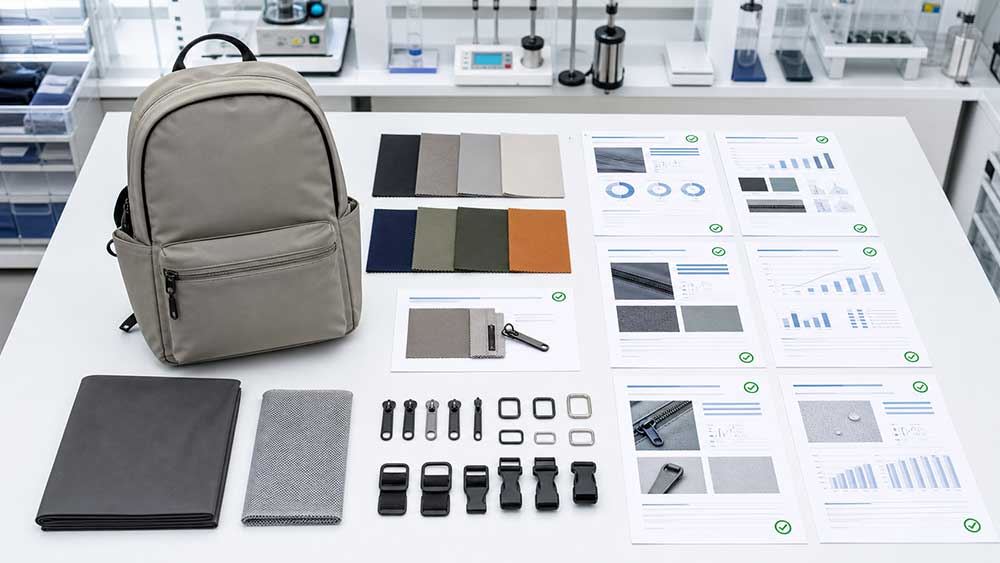
Approved fabric and lining references
Color standard
Zipper and hardware specifications
Logo artwork and placement approval
Label and care-instruction version
Packaging specification
Barcode master file
Test plan
Approved deviations
The buyer does not necessarily need the factory to disclose or resend every internal production document. However, the release file must make clear which approved specification and physical sample control the order.
This becomes especially important after several sample revisions. “Same as approved sample” is not a reliable reference if there are multiple samples and no one has recorded which one received final approval.
Material and color approvals should also be traceable. Screenshots and monitor colors are weak references for shade decisions. When buyers cannot review materials in person, the approval process described in how to approve custom bag materials and colors remotely can help create clearer records.
For a straightforward repeat order, the factory may only need to confirm the existing style number, approved sample, color reference, packaging version, and any changes agreed for the reorder. It is not always necessary to recreate the complete product file.
7. Test Reports and Compliance Documents
The factory should provide or coordinate the test and compliance records specified in the purchase order.
These may be required because of:
Destination-market regulations
Buyer restricted-substances requirements
Retailer protocols
Product category
Materials and coatings
Intended age group
Product claims
Certified-material claims
Depending on the bag, the records may cover:
Exterior fabric
Lining
Coating or lamination
Synthetic leather
Genuine leather
Printing ink
Metal hardware
Plastic components
Water-repellent treatment
Packaging materials
Complete finished product
What should buyers check on a test report?
Review:
Laboratory name
Applicant
Manufacturer or supplier
Product or material description
Style, model, and color
Sample photograph
Test method
Applicable limit
Result
Pass or fail conclusion
Report number and date
Authorized signature or verification method
The most important question is whether the report covers the materials used in the actual shipment.
A report for a black polyester fabric may not cover:
A separately dyed blue color
A new coating
Printed lining
PU trim
Logo ink
Metal zipper pullers
Another factory
Supplier declarations may support material identification and restricted-substance management, but they are not automatically equivalent to independent laboratory testing.
Small order size does not automatically remove regulatory or retailer requirements. If testing is required, the buyer and factory should agree on the samples, test scope, laboratory, cost, and timing before production. Testing requested only after the goods are packed may delay release.
GRS, RCS, and certified-material claims
If the order carries a GRS, RCS, or another certified-material claim, the buyer should request the records required by that certification system.
A Scope Certificate and a Transaction Certificate serve different purposes:
A Scope Certificate shows that an organization is qualified within the listed certification scope.
A Transaction Certificate verifies certified products transferred in a particular transaction.
Textile Exchange explains that a Transaction Certificate contains the specific products and shipment details. A factory’s Scope Certificate alone therefore does not prove that the current order is certified.
Check:
Certificate holder
Certified site
Certification body
Standard
Validity
Product category
Seller and buyer
Invoice or transaction reference
Certified product and material details
The timing of the final Transaction Certificate should be agreed in advance because certification bodies may need the completed transaction and shipment records before issuing it.
8. Finished-Goods and Packaging Evidence
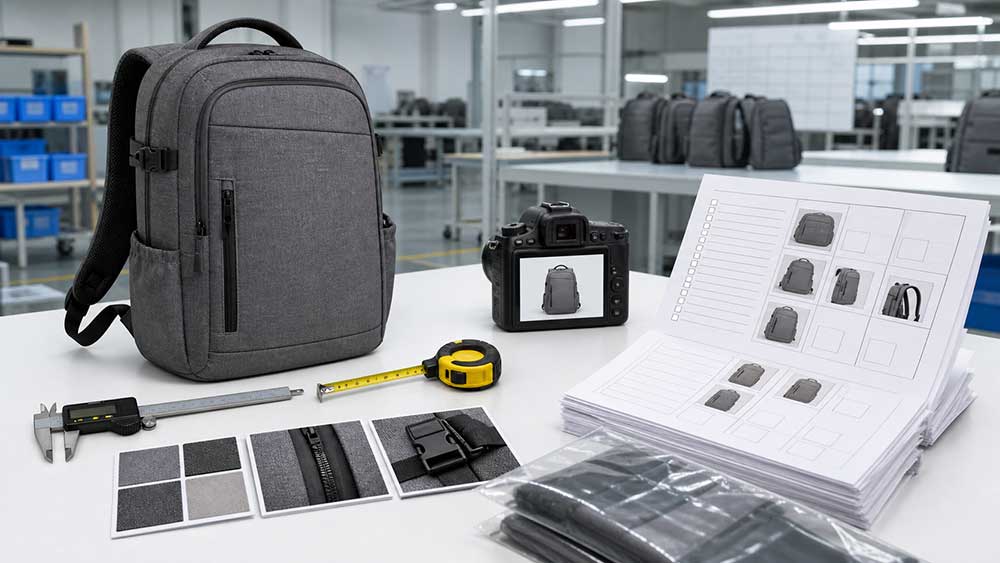
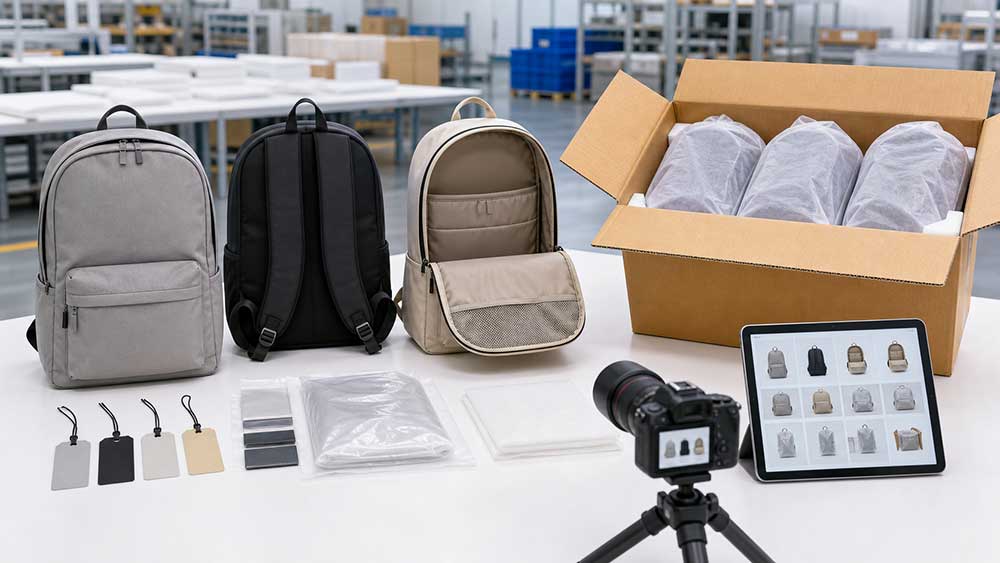
For many small orders, photographs or videos are the main evidence a factory provides before shipment. They can help the buyer see that the finished goods and packaging match the approved requirements.
Useful evidence may show:
Each style and color
Front, back, sides, base, and interior
Laptop compartments or other key functions
Logo size, color, method, and position
Woven labels and care labels
Barcodes
Hangtags
Retail packaging
Folding and stuffing method
Polybags or dust bags
Carton packing
Carton marks
Carton-number sequence
Pallets, when applicable
The images should be traceable to the order. A close-up photograph of a correct logo does not prove that every color or SKU uses the correct version.
A more useful photo record includes the purchase-order or style reference, date, color, carton number, or enough surrounding context to identify what is being shown.
For video review, the factory can move through the order in a logical sequence: show the style and color, open the main compartments, demonstrate key functions, scan or display the barcode, show the individual packaging, and finish with carton marks and carton numbers.
Photographs and videos support the release file, but they do not provide the same level of assurance as independent sampling. It is possible to photograph one acceptable bag while defects remain elsewhere in the order.
What should packaging evidence prove?
It should help confirm that:
The correct product is in the correct retail packaging
Barcodes match the SKU
Required labels and inserts are present
Products are folded and protected correctly
Mixed cartons follow the packing plan
Carton marks are readable
Cartons are in suitable condition
The packing method does not damage the bags
Foam, fabric, linings, and cartons should also be dry enough before sealing. A correct document file cannot prevent moisture damage if wet materials are packed into a closed carton. Buyers shipping by sea can review how to prevent mold and moisture damage in bags during ocean shipping.
9. Ready-to-Ship Confirmation and Basic Shipment Details
Once production, inspection, correction, and packing are complete, the factory can provide a written ready-to-ship notice.
It may confirm:
Purchase-order number
Product and style
Final quantity
Total carton count
Net and gross weight
Carton dimensions
Total CBM
Packing completion
Inspection status
Corrective-action status
Cargo availability date
Collection address
Factory contact
Loading hours or collection restrictions
Any remaining document still pending
For a small order, these basic shipment details may be provided in an email, spreadsheet, packing list, or message to the buyer and freight forwarder rather than in a separate formal release document.
The notice does not replace the packing list or agreed quality evidence. It provides a clear operational point at which the buyer or freight forwarder can arrange collection.
The goods should not be described as “ready” if:
Production is incomplete
Required rework remains open
The final quantity is unknown
Cartons are not sealed
Required testing has not been completed
The buyer has not approved a critical deviation
The factory cannot make the full order available for collection
10. Commercial Invoice, When the Factory or Its Export Entity Is the Seller
For many small orders, the commercial invoice is one of the few formal documents provided alongside photographs, video, and basic shipment information.
If the factory or its export entity is the contract seller, the invoice should normally include:
Seller and buyer
Invoice number and date
Purchase-order reference
Product description
Quantity
Unit price
Total amount
Currency
Country of origin
Agreed Incoterm and named place, when applicable
Payment terms
Relevant freight, tooling, or other charges
The quantity should match the final packing list and available quality-release records.
Some custom bag orders are sold or exported through a trading company, sourcing company, or related export entity. In that situation, the factory may provide production and packing records while another approved company issues the commercial invoice.
The buyer should understand the relationship among:
Production factory
Contract seller
Payment recipient
Exporter
Shipper shown on later transport records
Different legal entities are not automatically a problem, but the arrangement should be disclosed and consistent with the purchase agreement.
The U.S. International Trade Administration’s common export document guidance explains the general roles of commercial invoices and packing lists in international shipments.
Which Documents Are Not Normally Issued by the Factory?
A final bill of lading, sea waybill, or air waybill is issued by a carrier or freight forwarder, not created independently by the sewing factory.
Similarly:
A formal Certificate of Origin may require an authorized issuer
An insurance certificate comes from an insurer, broker, forwarder, or responsible contracting party
An independent inspection report comes from the inspection company
A laboratory report comes from the laboratory
A Transaction Certificate comes through the relevant certification body
Customs declarations are handled by the responsible exporter, broker, or authority
The factory may coordinate, apply for, collect, or forward these documents when that responsibility is included in the order. Buyers should still distinguish between a document the factory prepares and one issued by an independent or authorized party.
This article focuses on the evidence buyers should request from the factory before releasing the goods—not every document needed later for transport and customs clearance.
What Should Buyers Review Before Paying the Balance?
The answer depends on the payment terms agreed before production.
For many small orders, the practical balance-payment file may consist of:
Finished-product photographs or video
Final quantity and packing information
Commercial invoice
Basic ready-to-ship details
For larger, higher-risk, regulated, certified, or retailer-controlled orders, the agreed file may also include:
Final factory QC report
Third-party inspection report
Corrective-action and reinspection records
Required test and compliance documents
Approved-deviation records
Detailed packaging evidence
Buyers should not add new payment conditions after the factory has completed the order unless both parties agree.
A final on-board bill of lading cannot normally be required for a payment that must be completed before the factory releases the goods for loading.
Test report, material record, actual style and color
Approved deviations
Deviation record, inspection conclusion, final specification
Seller and factory
Purchase agreement, invoice, quality and production records
The wording may differ because each document has a different purpose, but the facts should not conflict.
If one quantity changes, do not update only the packing list. Check whether the inspection report, commercial invoice, barcode allocation, carton sequence, compliance record, and collection information also need revision.
Agree on the Document List Before Production
The purchase order or quality agreement should include a simple document schedule appropriate to the size and risk of the order.
For each required record, define:
Document name
Who prepares or issues it
Required contents
Product or material coverage
Format and language
Draft review date
Final delivery date
Who approves it
Whether it is a balance-payment condition
Whether it is a shipment-release condition
A small, repeat order may only require photographs, video, commercial documents, and basic packing information. A new retail program with custom materials, several SKUs, testing, and certification claims may require a much more controlled file.
This prevents a familiar last-minute dispute: the factory says the goods are ready, while the buyer is still waiting for a report or certificate that was never clearly included in the order.
The goal is not to request every document a factory has. It is to obtain enough traceable evidence to make a responsible release decision.
Prepare Custom Bag Orders for Shipment With Vancharli Outdoor
Vancharli Outdoor supports OEM and ODM bag development, bulk manufacturing, quality control, custom packaging, and export coordination.
Before shipment, our team can provide finished-product photographs or videos, commercial and packing information, and other records agreed for the order. For projects requiring more detailed quality, testing, certification, or third-party inspection documentation, the scope and timing can be confirmed before production.
The exact release file depends on the product, order quantity, materials, destination, quality agreement, certification claims, payment terms, and buyer requirements.
Frequently Asked Questions
What do factories usually provide for a small bag order?
For many small or straightforward orders, factories commonly provide finished-product photographs or videos, a commercial invoice when they or their export entity are the seller, and basic shipment details such as quantity, cartons, weight, dimensions, and collection date.
Does every custom bag order need a factory QC report?
No. A detailed QC report may not be prepared automatically for a small order. If the buyer requires one, its scope and format should be agreed before production.
Can factory photographs replace a third-party inspection?
No. Photographs can support a release decision, but they show only what the factory chooses to photograph. They do not replace an agreed independent sampling and inspection process.
Should buyers request the complete BOM before shipment?
Not always. A factory may treat parts of its internal BOM as confidential. The buyer should nevertheless have enough approved material, component, color, and specification records to verify the ordered product.
What should happen if the factory fails inspection?
The factory should identify the affected goods, investigate the cause, complete the agreed correction, and provide corrective-action and reinspection evidence before the order is released.
Do test reports need to match the shipped color?
It depends on the material, test scope, and laboratory assessment. Different colors may use different dyes, coatings, inks, or production lots, so coverage should not be assumed.
Is a commercial invoice always issued by the factory?
No. It may be issued by the factory, a related export company, or the contract seller. The issuing entity should match the agreed commercial arrangement.
When should the document requirements be agreed?
Ideally, before the purchase order is finalized. This gives the factory time to plan inspections, testing, certification, packing records, and document delivery without delaying shipment.








Comments are closed