How to Choose a Waterproof Zipper for a Soft Cooler
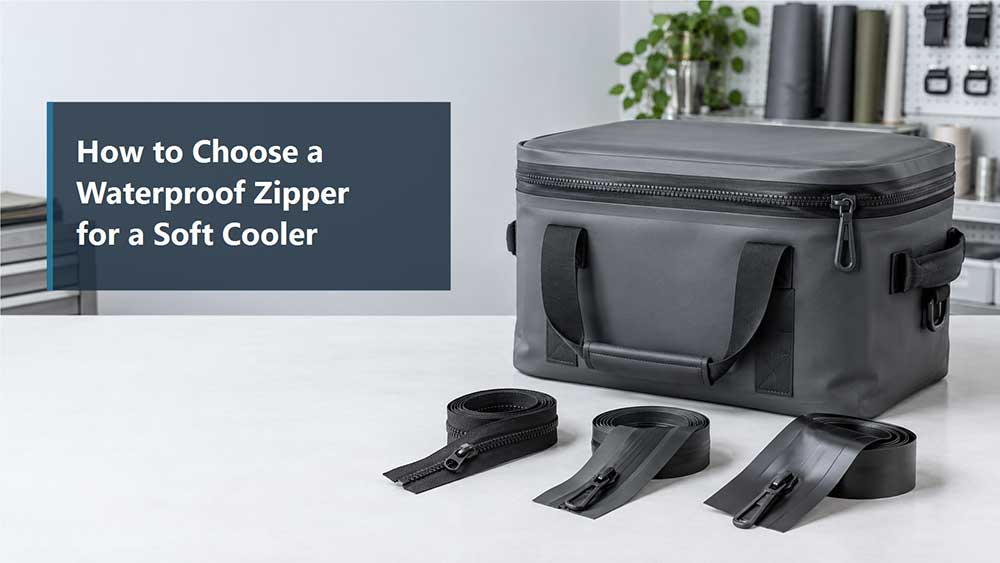
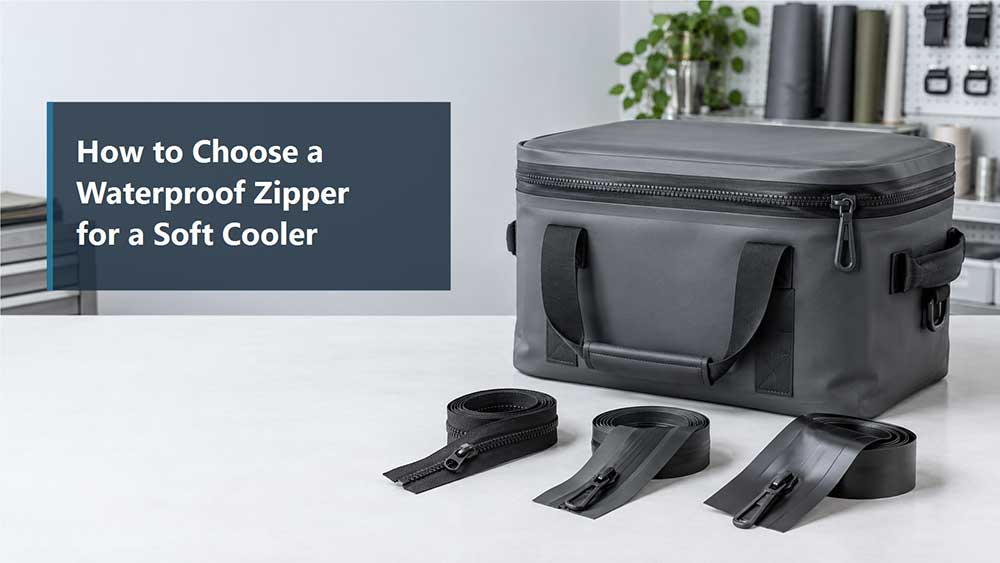
Before choosing a waterproof zipper for a soft cooler, determine how the cooler will be constructed and what it must prevent.
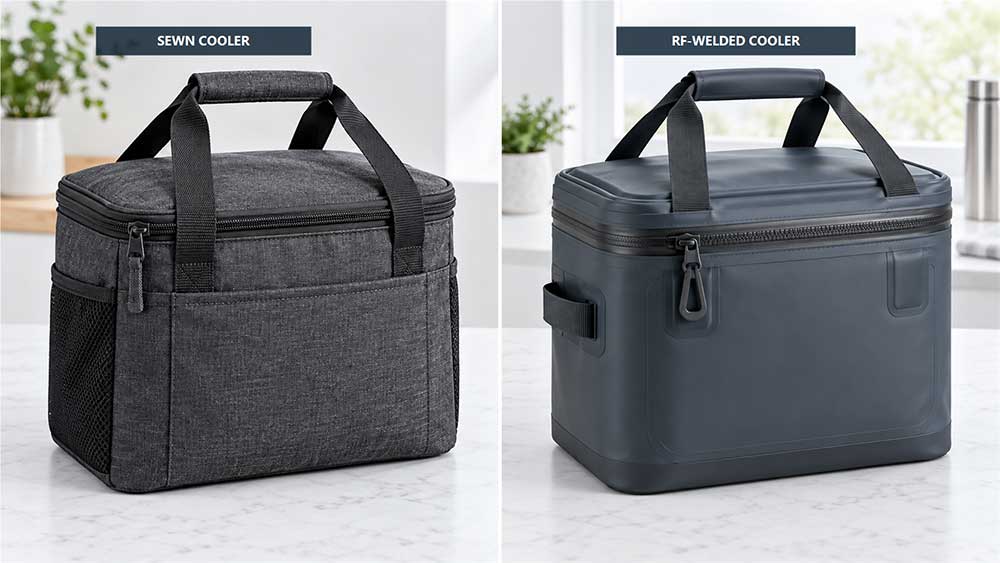
Most sewn cooler bags use a standard zipper because they are designed for upright transport and everyday insulation. A zippered RF-welded soft cooler normally requires an airtight or watertight zipper when it must contain melted ice, resist leakage when tipped, or support a leakproof claim.
The best zipper is not necessarily the option with the highest sealing performance. It is the one that matches the cooler construction, opening design, intended use, attachment method, user experience and target price.
Cooler construction
Common zipper choice
Typical use
Conventional sewn cooler
Standard coil or molded zipper
Lunch, grocery, delivery and promotional use
Upgraded sewn cooler
Coated water-resistant zipper
Better protection from rain and splashes
RF-welded waterproof cooler
Airtight or watertight zipper
Loose ice, tipping resistance and wet outdoor use
Higher-spec welded cooler
Supplier-offered resin or polymer sealing zipper
Premium or more demanding product programs
The last two descriptions are supplier-side product categories, not universal performance grades. The actual materials, sealing ability and test results still need to be confirmed for each zipper.
Sewn cooler bags are commonly used for lunches, groceries, food delivery, promotions and everyday travel.
The shell, insulation and lining are mainly joined by stitching. The inner lining may have heat-sealed seams to reduce leakage, but the entire product is not normally built as one sealed waterproof chamber.
A standard zipper is often the practical choice because it:
opens smoothly;
offers more sizes and colors;
is easier to source;
keeps component costs under control;
works well when the cooler remains upright.
A sealed inner lining does not make the main zipper watertight. If a sewn cooler falls onto its side, melted water may still escape through the opening.
RF-Welded Waterproof Soft Coolers
An RF-welded soft cooler usually uses TPU- or PVC-coated fabric, with critical seams joined by high-frequency welding.
If this type of cooler uses a zipper as its main opening and must prevent melted water from escaping, an ordinary zipper would leave a major leakage path even if the body seams were fully welded.
These coolers therefore commonly use an airtight or watertight zipper. The two terms are related but not identical:
Watertight describes resistance to water passing through the closed zipper.
Airtight describes resistance to air passing through it.
For a soft cooler, preventing water leakage is normally the more relevant requirement. If a factory describes a component only as an airtight zipper, ask for the corresponding water-sealing information as well.
Some RF-welded coolers use roll-top or other closures. However, when a zippered welded cooler is expected to be leakproof, the zipper, its ends and its connection to the cooler body must all form part of the sealed structure.
Define the Required Level of Protection
“Waterproof zipper” is often used as a broad marketing term. Before requesting quotations, define what the finished cooler is expected to do:
Will consumers use sealed ice packs, loose ice or both?
Must the cooler remain leak-free only when upright?
What should happen if it falls onto its side?
Will it be exposed to rain, waves or standing water?
Is temporary immersion part of the intended use?
Will it be described as water-resistant, leak-resistant, watertight or waterproof?
These requirements should appear in the product specification. Otherwise, one supplier may quote a coated water-resistant zipper while another quotes a substantially different watertight system.
YKK, for example, describes AquaGuard as water-resistant rather than fully waterproof. This distinction is important when comparing products with similar descriptions. YKK explains the difference in its overview of water-resistant and waterproof zippers.
For most sewn cooler bags, protection from rain and occasional splashes may be enough. For a welded cooler that must contain melted ice when tipped, water resistance alone is normally insufficient.
Compare the Main Zipper Options
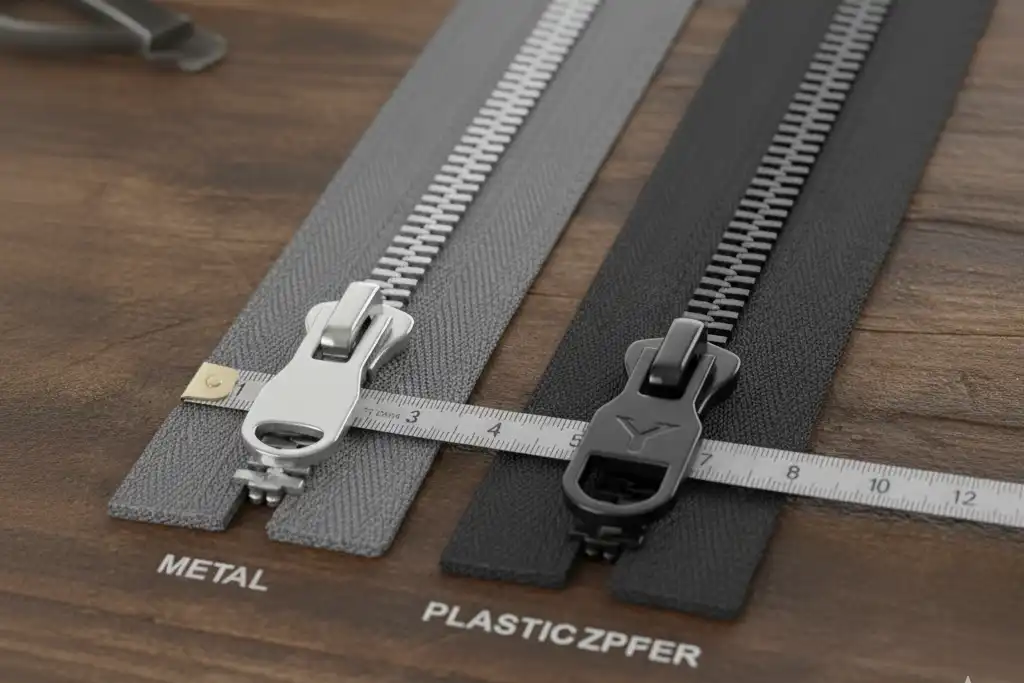
Standard Coil or Molded Zipper
A conventional zipper is usually suitable for a sewn cooler that is intended to stay upright.
It is a sensible choice when:
the cooler mainly uses sealed ice packs;
it does not need to contain melted water;
it will not carry a watertight or leakproof claim;
easy access and cost control are priorities.
A protective flap may reduce direct exposure to rain, but it does not seal the zipper chain, slider, ends or surrounding stitching.
Coated Water-Resistant Zipper
A coated zipper has a protective film over the tape and chain area. It gives the cooler a more technical appearance and provides better splash protection than an exposed standard zipper.
It may suit outdoor lunch coolers, cooler backpacks and other sewn products that are occasionally exposed to rain.
However, the coating does not automatically seal the slider, end stops or stitching. A coated water-resistant zipper should not support a watertight claim unless the specific zipper and finished cooler have been validated for that performance.
Airtight or Watertight Zipper
An airtight or watertight zipper is the appropriate starting point for a welded cooler that must control melted-ice leakage.
Depending on the model, the zipper may use specialized sealing elements and a coated tape or flange designed for a particular attachment process.
It is commonly considered when:
loose ice will be placed directly inside;
the cooler must resist leakage when tipped;
the product is intended for boating, fishing or wet outdoor use;
a leakproof claim is commercially important.
The zipper supplier’s performance applies to a particular type and configuration. It does not automatically prove that the assembled cooler will reach the same level. TIZIP’s hydrostatic zipper test information also notes that sealing performance depends on both zipper type and configuration.
Standard and Higher-Spec Airtight Zipper Options
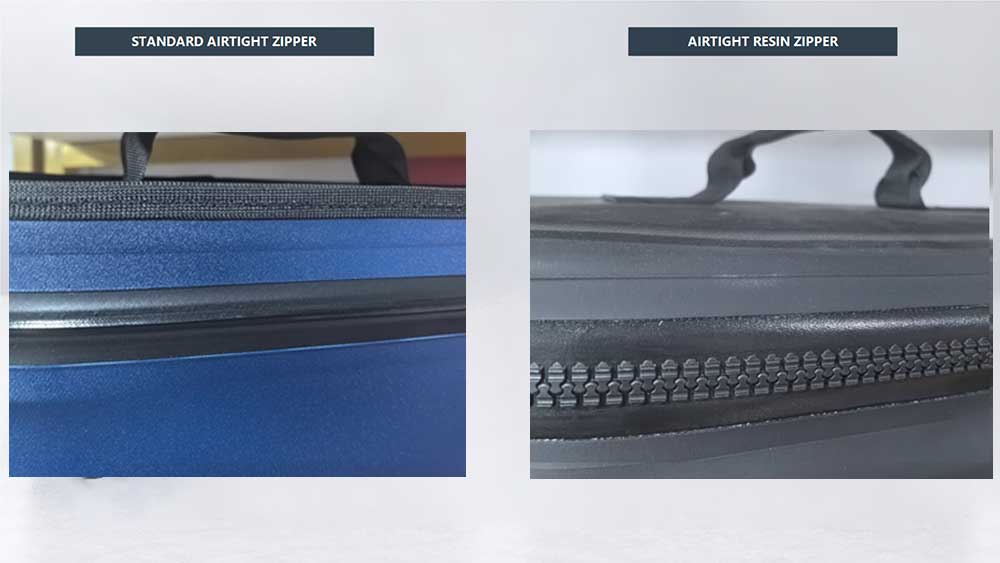
In actual sourcing, a factory may offer a commonly used airtight zipper and a higher-spec resin or polymer option.
These descriptions can be useful when comparing quotations, but they are not standardized international grades. A standard airtight zipper may already contain resin or polymer components, while a higher-priced resin zipper is not automatically more waterproof.
Compare the actual specifications instead:
Item to check
Why it matters
Zipper construction and materials
Clarifies what the supplier means by standard, resin or polymer
Declared watertight and airtight performance
Identifies which sealing properties were evaluated
Test method and zipper configuration
Provides context for the stated result
Tape or flange material
Determines compatibility with the cooler fabric
Slider and end construction
Affects operation and potential leakage paths
Opening force
Influences the customer experience
Temperature suitability
Matters when the cooler and zipper are cold
Recommended attachment method
Prevents incompatible welding or bonding
Maintenance requirements
Helps the brand prepare accurate care instructions
Production consistency
Reduces the risk of an unapproved substitution
A higher-spec zipper may be appropriate for a premium or frequently used cooler, but only when its documented and sample-tested performance provides a practical benefit to the project.
Match the Zipper to the Opening Design
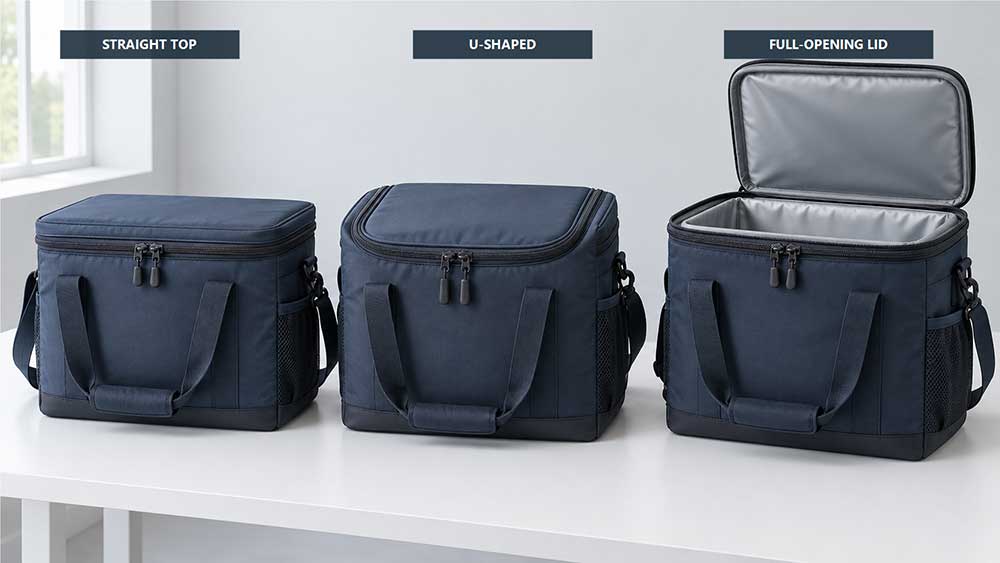
Straight Top Opening
A straight zipper path is comparatively simple and has fewer bends. It can make the zipper easier to operate and integrate into the cooler body.
The tradeoff is access. A narrow straight opening may make it harder to load food containers or reach items at the bottom.
U-Shaped Opening
A U-shaped opening allows the lid to open more widely, making it easier to load cans, food and ice.
However, it creates a longer zipper path with curved sections. If a curve is too tight for the selected zipper, the slider may become difficult to operate and the zipper may not sit evenly around the opening.
There is no universal corner radius for every sealing zipper. Confirm the permitted bend with the zipper supplier and evaluate it on the physical sample.
Full-Opening Lid
A full-opening lid is convenient for loading and cleaning, but the surrounding construction must provide enough support.
If the lid collapses or twists when the slider is pulled, force may be transferred unevenly to the zipper tape, corners and ends. Foam structure, lid stiffness, zipper position and pull-tab placement should therefore be evaluated together.
Confirm Material and Attachment Compatibility
A suitable zipper can still leak if it is attached using the wrong process.
A standard or water-resistant zipper on a sewn cooler is normally stitched into the opening. An airtight zipper for an RF-welded cooler may use a coated tape or flange intended for welding, bonding or another supplier-approved integration method.
Before approving the zipper, confirm:
tape or flange material;
compatibility with the TPU or PVC coating;
the supplier-recommended attachment method;
whether surface preparation or bonding material is needed;
how the zipper ends will be sealed;
how much working space is required around the opening.
A zipper designed for sewing should not be assumed to be suitable for RF welding. Likewise, a weldable flange is not automatically compatible with every coated fabric.
The zipper should be included in the pattern and manufacturing plan from the beginning. Our guide to designing waterproof bags for RF welding explains how panel layout, equipment access and seam order affect the complete sealed chamber.
Do Not Overlook the Zipper Ends
The ends are often among the most difficult parts of a sealing zipper to integrate correctly.
The design needs to account for:
the top and bottom stop configuration;
the slider’s fully closed position;
the transition between the zipper flange and cooler panels;
overlapping layers near the ends;
enough space for welding or bonding equipment;
reinforcement that does not puncture the protected chamber.
Adding extra layers does not automatically improve sealing. If the material cannot lie flat, the additional reinforcement may create wrinkles or gaps.
The end construction should be completed and approved during sampling rather than left for the production team to decide during bulk manufacturing.
Check Usability Under Real Conditions
A sealing zipper may feel acceptable as a loose component but become harder to operate after installation in a thick insulated lid.
Evaluate the sample:
when the cooler is empty;
when it is realistically loaded;
after it has been chilled;
with wet hands or gloves when relevant;
while it is sitting in a normal operating position.
The user should be able to steady the cooler, move the slider through every curve and pull it fully into the closed position.
A longer pull tab can improve leverage, but it cannot correct a tight corner, twisted zipper path or unsupported lid.
If the zipper requires cleaning or lubrication, follow the instructions for that specific model rather than applying a general-purpose product.
Test the Finished Cooler, Not Just the Zipper
A supplier test report helps evaluate the component. Final approval should still be based on the assembled cooler because leakage can also come from the zipper ends, attachment area, surrounding material or nearby seams.
Inspect and Operate the Installed Zipper
Check the full zipper path for wrinkles, gaps, coating damage, uneven attachment and distorted end areas.
Open and close the cooler when it is empty and realistically loaded. The slider should complete the full path without separating, snagging or excessively twisting the lid.
Use a Test That Matches the Product Claim
Intended claim
Relevant sample evaluation
Splash-resistant
Controlled spray exposure
Leak-resistant when upright
Upright leakage observation
Resists leakage when tipped
Controlled side or tipping test
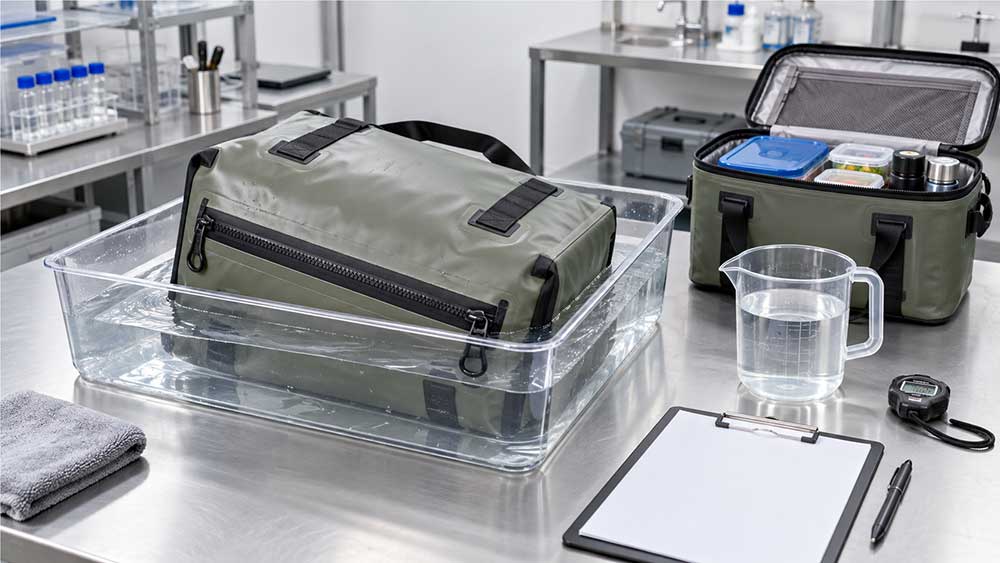
Intended for temporary immersion
Defined immersion test
Suitable for loose ice
Representative load and melted-water test
Record the water quantity, test duration, cooler position, internal load, closing procedure and acceptance criteria. A note that only says “waterproof test passed” is not detailed enough to reproduce during production.
Repeat the Test After Use Simulation
A new sample may pass while a repeatedly operated or cold-conditioned zipper behaves differently.
After the agreed opening cycles or environmental conditioning, repeat the water test that supports the product claim. Do not use an arbitrary cycle count that has no connection to the intended product.
When leakage occurs, identify the original entry or exit point before replacing the zipper. Our waterproof bag failure analysis guide explains how to separate zipper, seam, material and construction failures.
Lock the Approved Zipper Specification
The final product specification should record:
zipper supplier and series;
zipper construction and materials;
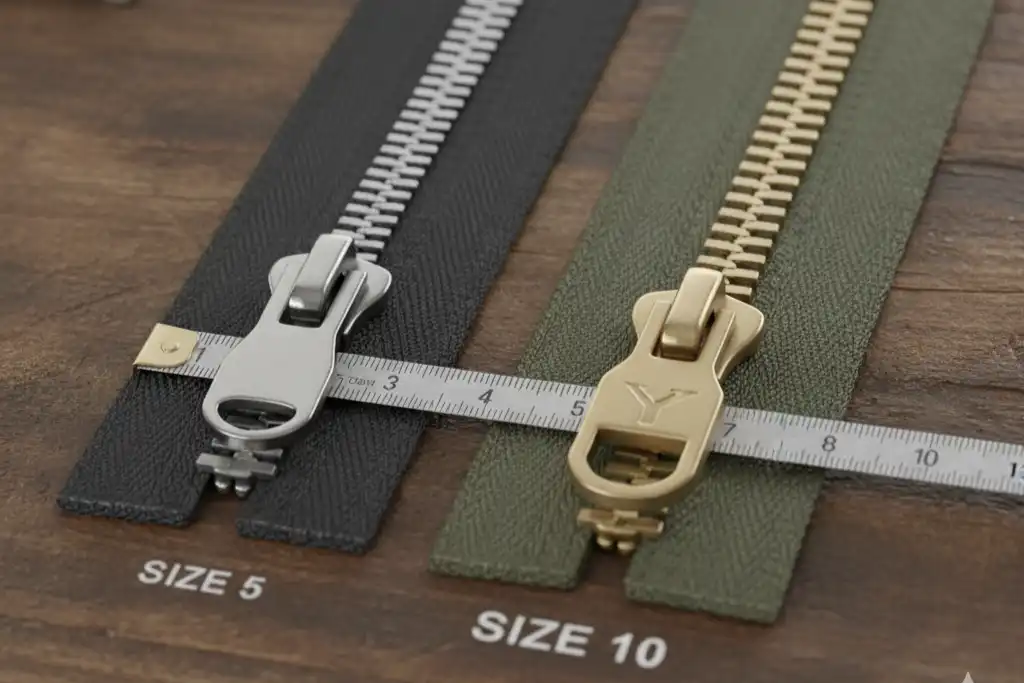
size and length;
slider type and quantity;
tape or flange material;
end configuration;
puller type;
approved attachment method;
opening and water-test requirements;
maintenance instructions;
approved sample reference.
The factory should not replace the zipper during bulk production simply because another option looks similar.
Does it need a standard, water-resistant or airtight/watertight zipper?
What does the supplier mean by a standard or resin zipper?
Does the product claim match the planned water test?
Is the zipper compatible with the cooler fabric and attachment process?
Can the target user operate it when the cooler is cold and loaded?
Have the zipper ends and curved sections been evaluated?
Has the assembled sample passed the required test?
Are the approved zipper details locked for bulk production?
If the construction, zipper specification or test method is unclear, the zipper is not ready for approval.
Developing a Custom Waterproof Soft Cooler
Vancharli Outdoor supports OEM and ODM waterproof soft cooler development for brands and importers. During sampling, different zipper options can be evaluated together with the coated fabric, insulation, opening structure, attachment process, operating force and finished-product leakage requirement before bulk production.
FAQ
Does a sewn cooler bag need a waterproof zipper?
Usually not. Most sewn lunch, grocery and promotional coolers use standard zippers because they remain upright and use sealed ice packs. A coated water-resistant zipper can be added when better rain and splash protection is required.
Can an RF-welded cooler use an ordinary zipper?
It can be installed, but it will leave a significant leakage path. If the cooler must contain melted ice or support a leakproof claim, an ordinary zipper is generally unsuitable.
Are airtight and watertight zippers the same?
Not exactly. Airtight describes resistance to air passing through the closure, while watertight describes resistance to water. Some zipper systems provide both, but buyers should verify the performance stated for the specific model.
Is a resin airtight zipper always better?
No. “Resin airtight zipper” may be a supplier-side product description rather than a standard performance grade. The actual construction, sealing data, usability, attachment compatibility and finished-sample results are more important than the name.
Can a sealing zipper be RF welded to any TPU fabric?
Not automatically. Compatibility depends on the zipper flange, fabric coating and attachment process. The actual materials should be confirmed and tested during sampling.
Why can a watertight zipper still leak after installation?
Possible causes include incomplete attachment, poorly sealed ends, wrinkles, coating damage or leakage from another seam. The original leak point should be identified before the zipper is replaced.
Should the sample be tested with loose ice?
Yes, if loose ice is part of the intended use. Test with a representative load and melted-water condition, and record the position, duration, closing procedure and acceptance criteria.






Comments are closed