Custom Laptop Bags for Corporate Gifts: A Buyer’s Guide
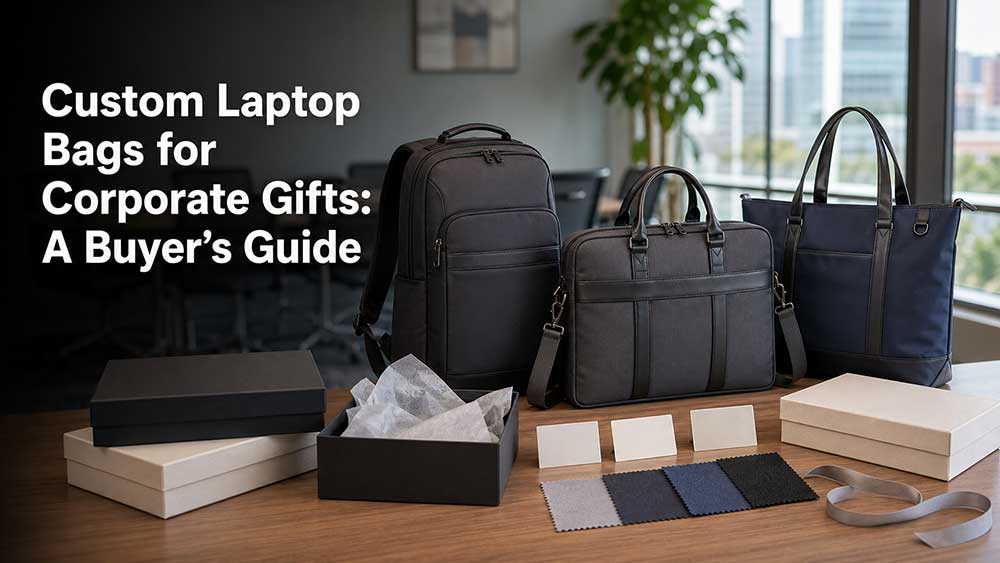
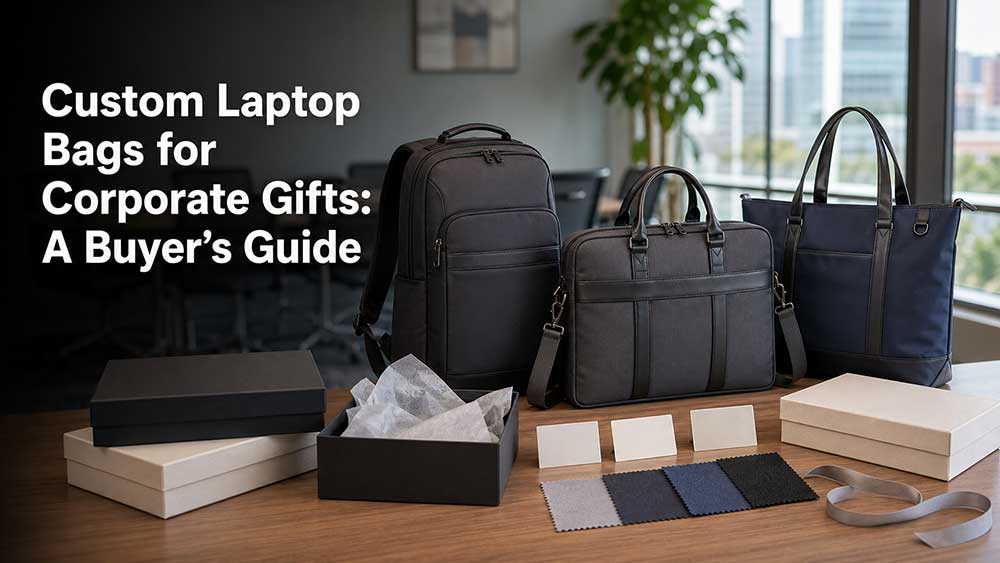
Custom laptop bags can be useful corporate gifts for employees, clients, conference attendees, and business partners. They support everyday work, provide a natural place for company branding, and can fit anything from an onboarding kit to a large corporate event.
Most corporate gift projects, however, do not need a completely original bag.
The more common and economical approach is to select an existing laptop backpack, briefcase, messenger bag, or sleeve and add the company logo. By using a proven design, the buyer can avoid new pattern-making, reduce sampling costs, shorten the development process, and keep the unit price within a typical promotional gift budget.
The real buying decision is therefore not how to develop a laptop bag from scratch. It is how to choose the right existing style, confirm that it can protect the intended computer, apply the logo cleanly, and receive the finished order before the distribution date.
A good corporate gift should be useful to the person receiving it. Laptop bags can support daily commuting, office work, remote work, business travel, training programs, and client meetings.
The ASI Ad Impressions Study reported that 43% of consumers would keep and use a promotional bag for two years or longer. That does not mean every branded bag will be kept. Recipients are more likely to carry one regularly when it looks professional, feels comfortable, fits their computer, and does not display an excessively large logo.
Custom laptop bags may be used for:
New employee onboarding
Staff recognition programs
Client appreciation gifts
Conferences and trade shows
Company anniversaries
Sales and field teams
Remote-work packages
Training programs
Executive gifts
Dealer or distributor meetings
The bag should still make sense without the logo. Branding can connect it to the company, but it cannot compensate for an uncomfortable design, unreliable zipper, or poorly padded laptop compartment.
Start With the Recipient, Not the Product Catalog
Before comparing materials or logo techniques, identify who will receive the gift and how that person is likely to use it.
Ask:
Who will receive the bag?
What type and size of laptop do they use?
Will they carry it daily or only occasionally?
Do they walk, drive, fly, or work mainly in an office?
Should the gift feel practical, premium, or strongly promotional?
What is the available budget per recipient?
These answers make it easier to choose between a backpack, briefcase, messenger bag, tote, or laptop sleeve.
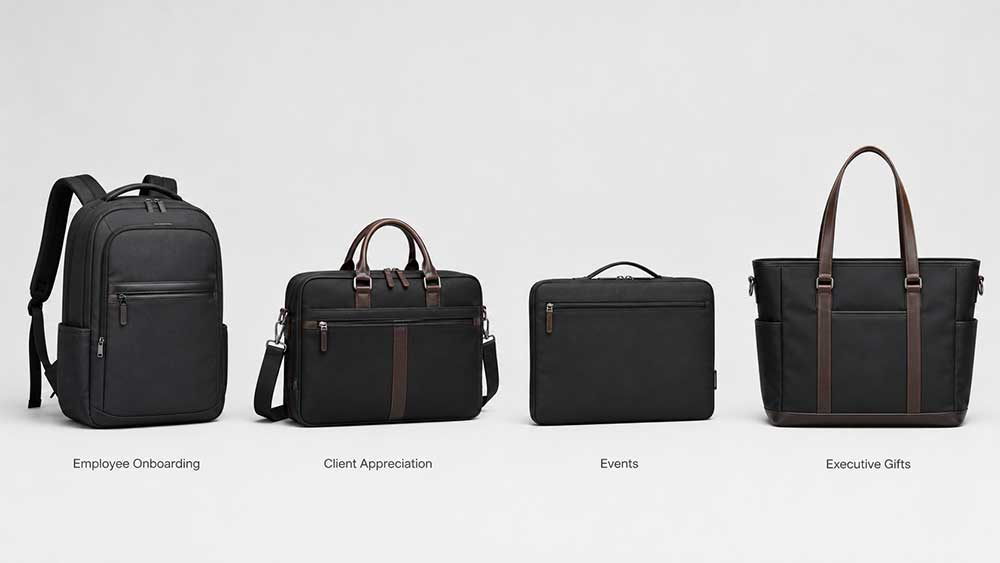
Employee onboarding
A laptop backpack is usually a practical option for new employees. It can hold a computer, charger, notebook, bottle, and personal items while distributing the weight across both shoulders.
For an onboarding program, comfortable straps, sensible organization, and reliable construction normally provide more value than an expensive presentation box.
Client appreciation
A structured briefcase, slim backpack, or laptop sleeve may be more suitable for clients. Neutral colors, clean hardware, and restrained branding make the gift easier to use outside the company’s own events.
Conferences and trade shows
For a large event, consider how much space the packed bags will occupy and how easily staff can distribute them. Lightweight sleeves and messenger bags are usually easier to transport and store than heavily structured backpacks.
If attendees are expected to carry documents and promotional materials during the event, the bag needs enough usable space without becoming unnecessarily bulky.
Executive gifts
Executive programs may justify better fabrics, refined hardware, subtle branding, and individual gift packaging. Even at this level, selecting an existing premium bag and adding a well-executed logo may be more economical than developing an entirely new product.
Choose an Existing Laptop Bag Whenever Possible
For most corporate gift orders, selecting an existing bag is the most practical route.
The bag’s pattern, dimensions, construction, and material arrangement have already been developed and used in production. The supplier does not need to create an entirely new product before applying the buyer’s branding.
Using an existing style can reduce or eliminate:
Product design fees
New pattern-making costs
Multiple rounds of structural sampling
Custom hardware or mold charges
Minimum order requirements for custom-made materials
Development time
The risk associated with an untested construction
The buyer can review existing laptop bag styles and select the closest match based on bag type, laptop size, material, available colors, features, and price.
The selected design can then be customized with:
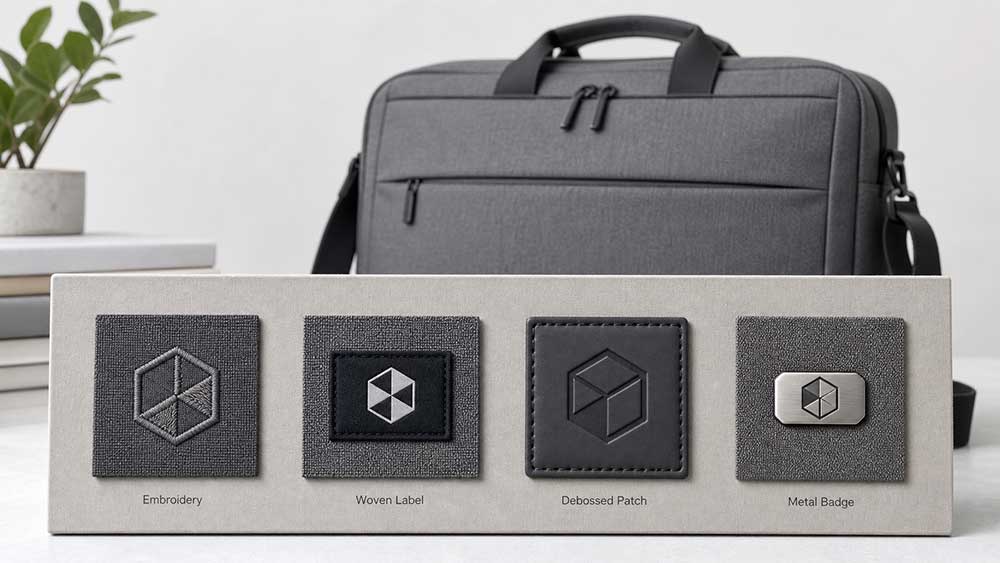
Embroidery
Screen printing
Heat transfer
A woven label
A rubber or silicone patch
A metal badge
A branded zipper pull, when the quantity permits
A gift card or welcome insert
Individual packaging
For employee gifts, conferences, client promotions, and company events, this level of customization is normally sufficient.
How Much Can an Existing Style Be Modified?
Choosing an existing design does not necessarily mean that every detail must remain unchanged.
Depending on the supplier, quantity, material availability, and budget, it may be possible to modify:
Main fabric color
Lining color
Zipper or zipper-puller color
Webbing color
Logo placement
Interior labels
Packaging
Selected pockets or small construction details
Minor changes can make a standard model feel more closely connected to the company while retaining its original pattern and overall construction.
Each modification may still affect the minimum order quantity, sample cost, unit price, and production schedule. Buyers should separate essential changes from optional preferences.
If an available black, gray, or navy fabric already works with the company logo, using it will usually cost less than ordering specially dyed material.
When Is a New Design Actually Necessary?
A new design and pattern may be justified when:
No existing model fits the required computer or equipment
The buyer needs an unusual compartment layout
The bag must support a specific technical function
The order quantity can absorb the development cost
The project is part of a premium, long-term merchandise program
There is enough time for development and sample revisions
For most price-sensitive corporate gift orders, this level of development is unnecessary. It is more commonly associated with private-label bags intended for retail sale.
If an existing bag already fits the laptop, carries comfortably, and meets the budget, applying a well-executed logo is usually more economical than paying for a new pattern that does not improve the recipient’s experience.
Choose the Right Type of Laptop Bag
The best style depends on the recipient, carrying habits, laptop size, and budget.
Bag type
Best for
Main advantages
Points to check
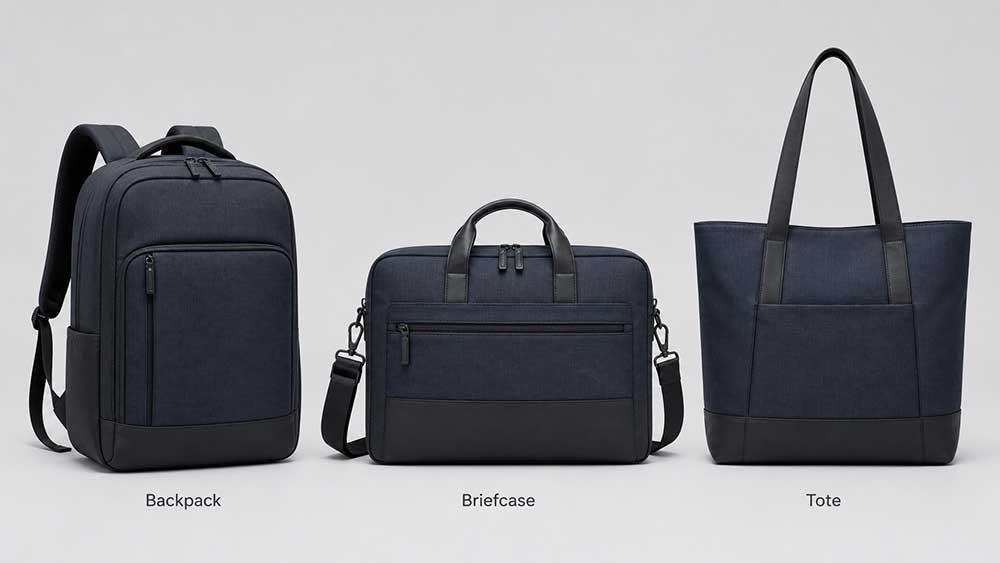
Laptop backpack
Employees, commuters and field teams
Comfortable, practical and spacious
Shoulder straps, back padding and empty weight
Laptop briefcase
Office staff, clients and executives
Professional appearance and easy access
Handle strength, structure and shoulder strap
Laptop messenger bag
Sales teams, events and light office carry
Convenient access and a clear logo area
Strap comfort and weight distribution
Laptop sleeve
Conferences, welcome kits and lower-budget programs
Compact, lightweight and economical
Device fit, padding and closure
Laptop tote
Office and lifestyle-oriented programs
Less technical appearance and easy access
Handle reinforcement and internal organization
Convertible bag
Traveling employees and mixed-use programs
More than one carrying method
Strap storage, hardware and overall weight
When deciding between common work styles, this comparison of a laptop backpack and laptop messenger bag explains the practical differences in comfort, access, and carrying capacity.
Confirm the Laptop Size Before Ordering
A 15.6-inch laptop bag does not necessarily fit every laptop advertised as 15.6 inches. Screen size measures the display diagonally, not the complete width, height, and thickness of the device.
Before selecting a bag, obtain the actual computer dimensions and compare them with the usable dimensions of the laptop compartment.
This is particularly important when:
Employees use several laptop models
The computer has a thick protective case
The compartment has rounded corners
The bag was designed for a slim device
The order will be distributed across several offices
If the company issues standardized equipment, the IT department may be able to provide a list of models. If devices vary, place the largest intended laptop inside the physical bag sample.
This guide to measuring a laptop for a bag explains how to compare the device with the usable internal compartment.
Check Basic Laptop Protection, Even on a Budget Order
Corporate gift bags are often price-sensitive, but basic laptop protection should not be removed simply to reach the lowest possible unit price.
Check whether the selected bag has:
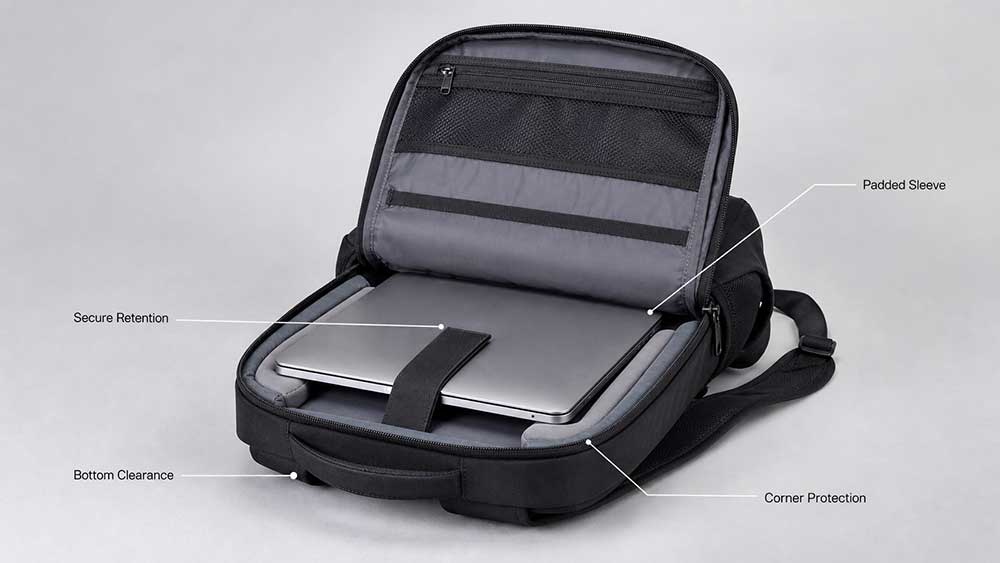
Padding on both sides of the laptop
Bottom cushioning
A strap, zipper, or other secure closure
A lining that separates the computer from exposed seams or hardware
Enough structure to keep the compartment from collapsing
A reasonably close fit around the intended device
A suspended laptop compartment can reduce direct contact between the computer and the bottom of the bag. If the existing style does not use this construction, check that it has adequate bottom foam.
Foam performance depends on density, coverage, and placement—not only thickness. More padding also increases cost and bulk, so the specification should match the expected use. This explanation of laptop bag padding provides additional guidance.
Most sewn corporate laptop bags are water-resistant rather than fully waterproof. A coated fabric may help with light rain and accidental splashes, but the bag should not be described as waterproof unless its complete construction has been designed and tested for that claim.
Select a Logo Method That Fits the Bag and Budget
Logo application is usually the main customization step in a corporate gift project. The right method depends on the material, artwork, desired appearance, quantity, and budget.
Logo method
Advantages
Considerations
Embroidery
Professional, durable and familiar
Fine details and gradients may be difficult; dense stitching can stiffen thin fabric
Screen printing
Economical for simple graphics and larger quantities
Works best on relatively smooth surfaces and with limited colors
Heat transfer
Suitable for detailed or multicolor artwork
Adhesion and abrasion resistance should be checked on the selected material
Woven label
Clean, subtle and easy to integrate
Label size and attachment position must be confirmed
Rubber or silicone patch
Modern and durable
Usually requires a mold and adds a setup cost
Metal badge
Premium and understated
More expensive and must be securely attached
Debossing or embossing
Minimal appearance on suitable PU surfaces
Visibility depends on the material, depth, and lighting
For a lower-cost promotional program, screen printing or simple embroidery is often sufficient. Molded patches, custom zipper pullers, and metal badges make more sense when the order quantity or gift budget can support the additional setup cost.
Provide the logo as a vector file whenever possible. AI, EPS, SVG, or a print-ready PDF gives the supplier clearer edges and scalable dimensions.
If accurate brand color is important, provide a Pantone reference rather than a general description such as “dark blue.” The Pantone color system gives the buyer and supplier a shared reference, although fabric, thread, ink, rubber, and metal may not reproduce the same color identically.
Make the Branding Visible Without Making the Bag Hard to Use
A large logo creates immediate visibility, but it may reduce the likelihood that employees or clients will carry the bag in everyday situations.
The appropriate level of branding depends on the program:
A conference giveaway may support a more visible logo.
An employee work bag usually benefits from moderate branding.
A client or executive gift often works better with a smaller, more discreet mark.
Subtle options include:
Small embroidery
Tone-on-tone embroidery
A woven side label
A small rubber patch
A discreet metal badge
Branding on the zipper pull
A logo inside the organizer panel
The logo should be reviewed at its actual production size. A digital mockup is useful for confirming general placement, but it cannot fully show how large the mark will feel on the physical bag.
Keep the Specification Appropriate for the Budget
Corporate gifts are usually purchased within a fixed cost per recipient. Buyers should therefore protect the parts of the bag that recipients will notice during normal use.
The total project cost may include:
Bag unit price
Logo setup
A sample or logo strike-off
Individual packaging
Gift cards or inserts
Inspection
Freight
Duties and taxes
Distribution to different offices
Replacement units
When the budget is limited, prioritize:
A suitable existing style
Correct laptop fit
Reliable zippers, handles, and straps
Basic laptop padding
A clean, durable logo
Simple protective packaging
Polyester is widely used for cost-controlled corporate bags because it is available in many colors and works with standard printing and embroidery methods. Nylon may suit lighter or more premium programs, while PU can create a more formal appearance for sleeves and briefcases.
Compare the complete fabric specification rather than the fiber name alone. Two materials described as polyester may differ in weight, weave, backing, coating, and surface texture. This comparison of business and laptop bag materials explains these differences in more detail.
The same principle applies to features. Extra pockets and accessories increase material use, labor, weight, and price. A conference attendee may only need a padded sleeve with one accessory pocket, while a commuting employee may value a charger compartment, bottle pocket, and luggage pass-through.
A simple bag that performs its main function well is usually better than a low-cost bag filled with poorly executed features.
Keep the Packaging Practical
Corporate gift packaging can range from a simple protective bag to a presentation box with tissue paper and a card.
Common options include:
Individual polybags
Paper or recycled-content protective bags
Kraft boxes
Branded paper sleeves
Gift boxes
Tissue wrapping
Welcome cards
Employee name labels
Packaging should match the way the bags will be distributed.
Compact packaging is usually easier to handle at a conference. Individual parcel delivery requires more protection, while an executive gift may justify a box or branded sleeve.
Before ordering a large gift box, ask for the packed dimensions and carton quantities. Bulky packaging can significantly increase storage and freight costs without improving the laptop bag itself.
Work Backward From the Required Arrival Date
Corporate gift orders are often connected to a fixed conference, onboarding date, anniversary, or sales meeting. Missing that date can make the order far less useful.
A typical project may include:
Selecting an existing style
Confirming quantity, colors, and price
Submitting the logo artwork
Preparing a digital mockup
Producing a logo strike-off or branded sample
Reviewing and approving the sample
Bulk production
Inspection and packaging
Freight and customs clearance
Delivery to the final location
Lead time depends on the order quantity, material availability, logo method, packaging, factory schedule, shipping method, and season.
Ask the supplier to define each date clearly:
Artwork approval
Sample completion
Bulk production completion
Factory departure
Estimated port or warehouse arrival
Final delivery
For a time-sensitive project, an existing model, an available fabric color, and a straightforward logo method are usually safer than structural modifications or custom-made materials.
Confirm the Logo Before Production and Check It Again in Bulk
Even when the buyer selects an existing bag, the branding should be checked before bulk production.
Depending on the project, the supplier may provide:
An unbranded stock sample
A digital placement mockup
An embroidery or printing strike-off
A completed sample with the company logo
A packaging sample
A physical branded sample is particularly helpful when the logo is detailed or the order quantity is large.
Check:
Logo dimensions
Position and alignment
Thread or print color
Edge definition
Adhesion
Embroidery density
Fabric distortion around the logo
Overall appearance at normal viewing distance
Use exact measurements when requesting a change. “Reduce the logo width from 100 mm to 75 mm” is clearer than “make the logo a little smaller.”
During the bulk inspection, confirm that the order still matches the approved bag and branding sample. Check the quantity, colors, laptop compartment, logo, stitching, zippers, handles, straps, labels, packaging, and carton markings.
A clear inquiry helps the supplier recommend a suitable existing model instead of quoting an unnecessarily complex or expensive product.
Provide:
Intended recipients
Gift or event purpose
Preferred bag type
Order quantity
Required laptop size
Target unit price or budget range
Preferred colors
Logo artwork
Preferred logo method, if known
Packaging requirements
Delivery country and destination
Required arrival date
Reference images
Any required documentation or testing
If the buyer has not selected a specific style, the supplier can recommend existing options within the target budget.
Providing a price range does not weaken the buyer’s position. Bag structure, fabric, padding, lining, hardware, branding, and packaging all affect the final cost. A realistic target helps the supplier avoid recommending a product that cannot fit the promotional program.
Corporate Gift Laptop Bags vs. Private Label Laptop Bags
Corporate gift and private-label projects may both include a company logo, but their commercial goals are different.
Corporate gift laptop bag
Private-label laptop bag
Distributed to employees, clients, or event attendees
Developed for retail sale
Usually selected from existing styles
May require an original design and pattern
Customized mainly through a logo and packaging
May involve structure, materials, labels, and multiple SKUs
Purchased within a promotional budget
Developed around a target retail price
Often tied to a fixed event date
Planned for repeat production
Does not normally need retail barcodes or labels
May require a complete retail labeling system
Corporate gift buyers usually do not need to pay for original pattern development, barcodes, retail packaging, or a complete labeling system.
Common Mistakes When Ordering Corporate Laptop Bags
Developing a new product when an existing style would work
Unnecessary development adds pattern-making costs, sampling time, and production risk without always improving the gift.
Selecting the cheapest bag without checking its construction
A very low price may mean thinner fabric, weaker handles, less padding, or lower-grade zippers.
Assuming the advertised laptop size guarantees a fit
Always compare the device’s complete external dimensions with the usable compartment.
Making the logo too large
A highly visible logo may work for an event giveaway but reduce everyday use among employees and clients.
Adding too many custom details
Specially dyed fabric, custom hardware, molded patches, and premium packaging can quickly push the project beyond its original budget.
Approving only a digital mockup
A mockup cannot show actual thread color, print texture, adhesion, fabric distortion, or physical logo scale.
Treating water-resistant as waterproof
Most corporate laptop bags can handle light rain and splashes, but they are not fully waterproof.
Planning around the production date instead of the delivery date
Factory completion is not the same as arrival at the event venue or company office.
A Final Checklist Before Placing the Order
Before confirming the purchase order, check:
Who will receive the bag
How it will be used
The selected existing style
The required laptop dimensions
The bag material and available color
The laptop padding and closure
The logo method
The approved logo size and position
The order quantity
The complete unit price
The individual packaging
The required arrival date
The sample or strike-off approval
The inspection requirements
The carton markings
If these details are recorded clearly, quotations are easier to compare and the finished order is less likely to contain avoidable surprises.
Sourcing Custom Laptop Bags for Corporate Gifts
A suitable supplier should be able to offer several proven work-bag options at different price levels. Ask what changes between those options—fabric, padding, zippers, organization, branding, or packaging—rather than comparing appearance alone.
For corporate gift programs, Vancharli Outdoor can first match the buyer’s budget and laptop requirements with an existing bag style, then apply the approved logo and packaging. Structural changes or new pattern development are only considered when the available designs cannot meet the project.
The typical starting MOQ for custom bag projects is around 300 pieces, although the final requirement depends on the selected style, material, colors, logo method, packaging, and order details.
For a quotation, provide the quantity, preferred bag type, laptop dimensions, logo file, target price, destination, and required arrival date. This allows the team to identify practical existing options before recommending any unnecessary product development.
Frequently Asked Questions
What is the usual MOQ for custom corporate laptop bags?
MOQ depends on the selected bag, available colors, logo method, packaging, and quantity per design. Vancharli Outdoor’s custom bag projects typically start at around 300 pieces, but the final requirement must be confirmed for each order.
Can several bag colors be included in one order?
Sometimes, but each color may need to meet a minimum quantity. Using colors that are already available for the selected model is generally easier and more economical than ordering custom-dyed fabric.
What logo file format should the buyer provide?
A vector file such as AI, EPS, SVG, or print-ready PDF is preferred. It allows the artwork to be resized without losing edge quality and makes color separation easier for printing or embroidery.
Can an existing laptop bag use custom packaging?
Yes. Depending on the budget and quantity, an existing bag may be packed in a branded sleeve, kraft box, gift box, or another individual package. Packaging should be confirmed separately because it can affect unit cost, carton size, and freight.
Is a complete branded sample always necessary?
Not always. A stock bag sample plus a logo strike-off may be sufficient for a straightforward order. A complete branded sample is more valuable when the logo is complex, presentation is important, or the order quantity is large.
What affects the final price most?
The existing bag specification, material, padding, hardware, quantity, logo method, number of logo colors, packaging, and delivery requirements all affect price. Structural modifications and custom-made materials usually add more cost than applying a logo to an available style.








Comments are closed