Common Defects in Laptop Bag Manufacturing: A Buyer’s Quality Inspection Guide
The approved sample looks right. Production is complete. The cartons arrive neatly packed, and the first few bags appear ready for sale.
Then the problems begin to show.
One zipper catches at the corner. A front pocket sits slightly higher on one side. The shoulder strap reinforcement looks weak. Another bag has uneven foam around the laptop compartment. A logo is positioned several millimeters away from the approved location.
On their own, some of these problems may seem minor. Across hundreds or thousands of units, however, they can lead to customer complaints, returns, warranty costs, delayed launches, and damage to the brand’s reputation.
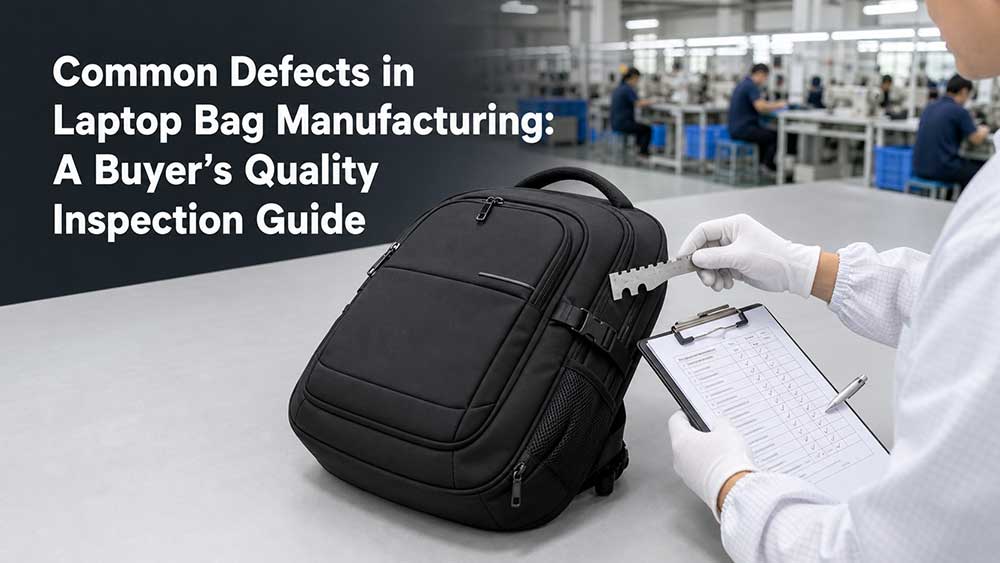
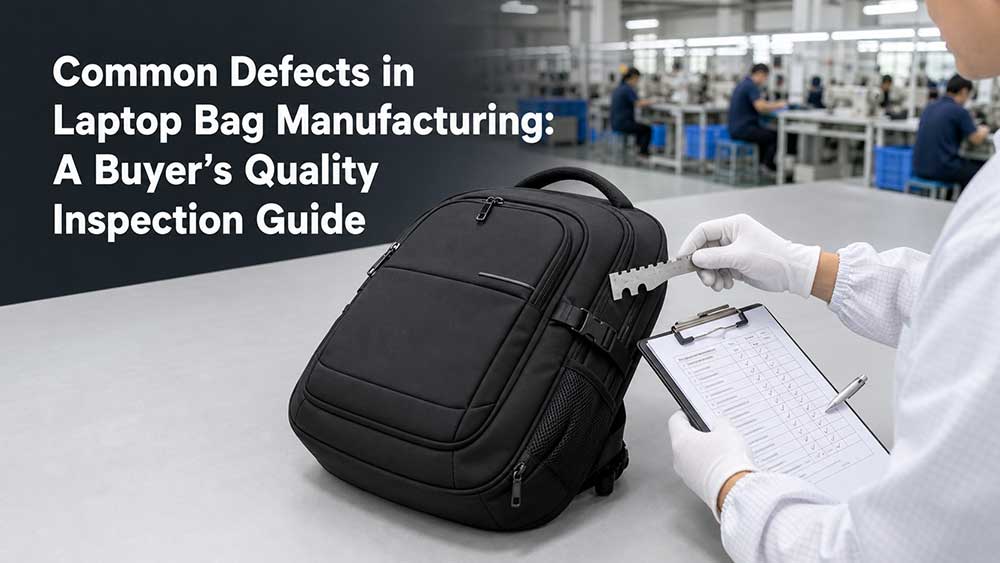
That is why experienced buyers do not evaluate a shipment by appearance alone. They know which defects affect function, which weaken durability, and which cosmetic problems could make a product unacceptable for retail.
This guide explains the most common defects found in custom laptop bag manufacturing, why they occur, how they affect the finished product, and what buyers should inspect before approving a production lot or shipment.
A laptop bag is not simply a fashion accessory. It is expected to organize and carry expensive electronic devices through commuting, work, travel, and everyday handling.
A meaningful inspection should therefore cover three areas:
Appearance: Does the bag match the approved sample in shape, color, branding, and workmanship?
Function: Do the zippers, buckles, straps, pockets, and adjustment systems operate correctly?
Durability: Are load-bearing seams, handles, shoulder straps, bottom panels, and hardware reinforced adequately?
The inspection should also confirm that the correct materials, dimensions, accessories, packaging, and labeling have been used.
A bag can look acceptable on a table and still contain hidden functional problems. Weak strap reinforcement, misplaced foam, a rough zipper, or an incorrectly assembled buckle may only become apparent when the product is handled and tested.
1. Stitching and Seam Defects
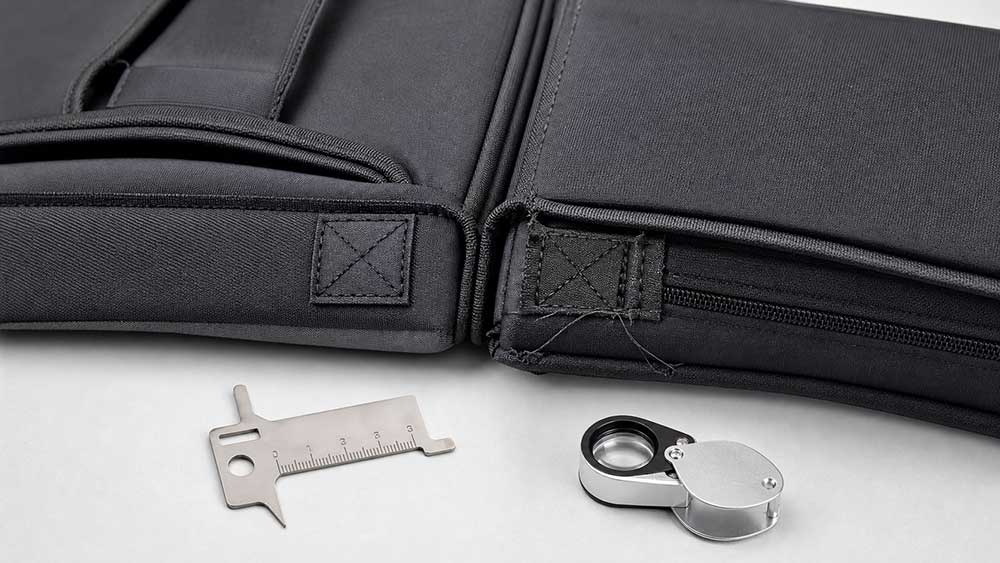
Stitching quality affects almost every part of a laptop bag. Poor seams can reduce structural strength, distort the product’s appearance, and cause premature failure under load.
Common stitching defects include:
Skipped stitches
Loose or looping stitches
Broken thread
Uneven stitch length
Crooked stitch lines
Open seams
Inconsistent seam allowance
Inadequate backstitching
Untrimmed thread ends
These defects may result from incorrect thread tension, damaged needles, unsuitable thread, inconsistent operator handling, poor material feeding, or insufficient in-line inspection.
The most important seams are not always the most visible ones. Inspectors should pay particular attention to:
Carry-handle attachments
Shoulder-strap anchor points
Bottom-panel seams
Laptop-compartment seams
Webbing attachment points
Areas where several material layers meet
A decorative stitch that is slightly uneven may be cosmetic. An incomplete seam at a shoulder-strap attachment can become a serious durability problem.
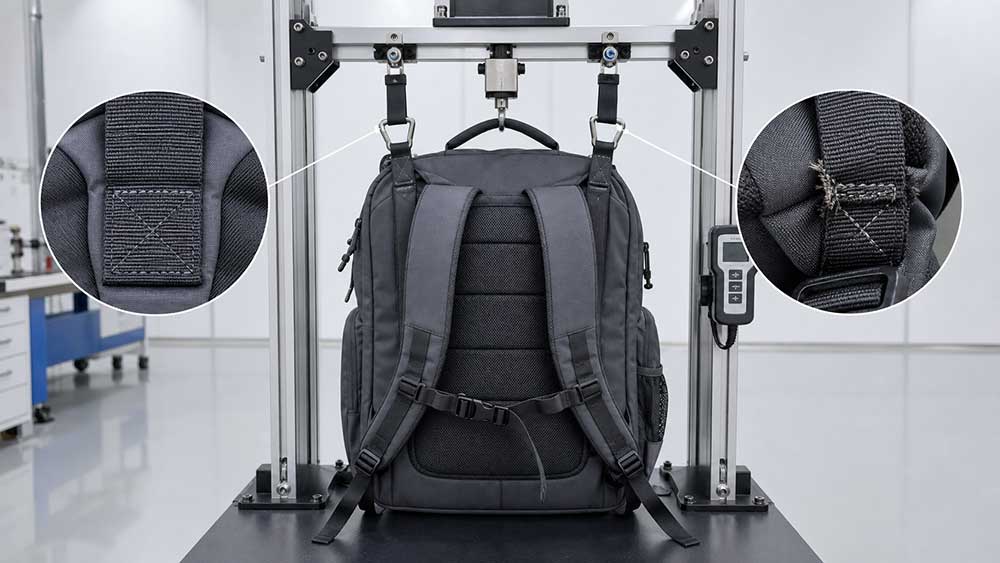
Inspection tip: Apply moderate manual tension to reinforced seams and attachment points. The stitch line should remain stable without opening, stretching excessively, or producing cracking sounds.
2. Zipper Defects
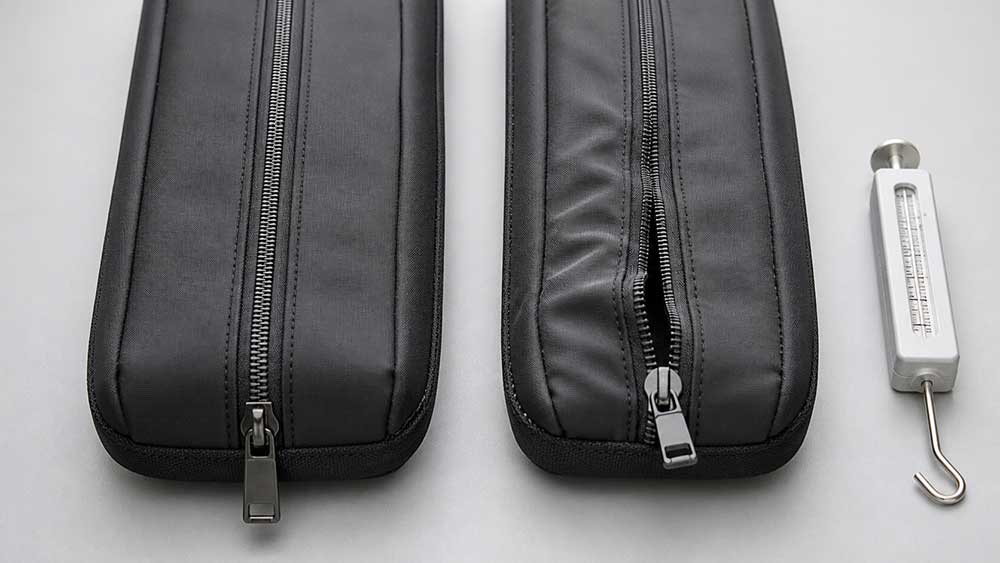
Zippers are among the most frequently operated components on a laptop bag. A zipper that looks correct may still jam, separate, or become difficult to operate after repeated use.
Typical zipper defects include:
Rough or inconsistent slider movement
Misaligned zipper tape
Wavy zipper installation
Teeth or coil separation
Missing or loose stops
Damaged pullers
Incorrect zipper length
Fabric or lining caught in the zipper path
Gaps at the ends of the opening
Zipper problems may come from the zipper itself, but they can also be caused by poor installation. Excessive fabric tension, misaligned sewing, sharp curves, or lining positioned too close to the teeth can interfere with movement.
YKK’s official quality-management information describes standardized quality assurance and zipper-strength testing, illustrating why fastening performance should be evaluated as a functional system rather than judged only by the brand name on the slider.
Inspection tip: Open and close each sampled zipper several times, including around corners. Test it with the compartment empty and lightly loaded. The slider should move smoothly without catching the lining or forcing the opening out of shape.
For a broader explanation of how zippers, buckles, handles, and trims affect bag quality, see this business bag hardware guide.
3. Fabric and Surface Defects
Fabric covers most of the visible product, so even small inconsistencies can reduce perceived quality.
Common fabric defects include:
Color variation between panels
Stains, oil marks, or adhesive residue
Scratches and abrasion marks
Coating damage
Permanent creases
Weaving defects
Uneven texture or gloss
Incorrect fabric direction
Material that does not match the approved specification
Some defects originate at the textile mill, while others occur during storage, cutting, sewing, or assembly. Combining panels from different dye lots can also produce visible shade differences.
Inspection should be performed under consistent lighting. Dark colors, coated fabrics, PU leather, and fabrics with a directional weave may look different depending on viewing angle.
Buyer tip: Do not compare color using one panel alone. Place the front, back, gusset, pocket, and shoulder-strap materials beside one another and check the assembled product from several angles.
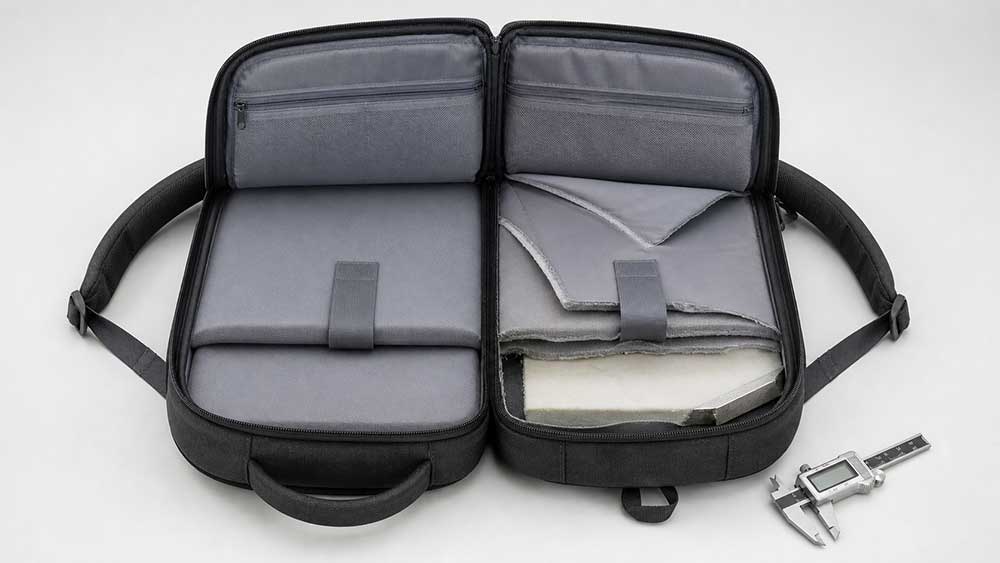
Padding is a core functional feature of a laptop bag, but much of it is hidden after assembly.
Common problems include:
Missing foam pieces
Uneven foam thickness
Incorrect foam density
Compressed or damaged foam
Foam shifting away from its intended position
Insufficient bottom or corner coverage
Hard seams or hardware pressing into the compartment
A laptop sleeve that is too loose or too tight
Thicker foam does not automatically provide better protection. Protection also depends on foam density, placement, compartment fit, bottom clearance, and whether the laptop is separated from hard exterior components.
A useful laptop compartment should protect the bottom, sides, corners, front, and back without making device insertion difficult. A suspended compartment can also reduce direct contact between the laptop and the ground when the bag is set down.
Inspection tip: Press along the full perimeter of the laptop compartment with both hands. Resistance should feel reasonably consistent. Soft gaps, hard lumps, or sudden changes in thickness may indicate missing, folded, or displaced foam.
5. Shape, Symmetry, and Dimensional Defects
A finished laptop bag should reflect the shape and measurements established in the approved sample and specification sheet.
Structural defects may include:
A twisted or leaning bag body
Uneven side panels
An off-center front pocket
Different shoulder-strap lengths
Uneven handle height
A distorted bottom panel
An asymmetrical top opening
Finished dimensions outside tolerance
These problems can originate from inaccurate patterns, incorrect cutting, inconsistent seam allowance, fabric stretching, poor assembly sequence, or uneven foam placement.
Some bags are intentionally soft and may not stand upright when empty. Inspectors should therefore compare the product with the approved construction rather than applying the same expectation to every style.
Inspection tip: Place the bag on a flat surface, then hang it naturally by the handle and shoulder straps. Check symmetry, pocket position, panel alignment, and whether the bag twists when suspended.
6. Handle, Shoulder-Strap, and Load-Bearing Defects
Handles and straps carry the combined weight of the laptop, charger, documents, and personal items. Failures in these areas can make the entire product unusable.
Common defects include:
Missing or incomplete bartacks
Weak reinforcement stitching
Misaligned strap anchors
Twisted webbing
Unequal shoulder-strap lengths
Loose adjusters
Poorly secured D-rings or hooks
Insufficient reinforcement beneath the outer fabric
A neat row of visible stitches does not necessarily mean the attachment is strong. The internal reinforcement material, stitching pattern, thread, number of layers, and location of the load path all matter.
Inspection tip: Confirm that both sides are attached symmetrically, then apply a controlled pull to handles and strap anchors. Reinforcement should remain secure, and the surrounding fabric should not distort excessively.
7. Logo and Branding Defects
A functional bag may still be commercially unacceptable if the branding is incorrect.
Common branding problems include:
Logo placed in the wrong position
Incorrect size or proportion
Crooked alignment
Wrong color
Poor embroidery density
Missing embroidery stitches
Incomplete screen printing
Peeling heat transfer
Scratched metal badges
Incorrect spelling or artwork
These problems often result from outdated artwork, incorrect positioning templates, poor embroidery files, inadequate print curing, or failure to approve a production-ready branding sample.
Branding should be checked against the final approved artwork and specification—not against another randomly selected production unit.
Buyer tip: Confirm the logo method, size, color reference, placement measurement, and orientation before production. For multilingual labels or small text, inspect spelling and punctuation separately.
8. Hardware and Component Defects
Laptop bags may use buckles, hooks, D-rings, magnetic closures, rivets, adjusters, feet, trolley sleeves, and other components.
Frequent defects include:
Scratched or chipped finishes
Rust or corrosion
Sharp edges or burrs
Cracked plastic buckles
Deformed rings or hooks
Loose rivets
Weak magnetic closures
Components in the wrong finish or size
Adjusters that slip under tension
Hardware quality should be evaluated for both appearance and function. A polished metal part may look premium but still have sharp edges. A plastic adjuster may operate correctly when unloaded but slip once tension is applied.
Inspection tip: Operate every component on the sampled bags. Apply light tension to adjusters and hooks, check rivets for rotation, and run a finger carefully around accessible metal edges to identify burrs.
9. Lining, Pocket, and Interior-Finishing Defects
Customers often judge workmanship by opening the bag and examining the interior.
Typical interior defects include:
Loose or excessively wrinkled lining
Raw edges left exposed
Torn or punctured lining
Crooked organizer pockets
Incorrect pocket dimensions
Lining caught in a zipper
Excess fabric bunching at corners
Stains, thread ends, or foreign material inside the bag
Interior pockets should match the approved size and remain usable when the bag is loaded. A phone pocket that is too narrow or a charger pocket positioned behind a seam may technically be present but fail in practical use.
Inspection tip: Insert representative items into the laptop sleeve and organizer pockets. Check accessibility, dimensions, seam security, and whether the lining pulls or catches when items are removed.
10. Packaging, Labeling, and Assortment Defects
Inspection should not end when the bag itself passes.
Packaging problems can delay receiving, create warehouse errors, affect retail presentation, or cause products to arrive damaged.
Common packaging defects include:
Incorrect polybags
Missing or incorrect hangtags
Wrong barcode or SKU labels
Incorrect carton markings
Missing instruction or warranty cards
Incorrect color or size assortment
Products packed in the wrong orientation
Insufficient protection for metal parts
Damaged or weak export cartons
Packaging should be checked against the purchase order, packing specification, barcode file, and approved packaging sample.
Inspection tip: Select cartons from different positions in the shipment. Verify carton quantity, assortment, barcode scanning, product orientation, moisture protection, and carton condition rather than checking only the top carton.
How Should Defects Be Classified?
Not every imperfection has the same effect. Buyers and manufacturers normally define defect classifications before inspection so that decisions are not made subjectively at the last minute.
Critical defects
Critical defects may create a safety risk, violate a mandatory requirement, or make the product dangerous or fundamentally unsuitable.
Possible examples include:
A sharp metal edge that could injure the user
A prohibited or noncompliant material
A load-bearing attachment that fails immediately
Incorrect safety or regulatory labeling where such labeling is required
Critical defects are generally assigned a very low or zero acceptance allowance, depending on the inspection plan and buyer requirements.
Major defects
Major defects substantially affect function, durability, saleability, or customer acceptance.
Examples may include:
A non-functioning main zipper
An open structural seam
A loose handle or shoulder strap
Missing laptop-compartment padding
Severe shape distortion
Incorrect branding that makes the product unsellable
Minor defects
Minor defects usually affect appearance without materially reducing normal function.
Examples may include:
A small untrimmed thread
A slight cosmetic mark in a less visible area
Minor stitch-line variation
A small wrinkle that does not affect use
Classification must be agreed for the specific product. The same issue may be minor on one design and major on another. For example, a small logo-position deviation may be minor on an internal label but major on a prominent front-panel logo.
How AQL Sampling Fits into Laptop Bag Inspection
Checking every unit may be appropriate for certain premium, safety-sensitive, or low-volume orders, but many commercial inspections use statistical sampling.
ISO 2859-1:2026 defines acceptance-sampling plans for inspection by attributes and allows production lots to be evaluated against an agreed acceptance quality limit, or AQL.
AQL does not mean that defects are desirable or that an approved shipment contains a guaranteed defect percentage. It is part of a statistical decision system used to determine whether a sampled lot should be accepted or rejected under agreed inspection conditions.
Before production, buyers should define:
Inspection level
Sample size
Critical, major, and minor defect limits
Product-specific defect definitions
Measurement tolerances
Functional tests
Packaging requirements
Rules for reinspection or corrective action
Clear standards reduce disputes because the factory, inspection company, and buyer are working from the same criteria.
How Manufacturers Prevent Defects Before Final Inspection
Final inspection is necessary, but relying on it alone is inefficient. By the time a defect is found at the end of production, hundreds of units may already be affected.
A stronger quality-control system includes several stages.
Incoming material inspection
Fabric, lining, foam, webbing, thread, zippers, hardware, labels, and packaging are checked against approved specifications before they enter production.
First-piece approval
The first completed units from the production line are compared with the approved sample. Dimensions, construction, branding, function, and workmanship are confirmed before full production continues.
In-line inspection
Inspectors monitor cutting, sewing, reinforcement, assembly, and finishing while production is underway. Early detection limits the number of affected units.
Functional and measurement checks
Zippers, straps, buckles, pockets, laptop compartments, and other components are operated and measured rather than judged only visually.
Final random inspection
Completed and packed units are sampled to assess workmanship, function, measurements, labeling, assortment, and packaging before shipment.
Root-cause correction
Repairing individual bags is not enough when the same defect continues to appear. The manufacturer should identify whether the cause is material, pattern, equipment, method, training, or process control—and correct it at the source.
How Vancharli Outdoor Approaches Laptop Bag Quality
At Vancharli Outdoor, laptop bag quality control begins with the approved specifications, materials, patterns, and pre-production sample—not only with the final shipment.
Our teams monitor key stages from incoming materials and pattern development through cutting, sewing, assembly, branding, finishing, and packing. Inspection priorities are adjusted to the product. A lightweight laptop sleeve, structured business briefcase, rolling laptop bag, and padded laptop backpack do not have identical risk points.
For OEM and private-label projects, we work with customers to clarify material specifications, construction requirements, logo standards, measurements, packaging, and inspection criteria before bulk production.
This process helps reduce avoidable defects, improve consistency, and make quality discussions more objective throughout development and manufacturing.
Most laptop bag defects are preventable, but prevention requires more than a final visual check.
Reliable quality comes from accurate specifications, approved materials, stable patterns, trained operators, appropriate equipment, in-line control, functional testing, and clearly defined acceptance criteria.
For buyers, knowing the common defect categories makes sample approval and pre-shipment inspection more effective. It also helps separate a minor cosmetic issue from a problem that could cause product failure, returns, or reputational damage.
A high-quality laptop bag is not defined by one fabric, zipper, or inspection report. It is the result of consistent execution across every component and every production stage.
Frequently Asked Questions About Laptop Bag Manufacturing Defects
What are the most common laptop bag manufacturing defects?
Stitching irregularities, loose thread ends, zipper problems, shape distortion, branding errors, and misaligned pockets are frequently identified. Load-bearing reinforcement and laptop-compartment padding deserve particular attention because defects in these areas may affect durability or protection.
Are all visible defects grounds for rejecting a shipment?
No. Defects are normally classified as critical, major, or minor according to their effect on safety, function, durability, and saleability. The agreed AQL plan and product-specific defect definitions determine whether the inspected lot passes.
Why is padding inspection important?
Padding helps protect the laptop during normal handling, but it is largely hidden after assembly. Missing, shifted, compressed, or incorrectly specified foam may reduce protection even when the exterior looks acceptable.
Should inspectors test every zipper?
For a full 100% inspection, every zipper can be operated. In a sampled inspection, all zippers on every selected unit should be tested several times, including around corners and with the compartment lightly loaded.
How can buyers reduce defects before shipment?
Approve detailed specifications and a representative production sample, define defect classifications and tolerances, confirm materials and branding before bulk production, and use in-line and pre-shipment inspections rather than relying only on a final check.








Comments are closed