Standard Backpack Size Guide: Dimensions, Liters & Uses
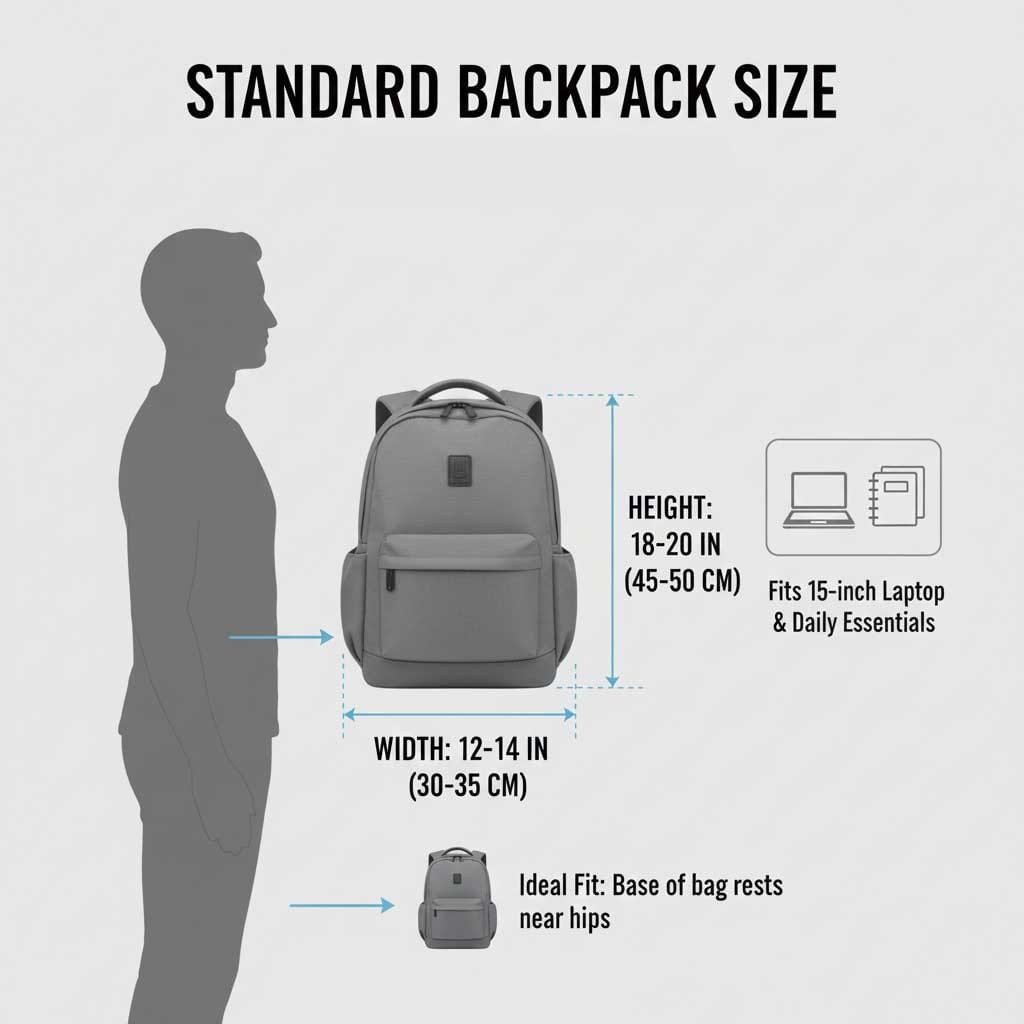
There is no single universal standard backpack size. In practice, the average or regular backpack size for adult everyday use is approximately 18–20 inches high, 12–14 inches wide, and 6–8 inches deep, with a capacity of about 20–30 liters.
This range works well for most school, commuting, work, and everyday carry needs, although the right size still depends on what you carry and how the backpack is constructed.
Backpack size
Typical capacity
Approximate dimensions
Common uses
Compact
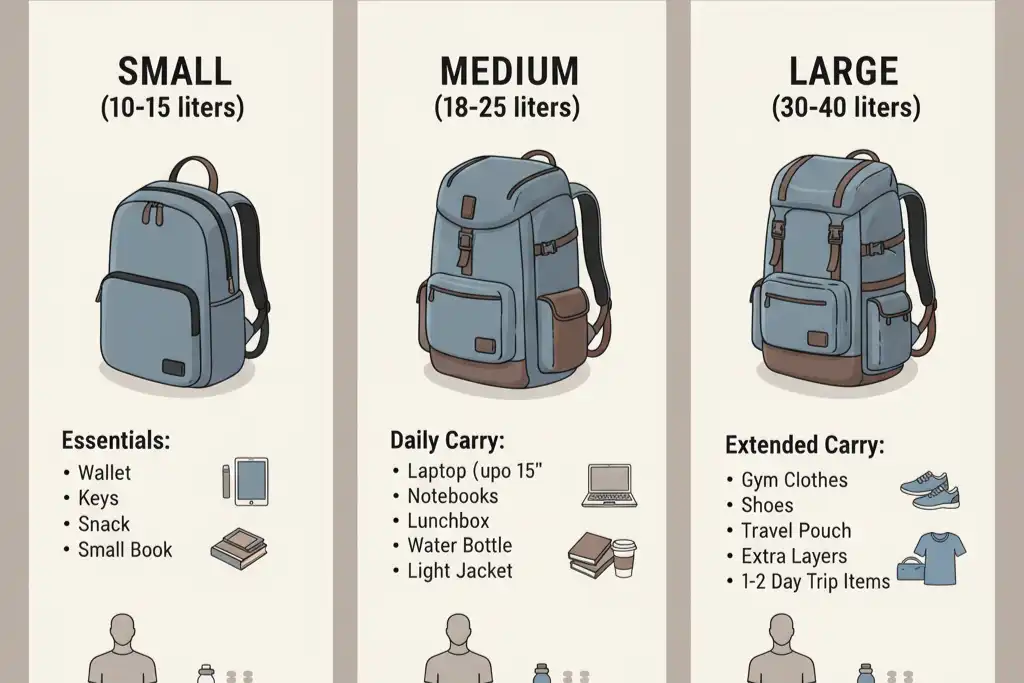
10–15L
15–17 × 10–11 × 4–6 in
Tablets, small essentials and light commuting
Standard everyday
20–30L
18–20 × 12–14 × 6–8 in
School, work, commuting and 13–15.6-inch laptops
Large everyday
30–40L
20–22 × 13–15 × 8–10 in
Gym gear, extra clothing and short trips
These dimensions are approximate. Backpack shape, padding, pocket construction, and the method used to measure capacity can all affect usable internal space.
There is no universal standard backpack size, but most adult everyday models fall within the 20–30L range.
Typical standard backpack dimensions are approximately 18–20 × 12–14 × 6–8 inches.
Compact 10–15L backpacks suit light daily loads, while 30–40L models provide more room for gym gear, clothing, or short trips.
Capacity and external dimensions are not interchangeable. Padding, pockets, shape, and internal dividers affect usable space.
For school, laptop, and airline use, check the actual compartment or packed-bag dimensions instead of relying only on the stated capacity.
Standard Backpack Size
Standard Backpack Dimensions
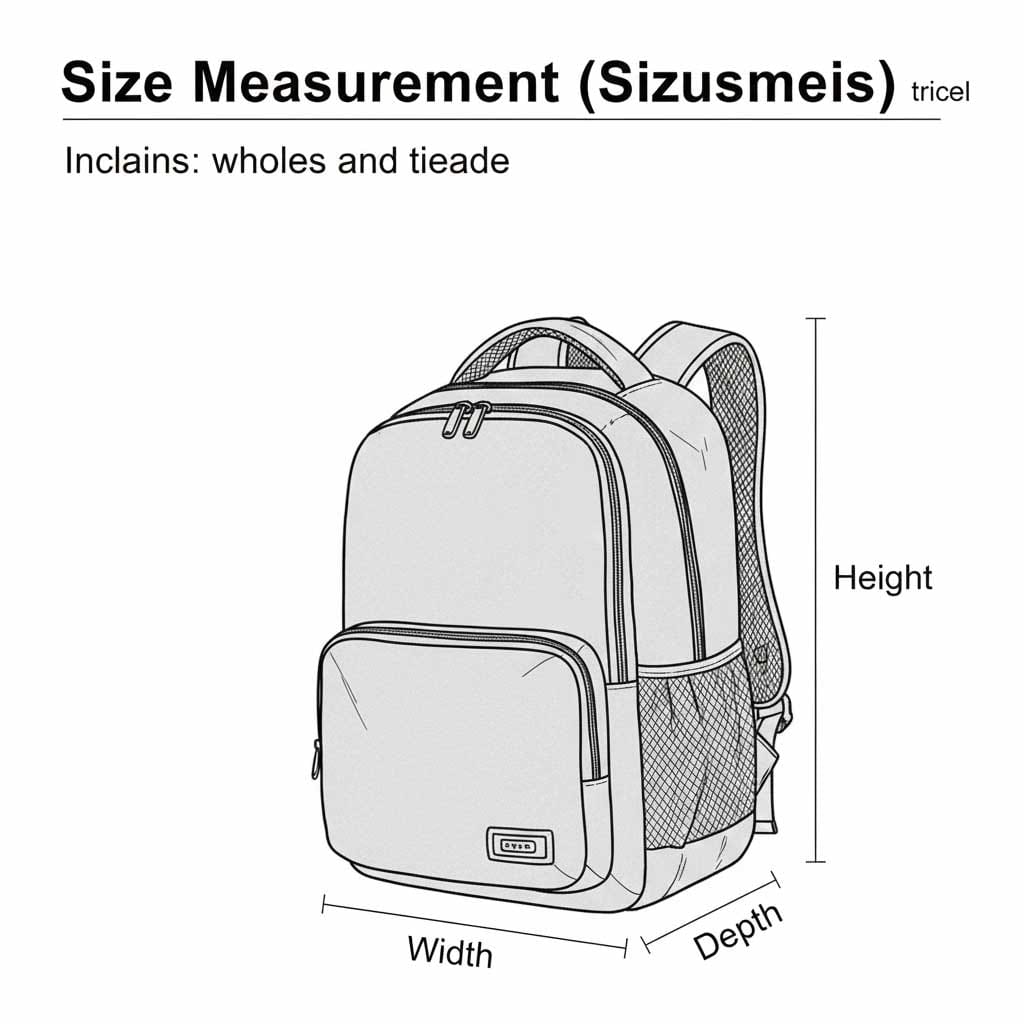
A standard, average, or regular everyday backpack usually measures approximately 18–20 inches high, 12–14 inches wide, and 6–8 inches deep. Backpack dimensions are normally listed as height × width × depth, although the exact measurements vary according to capacity, structure, padding, and intended use.
Measurement
Common range
Metric equivalent
Height
18–20 in
46–51 cm
Width
12–14 in
30–36 cm
Depth
6–8 in
15–20 cm
Capacity
20–30L
1,220–1,831 cu in
These are reference ranges rather than an industry-wide standard. A compact school or commuter backpack may be shorter or slimmer, while a backpack designed for gym gear, travel, or a larger laptop may be deeper.
External backpack dimensions do not guarantee laptop fit. A padded compartment takes up internal space, and laptops with the same screen size can have different body dimensions. If laptop compatibility matters, measure the laptop’s actual width, depth, and thickness and compare them with the compartment’s internal measurements.
Volume
Volume describes the backpack’s stated storage capacity and is usually expressed in liters. For everyday use, 20–30L is a common range because it provides room for a laptop, notebooks, a water bottle, lunch, chargers, and a light layer without creating the bulk of a larger travel pack.
A smaller 10–15L backpack works better for a tablet and a few essentials. A 15–20L model suits lighter commuting, while a 25–30L backpack provides more flexibility for books, larger laptops, gym clothing, or extra daily items.
One liter equals approximately 61 cubic inches, but liter capacity should still be treated as a comparison tool rather than a guarantee of what will fit. Two backpacks labeled 25L may offer different usable space because of their shape, padding, compartments, and pocket layout.
How Big Is a 15L Backpack?
A 15L backpack is considered compact. Its dimensions vary by shape, but many models are approximately 15–17 inches high, 10–11 inches wide, and 4–6 inches deep. This size usually works for a tablet, water bottle, small notebook, light jacket, and a few personal items.
A 15L backpack may fit some 13-inch laptops, but capacity alone does not confirm laptop compatibility. Always check the internal compartment dimensions.
How Are Backpack Measurements Taken?
Measuring Backpack Capacity in Liters
Backpack capacity is normally measured by evaluating the usable space inside the main compartment and other enclosed pockets. One recognized method, described in the official ASTM F2153 backpack capacity measurement standard, uses standardized small balls to fill enclosed compartments. The balls are then transferred into a measuring container to determine the total volume.
ASTM F2153 excludes storage areas that are not completely enclosed by fabric, such as open mesh pockets, water bottle holders, and compression pockets. However, not every backpack brand follows exactly the same method. Some brands may include storage areas that others exclude, so two backpacks carrying the same liter rating may not provide identical usable space.
Multiplying external height, width, and depth only produces a rough box-volume estimate. It does not accurately calculate internal capacity because curved panels, padding, seams, pockets, and compartment dividers take up space.
Tip: Use liters to compare general capacity, but check the compartment layout and internal measurements when a specific laptop, binder, camera, or other item must fit.
Backpack Dimensions in Inches and Centimeters
External backpack dimensions describe the maximum height, width, and depth of the bag. They help determine whether the backpack will fit inside a locker, under a desk, in an airline baggage sizer, or against the intended user’s body.
Measure the backpack while it is standing in its normal shape:
Measure from the bottom panel to the highest point for height.
Measure across the widest part of the body for width.
Measure from the back panel to the frontmost point for depth.
Include filled front pockets if you need the maximum packed dimensions.
External size and internal capacity are related, but they are not the same. Thick foam, reinforced panels, curved construction, laptop compartments, and multiple organizers can make a backpack look large while reducing the space available inside.
For product specifications, state whether the dimensions refer to the empty, naturally shaped, fully packed, compressed, or expanded backpack. This makes backpack measurements and quality inspections more consistent.
Standard Backpack Uses
Choosing the right backpack depends on how you plan to use it. You see different needs for school, work, and day trips. Each activity requires a specific size and design. The table below helps you compare common uses and sizes:
Use Case
Typical Volume
Common Dimensions (inches)
Youth Sizing
Adult Sizing
Key Features
School
18–25 L
16–18 x 11–13 x 5–7
15–17 L
20–25 L
Laptop sleeve, organizer
Work
20–30 L
17–20 x 12–14 x 6–8
N/A
20–30 L
Padded laptop, pockets
Daypack
15–22 L
15–18 x 10–12 x 5–7
12–15 L
18–22 L
Lightweight, hydration slot
School
The average school backpack size depends on the student’s age, body size, and daily load. A typical school backpack for older students usually holds about 18–25 liters and measures approximately 16–18 inches high, 11–13 inches wide, and 5–7 inches deep.
Smaller backpacks of around 12–17 liters may suit younger children, while adult-sized school backpacks commonly fall within the 20–25L range. The backpack should provide enough room for books, folders, lunch, and any required device without being unnecessarily large.
For a school backpack with a laptop compartment, check the laptop’s actual body dimensions instead of relying only on its advertised screen size.
Work
You want a backpack that keeps your laptop safe and organizes your work items. A standard backpack for work holds 20 to 30 liters. This size fits most office needs. You find padded laptop sleeves, pen holders, and side pockets in these bags. Adult sizing works best for professionals. You should check if the backpack fits under your desk or in a locker.
Choose a backpack with a water-resistant material for rainy days.
Pick one with a simple design for a professional look.
Daypack
You use a daypack for short trips, hikes, or city outings. Most daypacks hold 15 to 22 liters. Youth daypacks are smaller, around 12 to 15 liters. Adult daypacks offer more space for snacks, water, and a light jacket. You want a lightweight design and easy-access pockets. Some daypacks include hydration slots for water bladders.
Note: Always match the backpack size to your activity. You avoid carrying extra weight and keep your items organized.
Choosing the Right Size
Daily Needs
You should start by thinking about what you carry every day. Make a list of your items. Do you bring a laptop, books, lunch, or gym clothes? A standard backpack usually fits these essentials. If you carry only a few things, choose a smaller size. If you need space for extra gear, pick a larger volume. Here is a simple checklist to help you match backpack size to your daily needs:
Laptop or tablet
Textbooks or notebooks
Water bottle
Lunch box or snacks
Jacket or sweater
Tip: Lay out your daily items before shopping. This helps you see how much space you need.
Fit and Comfort
Capacity alone does not determine whether a backpack will feel comfortable. The bag should also match the user’s body proportions, expected load, and carrying time.
Adjust the shoulder straps so the backpack sits close to the back rather than hanging low. The straps should distribute the load without creating concentrated pressure. For heavier daily loads, a structured back panel, wider padded shoulder straps, and a sternum strap can improve stability.
Try the backpack with a realistic load whenever possible. A lightly packed 30L backpack may feel comfortable, while the same backpack filled with books, electronics, and water may feel very different. The best size is one that carries the required items without encouraging unnecessary weight.
Carry-On Compatibility
Airline compatibility depends on the backpack’s packed external dimensions, not only its capacity in liters. The Federal Aviation Administration’s carry-on baggage guidance notes that the maximum carry-on size used by many airlines is 45 linear inches—the combined total of the bag’s height, width, and depth—but travelers should still confirm the applicable limits with their airline.
For example, a bag measuring 22 × 14 × 9 inches totals 45 linear inches. However, this should not be treated as a universal carry-on limit. Airline, aircraft, route, and ticket rules may differ, and personal-item allowances are usually smaller.
A soft-sided everyday backpack may fit into a baggage sizer more easily than a rigid bag, but overpacking can increase its depth. Measure the backpack after packing and check the operating airline’s current rules before traveling.
A standard everyday backpack usually holds 20–30 liters and measures approximately 18–20 × 12–14 × 6–8 inches. This range works for many school, work, commuting, and general daily-use situations, but it is not a universal standard.
Choose a smaller backpack if you carry only a tablet and a few essentials. Choose a larger model if you regularly carry books, gym clothing, camera equipment, or travel items. When laptop fit or airline compatibility matters, check the actual internal or packed external dimensions rather than relying only on the stated liter capacity.
For brands developing everyday or laptop backpacks, capacity should not be selected by liters alone. The product specification should also define external dimensions, usable compartment dimensions, target laptop size, pocket layout, padding, and expected load. Vancharli Outdoor supports custom laptop backpack development based on the buyer’s target users, retail positioning, materials, and functional requirements.
FAQ
What is the best backpack size for school?
You should choose a backpack with 18 to 25 liters. This size fits books, folders, and a laptop. Most students find this range comfortable for daily use.
How do I measure my backpack for airline travel?
Measure the backpack’s maximum packed height, width, and depth, including filled front pockets and other protruding parts. Add the three measurements if the airline uses a linear-inch limit, but also compare each individual dimension with the airline’s published allowance. Many airlines use a maximum of 45 linear inches for carry-on baggage, but there is no universal airline size limit. Always check the operating airline before traveling.
Can a standard backpack fit a 15-inch laptop?
Many standard 20–30L backpacks can accommodate a 15- or 15.6-inch laptop, but capacity alone does not guarantee a proper fit. A “15-inch backpack” may refer either to the backpack’s external height or to its intended laptop screen size, so check the product specification carefully. For laptop compatibility, compare the compartment’s internal width, height, and depth with the laptop’s actual body dimensions, including any protective case. Do not rely only on the advertised screen-size label.
What is the difference between volume and dimensions?
Volume shows how much you can carry inside. Dimensions tell you the outside size. You need both to make sure your items fit and the backpack feels comfortable.
What is the difference between volume and dimensions?
Volume shows how much you can carry inside. Dimensions tell you the outside size. You need both to make sure your items fit and the backpack feels comfortable.
How do I know if a backpack fits my body?
Try on the backpack. Adjust the straps so the bottom sits near your hips. You should feel the weight on your shoulders and back, not just your arms. What Is a Standard Backpack or Rucksack Size in Centimeters? A standard adult everyday backpack or rucksack is approximately 46–51 cm high, 30–36 cm wide, and 15–20 cm deep, with a capacity of about 20–30 liters. These are general reference dimensions rather than a universal industry standard.







Comments are closed