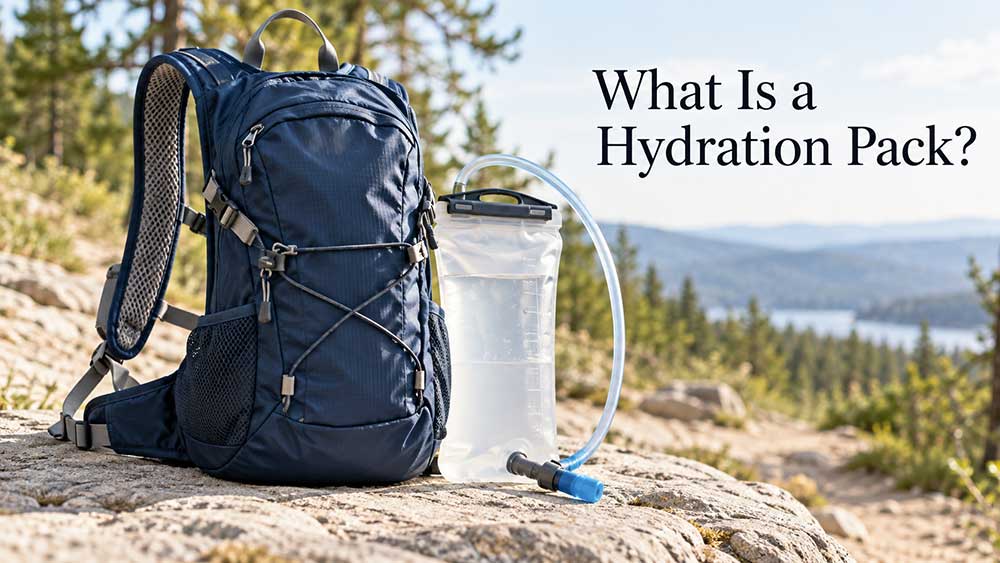
A hydration pack is a backpack, vest, or waist pack designed to carry water and make drinking convenient during an activity. Most backpack-style models hold a flexible water reservoir, also called a bladder, connected to a drinking tube and bite valve. You can sip without taking off the pack or digging out a bottle.
Hikers, cyclists, and runners use them, but the designs vary considerably. Some carry little more than water and a few essentials. Others have a main compartment for food, clothing, and trail gear. Understanding that difference helps you make sense of what a product actually offers.
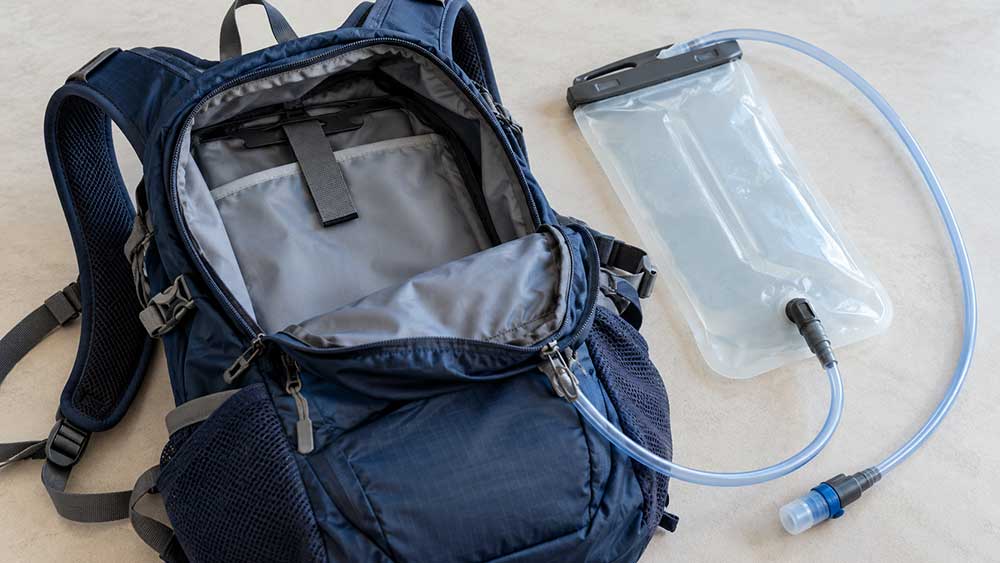
A typical reservoir-based hydration pack has four main components:
Component
What it does
Pack
Carries the water and other items, with straps that hold the load against your body
Reservoir, or bladder
Stores water in a flexible container inside the pack
Drinking tube
Connects the reservoir to a mouthpiece near your shoulder
Bite valve
Opens for drinking when gently bitten and helps prevent dripping when released
The pack usually has a sleeve or compartment for the reservoir and an opening through which the tube exits. A clip, loop, or magnetic attachment may keep the mouthpiece within reach.
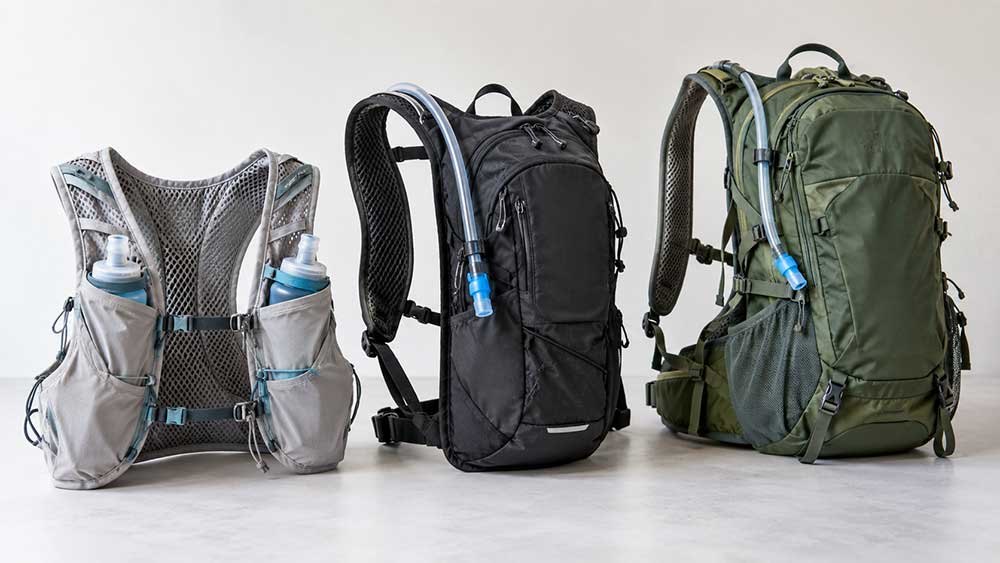
Not every hydration pack uses this arrangement. Some running vests hold soft flasks in front pockets, while some hydration waist packs carry bottles. These still make water accessible during activity, even without a reservoir and tube.
How Does a Hydration Pack Work?
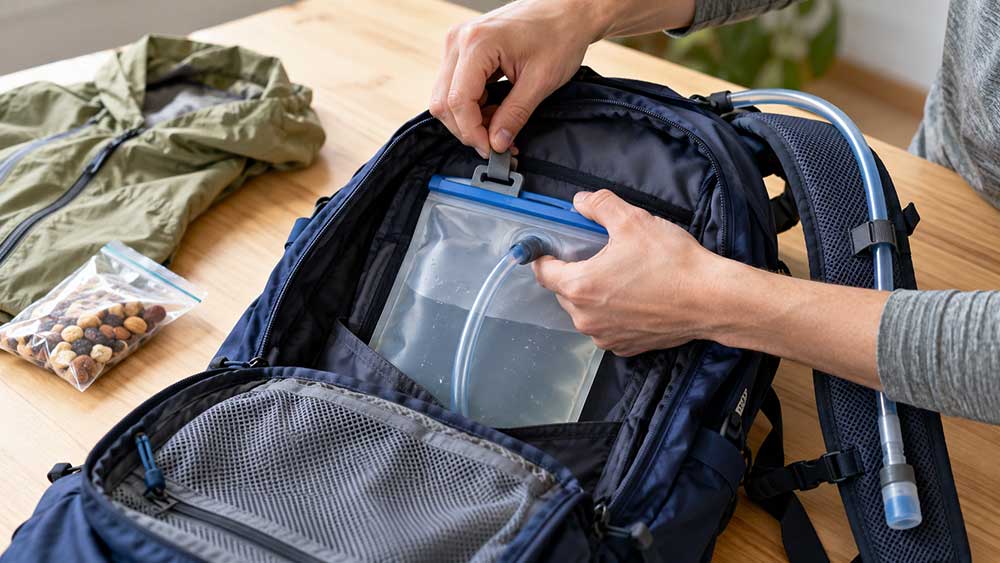
With a reservoir-based system, you fill the reservoir, close its cap or sliding seal, and place it in the designated compartment. If the pack has a reservoir hanger, use it to help keep the container supported.
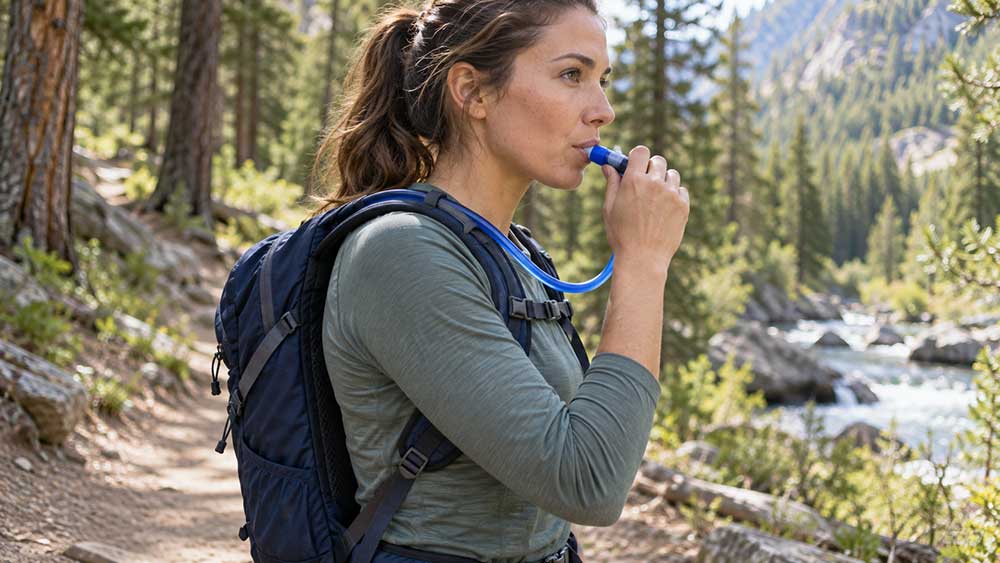
Next, route the tube through the pack’s opening and secure it along a shoulder strap. Bring the bite valve to your mouth, open any shutoff mechanism, gently bite, and sip. Most conventional systems work through suction; you do not need a pump.
You may still use a hand to position the mouthpiece. The convenience comes from having water within reach without retrieving and holding a bottle.
Before leaving, check the closure, tube connection, and valve for leaks. Make sure the tube is not folded sharply or trapped under packed items. Adjust the straps with the reservoir filled, since the loaded pack can feel different from the empty one.
Hydration Pack, Water Bladder, or Hydration-Compatible Backpack?
These terms describe related equipment, but they mean different things.
Hydration pack describes the wearable carrier designed for convenient access to water. Depending on the model, it may use a reservoir, soft flasks, or bottles.
Hydration reservoir, also called a bladder, is the flexible container that holds the water. A reservoir on its own is not a backpack.
Hydration-compatible backpack describes a backpack with features that accommodate a reservoir, such as an internal sleeve and tube opening. The reservoir may be sold separately.
Check the included-item list rather than relying on the product name. A listing may show a drinking tube in its photos while selling only the pack.
How Much Water Does a Hydration Pack Hold?
The answer depends on its reservoir, bottles, or flasks. For reservoir-based models, familiar sizes include 1.5 liters, 2 liters, and 3 liters. These indicate maximum water capacity, rather than how much you must carry on every outing.
Water also adds a noticeable load:
Water carried
Approximate water weight
1.5 liters
1.5 kg / 3.3 lb
2 liters
2 kg / 4.4 lb
3 liters
3 kg / 6.6 lb
These figures cover the water alone. The reservoir, pack, and other equipment add more weight.
Water capacity and gear capacity should be checked separately. A product described as having a “2-liter reservoir” may offer very little room for belongings, or it may have a much larger cargo compartment. Check how the manufacturer defines its stated pack capacity.
REI’s hydration pack guide explains both reservoir and gear capacity. For a practical check, load the pack with the water and belongings you intend to carry. A jacket that fits beside an empty reservoir may be harder to pack when the reservoir is full.
What Types of Hydration Packs Are There?
Type
Common use
Main design difference
Minimal hydration backpack
Carrying water and a few essentials
Small cargo area built around the reservoir
Running hydration vest
Running and fast-paced trail activity
Close-fitting design, often with accessible front pockets
Cycling hydration pack
Road cycling or mountain biking
Stable fit, with storage that varies from minimal pockets to space for tools and layers
Hiking hydration backpack
Carrying water alongside hiking equipment
More emphasis on cargo space and support for the complete load
Hydration waist pack
Carrying a lighter load around the waist
Uses a waist belt and may carry a reservoir or bottles
These categories overlap. A small hiking pack may work for cycling, while a running vest may suit a light hike. The activity label is a starting point; fit and storage determine how useful the pack will be.
When Is a Hydration Pack Useful?
A hydration pack is useful when retrieving a bottle would be inconvenient. On a hike, it keeps water accessible while you carry trekking poles. On a ride, it lets you carry water on your body along with small tools or clothing. A running vest can keep water and essentials close to your torso.
There are practical drawbacks, too. A reservoir requires more cleaning than a simple bottle, and refilling it may mean opening the pack or removing the container. Remaining water can be difficult to see, and the tube or valve can freeze in cold conditions.
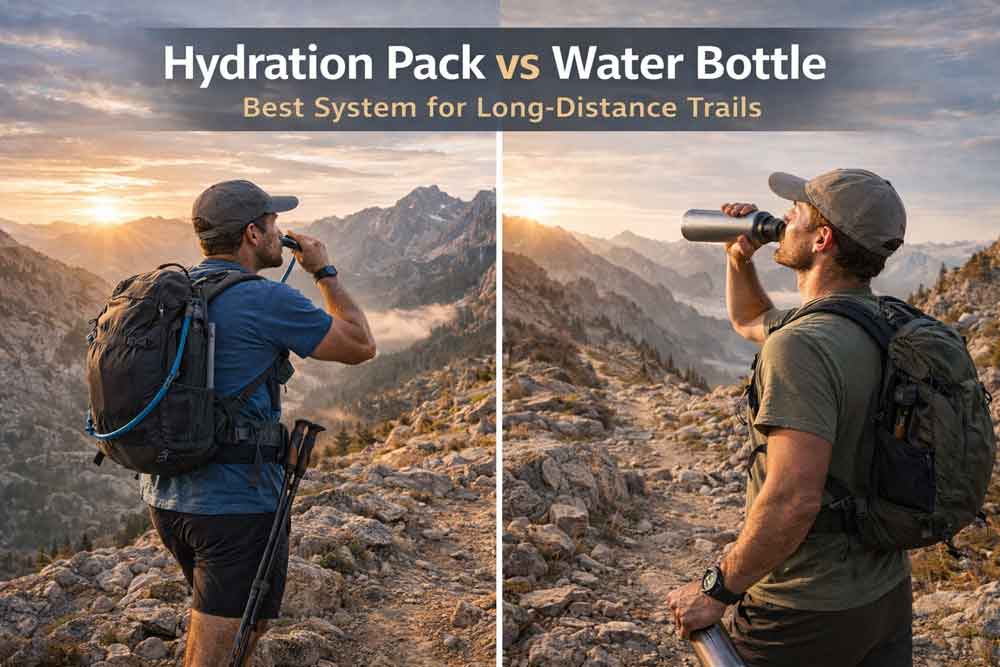
For a short outing where a bottle is easy to carry and reach, a hydration pack may offer little extra convenience. Our hydration backpack versus water bottle comparison explores that decision in more detail.
What Should a First-Time User Check?
Start with the actual drinking system, rather than the number of pockets:
Check what is included. Confirm whether the reservoir, tube, and valve come with the pack.
Check compatibility. A replacement reservoir needs to fit the compartment and work with the pack’s support and tube routing.
Try the loaded fit. Fill the reservoir to your intended carrying level, add your gear, and walk with the pack.
Check access. Make sure you can reach the mouthpiece and refill the reservoir without an unnecessarily awkward unpacking process.
Plan for cleaning. Empty, clean, and thoroughly dry the reservoir, tube, and valve according to their care instructions.
For brands developing a hydration pack, the same checks belong in sample approval. Fit the intended reservoir, fill it, add the expected gear, and check whether the tube outlet stays clear and the mouthpiece remains accessible. Vancharli Outdoor provides custom hydration pack options for different activities and storage requirements.
FAQ
Does every hydration pack include a reservoir?
No. Some include a reservoir, while others require you to buy one separately. Running vests may include soft flasks instead. Check the included-item list.
Can you put a hydration reservoir in a normal backpack?
Yes, if it fits and can be supported securely, with a suitable route for the tube. A dedicated reservoir sleeve, hanger, and tube opening make the setup easier.
How do you know how much water is left?
With many reservoir-based packs, you need to open the compartment and inspect or feel the reservoir. Unless the product has a specific indicator, you should not assume it shows the remaining volume while you wear it.
Can you refill it without removing the reservoir?
Sometimes. It depends on access to the reservoir’s opening and how the compartment is arranged. Some designs allow easy access; others are easier to refill after removing the reservoir.
Will a hydration pack keep water cold?
Not automatically. Some have insulation that slows warming, but an ordinary pack does not provide the same temperature control as an insulated bottle. Check the specific product features.
Can you use a hydration pack without the reservoir?
Usually, if the reservoir is removable. Its usefulness as an everyday bag depends on the remaining storage space and layout. A minimal reservoir carrier may have room for only a few small items.









Comments are closed