



Business Bag Hardware Guide: Zippers, Buckles, Handles, and Trims
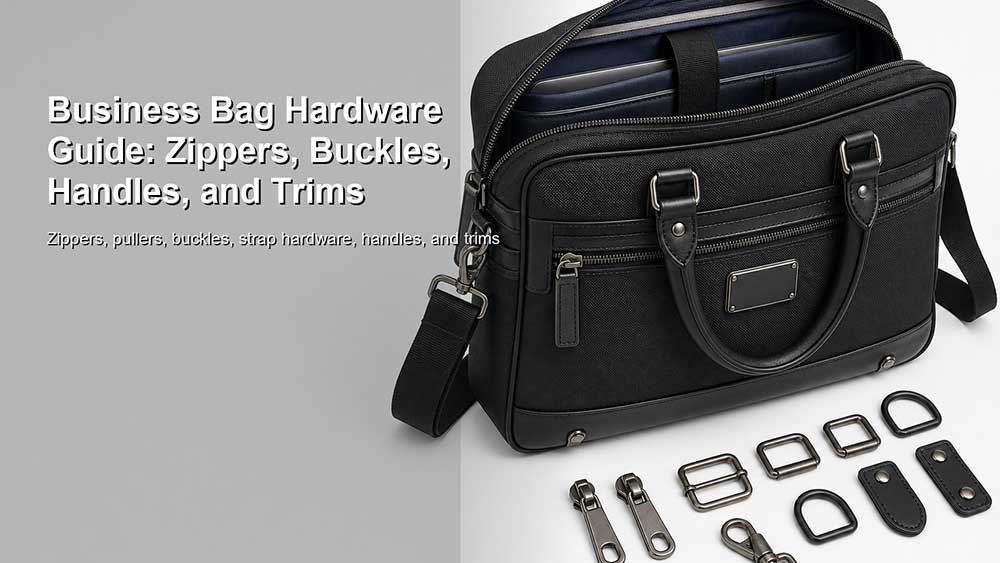
Business bag hardware is easy to overlook until something fails. A zipper starts to catch at the corner. A shoulder strap adjuster slips during the commute. A handle feels sharp in the hand. A logo plate scratches too easily. These small details can change how professional, durable, and comfortable a business bag feels in daily use.
For business bags, laptop bags, briefcases, and work backpacks, hardware is not just decoration. It affects access, carrying comfort, weight, appearance, repair risk, and long-term user satisfaction.
This guide explains the main hardware parts used in business bags, including zippers, buckles, handles, trims, metal finishes, and sample approval checks. It is written for buyers, brands, wholesalers, and product teams that want to understand what to check before developing or approving a business bag.
The Simple Way to Judge Business Bag Hardware
Good business bag hardware should do three things: work smoothly, support daily carrying, and match the professional look of the bag.
Zippers should open easily and protect the main compartments. Buckles and adjusters should keep straps stable without adding unnecessary bulk. Handles should feel comfortable when the bag is fully packed. Trims should improve the bag’s appearance without scratching, oxidizing, or making the product look overdesigned.
A buyer should not judge hardware only by whether it looks premium. The better question is: does this hardware make the bag easier to use, stronger in daily carry, and more consistent in bulk production?
Why Hardware Matters in a Business Bag
A business bag is used differently from a casual backpack. It may carry a laptop, charger, documents, tablet, notebook, water bottle, keys, and personal items. It may move from office to airport, meeting room to hotel, subway to coffee shop. In these situations, hardware needs to work smoothly without looking too heavy or too casual.
Good business bag hardware should support:
- Smooth daily opening and closing
- Stable shoulder strap adjustment
- Comfortable hand carry
- Secure laptop and document storage
- A clean professional look
- Low noise during movement
- Consistent finish across production
- Long-term resistance to wear
- Easy use without sharp edges or awkward parts
Poor hardware creates problems quickly. A weak zipper can make the bag feel cheap. A noisy metal buckle can be annoying in office settings. A handle that is not reinforced well can fail under daily load. A shiny trim that scratches after a few weeks can damage the brand image.
A business bag should not use hardware simply because it works on a tactical bag, fashion handbag, or hiking pack. It needs the right balance of durability, weight, function, and professional appearance.
What Counts as Business Bag Hardware?
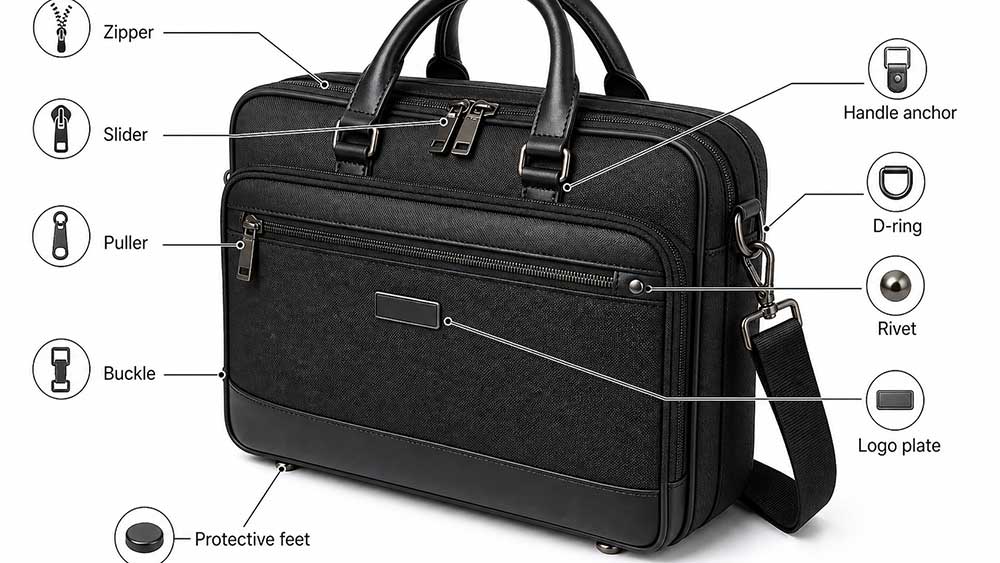
Business bag hardware includes both functional and decorative parts. Some pieces carry weight. Some control access. Some shape the visual identity of the bag.
Common business bag hardware includes:
- Zippers
- Sliders
- Zipper pullers
- Buckles
- Strap adjusters
- D-rings
- Swivel hooks
- Snap hooks
- Handle anchors
- Rivets
- Logo plates
- Metal badges
- Protective feet
- Magnetic snaps
- Strap clips
- Corner guards
- Pull tabs
- Decorative trims
- Edge finishing parts
Not every business bag needs all of these. A slim laptop briefcase may need high-quality zippers, reinforced handles, and a detachable shoulder strap. A business backpack may need smooth compartment zippers, strap adjusters, luggage strap hardware, and small logo trims. A premium leather work bag may rely more on metal feet, handle rings, rivets, and polished finish details.
The key is not to add more hardware. The key is to choose the right hardware for the user, price level, material, and carrying scenario.
Zippers: Smooth Access, Security, and Daily Durability
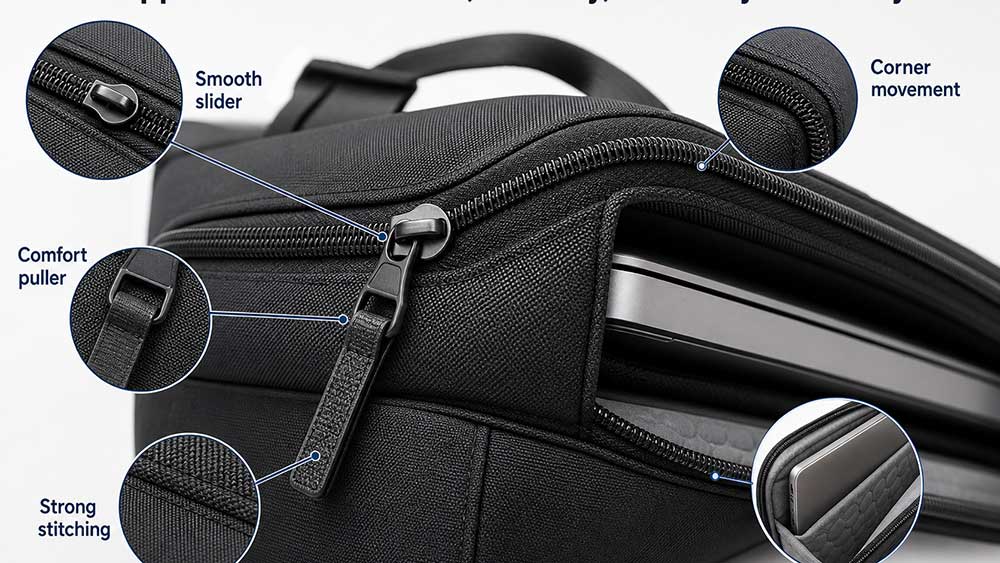
Zippers are one of the most important hardware components on a business bag. They control how users access the laptop compartment, main compartment, front pocket, document section, and hidden security areas.
A good business bag zipper should be smooth, stable, and easy to operate with one hand. It should not catch at corners, pull apart under pressure, or feel rough after repeated use.
Common zipper options include:
| Zipper Type | Common Use | Best For |
|---|---|---|
| Coil zipper | Most business backpacks and laptop bags | Lightweight daily use, curved openings |
| Metal zipper | Premium leather briefcases and fashion business bags | Classic appearance, strong visual detail |
| Molded tooth zipper | Larger bags or casual work bags | Stronger look, outdoor or travel influence |
| Water-resistant zipper | Travel laptop bags and commuter bags | Added protection against light rain |
| Reverse coil zipper | Clean modern business bags | Sleek appearance and smoother finish |
| Lockable zipper | Travel and anti-theft business bags | Security-focused compartments |
Zipper size also matters. A small zipper may look refined, but it may not be strong enough for a large main compartment. A heavy zipper may be durable, but it can make a slim business bag feel bulky.
Buyers should check:
- Zipper smoothness
- Slider stability
- Puller comfort
- Stitching around the zipper tape
- Corner movement
- Alignment between left and right zipper sides
- Whether the zipper opens too easily under pressure
- Whether the laptop compartment zipper scratches the device
- Whether the zipper puller matches the overall design
For technical quality control, zipper strength can be tested rather than judged only by appearance. ASTM D2061 covers strength tests for zippers and zipper parts, which is useful when zipper performance is important for bulk production approval.
For premium or branded projects, zipper sourcing also matters. YKK fastening products include zippers, hook-and-loop fasteners, snaps, buttons, and other fastening components, and many brands use recognized zipper suppliers when consistent performance is important.
Zipper Pullers: Small Parts That Affect Daily Use
A zipper puller is small, but users touch it many times a day. It affects the feel of the bag more than many buyers expect.
Business bag zipper pullers may be made from:
- Metal
- Rubber
- PU leather
- Genuine leather
- Webbing
- Cord
- Plastic
- Combination materials
For business bags, the puller should be easy to grip but not too sporty unless the design is more casual or travel-oriented. A leather puller can make a briefcase feel more premium. A rubberized puller may work better for a commuter backpack. A metal puller can look polished, but it may create noise or scratch nearby surfaces if not designed carefully.
Check whether the puller:
- Feels comfortable in the hand
- Makes too much noise
- Scratches the bag fabric
- Matches the bag’s price level
- Is easy to replace if damaged
- Works well with gloves or wet hands
- Stays consistent in color and finish across production
For B2B buyers, zipper puller design is also a branding opportunity. A custom puller can carry a logo, create a distinctive look, or improve grip. But it should not be overdesigned. If the puller is heavy, sharp, or too large, it can hurt the user experience.
Buckles and Strap Adjusters: Stability Without Bulk
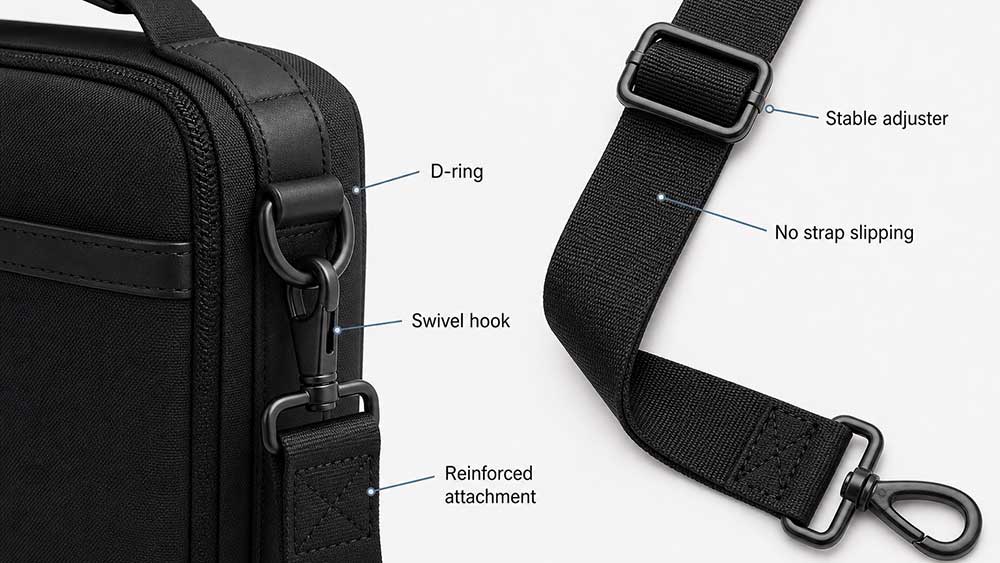
Buckles and adjusters control how the strap fits the user. On a business bag, this is especially important because the user may carry a laptop and accessories every day.
Common strap hardware includes:
- Ladder lock buckles
- Strap sliders
- Side release buckles
- Metal adjusters
- D-rings
- O-rings
- Swivel hooks
- Snap hooks
- Strap clips
A good adjuster should hold the strap in place without slipping. If the strap slowly gets longer during use, the user will notice immediately. This is common when the webbing is too smooth, the buckle angle is poor, or the hardware material is not matched to the strap.
Business bags usually need a cleaner look than outdoor or tactical bags. Large plastic buckles may be strong, but they can make a work bag look too casual. Heavy metal hardware can look premium, but it can add weight and noise.
Buyers should check:
- Does the strap slip after loading the bag?
- Does the buckle match the webbing width?
- Does the adjuster damage the strap edge?
- Does metal hardware create too much noise?
- Is the buckle too bulky for a business look?
- Does the hardware feel sharp or uncomfortable?
- Does the finish match the zipper, logo, and trim?
For laptop briefcases and messenger-style work bags, detachable shoulder straps often use swivel hooks and D-rings. These points need reinforcement because they carry real weight. The attachment area should be tested with the bag fully packed, not empty.
Handles: Comfort, Reinforcement, and Professional Appearance
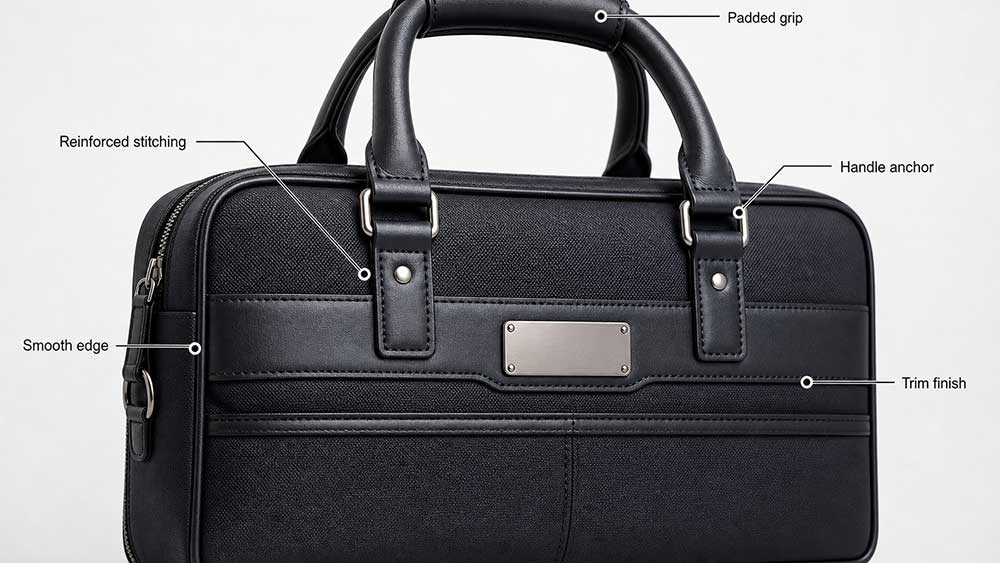
Handles are one of the most important parts of a business bag because users judge quality by touch. A business bag may look good on a product page, but if the handle feels thin, stiff, sharp, or poorly reinforced, the bag will not feel reliable.
Common business bag handle types include:
- Padded top handles
- Webbing handles
- Leather-wrapped handles
- PU leather handles
- Rolled handles
- Flat handles
- Dual carry handles
- Briefcase-style handles
- Reinforced backpack grab handles
A handle needs both comfort and strength. It should feel good in the hand when the bag is loaded with a laptop and accessories. It should also be firmly attached to the body of the bag.
Important handle details include:
- Padding thickness
- Handle width
- Edge finishing
- Stitching density
- Reinforcement material
- Handle anchor design
- Grip comfort
- Handle drop
- Long-term shape retention
A handle can fail in several ways. The stitching can loosen. The edge can crack. The padding can collapse. The anchor point can pull away from the body fabric. The handle can twist awkwardly when the bag is heavy.
For business bags, the handle should also match the style. A soft padded handle may be right for a laptop backpack. A leather-wrapped handle may suit a premium briefcase. A low-profile grab handle may work for a slim commuter bag.
For brands developing custom laptop bags, handle reinforcement should be reviewed early because it affects pattern design, material selection, stitching method, and production time.
Trims: Small Details That Shape Quality Perception
Trims are the small visible details that make a business bag feel finished. They may not always carry weight, but they strongly influence perceived quality.
Common trims include:
- Logo plates
- Metal badges
- Zipper pull tabs
- Decorative leather patches
- Edge binding
- Piping
- Rivets
- Grommets
- Protective feet
- Corner guards
- Strap end keepers
- Stitching details
- Heat-pressed labels
- Embossed logo patches
Trims should support the design, not overpower it. Business bags usually need clean, understated details. Too many shiny trims can make the bag look less professional. Too few details can make it look plain or unfinished.
Good trim design should consider:
- Brand identity
- Material compatibility
- Color matching
- Weight
- Scratch resistance
- Oxidation risk
- Placement
- User contact points
- Long-term appearance after wear
For example, a metal logo plate can look premium, but if it is placed where it scratches easily, it may age badly. Protective feet can help a briefcase stand upright and reduce bottom wear, but they add cost and may not suit soft backpack designs. Edge binding can improve structure, but poor finishing can make the bag look cheap.
Trims are small, but they can decide whether a business bag feels like a professional work product or a generic promotional bag.
Metal vs Plastic Hardware: Which Is Better for Business Bags?
A premium-looking business bag does not always need metal hardware everywhere. There is no single best material for all business bag hardware. Metal and plastic both have advantages.
| Hardware Material | Advantages | Limitations | Best Use |
|---|---|---|---|
| Metal | Premium look, strong feel, durable appearance | Heavier, may scratch, may create noise | Briefcases, premium work bags, logo trims |
| Plastic | Lightweight, quiet, cost-effective | Can look less premium, quality varies | Backpacks, strap adjusters, casual business bags |
| Zinc alloy | Common for metal trims and pulls | Finish quality varies | Logo plates, sliders, pullers |
| Aluminum | Lightweight metal option | May cost more | Modern lightweight business bags |
| Nylon/plastic buckles | Light and practical | Not always suitable for premium looks | Business backpacks and commuter bags |
For a professional business bag, hardware should not be chosen only by strength. It should also match the target user and style. A heavy metal buckle may be unnecessary on a slim laptop backpack. A cheap plastic adjuster may not fit a premium briefcase. A matte black metal puller may look modern, while shiny gold hardware may feel too fashion-oriented for some work bags.
The best choice depends on the bag type:
- Business backpack: lightweight, quiet, durable hardware
- Laptop briefcase: refined metal details and strong handle anchors
- Messenger bag: stable adjusters and reinforced strap connections
- Laptop tote: clean trims, secure zipper, comfortable handles
- Travel business bag: stronger zippers, luggage strap hardware, lockable options
Hardware Finishes: Black, Gunmetal, Nickel, Brass, and Matte Options
Hardware finish affects the whole mood of a business bag. The same bag can look very different with black, gunmetal, silver, brass, or matte hardware.
Common finishes include:
- Matte black
- Gunmetal
- Nickel
- Brushed nickel
- Antique brass
- Polished brass
- Silver
- Dark grey
- Color-matched coating
For business bags, matte black and gunmetal are often safe choices because they look modern and professional without drawing too much attention. Nickel can feel clean and classic. Brass may work well for leather briefcases but can look too decorative on some nylon laptop backpacks.
Buyers should check whether the finish is consistent across:
- Zipper sliders
- Pullers
- Buckles
- D-rings
- Logo plates
- Rivets
- Handle attachments
- Decorative trims
Inconsistent hardware finish is one of the easiest quality issues to notice. A gunmetal zipper with a bright silver D-ring may not look intentional. A logo plate that oxidizes faster than the zipper pullers can make the bag look old before the fabric wears out.
For bulk production, finish consistency should be checked under natural light, indoor light, and product photography conditions.
Common Hardware Problems Buyers Should Avoid
Many business bag problems are not caused by the main fabric. They are caused by hardware selection, placement, or assembly.
Common problems include:
- Zipper catching at curved corners
- Zipper sliders becoming loose
- Pullers breaking or falling off
- Strap adjusters slipping
- Buckles looking too bulky
- Metal parts making noise while walking
- Handle stitching pulling loose
- Logo plates scratching or oxidizing
- Rivets damaging nearby material
- Protective feet placed unevenly
- Trims feeling sharp to the touch
- Hardware finish not matching across parts
- Port or trim placement interfering with pocket use
- Heavy hardware making the bag uncomfortable
These problems can often be found during sample review. The bag should be tested as a real user would carry it: loaded with a laptop, charger, documents, and daily items. Reviewing hardware on an empty sample does not show how the parts behave under weight.
What to Check Before Approving a Business Bag Sample
Before approving a business bag sample, buyers should inspect hardware carefully. A good sample review should include both appearance and function.
Use this checklist:
- Open and close each zipper several times.
- Check zipper movement around corners.
- Pull gently on zipper pullers.
- Load the bag and test strap adjusters.
- Carry the bag by the handle when fully packed.
- Check whether the strap slips during movement.
- Listen for unwanted hardware noise.
- Check whether trims scratch fabric or hands.
- Compare all metal finishes under natural light.
- Inspect logo plate placement and edge smoothness.
- Check handle stitching and reinforcement.
- Confirm hardware color matches the approved sample.
- Test whether the laptop compartment opens smoothly.
- Make sure hardware does not press against the laptop.
- Confirm the final hardware matches the target price level.
A business bag should look professional, but it also needs to work every day. Sample approval should not focus only on shape, logo, and fabric. Hardware can create many of the problems users notice first.
Business Bag Hardware vs Tactical Bag Hardware
Business bag hardware is different from tactical bag hardware. A tactical bag often prioritizes heavy-duty function, outdoor durability, modular attachment, and load-bearing strength. A business bag usually needs cleaner appearance, lighter weight, smoother access, and a more professional look.
For example, tactical bag hardware may use heavier buckles, MOLLE-compatible structures, rugged pullers, and reinforced outdoor components. A business bag may use quieter adjusters, slimmer zippers, refined trims, and clean logo hardware.
This does not mean business bag hardware should be weak. It means the strength should be designed into the bag without making it look too bulky or too tactical.
The best business bag hardware feels reliable but not excessive.
What Brands Should Consider for OEM/ODM Business Bag Projects
For OEM and ODM business bag projects, hardware decisions should be made early. They affect the pattern, material cost, production process, appearance, and sample approval timeline.
Brands should define:
- Target user
- Bag type
- Price range
- Carrying weight
- Laptop size
- Main fabric
- Hardware finish
- Zipper level
- Handle style
- Strap hardware
- Logo hardware
- Trim style
- Quality test requirements
- Bulk production tolerance
For custom business bags, hardware should support the product’s market position. A lightweight business backpack may need durable but subtle parts. A premium laptop briefcase may need more refined metal trims and reinforced handles. A travel work bag may need stronger zippers, luggage strap hardware, and lockable pullers.
For OEM and ODM business bag projects, Vancharli Outdoor can help review zipper type, puller design, buckle material, handle reinforcement, trim finish, logo hardware, and bulk production consistency before sampling. This helps brands avoid hardware that looks good in photos but performs poorly in daily use.
For buyers developing custom laptop backpacks, hardware should also be checked against laptop protection, comfort, and travel use. A beautiful buckle or puller is not helpful if it scratches the device, adds too much weight, or makes the bag harder to use.
Final Thoughts
Business bag hardware may look like a small part of product development, but it has a major effect on user experience. Zippers control daily access. Buckles and adjusters affect comfort and stability. Handles shape how the bag feels in the hand. Trims influence brand perception and long-term appearance.
The best hardware choices are not always the heaviest or most expensive. They are the parts that match the bag’s function, material, user, price level, and brand style.
For business bags, hardware should feel smooth, quiet, secure, and professional. If it does that, users may not think about it much. That is usually the sign that the hardware was chosen well.
FAQ
What is business bag hardware?
Business bag hardware refers to functional and decorative parts such as zippers, buckles, strap adjusters, D-rings, handles, rivets, logo plates, protective feet, and trims.
Why are zippers important on a business bag?
Zippers affect daily access, security, smoothness, durability, and user satisfaction. A poor zipper can make even a good-looking business bag feel low quality.
What zipper type is best for business bags?
Coil zippers are common for business backpacks and laptop bags because they are lightweight and work well around curves. Metal zippers may suit premium leather briefcases, while water-resistant zippers are useful for commuter and travel bags.
Are metal buckles better than plastic buckles?
Not always. Metal buckles can look premium, but they add weight and may create noise. Plastic buckles are lighter and quieter, but they must be high quality to avoid a cheap appearance.
What should buyers check on business bag handles?
Buyers should check padding, grip comfort, stitching, reinforcement, handle anchors, edge finishing, and whether the handle still feels comfortable when the bag is fully loaded.
What are trims on a business bag?
Trims are small details such as logo plates, pull tabs, rivets, protective feet, edge binding, patches, and decorative hardware. They influence the bag’s appearance and perceived quality.
What hardware finish is best for business bags?
Matte black and gunmetal are common choices for modern business bags. Nickel can look clean and classic, while brass may suit leather briefcases. The best finish depends on the bag style and target user.
How can hardware affect business bag quality?
Hardware can affect opening smoothness, strap stability, hand comfort, weight, noise, scratch resistance, finish consistency, and long-term durability.
What should brands check before approving a business bag sample?
Brands should test zipper smoothness, strap adjustment, handle strength, hardware noise, trim placement, metal finish consistency, logo hardware, and performance when the bag is fully packed.
Should business bag hardware be different from tactical bag hardware?
Yes. Tactical bag hardware often focuses on rugged outdoor strength, while business bag hardware needs to balance durability with a clean, professional, lightweight appearance.


Comments are closed