Oxford Fabric vs Polyester for Custom Bags Which Is Better
When considering Oxford fabric vs polyester for bags, your choice depends on your needs. Oxford fabric vs polyester for bags highlights that Oxford fabric is more durable and resists scratches better, making it ideal for rugged bags. In contrast, polyester is lightweight and more affordable, which suits budget-friendly bags. Many brands now use recycled PET in both Oxford fabric and polyester, appealing to environmentally conscious consumers. The table below compares Oxford fabric vs polyester for bags in terms of strength, price, and eco-friendliness:
Property
Oxford Fabric
Polyester
Impact on Bag Applications
Tensile Strength
Higher
Moderate
Oxford fabric vs polyester for bags: Oxford is best for tough bags
Cost Range (per meter)
$3.0–$5.5
$1.5–$3.5
Oxford fabric vs polyester for bags: Polyester is good for cheap bags
Eco Options
Limited
Widely available
Oxford fabric vs polyester for bags: Polyester is favored by eco-friendly brands
Consider how Oxford fabric vs polyester for bags can influence your brand’s reputation. Using recycled materials and displaying certifications helps build trust with customers.
Brands choosing rPET Oxford fabric vs polyester for bags show environmental responsibility.
Certifications like GRS reassure buyers about sustainability.
rPET Oxford fabric vs polyester for bags: rPET Oxford is as strong and eco-friendly as regular polyester.
Oxford fabric is strong and does not scratch easily, so it works well for tough bags. Polyester is light and costs less, which is good for people who want to save money. Both materials now have eco-friendly options, like recycled PET, which is good for people who care about the environment. Pick Oxford fabric if you want bags that look fancy and last a long time. Choose polyester if you want bags that are light, easy to carry, and not expensive. Think about how you will use the bag: Oxford fabric is best for heavy use, but polyester is better for light or everyday use. Check for certifications like GRS to make sure your bags use recycled materials and are good for the planet. Always try out samples first to make sure the bags are good quality.
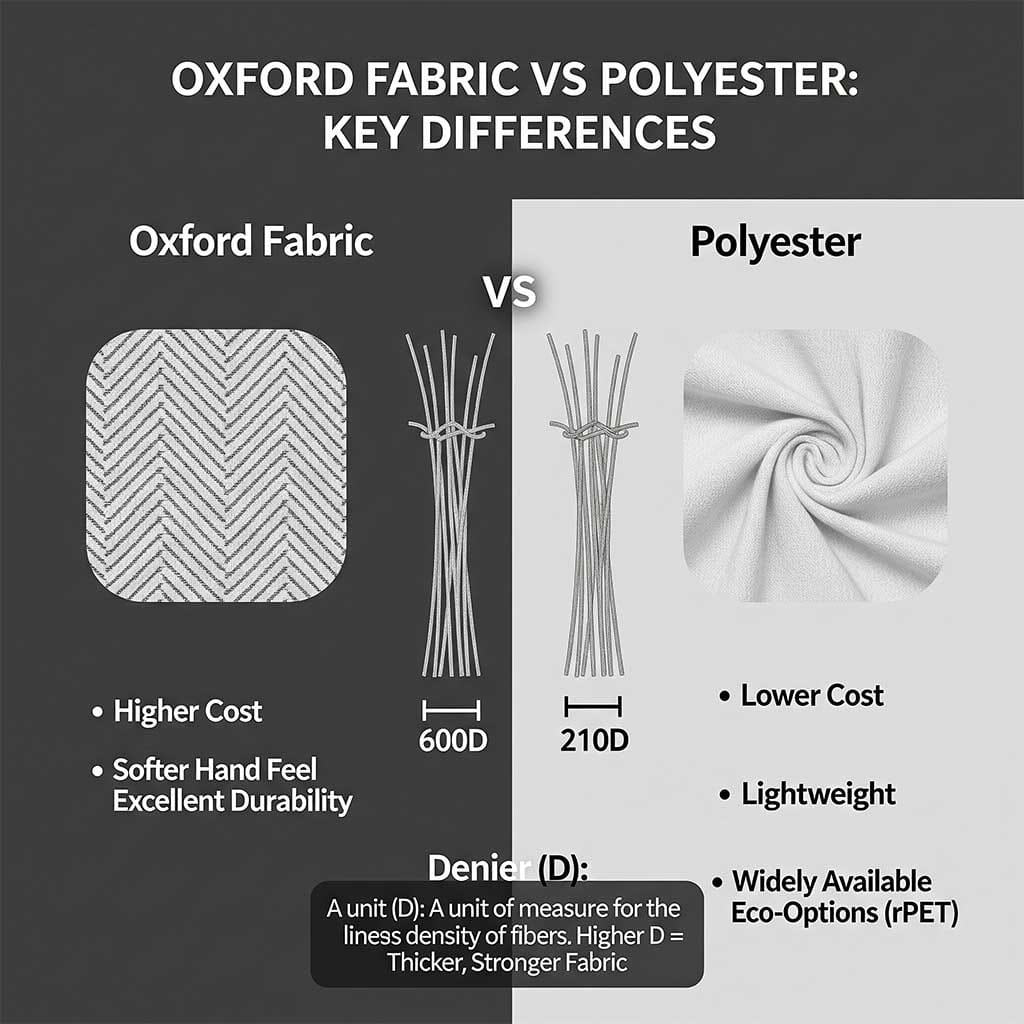
Oxford Fabric vs Polyester for Bags: Key Differences
Oxford Fabric Overview
Composition & Weave
Oxford fabric uses a basketweave pattern. This pattern makes the fabric strong and tough. Oxford fabric feels softer than regular polyester. It has a special texture. The basketweave helps the fabric avoid scratches. It can handle daily use. Bags made with Oxford fabric look and feel fancy because of the weave.
Oxford fabric is softer than 600D polyester.
The basketweave makes it stronger and tougher.
Oxford fabric looks fancy and does not scratch easily.
Denier & Coatings
Denier tells you how thick the yarn is. Oxford fabric comes in 210D, 420D, and 600D. Higher denier means thicker yarn and more strength. Some Oxford fabrics have PU or PVC coatings. These coatings help keep water out. They also make the fabric easy to clean. Coated Oxford fabric is good for bags that get wet or used a lot.
Polyester Overview
PET & rPET Types
Polyester is made from PET. Some polyester uses recycled PET, called rPET. Using rPET helps the planet by cutting waste. Polyester is strong, light, and cheap. You see polyester in many bags like backpacks and outdoor gear.
Denier & Structure
Polyester comes in different deniers like 600D. Higher denier means thicker and stronger fabric. Polyester feels smooth but can be rougher than Oxford fabric. It resists chemicals well. This helps it last longer in tough places. Polyester is used for heavy-duty bags because it is strong and tough.
Comparison Table
When you look at Oxford fabric vs polyester for bags, check a few things. These include how strong, tough, heavy, cheap, and eco-friendly they are. The table below shows how each one does:
Property
Oxford Fabric
Polyester
Tear Strength
~15 N (Cotton Oxford)
~25-30 N (Polyester Oxford 600D)
Abrasion Resistance
10,000–12,000 cycles
18,000–20,000 cycles
Water Resistance
100-200 mm (untreated)
1200–1800 mm (PU coated)
Breathability
Excellent (Cotton Oxford)
Moderate (Polyester Oxford)
Cost (USD/m)
$1.30 – $1.80
$0.80 – $1.10
Tip: Oxford fabric feels softer and looks fancy. Polyester lasts longer and costs less. If you want a bag that keeps water out and stays strong, pick polyester with high denier and PU coating.
Oxford fabric is used in student backpacks, travel bags, and gym bags. These bags need to handle rubbing and pressure every day. Polyester is used in backpacks, tents, and outdoor gear. It is light and tough.
Oxford fabric vs polyester for bags is an important choice for brands and buyers. Oxford fabric gives a fancy look and feel. Polyester keeps water out and lasts longer, especially with higher denier. Both fabrics now have eco-friendly choices. You can pick recycled ones to help the planet.
Pros and Cons
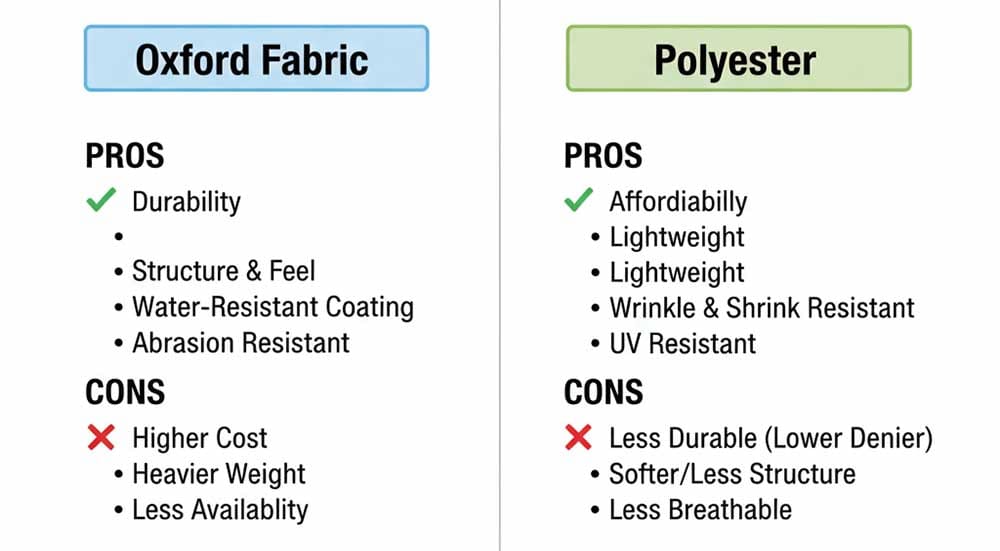
Oxford Fabric Advantages
Durability
If you want your bag to last, Oxford fabric is a good choice. It is strong because of its basketweave. This fabric does not tear or wear out easily. Tests show Oxford fabric stays strong under pressure. You can use these bags every day. They keep their shape and look nice for a long time. Oxford fabric is great for school, travel, or work bags. You can trust it to last.
Tip: Pick Oxford fabric for bags that get rough use or heavy stuff.
Premium Look
Oxford fabric looks fancy. It feels soft and smooth. The weave makes it look special. You can see and feel the difference with Oxford bags. Brands use Oxford fabric for bags that need to look nice. If you want your bag to stand out, Oxford fabric helps. It also keeps colors bright, so your designs look good.
Oxford Fabric Disadvantages
Weight
Oxford fabric is heavier than polyester. You feel this when you carry the bag. Heavy bags can be less comfy. If you use your bag a lot, think about the weight. Some people like lighter bags for daily use. Oxford fabric is best when you need a strong bag.
Cost
Oxford fabric costs more than polyester. You pay extra for its strength and style. The price per meter is higher. If you want to save money, polyester is better. Brands that use Oxford fabric want customers who care about quality. You should decide if the higher price is worth it.
Polyester Advantages
Lightweight
Polyester is much lighter than Oxford fabric. You notice this when you pick up a polyester bag. It is easier to carry, good for travel or sports. Many people pick polyester for backpacks and duffel bags. Even though it is light, polyester is still strong.
Eco-Friendly Options
Polyester now has eco-friendly choices. Many brands use recycled PET, called rPET, for polyester bags. This helps cut down on waste and helps the planet. You can find polyester bags with eco labels like GRS. These choices are good for people who care about the earth. Oxford fabric vs polyester for bags depends on your eco needs.
Here is a table that shows the main features of Oxford fabric and polyester for custom bags:
Feature
Oxford Material
Polyester
Durability
High (resistant to tears/abrasion)
Medium (less durable)
Water Resistance
Excellent (often PU coated)
Moderate (can be treated)
Weight
Heavier
Lighter
Flexibility
Less flexible
More flexible
Cost
Higher
More affordable
Note: Use this table to help pick the right bag material. Oxford fabric is best for style and strength. Polyester is best for light weight and saving money.
Polyester Disadvantages
Breathability
Polyester does not let air pass through well. When you use a polyester bag, air gets trapped inside. This can make moisture build up in the bag. If you put gym clothes or food inside, it might feel damp. Polyester also keeps heat in, so the bag can get warm in the sun. Sometimes, you may see water drops inside after a long day. This can make your things smell or feel wet.
Polyester bags can feel hot and stuffy.
Air does not move through polyester like it does with cotton or Oxford fabric.
Moisture can stay inside and cause bad smells.
Tip: For sports or food bags, pick ones with mesh or holes. These help air move and keep your things fresh.
Environmental Impact
Polyester is made from oil. Making polyester uses lots of energy and water. Factories that make polyester release gases that hurt the air. Polyester does not break down fast in nature. If you throw away a polyester bag, it can stay in the ground for many years. Some polyester bags use recycled PET, called rPET, which helps cut down on trash. But recycling polyester still needs chemicals and energy.
Making polyester causes pollution.
Old polyester bags can hurt the earth.
rPET helps, but it is not perfect.
Note: If you care about the earth, pick bags made from recycled polyester. Look for GRS labels to know the bag uses eco-friendly materials.
Side-by-Side Comparison
You want to find the best material for your custom bags. Oxford fabric and polyester both have good and bad points. Use this table to compare them fast:
Feature
Oxford Fabric
Polyester
Durability
Very strong, resists tears
Strong, but less durable
Weight
Heavier
Lighter
Water Resistance
Good with coating
Excellent with PU coating
Breathability
Good
Poor
Cost
Higher
Lower
Eco Options
Limited
Many rPET choices
Look & Feel
Premium, soft
Smooth, less premium
Environmental Impact
Biodegradable (cotton)
Not biodegradable
Actionable Insights for Buyers:
Pick Oxford fabric if you want a strong, fancy bag.
Choose polyester if you want a light, cheap bag.
For eco-friendly bags, look for rPET polyester and check for labels.
If you need a bag that lets air in, Oxford fabric is better for sports or food.
Think about your brand and what your customers want before you choose.
Remember: The right material makes your bag work well and helps your brand look good.
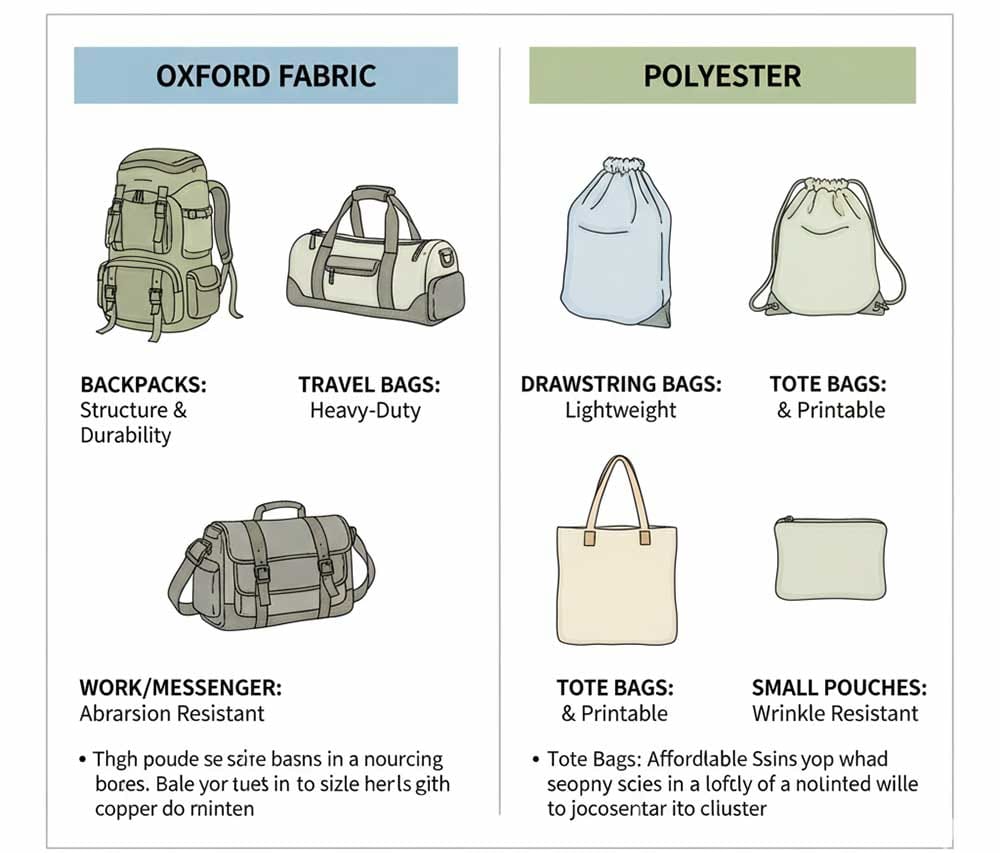
Bag Type Suitability
Backpacks
Oxford for Durability
You want a backpack that lasts a long time. Oxford fabric is strong and tough. The basketweave helps stop tears and scratches. Oxford fabric keeps its shape, even with heavy books. Outdoor brands pick Oxford fabric for rough use. Your bag will look nice and stay strong.
Oxford fabric is tough, keeps water out, and is useful.
You see Oxford fabric in school, hiking, and travel backpacks.
The material looks fancy and feels nice.
Polyester for Budget
If you want to save money, polyester is a good pick. Polyester is light and cheap. It is easy to carry and dries fast after rain. Many cheap backpacks use polyester because it is simple to clean. Polyester does not shrink much. Recycled PET polyester is good for the planet.
Feature
Description
Durable
Made from 100% polyester, so it is strong for backpacks.
Water-Resistant
The fabric keeps water out in many situations.
Tear-Resistant
It protects against rips and lasts longer.
Shrink-Resistant
It keeps its size after getting wet or washed.
Wind-Proof
It blocks wind, so it works well outside.
Tip: Pick Oxford fabric if you want a strong, stylish backpack. Choose polyester if you want a light, cheap bag.
Duffel & Travel Bags
Oxford for Structure
You need a duffel bag that keeps its shape. Oxford fabric gives support and holds up under heavy stuff. It stands up to lots of trips and keeps water out. Your things stay dry and safe. Oxford fabric bags look nice and last a long time.
Oxford fabric is tough, keeps water out, and is useful.
The material looks good and comes in many styles.
You find Oxford fabric in luggage and travel bags for strength.
Polyester for Lightness
If you want a bag that is easy to carry, pick polyester. Polyester is light and dries fast. You can pack more without making the bag heavy. Polyester costs less, so it is good for cheap travel bags. It is easy to clean and does not stain easily.
Material
Characteristics
Best Suited For
Oxford Fabric
Tough, water-resistant, useful, comes in different thicknesses
Backpacks, luggage, outdoor gear
Polyester
Light, cheap, strong, keeps water out, dries fast
Light backpacks, luggage
Note: Oxford fabric is best for support. Polyester is best for keeping your bag light.
Cooler & Insulated Bags
Polyester for Waterproofing
You want a cooler bag that keeps food dry. Polyester is good at stopping water, especially with PU coatings. It dries fast and does not leak in short rain. Polyester is light, so coolers are easy to carry. Many cooler bags use polyester because it dries fast and costs less.
Feature
Oxford Fabric
Polyester
Waterproofing
2000mm hydrostatic rating (ISO 9860)
190D polyester (no certification)
Durability
Lasts longer than regular polyester
Can wear out faster
Food Safety Compliance
LFGB/CP65 certified
No certification
Submersion Resistance
Can go under water up to 1m
Leaks if in rain too long
Polyester is light, keeps water out, and dries fast.
It is simple to clean and does not cost much.
Oxford for Premium
If you want a fancy cooler bag, Oxford fabric is best. Oxford fabric keeps water out and can go under water. It keeps food safe and meets food safety rules. Your cooler bag will look nice and last longer than most polyester bags.
Oxford fabric is tough, keeps water out, and is useful.
The material looks good and comes in many styles.
Oxford fabric is safe for food in premium cooler bags.
Tip: Pick polyester for a light, waterproof cooler bag. Choose Oxford fabric for a fancy, strong cooler bag.
Totes & Gifts
Polyester for Cost
You want to give away bags at events or use them for shopping. Polyester works well for totes and gift bags because it costs less. You can choose many colors and styles. Polyester bags feel light and easy to carry. You can print logos or messages on them. This helps you promote your brand at a low price.
Polyester bags fit many uses, from shopping to gifts.
You can customize polyester bags with your logo or design.
These bags cost less, so you can order more for events.
Oxford for Branding
Oxford fabric gives your tote or gift bag a premium look. You can use Oxford fabric to make your brand stand out. The fabric feels soft and looks fancy. You can add embroidery or print your logo for a high-end finish. Oxford totes keep items fresh and insulated for hours. This makes them great for food gifts or special occasions.
Oxford fabric bags hold heat or cold for up to five hours.
You can customize Oxford bags with logos or special designs.
These bags work well for gifts that need to stay fresh.
Here is a table that shows the features and cost for Oxford fabric and polyester in totes and gift bags:
Material
Features
Cost
Oxford Fabric
Insulated, waterproof, retains heat/cold for up to five hours
$3.77 and up
Polyester
Versatile, customizable, ideal for advertising on various occasions
Lower
Tip: Pick polyester for affordable, customizable totes. Choose Oxford fabric if you want a premium gift bag that highlights your brand.
Tool & Industrial Bags
Oxford for Heavy-Duty
You need a bag that can hold tools and stand up to tough jobs. Oxford fabric works best for heavy-duty tool bags. The thick weave resists tears and scratches. You can carry sharp or heavy items without worrying about damage. Oxford tool bags keep their shape and protect your tools.
Oxford fabric resists wear and tear.
You can use these bags for construction, repairs, or industrial work.
The material supports heavy loads and keeps tools safe.
Polyester for Light Kits
Polyester suits light tool kits or small industrial bags. You can carry lightweight items and move easily. Polyester bags cost less and feel lighter. These bags work well for simple tasks or carrying small tools.
Polyester bags are easy to carry and store.
You can use them for light repairs or quick jobs.
These bags cost less and fit basic needs.
Note: Choose Oxford fabric for tough, heavy-duty tool bags. Pick polyester for light kits and simple tasks.
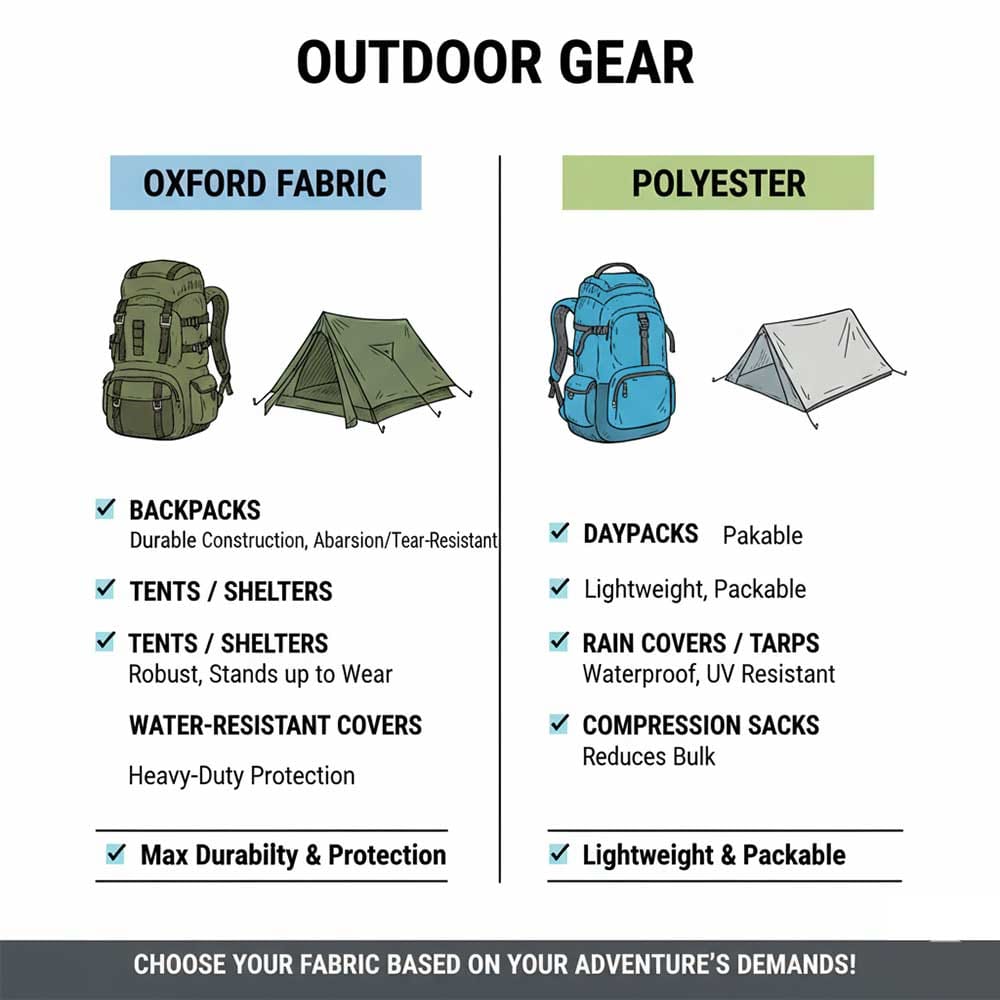
Outdoor Gear
Oxford for Durability
You want your outdoor gear to last through rough use. Oxford fabric offers high durability, especially in higher denier options like 600D or 900D. These bags resist wear and keep your gear safe. You can use Oxford fabric for hiking, camping, or sports bags. The material stands up to rain and rough ground.
Material
Durability
Weight
Water Resistance
Oxford Fabric
Strong, resists wear (600D, 900D)
Varies by denier
Treated for water resistance, withstands light to moderate rain
Oxford fabric bags protect your gear from scratches and moisture.
You can use these bags for outdoor trips or sports.
Polyester for Ultralight
Polyester works well when you need a light bag for outdoor activities. You can carry polyester bags for hiking or biking. The material feels light and dries quickly. Polyester also resists water when treated. You can pack more without adding weight.
Material
Durability
Weight
Water Resistance
Polyester
Strong and lightweight (600D)
Lightweight
Treated for water resistance, suitable for outdoor use
Polyester bags help you move fast and stay comfortable.
You can use these bags for day trips or travel.
Tip: Pick Oxford fabric for tough outdoor gear. Choose polyester for ultralight bags that keep you moving.
Oxford Fabric vs Polyester for Bags: Recommendations
Picking the right material for your bags is important. You want bags that last, look nice, and fit your budget. You also want to show you care about the earth. Oxford fabric vs polyester for bags is a big choice for brands and buyers.
Here is a table to help you pick the best material for each bag type. Use this guide to match your needs with the right fabric.
Bag Type
Best Material
Why Choose It?
Eco-Friendly Option
Backpacks
Oxford Fabric
Strong, resists tears, holds shape
rPET Oxford or Organic Cotton
Duffel & Travel Bags
Oxford Fabric
Keeps structure, stands up to heavy use
rPET Oxford or Canvas
Cooler & Insulated
Polyester
Lightweight, waterproof, dries fast
rPET Polyester
Totes & Gifts
Polyester
Affordable, easy to customize
rPET Polyester, Jute, Juco
Tool & Industrial
Oxford Fabric
Heavy-duty, protects tools
Canvas, rPET Oxford
Outdoor Gear
Polyester
Ultralight, dries quickly
rPET Polyester, Bamboo Fiber
Tip: Pick Oxford fabric if you want bags that look fancy and last long. Choose polyester if you want light bags that cost less.
You can also use other materials for special bags:
Jute has a rough feel and breaks down in nature.
Juco mixes jute and cotton for a smooth look.
Canvas is strong and breaks down over time.
Non-woven polypropylene is cheap and can be used again, but does not break down.
Paper bags work for short use and can be recycled.
If you want the softest and most earth-friendly bag, pick organic cotton. It is easy to wash and breaks down in nature. Bamboo fiber feels soft and breaks down fast, but costs more.
Think about what matters most for your brand when you pick materials. Do you want to show your logo with embroidery or printing? Do you want your bags to last many years or just a few uses? Do you want to help the earth by using recycled or natural fabrics?
You get to choose what works best for you. Oxford fabric gives you strong and stylish bags. Polyester helps you save money and keep bags light. Both now have recycled choices, so you can help the planet.
Note: Always look for eco labels like GRS or OEKO-TEX to show your bags are safe for the earth.
Use this guide to help you pick the best material for your custom bags. Your choice affects how your bags work and how your brand looks.
Sourcing & Customization
OEM/ODM Workflow
When you want to create custom bags, you need to follow a clear workflow. This helps you get the right material, design, and quality for your brand. Here is a simple table that shows the main steps in the OEM/ODM process for Oxford fabric and polyester bags:
Step
Description
1
Choose the material based on how tough and stylish you want your bag.
2
Share your order details, like how many bags you need, colors, and when you want them ready.
3
Give your artwork and brand rules so the factory can make your logo and design look perfect.
4
Explain what you want for the bag’s fabric and finish, such as waterproofing or extra strength.
5
Set your target price, minimum order quantity (MOQ), and delivery date.
6
Check samples before full production to make sure the bags meet your standards.
7
Use a quality control plan with tests for strength, water resistance, and durability.
Material Selection
You have many choices for Oxford fabric and polyester. Each type fits different needs:
600D works well for everyday bags.
420D feels thinner and suits travel bags.
1000D gives extra strength for tool bags.
1680D offers high density for premium bags.
Ripstop fabric stops tears and fits technical or outdoor bags.
You should pick the material that matches how your customers will use the bag. If you want a bag for heavy tools, choose 1000D or 1680D. For light travel bags, 420D is a good choice.
Sampling & Prototyping
You need to see and feel your bag before making a big order. Ask for samples and prototypes. This lets you check the color, stitching, and logo placement. You can test the bag for strength and water resistance. If you find problems, you can fix them before full production.
Branding Options
You can make your bag stand out with custom branding. Factories offer full customization for logos, compartments, and colors. You can match Pantone colors for exact shades. Choose embroidery for a premium look or screen printing for bold designs.
Tip: Custom branding helps your bag show your brand’s style and message. Pick the method that fits your budget and design.
MOQ & Lead Times
Volume Flexibility
You need to know the minimum order quantity (MOQ) before you start. Some factories let you order small batches, while others need bigger orders. If you want to test the market, start with a lower MOQ. For large campaigns, higher volumes can lower your cost per bag.
Cost Factors
Your cost depends on material, design, and order size. Premium Oxford fabric costs more than basic polyester. Adding custom features like embroidery or waterproof coatings increases the price. You should balance quality and budget to get the best value.
Customization Features
Printing & Embroidery
You can choose printing or embroidery for your logo. Printing works well for bright colors and big designs. Embroidery gives a textured, premium look. Factories can add extra pockets, zippers, or compartments to fit your needs.
Eco-Friendly rPET
If you care about the environment, ask for recycled PET (rPET) options. rPET uses recycled plastic bottles to make new fabric. This helps reduce waste and shows your brand’s commitment to sustainability.
Note: Customization lets you create bags that match your brand and values. You can choose features that make your bags unique and eco-friendly.
Quality Control
When you pick custom bags, you want them to last. Quality control helps make sure your bags are strong and safe. You can check quality at every step. This starts with fabric testing and ends with the final check.
Testing Protocols
Abrasion & Tensile
You need bags that can handle daily use. Factories use tests to check this. The Martindale abrasion test rubs the fabric on a rough surface. It shows how many times the fabric can be rubbed before it wears out. Tensile strength testing pulls the fabric until it breaks. This test shows how much force the bag can take before tearing. These tests help you choose bags that do not rip or wear out fast.
Testing Protocol
Description
Martindale abrasion test
Rubbing fabric to see how long it lasts before wearing out.
Tensile strength testing
Pulling fabric until it breaks to see how strong it is.
Water Resistance
You want your bag to keep things dry inside. Factories use the hydrostatic pressure test to check how much water the fabric can hold before leaking. The spray test checks if water goes through the fabric, like rain. The water absorption test measures how much water the fabric soaks up. Less water means better waterproofing.
Water Resistance Test
Description
Hydrostatic Pressure Test
Measures how much water pressure the fabric can take before leaking.
Spray Test
Sprays water to see if it goes through the fabric.
Water Absorption Test
Checks how much water the fabric soaks up; less is better for waterproof bags.
Tip: Always ask for test results when you order custom bags. This helps you know your bags will last.
Certifications
GRS & OEKO-TEX
Certifications show your bags are safe and eco-friendly. GRS tracks recycled content in fabrics. OEKO-TEX checks that the fabric does not have harmful chemicals. These labels help you prove your bags are safe for people and the planet.
REACH & CPSIA
REACH makes sure chemicals in your bags are safe. CPSIA checks that bags are safe for kids in the United States. You should look for these certifications if you want to sell bags in strict markets.
Certification
Description
GRS
Tracks recycled materials in fabrics.
OEKO-TEX
Certifies fabrics do not have harmful substances.
REACH
Makes sure chemicals used are safe for health and the environment.
CPSIA
Confirms products are safe for children in the U.S.
Note: Certifications help you build trust with customers and follow the rules.
Production Monitoring
Batch Inspections
You want every bag to look and work the same. Factories check each roll of fabric for marks or flaws. They test random samples for strength and water resistance. This helps catch problems early.
Consistency Checks
Factories run checks during and after making bags. They compare batches to make sure every order matches your standards. Before shipping, they inspect each bag to confirm quality and performance.
Quality Control Measure
Description
Visual Inspection
Checks for marks or flaws on every roll of fabric.
Performance Testing
Tests random samples for strength and water resistance.
Consistency Verification
Compares batches to keep quality the same for every order.
Final Inspection
Reviews each bag before shipping to make sure it meets your needs.
Remember: Good quality control means fewer returns and happier customers. Always work with suppliers who follow strict checks and hold certifications.
When you compare Oxford fabric vs polyester for bags, focus on durability, cost, eco-friendliness, and the type of bag you need. Oxford fabric works best for tough, long-lasting bags. Polyester suits lightweight, budget-friendly options. Match your choice to your brand’s goals and how customers will use the bag. You should talk with suppliers, ask for samples, and check certifications. Strong quality control protects your brand and keeps customers happy.
FAQ
What makes Oxford fabric stronger than polyester?
Oxford fabric has a basketweave pattern. This weave makes the fabric strong. It helps stop tears and scratches. Oxford fabric is good for bags that need to last long.
Is polyester always cheaper than Oxford fabric?
Polyester costs less than Oxford fabric. It is cheaper to make. Polyester bags are good for small budgets. Oxford fabric costs more because it looks fancy and lasts longer.
Can you find eco-friendly options for both materials?
Yes, you can pick recycled PET (rPET) for both fabrics. Look for GRS certification. These choices help cut down on waste. They show your brand cares about the earth.
Which material is better for waterproof bags?
Polyester with PU coating keeps water out best. It gives strong water resistance for outdoor bags. Oxford fabric also resists water, but polyester works better in heavy rain.
Do Oxford fabric bags feel heavier than polyester bags?
Oxford fabric feels heavier because of its thick weave. You notice the weight when you carry it. Polyester bags are lighter and good for travel or sports.
How do you customize bags made from Oxford fabric or polyester?
You can print logos or use embroidery on both. Factories offer color matching and extra pockets or zippers. Pick what fits your brand style and budget.
What certifications should you check for safe and eco-friendly bags?
Look for GRS for recycled content, OEKO-TEX for safe chemicals, REACH for health rules, and CPSIA for child safety. These certifications help you trust your bags are safe and good quality.








Comments are closed