You can get custom belt bags for B2B in 2026 by first learning about the fanny pack evolution and how names have changed around the world. The term “belt bag” is now the most searched term everywhere. In the UK, people refer to it as a “bum bag.” In North America, the terms “waist pack” or “fanny pack” are commonly used.
Understanding the fanny pack evolution helps you choose the right name for each region. The best suppliers in 2026 have high ratings and respond quickly:
Learn how fanny packs have changed over time to pick the best name for your market. Use ‘belt bag’ if you want a modern look. Use ‘fanny pack’ if you want a more relaxed feel.
Pick suppliers who have good reviews and answer fast. This helps you get good products and quick shipping for your business.
Think about what people in your area call these bags when you sell them. Using local words can help your brand connect with buyers and boost sales.
Pick materials that last long and are good for the planet. Eco-friendly choices can bring in buyers who care about the environment and make your brand look better.
Talk clearly with suppliers so there are no mistakes. Give them all the details about your project and ask for references to make sure they are trustworthy.
Fanny Pack Evolution & Global Naming
From Fanny Pack to Belt Bag
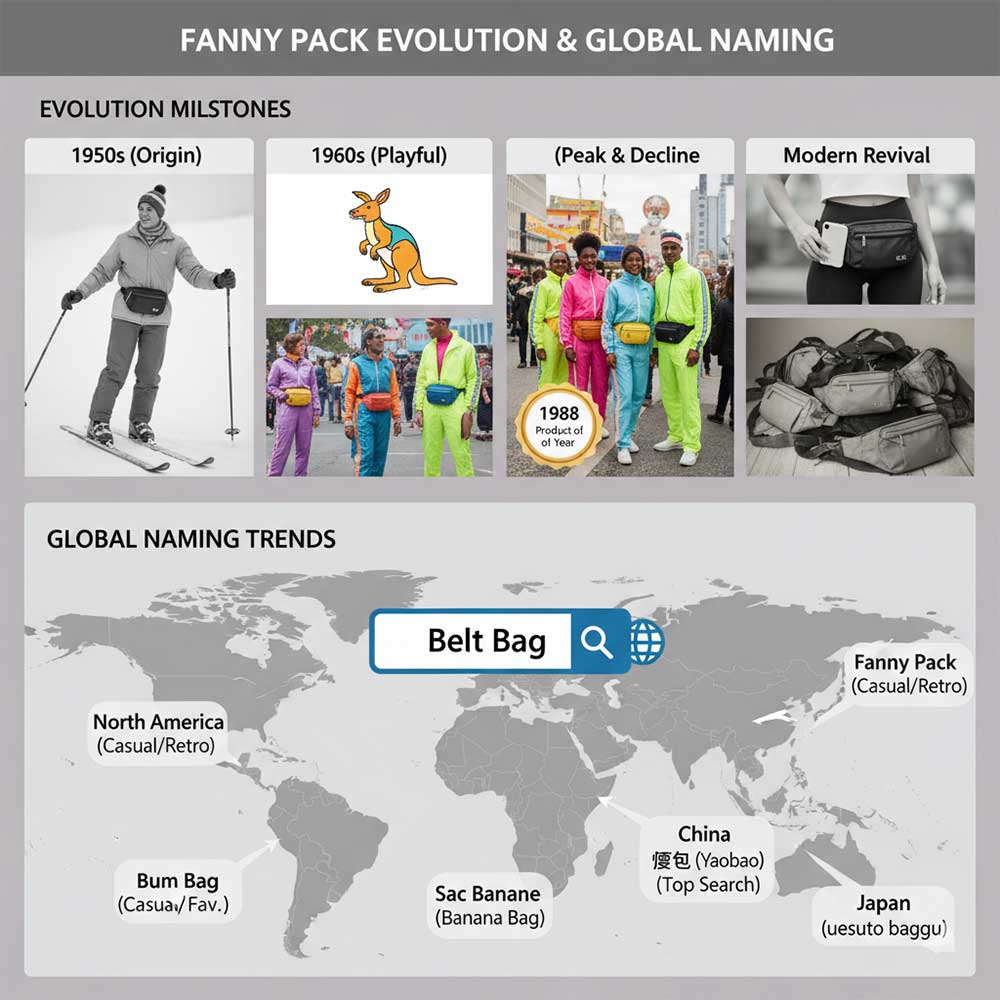
The fanny pack has changed a lot over time. It started in the 1950s as a handy item for skiers. Later, it became a cool fashion item. Now, people all over the world use it. Here are some big moments in its history:
Year
Milestone Description
1954
A skier’s leather fanny pack was shown in Sports Illustrated as a useful item for sports.
1962
Melba Stone made a fun fanny pack that looked like a kangaroo. This added to its story.
1988
The fanny pack was called product of the year by Adweek. This made it even more popular.
1980s-1990s
The fanny pack was everywhere and made from strong materials. It became less popular in the late 1990s.
2000s
The fanny pack became cool again when people started using mobile phones. It changed into the modern belt bag.
This timeline helps you see how the fanny pack turned into the belt bag we know today.
Regional Naming Trends
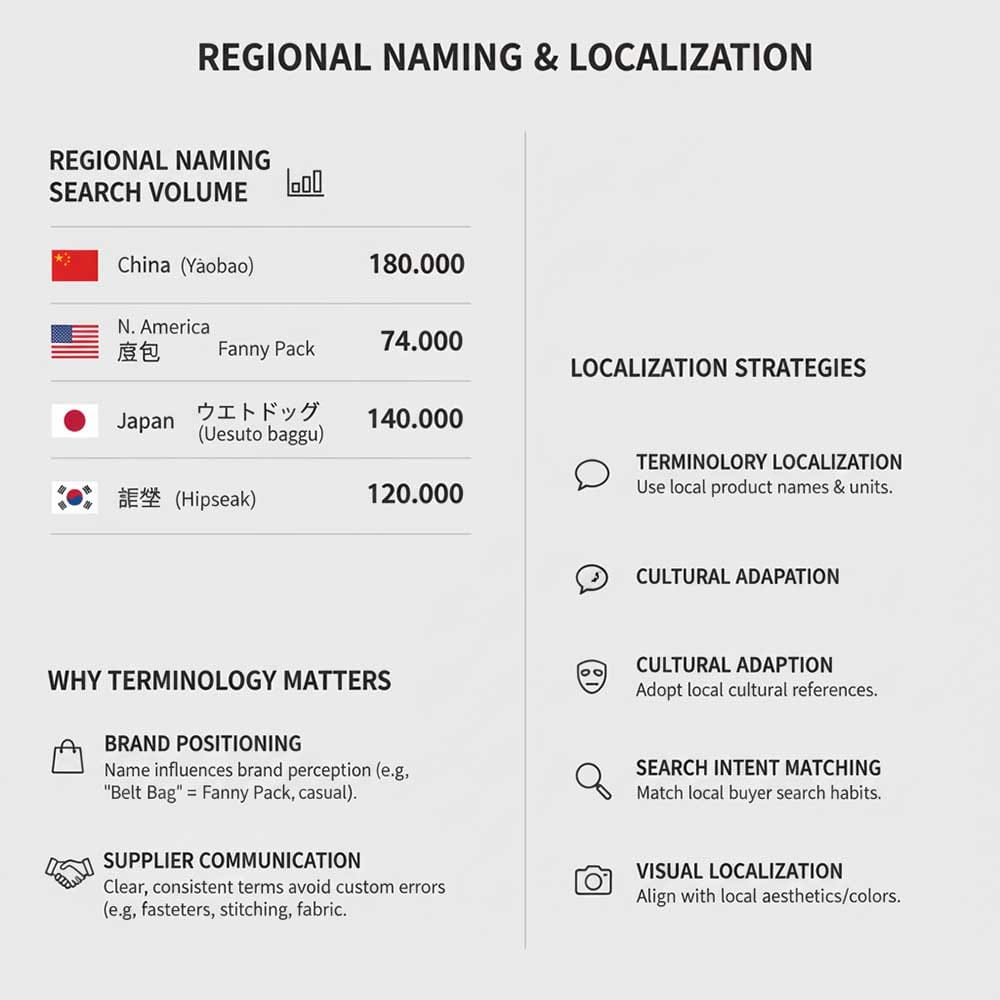
People call belt bags different names in different places. In North America, people say “fanny pack.” In the UK, they say “bum bag.” In France, it is called “sac banane.” These names show the language and style of each place. Search numbers tell us which names are most used:
Picking the right name for your product is important. The name you use can change how people think about your brand. For example, when the Patagonian Toothfish was called Chilean Sea Bass, it sold better. The same thing happens with belt bags. If you say “belt bag,” you might get buyers who want something fancy. If you say “fanny pack,” you may get people who like old-school or casual things. This can make things confusing when you buy or sell these bags.
When you talk to suppliers, using clear words helps stop mistakes. You should talk about things like fastenings, stitching, and fabric. This way, everyone knows what you want. The story of the fanny pack shows that names and details are important for selling and making products in different countries.
Design & Style Changes
Naming Linked to Design
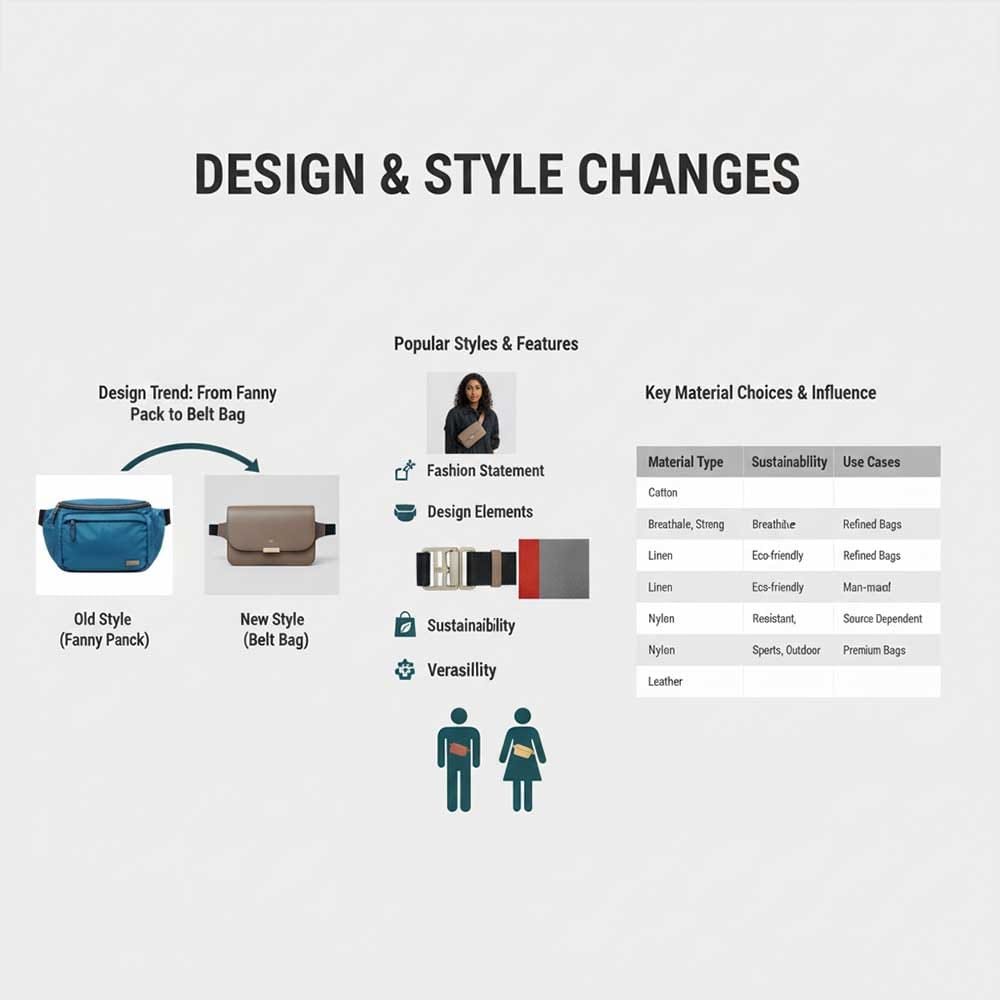
The name of a belt bag often matches its look. If you hear “belt bag,” you may think of something modern and smooth. If you hear “fanny pack,” you might picture a sporty or old-school style. As styles change, the names change too. Designers pick new names to show new shapes and colors. This helps you pick the best style for your brand or buyers.
Popular Styles
Belt bags have changed a lot since 2015. Now, there are many styles for different people. Here are some big trends:
Belt bags used to be simple and old-fashioned. Now, they are a big part of fashion.
Many brands make belt bags that get noticed.
You can find fancy finishes, bright colors, and soft earth colors.
Some designs use eco-friendly materials and show personal style.
Belt bags are for everyone, no matter their age or gender.
Tip: When you pick a style, think about who will buy it. Some people like classic styles. Others want bold and new looks.
Material Choices
The material you choose for your belt bag matters. It affects how strong the bag is and if it is good for the planet. Look at the table to see the differences:
Material Type
Durability
Sustainability
Use Cases
Cotton
Breathable, strong
Good for the planet
Canvas bags, tote bags
Linen
Tough, strong
Good for the planet
Fancy bags
Leather
Lasts long, strong
Depends
Fancy bags
Straw
Cool, good for planet
Good for the planet
Beach bags, casual totes
Denim
Strong, cool
Depends
Casual bags, shoulder bags
Nylon
Tough, water-safe
Made by people
Sports bags, backpacks
Polyester
Strong, water-safe
Made by people
Tote bags, grocery bags
PVC Leather
Strong, easy to clean
Made by people
Cheap handbags
PU Leather
Cool, good for planet
Vegan
Fancy bags
You can pick recycled nylon or plant leather for a green choice. These choices show you care about the planet and help your brand get noticed.
Regional Naming & Localization
Cultural Sensitivities
When you sell belt bags in other countries, you must know what people call them. Names can mean different things in each place. Some names might sound silly or rude to locals. Always check what a name means before you use it. The table below shows what names are used and what you should think about:
Region
Term Used
Cultural Sensitivity Description
United Kingdom
Bum Bag
Talks about the butt, which is informal.
United States
Fanny Pack
Uses ‘fanny’, which is funny in Canada.
Australia
Belly Bag
Is slang, but ‘waist bag’ is also trendy.
Germany
Hip Bag
Is a simple and common name.
France
Sac Banane
Named for its shape, and is neutral.
Spain
Riñonera
Means near the kidneys, and is special to Spain.
Japan
ウエストポーチ (Waist Pouch)
Comes from English, showing global style.
Even a small name can change how people feel about your product.
Localization Strategies
If you want to sell in a new country, you need to change your product and ads. This means you use the local language and match the culture. Here are some steps you can use:
Terminology Localization: Pick the right words and measurements for each country.
Cultural Adaptation: Use stories and examples that fit local ways.
Search Intent Matching: Choose keywords that answer what local buyers want.
Visual Localization: Use pictures and colors that look good in each place.
You should also check your website. For domestic SEO, use one server and one language. For international SEO, use servers in many places and translate your site. Local links and content help people trust you.
Dimension
Domestic SEO
International SEO
Technical Architecture
One server/CDN
Servers in many places + global CDN
Content Strategy
One language
Many languages + local stories
Backlink Building
Global links
Local links + regional content
Tip: Test your product names and ads with local partners before you start selling.
SEO & Brand Positioning
Local SEO helps you find the right customers in each country. When you use the right keywords and local content, people nearby can find you. This brings more good leads and helps people trust your brand. You can also save money because you do not need offices everywhere. Here is how local SEO helps your brand:
Benefit
Description
Attract Local Customers
Local SEO helps you show up for people in your area.
Get Qualified Leads
Local SEO brings people who really want your product.
Higher Conversion Rates
Targeting regions brings customers who are ready to buy.
Cost Savings
You can grow without opening offices in every city.
You can use what you learned from fanny pack evolution to help your naming and ads. When you respect local culture and use smart localization, your brand gets stronger everywhere.
Sourcing Criteria for B2B
Product Specifications
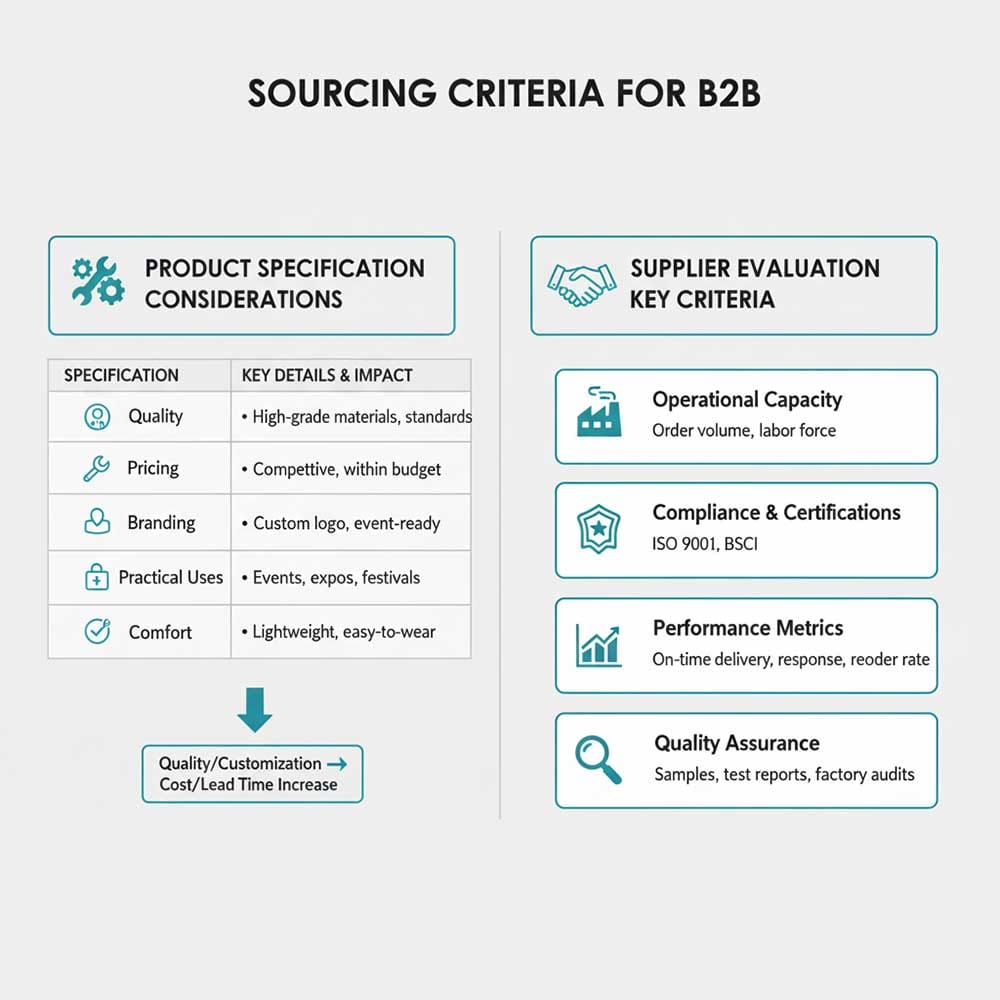
When you buy custom belt bags for your business, you need to know what you want. Clear product details help you get the right bags. You should check quality, price, branding, and how you will use them. The table below lists the most important things to look at:
You should also think about how your choices change the price and wait time. If you pick better materials or special hardware, you might pay more and wait longer. The table below shows how your choices can change costs and delivery times:
Specification Type
Influence on Pricing and Lead Times
Material Selection
Better materials can cost more.
Hardware Choices
Special hardware can make prices go up.
Branding Elements
Custom branding can make bags seem worth more, so prices can rise.
Production Processes
Faster processes can make delivery quicker.
Tip: Make sure your product choices match your business goals and what your customers want. This helps you avoid mistakes that cost money.
Supplier Evaluation
Picking the right supplier is very important. You want a partner who can make enough bags, deliver on time, and give you good quality. Use the table below to help you choose:
Ask for samples, test reports, and factory checks to make sure the bags are good.
Quality checks help you get belt bags that meet your needs. Top factories use many checks, like:
Checking suppliers and doing quality audits
Audits for quality, environment, and safety like ISO 9001, ISO 14001, and ISO 45001
Social audits like SA8000, WRAP, SMETA, and BSCI
Checking the first bags, bags during production, and before shipping
Watching container loading and sorting bags
You should also ask about special checks, such as:
Checking the material and seams
Checking stitching and sizes
Testing for water leaks
Testing strap strength
Using a needle detector for safety
Note: Suppliers with strong quality checks help you avoid problems and make your customers trust you.
Many buyers now look outside China because of high tariffs, sometimes up to 245%. Vietnam is popular because tariffs are lower and there are trade deals like CPTPP and EVFTA. Still, some brands use Chinese suppliers for parts like zippers and labels because they are experts.
Communication Essentials
Good communication is key for B2B success. Talking clearly with your supplier builds trust and stops mistakes. Here are some tips for working with suppliers from other countries:
Pick suppliers who answer fast and care about good communication.
Give clear details about your project, like type, materials, amount, and when you need it.
Ask for references from other clients to see if the supplier is reliable.
Check for certifications like ISO 9001 or SMETA to make sure they meet standards.
Protect your designs by having suppliers sign an NDA before you share anything.
Good communication makes sure your needs are clear and helps stop mistakes. It also helps you build strong partnerships, which are good for your business.
If you do not talk clearly, you can lose business and hurt relationships. When you follow these steps, you can do well in the global market. You also show you learned from the fanny pack story by using clear words and setting the right expectations.
If you learn about how fanny packs have changed, you can make better choices. You should also know about new designs and what people call them in different places. The table shows how picking the right words helps you sell to people all over the world:
Terminology
Region
Belt Bag
International
Bum Bag
United Kingdom
Waist Pack
North America
Hip Pack
Parts of Europe
“We got our zipper drawstring bags on Friday. We are very happy with the great quality again!”
Pick suppliers who give you clear details and care about the planet. Work with skilled makers and use what you learn about the market to keep up with new styles.
FAQ
What is the difference between a belt bag and a fanny pack?
You will see both names used for similar bags. “Belt bag” sounds modern and stylish. “Fanny pack” feels more casual or retro. The design is often the same, but the name can change how people see your product.
How do I choose the right material for custom belt bags?
You should think about how the bag will be used. For sports, pick nylon or polyester. For fashion, try leather or canvas. Eco-friendly brands often use recycled or plant-based materials.
Why do naming conventions matter when sourcing internationally?
Using the right name helps you connect with buyers in each region. For example, “bum bag” works best in the UK. “Waist pack” is common in North America. The right term can help your product sell better.
What certifications should I look for in a supplier?
You should check for ISO 9001 for quality, BSCI for social responsibility, and SMETA for ethical audits. These show that your supplier meets global standards and cares about quality and safety.








Comments are closed