Smell-Proof Bags Explained: How They Work and What to Look For
You can count on smell-proof bags to stop bad smells. They help keep your things private. Many people use them for privacy and easy carrying. Research shows most people use these bags for personal reasons. More people use them now because of premium botanical and herb storage needs. Businesses use them to follow packaging rules and look good to customers. This guide will show you how to pick and care for these bags. You will learn how to get the best results.
Smell-proof bags stop smells by using special materials and tight seals. Pick a bag that is strong for better smell control and to last longer. You can use smell-proof bags for food, cannabis, or your things. Clean your bag often to keep it blocking smells and to make it last longer. Do not put too much in your bag so it can close well and keep smells inside. Bags with activated carbon and Mylar give the best smell protection. Check the seals and zippers for any damage to make sure they work well. Choose the right size and kind of bag for what you need to store.
Do Smell-Proof Bags Work?
Effectiveness Overview
You want to know if smell-proof bags actually block odors. These bags use special materials and tight seals to keep smells inside. Most users say they work well for everyday needs. You can trust them to keep strong scents from escaping. Many people look for long-term odor control, and these bags often deliver. You may notice that the quality of the material and the strength of the zipper affect how well the bag works. If you choose a bag with sturdy construction, you will likely get better results. Some users mention that zipper problems can let smells leak out. You should check the bag for a good seal before using it.
Tip: Always close your bag tightly to get the best odor protection.
Real-World Uses
You can use smell-proof bags in many situations. People often carry them when traveling or storing items at home. These bags help you keep your belongings private and fresh. You may use them for food, herbs, or personal items. Many reviews highlight how these bags keep snacks and ingredients fresh. Some users like the stylish look and strong build of the bags. You may find that the effectiveness changes depending on what you store. For example, some substances have stronger odors and may need a higher-quality bag. If you travel often, you will appreciate how these bags organize your items and block unwanted smells.
Long-term odor retention is important for reliable use.
Durability and material quality matter for everyday performance.
Effectiveness can change based on travel, storage, or the type of item.
Many users praise the design and construction.
Common complaints include zipper issues and weak odor control for some substances.
Common Applications
You will see smell-proof bags used in many industries and daily routines. These bags help you store cannabis, food, beauty products, pet treats, and supplements. If you work in the cannabis industry, you need these bags to meet packaging laws. Food companies use them to keep spices, dried fruits, and snacks fresh. Beauty brands rely on them to stop bath salts and soaps from mixing scents. Pet owners use them for strong-smelling treats. Supplement companies use them to keep powders fresh.
Industry
Reported Outcomes
Cannabis
Used for storing marijuana to meet packaging laws.
Food Products
Keeps spices, dried fruits, and snacks fresh.
Beauty and Self-Care
Prevents scent mixing for bath salts and soaps.
Pet Products
Stores strong-smelling pet foods and treats.
Supplements and Powders
Preserves protein powders and herbal supplements.
You can use smell-proof bags for many tasks at home, work, or on the go. These bags help you keep your items fresh and your space odor-free.
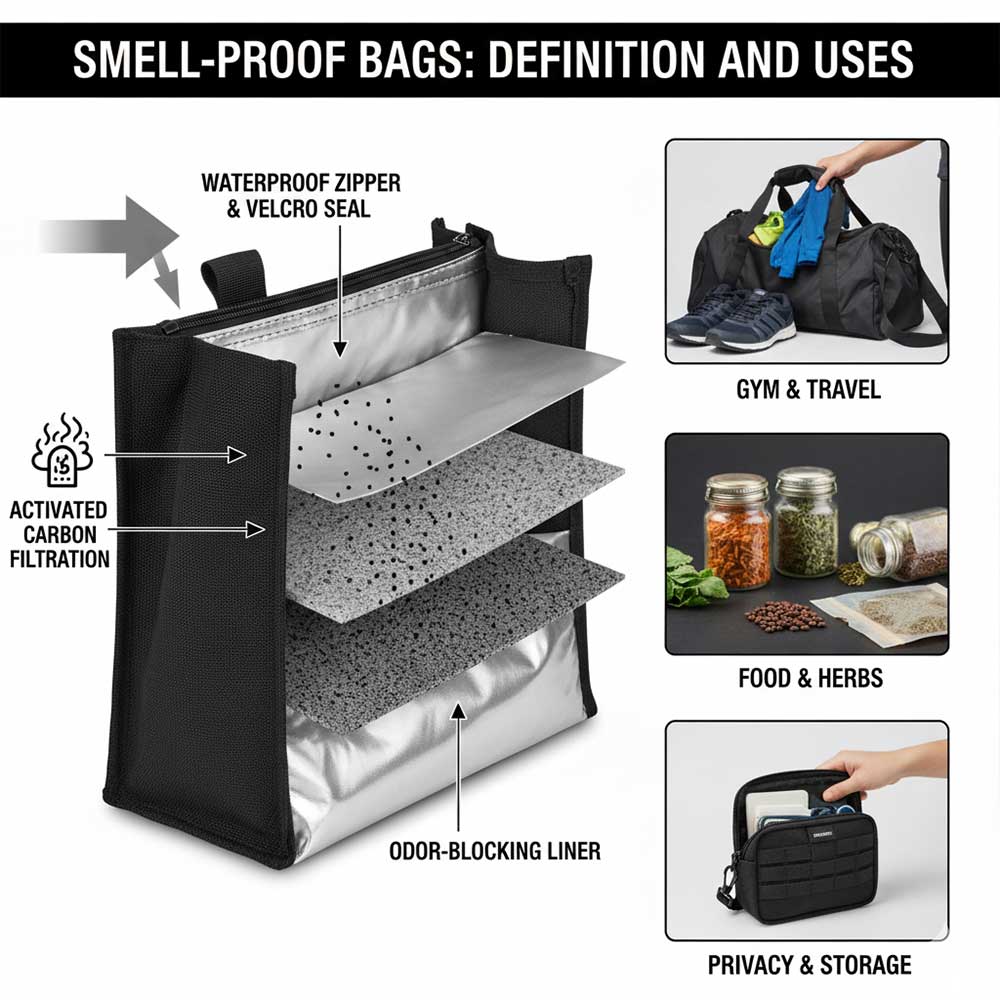
Smell-Proof Bags: Definition and Uses
What Are Smell-Proof Bags?
You might ask what makes a bag smell-proof. These bags use special materials to trap odors inside. They often have several layers to stop smells from getting out. Many bags have airtight seals or zippers. This helps keep your things fresh and blocks strong scents. You can use these bags for privacy and freshness. They work for food, herbs, or other items.
Main Uses
Smell-proof bags are useful in many ways. You can use them for personal, fun, or work needs. Here are some main uses:
Cannabis
People use smell-proof bags to store cannabis. These bags help keep cannabis fresh and strong. The airtight seal keeps air out and stops smells from escaping. This gives you privacy and helps you follow rules. Many people use these bags to avoid attention.
Keep cannabis fresh and strong.
Store and carry it without others noticing.
Trap odors for privacy and safety.
Food Storage
Smell-proof bags help keep food fresh longer. They stop strong food smells from spreading. The layers in the bag help snacks and dried fruits last longer. You save money and waste less food by keeping it fresh.
Make food last longer.
Save money and waste less.
Stop strong food smells from spreading.
Travel & Outdoors
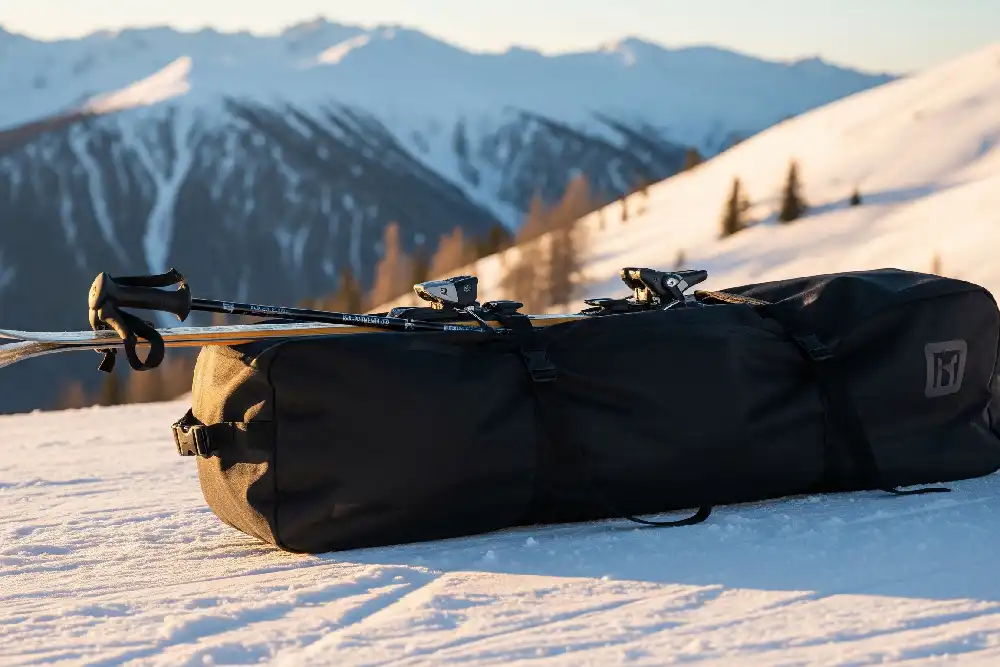
When you travel or go outside, you want your things to stay neat and not smell. Smell-proof bags help you pack snacks or gear without worrying about odors. You can use them for camping, hiking, or daily trips. These bags give you privacy and keep your things safe.
Store and carry things without others noticing.
Keep travel bags and backpacks from smelling.
Protect items from air and water.
Tip: Pick a bag with a strong seal to block smells when you travel.
Types of Bags
There are many types of smell-proof bags for different needs. Each type has features for certain uses. The table below shows some common types and what they offer:
Occasion
Bag Type
Capacity
Key Features
Travel
Vacuum-seal backpack
20–40 L
Valve, carbon lining, tough shell
Gym
Carbon pouch + duffel
5–10 L +30 L
Removable pouch, easy to clean
Daily Carry
Leather-clad odor bag
10–15 L
Stylish look, hidden carbon lining
Outdoor Adventure
Dry-bag with valve
10–25 L
Waterproof, roll-top, odor barrier
Professional Use
Medical kit bag
5–10 L
Special lining, fights germs
You can choose a bag based on what you need. Some bags look nice, while others are easy to clean or protect better. No matter which you pick, smell-proof bags help keep your things fresh, private, and safe.
How Smell-Proof Bags Work
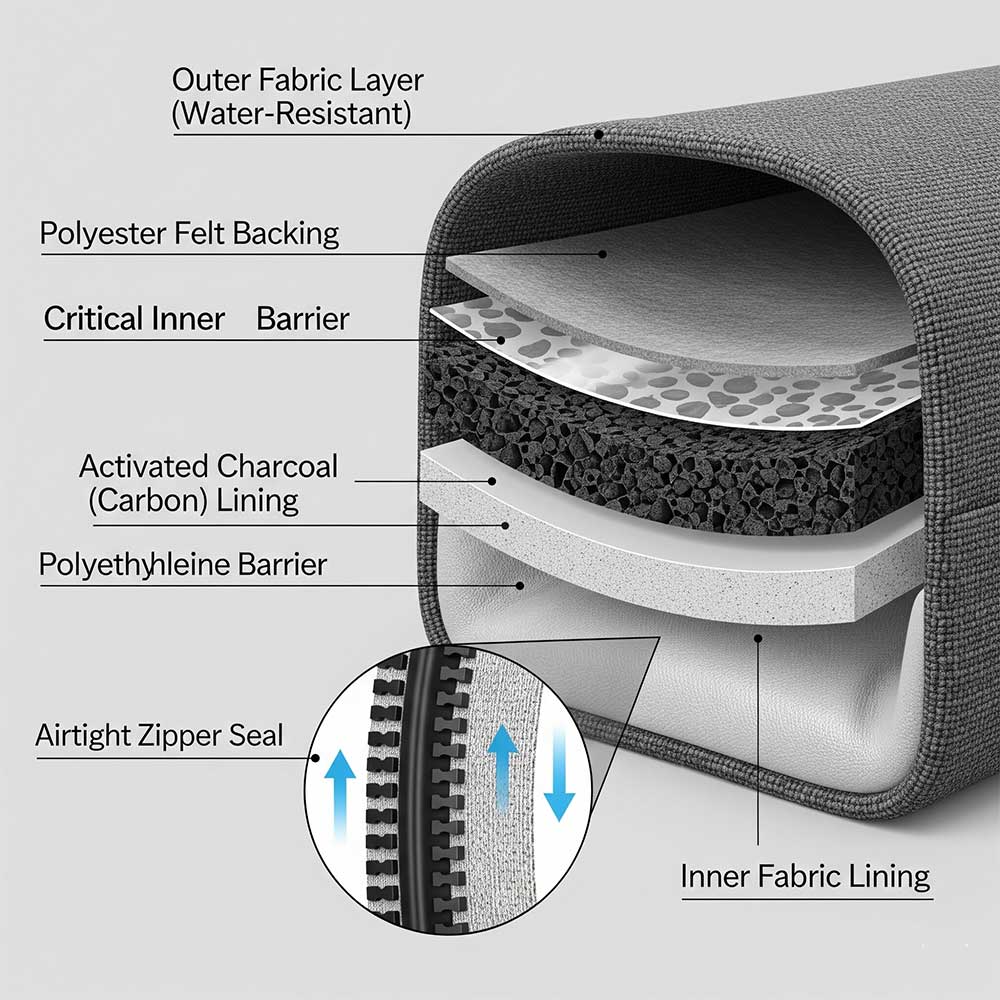
It helps to know how smell-proof bags block odors. This makes it easier to pick the right bag for you. From a manufacturing perspective, true scent-elimination relies on combining premium activated carbon linings with high-frequency welded airtight zippers. Standard stitched bags often leak scents through sewing punctures over time. These professional bags use special materials, multi-layer technology, and tight seals to keep all smells inside.
Odor-Blocking Materials
The materials inside the bag help stop smells. Different bags use different layers and linings. Some layers soak up odors. Other layers keep smells from getting out.
Activated Carbon
Activated carbon is great for blocking odors. You often find it in good smell-proof bags. The carbon traps and removes odor molecules. Strong smells like herbs or food stay inside. This gives you better absorption and keeps things fresh longer.
Mylar Films
Mylar films make a strong wall against smells. This material is light and tough. It does not tear easily. Mylar keeps odors from leaking out. It also protects your things from water and air. You can trust Mylar to keep snacks and herbs fresh.
Silicone Seals
Silicone seals help make the bag airtight. They stop air and smells from escaping. Silicone is bendy and closes tightly every time. This keeps your items safe and free from odors.
Here is a table that shows how these materials work in smell-proof bags:
Material
Effectiveness Description
Activated Carbon
Very good at stopping odors; used in liners for strong absorption.
Mylar Films
Light, tough, and hard to tear; blocks odors well.
Silicone and Rubber Seals
Make the bag airtight; stop air and smells from leaking.
Tip: Pick bags with both activated carbon and Mylar for the best results.
Airtight Seals
Airtight seals are important for keeping smells inside. When you close the bag, the seal stops air and moisture from getting out. This gives you better odor protection than regular bags. Airtight seals also keep your things fresh by blocking air and water.
Feature
Description
Airtight Seals
Keeps odors, moisture, and air inside the bag.
Effectiveness
Works better than other reusable smell-proof bags.
Always check that the seal is tight before you use the bag. A good seal helps you feel safe and keeps your space free from smells.
Multi-Layer Design
Many smell-proof bags have more than one layer. Each layer adds more protection against odors. Some bags, like OPSAK, use many layers to trap smells. These bags work better than regular dry bags. Mylar bags with many layers are also very good. This design helps keep strong smells inside. It is important for privacy and following rules.
OPSAK bags use many layers for strong odor control.
Bags with more layers work better than regular dry bags.
Mylar bags with many layers keep strong smells inside.
This helps with privacy and following packaging rules.
Note: Bags with many layers give you the best long-term odor control.
You can see that using special materials, tight seals, and many layers makes smell-proof bags work well. If you pick a bag with these features, you get strong protection and peace of mind.
Benefits of Smell-Proof Bags
Odor Control
You want to keep strong smells from escaping your bag. Smell-proof bags use special materials like Mylar and foil-lined kraft paper. These materials create a strong barrier against odors. You get better odor control than with regular plastic bags or containers. The design of these bags blocks smells, moisture, and even light. This makes them a top choice for anyone who needs to hide strong scents. You can trust these bags to keep your space fresh and odor-free.
Tip: Always check the seal before you use your bag. A tight seal gives you the best odor control.
Preservation
You need to keep your items fresh for as long as possible. Smell-proof bags help you do this with their multi-layered construction. The aluminum foil lamination acts as a shield against air, moisture, and light. This helps your food, herbs, or other items stay fresh and safe. You can store things for longer without losing flavor or quality.
Here is a table that shows how these bags help preserve freshness:
Feature
Description
Barrier Properties
Blocks oxygen, moisture, and light to keep items fresh.
Modified Atmosphere Packaging
Uses gases like nitrogen to slow spoilage.
Vacuum Sealing
Removes air to extend shelf life and keep flavor.
Moisture Regulation
Controls moisture to prevent spoilage.
Heat Sealing
Strong seals stop leaks and keep products safe.
Multi-layered Protection
Several layers give extra defense against outside factors.
Odor Control
Stops smells from mixing, so items keep their original scent and taste.
Smell-proof Mylar bags protect your items from oxygen, humidity, and UV rays. You can keep your products fresh, strong, and full of flavor for a long time. This makes these bags great for long-term storage.
Privacy
You may want to keep your items private, especially in public or shared spaces. Smell-proof bags help you do this by trapping strong odors inside. This is important if you carry things like cannabis or strong-smelling foods. The bags use activated carbon and airtight seals to stop smells from escaping.
You can stay discreet in social settings because the bags block strong odors.
Activated carbon and airtight seals give you extra privacy.
You show respect for others in shared spaces, like family gatherings or public places.
Note: Using these bags helps you avoid unwanted attention and keeps your belongings private.
Durability
You want your storage solutions to last. Smell-proof bags stand out because they can handle daily use and tough conditions. Manufacturers test these bags to make sure they stay strong over time. You can see how well they perform by looking at the results from different durability tests.
Test Description
Result
Long-term usage
Lasts a very long time, at least six months with daily use
Water resistance test
Did not absorb water
Smell retention test
No smell detected when closed, slight smell when opened with cannabis inside
You can trust these bags to keep working even if you use them every day. The materials resist tearing and do not let water in. When you close the bag, it holds in strong odors. You only notice a smell if you open the bag with something like cannabis inside. This means you get reliable performance for months.
Tip: Check your bag for any damage after heavy use. A small tear or broken seal can reduce its effectiveness.
Versatility
You can use smell-proof bags in many ways. These bags help you store different items and keep them fresh. You do not have to worry about odors mixing or escaping. Here are some common uses:
You can store food and keep perishable items fresh for longer.
Medicinal herbs stay safe and do not lose their quality.
Coffee and tea keep their aroma and flavor locked in.
Cosmetics and fragrances stay separate, so you avoid cross-contamination.
You get more value from these bags because you can use them at home, at work, or while traveling. You can pack snacks for a trip, store herbs in your kitchen, or keep your gym bag odor-free. The same bag can help you in many situations.
Note: Choose the right size and type of bag for each use. This helps you get the best results and keeps your items safe.
Smell-proof bags give you both strength and flexibility. You can rely on them for daily needs and special occasions. Their design makes them a smart choice for anyone who wants to keep things fresh and private.
Smell-Proof Bag Materials
Activated Carbon Pros & Cons
Activated carbon is used in many smell-proof bags. This material soaks up and stops bad smells. When you put strong-smelling things in the bag, the carbon traps the odor inside. This makes the bag work well at blocking smells and keeps your items safe.
Here is a table that shows how activated carbon works in these bags:
Material
Function
Advantages
Activated Carbon
Absorbs and neutralizes odors
High odor-blocking efficiency
But activated carbon is not perfect. After a while, it can fill up and not work as well. If you use the same bag for a long time, it may not block smells like before. You also need to keep the bag dry. If the bag gets wet, the carbon will not trap odors as well.
Tip: If you notice smells coming out, get a new bag or liner. This will help your bag work its best.
Mylar Film Features
Mylar film is another important part of smell-proof bags. It makes a strong wall that keeps smells from getting out. Mylar also stops water from getting in, so your things stay fresh. The film blocks oxygen too, which helps protect what you store.
Mylar film is great at stopping smells from escaping.
It keeps water out, so your items stay fresh.
The film blocks oxygen, which helps keep things good longer.
You can count on Mylar film to keep food, herbs, or other items safe and fresh. The film is light and strong, so it does not tear easily when you use it every day.
Silicone Seal Details
Silicone seals are very important for keeping bags airtight. When you close a bag with a silicone seal, air cannot move in or out. Smells travel with air, so stopping air keeps odors inside. You get better smell control when the seal presses tight against the bag.
Smells move with air, so stopping air keeps odors inside.
Hard containers with silicone seals press tight to stop air from moving.
People who use cannabis say airtight containers with good seals work best.
Always check the seal before you use your bag. A strong silicone seal helps you feel sure that no smells will get out.
Material Comparison
When you choose a smell-proof bag, you want to know which material works best. Each material—activated carbon, Mylar film, and silicone seals—has its own strengths and weaknesses. You can see big differences in how these materials block odors, keep items fresh, and last over time.
Here is a table to help you compare the main features:
Material
Odor Blocking
Durability
Moisture Barrier
Flexibility
Best Use Cases
Activated Carbon
Excellent
Good
Fair
Good
Strong odors, cannabis
Mylar Film
Very Good
Excellent
Excellent
Moderate
Food, herbs, long-term
Silicone Seal
Good
Excellent
Excellent
Excellent
Airtight closure, travel
You can use this table to match your needs with the right material. If you want the best odor control, activated carbon works well. If you need to keep out moisture and air, Mylar film gives you strong protection. Silicone seals help you get a tight, leak-proof closure every time.
Tip: For the best results, look for bags that combine these materials. You get more protection when you use a bag with both activated carbon and a Mylar layer, plus a silicone seal.
You should also know that the way a bag is made can change how well it works. Some studies show that the material you pick affects how much odor escapes. Here are some key findings from research:
The type of material in a bag can change how well it blocks or lets out smells.
Some bags let out more odor than others, even if they look the same.
The way a bag holds different chemicals can change the results you get when you test for smells.
You need to think about what you want to store. Some materials work better for certain items.
You may notice that some bags work better for food, while others are best for herbs or strong-smelling items. If you want to keep your items fresh and private, you need to match the material to your needs.
You should also check the bag for any weak spots. Even the best material will not work if the seal is loose or the bag has a tear. Always close the bag tightly and check for damage before you use it.
Note: The right material makes a big difference. Choose carefully to get the best odor control and freshness for your items.
When you compare smell-proof bag materials, you see that each one has a special job. Activated carbon soaks up strong smells. Mylar film blocks air and moisture. Silicone seals keep everything airtight. You get the best results when you use a bag that combines all three.
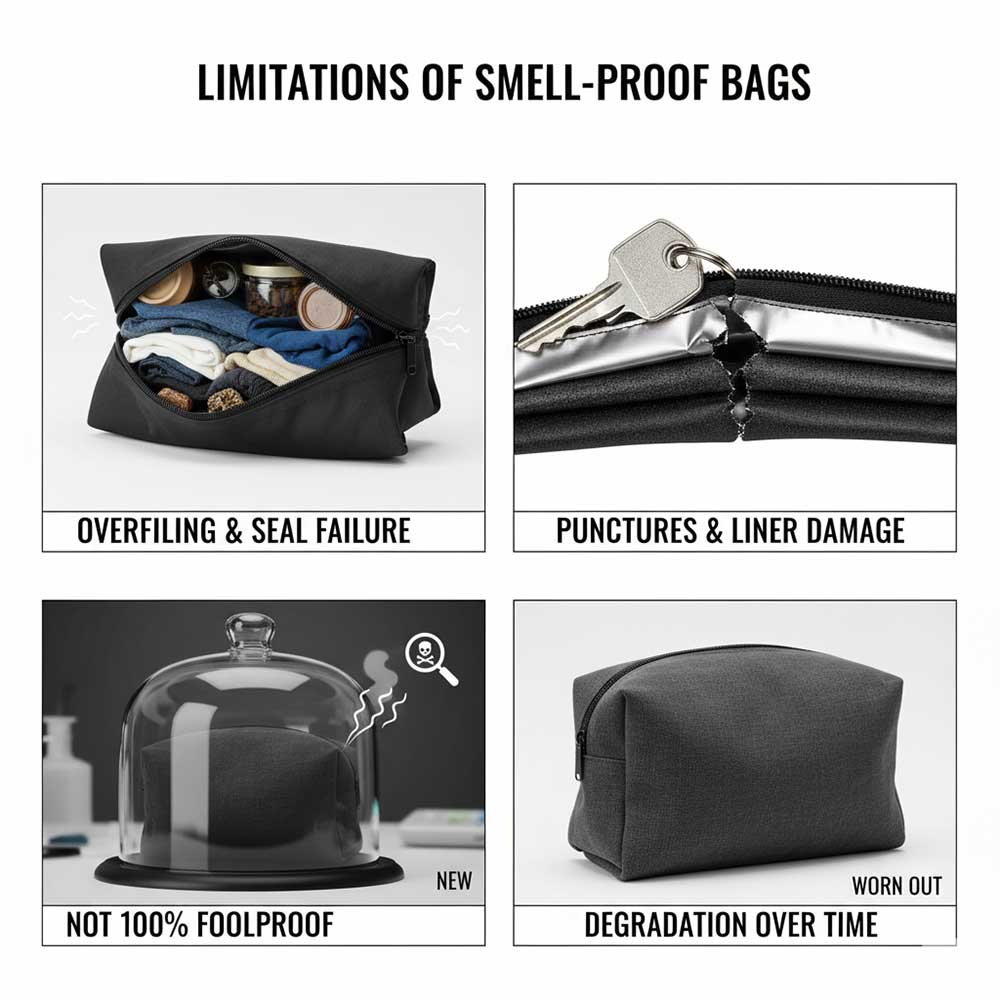
Limitations of Smell-Proof Bags
Maintenance Needs
You need to care for your smell-proof bag to keep it working well. If you ignore cleaning, odors may build up inside. Dirt and moisture can damage the special layers. You should clean your bag often, especially after storing strong-smelling items. Use a soft cloth and mild soap for most bags. Avoid harsh chemicals because they can break down the odor-blocking materials.
Here are some simple steps for maintenance:
Wipe the inside and outside with a damp cloth.
Let the bag air dry before you use it again.
Check the seals and zippers for dirt or damage.
Store your bag in a cool, dry place.
Tip: Clean your bag after each use to keep odors from sticking.
If you skip these steps, your bag may lose its smell-blocking power. Regular care helps you get the best results and extends the life of your bag.
Lifespan
Smell-proof bags do not last forever. You will notice that the odor-blocking materials wear out over time. Activated carbon can fill up with odors and stop working. Mylar films may tear or lose their barrier strength. Silicone seals can crack or lose flexibility.
You should watch for signs that your bag needs replacing:
Sign of Wear
What It Means
Odors escaping
The bag is losing effectiveness
Tears or holes
The barrier is broken
Weak seals or zippers
Air and smells can leak out
Stiff or cracked seals
The airtight closure is failing
Most smell-proof bags last several months with regular use. If you use your bag every day, you may need to replace it sooner. Bags with activated carbon liners often need replacement after heavy use. You should check your bag often and replace it when you see damage or smell leaks.
Note: A fresh bag gives you better odor control and keeps your items safe.
Extreme Conditions
You may use your smell-proof bag in tough places. Extreme heat, cold, or humidity can affect how well your bag works. High temperatures can weaken seals and damage the odor-blocking layers. Cold weather can make silicone seals stiff and less airtight. Humidity can cause mold or mildew inside the bag.
Here are some ways extreme conditions can limit your bag:
Heat can melt or warp plastic and silicone parts.
Cold can crack seals and make zippers hard to close.
Moisture can break down activated carbon and cause odors to escape.
If you plan to use your bag outdoors or in harsh environments, choose one with strong seals and tough materials. Store your bag away from direct sunlight and wet places. You should avoid leaving your bag in a hot car or outside in freezing weather.
Alert: Extreme conditions can shorten the life of your smell-proof bag. Protect your bag to keep it working well.
You can get the most from your smell-proof bag by caring for it, watching for wear, and protecting it from harsh conditions. This helps you keep your items fresh and your space odor-free.
Overloading
You might think you can fit as much as possible into your smell-proof bag. Overloading seems like a good way to save space, but it can cause problems. When you stuff your bag too full, you put stress on the seams, zippers, and seals. This stress can break the airtight barrier that keeps odors inside.
If you overfill your bag, you may notice these issues:
The zipper or seal may not close all the way.
The bag can stretch or tear at the seams.
Odors may escape because the seal is weak.
The bag may lose its shape and become hard to use.
The materials inside the bag can get crushed or damaged.
Here is a table that shows what can happen when you overload your smell-proof bag:
Overloading Effect
What You Might Notice
Resulting Problem
Broken zipper/seal
Bag does not close tightly
Odors leak out
Stretched seams
Bag looks misshapen or bulges
Bag tears or rips
Crushed contents
Items inside get squished
Loss of freshness or quality
Reduced odor control
Smells start to escape
Less privacy and freshness
Hard to carry
Bag feels bulky or awkward
Less convenience
Tip: Always leave a little extra space in your bag. A bag that is only three-quarters full will seal better and last longer.
You should check the manufacturer’s recommended capacity before you pack your bag. Most smell-proof bags work best when you do not fill them to the top. If you need to carry more, use a larger bag or split your items between two bags.
Overloading can also shorten the life of your bag. The extra pressure can wear out the odor-blocking materials faster. You may need to replace your bag sooner if you keep overfilling it.
To get the best results, follow these steps:
Fill your bag only to the recommended level.
Close the zipper or seal gently, without forcing it.
Check for gaps or bulges before you store or carry the bag.
If you feel resistance when closing, remove some items.
You protect your investment and keep your items fresh when you avoid overloading. A well-packed bag gives you better odor control, longer life, and easier use every day.
Choosing & Maintaining Smell-Proof Bags
When you want the best results, you need to choose and care for your smell-proof bags carefully. This section gives you clear tips for picking the right bag and keeping it in top shape.
Selection Tips
Size & Capacity
Pick a bag that fits what you want to store. If you need to carry small items, choose a compact bag. For larger items or more storage, select a bigger size. Always leave some space inside so the bag can close tightly.
Small bags work well for snacks or single items.
Medium bags fit daily essentials.
Large bags help with bulk storage or travel.
Tip: A bag that is too full may not seal well. Choose a size that matches your needs.
Material Quality
Look for strong materials. Good bags use thick layers and tough linings. Check for features like reinforced seams and sturdy zippers. High-quality materials last longer and block odors better.
Material Feature
Why It Matters
Thick lining
Stops odors escaping
Reinforced seams
Prevents tearing
Strong zipper
Keeps bag airtight
Intended Use
Think about how you plan to use the bag. If you travel, pick a lightweight and portable option. For home storage, choose a bag that fits your space. Outdoor use needs waterproof and durable materials.
Travel: Lightweight, easy to pack
Home: Fits shelves or drawers
Outdoors: Waterproof, tough shell
Features
Check for extra features that make the bag easier to use. Some bags have locks for privacy. Others have handles or straps for carrying. Look for bags with multiple layers or special linings for better odor control.
Note: Features like locks and handles add convenience and security.
Maintenance Tips
Cleaning
Clean your bag often to keep it working well. Use a damp cloth and mild soap. Dry the bag fully before using it again. Avoid harsh cleaners that can damage the lining.
Storage
Store your bag in a cool, dry place. Keep it away from direct sunlight and heat. This helps the materials last longer and keeps the bag effective.
Replacement
Check your bag for signs of wear. If you see tears, weak seals, or odors escaping, it is time to replace the bag. Regular checks help you catch problems early.
Avoid Overloading
Do not fill your bag past its limit. Overloading can break the seal or damage the zipper. A bag that is too full will not block odors as well.
Alert: A well-packed bag lasts longer and keeps your items fresh.
By following these tips, you get the most out of your smell-proof bags. Good care and smart choices help you keep your items fresh, private, and safe.
You can trust smell-proof bags to keep smells inside. These bags help your items stay fresh. They use strong materials like Mylar and special linings. These materials block smells and stop air and moisture. There are many types of bags. Some use kraft paper with foil. Others use plastic films. You can pick the one that fits your needs.
They keep smells in for privacy.
They help your items stay fresh by blocking air and moisture.
They hide sensitive items with discreet packaging.
They come in many designs for different needs.
Always clean your bag and check for damage. Do not put too much inside. Taking care of your bag helps it last longer and work better. When purchasing wholesale or bulk options for your business, ensure you look for multiple protective layers to guard against oxygen and humidity.
FAQ
How do smell-proof bags block odors?
You get odor protection from special materials like activated carbon and Mylar. These layers trap and block scent molecules. Airtight seals keep smells from escaping. You keep your items fresh and private.
Can you wash smell-proof bags?
You can clean most smell-proof bags with a damp cloth and mild soap. Let the bag air dry before using it again. Avoid harsh chemicals. Always check the care instructions for your specific bag.
Do smell-proof bags work for food storage?
You can use smell-proof bags to store snacks, dried fruits, and spices. The bags keep food fresh and stop strong smells from spreading. You get longer shelf life and less waste.
How long does a smell-proof bag last?
You get several months of use from a quality smell-proof bag. Activated carbon liners may need replacement sooner. Check for tears, weak seals, or escaping odors. Replace the bag when you notice these signs.
Are smell-proof bags waterproof?
Many smell-proof bags use waterproof materials like Mylar. You keep your items dry and safe from moisture. Always check the product details to make sure your bag is water-resistant.
Can you use smell-proof bags for travel?
You can pack smell-proof bags in your suitcase or backpack. They help you organize items and block unwanted odors. Choose a bag with a strong seal for best results when traveling.
What should you avoid putting in smell-proof bags?
You should avoid sharp objects that can tear the bag. Wet items may damage odor-blocking layers. Overloading the bag can break the seal and let smells escape.
Do smell-proof bags prevent all odors?
You get strong odor control, but no bag blocks every scent perfectly. Very strong smells may escape if the bag is damaged or overloaded. Always close the bag tightly for best results.







Comments are closed