What Are TSA-Approved Carry-On Bag Sizes and How Do They Differ by Airline
You want your trip to start smoothly, right? The TSA-approved carry-on bag size lets you know what fits in overhead bins. Here’s what you need to remember:
The standard size is 22 inches x 14 inches x 9 inches (or 56 cm x 35 cm x 22 cm).
Airlines sometimes set different limits, so always double-check before you pack.
If your bag is too big, you might face extra fees or delays.
Choosing the right bag helps you breeze through security and board without stress.
The usual TSA-approved carry-on size is 22 x 14 x 9 inches. This size includes the wheels and handles. Airlines can have different size and weight rules. You should check your airline’s rules before you pack. If you measure your bag the right way, you can avoid extra fees. You can also avoid delays at the airport. Soft-sided bags can bend and fit in tight spaces. Hard-sided bags protect breakable things better. Backpacks and roller bags are easy to use when you travel. Each type helps you move around in its own way. Budget airlines have tougher carry-on rules. You need to know their size and weight limits. If you pack liquids by the 3-1-1 rule, you can get through security faster. You can also keep your liquids from being taken away. Always check your airline’s rules again before you pack. Pack smart so your trip goes smoothly.
TSA-Approved Carry-On Bag Size
Standard Dimensions
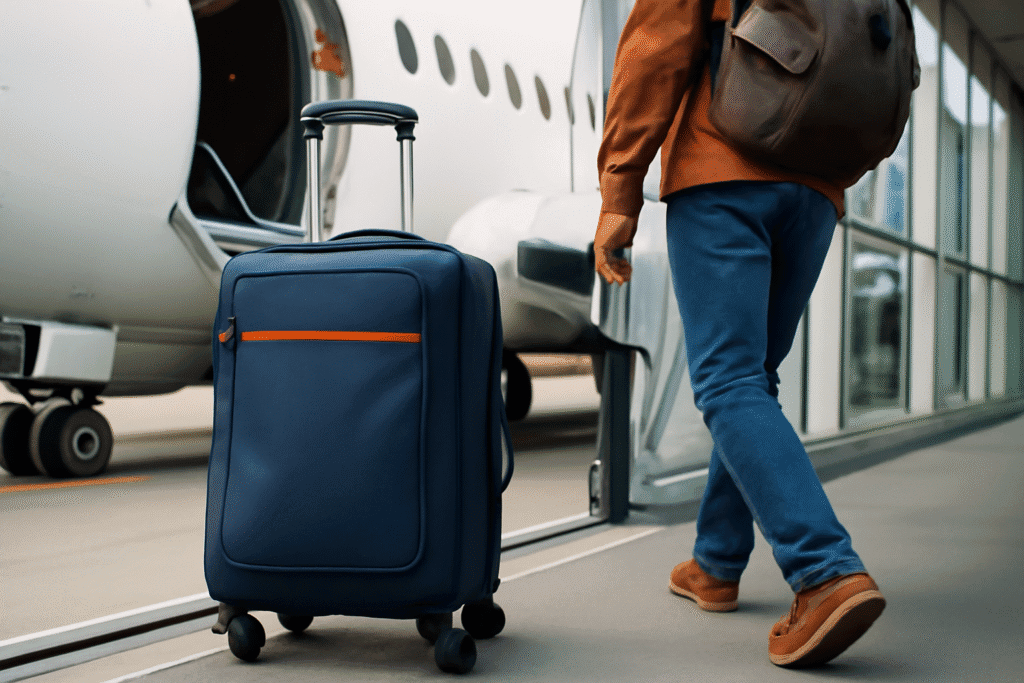
You want to make sure your bag fits in the overhead bin, right? The TSA-approved carry-on bag size gives you a clear guideline. Most airlines follow the standard dimensions of 22 inches x 14 inches x 9 inches (56 cm x 35 cm x 22 cm). These measurements include wheels and handles, so don’t forget to count those parts.
Tip: Always check with your airline before you travel. Some airlines have their own rules, and the space under the seat or in the overhead bin can be different.
The TSA-approved carry-on bag size helps you avoid surprises at the airport.
If your bag fits these dimensions, you’re more likely to breeze through security and boarding.
Measuring Your Bag
You might wonder how to measure your bag the right way. It’s easier than you think! Follow these steps to make sure your bag meets the TSA-approved carry-on bag size:
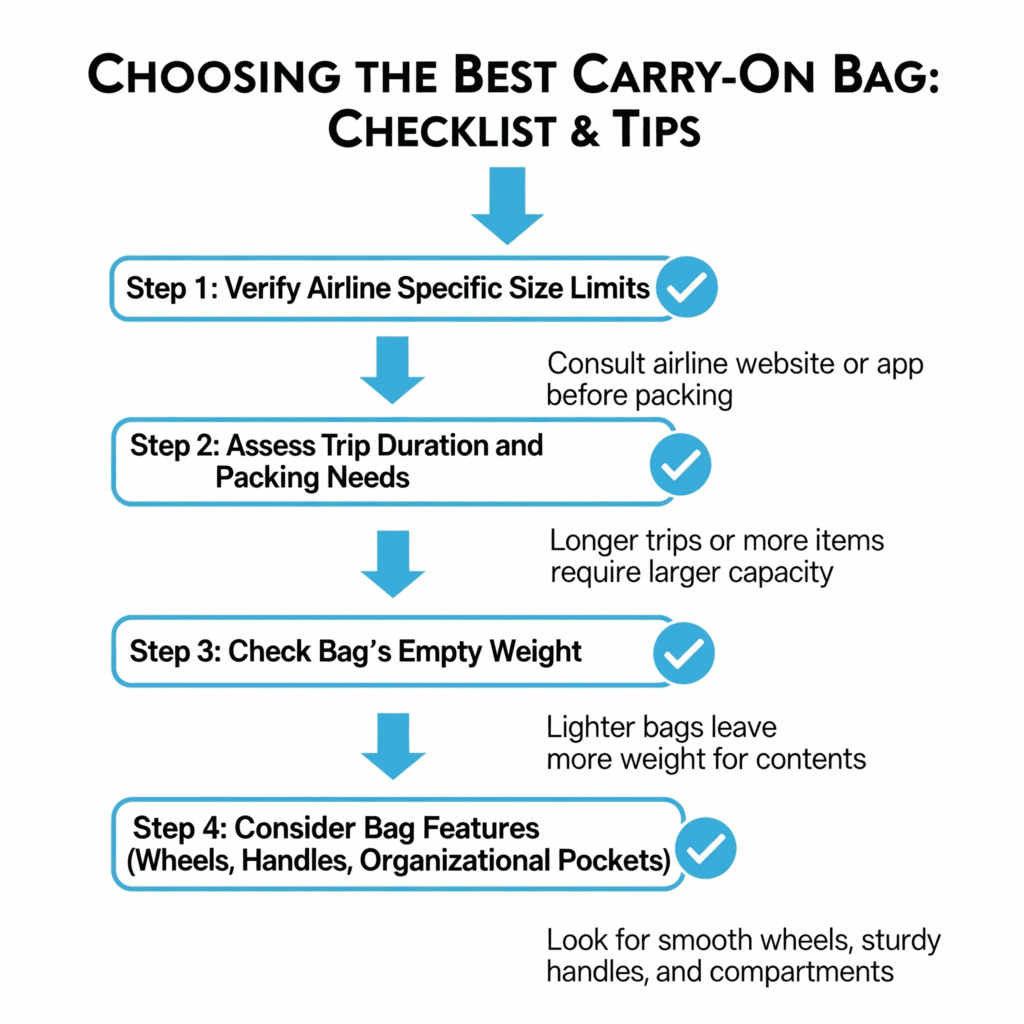
Check your airline’s website for their specific size limits.
Look at the luggage manufacturer’s guidelines for your bag’s measurements.
Pack your bag first. Overpacking can make your bag bigger than you expect.
Use a tape measure to check the length, width, and height. Include wheels, handles, and any pockets that stick out.
Note: If your bag is too big, you could face extra fees or have to check it at the gate. That can slow you down and cost you money.
Why Size Matters
You might ask, “Why does the TSA-approved carry-on bag size matter so much?” The answer is simple. When everyone follows the rules, boarding goes faster and security checks run smoothly. Oversized bags can block the aisle, slow down the process, and even cause delays for other travelers.
Airlines may charge extra fees if your bag is too large.
Security checks can take longer if your bag doesn’t fit the guidelines.
Smaller bags help keep the boarding process quick and easy.
Studies show that when passengers bring bags that fit the TSA-approved carry-on bag size, boarding times drop and everyone gets to their seat faster. You help yourself and others by sticking to the right size.
By following these simple steps and sticking to the TSA-approved carry-on bag size, you make your trip smoother and less stressful.
Types of TSA-Approved Carry-On Bags
Soft-Sided Bags
You see soft-sided bags a lot at airports. People like them because they are flexible. These bags use materials like nylon or polyester. You can fit them into small spaces. They have extra pockets outside. This makes it easy to grab snacks or your boarding pass. If you pack quickly or have odd-shaped things, these bags help. You get more space to fit your stuff.
Here’s a quick look at how soft-sided bags compare to hard-sided ones:
Type of Luggage
Pros
Cons
Soft-Sided
Flexible and can expand Lightweight Easy-to-reach outside pockets Simple to store Works for many uses
Not as much protection Can wear out faster Not very water resistant
Hard-Sided
Strong and protects your things Water resistant Looks modern Easy to wipe clean
Hard to expand Heavier Not as easy to move around
Soft-sided bags are good if you want a light bag. They fit well in overhead bins. You can use the extra pockets to organize your things. But they do not protect breakable items well. They might rip if you pack too much or if they get caught on something.
Tip: If you travel a lot, pick a soft-sided bag with strong corners and water-resistant fabric. This helps your bag last longer.
Hard-Sided Bags
Hard-sided bags look new and stylish. They have a hard shell made from polycarbonate or ABS plastic. These bags keep your things safe. They are good for electronics or breakable items. Water does not get in easily, so your clothes stay dry.
Hard-sided bags are sometimes heavier than soft-sided ones. You cannot squeeze in extra things. This stops you from packing too much. These bags can get scratched, but you can clean them with a wet cloth.
Hard-sided bags keep breakable things safe.
They keep water out and your things dry.
They look modern and are easy to clean.
If you want your things safe and your bag to last, pick hard-sided luggage. Just check that the size fits TSA and airline rules.
Backpacks
Backpacks are great for short trips. They let you keep your hands free. You can wear them and move through busy airports easily. Most backpacks have soft straps and many pockets. You can organize your things and grab them fast.
Backpacks come in soft-sided and hard-sided types. Soft-sided backpacks are lighter and easy to store. Hard-sided backpacks protect things like laptops or cameras. Some backpacks have a sleeve to slide over your suitcase handle. This makes travel easier.
Note: Always check your backpack’s size before you fly. Some airlines have strict rules for personal items. You do not want to check your bag at the gate.
Backpacks give you comfort and let you move easily. If you pack light and want to reach your things fast, a backpack is a good choice.
Roller Bags
Roller bags make travel much easier. You see them everywhere at airports. These bags have wheels and a handle, so you can pull them instead of carrying them. You save your back and shoulders from heavy lifting. If you walk long distances in airports, a roller bag helps you move quickly.
You find two main types of roller bags:
Two-wheel (upright) bags: These roll forward and backward. You tilt the bag and pull it behind you. They work well on rough surfaces like sidewalks.
Four-wheel (spinner) bags: These stand upright and roll in any direction. You push, pull, or spin them beside you. Spinner bags glide smoothly on flat floors.
Tip: Spinner bags work best inside airports. If you travel on bumpy streets, two-wheel bags handle cracks and curbs better.
Roller bags come in many sizes. You want to pick one that fits the TSA-approved carry-on size. Most roller bags list their measurements on the tag or inside the bag. Always check the size with a tape measure before you pack. Remember to include the wheels and handle in your measurement.
Here’s a quick comparison to help you choose:
Feature
Two-Wheel (Upright)
Four-Wheel (Spinner)
Maneuverability
Good on rough ground
Great on smooth floors
Direction
Forward/backward
Any direction
Stability
Less stable upright
Stands on its own
Weight
Often lighter
Can be heavier
Roller bags often have extra pockets and compartments. You can organize your clothes, shoes, and toiletries. Some bags have a special pocket for laptops or tablets. You reach your electronics fast at security.
When you shop for a roller bag, look for these features:
Strong zippers and handles
Durable wheels that roll smoothly
A sturdy telescoping handle that locks in place
Lightweight material to save on airline weight limits
Note: Some airlines have strict weight rules for carry-ons. A heavy bag can push you over the limit, even if it fits the size.
You want a roller bag that matches your travel style. If you rush through airports, a spinner bag glides beside you. If you travel on city streets, a two-wheel bag handles bumps better. Always check your airline’s rules before you fly. This helps you avoid last-minute surprises at the gate.
Roller bags give you freedom and comfort. You move faster and carry more with less effort. Pick the right roller bag, and your trip starts off right.
Airline-Specific Restrictions
Budget Airlines
Budget airlines want to keep costs low, so they set their own rules for carry-on bags. You might notice that these airlines have stricter size and weight limits than the TSA-approved carry-on bag size. Some even charge extra if your bag is too big or heavy. You need to pay close attention to their rules before you pack.
Here’s a quick look at how budget airlines compare to TSA standards:
Aspect
TSA Standards
Budget Airlines
Prohibited Items
Firearms, lithium batteries, etc.
Varies by airline
Liquid Restrictions
3.4 ounces in quart-size bag
Varies by airline
Carry-on Size Limits
Not specified
Specific size limits apply
Personal Item Definition
Not specified
Small backpacks, purses, etc.
Weight Restrictions
Not specified
Varies by fare type
You might see airlines like Spirit, Frontier, or Allegiant with smaller size limits for carry-ons. Some only allow a personal item for free, like a small backpack or purse. If you want to bring a bigger bag, you often pay a fee. Always check your airline’s website before you fly. This helps you avoid surprise charges at the airport.
Tip: Measure your bag at home and compare it to the airline’s size chart. This saves you time and money at check-in.
Regional Flights
Regional flights use smaller planes. The overhead bins and under-seat spaces are tiny compared to big jets. Even if your bag fits the TSA-approved carry-on bag size, it might not fit on a regional plane. You need to know the rules for these flights so you don’t have to check your bag at the last minute.
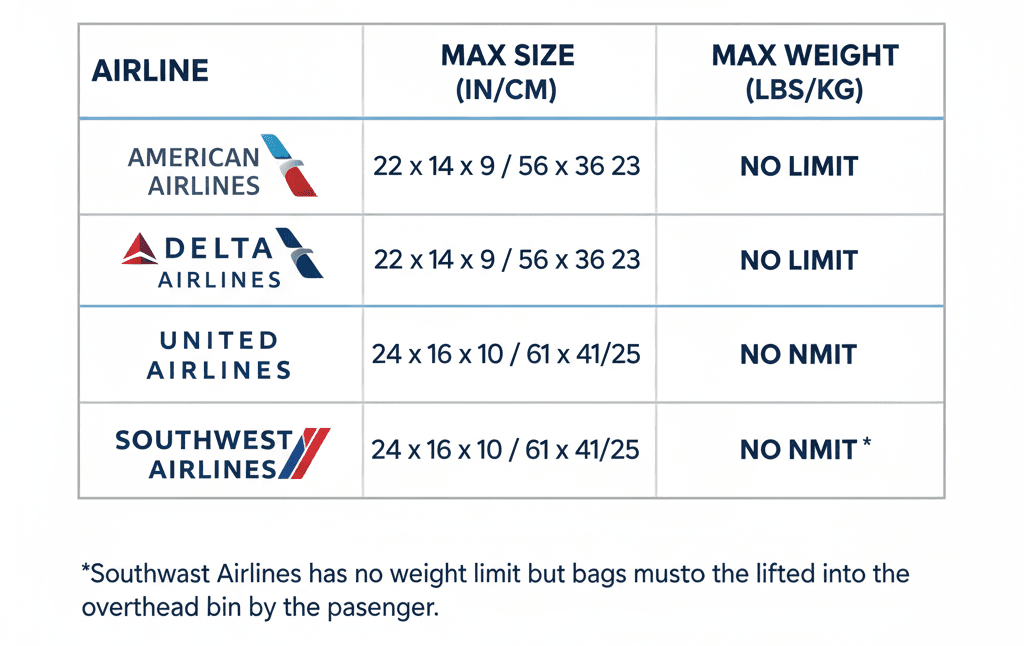
Most U.S. carriers let you bring a bag up to 22 x 14 x 9 inches. Some airlines use a rule called “maximum linear dimension.” This means you add the length, width, and depth together, and your bag must not go over a certain number.
Most U.S. carriers permit carry-on bags up to 22 x 14 x 9 inches.
Airlines may have a maximum linear dimension rule, where the total of length, width, and depth must not exceed a certain limit.
It is important to check individual airline policies to avoid unexpected fees.
You might have to gate-check your bag if the plane is full or the bins are too small. This means you leave your bag at the plane door, and the crew puts it in the cargo hold. You get it back when you land. Always pack your valuables and important items in a small personal bag you can keep with you.
Note: Even if you fly a big airline, your connecting flight on a regional jet may have different rules. Double-check before you travel.
International Airlines
International airlines have their own carry-on rules. These rules can be very different from what you see in the U.S. Some airlines use metric measurements. Others set strict weight limits for your bag. You need to check these rules before you fly overseas.
Here’s a table to help you compare international airline rules with TSA regulations:
Aspect
International Airlines
TSA Regulations
Carry-On Size Limit
Usually max 22 inches (55cm) tall, 15 inches (40cm) wide, 10 inches (25cm) deep
No specific size limit, but must fit in overhead bin or under seat
Carry-On Weight Limit
Generally 16 to 18 lbs, with some exceptions like British Airways at 51 lbs
No specific weight limit, but must be manageable for the passenger
Packing Restrictions
Varies by airline, often stricter than domestic
3-1-1 rule for liquids applies to all travelers
Some airlines in Europe or Asia may only allow bags that are smaller or lighter than what you use in the U.S. If your bag is too heavy, you might have to check it or pay a fee. Always look up the rules for your airline and your destination.
Travel Tip: Use a luggage scale at home to check your bag’s weight. This helps you avoid extra charges at the airport.
You want your trip to go smoothly. Always check both the TSA and your airline’s rules before you pack. This helps you pick the right bag and avoid problems at the airport.
Checking Airline Policies
You want to avoid surprises at the airport, right? The best way to do that is to check your airline’s carry-on policies before you pack. Every airline sets its own rules. These rules can change often. If you skip this step, you might end up paying extra fees or checking your bag at the last minute.
Here’s how you can stay ahead:
Visit your airline’s official website. Look for the “Baggage” or “Carry-On” section. Airlines update these pages with the latest size and weight limits.
Pay close attention if you fly with budget airlines. These carriers often have stricter rules for bag size and weight. Sometimes, they only allow a small personal item for free.
Check if your ticket is a basic economy fare. Some airlines do not include a full-sized carry-on with these tickets. You may only get a personal item, like a backpack or purse.
Compare domestic and international flights. International airlines might have different restrictions than U.S. carriers. You could face smaller size limits or lower weight allowances.
Watch for extra fees. Some airlines charge for carry-on bags, especially budget carriers. You want to know these costs before you get to the airport.
Tip: Always measure your bag at home. Use a tape measure and check the size with wheels and handles included. Weigh your bag if your airline has weight limits.
You can also call the airline’s customer service if you have questions. Agents can explain the rules and help you avoid mistakes. Some airlines even have mobile apps that show baggage policies and let you check your bag’s size with your phone’s camera.
Note: Airline rules change often. What worked last year might not work now. Always double-check before every trip.
When you take a few minutes to check your airline’s carry-on policies, you save time and money. You also travel with less stress. You know what to expect, and you can pack with confidence.
Choosing the Best Carry-On Bag
Durability and Materials
You want your carry-on bag to last for many trips. The right material makes a big difference. Some bags look good but wear out fast. Others can handle rough treatment and still look new. When you shop for a bag, check what it’s made of. Here’s a quick guide to the most common materials you’ll see:
Material
Type
Pros
ABS
Hard-side
Lightweight, affordable, rigid, water resistant
Polypropylene
Hard-side
Lightest hard-side, budget-friendly, waterproof, crack-resistant, handles temperature changes
Polycarbonate
Hard-side
Strong, flexible, impact and scratch resistant, lightweight, water resistant
Polyester
Soft-side
Lightweight, flexible, durable, resists water and scuffs (when treated)
Nylon
Soft-side
Very strong, resists tears and abrasion, especially in ballistic nylon
If you want a hard-sided bag, polycarbonate gives you the best mix of strength and lightness. Polypropylene works well if you want something light and affordable. For soft-sided bags, nylon stands out for its toughness. Ballistic nylon is the top choice if you want a bag that can take a beating. Polyester is also good, especially if it has a special coating to resist water.
Tip: If you travel a lot, pick a bag with reinforced corners and strong zippers. These small details help your bag last longer.
Organization Features
A good carry-on bag keeps your things neat and easy to find. You don’t want to dig through a messy bag at the airport. Look for these features when you choose your next bag:
Multiple compartments help you separate clothes, shoes, and toiletries.
Mesh pockets let you see what’s inside without opening every zipper.
Laptop sleeves protect your electronics and make security checks faster.
Quick-access pockets hold your passport, boarding pass, or snacks.
Compression straps keep your clothes from shifting and wrinkling.
Backpacks often use every inch of space. You can fit more inside without the bulk of wheels and handles. They also make it easy to move through big airports, especially if you have a tight connection. If you want a bag that works for business and fun, a backpack gives you lots of options.
Note: The right organization features save you time and stress. You find what you need fast and keep your things in order.
Wheels and Handles
Wheels and handles change how you move through the airport. You want a bag that rolls smoothly and feels comfortable in your hand. Here’s how different designs help you:
Feature
Impact on Usability
Adjustable handle height
Fits your height, reduces strain on your back and arms
Number and placement of wheels
Makes it easier to steer and balance your bag
Wide handle design
Gives you a better grip and less wrist pain
Wide-handle bags feel more comfortable and easy to use.
Good wheels help you move quickly, even in crowded spaces.
You avoid wrist pain and tired arms with the right handle.
Spinner wheels let you roll your bag in any direction. Upright wheels work better on rough ground. Adjustable handles help you find the perfect height, so you don’t have to bend or stretch. If you want a smooth trip, check the wheels and handles before you buy.
Travel Tip: Try rolling the bag in the store. Make sure the handle feels sturdy and the wheels glide without sticking.
Weight and Expandability
You want your carry-on bag to be light. A heavy bag makes travel harder. Most airlines set weight limits for carry-ons. International carriers usually allow bags between 15 and 22 pounds (7 to 10 kg). If your bag is too heavy, you might have to check it or pay extra fees.
Expandable bags sound great. You unzip a section and get more space. This helps when you buy souvenirs or need to pack a jacket. But extra space can tempt you to overpack. If you fill every inch, your bag might go over the airline’s weight limit. You need to balance space and weight.
Here are some things to remember about weight and expandability:
Airlines often check the weight of your carry-on at the gate.
Expandable compartments give you flexibility, but you must watch the total weight.
A lighter bag helps you move faster and saves your back.
Overpacking an expandable bag can lead to extra fees or delays.
Tip: Use a luggage scale at home. Weigh your bag after packing. This helps you avoid surprises at the airport.
You want a bag that fits your needs. If you travel light, pick a bag with a simple design. If you need more space, choose one with expandable sections. Always check the airline’s weight rules before you fly.
Matching Bag to Travel Needs
You travel for different reasons. Sometimes you go on a family vacation. Other times you take a business trip. Your carry-on bag should match your trip.
If you travel with family, a multi-piece luggage set works best. Each person gets their own bag. This keeps things organized. You can track everyone’s belongings easily. Kids like having their own suitcase. Parents can pack snacks and toys in separate bags.
Business trips need a different approach. You want a bag that looks professional. Multiple suitcase sizes help you pack for short or long trips. You might need space for a laptop, files, and a change of clothes. Versatility matters.
When you pick a carry-on, look for these features:
Durability keeps your bag safe through many trips.
Weight matters. A lighter bag is easier to carry and meets airline rules.
Maneuverability helps you move quickly in busy airports.
Security features like TSA-approved locks protect your things.
Note: Think about your travel style. If you travel often, invest in a sturdy bag with good wheels and handles. If you travel with kids, look for sets that make packing easier.
You want your bag to fit your trip. Choose features that help you stay organized and stress-free. The right carry-on makes every journey smoother.
TSA Carry-On Guidelines
Liquid Restrictions
You probably know that liquids can cause trouble at airport security. TSA has strict rules for what you can bring in your carry-on. You need to follow the 3-1-1 rule every time you pack. This rule keeps things simple and helps you get through security faster.
Here’s a quick table to show you what’s allowed:
Rule Component
Description
Maximum Size
Each liquid container must not exceed 3.4 ounces (100 milliliters).
Bag Requirement
All liquid containers must fit into one quart-sized, clear, resealable plastic bag.
Number of Bags Allowed
Each passenger is allowed one quart-sized bag.
Applicability
Applies to every traveler, regardless of age or destination.
International Travel Consideration
Must follow the 3-1-1 rule when departing from U.S. airports, but check for specific destination rules.
You can bring travel-size shampoo, lotion, or toothpaste, but each bottle must be small enough. Put all your liquids in one clear bag. If you pack more than allowed, TSA will ask you to throw items away. You don’t want to lose your favorite products at the checkpoint!
Tip: Pack your liquid bag at the top of your carry-on. You can grab it quickly when you reach security.
Electronics Screening
You probably travel with electronics like laptops, tablets, or e-readers. TSA wants you to keep these devices easy to reach. When you get to the checkpoint, you need to follow a few steps:
Keep laptops and tablets accessible for easy removal during screening.
Place these devices in a separate bin for X-ray screening.
Make sure nothing sits on top of or underneath your electronics in the bin.
Be ready to power on your device if a TSA officer asks.
Charge your devices before you arrive at the airport.
If you follow these steps, you move through security faster. TSA officers need a clear view of your electronics. If your device won’t turn on, you might have to leave it behind. You don’t want to risk losing your laptop or tablet.
Note: Pack your charging cables in your personal item. You can charge your device if needed.
Prohibited Items
TSA keeps a list of items you cannot bring in your carry-on. Some things seem harmless, but they can cause problems at security. Here’s a list of the most common prohibited items:
Liquids, aerosols, and gels exceeding 3.4 ounces (100 milliliters).
Knives and sharp objects such as scissors and box cutters.
Firearms and firearm components.
Explosives and flammable materials like gunpowder and fireworks.
Realistic replicas and novelty items resembling weapons.
Ammunition.
Flammable household items such as paint solvents and lighter refills.
If you pack any of these, TSA will take them away. You might even face delays or extra screening. Always double-check your bag before you leave home. You want your trip to start without stress or surprises.
🛑 Alert: If you’re not sure about an item, check TSA’s website or ask an agent at the airport.
By following these TSA guidelines, you make your airport experience smoother and safer. You help yourself and everyone around you travel with less hassle.
Travel Tips for a Smooth Airport Experience
Double-Check Size and Weight
You want to avoid surprises at the airport. Checking your bag’s size and weight before you leave home helps you travel with confidence. Here’s a simple way to make sure your carry-on meets airline rules:
Measure your luggage after you pack it. Include wheels and handles in your measurement.
Review your airline’s baggage policy. Rules can change, so check before every trip.
Use a tape measure and a digital scale to check the size and weight.
Pack smart. Roll your clothes and use packing cubes to save space and stay under the weight limit.
Set a reminder to check your luggage size and weight about a week before your flight.
Rachel Simmons, an expert organizer, says, “Measuring your bag after packing and being aware of each airline’s methods can save you from embarrassing gate-check fees.”
You can also use a luggage scale to weigh your packed bag. Attach the scale’s strap to your bag handle and lift. Make sure your bag’s weight is within your airline’s limit, which is usually around 50 pounds. These steps help you avoid extra fees and delays.
Packing for Security
Packing with security in mind makes your airport experience smoother. You want to get through TSA screening quickly. Try these tips:
Use packing cubes to organize your clothes. This keeps your bag neat and helps you find things fast.
Pack liquids and electronics in easy-to-reach pouches. You can pull them out quickly during screening.
Keep important items like medications and travel documents in outer pockets.
Prepare ahead by organizing your items and having your boarding pass and ID ready.
Dress in layers and wear clothes that are easy to remove. This helps if you need extra screening.
Follow the 3–1–1 rule for liquids and gels. Put all liquids in a quart-sized clear bag.
Wear slip-on shoes and keep accessories simple. You save time at security.
Review TSA and airline rules before you pack. This helps you avoid packing prohibited items.
Packing this way helps you move through security faster. You spend less time searching for things and more time relaxing before your flight.
Preparing for Airline Rules
Every airline has its own carry-on rules. You want to be ready for anything. Here’s how you can prepare:
Know your airline’s carry-on luggage rules. Always check for size and weight restrictions before you pack.
Pack your handbag inside your personal bag. This gives you more space and helps you meet airline limits.
Always have a backup plan. Bring a small expandable tote for important items in case you need to check your main bag.
Some airlines allow only one personal item. Others let you bring a carry-on and a personal bag. If you travel internationally, rules may be stricter. Checking your airline’s website helps you avoid last-minute problems. You want your bag to fit the TSA-approved carry-on bag size and your airline’s rules.
Tip: Print or save your airline’s baggage policy on your phone. You can show it to staff if there’s any confusion at the gate.
By following these steps, you make your airport experience smoother. You avoid extra fees, delays, and stress. You travel with peace of mind, knowing you’re prepared for anything.
Final Travel Checklist
You want to walk into the airport feeling ready, right? A good travel checklist helps you avoid last-minute stress and keeps your trip on track. Before you zip up your bag, take a few minutes to run through this list. You’ll save time, money, and maybe even your favorite shampoo!
Carry-On Bag Essentials
Check your bag’s size and weight. Use a tape measure and a luggage scale. Make sure your bag fits your airline’s rules, including wheels and handles.
Pack your travel documents. Keep your passport, boarding pass, and ID in an easy-to-reach pocket.
Follow the 3-1-1 liquids rule. Put all liquids, gels, and aerosols in containers of 3.4 ounces or less. Place them in a clear, quart-sized bag.
Keep electronics handy. Place your laptop, tablet, and chargers where you can grab them fast at security.
Bring snacks and an empty water bottle. You can fill your bottle after security. Choose snacks that don’t need refrigeration.
Pack a change of clothes and basic toiletries. Delays happen. You’ll feel better if you have a fresh shirt and a toothbrush.
Add a small first-aid kit and any medications. Keep these in your personal item for easy access.
Prohibited Items to Double-Check
Some things can’t go in your carry-on, even if you think they’re harmless. Here’s a quick table to help you check:
Item Category
Description
Sharp objects
Knives, scissors over four inches, and box cutters are not allowed in your carry-on.
Sporting goods and athletic equipment
Baseball bats, golf clubs, and most sports gear must go in checked bags. Some exceptions exist.
Self-defense items
Pepper spray and brass knuckles are not allowed in your carry-on.
Gel-type candles
Only solid wax candles are okay. Gel candles must go in checked luggage.
Large quantities of alcohol
Bottles over 3.4 ounces are not allowed in your carry-on. Check with your airline for details.
Guns and ammunition
Firearms must be declared and packed in checked bags. Never put them in your carry-on.
🛑 Tip: If you’re not sure about an item, check the TSA website or ask an agent before you pack.
Last-Minute Reminders
Charge your devices before you leave home.
Print or save your airline’s baggage policy on your phone.
Double-check your flight time and terminal.
Leave early to allow for traffic and long security lines.
You’ve got this! With this checklist, you’ll breeze through the airport and start your trip with confidence.
You want your whole trip to go well. Knowing TSA and airline carry-on size rules helps you avoid problems. This makes traveling much easier.
Travel expert Kate Duthie says it best: “With one bag, you move around faster, skip extra luggage fees, and don’t wait in long lines to check bags or pick them up at your destination.”
Stays strong for many trips, so you don’t buy new bags often
Functionality
Makes packing and traveling simple
Convenience
Follows airline rules and keeps your trip easy
Expandability
Lets you bring home souvenirs or extra things
Always check the newest rules before you travel. Pick a bag that works for you. You’ll feel less stressed and more ready for your trip.
FAQ
What is the TSA-approved carry-on bag size?
The standard size is 22 x 14 x 9 inches, including wheels and handles. Most airlines follow this, but some have their own rules. Always check before you pack.
Can I bring two bags as carry-ons?
You can usually bring one carry-on and one personal item, like a backpack or purse. Some airlines only allow a personal item for free. Check your airline’s policy before you travel.
What happens if my bag is too big?
If your bag is too large, the airline may ask you to check it at the gate. You might pay extra fees. Measure your bag at home to avoid surprises.
Do all airlines have the same carry-on rules?
No, airlines set their own rules. Budget and international airlines often have stricter size and weight limits. Always review your airline’s website for the latest information.
Can I bring food in my carry-on?
Yes, you can bring snacks and most solid foods. Liquids and gels must follow the 3-1-1 rule. Pack your food in a clear bag for easy screening.
How do I measure my carry-on bag?
Use a tape measure. Measure the length, width, and height. Include wheels and handles. Compare your measurements to your airline’s size limits.
What items are not allowed in my carry-on?
You cannot bring sharp objects, large liquids, or anything flammable. Check the TSA website for a full list. If you are unsure, ask before you pack.










Comments are closed