



How to Secure a Cooler Bag to Your Paddle Board

You want to keep your drinks cold and snacks fresh while out on the water. Securing your cooler bag to your paddle board makes this easy and safe. You just need the right gear. Bungee cords, cam buckle straps, or S-hooks do the trick.
Tip: Always check your setup for balance and easy access before you paddle out!
Key Takeaways
- Choose a cooler bag that fits your paddle board size and weight. A lighter bag helps maintain balance while paddling.
- Look for a cooler bag with strong waterproof features. This keeps your food and drinks dry, even if you splash or tip over.
- Secure your cooler bag using bungee cords or cam buckle straps. This prevents it from shifting while you paddle.
- Place your cooler bag near the center of your board for better balance. This helps you paddle straight and reach your snacks easily.
- Always check your setup before paddling. Ensure everything is secure and balanced to enjoy a safe and fun experience.
Choose a Cooler Bag
Size & Weight
Picking the right cooler bag starts with size and weight. You want a bag that fits your paddle board without making it hard to balance. If you plan to carry drinks, snacks, or even lunch, think about how much space you need. A small bag works for short trips, but a larger one helps on longer adventures.
Here’s a quick way to compare options:
| Bag Size | Best For | Weight (Empty) |
|---|---|---|
| Small | Solo paddling | Light |
| Medium | Two people | Moderate |
| Large | Group outings | Heavy |
Don’t forget about the weight when the bag is full. A heavy cooler bag can make your board tip or slow you down. Try to keep the load light and spread out. Most paddle boarders choose a bag that holds enough for a few hours but doesn’t weigh them down.
Tip: Test your bag at home. Fill it with what you plan to bring, then lift it. If it feels too heavy, swap for a smaller size.
Waterproof Features
Waterproofing matters a lot when you’re on the water. You want your food and drinks to stay dry, even if you splash or tip over. Some bags say they are water-resistant, but that’s not enough for paddle boarding. Look for a cooler bag that promises waterproof protection.
- Understanding the difference between waterproof and water-resistant is essential.
- For paddle boarding, it is vital to choose a bag that guarantees waterproof capabilities to keep contents dry.
Popular brands like Bluefin, Gili, NIXY, and GLIDE offer bags with strong waterproof features. You’ll find prices range from $23.00 to $95.00, so there’s something for every budget.
Note: Zippers and seams are common weak spots. Check for sealed seams and waterproof zippers before you buy.
A good waterproof cooler bag keeps your snacks safe and your trip stress-free. You’ll paddle with confidence, knowing your gear is protected.
Find Attachment Points
D-Rings & Bungee System
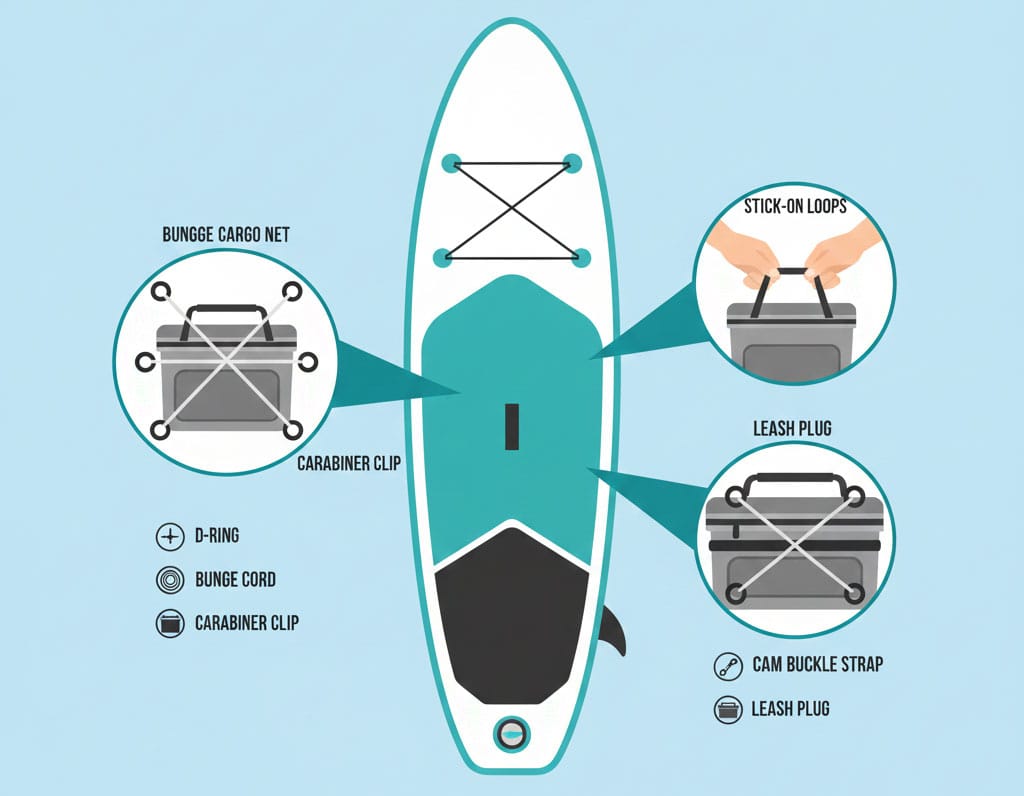
You need to find strong spots on your paddle board to attach your cooler bag. Most boards come with built-in D-rings or a bungee cargo net. These are the best places to start. D-rings are small metal loops that sit flat on your board. You can clip, hook, or tie things to them. The bungee system is a stretchy cord that runs across the front or back of your board. It holds gear in place and keeps things from sliding around.
You might also see other attachment points, like:
- Stick-on loops
- Specialized tie-down kits
- Peel and stick velcro lash tabs
- Kayak style or auto shop small cargo nets
- Leash plugs
If your board does not have enough D-rings, you can add stick-on loops or tie-down kits. These give you more options for securing your cooler bag. Always check that each attachment point feels solid before you trust it with your gear.
Tip: Give each D-ring or loop a gentle tug. If it moves or peels up, pick a different spot.
Best Placement for Balance
Where you put your cooler bag matters. You want your board to stay steady and easy to paddle. Place the cooler bag near the center of your board. This spot keeps the weight balanced and helps you move straight. If you put the bag too far forward or back, your board might tip or drag in the water.
Here’s a quick way to check your placement:
- Set your cooler bag on the board without strapping it down.
- Stand on your board and see if it feels balanced.
- Move the bag a little forward or back until the board feels steady.
Note: Keep the cooler bag within easy reach. You want to grab a drink or snack without losing your balance!
Secure Cooler Bag
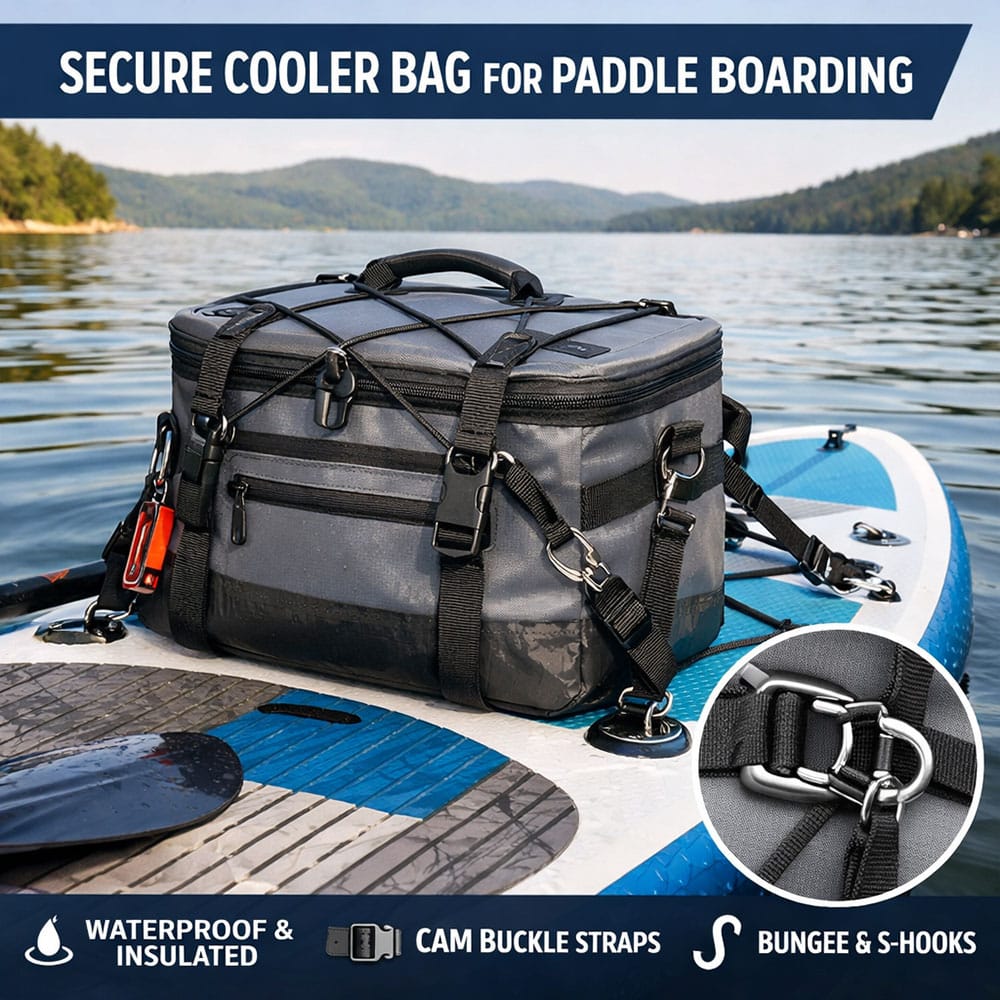
Securing your cooler bag to your paddle board keeps your snacks and drinks safe, even if you hit a few waves. Let’s walk through the best ways to attach your cooler bag so it stays put and you can reach it easily.
Bungee Cords & Cam Buckle Straps
Bungee cords are quick and easy for most paddle boarders. You can use them to strap your cooler bag down in just a few steps:
- Thread the bungee cord through the top left anchor point or D-ring on your paddle board.
- Do the same with the top right anchor point.
- Adjust the cord so both sides are even.
- Cross the ends of the bungee cord over the middle of your cooler bag and thread them through the bottom anchor points.
- Pull the cord tight so your cooler bag feels snug.
- Tie the ends together with a strong knot, like an overhand knot.
- Double-check the tension. If you want extra security, clip on a carabiner.
Cam buckle straps give you even more security, especially for longer trips or heavier loads. Here’s how they compare to bungee cords:
| Feature | Cam Buckle Straps | Bungee Cords |
|---|---|---|
| Security | Better long-term tension retention | Poor long-term tension retention |
| Ease of Use | Quick to install and user-friendly | Fast to deploy but less secure |
| Recommended Use | Ideal for critical loads | Not recommended for critical loads |
To use cam buckle straps, loop the strap through the D-rings or anchor points around your cooler bag. Feed the loose end through the buckle and pull it tight. The buckle locks the strap in place, so your cooler bag won’t budge.
Tip: Always check that the straps or cords are not twisted. Flat straps hold better and are less likely to slip.
Using S-Hooks & Clips
S-hooks and clips make it simple to attach your cooler bag to D-rings. Here’s how you can do it:
- Make sure your D-rings are firmly attached. If you need to add new ones, use a strong adhesive and follow the instructions for your board.
- Clip the S-hooks or carabiners onto the D-rings.
- Attach the other end of each hook or clip to the handles or loops on your cooler bag.
- Check that each connection feels secure and does not wiggle loose.
If you need to add D-rings, pick a warm day and clean the area well before gluing. Cut away any traction pad that covers the spot, but be careful not to damage your board.
Note: Always use sturdy S-hooks and clips. Weak ones can bend or break if your cooler bag shifts.
Check Stability & Access
Before you paddle out, take a minute to check your setup:
- Gently shake your cooler bag. It should not slide or tip.
- Stand on your board and see if you can reach your cooler bag without stretching or losing balance.
- Make sure the weight feels even. If your board leans to one side, move the cooler bag closer to the center.
If you notice any shifting, tighten the straps or cords. You can also add a second strap or cord for extra hold.
Safety Tip: Never overload your cooler bag. Too much weight can make your board unstable and harder to control.
A secure cooler bag means you can focus on paddling and having fun, not worrying about your gear.
Weight & Safety Tips
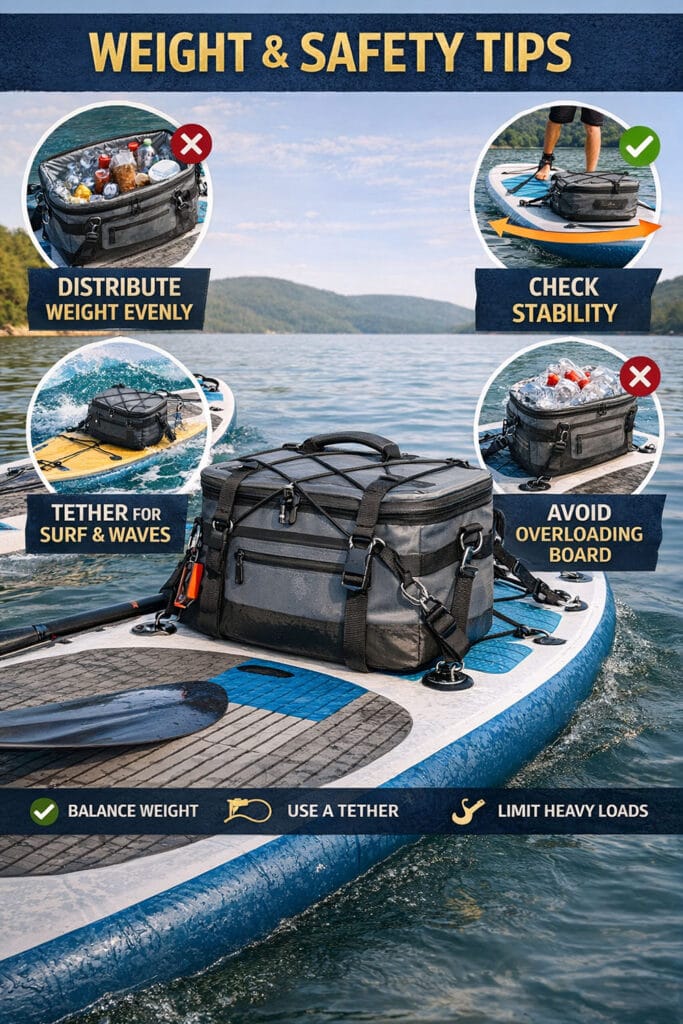
Distribute Load Evenly
You want your paddle board to feel steady under your feet. The way you pack your cooler bag can make a big difference. Spread the weight out so your board stays flat and easy to control. If you put too much weight on one side or at the front, you might run into problems like:
- Your board feels wobbly, especially in choppy water.
- You have trouble steering or turning.
- The board sits lower in the water and feels heavy.
- You might even tip over if the weight shifts too much.
Try to keep your cooler bag close to the center of your board. Place other gear on the opposite side if you need to balance things out. Always check how your board feels before you head out. If it leans or dips, move things around until it feels right.
Tip: Test your setup in shallow water first. You can adjust your gear before you paddle far from shore.
Prevent Shifting
A shifting cooler bag can ruin your day on the water. You want everything to stay put, even if you hit a wave or make a quick turn. Paddle board groups suggest a few smart ways to keep your gear secure. Here’s a quick look at their top tips:
| Recommendation | Description |
|---|---|
| Tethering | Tie off your cooler for safety, especially in surf or waves. |
| Bungee Attachment | Use bungee cords to hold your cooler bag to a loop or D-ring. |
| Cooler Mounts | Some boards have special mounts for coolers to add extra stability. |
| Insulated Dry Bags | Clip dry bags to deck bungees for easy access and security. |
| Suction Cup Coolers | Use suction cup mounts with S-type clips for a strong hold. |
| Load Distribution | Keep heavy loads toward the back, not the front, for better balance. |
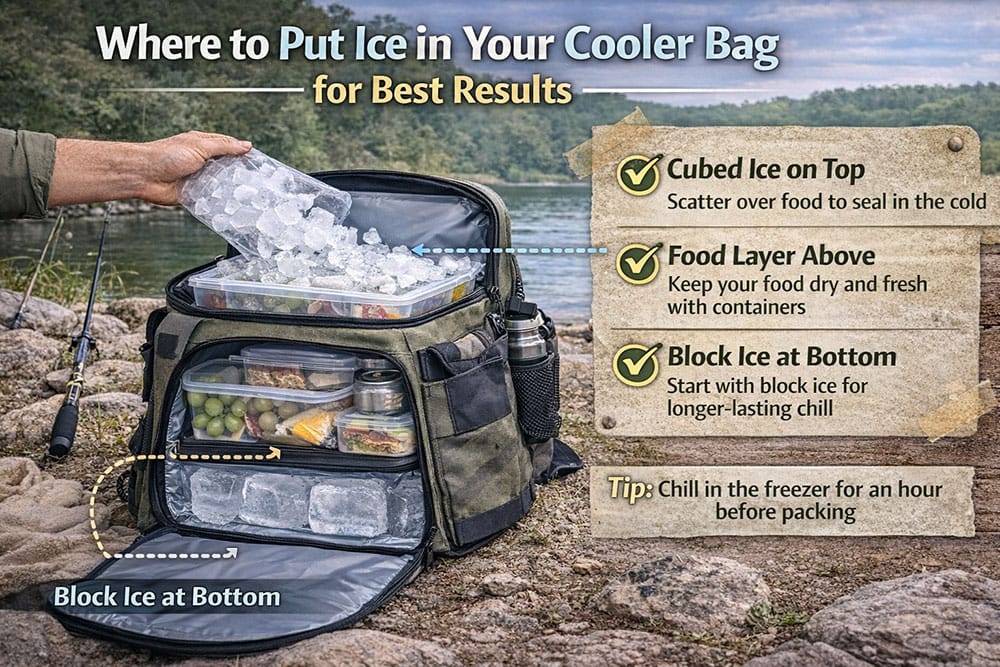
| Ice Packs | Freeze water bottles for ice packs that double as drinking water. |
Before you paddle, give your cooler bag a gentle shake. Make sure nothing moves or rattles. Tighten straps or cords if you need to. If you plan to paddle in waves or wind, double up on straps for extra safety.
Safety Tip: Never overload your board. Too much weight can make it hard to paddle and increase your risk of falling in.
You can secure your cooler bag to your paddle board in just a few steps.
- Use bungee cords or straps to keep it in place.
- Check the size and weight so your board stays balanced.
- Tether the bag for extra safety.
“Love this cooler, I am able to fit plenty and it’s walls are pretty thick so it holds the ice well.”
Always double-check your setup before you paddle out. Enjoy cold drinks and snacks while you explore the water!
FAQ
How do I know if my cooler bag is too heavy for my paddle board?
You can test the weight at home. Fill your cooler bag, place it on your board, and stand up. If your board feels wobbly or hard to steer, try a lighter bag.
Can I use regular straps instead of cam buckle straps?
You can use regular straps, but cam buckle straps hold tighter. Regular straps may loosen if you hit waves. Always check your straps before you paddle out.
What should I do if my board does not have D-rings?
You can add stick-on loops or tie-down kits. Clean the area first, then follow the instructions. Make sure each new attachment feels strong before you use it.
Will my cooler bag stay dry if I fall in?
Most waterproof cooler bags keep your food and drinks dry. Check for sealed seams and waterproof zippers. If your bag is only water-resistant, water may get inside.
How can I reach my cooler bag while paddling?
Place your cooler bag near the center of your board. Make sure you can grab it without stretching or losing balance. Test your setup before you head out.
Best Floating Coolers for Kayaking, Rafting, and Pool Fun
Top 8 Waterproof Cooler Bags for Kayak Adventures in 2026
How to Keep Your Gym Bag Smelling Fresh
Easy Gym Bag Organization Hacks for Everyday Athletes


Comments are closed