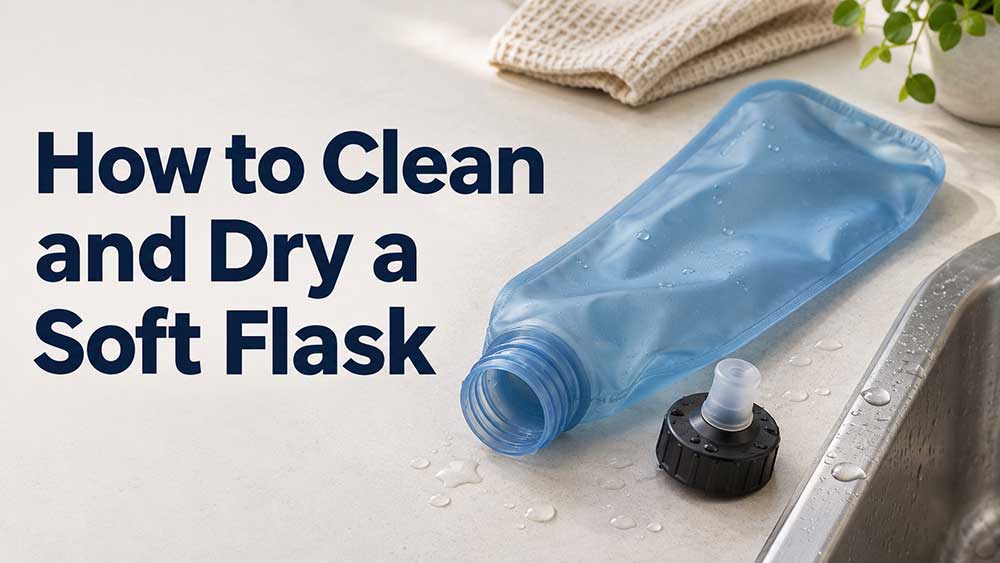
To clean a soft flask, take the cap off and wash the flask and mouthpiece with lukewarm water and mild dish soap. Rinse well and flush clean water through the bite valve. If your flask has a straw, rinse it too. To dry it, turn the flask upside down with the cap off and leave room for air to get in. If the sides stick together, gently squeeze the edges to open the flask, then tilt it so water can drain from the folds.
After your run, pull the flask out of your vest and empty it as soon as you can. Rinse the flask and mouthpiece after every run, even if you only carried water, and wash both regularly. If you used a sports drink or mixed a gel with water, wash the flask with soap that day. Pay particular attention to the cap and the inside of the bite valve.
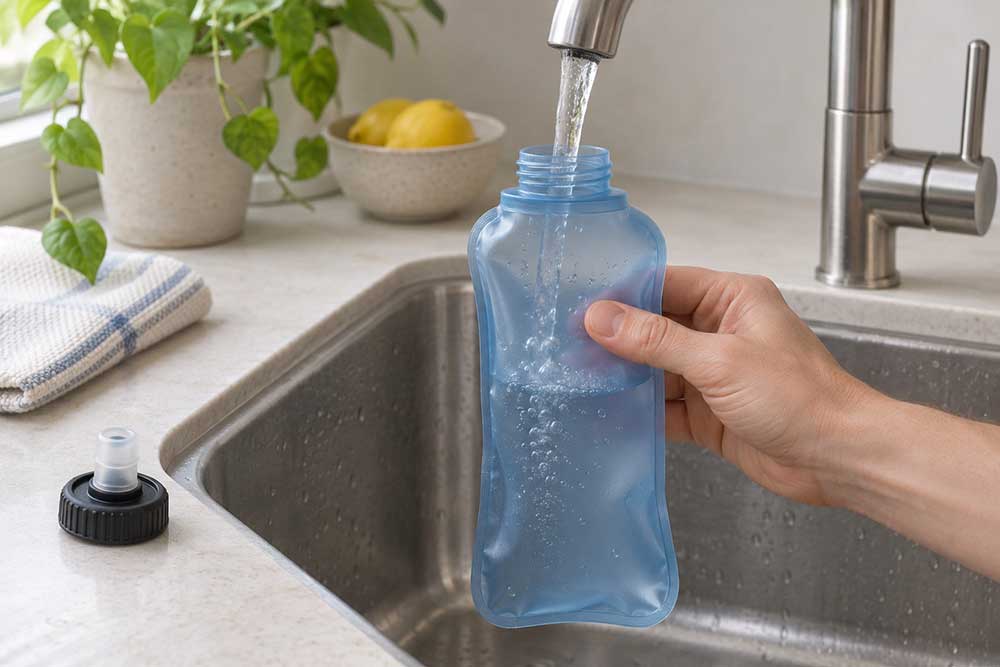
Wash the body. Add lukewarm water and a little mild dish soap. Swirl it around and gently flex the flask so the solution reaches the bottom folds. Use a soft bottle brush to loosen any visible residue. Choose one that slips easily through the opening.
Wash the cap. Clean the threads on both the neck and cap. Wipe around the underside of the cap and any accessible sealing surface. If there’s a hinged dust cover, open it and wash underneath.
Rinse with clean water. Pour out the soapy water and rinse the flask and cap until the suds are gone. Then run clean water through the valve and straw as described below.
Salomon’s flask care guide illustrates hand washing and cleaning a cap with a removable silicone sleeve. Follow your own model’s instructions for disassembly and heat limits. For example, HydraPak’s liquid guidance rules out liquids above 140°F (60°C). Stick with lukewarm water for washing.
Clean the bite valve or long straw
The bite valve is the soft mouthpiece that opens when you bite or pinch it. Some valves come apart into a silicone sleeve and a center post. Check your model’s care instructions before taking anything apart.
Flushing a short bite valve
Wash around the mouthpiece and where it meets the cap. If the sleeve comes off, wash and rinse it and the exposed valve parts separately.
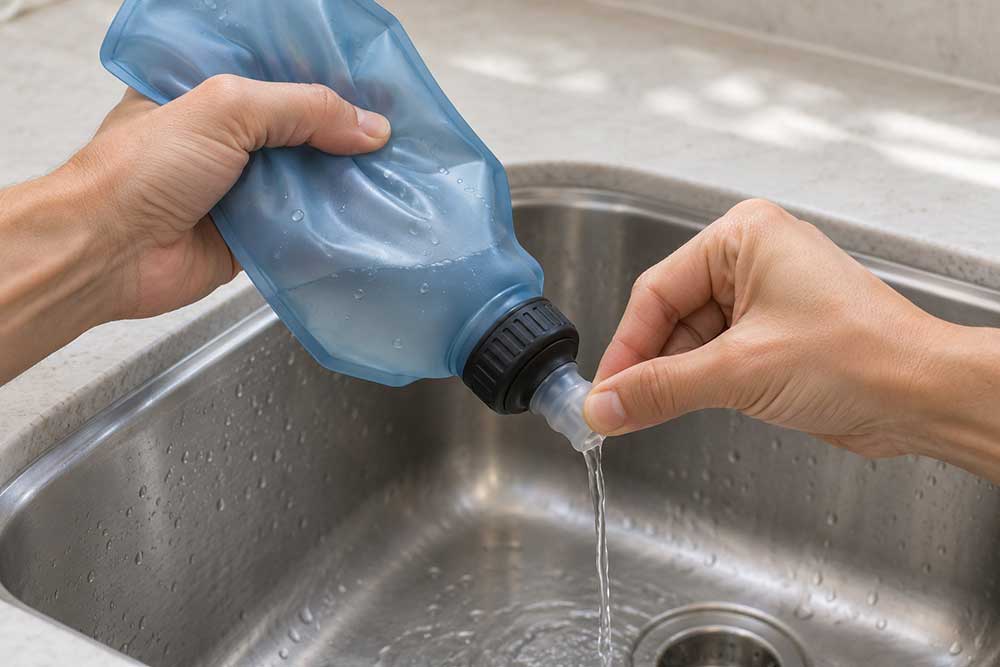
If the valve stays on the cap, put a little soapy water in the flask and screw the cap back on. Open any twist lock first. Over the sink, pinch the valve open and squeeze the flask to push soapy water through. Repeat with clean water until the water runs clear and there are no suds. Take the cap off to drain.
Cleaning a long straw
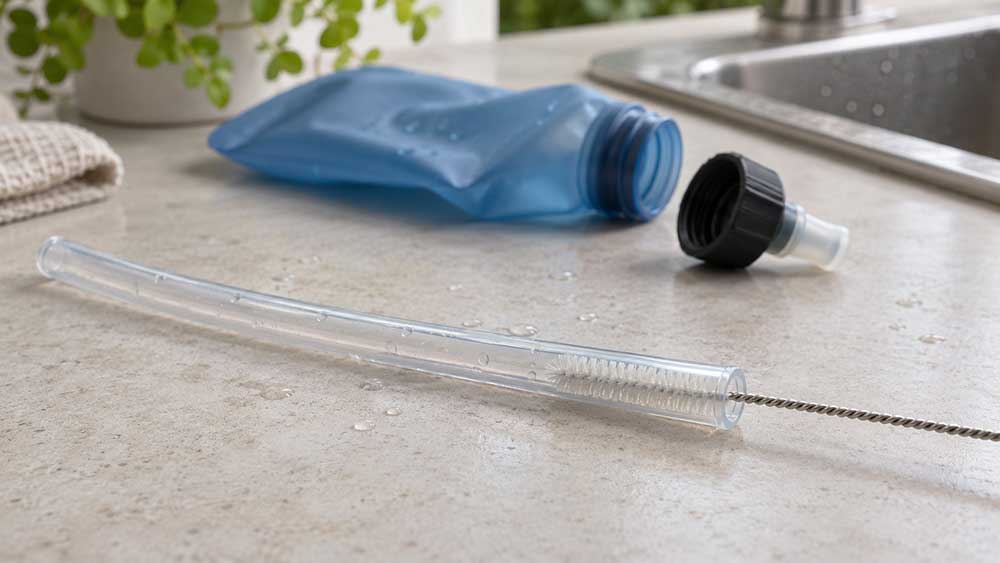
If the straw comes off, follow the care instructions to detach it. For example, if you use a HydraPak Run Straw, pinch the base of the straw and pull it out. Use a soft straw brush long enough to scrub the whole tube. Rinse the tube. Wash around the bite valve and where it meets the straw, then rinse the valve well.
If the straw stays attached, open the bite valve and flush soapy water through the straw, then rinse it the same way with clean water. If you can still see residue you can’t reach, ask the manufacturer how to clean that part.
Dry the inside before putting the flask away
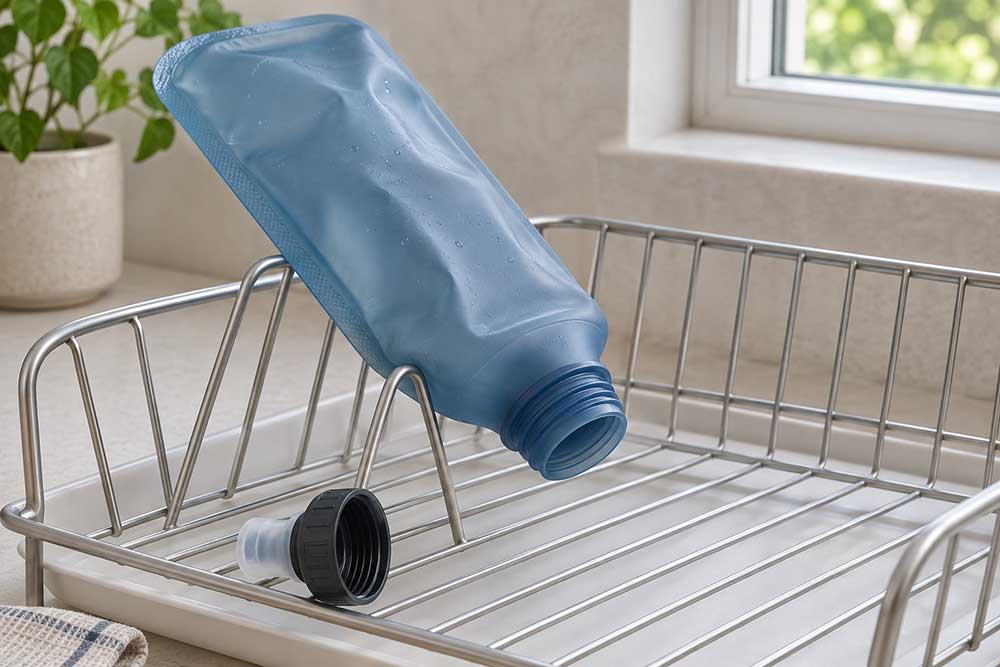
Drain the body with the cap off. Shake out loose drops, then hang the flask mouth-down or rest it at an angle on a clean drying rack. Keep the opening clear so it can drain and air can get in. A rim pressed flat against the counter can block both.
Separate the sides if they stick. Gently squeeze the edges to open the flask. If you see water pooled in a fold or corner, tilt the flask until it drains. Leave it where air can circulate, away from direct heat.
Dry the cap and straw beside the body. Set the cap where its underside and valve can drain, with the dust cover open. Hang a detached straw so water can drip out one end. If it’s still attached to the cap, straighten it so water doesn’t pool in a bend.
Check before storing. Check the bottom seam, the underside of the cap, and both ends of the straw for drops. Open any folds that were stuck together and check inside. Once everything is dry, store the flask in a clean, dry place with the cap off or loosely fitted.
If you’re cleaning the separate reservoir that sits in the back of a pack, use the hydration bladder cleaning guide for steps specific to the reservoir and hose.
Wash and rinse the body and cap again, then check for residue in the valve and tube. If your flask maker allows a bottle cleaning tablet, follow the tablet’s directions. For example, Bottle Bright’s standard bottle tablet instructions specify a 15–30 minute soak followed by a thorough rinse.
You see spots that look like mold
Set the flask aside and check the maker’s guidance before using it again. If you can’t clean the part, or the spots are still there after cleaning it as directed, replace that part if possible. Otherwise, replace the flask.
Water beads around the cap after reassembly
Wipe the outside dry, add clean water, then turn the flask over above the sink and gently squeeze. Check where the first drop appears. If water seeps out around the threads, check for grit or a crooked cap. If your flask has a removable seal, make sure it sits flat. Screw the cap back on straight and test again.
Water comes through the wall or a welded seam
Stop using the damaged flask and replace it. If it goes in a running vest, check whether the replacement fits the pocket when it’s full.
FAQ
Can I put a soft flask in the dishwasher?
Only if the care instructions for your exact model allow it. Check which parts can go in and follow any instructions about rack placement or wash cycles. If you can’t confirm, hand-wash it.
Can I turn my soft flask inside out to dry it?
Only if the maker says the flask can be turned inside out. If the material catches at the neck, stop. Leave the cap off and let air in through the opening.
Can I clean a soft flask with vinegar or bleach?
Use vinegar or bleach only if your flask’s care instructions say how to use it. HydraPak, for example, advises against vinegar. For everyday cleaning, use lukewarm water and mild dish soap.
What if water drips from the tip of the bite valve?
Drain any water left in the spout, then repeat the leak check without pinching the valve. If it still drips, check for residue in the slit and see whether the silicone sleeve is torn or out of place. If the sleeve is damaged, check whether the maker supplies a replacement for that exact cap.
What if my flask has a filter cap?
Check the filter manufacturer’s care and storage instructions before washing. Clean the flask body separately, and keep soap or tablet solution out of the filter unless its instructions expressly allow it.






Comments are closed