Can You Use a Hydration Pack as a Regular Backpack?
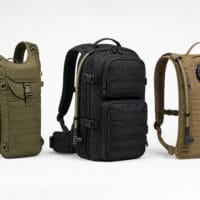
Yes, you can use a hydration pack as a regular backpack if it has enough room for what you carry and feels comfortable with that load. Removing the reservoir may free up space, but it will not turn a slim cycling pack or bladder carrier into a roomy work bag. A hiking hydration pack with a proper main compartment is much more likely to handle both jobs.
The quickest way to decide is to put your usual belongings inside. Can you close the bag without forcing it? Can you reach your phone, keys, and wallet easily? Does it still sit comfortably on your back? Those answers matter more than the “hydration pack” label.
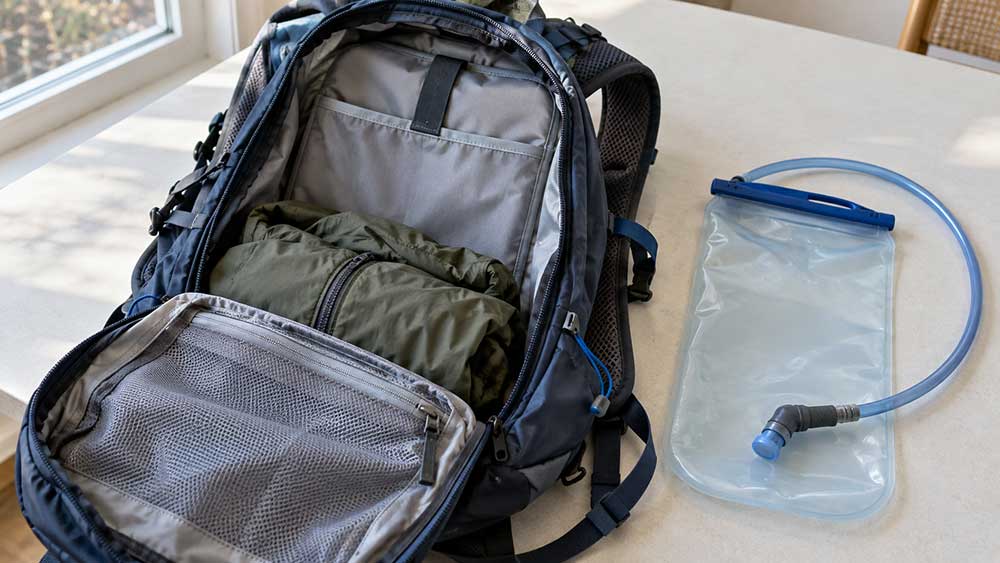
On many hydration backpacks, the bladder sits in a sleeve behind the main compartment. Take it out and you can still use the pack for a jacket, snacks, a book, or other small items. You may also gain a little usable space.
How much space you gain depends on the bag. Some sleeves are thin and separate from the main compartment. Removing the bladder from one of these may make the pack lighter without noticeably enlarging the main compartment. In other designs, the filled reservoir pushes into the space used by your gear. Taking it out can make packing easier, even though the bag’s stated capacity has not changed.
The difference is easy to miss when the pack is empty. A folded jacket might fit comfortably alongside an empty bladder, then become difficult to squeeze in once the bladder holds two or three liters of water. If you plan to use the bag both ways, test it with the reservoir filled—not just with the empty reservoir laid inside.
If you are taking a break from using the hydration system, remove the reservoir, empty it, and clean and dry it according to its care instructions. A damp bladder left inside the bag is no help on your next trip.
The Type of Hydration Pack Makes the Difference
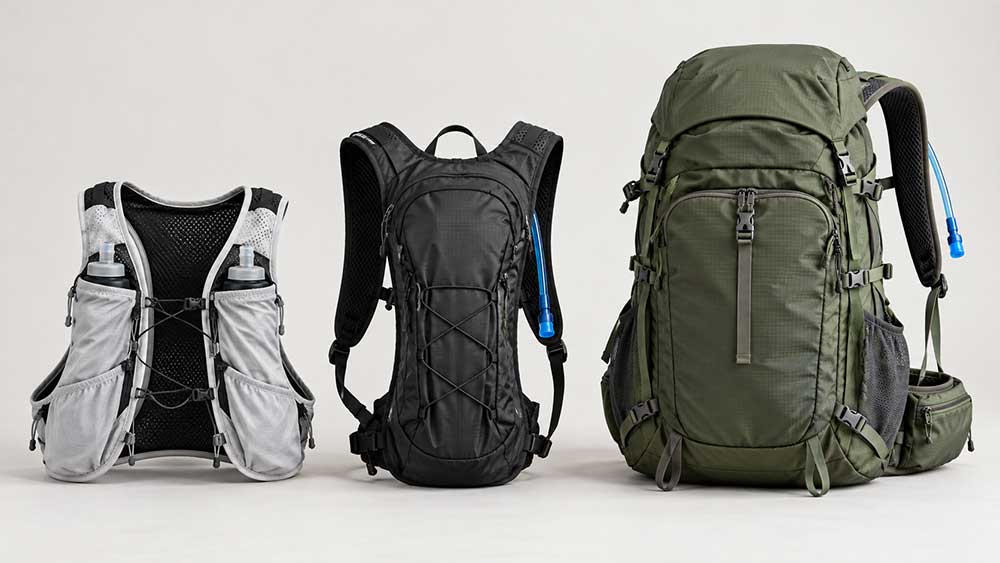
Not all hydration packs are small backpacks with identical layouts. REI’s hydration pack guide describes models built for different activities, with different amounts of cargo space.
Pack type
As a regular backpack
Minimal bladder carrier
Usually has room for the reservoir and only a few small items. Poor choice for everyday gear.
Running or compact cycling pack
Useful for a phone, wallet, light layer, and snacks. Often too narrow for bulkier items.
Hiking hydration backpack
More likely to have a usable main compartment and pockets for a day out.
Larger hydration-compatible daypack
Can often work as an ordinary daypack, whether or not you install a reservoir.
Check the gear capacity, not just the reservoir size. A pack that holds a 3-liter bladder does not necessarily have much room left for your belongings.
Where Does It Work Well—and Where Does It Fall Short?
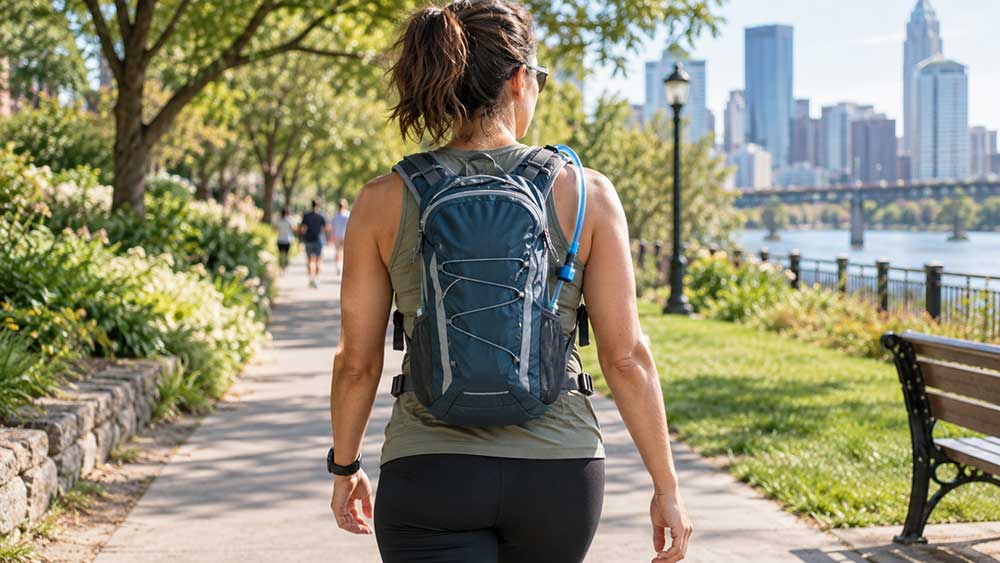
For a walk, sightseeing day, short hike, or light errand, a hydration backpack can be a convenient single bag. You can leave the bladder at home or keep it installed if drinking while moving matters to you.
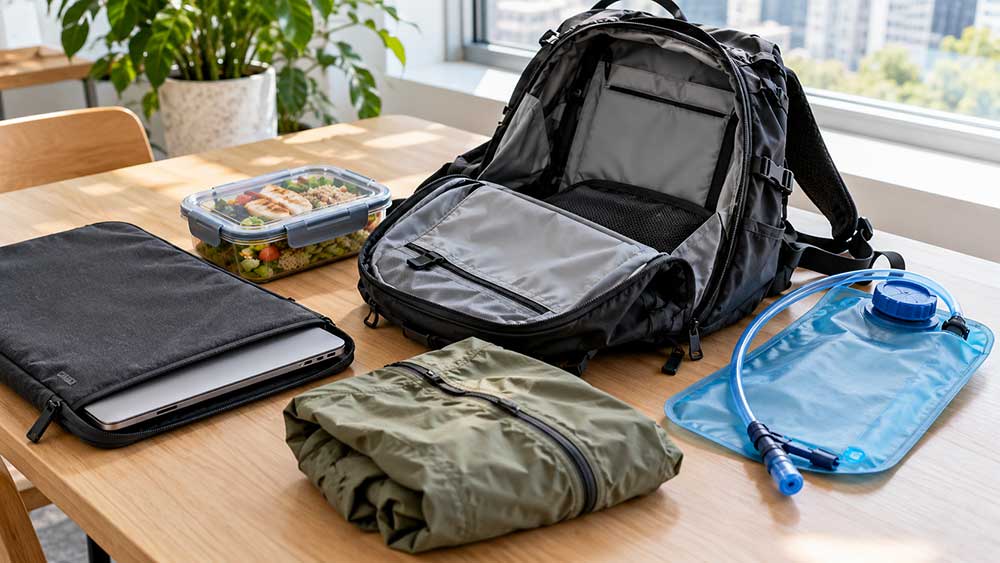
For work or school, pack the items you actually take on a normal day. A phone, keys, wallet, and light jacket may fit easily. Add a laptop, charger, lunch container, and spare layer, and a narrow pack can become awkward to close or organize. An item may technically fit while still being hard to reach without unpacking everything else. If you are unsure how much space your daily load needs, compare it with a standard backpack size guide.
A reservoir sleeve is also not automatically a padded laptop compartment. Check whether your computer fits in a protective sleeve or dedicated compartment, especially if you plan to carry a filled bladder at the same time. Keeping water and electronics in separate areas is a sensible design choice, but you should still check the reservoir, hose connections, and closure for leaks before relying on that setup.
On a longer day with extra clothing or heavier gear, capacity is only part of the question. Load the pack as you would actually use it and see whether the shoulder straps and back panel remain comfortable. REI’s daypack guide offers a useful comparison when you need more room for daily or trail essentials.
How to Tell if Your Pack Will Work for Daily Use
Try this with the actual bag rather than relying only on its advertised capacity:
Pack your normal load. Include bulky items such as a jacket, lunch container, or laptop.
Try it both ways. Pack it once with the reservoir removed and once with it filled, if you intend to use both setups.
Check access. Make sure everyday essentials are not buried behind the hydration compartment.
Walk with it. Notice whether it bounces, pulls on your shoulders, or feels awkward when you turn.
Check the electronics question. If you carry a laptop, confirm there is a suitably sized, protective place for it rather than assuming the bladder sleeve will do.
If it passes those checks, there is no reason to reserve the pack only for outdoor activities. If it fails, a regular daypack with hydration compatibility may suit you better.
For brands designing a bag for both trail and daily use, this is a useful product question too: the empty and filled configurations should each be tested with the items customers will actually carry. Vancharli Outdoor’s custom hydration pack options and guide to choosing a hydration pack provide a starting point for matching storage and hydration features to the intended use.
FAQ
Can you carry a water bottle instead of using the bladder?
Yes. Remove the bladder and carry a bottle if the pack has a suitable pocket or enough secure space inside. Check that the bottle stays in place and does not press against items you need to protect.
Can you carry a laptop in a hydration backpack?
Only if the laptop fits and has suitable protection. A bladder sleeve should not be treated as a padded laptop compartment unless the bag is specifically designed for both uses.
Does removing the bladder give you the full advertised pack capacity?
Not necessarily. Some hydration sleeves are separate from the main compartment, and advertised capacities may describe different parts of the product. Check the bag’s actual usable space with your belongings inside.
Is a hydration pack comfortable enough for everyday use?
It can be, particularly for light loads. Comfort with books, a laptop, or other dense items depends on the pack’s fit, straps, structure, and how the weight sits when you walk.








Comments are closed