What Insulation Fabrics Are Used in Lunch Bags Today
When you pick a lunch bag, you see many insulation fabrics for lunch bags. These include foam, reflective materials, cotton, neoprene, and polyester-based fabrics. Each material keeps food at the right temperature in its own way. Some people want eco-friendly or non-toxic choices. Others want something that is easy to clean or lasts a long time.
Pick insulation fabrics that fit your needs. Think about keeping food hot or cold, being eco-friendly, or easy cleaning. Foam insulation keeps food hot or cold well. Thicker foam works even better. Reflective materials help foam control temperature. They are also light and easy to carry. Cotton is good for the environment. But it may not keep food fresh for a long time. Neoprene is flexible and strong. It is good for daily use. But you might need ice packs for longer cooling. Polyester-based fabrics are tough and simple to clean. They are great for busy people. But they may not keep food hot or cold as well as foam. For best food safety, use bags with many layers. Add ice packs for longer trips. Clean your lunch bag often. This helps it last longer and keeps your food safe.
Insulation Fabrics for Lunch Bags: What and Why
What Are Insulation Fabrics?
Insulation fabrics for lunch bags are special materials. They help keep your food at the right temperature. These fabrics are inside lunch bags. They act as a barrier against heat or cold. Some types are foam, reflective materials, cotton, neoprene, and polyester. Each type stops heat from moving in or out in its own way.
Tip: Pick a lunch bag with more than one insulation layer. These layers help protect your food from outside temperatures.
Here is a table that shows how different insulation materials work. It also shows how they help keep your food safe:
Insulation Material
Function
Contribution to Food Safety and Temperature Retention
Foam
Traps heat inside the bag
Prevents heat loss for warm food and heat gain for cold food
Reflective Materials
Reflects thermal energy
Keeps warm food warm and prevents overheating of cold items
Cotton, Neoprene, Polyester
Varies
Each material helps maintain the temperature in different ways
How They Work in Lunch Bags
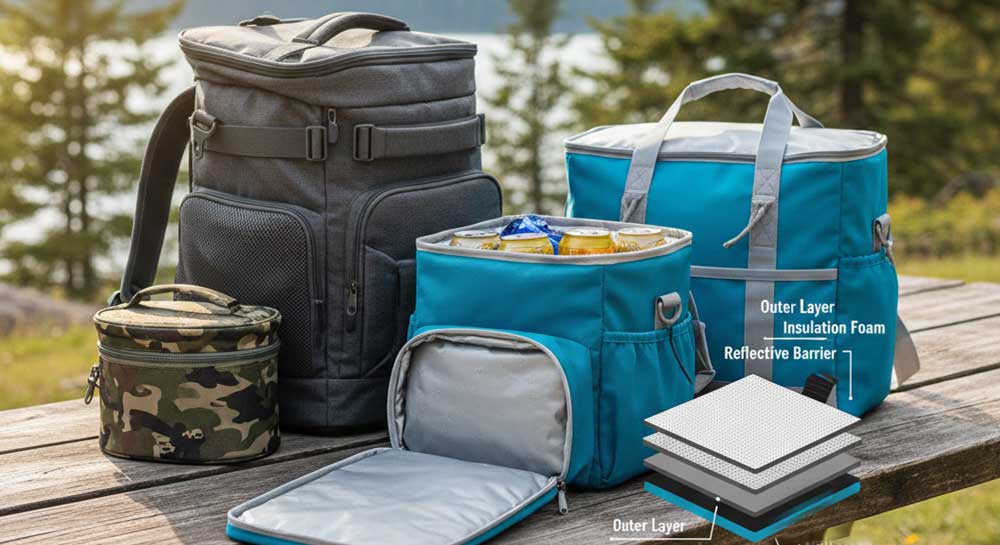
Insulation fabrics for lunch bags use science to keep food fresh. These fabrics slow down how fast heat moves. Most lunch bags have three main layers:
Outer Layer: This layer protects your lunch from bumps and weather.
Middle Layer: This is the main insulation. It is often foam or reflective foil.
Inner Layer: This layer touches your food. It helps keep the temperature steady.
Lunch bags use several science ideas to work:
Principle
Description
Thermal Insulation
Layers of material create a barrier against heat.
Conduction
Insulation reduces direct heat transfer through solids.
Convection
Insulation slows down heat movement through air or liquids.
Radiation
Reflective materials bounce heat away from the bag.
Sealing
Airtight designs keep air from moving in and out, helping food stay fresh.
Foam insulation traps air. This slows down heat transfer. Reflective foil bounces heat away. It keeps food warm or cold as needed.
Why Insulation Matters
You want your lunch to stay safe and tasty until you eat it. Insulation fabrics for lunch bags help you do this. These fabrics keep perishable foods cold. This stops bacteria from growing fast. If you pack your lunch the night before and use freezer packs, your food stays cold longer. Experts say you should use two cold sources in your lunch bag for best results.
You can use reusable freezer packs or frozen juice boxes to help.
Packing perishable foods with two cold sources stops bacteria from growing fast.
Paper bags do not keep food cold, so insulated bags are needed.
Note: Insulation in lunch bags helps you keep food fresh and safe. This is important when you pack things like yogurt, cheese, or deli meats.
Types of Insulation Fabrics
Foam Insulation
How Foam Works
Foam insulation has tiny air pockets inside. These pockets help slow down heat movement. Many lunch bags use foam for this reason. Your food stays hot or cold longer with foam. EPE foam is used a lot. It does not let heat move through it easily. Thicker foam keeps food at the right temperature for more time. Some lunch bags use thicker or special foam like EVA foam. This helps keep food hot or cold even better.
Thicker foam keeps food at the right temperature longer.
Some lunch bags use special foam for better heat control.
Foam Benefits
Foam insulation is light and easy to carry.
It keeps food hot or cold well.
Foam is cheap and can be shaped easily.
Lunch bags with foam are soft and comfy.
Foam insulation is good for daily use. It helps keep your lunch fresh at school or work.
Foam Drawbacks
Foam can start to smell after a while.
It might break if you bend it too much.
Thin foam does not keep food hot or cold for long.
Foam is not always good for the planet.
Foam Use Cases
Pick foam insulation for a lunch bag you use every day. It works best for short trips, school, or work. If you want better temperature control, get a bag with thicker foam.
Reflective Materials
How Reflective Insulation Works
Reflective insulation uses shiny foil to bounce heat away. It does not trap air like foam does. Instead, it reflects heat energy. Many lunch bags use both reflective foil and foam together. This makes them work better.
Property
Description
Reflectivity
Reflective foil bounces heat away well.
Insulation Time
Keeps food at the right temperature for 3–5 hours.
Performance with Additions
Gel packs or foam can keep food cold up to 10 hours.
Weight and Bulk
Reflective foil is light and not bulky.
Multi-Layer Performance
Often used with other layers for better results.
Reflective Benefits
Reflective materials keep food hot or cold for hours.
Lunch bags with reflective foil are light and easy to carry.
These materials work well with other insulation fabrics.
Reflective foil does not soak up water or smells.
Tip: Use gel packs or foam with reflective foil to keep food cold or hot longer.
Reflective Drawbacks
Reflective foil alone does not insulate as well as foam.
It can rip or crease if you are rough with it.
You may need extra layers for the best results.
Reflective Use Cases
Pick reflective insulation if you want a light lunch bag. It is good for picnics or short trips. It works best with gel packs. Many top lunch bags use both reflective foil and foam.
Cotton Insulation
How Cotton Works
Cotton insulation uses natural fibers to slow heat down. Some eco-friendly lunch bags use cotton. Cotton does not trap air as well as foam. It still helps keep food fresh for a short time.
Material
Insulation Level
Water Resistance
Breathability
Eco-friendliness
Cotton
Moderate
Low
High
Moderate
Neoprene
Superior
High
Moderate
Low
Cotton Benefits
Cotton is natural and breaks down over time.
Lunch bags made with cotton let air move through.
Cotton feels soft and is nice to carry.
Many people pick cotton because it is better for the earth.
Cotton insulation is good if you care about the planet and want a reusable bag.
Cotton Drawbacks
Cotton does not block water well.
It does not keep food hot or cold as long as foam or reflective foil.
Cotton can stain or start to smell easily.
Cotton Use Cases
Pick cotton insulation if you want an eco-friendly lunch bag. It is best for dry snacks or short trips. Cotton is also good if you want a soft, natural-feeling bag.
There are many types of insulation fabrics for lunch bags. Each one has good and bad points. You can choose the one that works best for you.
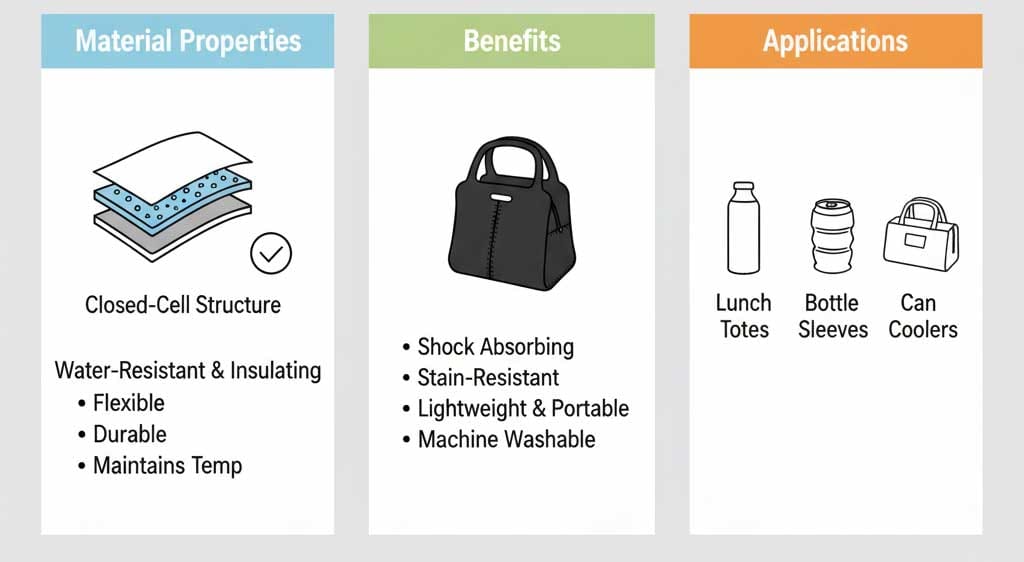
Neoprene Insulation
How Neoprene Works
Neoprene is a soft, rubber-like material. You find it in wetsuits and sports gear. In lunch bags, neoprene acts as a barrier that slows down heat transfer. The material has tiny air pockets that help keep your food at the right temperature. Neoprene does not trap as much air as foam, but it still helps your lunch stay fresh for a few hours.
Neoprene Benefits
Neoprene offers several advantages for lunch bags:
You get a lightweight bag that is easy to carry.
The material bends and stretches, so you can fit your lunch bag into tight spaces.
Neoprene keeps its shape even after you squish it.
The surface resists water, so spills do not soak in right away.
Cleaning is simple. You can wipe it down or wash it by hand.
Tip: Neoprene lunch bags work well for kids and adults who want a soft, flexible bag.
Neoprene Drawbacks
Neoprene does not keep food cold as long as thicker insulation. If you need to keep your lunch cold for many hours, you should add an ice pack. Neoprene can also hold onto smells if you do not clean it often. Some people may find neoprene less eco-friendly because it comes from synthetic rubber.
Here is a table that shows how neoprene performs for temperature retention:
Property
Neoprene Insulation
Duration of Cold Retention
2-4 hours
Comparison with Thicker Materials
Less effective than foam
Recommended Usage
Short-term use, consider ice packs for longer periods
Neoprene Use Cases
You should choose neoprene if you want a lunch bag that is light, flexible, and easy to carry. Neoprene works best for short trips, school lunches, or snacks. If you need to keep food cold for longer, add an ice pack. Neoprene is a good choice if you want a bag that fits in a backpack or locker.
Neoprene is lightweight, making lunch bags easy to carry.
The flexibility of neoprene allows it to be squished into tight spaces without losing shape.
In contrast, canvas lunch bags are heavier and less flexible, making neoprene a more convenient choice.
Polyester-Based Insulation
How Polyester Works
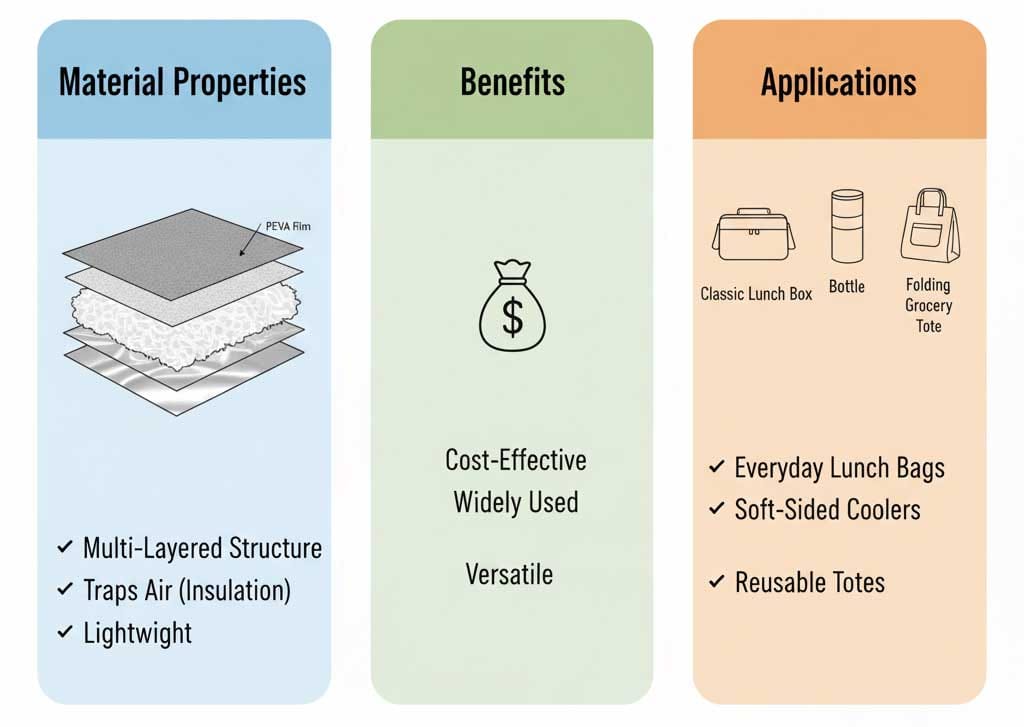
Polyester-based insulation uses synthetic fibers to slow down heat transfer. You find polyester in many modern lunch bags. The fibers trap air, which helps keep your food hot or cold. Some lunch bags use polyester batting, while others use a woven polyester fabric with a special coating. Polyester resists water and stains, so it helps protect your lunch from spills.
Polyester Benefits
Polyester insulation offers many benefits:
The material is strong and resists tearing.
Polyester dries quickly after cleaning.
You can find lunch bags in many colors and designs.
Polyester is lightweight, so your bag will not feel heavy.
The fabric resists stains and is easy to wipe clean.
For the best results, look for tightly woven polyester with a high denier count. A higher denier means the fabric is thicker and tougher. Double-stitched or reinforced seams make the bag last longer. Thick metal or sturdy plastic zippers help prevent jams or breaks. If you clean and dry your bag often, it will last even longer.
Polyester Drawbacks
Polyester does not insulate as well as thick foam or neoprene. If you want to keep food cold for a long time, you may need to use ice packs. Polyester is made from plastic, so it is not the most eco-friendly choice. Some polyester bags may wear out if you use them every day and do not care for them.
Polyester Use Cases
You should pick polyester-based insulation if you want a lunch bag that is durable and easy to clean. Polyester works well for busy students and workers who need a bag that can handle daily use. If you want a bag that looks good and lasts, polyester is a smart choice. Remember to check the stitching and zippers for extra strength.
Fabric Quality: Look for tightly woven polyester with a high denier count; higher denier indicates better abrasion resistance.
Stitching and Seams: Double-stitched or reinforced seams enhance durability under stress.
Zippers: Use thick metal or sturdy plastic zippers to prevent jams or breaks.
Maintenance: Regular cleaning and proper drying can significantly extend the life of the bag.
You can find insulation fabrics for lunch bags that use polyester, neoprene, or other materials. Each one has special features to fit your needs.
Insulation Fabric Comparison
Performance and Durability
You want your lunch bag to keep food safe and last long. Different insulation fabrics for lunch bags work in their own ways. Foam and reflective materials both keep heat in very well. Neoprene keeps food hot or cold even longer. Cotton and polyester-based fabrics keep food warm or cool, but not as much.
How long a bag lasts is important too. Neoprene and polyester-based bags do not wear out fast. Foam can get squished and lose its shape. Cotton feels soft but may not last if you use it every day. Reflective materials can rip if you are rough with them. Flexibility matters as well. Neoprene bends easily and fits in small spaces. Foam and polyester are also bendy, but cotton and reflective materials are less flexible.
Tip: The way your lunch bag is made, what food you pack, and the weather outside all change how well your bag keeps food fresh.
Eco-Friendliness and Cost
Many people care about the environment. Cotton is a natural choice and breaks down over time. Polyester and neoprene are made from man-made materials, so they are not as good for the earth. Foam and reflective materials are hard to recycle and do not break down.
Price is something to think about too. Foam and polyester-based bags do not cost much. Cotton bags can cost more because they use natural fibers. Neoprene and good reflective bags cost the most, but they last longer and work better.
Cleaning your bag is important. Polyester and neoprene are easy to wipe clean. Cotton can get stains, and foam can smell if you do not wash it often.
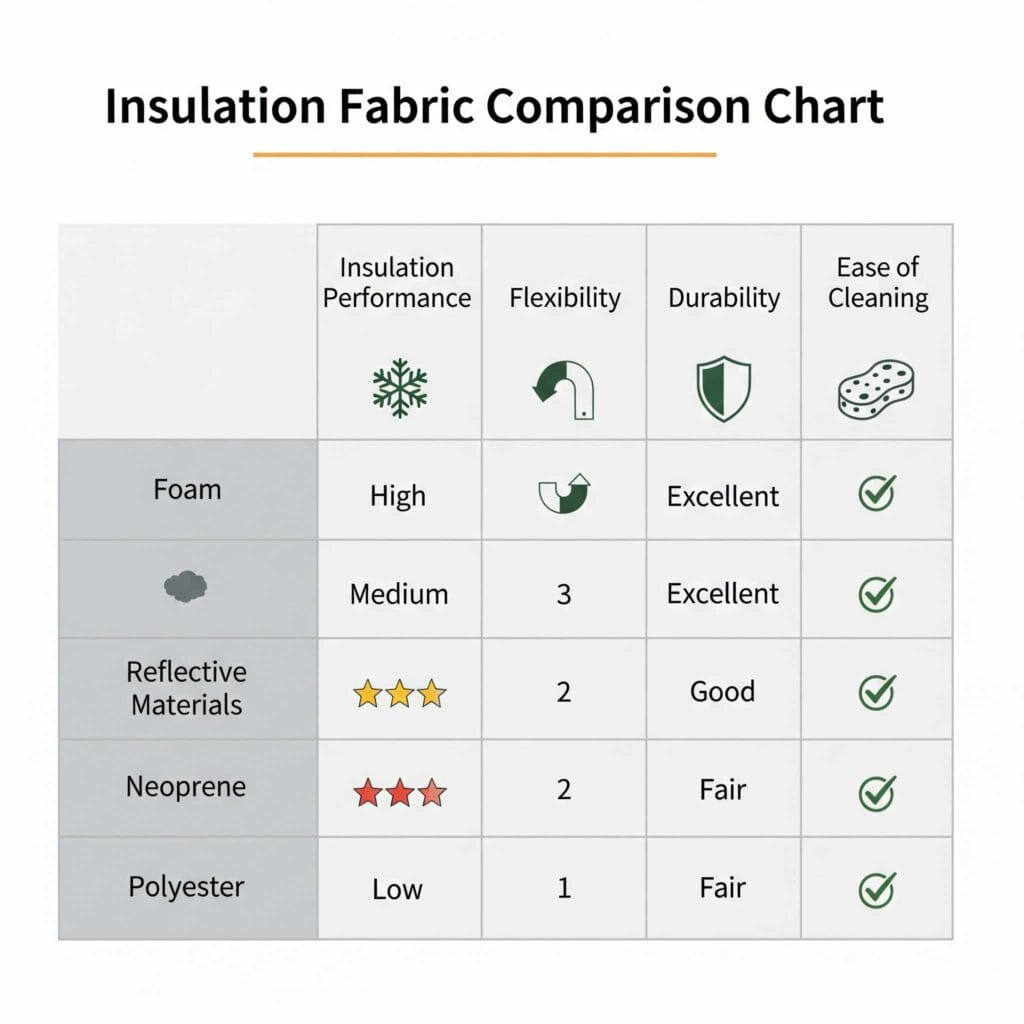
Comparison Table
Here is a table to help you see the main features of each insulation fabric:
Material
Thermal Insulation
Durability
Flexibility
Eco-Friendliness
Cost
Foam (EPE/EVA)
High
Low
High
Low
Low
Reflective Materials
High
Low-Moderate
Moderate
Low
Moderate
Cotton
Moderate
Moderate
Moderate
High
Moderate
Neoprene
Very High
High
High
Low
High
Polyester-based
Moderate
High
High
Low
Low-Moderate
Each material has things it does well and things it does not. Good insulation keeps your food at the right temperature. Lighter bags are easier to carry. Bags that last longer save you money. If you want a bag that is easy to clean, pick polyester or neoprene. If you care about the planet, cotton is a good pick.
Good insulation keeps your food safe and fresh.
The right material helps your lunch bag last longer.
Easy-to-clean fabrics make your bag simple to keep clean.
The best insulation fabric for lunch bags depends on what you need. Think about how you use your bag and what matters most to you.
Best Insulation Fabrics for Lunch Bag Needs
For Keeping Food Cold
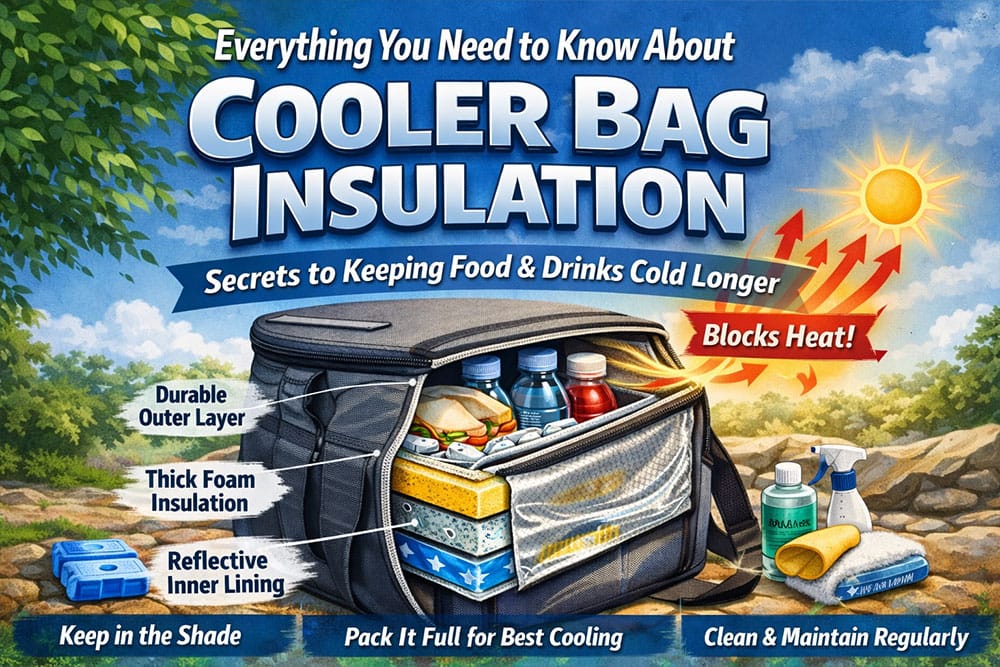
If you want your lunch to stay cold, you need the right insulation. Some lunch bags work better than others for keeping food chilled. You should look for bags that use thick foam, reflective materials, or special freezable gel. These materials slow down how fast heat moves into your bag.
Many people choose lunch bags with built-in gel or thick foam. The PackIt Freezable Classic stands out because it has freezable gel inside its walls. You put the whole bag in your freezer overnight. In the morning, the bag acts like its own ice pack. This design keeps yogurt and other cold foods at a steady temperature for up to six hours. The temperature stays close to what you get in your refrigerator.
The YETI Daytrip is another strong choice. It uses high-quality insulation to keep your food cold for hours. You can trust it for long days at school, work, or on a picnic. Both of these bags show how important good insulation is for keeping food safe and fresh.
Here are some top features to look for:
Thick foam or gel insulation
Reflective inner linings
Airtight zippers or closures
Room for extra ice packs
Tip: Freeze your lunch bag overnight if it has built-in gel. Add an ice pack for extra cooling power.
For Keeping Food Hot
You may want to keep soup, pasta, or leftovers warm until lunchtime. The best insulation fabrics for this job trap heat inside the bag. Foam and neoprene work well because they slow down heat loss. Reflective linings also help by bouncing heat back toward your food.
Look for these features in a lunch bag for hot food:
Thick foam or neoprene layers
Reflective foil lining
Tight-sealing lids or zippers
You can also use a thermos or insulated food jar inside your lunch bag. This gives you even better heat retention. Always preheat your container with hot water before adding your food. This simple step helps your meal stay warm longer.
For Eco-Friendly Choices
If you care about the planet, you have options. Some insulation fabrics for lunch bags use natural or recycled materials. Cotton is a popular eco-friendly choice. It comes from plants and breaks down over time. Some brands use recycled polyester or blends of natural fibers.
Here is a table to help you compare eco-friendly options:
Material
Eco-Friendliness
Insulation Level
Best Use
Cotton
High
Moderate
Short trips, snacks
Recycled Polyester
Moderate
Moderate
Daily use
Hemp
High
Moderate
Light lunches
Note: Eco-friendly bags may not keep food hot or cold as long as synthetic options. They work best for short trips or snacks.
You can find a lunch bag that matches your values and keeps your food safe. Think about what matters most to you—temperature, the environment, or both.
For Durability and Flexibility
When you want a lunch bag that lasts and bends easily, you need to look at the insulation fabrics inside. Some materials stand out because they make your lunch bag tough and flexible. You can use these bags every day without worrying about rips or losing shape.
Lunch bags with strong insulation fabrics keep your food safe and fresh. You can toss them in your backpack or squeeze them into tight spaces. The bag will bounce back and keep working. You do not have to worry about the bag breaking or wearing out quickly.
Here is a table that shows which insulation fabrics offer the best durability and flexibility:
Material
Description
EPE Pearl Cotton
Effective for maintaining temperature; used in insulation layers.
Aluminum Foil
Radiation resistant and easy to clean; enhances insulation efficiency.
EVA Foam
Low thermal conductivity, keeps food hot or cold for a long time.
Reflective Foil
Bounces heat away from your lunch, helping with cold retention.
Closed-Cell Foam
Adds extra insulation and makes the bag tougher.
EPE Pearl Cotton and EVA Foam help your lunch bag keep its shape. You can bend or fold the bag, and it will not crack. Closed-cell foam adds extra strength. It makes the bag tough, so you can use it for a long time. Aluminum foil and reflective foil make cleaning easy. You can wipe away spills and crumbs without trouble.
If you want a bag that bends and stretches, look for neoprene or polyester-based insulation. Neoprene feels soft and flexible. You can squish it into your locker or backpack. Polyester-based bags resist tearing and stay strong after many uses. These fabrics help your lunch bag last through busy school days or work weeks.
Tip: Choose a lunch bag with reinforced seams and sturdy zippers. These features work with strong insulation fabrics to make your bag last even longer.
You should also think about how easy it is to clean your lunch bag. Aluminum foil and polyester wipe clean quickly. Neoprene can be washed by hand. If you keep your bag clean, it will stay fresh and last longer.
Lunch bags with durable and flexible insulation fabrics give you peace of mind. You can use them every day, and they will keep your food safe. You do not have to buy a new bag often. This saves you money and helps the environment.
For Budget Options
You may want a lunch bag that does not cost much. Budget lunch bags use basic insulation fabrics. Most of these bags have thin foam or simple polyester linings. These materials keep your food cool or warm for a short time. You can use them for school lunches or short trips.
Luxury lunch bags use thicker, multi-layer insulation. They have foam and reflective linings that keep food fresh for longer. Standard lunch bags with basic insulation do not work as well. You may notice your food gets warm or cold faster in a budget bag.
Product tests show that luxury lunch bags keep food cool for 25% longer than budget bags. The better materials and strong construction help premium bags perform better. If you need your lunch to stay fresh all day, you may want to spend more on a high-quality bag.
Budget lunch bags work well if you need something simple. You can use them for snacks or short outings. If you want better performance, look for bags with thicker foam or reflective layers. These features help keep your food safe and tasty.
Note: Budget lunch bags save you money, but they may not keep food fresh as long as premium options. Always check the insulation before you buy.
You can find a lunch bag that fits your budget and meets your needs. Think about how long you need your food to stay cold or hot. Choose the best insulation fabric for your lifestyle.
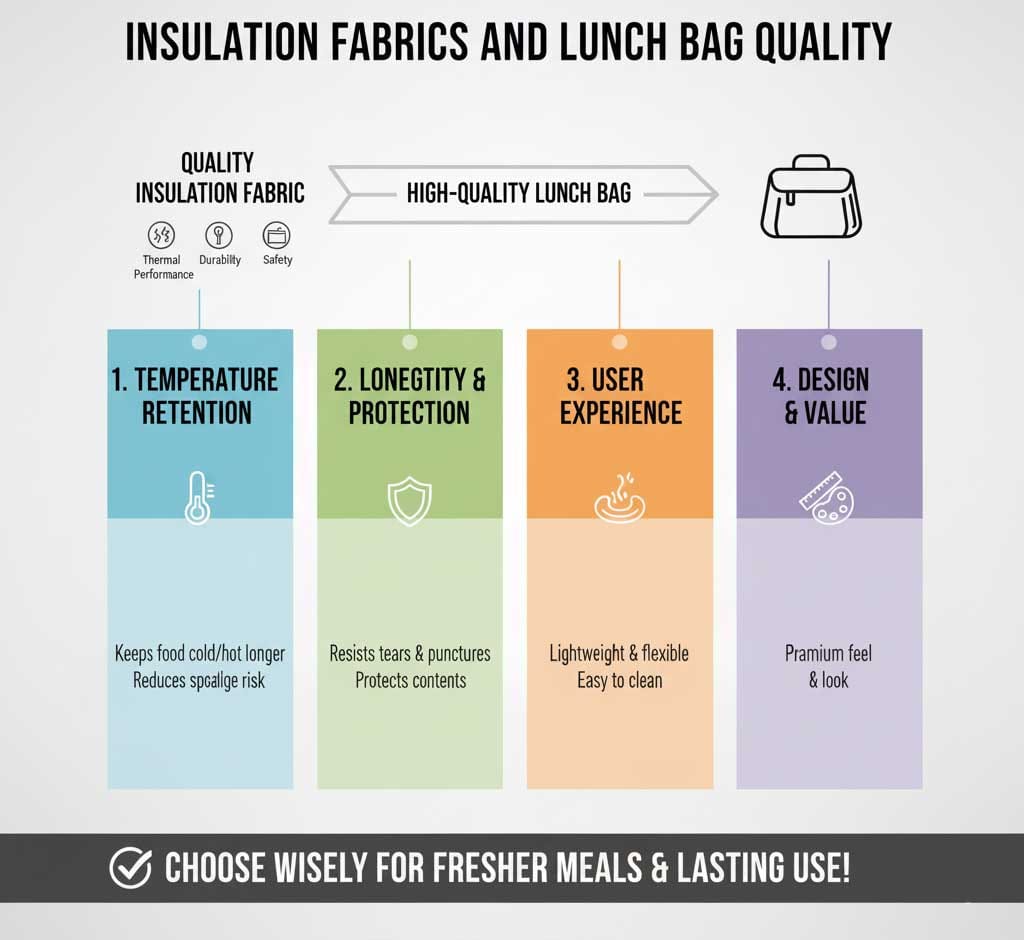
Insulation Fabrics and Lunch Bag Quality
Durability Impact
When you choose a lunch bag, you want it to last. The insulation fabric inside plays a big role in how long your bag stays strong. Polyester and nylon stand out as top choices. These fabrics resist tears and keep their shape, even after many uses. You can trust them to handle daily bumps and drops.
Here is a table that shows how different insulation fabrics affect the quality and lifespan of your lunch bag:
Insulation Fabric
Impact on Quality and Longevity
Polyester
Durable and effective insulation
Nylon
Maintains temperature effectively
Thermal Lining
Enhances insulation properties
Insulated bags with these materials keep your food safe for hours. When you use ice packs, insulated bags can hold food below 45°F (7°C) for 4–6 hours. Regular bags, like those made from canvas, do not protect as well. Food in these bags can reach unsafe temperatures in just a few hours, especially on hot days.
Insulated lunch bags use tough fabrics like nylon or polyester. These give you better thermal protection and a longer-lasting bag.
Regular lunch bags often use canvas or thin polyester. These do not keep food cold and wear out faster.
Flexibility and Structure
You want a lunch bag that fits your life. Some insulation fabrics make bags soft and bendy. Neoprene and polyester-based bags let you squeeze them into backpacks or lockers. They bounce back to shape after you pack them tight. Foam and foil linings add structure, so your bag stands up on its own. This helps protect your food from getting squished.
If you need a bag that holds its shape, look for one with foam or thermal lining. If you want something flexible, neoprene is a smart pick. Polyester blends give you a mix of both—some structure and some flexibility.
Tip: Choose a lunch bag with reinforced seams. This helps your bag stay strong, even if you stretch or fold it often.
Care and Maintenance
Taking care of your lunch bag keeps it fresh and safe. You should clean your insulated lunch bag after every use. This stops germs and odors from building up. Always check the care label before washing. Some bags, like those made from neoprene, are machine washable. Others, such as foam with foil lining, need gentle hand washing.
Follow these simple care tips:
Clean your bag after each use.
Only machine wash if the label says it is safe.
Hand wash foam or foil-lined bags to protect the insulation.
Air dry your bag fully, unzipped and open, away from direct sunlight.
Check the insulation for damage. Replace your bag if you see cracks or softness.
Use ice packs for longer-lasting cold storage.
Parents, rinse spills right away and check if the insulation feels soft. Fitness fans should rinse after carrying drinks and keep things organized. Students and remote workers can empty crumbs daily and wipe the inside to stop odors.
Insulation Fabric
Cleaning Method
Special Notes
Foam + Foil Lining
Hand wash, avoid folding
Excellent insulation, gentle care
Neoprene
Machine washable, air dry
Good insulation, easy to clean
Polyester Canvas
Spot clean, avoid machine wash
Average insulation, gentle cleaning
A clean, well-cared-for lunch bag lasts longer and keeps your food safe every day.
You now know about foam, reflective materials, cotton, neoprene, and polyester-based insulation fabrics. Each one is good for different things. Foam and reflective materials help keep food hot or cold. Cotton is a better choice for the environment. Neoprene and polyester are strong and simple to clean.
Look at the comparison table before you buy a lunch bag. Think about what is most important to you. Choose a lunch bag that matches your needs and keeps your food safe.
FAQ
What insulation fabric keeps food cold the longest?
You get the best cold retention from thick foam or neoprene. These materials slow down heat transfer. Reflective foil works well when you add ice packs. For long trips, choose a lunch bag with multiple layers.
Can you wash insulated lunch bags in the washing machine?
You can wash neoprene lunch bags in the machine. Polyester bags often need spot cleaning. Foam and foil-lined bags require gentle hand washing. Always check the care label before cleaning.
Are cotton-insulated lunch bags eco-friendly?
Cotton insulation comes from natural fibers. You help the environment when you choose cotton. These bags break down over time. Cotton bags work best for short trips and dry snacks.
Do reflective materials work for both hot and cold foods?
Reflective insulation bounces heat away or back inside. You keep hot foods warm and cold foods cool. For best results, use reflective foil with foam or gel packs.
How do you choose the right insulation fabric for your needs?
You should think about how long you need food to stay fresh. Pick foam or neoprene for long-lasting insulation. Choose cotton for eco-friendly use. Polyester works well for daily use and easy cleaning.
What makes a lunch bag durable?
You get durability from strong fabrics like polyester and neoprene. Reinforced seams and sturdy zippers help your bag last longer. Flexible materials resist tearing and keep their shape after many uses.








Comments are closed