Everything You Need to Know About Cooler Bag Insulation
You use cooler bags to keep food and drinks cold for hours. Multi-layer construction is very important for this. Each layer uses materials that reflect heat and do not let heat pass through easily. These layers work together to stop heat from getting in. This design keeps things cold longer than bags with only one layer. The insulation materials and technology you choose affect how well your bag works.
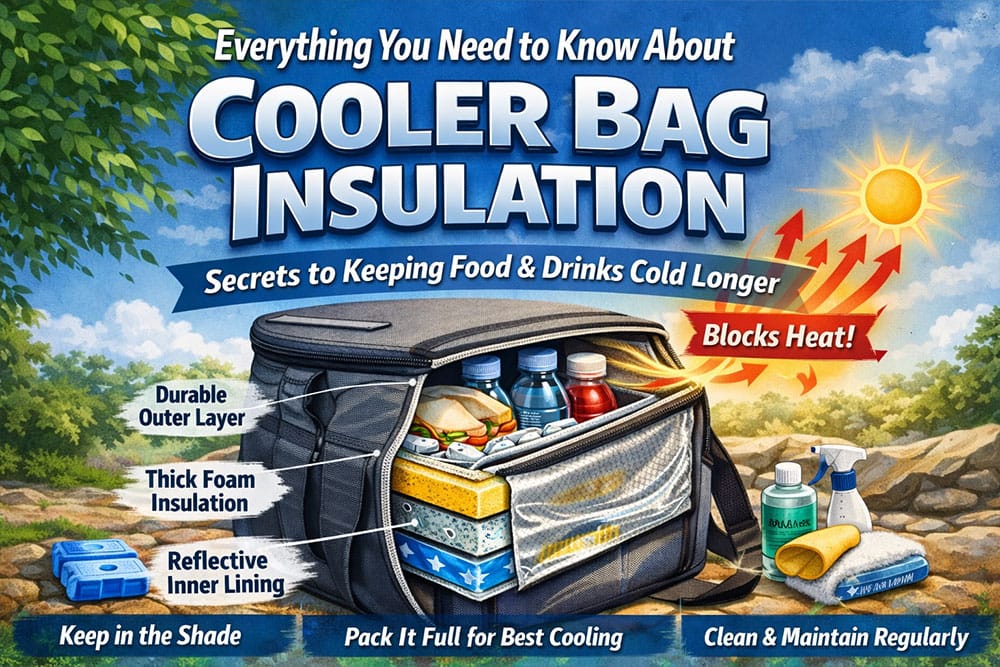
Cooler bags with many layers keep things cold longer. More layers stop heat from getting in and help things stay cool for more time.
Pick cooler bags that have thick foam and shiny linings. These parts help keep the inside cold for a longer time.
Pack your cooler bag full to keep cold air inside. Use ice packs to fill any empty spots and keep it cold.
Put your cooler bag in the shade so it does not get hot. Sunlight can make the inside warm very fast.
Clean your cooler bag often and store it right to make it last longer. Wash it every week to stop bad smells and keep it working well.
How Cooler Bag Insulation Works
Thermal Principles
You rely on cooler bags to keep your food and drinks cold, but how do they actually work? The answer lies in the science of heat transfer. When you place cold items inside a cooler bag, the insulation slows down the warming process. The main goal is to stop heat from moving into the bag and reaching your food.
Insulated cooler bags fight against three types of heat transfer:
Conduction: The insulation acts as a shield. It blocks heat from moving through direct contact with the outside environment.
Convection: Airtight zippers and seams keep warm air out and cold air in. This stops air from carrying heat into the bag.
Radiation: Reflective liners, often made of aluminum foil, bounce away up to 90% of radiant heat. This keeps the inside cool even when the sun shines on the bag.
The foam inside the bag traps air, which is a poor conductor of heat. This means heat moves very slowly through the foam. The reflective lining sends heat away, so less energy reaches your food. When you use a cooler bag, you take advantage of these scientific principles to keep your items cold for longer.
Tip: Always zip your cooler bag tightly. This helps block convection and keeps cold air inside.
Multi-Layer Design
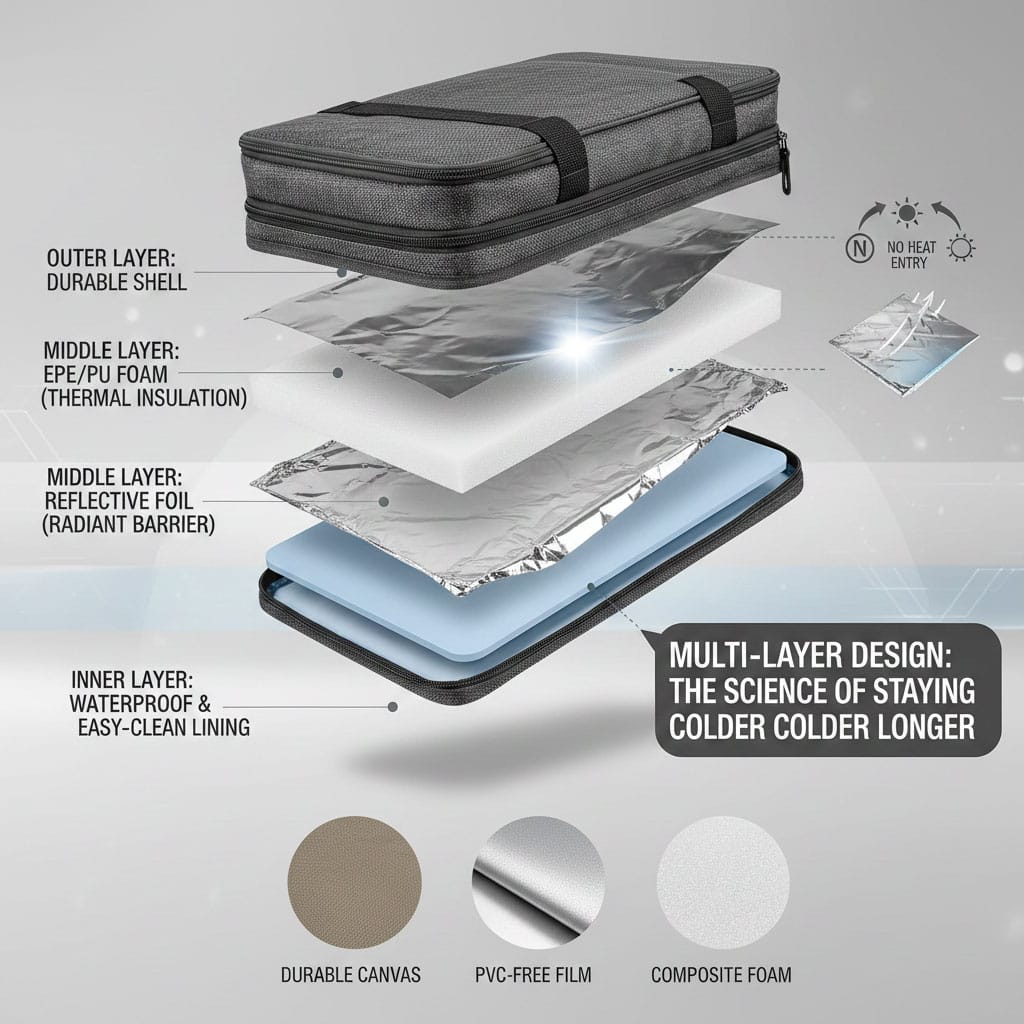
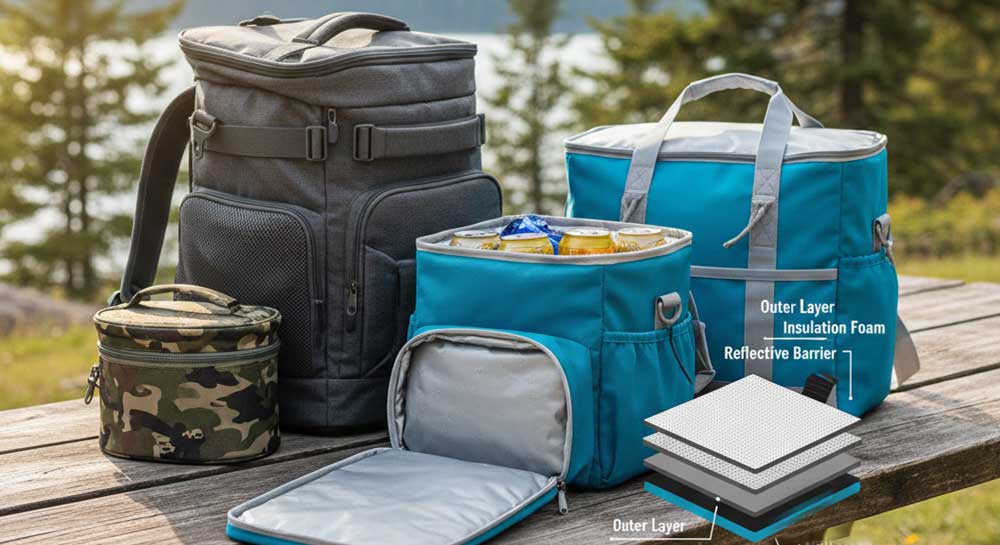
The secret to great insulation is the multi-layer design. High-performance cooler bags use several layers, and each layer has a special job. The more layers a bag has, the better it can keep things cold.
Here is what you usually find in a well-made cooler bag:
Layer
Function
Material Examples
Outer Layer
Protects the bag and makes it durable. Does not control temperature directly.
Polyester, nylon
Middle Layer
Core insulation. Foam traps air to slow heat transfer. Reflective foil sends heat away.
EPE foam, PU foam, aluminum foil
Inner Layer
Waterproof and easy to clean. Helps keep cold in and heat out.
PEVA, PVC, TPU, aluminum foil
Outer Layer: You get protection from bumps and scratches. This layer keeps the bag strong.
Middle Layer: Foam insulation traps air. Air slows down heat movement. Reflective foil bounces heat away.
Inner Layer: Waterproof materials make cleaning easy. They also help keep the temperature steady.
Laboratory tests show that hard-shell cooler bags usually keep things cold longer than soft-shell ones. Hard-shell bags have thicker and stronger layers. Soft-shell bags are lighter and easier to carry, but they may not keep items cold as long.
The number of layers in a cooler bag matters. More layers mean better insulation. Each layer slows down heat in a different way. When you choose a cooler bag, look for one with several layers and good materials. This will help you keep your food and drinks cold for hours.
Note: If you want the best cooling, pick a bag with thick foam and a reflective lining.
Cooler Bag Materials and Layers
Foam Insulation
Foam insulation is found in every good cooler bag. Foam holds air inside. This slows down heat from getting in. It helps keep your food and drinks cold. The kind and thickness of foam matter a lot. Thicker foam keeps things cold for a longer time.
Here is a table that shows how foam thickness affects insulation:
Foam Type
Thickness Range
Insulation Effectiveness
EPE Foam
3mm – 10mm
Better insulation with thicker layers
EVA Foam
Varies
Superior thermal resistance with thickness
Composite Foam
8mm – 20mm
Significant reduction in conductive heat transfer
EPE foam is good for light cooler bags. If the layer is thick, it keeps things cold longer.
EVA foam makes a steady space inside. This keeps your food fresh for many hours.
Composite foam blocks heat very well. Thicker foam works even better.
Tip: To keep things cold all day, pick a cooler bag with thick foam insulation.
Reflective Linings
Reflective linings are important for keeping heat out. These linings bounce heat away from the inside. Your food and drinks stay cold, even if the sun shines on the bag. Aluminum foil is the most used material for reflective linings. It sends heat away and helps keep the inside cool.
Here is a table that shows popular reflective lining materials and their functions:
Material
Function
Aluminum foil
Reflects heat, aids in temperature retention
PEVA
Food-safe, helps in easy cleanup
PVC-free films
Environmentally friendly, assists in insulation
Reflective linings like aluminum foil push heat away from the inside.
Linings that are not reflective let more heat in.
Note: Pick cooler bags with reflective linings if you want to keep things cold longer.
Shell and Lining Properties
The shell and lining protect your cooler bag. They also help it last longer. You need strong materials for outdoor use and easy cleaning. Polyester and nylon shells do not wear out fast. You can use these bags outside. Canvas looks nice and lasts a long time. But it does not keep water out as well as other materials.
Here is a table that shows the most durable shell and lining materials and how they affect insulation:
Material Type
Durability
Insulation Effect
Polyester
Strong, resists wear and tear
Good for outdoor activities
Nylon
Tough, abrasion-resistant, lightweight
Reliable in tougher conditions
Canvas
Stylish, long-lasting
Excellent insulation, less water resistance
PEVA Lining
Safe, lightweight, adaptable
Efficient temperature preservation
Foam Insulation
Varies in thickness and grade
Key for maintaining cold temperatures
The shiny part of reflective linings helps keep things cool by bouncing heat away.
Shell and lining materials that do not let heat move fast help keep things cold.
Linings that block water make cleaning easy. They also stop bacteria from growing.
Tip: Choose cooler bags with waterproof linings and strong shells for easy cleaning and long-lasting insulation.
Types of Cooler Bags
Soft-Sided vs. Hard-Sided
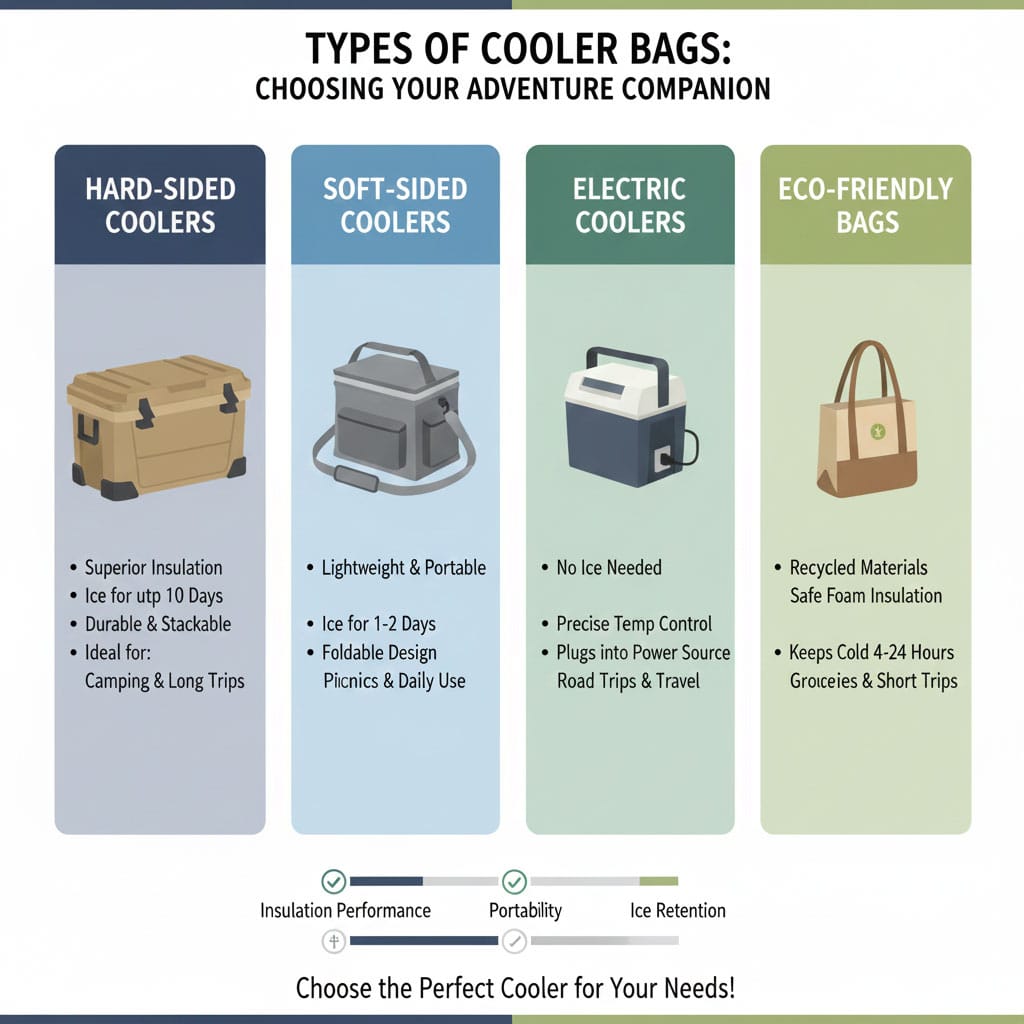
You can pick soft-sided or hard-sided cooler bags. Soft-sided cooler bags are light and bend easily. You can carry them on hikes or trips. Some soft-sided bags, like the Cobalt Soft Sided Cooler Backpack, hold 24 cans with ice. These bags use strong PVC tarpaulin and waterproof PEVA liners. You can open them fast and store things easily.
Hard-sided cooler bags keep things cold better. They use thick foam and tight lids. Some models keep ice frozen for ten days. These bags are good for camping or outdoor events. They are heavier and bigger, but they protect food and drinks more.
Here is a table that shows how well each type keeps things cold and how long ice lasts:
Cooler Type
Insulation Performance
Ice Retention Duration
Hard-Sided
Superior insulation, thicker walls
Up to ten days
Soft-Sided
Limited insulation, varies by thickness
One to two days
Tip: Pick a soft-sided cooler bag if you want to walk far. Choose a hard-sided cooler if you need ice for many days.
Electric and Eco-Friendly
Electric cooler bags use power to stay cold. You plug them into your car or a battery. Brands like BODEGA, Dometic, and ARB use 35 to 55 watts in eco mode. Electric cooler bags are good for road trips or long drives. You do not need ice and can set the temperature.
Eco-friendly cooler bags use recycled materials and safe foam. They help the planet and keep food cold for 24 hours. Regular cooler boxes with high-density polyurethane keep food safe for 45 hours. Eco-friendly bags are best for short trips or daily use.
Here is a table that compares how long each type keeps things cold and their insulation:
Feature
Eco-Friendly Cooler Bag
Conventional Cooler Box
Temperature Retention
Up to 24 hours
5–7 days
Safe Temp Duration
14.5h (37.6–45.1°F)
36–45h (<40°F)
Insulation
2.33cm foam
High-density polyurethane (R-32)
Note: Electric cooler bags need power to work. Eco-friendly bags keep things cold for a short time and help cut down on waste.
You can choose cooler bags based on insulation, how easy they are to carry, and energy use. Each type has different benefits for travel, outdoor fun, or daily life.
Advanced Insulation Technologies
Vacuum Panels
You can find vacuum insulation panels (VIPs) in some of the most advanced cooler bags. These panels use a special design that removes air from inside the panel. This process creates a vacuum, which blocks heat from moving through the material. You get much better insulation than with regular foam.
Panasonic’s ADVANC-R® VIP has an R-value of 66. This number shows very high thermal insulation. Most foam panels have much lower R-values.
VIPs help you keep food and drinks cold for a longer time. You can use cooler bags with VIPs for camping, long road trips, or outdoor events. These bags cost more, but you get top performance.
Tip: If you need to keep items cold for days, look for cooler bags with vacuum panels.
Phase Change Materials
Phase change materials (PCMs) store and release energy as they change from solid to liquid or back again. You can use PCMs in cooler bags to keep the temperature steady. When the material melts, it absorbs heat. When it freezes, it releases cold.
You get better temperature control with PCMs. They work well for medicine, dairy, or anything that needs a stable temperature. Some cooler bags use PCM packs that you can freeze and reuse.
PCM Feature
Benefit
Stable temperature
Protects sensitive items
Reusable packs
Saves money
Easy to use
No special tools needed
Gel Ice Packs
Gel ice packs are common in cooler bags. You freeze the packs before use. The gel inside stays cold longer than regular ice. You can shape gel packs to fit around food and drinks.
Gel ice packs do not leak water as they melt. You keep your bag dry and clean. You can reuse gel packs many times. They work well for lunch bags, picnics, and short trips.
Note: Place gel ice packs on top of your food for best cooling results.
Cooling Performance Factors
External Temperature
You need to think about the weather when you use cooler bags. Hot weather makes drinks and food warm up faster inside your bag. If you leave your cooler bag in direct sunlight, the inside temperature rises quickly. Cooler or shaded places help your bag keep things cold for a longer time.
External temperature changes how long your food stays cold.
Sunlight speeds up warming inside the bag.
Shade helps keep the inside cool.
Tip: Place your cooler bag in the shade or inside your car to slow down warming.
Packing Density
How you pack your cooler bag matters. If you fill the bag tightly, cold air stays trapped between items. This helps keep everything cold. Loose packing leaves empty spaces, so warm air can move in and out more easily. Try to pack your food and drinks close together. Use ice packs or frozen bottles to fill gaps. You get better cooling when you reduce empty space.
Packing Style
Cooling Effectiveness
Tight packing
High
Loose packing
Low
Insulation Thickness
The thickness of the insulation in your cooler bag affects how long it keeps things cold. Thicker insulation walls slow down heat from getting inside. For overnight use, ½” to 1″ insulation works well. If you need to keep items cold for two days or more, choose a bag with 1-½” to 2″ thick insulation. Product tests show that both the type of cooler and the amount of coolant matter. Thicker insulation helps your cooler bag maintain low temperatures for longer periods.
Note: Pick a cooler bag with thicker insulation if you want to keep food cold for more than one day.
Opening Frequency
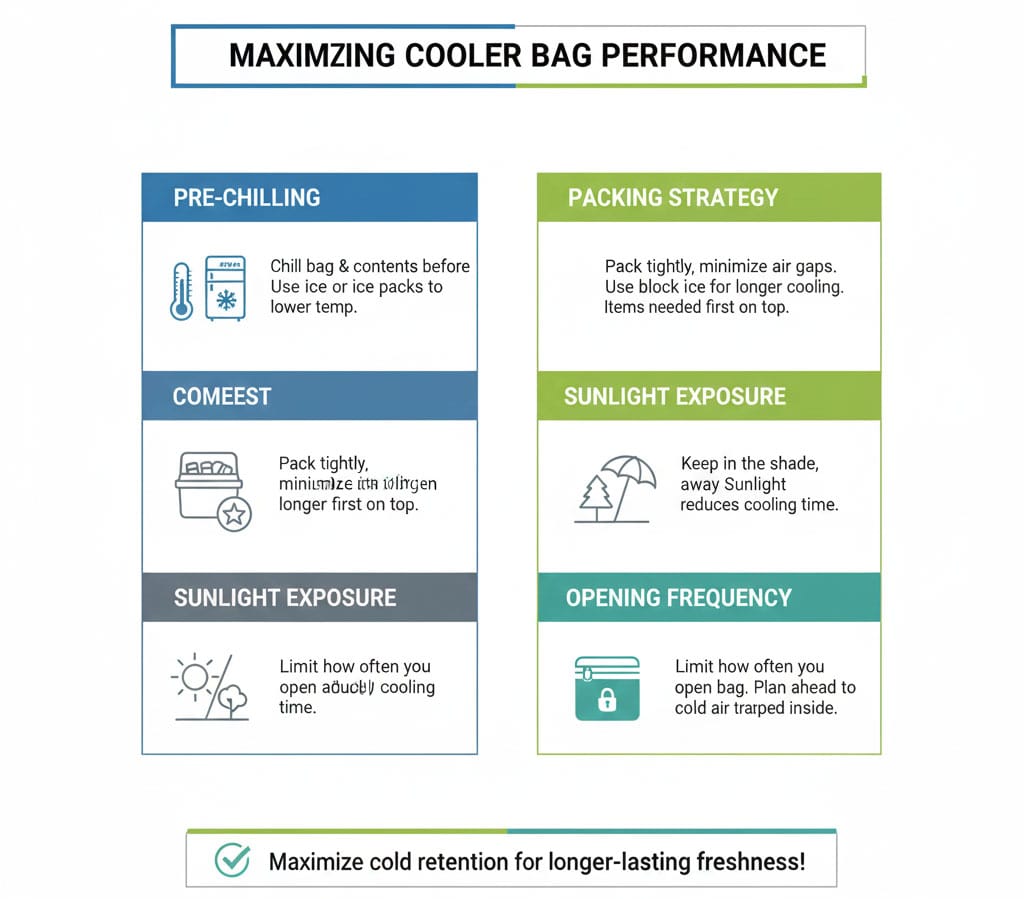
Every time you open your cooler bag, warm air gets inside. This makes the temperature rise faster. Try to open your bag only when you need something. Keep the lid closed as much as possible. If you open the bag often, cold air escapes and your food warms up quickly. You can keep things cold longer by limiting how often you open the bag.
Open less often for better cooling.
Keep the lid closed to trap cold air.
Tip: Plan what you need before opening your cooler bag to keep cold air inside.
Maximizing Cooler Bag Performance
Pre-Chilling
You can boost the cooling power of your bag by pre-chilling. Start by placing your cooler bag in a cold place or adding ice packs before you pack your food. This step lowers the inside temperature. Cold food and drinks help keep everything chilly for longer. If you put warm items inside, they will raise the temperature and melt your ice faster. Always chill your food and drinks in the fridge before packing them. You can also use bagged ice to cool the inside quickly. This simple step makes a big difference in how long your items stay cold.
Packing Strategy
How you pack your cooler bag matters a lot. Experts say that good organization helps your bag stay cold. Try these tips:
Pack cold items together to keep them chilled.
Fill empty spaces with ice packs or frozen water bottles.
Use more ice for longer trips. A larger amount of ice keeps things cold for a longer time.
Bagged ice cools the inside faster than block ice.
Place items you need first on top to avoid opening the bag too often.
When you pack tightly, you trap cold air inside. Loose packing lets warm air move in and out, which makes your food warm up faster. Always plan your packing to get the best results from your cooler bag.
Sunlight Exposure
Sunlight can heat up your cooler bag quickly. You should always keep your bag in the shade. Use a tent, umbrella, or even a tree to block direct sunlight. If you leave your bag in the sun, the inside temperature will rise fast. Hot weather makes it harder for your bag to keep things cold. In very hot places, cooler bags may not work as well for long periods. High temperatures outside speed up how fast heat gets inside your bag. You can help your bag work better by keeping it cool and out of the sun.
Tip: Always look for a shady spot when you set down your cooler bag outdoors.
Cooler Bag Maintenance
Cleaning Tips
You need to clean your cooler bag often to keep it working well. Dirt and stains can damage the insulation and cause odors. Use gentle cleaning methods to protect the materials. Here is a table that shows the best ways to clean your cooler bag:
Cleaning Method
Details
External Cleaning
Use a damp rag with mild detergent. Avoid harsh chemicals.
Avoid Soaking
Do not soak the bag. Scrub local stains gently.
Temperature Control
Use warm water, not hot, to prevent damage.
Drying
Dry in a ventilated area away from direct sunlight to prevent fading.
Lining Cleaning
Use a soft-bristle brush for waterproof linings. Rinse thoroughly after cleaning.
Regular Maintenance
Clean weekly to avoid odor build-up. Follow manufacturer instructions for special care.
You should always use mild detergent and warm water. Harsh chemicals can break down the insulation. For tough stains, apply a small amount of detergent and wipe clean. Never soak your bag, as this can damage the foam inside. Clean the lining with a soft brush if needed, and rinse well.
Tip: Clean your cooler bag every week to stop odors and keep it fresh.
Drying and Storage
Proper drying and storage help your cooler bag last longer. Moisture left inside can cause mold and weaken the insulation. After cleaning, let your bag dry completely in a well-ventilated area. Keep it out of direct sunlight to prevent fading.
Leave the lid open so air can move inside.
Wipe off any extra moisture with a dry microfiber towel.
Store your cooler bag in a cool, shaded, and dry place.
Keep it off the floor and leave the lid slightly open for air flow.
Place silica gel packs or moisture absorbers inside to control humidity.
When you care for your cooler bag, you protect the insulation. This keeps your bag working well for many trips. Good maintenance means your cooler bag will keep food and drinks cold for a long time.
Note: Regular cleaning and careful storage help your cooler bag stay effective and last longer.
Choosing Cooler Bags for Your Needs
Outdoor and Travel Use
You need a cooler bag that matches your adventure. When you travel or spend time outdoors, you should look for features that make your trip easier and more comfortable. Experts recommend these important features:
Size: Pick a size that fits your trip length and the number of people.
Sealing System: Choose roll-top closures or waterproof zippers to keep your food dry.
Comfort and Fit: Select padded, adjustable straps for easy carrying.
Pockets: Use extra pockets to separate wet and dry items.
A cooler bag with these features helps you keep food fresh and makes your journey more enjoyable. You can carry it for long distances without discomfort.
Grocery and Everyday Use
You use cooler bags for grocery shopping and daily tasks. These bags work best when you need to keep items cold for a few hours. Insulated bags keep food cold for 4 to 8 hours. Some high-quality bags last up to 14.5 hours. If you need longer ice retention, coolers can hold cold temperatures for over two days.
Cooler Type
Best For
Portability
Ice Retention
Special Features
Hard-Sided
Long trips, camping
Medium
High
Durable, stackable
Soft-Sided
Short trips, daily use
High
Low-Medium
Lightweight, foldable
Electric
Road trips, travel
Medium
No ice needed
Plugs into power source
Insulated bags are ideal for school lunches and grocery runs.
Cooler bags are preferred for camping and road trips because they keep ice longer.
You can choose a soft-sided bag for quick errands or a hard-sided cooler for longer outings.
Matching Features
You should match the features of your cooler bag to your needs. If you want portability, pick a lightweight, foldable bag. For long trips, select a bag with thick insulation and a strong shell. Electric cooler bags work well for road trips because you do not need ice. Always check for easy-to-clean linings and sturdy handles. These features help you get the most out of your cooler bag and keep your food safe.
Tip: Think about how you will use your cooler bag before you buy. The right features make a big difference in performance.
You now understand how cooler bag insulation works and why choosing the right materials and technologies matters. Use the tips in this guide to keep your food cold and your bag in good shape. Cooler bags fit many needs, from outdoor trips to daily errands.
Pick the features that match your lifestyle.
Care for your bag to keep it working well.
Make smart choices and enjoy fresh food wherever you go!
FAQ
How long can a cooler bag keep food cold?
Most cooler bags keep food cold for 4 to 24 hours. The time depends on insulation thickness, outside temperature, and how often you open the bag. For best results, use ice packs and keep the bag closed as much as possible.
Can you put hot items in a cooler bag?
Yes, you can use a cooler bag to keep hot food warm. The insulation works both ways. You should wrap hot items in foil and keep the bag closed. This helps hold the heat inside.
How do you stop cooler bags from smelling?
You should clean your cooler bag after each use. Use mild soap and warm water. Dry it fully before storing. Place a small box of baking soda inside to absorb odors.
Tip: Always leave the bag open to air out after cleaning.
Are cooler bags safe for carrying raw meat?
Yes, you can carry raw meat in a cooler bag. Use sealed containers or zip bags to prevent leaks. Keep meat separate from ready-to-eat foods. Add plenty of ice packs to keep the temperature below 40°F.
What is the best way to pack a cooler bag?
Pack cold items together and fill empty spaces with ice packs. Place items you need first on top.
Use block ice for longer trips.
Keep the bag full for better cooling.Remember: Less empty space means better insulation.






Comments are closed