What to Pack in a Boating Safety Dry Bag (Full Checklist)
Preparing for a day on the water is more than packing snacks and sunscreen. Whether you’re cruising the coast, fishing offshore, or taking a family trip on a lake, having a boating safety dry bag—sometimes called a ditch bag or grab bag—is one of the most important steps to staying safe.
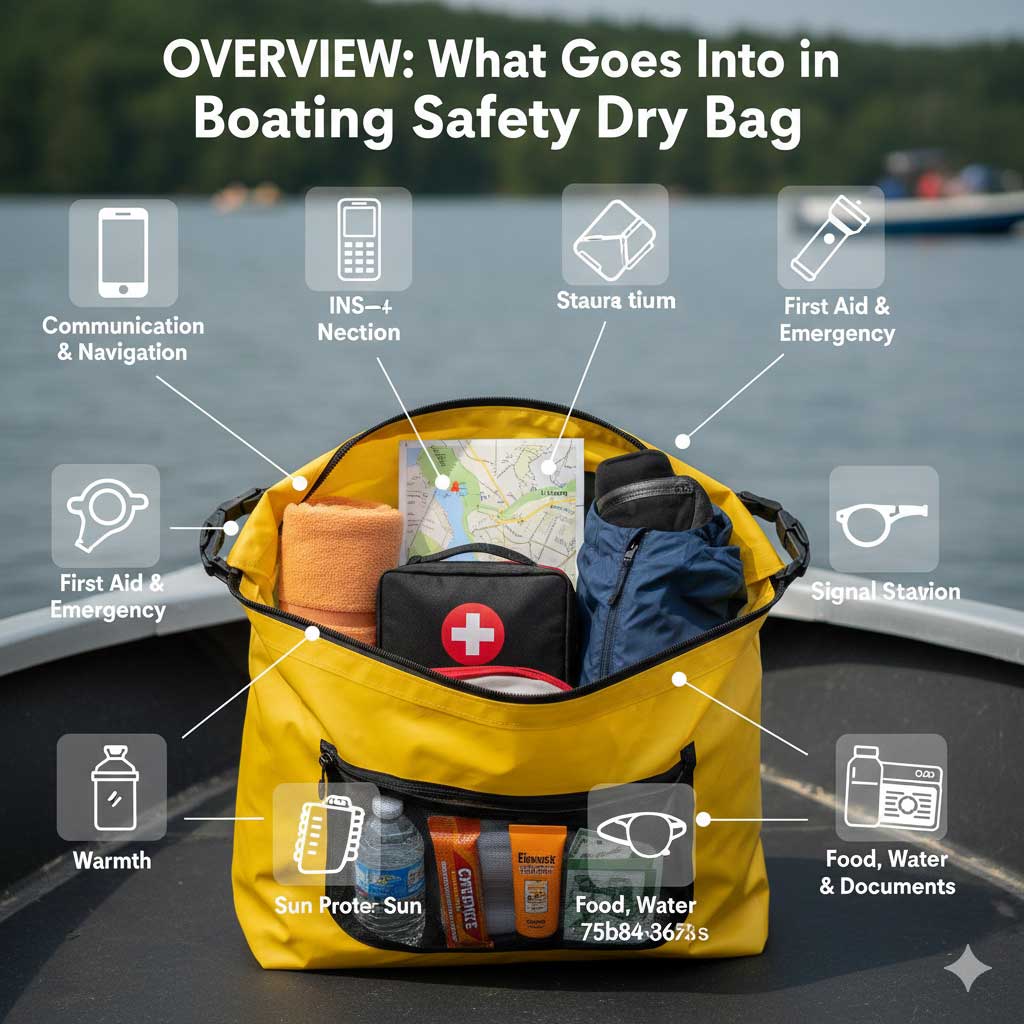
A boating safety dry bag is a dedicated waterproof kit designed to keep your most critical rescue, signaling, medical, and documentation items together so you can grab it instantly during an emergency. It doesn’t replace legally required equipment—but it keeps everything that matters in one place, protected, and ready.
Before we walk through the full checklist, it’s important to understand why a boating safety dry bag is different from a regular dry bag and what features actually matter.
A regular dry bag is designed for convenience. A boating safety dry bag is designed for survival.
Regular Dry Bag (for daily use):
Holds clothing, electronics, snacks
Water-resistant but not always fully waterproof
Typically stitched construction
Comes in any color or shape
Boating Safety Dry Bag (for emergencies):
Holds signaling gear, documents, emergency tools
Must withstand submersion, heavy spray, and rough handling
Should use RF/HF welded seams for true waterproof sealing
Prioritizes visibility and quick access
Must float or be attached to flotation equipment
Should stay operational even if the boat is compromised
This is why safety authorities like the U.S. Coast Guard emphasize preparedness and proper storage of essential safety items. → See the USCG official recreational boating safety guidance (U.S. Coast Guard Boating Safety)
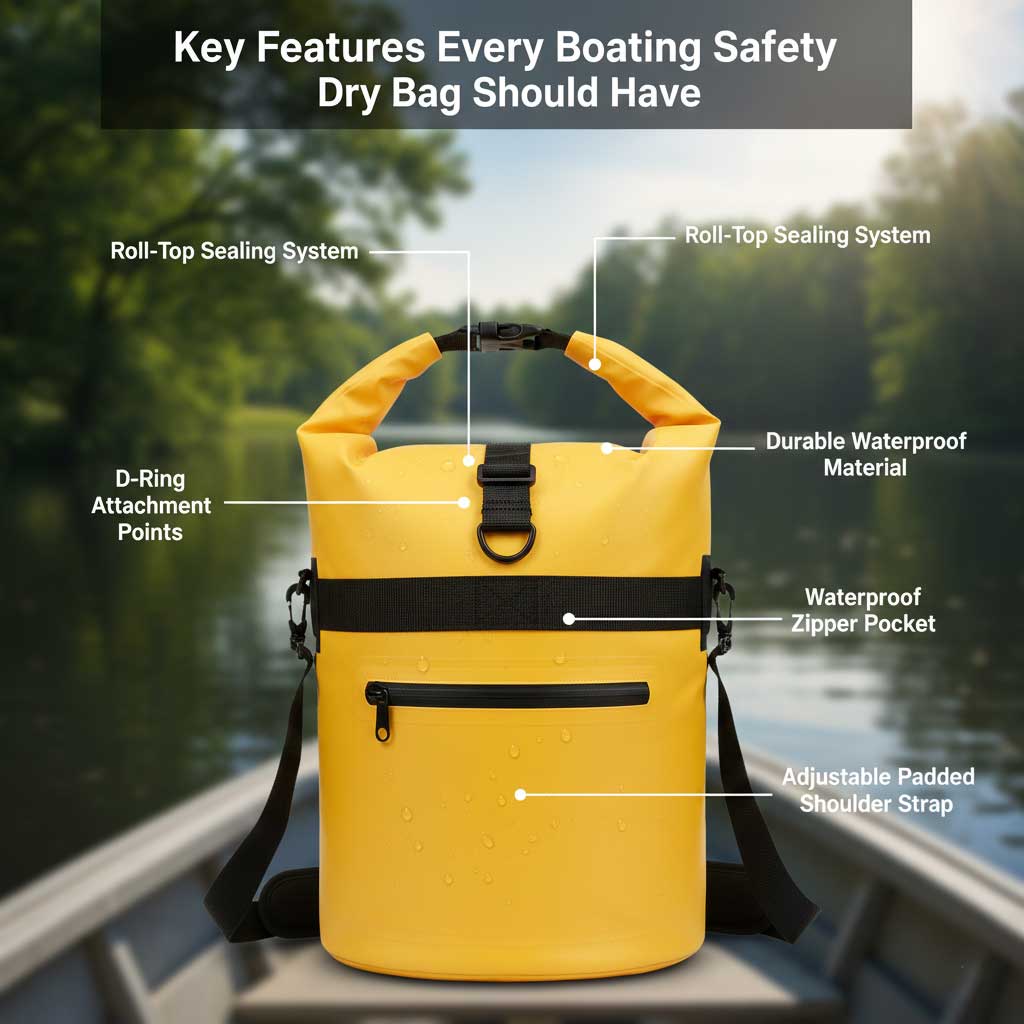
Key Features Every Boating Safety Dry Bag Should Have
High-Visibility Colors & Reflective Elements
In a rescue situation, your bag must stand out—day or night. Bright orange, yellow, or neon green dramatically improve visibility. Adding reflective trims or a reflective logo also helps rescuers locate you in low light.
Fully Welded Waterproof Construction
The most reliable safety dry bags are built using RF/HF welding (high-frequency welded seams)—a manufacturing process that fuses layers of TPU, PVC, or coated technical fabrics at the molecular level. Unlike stitched seams, which create needle holes that can leak under pressure or prolonged exposure to water, high-frequency welding creates a continuous bond with no perforations.
This construction method ensures:
Airtight and watertight sealing even during full submersion
Stronger seam integrity compared to stitched or taped seams
Long-term durability against saltwater, UV exposure, and abrasion
Consistent waterproof performance over years of use
Reliable protection for electronics, flares, documents, and medical supplies
Because a safety dry bag may face sudden immersion, heavy spray, impact during evacuation, or long durations in wet environments, welded seams offer a level of reliability stitched seams cannot match. For this reason, high-frequency welded construction is considered the professional standard for marine-grade dry bags, rescue kits, and offshore safety gear.
For reference: → RNLI explains what goes inside a “grab bag” and why waterproofing matters (RNLI – Inside the Grab Bag)
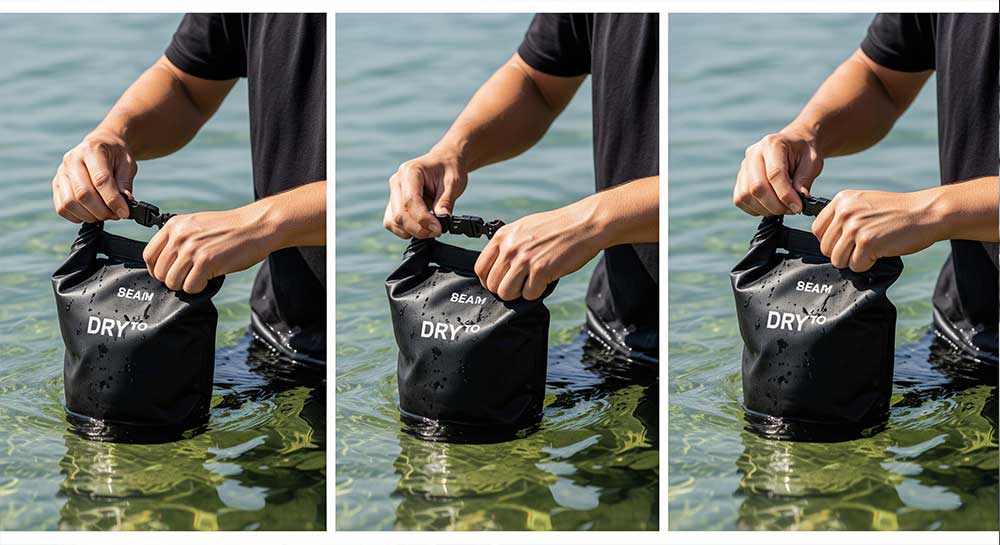
Roll-Top Closure + Strong Buckles
A roll-top closure with 3–4 folds creates a watertight seal. Heavy-duty buckles ensure the bag stays closed even under stress.
Floats or Connects to Flotation Equipment
The bag should:
Contain enough trapped air to float, or
Have attachment points (D-rings / loops) to secure it to a life raft or PFD
Internal Organization for Critical Items
Using small inner pockets or waterproof pouches helps categorize:
Signaling tools
Medical supplies
Documents
Tools
Water & snacks
A well-organized bag prevents delays during emergencies.
These should be easily accessible and protected from water at all times.
Tools & Boat-Specific Gear
These tools allow for basic problem-solving and quick repairs.
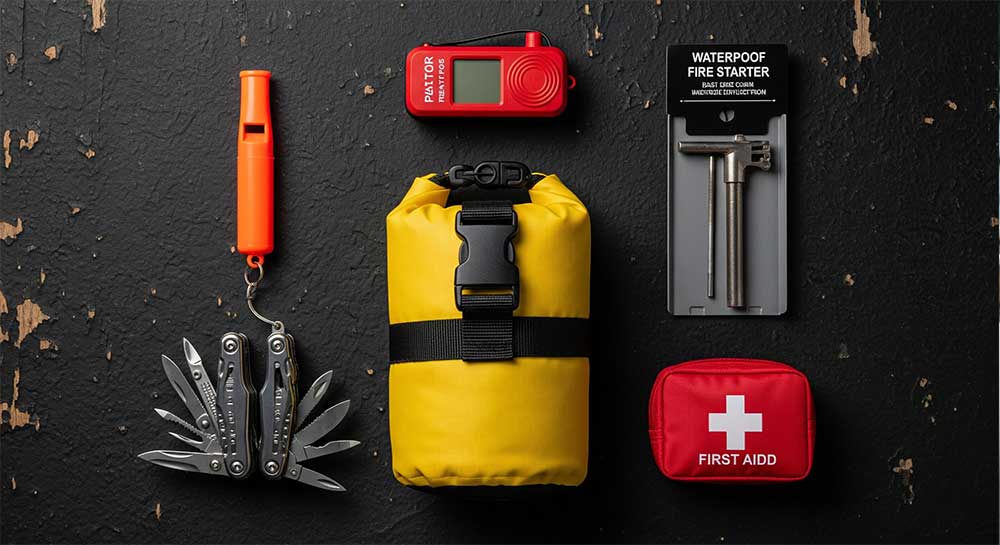
Highly Useful Tools
Rescue knife or folding knife
Multitool (pliers, screwdrivers, saw)
5–10 meters of braided rope/line
Duct tape (mini roll)
Zip ties (various sizes)
Glow sticks
Small inflatable repair tape (if relevant)
Additional offshore considerations may include a throw rope, spare carabiners, or backup signaling tools.
Additional Critical Items to Strengthen Your Safety Dry Bag
In addition to the core essentials above, offshore rescue organizations such as the USCG, RNLI, and RYA recommend several additional items that significantly increase safety and survival capability. These items do not replace the essentials—they strengthen them and create redundancy in high-risk environments.
1. Redundant Communication Tools
Backup mobile phone in a sealed waterproof pouch
Compact power bank
Secondary SIM card or international SIM
Why it matters: Communication systems fail frequently in emergencies. Redundancy ensures you always have a way to call for help.
2. Emergency Illumination Options
Headlamp with spare batteries
Chemical light sticks (non-electronic, long-lasting)
Why it matters: Hands-free lighting makes nighttime operation, signaling, or medical treatment significantly easier.
3. Thermal & Exposure Protection
Waterproof gloves
Hand warmers
Stormproof matches or a compact fire-starting capsule
Heat pack
Why it matters: Exposure—especially cold shock and post-rescue hypothermia—is one of the leading risks during offshore incidents.
4. Floatation & Recovery Tools
Floating rescue rope or buoyant line
Compact mini throw line
Stainless steel carabiners
Why it matters: These aid in rescue operations, recovery of crew, or securing equipment in rough conditions.
5. Water Treatment & Hydration Backup
Water purification tablets
Collapsible water pouch
Why it matters: Delays in rescue—even a few hours—can make water supplies critical.
6. Enhanced Medical & Trauma Supplies
Triangular bandage
Burn gel packet
Cold compress
Why it matters: These items treat common marine injuries such as sprains, burns, rope cuts, and impact trauma—areas not fully covered by basic first-aid kits.
7. Personal Identification & Tracking
Waterproof ID wristbands
Individual emergency information cards per crew member
Why it matters: In multi-person emergencies, clear identification helps rescuers communicate and provide the correct care.
8. Signaling Enhancements
High-visibility signal flag
Compact dye pack for surface visibility
Why it matters: These improve visibility from aircraft or distant vessels—critical during offshore rescues.
9. Navigation Redundancy Cards
Laminated list of emergency channels
Pre-printed Mayday/DSC distress call procedure
Why it matters: Panic often causes communication mistakes. Pre-written instructions ensure you communicate clearly and correctly in distress situations.
Tip:These additional items strengthen your core essentials, support redundancy, and align your kit with best practices recommended by maritime safety authorities. While not mandatory for every trip type, they are highly valuable for coastal cruisers, offshore boaters, and anyone who wants a more resilient and fully prepared safety setup.
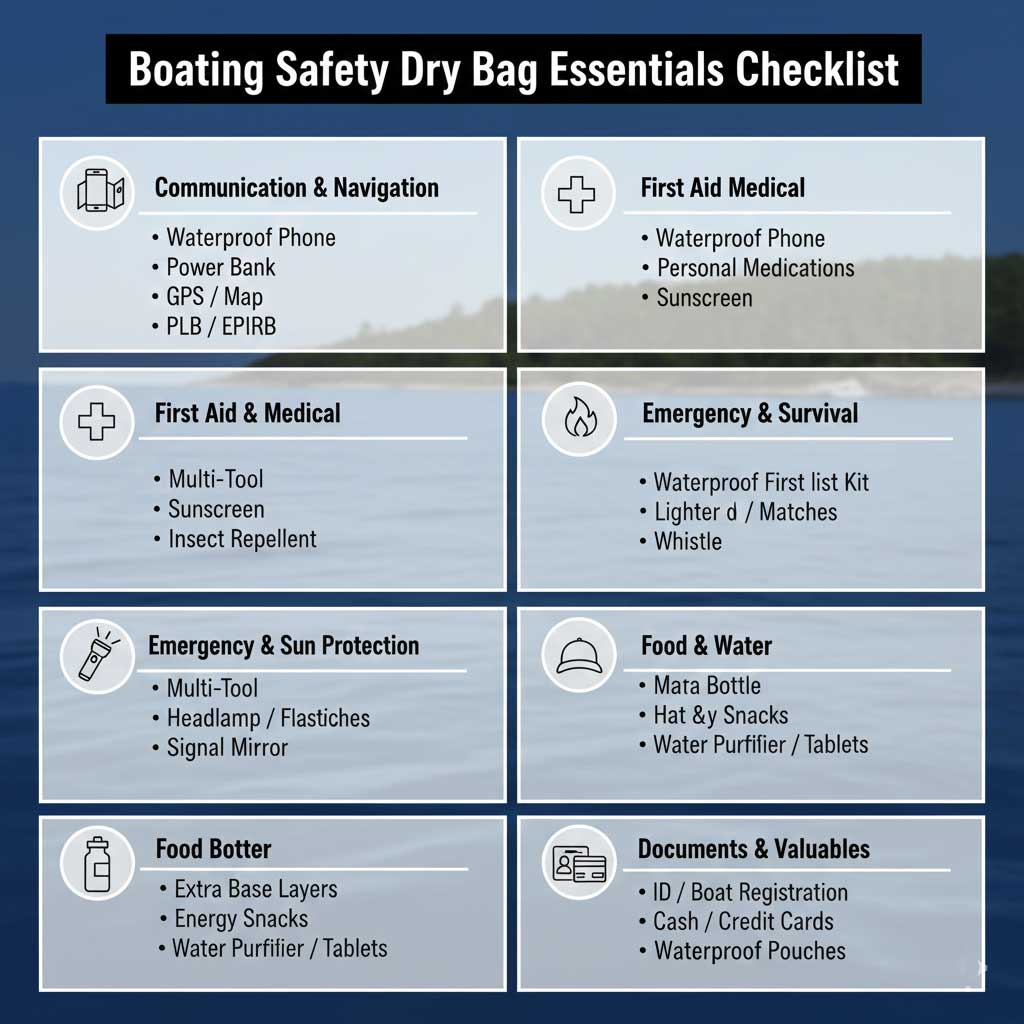
Checklists for Different Trip Types
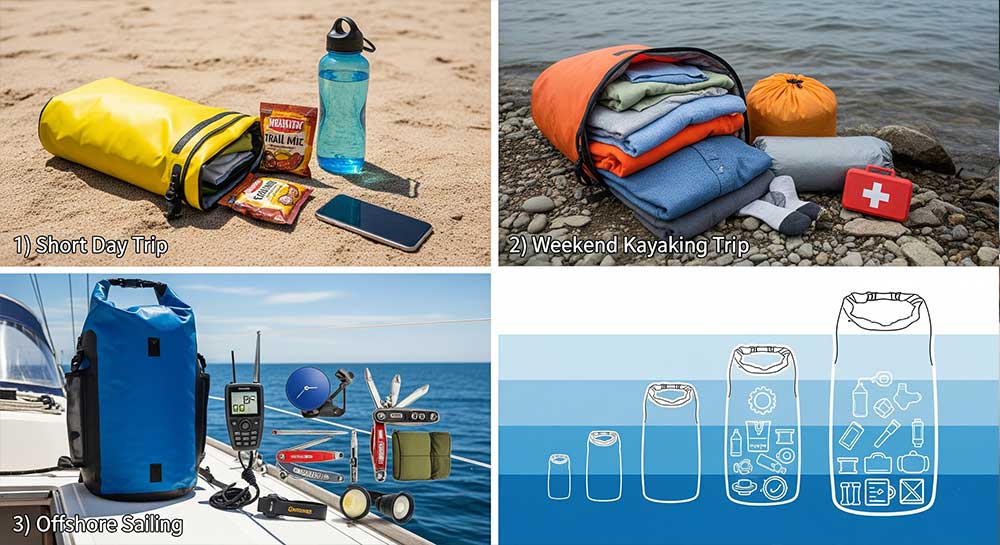
Different types of boating require different levels of preparation. The following sections outline what to pack based on the nature of your trip.
Inland Lakes & Rivers (Day Trips)
For short-distance and easily accessible waters, a compact but efficient kit is ideal.
Recommended Items:
Whistle
Waterproof flashlight
Small first aid kit
Sunscreen
Drinking water
Energy bar
Compact poncho
ID copy and emergency contact
Multitool or small knife
Phone in waterproof pouch
This setup balances practicality with preparedness for most inland emergencies.
Coastal Cruising & Nearshore Fishing
When venturing farther from shore, rescue response times can vary significantly. Additional tools are recommended.
Add These Items:
Handheld VHF radio
Day/night flares
Signal mirror
PLB (strongly recommended)
Extra water and snacks
Handheld GPS
More comprehensive first aid items
Rope and basic repair tools
These additions help improve communication and navigation if you drift or lose power.
Offshore & Overnight Trips
For offshore, multi-day, or open-water travel, a fully equipped safety dry bag is essential.
This is the most advanced configuration and aligns with common bluewater preparation standards.
How to Pack a Boating Safety Dry Bag
A well-organized dry bag ensures you can access what you need instantly, even under stress.
Use a Modular Packing System
Pack items in small, labeled waterproof pouches to divide your kit into manageable modules such as:
Signaling
First aid
Documents
Navigation
Survival
Tools
This structure prevents items from shifting and allows faster retrieval.
Prioritize Accessibility
Place the most critical items at the top of the dry bag:
Whistle
Flashlight or strobe
Flares
Knife
VHF or PLB
Less urgent items—such as snacks, documents, or clothing—should go in lower sections.
Where to Store Your Bag Onboard
Proper placement is just as important as proper packing.
Store in a visible, quickly accessible area
Avoid burying it under other gear
Keep it near the helm, cabin entrance, or cockpit
Secure it with a strap to prevent shifting in rough seas
Ensure all passengers know its location
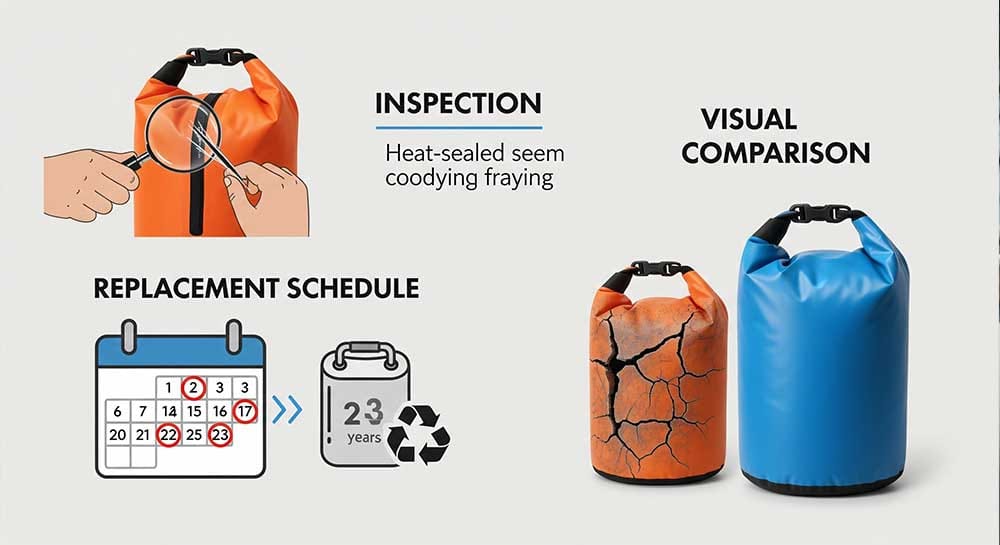
Inspection & Replacement Schedule
Your safety dry bag should be treated as a living system that requires routine checks.
Before Every Trip
Battery levels
Waterproof seals
Charge levels of electronics
Monthly
Food expiration dates
Medication validity
Tool and rope condition
Quarterly
Flare expiration
Waterproof pouch condition
Replacement of worn items
Regular checks ensure your bag works when you need it most.
OEM/ODM Guide for Brands & Retailers
This section is designed for brands, distributors, and marine equipment companies looking to develop custom boating safety dry bags.
Recommended Materials and Construction
Professional-grade safety dry bags typically feature:
TPU or heavy-duty PVC
RF/HF welded seams
High-visibility colors
Reinforced base panel
Reflective logos or trims
Durable roll-top closure
These standards offer maximum waterproof performance and durability suitable for marine environments.
Suggested Sizes for Retail Lines
Market Segment
Recommended Volume
Key Features
Entry-level
10–15L
Welded seams, basic roll-top
Mid-tier
15–25L
Reflective elements, added pockets
Professional
25–35L
Reinforced bottom, internal dividers
Customization Options
Brands often choose the following options to differentiate their marine safety products:
Custom colors (including high-visibility tones)
Reflective premium logos
Transparent ID windows
MOLLE webbing or D-rings
Reinforced roll-top structure
Airtight zippers
Pre-packed safety kit options
These features help create market-ready, high-value boating safety products.
Why Work With Vancharli
With over 30 years of experience in technical, outdoor, and waterproof welded bags, Vancharli supports global marine and outdoor brands with OEM/ODM production capabilities across China, Vietnam, Myanmar, and Indonesia.
A boating safety dry bag is one of the most essential pieces of gear for any type of boating—whether it’s a quick inland outing or a multi-day offshore adventure. By packing the right signaling tools, navigation aids, first aid items, documents, survival gear, and repair tools, you ensure that your crew has the best possible chance of staying safe and being located quickly during an emergency.
Preparedness is not only about having the right equipment but also about knowing where it is, how it works, and whether it’s in good condition. A well-organized safety dry bag that’s regularly inspected can make a critical difference when seconds matter.
For brands, creating high-visibility, fully welded, and professionally organized boating safety dry bags provides real value to customers and strengthens your product line. The right materials and construction build reliability. The right design builds trust.
FAQ
What size should a boating safety dry bag be?
Most boaters choose between 10–25L, depending on their trip type. Day trips may only require 10–15L, while offshore or overnight trips benefit from 20–35L for additional gear.
What color is best for a boating safety dry bag?
High-visibility colors such as orange, yellow, or neon green are recommended. These improve visibility for search and rescue teams during daylight and low-light conditions.








Comments are closed