Outdoor Bag Brands Comparing OEM and ODM Manufacturing Strategies
Imagine you own an outdoor bag brand and plan to launch a new waterproof backpack. You face a big decision: should you go with OEM or ODM manufacturing? Your choice affects how much you can customize your product, how quickly you reach the market, and how much control you keep over your brand. Think about what matters most to you—unique designs, cost savings, fast delivery, or strong brand identity—before you pick your path.
Pick OEM if you want to control your bag’s look and features.
Choose ODM if you want to launch faster and spend less at first.
OEM lets you make special products. ODM gives you designs that are already made.
Think about your money and time before you pick OEM or ODM.
Vancharli lets you order small amounts, so you can try new ideas easily.
Use OEM if you want to keep your brand’s ideas safe.
ODM works well for brands that want to test the market fast and with less risk.
Always look at samples to check quality before you order a lot.
OEM vs. ODM: Quick Answer for Outdoor Bag Brands
Which Model Fits Your Brand
You want your outdoor bag brand to be noticed. Picking OEM or ODM changes your product’s future. OEM lets you choose every part, like shape and materials. You control how it looks and works, so your brand is special. ODM gives you designs that are already made. You can add your logo and packaging, but not change much else. This is good if you want to launch fast or spend less money.
Vancharli offers both choices. You get flexible OEM and ODM programs that meet global standards. Their team helps you make custom waterproof bags or pick from designs that work well. You get high-quality production, strong material testing, and eco-friendly practices. Vancharli’s certifications, like ISO9001, Sedex, and GRS, show they care about quality and safety. You can start with small orders, so it’s easy to try new ideas for your outdoor bag brand.
Tip: If you want a bag that is one-of-a-kind, pick OEM. If you want to launch quickly and save money, ODM is a smart choice.
Needs more money upfront for design and custom production.
Costs less at first since design is done.
Customization Needs
Lets you control design, materials, and how it works.
Only lets you change branding and packaging.
Lead Time
Takes longer because of design and making the product.
Gets to market faster with ready-made designs.
Branding Focus
Best for making unique, branded products.
Good for branding with custom labels on existing products.
You see more differences when you look at things like design control, speed, and brand uniqueness.
Feature
OEM
ODM
Design Control
Full
Limited
Customization
High
Low
Cost
Higher
Lower
Speed
Slower
Faster
Brand Uniqueness
Strong
Moderate
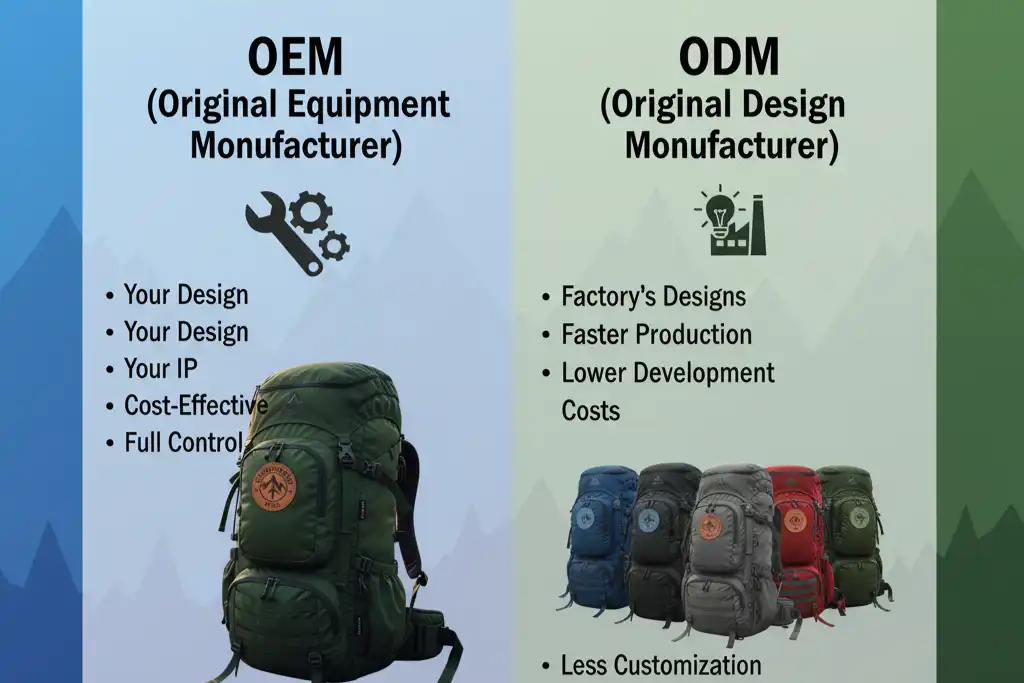
OEM gives you full control over design and lots of customization. You pay more and wait longer, but your outdoor bag brand is unique.
ODM lets you change only a few things. You spend less and launch faster, but your product may look like others.
Vancharli’s OEM and ODM programs start with small orders, so you can pick what fits your goals. Their factories in different countries help keep costs steady and give you choices. You get help with both custom and ready-made bags, so it’s easy to grow your outdoor bag brand.
OEM and ODM Defined
OEM Explained
OEM for Outdoor Bags
You want your outdoor bag brand to be different. OEM means “Original Equipment Manufacturer.” You work with a factory that makes bags using your own designs. You get to pick every detail, like the shape, color, and materials. You also choose special features for your bag. You decide how the bag should look and work. The factory follows your plan and builds the bag you want.
Here is a table that shows the official definitions:
Term
Definition
OEM
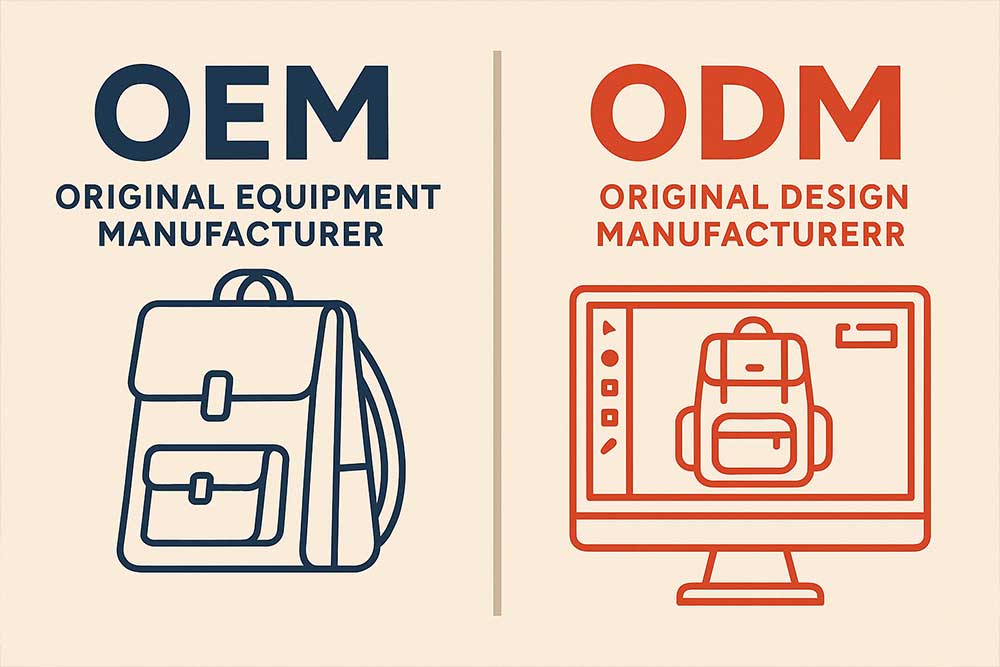
Refers to ‘Original Equipment Manufacturer’, which produces bags based on a brand’s specific designs, allowing complete control over the manufacturing process.
ODM
Stands for ‘Original Design Manufacturer’, which creates bags from its own designs, allowing clients to apply their logos with less customization required.
Design and Specification: You give your design to the factory. You include size, color, material, and features.
Prototyping: The factory makes a sample of your bag. You check the sample and ask for changes if you want.
Material Sourcing: After you like the sample, the factory finds the right materials.
Production: The factory starts making your bags. They use your design and follow your timeline.
Quality Control and Testing: The factory checks each bag. They make sure it meets your standards before shipping.
ODM Explained
ODM for Outdoor Bags
ODM means “Original Design Manufacturer.” The factory makes its own bag designs. You pick a design you like and add your logo or packaging. You cannot change the main parts of the bag. This choice is good if you want to launch fast or spend less money.
ODM Process Steps
The ODM process is easier and faster.
You pick a bag design from the factory’s catalog.
You ask for small changes, like color or logo.
The factory makes the bags using its own materials and ways.
The ODM holds the IP rights; you can only rebrand.
Product Customization
Total design control, allowing for unique products.
Limited to minor changes like color and logo.
Costs and Investment
High initial costs for R&D, molds, and tooling.
Lower initial costs, avoiding large R&D expenses.
Time to Market
Longer process, can take months or years.
Significantly shorter time to market.
Flexibility and Control
High control over materials and production.
Less control, ODM handles most production logistics.
Note: If you want full control and a special product, OEM is best. If you want things fast and cheaper, ODM is a smart choice.
Customization for Outdoor Bag Brands
OEM Customization Options
Design Flexibility
You want your outdoor bag brand to stand out. OEM manufacturing gives you the power to create bags that match your vision. You can choose the shape, size, and style. You decide how the bag looks and feels. You can add special pockets, waterproof zippers, or extra straps. You work with the factory to make sure every detail fits your brand’s style.
You can customize the bag to suit your brand’s style.
You pick from a variety of materials, including eco-friendly options.
You select colors and designs that match your brand identity.
You add logos and branding elements to make your bag unique.
This flexibility helps you build a product that matches your brand’s story. You can create a bag that meets your customers’ needs and stands out in the market.
Material Choices
OEM lets you choose from many materials. You can select strong fabrics for durability. You might want lightweight materials for hiking or thick, waterproof fabrics for fishing. You can ask for recycled or eco-friendly materials if you want to support sustainability. The factory helps you find the right materials for your design. You can mix and match materials to get the best performance and look.
ODM Customization Options
Pre-Designed Models
ODM manufacturing offers ready-made bag designs. You pick a model from the factory’s catalog. You can change small things, like the color or the logo. You do not change the main design or structure. This option helps you launch products quickly. You save time because the factory already has the design and materials.
You can order waterproof bags with no minimum quantity. For dry bags and backpacks, the minimum order is 300 pieces. Other accessories need at least 500 pieces. The table below shows the minimum order quantities for ODM products:
Product Type
Minimum Order Quantity
Waterproof Bags
No minimum (sample or stock)
Dry Bags and Backpacks
300 pieces
Other Accessories
500 pieces
Customization Limits
ODM has limits on how much you can change. You cannot change the main design or add new features. You can only adjust branding and packaging. If you want eco-friendly materials, you may pay more than for regular synthetic fibers. The demand for sustainable products is growing, so prices may change.
You pay higher costs for eco-friendly materials compared to traditional fibers.
The demand for sustainable products can affect pricing.
ODM works well if you want to launch fast and keep costs low. You get a reliable product, but you have less control over design and materials.
Tip: Choose OEM if you want full control and a unique product. Pick ODM if you want speed and lower costs.
Cost Comparison: OEM vs. ODM
Choosing between OEM and ODM manufacturing affects your costs in different ways. You need to look at both the upfront and long-term expenses before you decide which model fits your outdoor bag brand.
OEM Cost Structure
Upfront Investment
OEM manufacturing usually requires a higher upfront investment. You pay for custom designs, molds, and tooling. You also spend money on research and development. If you want a unique bag, you must cover the costs of creating new patterns and testing materials. This investment gives you full control over the design and features.
You pay for design and engineering work.
You cover the cost of custom molds and prototypes.
You may need to order a larger quantity to get the best price per unit.
Long-Term Costs
Over time, OEM can help you save money if you plan to produce large quantities. Once you finish the design and tooling, your cost per bag drops as you make more units. You also own the design, so you do not pay extra fees for using it again. You can change materials or features as your brand grows.
Note: OEM gives you more control over your product and brand, but you need to plan for higher starting costs.
ODM Cost Structure
Initial Costs
ODM manufacturing has lower initial costs. You choose from pre-designed bags, so you do not pay for new molds or design work. The factory already has the patterns and materials ready. You can start with a smaller order and spend less money at the beginning.
You pay only for the finished product.
You avoid design and development fees.
You can test the market with a small order.
Customization Pricing
ODM lets you add your logo or change colors, but deeper changes cost more. If you want special materials or extra features, the price goes up. You do not own the design, so you cannot make big changes without extra fees.
You pay more for special requests.
You have limits on how much you can customize.
Total Cost Analysis
When you compare OEM and ODM, you need to think about more than just the price per bag. The total cost depends on your goals, your team’s skills, and how much you want to customize.
Strong design teams may choose OEM for full control.
Brands with less design experience may prefer ODM for speed and savings.
OEM clients own their designs, while ODM clients use factory-owned designs.
Tip: If you want a unique product and plan to grow, OEM may save you money in the long run. If you want to launch quickly and keep costs low, ODM is a smart choice.
You should weigh these factors carefully to find the best fit for your outdoor bag brand.
Speed to Market
OEM Lead Times
Sampling and Adjustments
You want your outdoor bag brand to be special. OEM lets you control the design, but it takes time. First, you work with the factory to make samples. You look at each sample and ask for changes. The factory fixes the sample until you like it. This step makes sure your bag looks how you want, but it can take weeks.
You send your ideas to the factory.
The factory makes a sample for you.
You ask for changes and get new samples.
This repeats until you are happy.
Shorter lead times help you launch fast and follow trends. Many OEM factories, like Deego, use smart systems and good suppliers to save time. You get samples and changes faster, so you avoid waiting too long.
Production Timeline
After you like the sample, the factory starts making bags. You pick the materials and set how many bags you want. The factory plans your order and begins production. Making bags can take weeks, depending on your design and order size. The factory gives you updates as your bags are made.
The factory gets materials for your order.
Workers put together your bags.
Quality teams check each bag before shipping.
You need to plan for these steps with OEM. Faster lead times help you beat other brands and meet customer needs.
ODM Lead Times
Ready Designs
ODM is faster for getting bags to market. You pick a design from the factory’s catalog. The design is tested and ready to go. You add your logo or choose a color, and the factory starts making bags right away. You skip the long sample and change process.
ODM lets you use the factory’s tools and skills. This makes launching new bags quicker. You get your bags fast and can keep up with market changes.
Customization Impact
You can make small changes to ODM bags, like adding your logo or picking a color. These changes do not slow down production much. If you want special materials or features, it might take a little longer. Most brands pick ODM because it is quick and easy.
Balancing Speed and Customization
You need to decide what matters most for your brand. OEM gives you control and special designs, but you wait longer. ODM helps you launch fast and save time, but you cannot change much.
Model
Speed to Market
Customization Level
OEM
Moderate to Slow
High
ODM
Fast
Low to Moderate
Tip: If you want to launch quickly or test new ideas, ODM is best. If you want a unique bag that fits your brand, OEM is worth waiting for.
Think about what is most important before you choose. Speed helps you compete, but customization makes your brand stand out.
Brand Control and IP Protection
When you build an outdoor bag brand, you want to protect your ideas and keep control over your products. Choosing between OEM and ODM changes how much power you have over your brand and your designs. You need to understand how each model affects your intellectual property (IP) and your ability to stand out in the market.
OEM Brand Ownership
OEM manufacturing gives you strong control over your brand. You create your own designs and own the rights to them. You decide how your bags look and what features they have. You can make your products unique and protect your brand from copycats.
IP Strategies
You need a plan to keep your designs safe. Here are steps you can follow to protect your intellectual property when you use OEM:
Early Evaluation: Check for risks of theft and look at ways to stop counterfeiting.
Risk Assessment: Make a list of possible dangers to your products.
Strategy Development: Plan how to respond to threats and decide where to use your resources.
Detection and Monitoring: Set up systems to find and watch for fake products.
Enforcement: Work with local authorities to defend your rights.
Data Analysis, Reporting, and KPI Tracking: Measure how well your strategies work and adjust them to lower risks.
Tip: You should register your designs and trademarks early. This helps you prove ownership if someone copies your products.
Risks and Solutions
You face risks like counterfeiting and design theft. You can lower these risks by using strong contracts, working with trusted manufacturers, and keeping your designs secret until launch. You should also use anti-counterfeiting labels and track your products in the market. If you find fake products, report them quickly and work with legal teams to stop the problem.
Risk Type
Solution
Counterfeiting
Anti-counterfeit labels, legal action
Design Theft
NDA agreements, early registration
Market Infringement
Monitoring, fast reporting
ODM Brand Licensing
ODM manufacturing works differently. You use designs made by the factory. You can add your logo and packaging, but you do not own the design. This model helps you launch products quickly and save money, but it limits your control.
Design Rights
ODM agreements let you use existing designs, but you do not own them.
You cannot change the main features or structure of the bag.
You get less creative control and cannot make your product truly unique.
Exclusivity Options
ODM models often do not offer exclusivity. Other brands may use the same design.
You can ask for exclusive rights, but this may cost more.
If you want your brand to stand out, you need to check if the factory offers exclusive deals.
Note: If you want full creative control and strong IP protection, OEM is the best choice. If you want speed and lower costs, ODM works well, but you give up some control.
You should think about your brand goals before you choose. Protecting your ideas helps your brand grow and keeps your products safe in the market.
Decision Guide for Outdoor Bag Brands
Choosing between OEM and ODM can shape your business. You need to look at your goals, your resources, and your timeline. This guide helps you make the right choice for your outdoor bag brand.
OEM vs. ODM Table
You can compare OEM and ODM using this table. It shows the main features side by side.
Feature
OEM (Original Equipment Manufacturer)
ODM (Original Design Manufacturer)
Design Control
Full
Limited
Customization Level
High
Low to Moderate
Minimum Order Quantity
Usually higher
Usually lower
Speed to Market
Slower
Faster
Brand Uniqueness
Strong
Moderate
Cost Structure
Higher upfront, lower per unit later
Lower upfront, fixed per unit
IP Ownership
You own the design
Factory owns the design
Vancharli stands out in several ways. You can start with a minimum order of just 10 to 50 bags. Most other brands require 100 bags or more. You get more customization options, from minor changes to full custom designs. Other brands often limit your choices.
Manufacturer
Minimum Order Quantity
Vancharli
10 to 50 bags
Other Brands
100 bags or more
Manufacturer
Customization Options
Vancharli
Minor, Drawing-based, Sample-based, Full
Other Brands
Limited customization options
You also benefit from quick sample turnaround. You can test your designs before placing large orders.
Quick turnaround for samples
Ability to test designs before large orders
Prioritizing Brand Needs
You need to think about what matters most for your brand. Ask yourself these questions:
Do you want a unique product?
Do you need to launch quickly?
Is cost your main concern?
How much control do you want over your design?
When to Choose OEM
Choose OEM if you want full control over your product. You can create a bag that matches your vision. You pick the materials, the features, and the look. You own the design. This path works best if you want your outdoor bag brand to stand out. You may pay more at first, but you get a product that is truly yours.
You want a unique design.
You need special features or materials.
You plan to grow your brand long-term.
You want to protect your intellectual property.
Vancharli makes OEM easier. You can start with a low minimum order. You get help from their design team. You receive fast samples, so you can adjust your design before production.
When to Choose ODM
Choose ODM if you want to launch quickly. You pick from ready-made designs. You can add your logo and packaging. You spend less money upfront. You get your products faster. This path works well if you want to test the market or offer standard products.
You need to launch fast.
You want to keep costs low.
You do not need a unique design.
You want to test new ideas with small orders.
Vancharli’s ODM program gives you flexibility. You can order small quantities. You get reliable products with proven designs. You can still add your branding.
Real-World Scenarios
Let’s look at some examples. These scenarios show how you might choose between OEM and ODM.
Scenario 1: You run a new outdoor bag brand. You want to launch a waterproof backpack with your own design. You want special pockets and eco-friendly materials. You choose OEM. Vancharli helps you create samples quickly. You start with a small order and grow as your brand gets popular.
Scenario 2: You want to test a new fishing bag in the market. You do not want to spend much money. You pick an ODM design from Vancharli’s catalog. You add your logo and packaging. You order 20 bags to see how customers respond.
Scenario 3: Your brand needs to launch a cooler bag for a summer event. You have little time. You choose ODM. Vancharli provides fast samples. You order 30 bags and get them delivered quickly.
You can see how Vancharli’s low minimum order quantity, fast sampling, and wide customization options help you succeed. You get flexibility whether you choose OEM or ODM.
Tip: Think about your brand’s goals. Use Vancharli’s strengths to test new ideas, create unique products, or launch quickly.
OEM/ODM Partnership Challenges
Quality Control
Ensuring Consistency
You want every outdoor bag to be high quality. Consistency is important for your brand’s reputation. Many brands have trouble with quality control. Sometimes, bags have fabric problems or bad stitching. These mistakes can hurt how people see your brand. If production is late, you might lose sales. Finding good materials is also hard. You need strong materials that are also made the right way. If your supply chain is not organized, things can go wrong.
Common quality control challenges include:
Stitching that is not even or fabric with problems
Production or delivery that is late
Trouble finding good materials
Problems in the supply chain
Teams not understanding each other
Tip: Always look at samples before making lots of bags. This helps you find problems early.
QA Processes
Quality assurance (QA) helps keep your bags the same. You should make clear rules for every bag. Ask your manufacturer to check each step carefully. Use samples to test if bags are strong and waterproof. Ask for regular checks to make sure the factory does things right. Watch each batch and compare the results. If you see mistakes, ask for fixes before shipping.
QA Step
Purpose
Sample Testing
Checks if bags are good
Material Inspection
Looks at fabric and parts
Production Audits
Makes sure steps are followed
Final Review
Checks finished bags
Supplier Selection
Vetting Manufacturers
Picking the right manufacturer is very important. First, decide what kind of bag you want. Choose the materials and features you need. Look for factories that know how to make outdoor gear. Check if they have certifications like ISO9001 or Sedex. Make sure they can make enough bags for you. Ask for samples to see their work. Visit or check the factory to see how they do things.
Good partnerships help your brand get better. Tell your suppliers what you want clearly. Make deals that protect your business. Build trust by visiting or talking to the team. Write contracts that say what each side must do. Give feedback often to help them improve.
Note: Good suppliers can become long-term partners. They help fix problems and help your brand grow.
Communication
Overcoming Barriers
Talking with partners in other countries can be hard. Language and time differences can cause problems. Give clear instructions for every step. Use simple words and pictures when you can. Have regular meetings to talk about progress. Ask questions if you are confused.
Common barriers:
Different languages
Time zones that do not match
Instructions that are not clear
Tip: Use video calls and write down what you talk about to avoid mistakes.
Project Management
Good project management keeps things running smoothly. Set clear goals and deadlines for your team. Give jobs to the right people. Use easy tools or software to watch progress. Check each step before moving on. If something goes wrong, fix it fast. Be ready to change plans if needed.
Project Step
Action Needed
Goal Setting
Make clear goals
Task Assignment
Pick who does each job
Progress Tracking
Watch each step
Problem Solving
Fix problems quickly
You can beat partnership challenges by focusing on quality, picking good suppliers, and talking well. These steps help you build a strong outdoor bag brand.
Best Practices for Outdoor Bag Brands
Contract Negotiation
When you work with an OEM or ODM manufacturer, you need a strong contract. This keeps your brand safe and helps you avoid problems. You should talk clearly with your manufacturer. Tell them what you want and expect. This helps everyone trust each other and work together.
Key Clauses
Your contract should have important rules. These rules help you control costs and quality.
Ask for a list of all costs, even hidden fees.
Talk about minimum order numbers and see if they can change.
Set rules for quality checks so your bags last.
Agree on times for samples and big orders.
Add rules for giving feedback and making things better.
Tip: Always ask a legal expert to check your contract before you sign. This helps you find risks and keeps your brand safe.
Protecting Interests
You want to keep your ideas safe. Make sure your contract talks about intellectual property rights. This stops others from copying your designs. Add rules for fixing problems if something goes wrong. Regular feedback helps your manufacturer do better and keeps your bags high quality.
Production Management
Good production planning helps your brand grow. You need to plan inventory and shipping so you do not run out or get late.
Inventory Planning
Check every batch before it ships. Strong quality checks catch problems early. Your manufacturer should look at materials and finished bags. Pre-shipment checks make sure your bags are good.
Talk with your manufacturer about what you need and want.
Make first samples to test your design.
Pick the best textiles and parts when choosing materials.
Give final approval before making lots of bags.
You can ask for OEM samples or change ODM models with your logo. The production team follows steps from buying materials to sending bags. A special QC team checks each step for quality.
Shipping Strategies
You need a smart shipping plan. Sample orders take 7 to 10 days. Big orders need 30 to 35 days to make. Shipping takes 7 to 30 days, depending on how you send it. Plan ahead so you meet deadlines and keep customers happy.
Order Type
Production Time
Shipping Time
Sample Order
7-10 days
7-30 days
Bulk Order
30-35 days
7-30 days
Note: Good shipping keeps your brand strong. Always track your shipments and talk with your manufacturer.
Scaling Your Brand
You want your outdoor bag brand to get bigger. OEM lets you control design and branding, which makes your brand strong. ODM helps you start selling fast and test new bags with less risk.
Use ODM if you do not have your own design team. This saves time and money.
Test new bags with small orders before making lots.
Strong brands focus on their special market and choose good partners. You can grow your product line and reach new customers by following these best steps.
You should pick OEM or ODM based on your goals. OEM lets you control everything and makes your brand strong. ODM helps you start selling fast and spend less money. Both ways can help your outdoor bag brand grow.
You can talk to factories or try a small project to test your ideas. Vancharli gives you choices to help your brand do well.
FAQ
What is the difference between OEM and ODM for outdoor bags?
OEM lets you design your own bag. You choose materials and features. ODM gives you ready-made designs. You add your logo and packaging. You get less control with ODM.
How do I decide between OEM and ODM for my brand?
You should think about your goals. Choose OEM for unique designs and full control. Pick ODM for faster launch and lower costs. Consider your budget and timeline.
What is the minimum order quantity with Vancharli?
Vancharli offers low minimums. You can start with just 100 pieces for most bags. This helps you test new ideas without big risks.
Can I customize materials and features with OEM?
Yes, you can select fabrics, colors, and special features. You work with Vancharli’s design team to create a bag that matches your brand.
How long does it take to get samples?
You receive samples in 7 to 10 days. Fast sampling helps you check quality and make changes before full production.
Is my design protected when I choose OEM?
You own your design with OEM. Register your trademarks and designs early. Vancharli supports you with strong contracts and secure processes.
Can I switch from ODM to OEM later?
Yes, you can start with ODM to test the market. Move to OEM when you want more control and unique products. Vancharli helps you transition smoothly.
What certifications does Vancharli have?
Vancharli holds ISO9001, Sedex, and GRS certifications. These show strong quality and safety standards for your outdoor bags.






Comments are closed