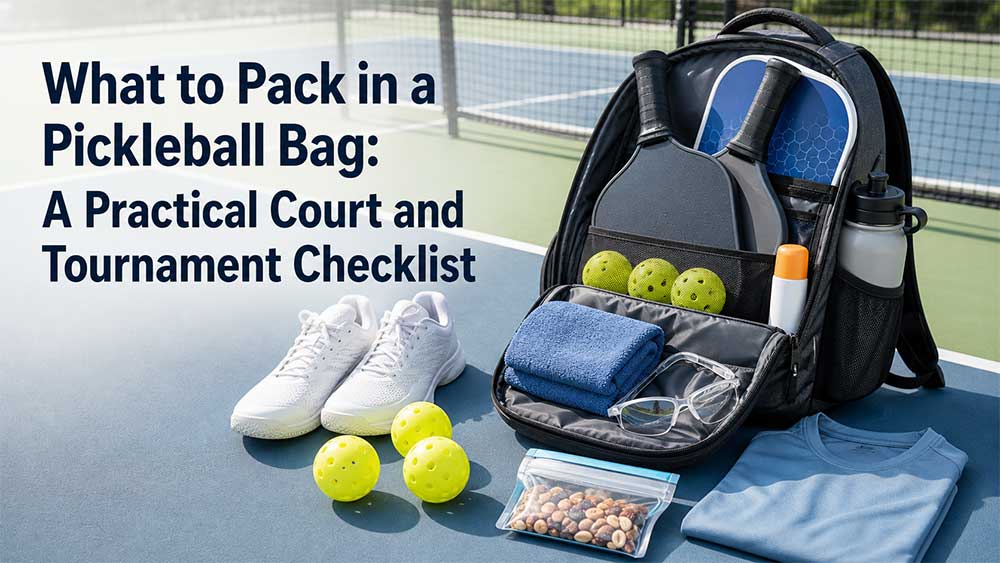
What to Pack in a Pickleball Bag: A Practical Court and Tournament Checklist
Packing a pickleball bag should be simple: bring the equipment you need to play, enough water for the conditions, and a few items that protect your comfort and gear.
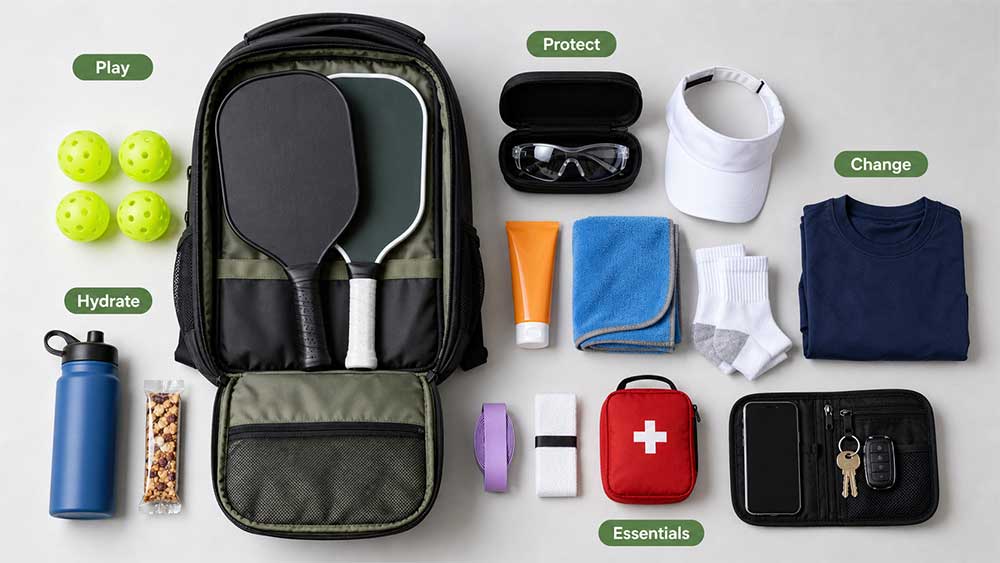
For most casual games, pack one paddle, three pickleballs, court shoes, protective eyewear, water, a small towel, and your phone and keys. For tournaments or all-day sessions, add a backup paddle, extra clothing, snacks, sunscreen, a replacement overgrip, basic first-aid supplies, and confirmed event information.
You do not need to carry every possible accessory. The right pickleball bag checklist depends on how long you will play, whether the courts are indoors or outdoors, the weather, and how far you are traveling.
Your primary paddle should have a protected place inside the bag rather than sharing an open compartment with shoes, keys, metal bottles, or other hard objects.
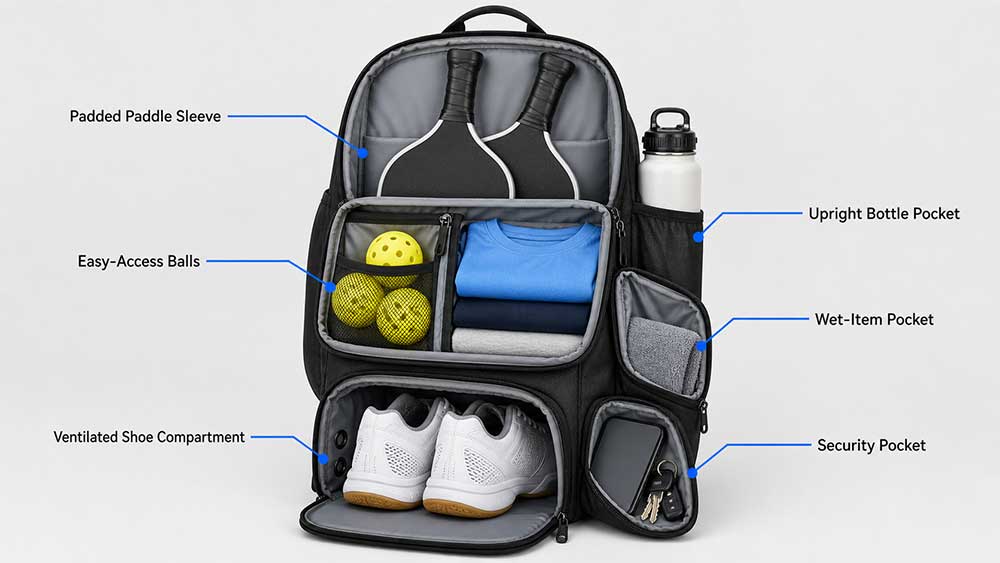
A padded paddle sleeve helps reduce scratches and limits unnecessary movement while the bag is being carried. If your bag has more than one sleeve, use the best-protected compartment for your main paddle.
Before leaving home, check the edge guard, handle, grip, and paddle face. This is particularly useful before league games and tournaments, when discovering damage at the court may leave little time to solve the problem.
Players entering organized events should also check the organizer’s equipment requirements. For USA Pickleball events, paddle models can be verified through the official Approved Paddle List.
2. A Familiar Backup Paddle
A second paddle is optional for a short recreational game but valuable during a tournament, league session, or out-of-town event.
The backup should be a paddle you have already used—not an unfamiliar model that feels completely different from your main paddle. If the primary paddle develops a damaged grip, loose edge guard, unusual sound, or another problem, you can switch without borrowing equipment.
When an event requires approved equipment, confirm that both models meet the applicable rules. Keep the second paddle in its own padded sleeve whenever possible.
3. Three to Six Pickleballs
Three balls are usually enough for a local recreational session. For drills, organized play, or tournaments, four to six provide a more practical reserve.
Make sure the balls match the playing environment. Indoor and outdoor pickleballs differ in hole pattern, weight, and playing behavior. Tournament players should check the event information rather than assume that any ball will be accepted.
USA Pickleball maintains an official Approved Ball List for events using its equipment standards.
Inspect the balls before packing them. Remove any that are cracked, badly warped, unusually soft, or no longer bounce consistently.
4. Protective Sports Eyewear
Pickleball is played at close range, and a fast ball, paddle, or partner’s movement can create an eye-injury risk. Ordinary fashion glasses are not a substitute for sports eyewear designed to resist impact.
Choose eyewear that fits securely without obstructing your vision. If you play outdoors, tinted or interchangeable lenses may help with glare, while clear lenses are generally more suitable indoors.
Keep the eyewear in a rigid or semi-rigid case instead of dropping it loose into the main compartment. Prevent Blindness recommends properly fitted protective eyewear made for sports rather than relying on everyday glasses or sunglasses; its sports eye safety guidance provides further information.
5. Court Shoes
Shoes designed for lateral court movement generally provide better stability than casual running shoes, which are primarily built for forward motion.
Check the outsole and upper before playing. Excessively worn tread, damaged sidewalls, or a loose sole can affect traction and support. Indoor facilities may also have rules concerning clean, non-marking soles.
If you carry shoes inside the bag, use a ventilated shoe compartment or separate shoe bag. This keeps dirt, moisture, and odor away from paddles, clothing, food, and personal items.
6. Water and, When Appropriate, Electrolytes
Bring enough water for the expected playing time and conditions. Hot outdoor courts, long practice sessions, and tournaments require more planning than a short indoor game.
The CDC advises athletes in hot conditions to drink more water than usual and not wait until they feel thirsty. Its heat and athletes guidance also stresses taking breaks and watching for heat-related illness.
Electrolyte drinks or tablets may be useful during prolonged activity, heavy sweating, or hot weather, but they do not replace water. Choose products you have used before and follow their labels.
Use a bottle that closes securely and fits an upright bottle pocket. Avoid placing a full bottle directly above your paddles, phone, or spare clothing.
7. Familiar Snacks
Tournament schedules can shift, earlier matches may run late, and suitable food may not always be available at the venue. A few familiar snacks reduce your dependence on court-side concessions.
Practical options include:
Bananas or other portable fruit
Energy bars you have eaten before
Pretzels or crackers
Small packs of nuts or seeds
Dried fruit
A simple sandwich for a longer break
Choose food that can tolerate the expected temperature without melting, breaking open, or leaking. Tournament day is not the best time to experiment with an unfamiliar energy product.
Keep food separate from dirty shoes, wet towels, and used clothing. If temperature control is required, use a small insulated pouch and follow appropriate food-safety practices.
8. A Quick-Drying Towel
A compact towel can handle sweat, damp hands, moisture on a grip, or a wet court-side seat.
A small quick-drying towel is usually more useful than a bulky bath towel. Once wet, keep it in a breathable pouch or moisture-resistant compartment, away from clean clothing and paddles.
Do not aggressively wipe a paddle face with a towel covered in court dust or grit, as trapped particles may scratch the surface.
9. A Spare Shirt and Socks
A dry shirt and fresh socks can make a considerable difference during hot weather or an all-day tournament.
Damp socks may increase friction and discomfort. Changing out of a sweat-soaked shirt also makes long breaks between matches more comfortable.
Pack clean clothing in a lightweight organizer or sealable dry pouch. After playing, move used clothing into a separate laundry or wet-item compartment.
10. Replacement Overgrip and Finishing Tape
A well-used grip can become slick, dirty, torn, or uncomfortable. Keeping one or two replacement overgrips in the bag gives you a simple way to restore a more secure feel.
If you have never replaced an overgrip, practice at home instead of attempting it for the first time just before a match. Keep the overgrip in its original packaging so it remains clean and dry, and remember the finishing tape needed to secure it.
11. Sunscreen
Outdoor players may spend several hours in the sun, including time waiting between matches.
The CDC recommends broad-spectrum sunscreen as part of a wider sun-protection routine and notes that sweating and towel use can reduce protection. Its sun safety guidance also recommends shade, protective clothing, and hats.
Follow the directions on the product label, including reapplication instructions. Keep sunscreen in a small leak-resistant pouch, and clean and dry your hands before handling the paddle.
12. A Hat or Visor
A hat or visor can reduce glare and add another layer of sun protection during outdoor play.
Choose one that stays secure during quick movement and overhead shots. After playing, let a damp hat dry instead of leaving it sealed inside the bag.
A hat is only one part of hot-weather preparation. It does not replace sunscreen, hydration, shade, breaks, or sensible scheduling in extreme heat.
13. Basic First-Aid and Comfort Supplies
You do not need to turn your pickleball bag into a full medical kit. A small pouch for common minor problems is usually enough.
Depending on your needs, it might include:
Adhesive bandages
Blister dressings
Athletic tape
Antiseptic wipes
Tissues
Personal medication
A small instant cold pack
Check expiration dates periodically. Keep medication in its labeled original packaging and store it according to the manufacturer’s instructions.
These items are intended for minor problems only. Stop playing and seek appropriate medical help for serious pain, a suspected fracture, head injury, breathing difficulty, chest pain, severe heat-illness symptoms, or another emergency.
14. Phone, Wallet, ID, and Keys
Small valuables easily disappear in a crowded bag. Give them one consistent location in a zipped security pocket instead of placing them in a different open compartment every time.
Do not leave valuables visible inside an unattended bag beside the court. Keep electronic devices away from water bottles, sunscreen, damp towels, and wet clothing.
A small power bank may be useful for long tournament days, but it should be stored securely away from moisture.
15. Confirmed Tournament Information
For a tournament, save or carry the details you may need at the venue:
Registration confirmation
Venue address
Start time and check-in deadline
Division or draw information
Partner contact details
Organizer announcements
Required membership or identification information
Download important documents or save screenshots in advance in case mobile service is unreliable. Check for last-minute schedule, court, weather, or check-in changes before leaving home.
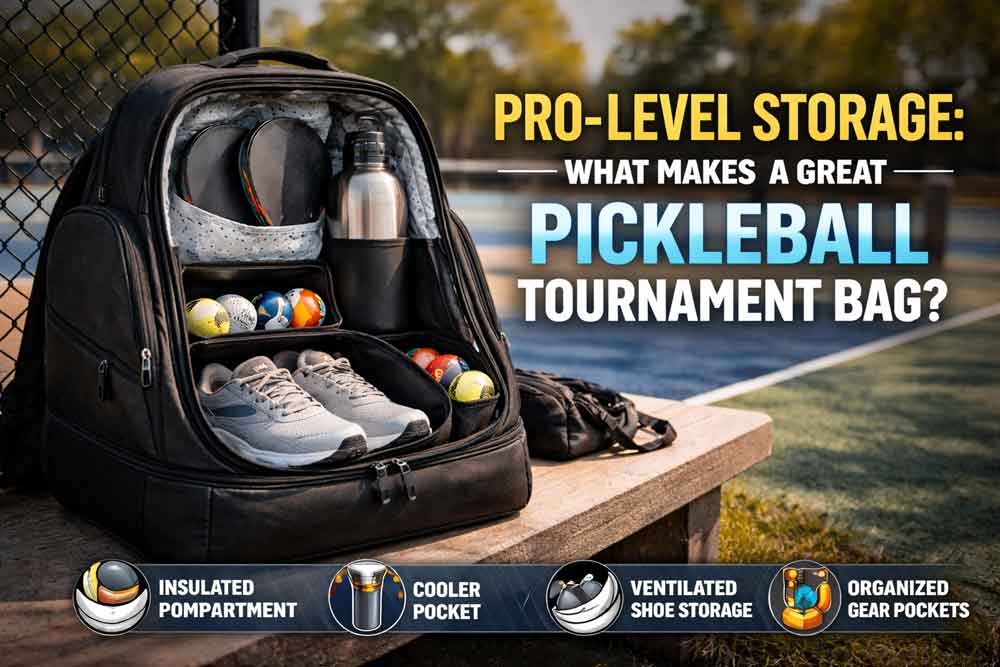
For players carrying multiple paddles, clothing, food, and accessories, a well-organized pickleball tournament bag can make equipment easier to separate and retrieve between matches.
At-a-Glance Packing and Storage Guide
Item
Casual Play
Tournament or All-Day Play
Practical Storage
Primary paddle
Essential
Essential
Padded paddle compartment
Backup paddle
Optional
Recommended
Separate padded sleeve
Pickleballs
About 3
About 4–6
Easy-access pocket
Protective eyewear
Recommended
Recommended
Protective case
Court shoes
Wear or carry
Carry when needed
Ventilated shoe section
Water
Essential
Larger capacity
Upright bottle pocket
Snacks
Optional
Recommended
Clean food pouch
Towel
Recommended
One or two
External or wet-item pocket
Spare clothing
Usually optional
Recommended
Clean clothing organizer
Overgrip
Optional
Recommended
Dry accessory pouch
Sunscreen and hat
For outdoor play
For outdoor play
Leak-resistant/top section
First-aid items
Optional
Recommended
Labeled accessory pouch
Valuables
Essential
Essential
Zipped security pocket
Event information
Not needed
Essential
Phone and document pocket
Casual Game Bag vs. Tournament Bag
You do not need all 15 items every time you play.
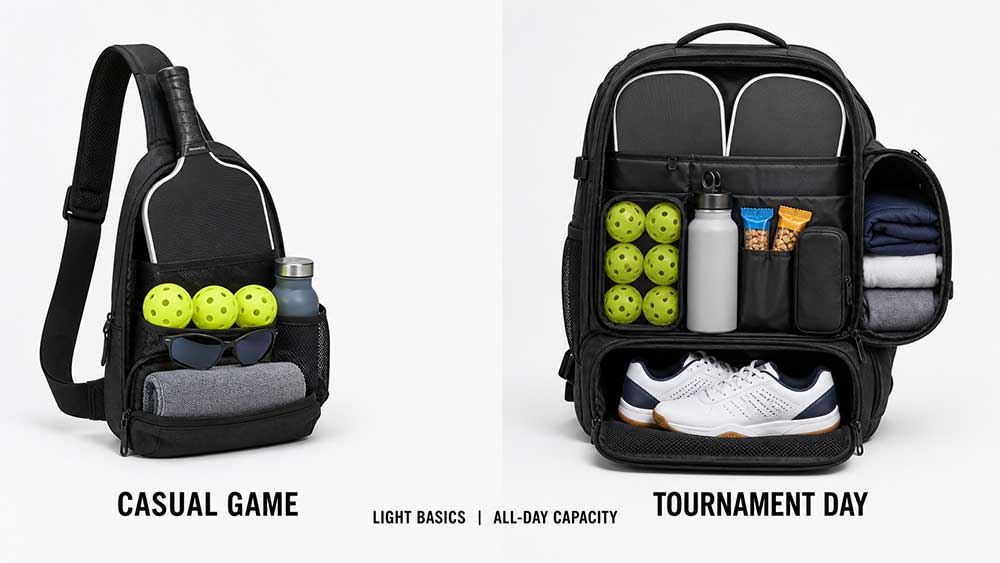
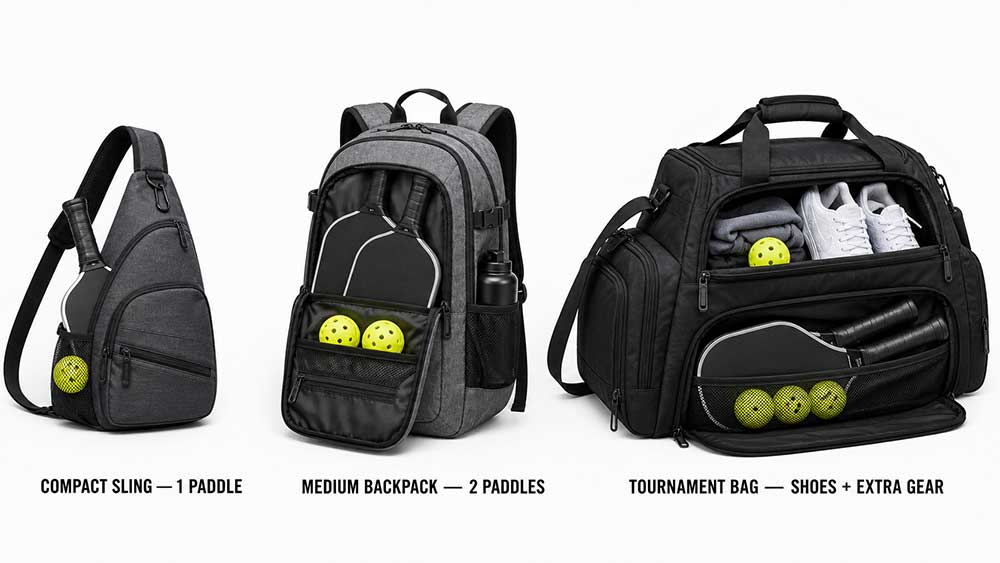
For a short local session, one paddle, three balls, water, protective eyewear, a towel, and personal items may be enough. If you usually carry only these basics, a lightweight pickleball sling bag may provide sufficient capacity without unnecessary bulk.
A tournament or all-day session is different. You may need two paddles, more water, food, spare clothing, court shoes, maintenance supplies, and event documents. A backpack or larger tournament bag with defined compartments will usually keep this load more manageable.
The goal is not to choose the largest bag available. It is to choose enough capacity and separation for the equipment you actually carry.
How to Organize a Pickleball Bag
Good organization separates fragile items, dirty items, liquids, and frequently used equipment.
Protect Paddles From Hard Objects
Do not place an unprotected paddle beside keys, metal bottles, scissors, shoes, heavy charging equipment, or loose metal accessories.
If the bag does not have a dedicated paddle compartment, use a padded divider or separate paddle cover.
Separate Shoes and Damp Clothing
Court shoes, used socks, wet towels, and sweat-soaked clothing should stay away from clean equipment and food.
A ventilated compartment can reduce trapped moisture and odor, but it cannot dry equipment that remains sealed inside indefinitely. Empty the bag when you return home.
Keep Liquids Upright
Water bottles, sunscreen, hand sanitizer, and other liquids should close securely and remain upright whenever possible. Small containers can be placed inside a secondary leak-resistant pouch.
Never place a full bottle loose above a paddle, phone, or clean clothing.
Put Frequently Used Items Within Reach
Balls, eyewear, towels, sunscreen, and snacks should be accessible without emptying the main compartment.
Logical organization saves time between matches and makes forgotten items easier to notice.
Use a Fence Hook When Available
Court-side ground may be dusty, wet, or crowded. A built-in hook lets you hang the bag on a fence, making compartments easier to reach and reducing the chance of someone stepping on it.
Avoid leaving the entire bag in a hot vehicle for extended periods. High temperatures may affect food, sunscreen, batteries, adhesives, paddle components, and some synthetic bag materials.
What Size Pickleball Bag Do You Need?
A compact sling bag commonly suits a player carrying:
One paddle
Three balls
A small water bottle
A phone and keys
One or two small accessories
A medium pickleball backpack is better for:
Two paddles
Four to six balls
A water bottle
A towel
An overgrip
Snacks
Personal items
A larger tournament bag becomes useful when you also carry:
Court shoes
A change of clothing
More food and water
First-aid supplies
Several accessory organizers
Travel-related items
Do not choose a tennis bag simply because it appears larger. Paddle fit, compartment proportions, carrying design, and internal organization can differ. This pickleball bag and tennis bag comparison explains the practical distinctions.
The right bag should have enough room without leaving everything loose inside one oversized compartment.
A 60-Second Check Before You Leave
Before heading to the court, confirm that you have:
Your primary paddle and backup when needed
The correct indoor or outdoor pickleballs
Protective eyewear and court shoes
Filled water bottle and familiar snacks
Towel, spare clothing, sunscreen, and hat as conditions require
Overgrip and basic first-aid supplies for longer sessions
Phone, wallet, ID, and keys
Confirmed tournament address, schedule, and check-in information
Finally, check the weather, tighten every bottle cap, and look for late messages from the organizer.
Final Thoughts
The best pickleball bag checklist is not the one with the most items. It is the one that matches the session and prevents predictable problems.
For casual play, start with a paddle, balls, court shoes, protective eyewear, water, a towel, and personal items. Add a backup paddle, clothing, food, grip supplies, sun protection, and event information when the playing day becomes longer or more formal.
How you pack matters as much as what you pack. Protect paddles from hard objects, separate shoes and wet clothing, secure liquids, and keep important items easy to reach. A thoughtfully organized bag reduces last-minute frustration and lets you focus on playing.
Frequently Asked Questions
Can court shoes go in the main compartment?
They can, but a ventilated shoe compartment or separate shoe bag is better. It prevents dirt, moisture, and odor from reaching paddles, clean clothing, food, and personal items.
Should I leave pickleball equipment in the car?
Avoid leaving it there for extended periods, especially in very hot or cold weather. Extreme temperatures may affect paddle components, adhesives, batteries, food, sunscreen, and some bag materials.
Can a pickleball bag be used as a carry-on?
Often, yes, if its dimensions and packed weight comply with the airline’s current cabin-baggage rules. Requirements vary by airline, fare, aircraft, and route, so measure the packed bag and check the operating airline before traveling. Liquids and restricted items must also meet airport-security rules.
How often should I clean out my pickleball bag?
Remove wet clothing, towels, food, and leaking containers after every session. A more thorough clean can be done whenever dirt or odor builds up, following the bag manufacturer’s care instructions. Regularly checking small pockets also helps you find expired snacks, damaged grips, and old first-aid supplies.






Comments are closed