How to Choose a Laptop Bag Manufacturer for Your Brand
Choosing a laptop bag manufacturer is not only about finding a factory that can sew bags. A laptop bag has to protect a device, carry daily work essentials, match your brand position, and hold up in real use. If the supplier does not understand laptop protection, material behavior, structure, sampling, pattern-making, and bulk production control, the problems usually appear later: poor padding, weak handles, zipper issues, wrong sizing, inconsistent stitching, or a bulk order that does not match the approved sample.
For brands, wholesalers, importers, and private label buyers, the right manufacturing partner should help turn a product idea into a reliable collection. That includes design development, material selection, pattern-making, laptop compartment structure, logo customization, sample improvement, quality inspection, packaging, and production planning.
This guide is not a supplier list or a product catalog. It is a decision framework for brands that already know they need a laptop bag supplier but want to evaluate the right manufacturing partner before sampling or placing a bulk order.
The best choice is not always the cheapest supplier. It is the manufacturer that can understand your product goal, control risk, communicate clearly, and deliver consistent laptop bags at scale.
A good laptop bag manufacturer should not only make a sample that looks acceptable. It should understand how the bag will be used, how the laptop will be protected, how the product will be produced in bulk, and how your brand plans to sell it.
For most brands, the right partner is the one that can combine four things: product development ability, laptop bag expertise, stable production capacity, and clear quality control. If one of these is missing, the project may still move forward, but the risk usually increases during sampling or bulk production.
First, Know What Type of Laptop Bag You Want to Develop
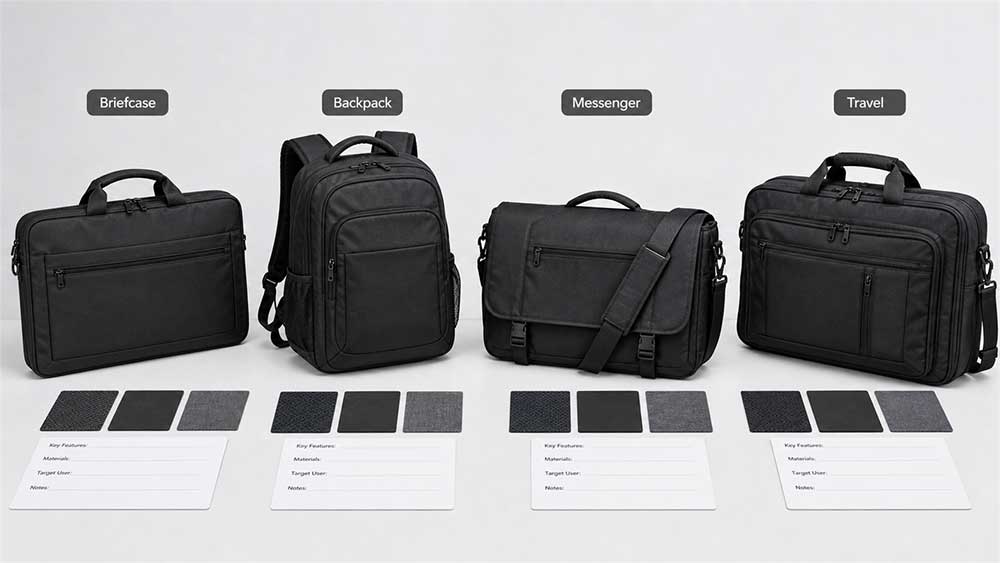
Before contacting suppliers, define the product type clearly. “Laptop bag” can mean many different things, and each style requires different materials, structure, equipment, and development experience.
Common laptop bag types include:
Product Type
Common Use
Key Manufacturing Focus
Laptop backpack
Daily commute, school, business travel
Back panel comfort, laptop padding, straps, organization
A supplier that is good at simple tote bags may not be the best choice for padded laptop backpacks. A factory that makes outdoor backpacks may not automatically understand slim business briefcases. A supplier that makes promotional laptop sleeves may not be suitable for premium retail laptop bags.
Start by defining:
Target user
Laptop size range
Product style
Price level
Main sales channel
Expected order quantity
Branding needs
Material direction
Required compartments
Travel or commute features
Target market, such as the US or Europe
This gives the manufacturer a clear starting point and helps you compare suppliers more fairly.
Check Whether the Manufacturer Has Real Laptop Bag Expertise
Laptop protection is one of the clearest ways to judge whether a supplier really understands laptop bags or is simply treating them like ordinary bags with an added computer pocket.
A reliable laptop bag manufacturing partner should understand:
Laptop compartment sizing
Padding thickness
Bottom protection
Suspended laptop sleeve design
Soft lining materials
Anti-scratch interior surfaces
Corner protection
Compartment placement
Weight balance
Device access during travel
How laptop padding affects bag shape
The laptop compartment should not simply be a flat pocket sewn into the main compartment. A good design usually needs padding on the front and back, enough bottom protection, and a fit that holds the device without making it difficult to remove.
For business and travel laptop bags, buyers should also think about how users behave. They may place the bag under an airplane seat, carry it through a subway station, put it on an office floor, or open it quickly at airport security. These everyday situations should influence how the laptop section is designed.
A useful question to ask the manufacturer is:
How do you normally design and test laptop protection for different laptop sizes?
If the supplier only says, “We can add padding,” that may not be enough. You want to see whether they understand structure, not just materials.
Decide Whether You Need OEM, ODM, or Private Label
Before choosing a laptop bag production partner, decide what type of cooperation model fits your brand.
Model
What It Means
Best For
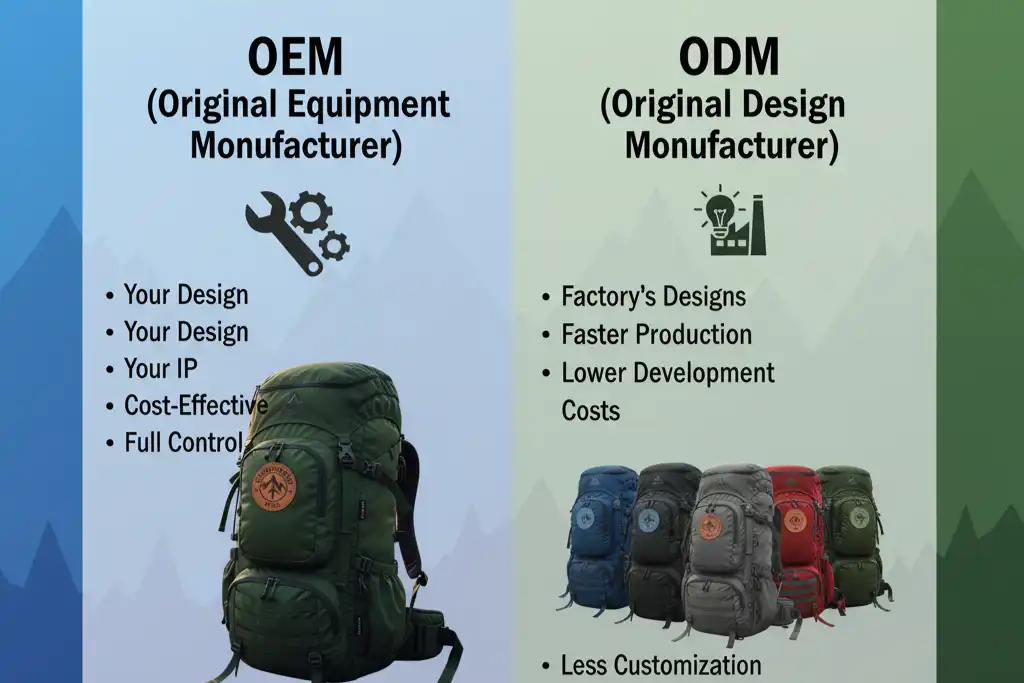
OEM
You provide the design, and the manufacturer produces it
Brands with clear product concepts, tech packs, or custom designs
ODM
The manufacturer provides an existing or semi-developed design that you customize
Brands that want faster development with some customization
Private label
You choose an existing product and add your brand
Startups, small batches, quick market testing
Full custom development
You and the manufacturer develop a new product together
Brands building a unique product line or long-term collection
If your brand already has sketches, dimensions, material direction, and feature requirements, OEM may be more suitable. If you want to enter the market faster, ODM or private label may reduce development time. If you need a unique laptop bag collection, a manufacturer with stronger product development support is usually better.
Do not choose a supplier only because they say “OEM/ODM” on their website. Ask what they can actually support:
Can they develop from a tech pack?
Can they help adjust structure?
Can they suggest materials?
Can they make samples based on reference images?
Can they modify an existing design?
Can they support private label packaging?
Can they scale from sample to bulk production?
The cooperation model affects cost, lead time, MOQ, and design control. It should be decided before you start sampling.
Match Your Brand Needs With Measurable Factory Capabilities
Different brands do not need the same type of laptop bag manufacturer. A startup testing one product, a retail brand building a full work bag collection, and a corporate buyer ordering branded laptop bags may all need different levels of factory support.
Instead of only asking whether a supplier “has experience,” buyers should look for measurable signs: design team structure, pattern-making ability, sample room support, production capacity, category history, quality control, and the ability to manage repeat orders.
Brand Need
Best-Fit Manufacturer Type
What to Check in Practice
Testing one laptop bag idea with lower risk
ODM or private label supplier
Existing styles, lower development pressure, clear MOQ, fast sample adjustment, logo and packaging support
Developing a new laptop bag from sketches or references
Factory with in-house design and pattern-making support
Dedicated pattern makers, sample room, ability to develop from sketches, reference images, dimensions, or tech packs
Building a premium business or work bag collection
Manufacturer with proven business bag and laptop bag production experience
Annual output, business bag category history, material sourcing ability, refined hardware options, stable sample-to-bulk control
Creating retail or wholesale laptop backpacks
Manufacturer experienced in padded backpacks and laptop compartments
For example, if your brand only needs a simple branded laptop sleeve for a short promotional campaign, a supplier with accurate sizing, basic padding, logo printing, and stable cost control may be enough.
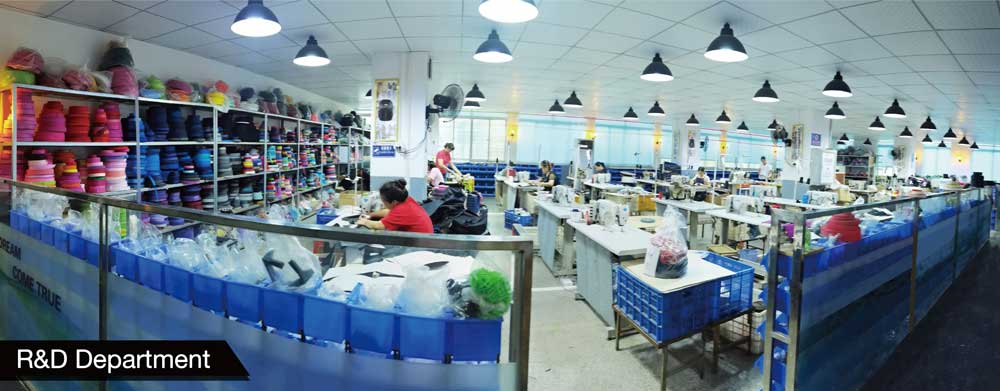
But if you want to develop a premium laptop backpack, briefcase, or business bag collection, you should look for stronger factory capabilities. That means an internal design or pattern-making team, a sample room that can revise structure, experience with laptop protection, reliable material and hardware sourcing, and enough production capacity to support repeat orders.
Production capacity should also be specific. A supplier should not only say “we can produce large quantities.” Buyers should ask for realistic monthly or annual capacity, production line arrangement, peak season planning, and how quality is controlled when order volume increases.
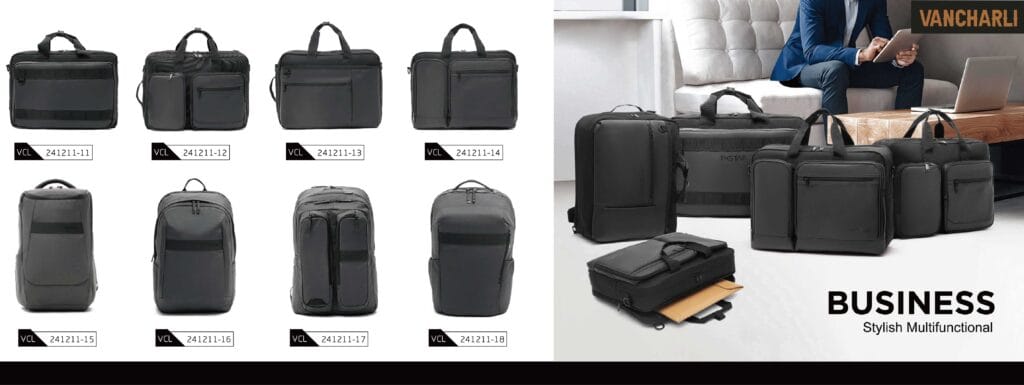
For example, Vancharli Outdoor has an annual production capacity of around 3 million high-end business bags. This type of capacity is more suitable for brands that need stable repeat orders, seasonal launches, and larger work bag or laptop bag programs, not just one-time sourcing.
The real question is not only: Can this factory make laptop bags? A better question is: Does this factory have the design, pattern-making, production capacity, and quality control needed for the way my brand plans to develop and scale this product?
Check Design, Pattern-Making, and Product Engineering Capability
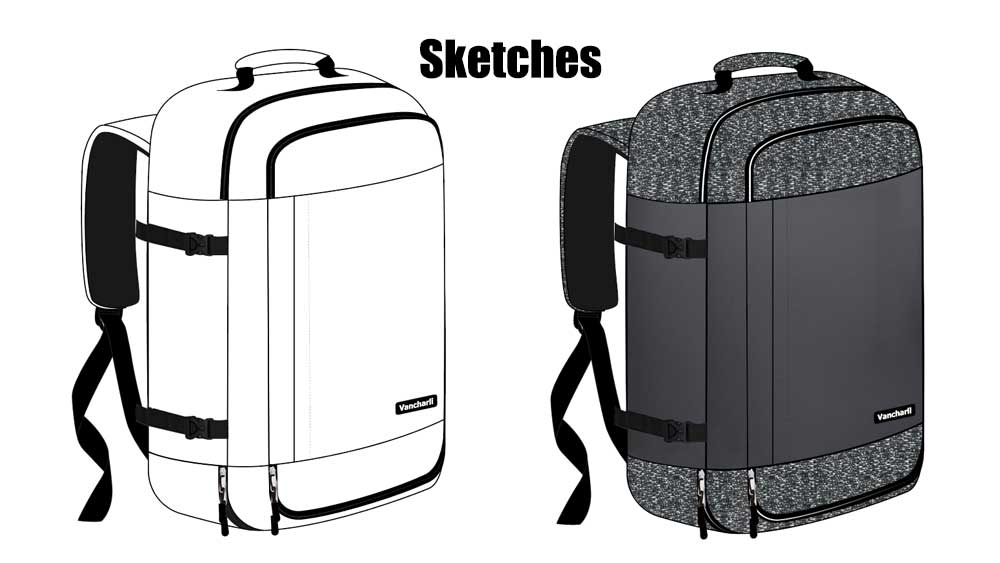
If your brand needs to develop a new laptop bag style, design and pattern-making ability become very important. A factory may be able to copy an existing bag, but that does not always mean it can develop a new product from sketches, reference images, dimensions, or an early product idea.
For laptop bags, pattern-making is not only about shape. It affects laptop compartment fit, padding placement, handle strength, pocket access, zipper curves, shoulder strap position, weight balance, and how the bag looks after it is packed.
A capable manufacturer should be able to support:
Design discussion based on brand direction
Product structure suggestions
Pattern development
Sample making
Fit adjustment
Laptop compartment engineering
Pocket layout improvement
Material and hardware matching
Cost optimization without damaging function
Revision based on buyer comments
Pre-production sample confirmation
This matters because many laptop bag problems come from weak product engineering, not only poor sewing. A bag may look good in a flat sketch but fail when loaded with a laptop, charger, documents, and daily items. The handle may pull awkwardly. The laptop compartment may be too tight. The front pocket may become hard to use. The bag may lose shape after packing.
Buyers should ask:
Can you develop a sample from a sketch or reference image?
Do you have an internal pattern-making team?
Can you adjust the structure if the first sample does not work?
Can you suggest better pocket placement or laptop compartment design?
Can you help balance function, appearance, cost, and production feasibility?
Can you turn one product idea into a series of related laptop bags?
This is especially important for brands building a collection, not just one product. If you want laptop backpacks, briefcases, sleeves, and messenger bags to share the same design language, the supplier needs both development ability and production coordination.
Review Material and Hardware Options
Laptop bag materials need to balance appearance, durability, structure, weight, and cost. A good manufacturer should be able to explain the difference between materials, not just send a list of fabric names.
Common laptop bag materials include:
Polyester
Nylon
Ballistic nylon
Recycled polyester
PU leather
Vegan leather
Genuine leather
Canvas
Oxford fabric
Water-resistant coated fabric
Lining fabric
Foam padding
Mesh
Webbing
The right material depends on the product. A business laptop briefcase may need a cleaner, more premium surface. A commuter laptop backpack may need abrasion resistance and water resistance. A laptop sleeve may need soft lining and accurate padding. A travel laptop bag may need stronger fabric, reinforced handles, and reliable zippers.
Hardware also matters. Zippers, sliders, pullers, buckles, D-rings, strap adjusters, handles, and trims can affect the product’s quality more than buyers expect. If you are still comparing hardware options, a detailed guide to business bag hardware can help you understand how zippers, buckles, handles, and trims influence daily use.
Ask the manufacturer:
What materials do you recommend for this price range?
Can you source recycled materials?
Can you match our color requirements?
What zipper options do you offer?
Can you provide water-resistant materials?
Can you support custom pullers or logo hardware?
Can you explain the difference between material grades?
Can you provide material swatches before sampling?
For quality systems, it is also worth checking whether the supplier has documented production and quality processes. ISO 9001 is a widely recognized quality management standard, and while certification does not guarantee a perfect product, it can show that a company has a formal quality management framework.
Check Sampling and Product Development Capability
A strong laptop bag manufacturer should not treat sampling as a one-time sewing task. Sampling is where design problems, material conflicts, structure issues, and cost problems are found.
The sampling process may include:
Design discussion
Material selection
Pattern development
First prototype
Fit and structure review
Revision sample
Logo and trim confirmation
Pre-production sample
Final approval before bulk production
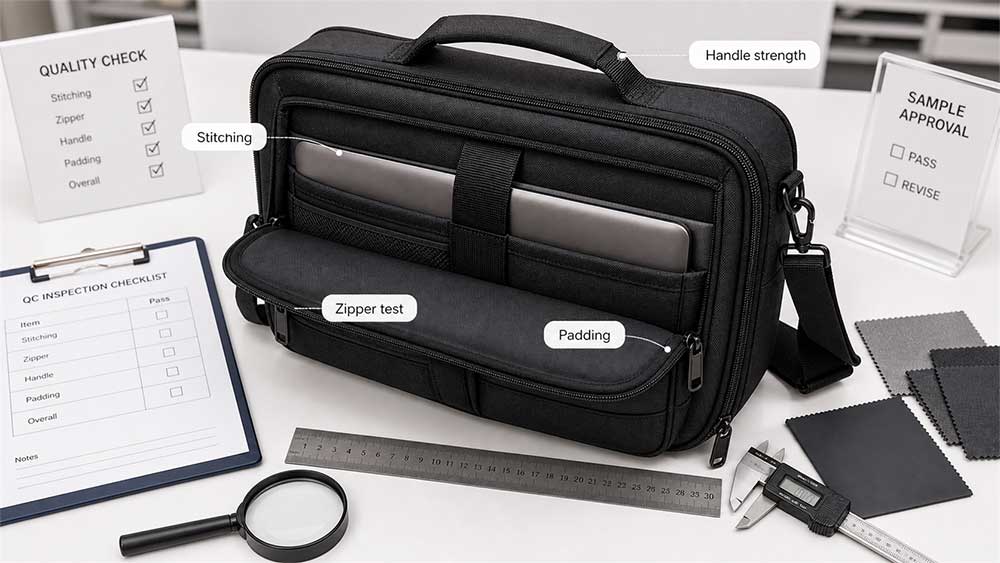
For laptop bags, sample review should be practical. Do not only look at the bag shape in photos. Put real laptops, chargers, notebooks, documents, and daily items inside the sample. Check how the bag feels when carried, opened, placed on a desk, or packed for travel.
Important sample checks include:
Does the laptop fit correctly?
Is the padding thick enough?
Is the bottom protected?
Are the handles comfortable when loaded?
Do the zippers move smoothly around corners?
Does the bag keep its shape?
Are the straps stable?
Are pockets easy to access?
Is the logo placement correct?
Does the product match the brand style?
Is the weight reasonable?
Does the sample match the target price?
A good manufacturer should be willing to discuss improvements, not just ask for approval. If a supplier cannot explain why a structure does or does not work, they may not be the right partner for a custom laptop bag project.
Evaluate Quality Control Before Bulk Production
Quality control is one of the biggest differences between an average supplier and a reliable laptop bag manufacturer.
Buyers should ask how the manufacturer controls:
Incoming materials
Fabric color consistency
Cutting accuracy
Sewing quality
Stitch density
Laptop compartment padding
Zipper function
Handle reinforcement
Strap strength
Hardware finish
Logo placement
Packaging
Final inspection
Sample-to-bulk consistency
The approved sample should become the production reference. The bulk order should not only look similar from a distance; it should match the approved details as closely as possible.
Ask whether the manufacturer can provide:
Pre-production sample
Material approval record
Color approval
Inline inspection
Final inspection
AQL inspection support
Packaging approval
Production photos
Defect classification
Measurement tolerance
For products sold in the EU, material compliance may also matter. The European Chemicals Agency maintains the REACH Candidate List for substances of very high concern, which is relevant when brands need to check restricted substances in materials, coatings, trims, or accessories.
Quality control should be discussed before placing the order, not after defects appear.
Understand MOQ and Lead Time
MOQ and lead time are not just numbers. They tell you whether the manufacturer fits your business stage.
A startup brand may need a lower MOQ to test the market. A wholesale buyer may need stable repeat production. A retail brand may need seasonal launches and strict delivery windows. A corporate gifting project may need faster sampling and logo customization.
Ask about:
MOQ per style
MOQ per color
MOQ per material
Sample lead time
Bulk production lead time
Repeat order lead time
Material sourcing time
Logo customization lead time
Packaging lead time
Shipping options
Be careful with very low MOQ promises if the product is fully custom. Custom materials, custom colors, special zippers, molded logo parts, and unique packaging often require higher MOQ because upstream suppliers also have minimums.
A good manufacturer should explain what drives MOQ, not just give a number.
For many custom laptop bag projects, MOQ may depend on style, material, color, logo method, hardware, lining, packaging, and order complexity. Buyers should confirm these details early so the project does not change direction after sampling.
Check Production Capacity and Scaling Ability
Production capacity matters because a good sample does not guarantee that the manufacturer can handle your real order volume. A supplier may be able to make one good prototype but still struggle with repeat orders, seasonal demand, tight delivery windows, or multiple styles at the same time.
For laptop bag brands, capacity is not only about how many pieces a factory can produce in one month. It is also about whether the manufacturer can keep quality stable while production increases.
Buyers should ask:
What is your monthly production capacity for laptop bags?
How many production lines can support this category?
Can you handle multiple styles or colors in the same order?
What happens during peak season?
How do you schedule repeat orders?
Can you support urgent replenishment orders?
How do you control quality when order volume increases?
Do you have stable material and hardware suppliers?
Can you keep the approved sample standard during large-scale production?
What is the realistic lead time for 300 pcs, 1,000 pcs, or larger orders?
A manufacturer with strong capacity should not only give a large number. They should be able to explain how production is planned, how workers are assigned, how materials are prepared, and how quality is checked during bulk production.
For brands comparing long-term partners, it is also helpful to ask whether the supplier has proven capacity in the same product category. For example, Vancharli Outdoor has an annual production capacity of around 3 million high-end business bags, which can support brands that need stable repeat orders, seasonal launches, and larger laptop bag or work bag programs.
This is especially important for brands that want to build a laptop bag collection instead of testing only one style. If your brand plans to launch laptop backpacks, briefcases, sleeves, and messenger bags together, the supplier needs enough development and production coordination to keep the whole collection consistent.
For brands, the laptop bag is not only a functional product. It also represents brand identity. A manufacturer should be able to support the right level of branding without making the product look overdesigned.
Common branding options include:
Woven label
Rubber patch
Metal logo plate
Debossed leather patch
Heat transfer logo
Embroidery
Screen printing
Custom zipper puller
Custom lining
Hangtag
Care label
Barcode label
Branded polybag
Custom carton mark
Retail packaging
The right branding method depends on the material, price level, sales channel, and brand style. A premium business briefcase may need subtle logo placement. A promotional laptop sleeve may use a larger printed logo. A retail laptop backpack may need branded zipper pullers, lining, labels, and packaging.
Ask the manufacturer to show examples of branding methods they have produced before. Check whether the logo looks clean, durable, and consistent across samples.
Check Communication and Project Management
Communication is part of manufacturing quality. A factory may have good equipment, but if communication is slow, unclear, or inconsistent, the project can still go wrong.
A reliable laptop bag supplier should communicate clearly about:
Product details
Material limitations
Cost changes
Sampling schedule
Production timeline
MOQ
Defect risks
Packaging
Shipping
Approval steps
Required buyer decisions
Good communication does not mean saying yes to everything. In many cases, a responsible manufacturer should tell you when a design detail may increase cost, affect structure, weaken the handle, delay material sourcing, or create production risk.
Watch for red flags:
They avoid detailed questions.
They cannot explain material differences.
They promise everything too quickly.
They do not ask about laptop size.
They ignore target price.
They do not provide clear sample comments.
They change pricing without explanation.
They cannot confirm MOQ details.
They do not discuss quality control.
They only send product photos but no technical information.
For B2B projects, clear communication often saves more money than a slightly lower unit price.
Ask the Right Questions Before Placing an Order
Before choosing a laptop bag manufacturer, prepare a practical question list. This helps you compare suppliers more objectively.
Useful questions include:
Question
Why It Matters
What laptop bag styles do you produce most often?
Shows whether they understand your category
Can you support OEM, ODM, or private label?
Clarifies cooperation model
Can you develop a new bag from sketches or reference images?
Tests design and pattern-making capability
Do you have an internal pattern-making team?
Shows whether they can support custom development
What laptop sizes can this design support?
Checks device protection and fit
What padding structure do you recommend?
Tests laptop protection knowledge
What materials fit our target price?
Connects design with cost
What is the MOQ per style and color?
Helps plan budget and inventory
What is your monthly production capacity?
Shows whether they can support real order volume
How do you handle peak season orders?
Tests planning and delivery reliability
How long does sampling take?
Helps control launch schedule
How many sample revisions are typical?
Sets realistic expectations
How do you control sample-to-bulk consistency?
Reduces production risk
What quality checks do you perform?
Shows production discipline
Can you support custom packaging?
Important for retail and private label
What information do you need for an accurate quote?
Reveals whether the supplier is serious
A good manufacturer should welcome detailed questions. If a supplier becomes impatient or vague during early discussions, that may be a warning sign.
Common Mistakes Brands Make When Choosing a Manufacturer
Many problems happen because buyers choose a manufacturer too quickly or focus only on price.
Common mistakes include:
Choosing the lowest quote without comparing specifications
Not confirming laptop size and padding structure
Not checking design and pattern-making capability
Approving samples without loading them with real items
Ignoring zipper and handle quality
Not asking about MOQ per color
Forgetting packaging requirements
Assuming the bulk order will match the sample automatically
Not checking material availability
Not checking monthly production capacity
Not asking how repeat orders are scheduled
Choosing a factory that does not understand business bags
Not confirming quality inspection standards
Making too many changes after sample approval
Using unclear reference photos instead of clear specifications
Price is important, but the cheapest quote can become expensive if the product has returns, delays, defects, or poor reviews.
A better approach is to compare total value: development support, material knowledge, pattern-making ability, communication, sample quality, bulk consistency, delivery reliability, production capacity, and long-term cooperation potential.
Factory vs Trading Company: Which Should You Choose?
Some brands prefer working directly with a factory. Others may work with a trading company, sourcing agent, or product development partner. The right choice depends on your experience and project needs.
Supplier Type
Advantages
Limitations
Factory
Direct production control, better technical discussion, stronger long-term development
May require clearer specifications and higher MOQ
Trading company
Can source multiple factories, sometimes easier communication
Less direct control over production
Product development partner
Can help with design, sourcing, packaging, and project management
May cost more
Private label supplier
Faster market entry, easier for small brands
Less product uniqueness
For a brand that wants long-term laptop bag development, working with a factory or factory-direct manufacturer can be useful because communication is closer to production. But the buyer still needs to confirm capability, not just factory identity.
A factory is not automatically better if it lacks laptop bag experience, design ability, or pattern-making support. A trading company is not automatically bad if it manages suppliers well. The real question is whether the partner can deliver the product you need with consistent quality.
How This Article Differs From a Top Manufacturer List
If you are still building your initial supplier list, a comparison of top laptop backpack manufacturers can help you understand different supplier types and market options.
But a list is only the beginning. After you have a shortlist, you still need to evaluate each manufacturer based on product fit, laptop protection, design support, pattern-making, materials, sampling, MOQ, quality control, production capacity, communication, and bulk production capability.
Think of it this way:
A manufacturer list helps you find possible suppliers.
A selection guide helps you decide which supplier is right for your brand.
This article is focused on the second step: how to choose with confidence.
Final Checklist for Choosing a Laptop Bag Manufacturing Partner
Before placing an order, check whether the manufacturer can answer these points clearly:
They understand your laptop bag category.
They can explain laptop protection structure.
They support the cooperation model you need.
They have design and pattern-making capability.
They can develop samples from sketches, references, or tech packs.
They can recommend suitable materials.
They can provide realistic MOQ and lead time.
They can explain monthly production capacity.
They can manage repeat orders and peak season demand.
They can keep sample-to-bulk consistency when order volume increases.
They can make and revise samples properly.
They understand your target price.
They can support your branding method.
They have a clear quality control process.
They communicate risks honestly.
They can support repeat orders.
They understand your target market requirements.
They can scale with your brand without sacrificing quality.
For brands developing custom laptop bag projects, the manufacturer should not only sew the product but also help control structure, material, protection, pattern-making, branding, production capacity, and production risk.
If your product direction is more specific, such as business laptop backpacks, then working with a supplier experienced in custom laptop backpacks can make the development process more efficient.
As a bag manufacturer experienced in business bags and laptop bag projects, Vancharli Outdoor can help brands review product type, laptop compartment structure, material selection, pattern-making, sample development, logo customization, quality control, production planning, and bulk order coordination. With an annual production capacity of around 3 million high-end business bags, Vancharli Outdoor can better support brands that need stable repeat orders, seasonal launches, and long-term work bag or laptop bag programs.
Choosing a laptop bag manufacturer for your brand is a product decision, not just a sourcing task. The right partner should understand laptop protection, business use, materials, hardware, branding, design development, pattern-making, sampling, quality control, production capacity, and bulk production consistency.
Start with your product type. Confirm whether the manufacturer understands laptop bag structure. Review their OEM/ODM capability, design support, material options, sample process, MOQ, lead time, production capacity, quality control, and communication style. Then compare suppliers based on total project value, not only unit price.
A good laptop bag manufacturer should help your brand reduce risk, improve product quality, and build a bag that customers can trust in daily work, travel, and commuting.
FAQ
What should I look for in a laptop bag manufacturer?
Look for laptop bag experience, OEM/ODM capability, design and pattern-making support, strong sampling ability, material knowledge, laptop protection design, clear MOQ, quality control, production capacity, branding options, and reliable communication.
Is a laptop bag manufacturer different from a regular bag manufacturer?
Yes. Laptop bags require device protection, accurate sizing, padding, laptop compartment structure, pattern adjustment, and better control of zippers, handles, and interior materials.
Should I choose OEM or ODM for laptop bags?
Choose OEM if you have a clear custom design or tech pack. Choose ODM if you want to customize an existing design and move faster. Private label may work if you need quick market testing.
Can a manufacturer help design a new laptop bag style?
Some manufacturers can help with design development, pattern-making, material selection, structure adjustment, and sampling. This is important if your brand wants to develop a new bag instead of using an existing style.
What is a typical MOQ for custom laptop bags?
MOQ depends on style, material, color, logo method, hardware, lining, packaging, and order complexity. Buyers should confirm MOQ per style and per color before sampling.
How do I check laptop bag sample quality?
Load the sample with a real laptop, charger, documents, and daily items. Check padding, bottom protection, zipper smoothness, handle comfort, strap stability, pocket access, logo placement, and overall shape.
How do I check a laptop bag factory’s production capacity?
Ask about monthly laptop bag output, production lines, peak season scheduling, repeat order planning, material supply stability, and whether quality can stay consistent when order volume increases.
What questions should I ask a laptop bag factory?
Ask about laptop bag experience, design and pattern-making ability, material options, laptop size support, padding structure, sample lead time, MOQ, production capacity, quality inspection, branding methods, packaging, and sample-to-bulk consistency.
Is the cheapest laptop bag manufacturer a good choice?
Not always. A very low price may mean weaker materials, thinner padding, poor zippers, limited development support, weak capacity planning, or inconsistent bulk production.
How important is quality control for laptop bag production?
Quality control is very important because laptop bags protect expensive devices. Buyers should check material inspection, sewing quality, zipper function, handle strength, padding, logo placement, and final inspection.
Can a laptop bag manufacturer help with private label branding?
Many manufacturers can support private label branding, including woven labels, rubber patches, metal logo plates, custom zipper pullers, hangtags, care labels, barcode labels, and packaging.
How do I know if a manufacturer is right for my brand?
A good manufacturer should understand your product goal, target user, price range, materials, branding needs, quality expectations, design requirements, production capacity, and schedule. They should also communicate risks clearly before bulk production.







Comments are closed