


Soft Flask vs Hard Water Bottle for Running
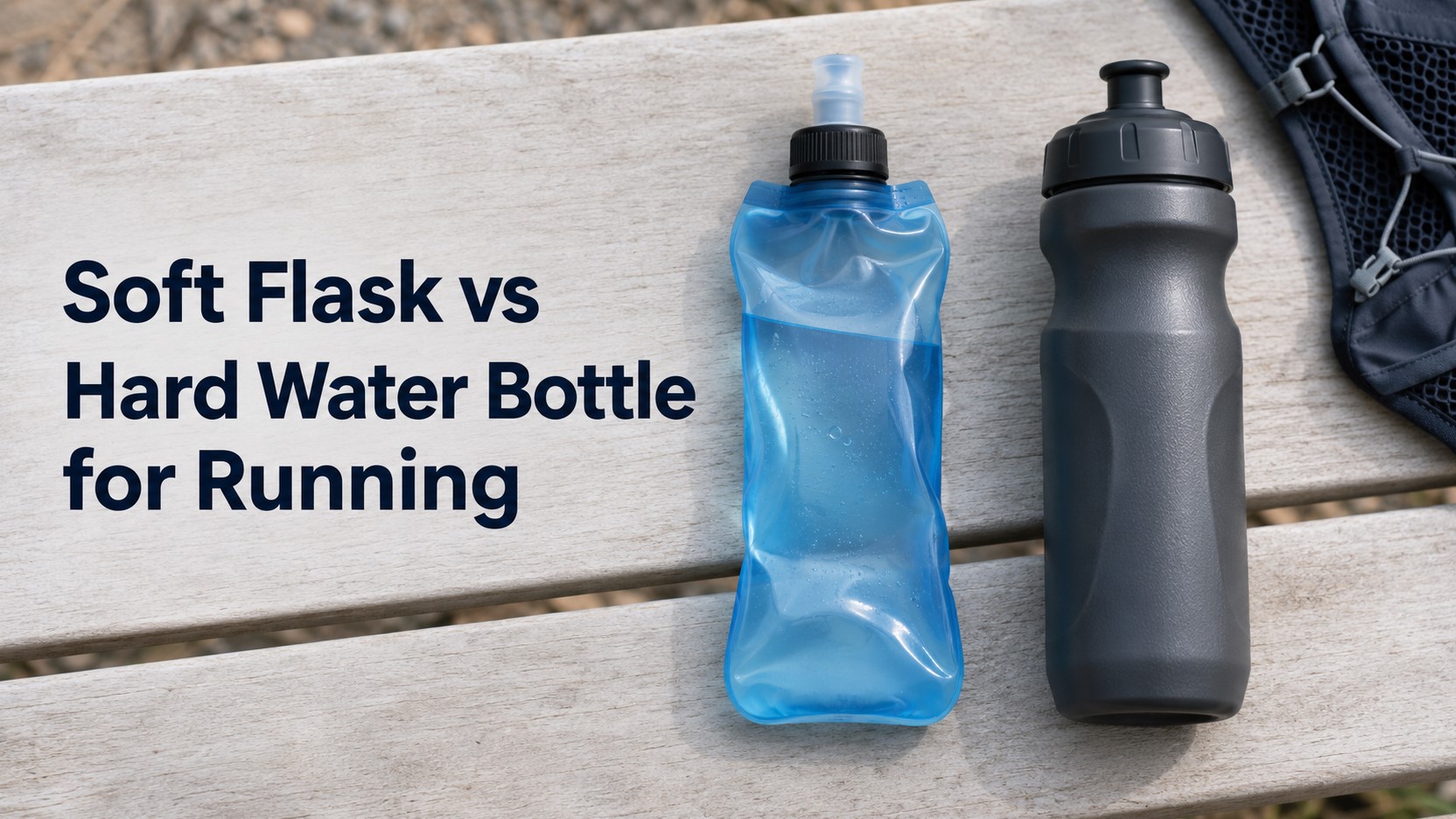
Choose a soft flask if you carry water in a snug vest pocket and want the bottle to take up less space as you drink. Choose a hard water bottle if you prefer a firm grip in your hand or want a bottle that keeps its shape when you pull it out and put it back. If you’re shopping online, start with the pocket or hand strap you’ll use. If you can try both bottles, a short jog with each about half full will show whether the water sloshes, the bottle bounces, or the cap is hard to reach.
How a soft flask and a hard bottle feel on the run
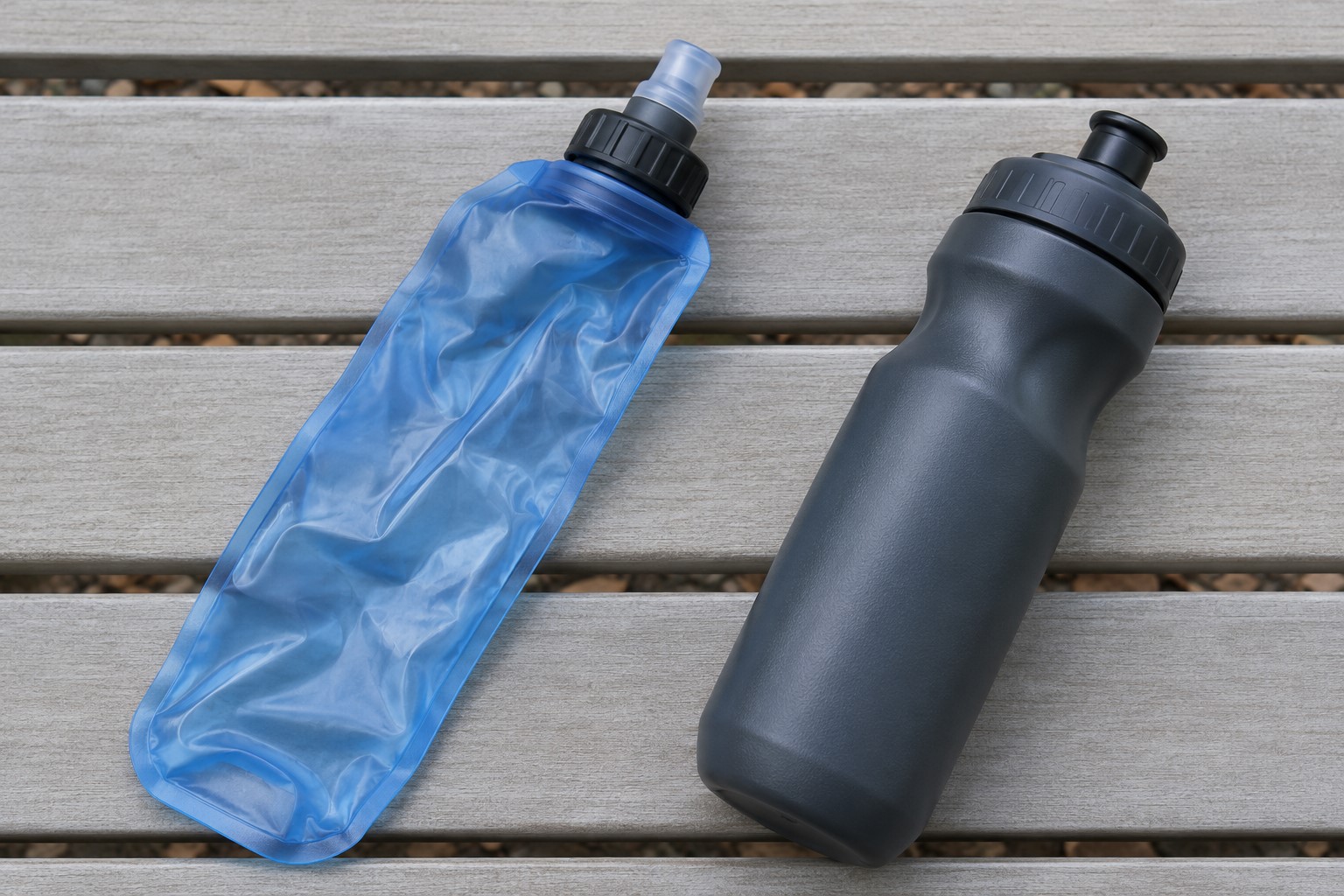
A soft flask collapses as you drink, so it can pack down once empty. A hard bottle keeps its shape. Here, “hard bottle” includes shape-holding plastic running bottles that flex when squeezed.
| What matters on the run | Soft flask | Hard water bottle |
|---|---|---|
| Fit against your body | The flexible body can conform to a snug pocket. A flask may slump in a loose pocket as it empties. | The shape stays predictable. A bottle that presses into your ribs or hip when full will keep that same profile as you drink. |
| Taking a sip on the move | A bite valve can be easy to reach in a front vest pocket if the mouthpiece stays high enough. | A sport cap can be easy to use in a handheld. If the bottle rides in a belt, check how easily you can pull it out. |
| Putting it back | A partly empty flask can fold as you slide it into a snug pocket. | A firm body slides back into a matching holder without folding. |
| Refilling | A wide opening or a flip lid can help. With a floppy body, hold the firm neck to steady it while you pour. | The body gives you something firm to hold while you fill it. The opening and lid still determine how fiddly it is. |
| Carrying it empty | Fold or flatten it if you want the pocket space back. | It takes up the same space empty as it does full. |
Water moving inside the bottle feels different from the whole bottle moving against you. A soft flask with excess air squeezed out can reduce sloshing as it collapses. If the whole flask still bounces, check whether the pocket or hand strap holds it securely. With a hard bottle, you may hear water move even when the bottle itself sits firmly in its holder.
Choose based on where you carry it
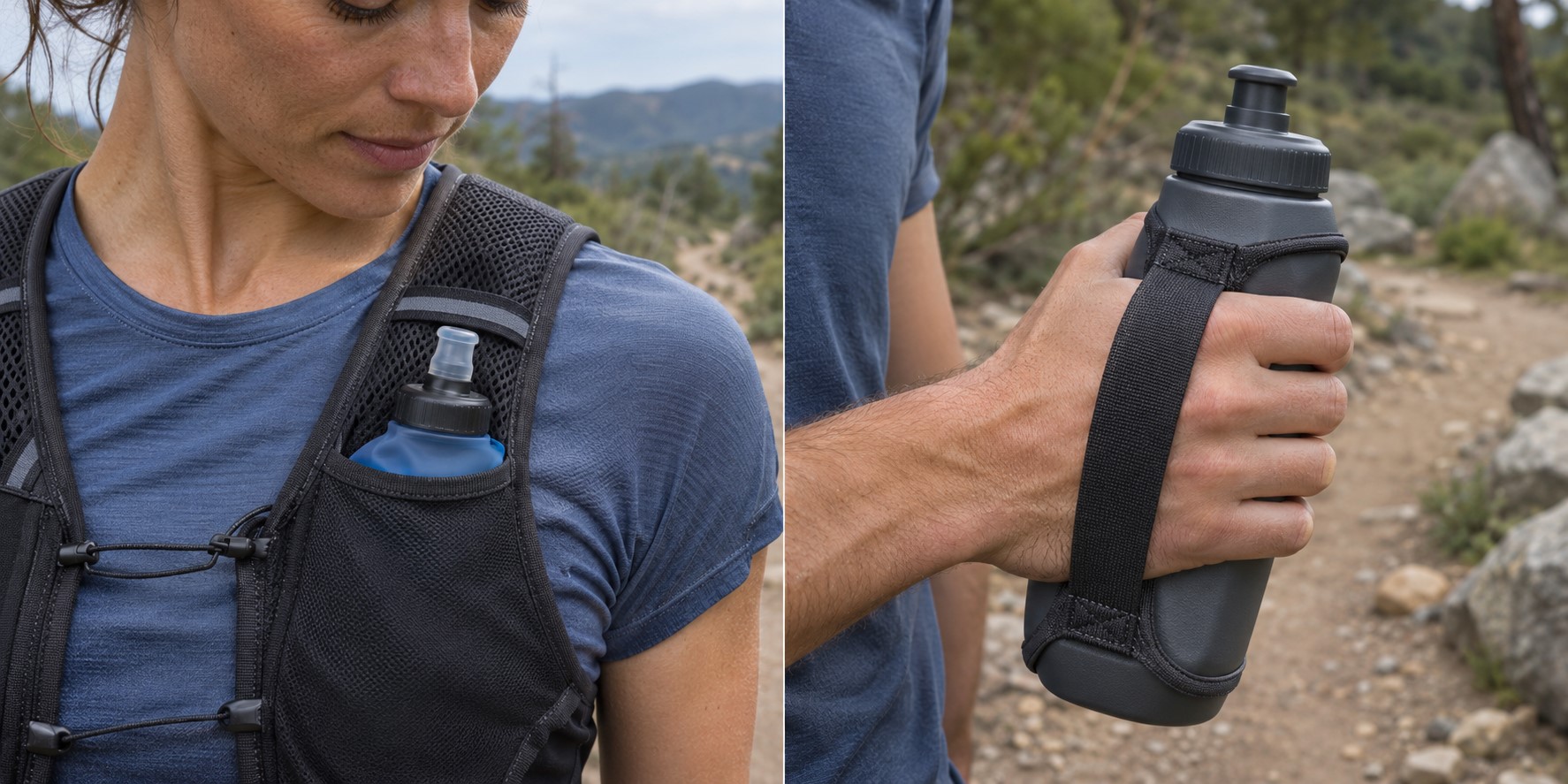
Front vest pocket. Start with a soft flask that fits the pocket opening and sits deep enough to stay put, with the mouthpiece still within reach. Check the filled shape and the shape of the base before you buy. Two flasks with the same capacity can fit very differently. The HydraPak fit chart lists two 500 mL (about 17 US fl oz) models, the SoftFlask Speed and the PocketFlask, at 55 mm (2.17 in) and 37 mm (1.46 in) deep, respectively. That thickness matters in a flat pocket. The flask’s height helps you judge where the valve will sit.
Running belt. Match the bottle to the holder. A slim soft flask can lie flat in a stretch pocket. A shape-holding bottle can be easier to slide into a sleeve made for it. Try putting the bottle back with one hand. If you have to stop and pull the pocket open every time, that matters more than how neatly it fits while you’re standing still.
Handheld. A firm bottle gives you the same grip from the first sip to the last. A soft handheld can work just as well if its strap or sleeve keeps it from shifting as it empties. Loosen your fingers briefly while keeping your hand in the strap. If the bottle slides or you immediately grip it again, try adjusting the strap or using a different holder.
Once you know how you’ll carry it, choose a capacity. Running soft flasks come in sizes such as 250 mL (8.5 US fl oz) and 500 mL (16.9 US fl oz), with different body shapes and mouthpieces. Pick a flask that leaves room for your other gear when full, and factor in where you can refill along your route.
Try the cap and refill opening
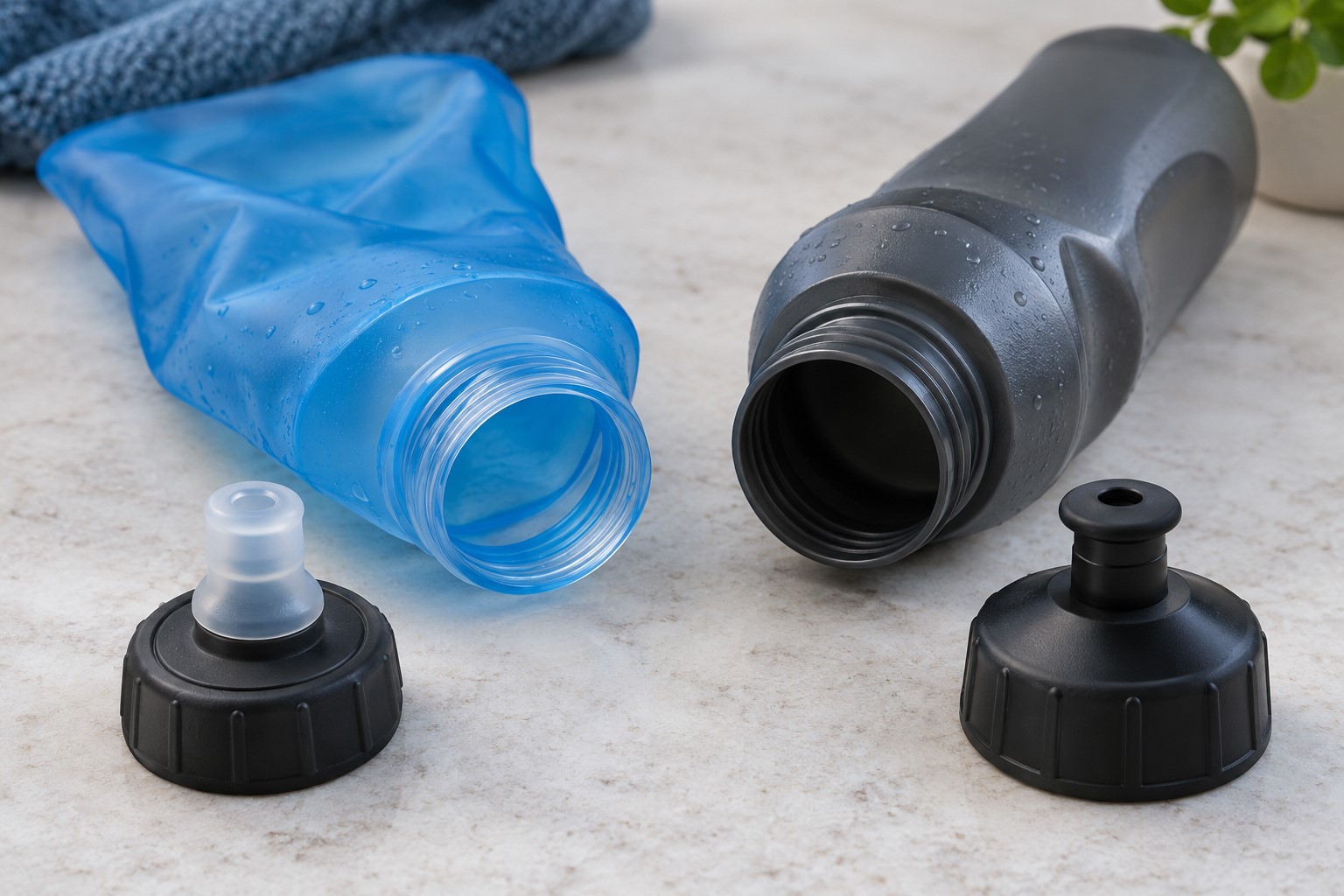
The HydraPak fit chart lists a cap diameter of 42 mm (1.65 in) for the 500 mL SoftFlask Speed and 28 mm (1.10 in) for the 500 mL PocketFlask. For refilling, check the opening you’ll actually pour through. A wider opening gives you more room to aim a stream of water or pour in drink powder. If you’ll be refilling from a jug or mixing powder at an aid station, practice with your own cap and see whether you can open it, fill it, and close it without setting loose parts down.
Then try taking a sip the way you will on the run. A bite valve in a chest pocket is convenient if you can reach it without tugging the flask up. A hard handheld with a push-pull sport cap can be just as straightforward if you can open it and sip without changing your grip. Test the closing action too, especially if the bottle goes back into a pocket with other gear.
Make the final check before you buy
If you’re buying without trying the bottle first, measure across the opening of your vest or belt pocket and from the opening to the bottom. Compare those measurements with the bottle’s width and height when full. If the listing doesn’t give filled dimensions, ask the seller for them. A bottle that fits through the opening can still sit too low to sip from. For handheld carry, check the product photos for an adjustable hand strap and see where the cap sits relative to your grip.
Run a half-full test if you can try both
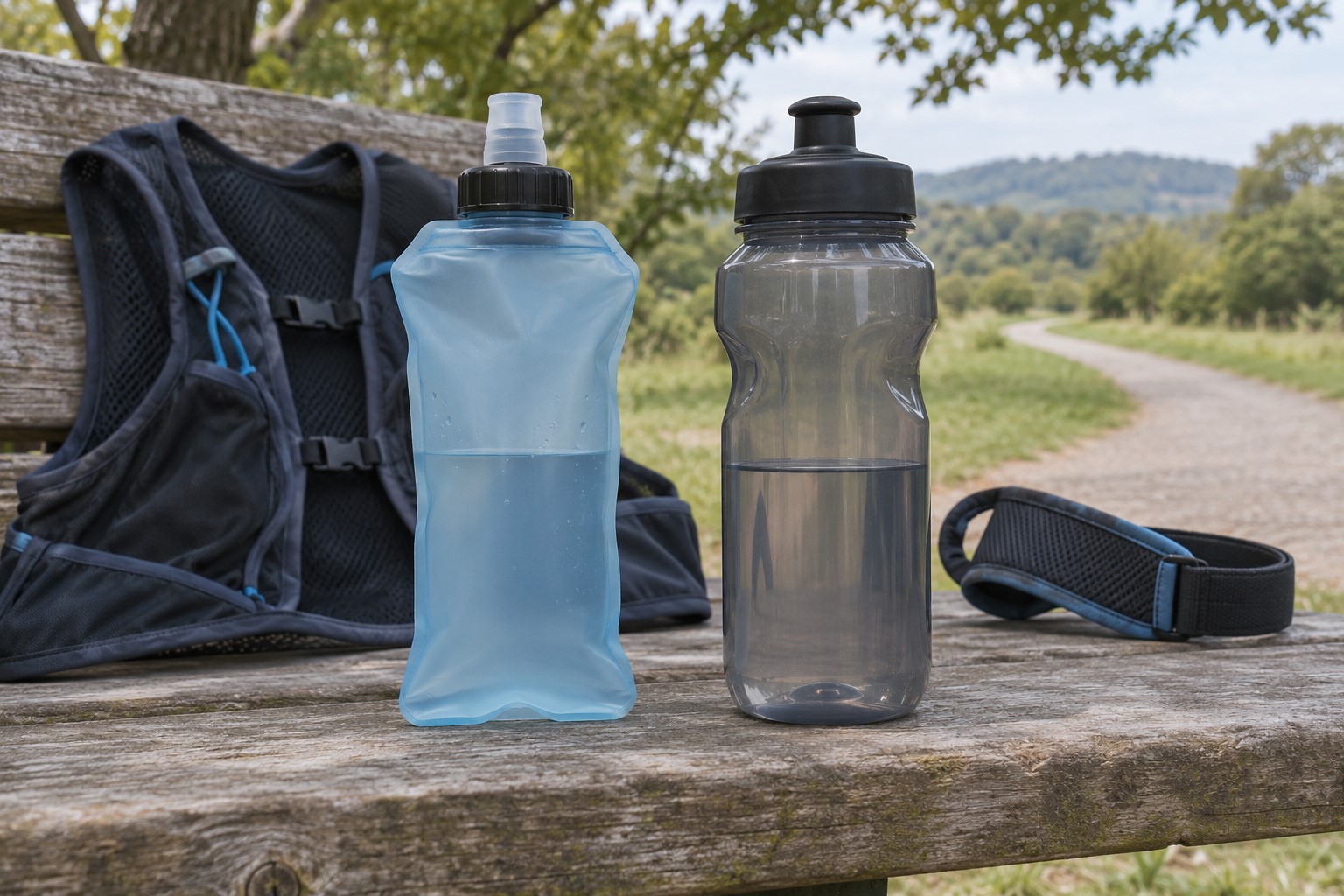
If you can borrow both styles, use bottles of similar capacity. Put the same amount of water in each, enough to fill them about halfway. Carry each in its intended holder and jog a short loop. Take a few sips, then close the cap or lock the valve, depending on the design. If you took the bottle out, try putting it back with one hand. Notice whether the water sloshes or the whole bottle shifts. Then try them full to check for pressure against your ribs or hip. Pick the setup that stays put and lets you drink and stow it without fiddling. If both work, do a refill at the sink and see which lid you’d rather handle mid-run.
FAQ
Can I run with a regular hard water bottle?
Yes, if you can grip it comfortably or carry it in a holder that secures it. Try drinking and closing it while walking first. A screw cap can be fine when you stop to drink, but you may prefer a sport cap if you sip on the move.
Are soft flasks always lighter?
Compare the complete setup you’ll carry, including the cap and any sleeve or strap. Weigh them empty to compare the gear itself. A bare flask’s listed weight may leave out the holder you’ll run with.
Can I use the same bottle in a vest and a belt?
Yes, if both holders keep it secure. Check each with the bottle full and partly empty. A bottle can sit securely upright in a vest but shift when you carry it sideways in a belt.
Which is easier to clean after using a sports drink?
A wide opening gives a brush more room, whether the bottle is soft or hard. Check whether the cap and valve are easy to rinse and whether you can leave all the parts open to dry. For a bite valve or long straw, follow the soft flask cleaning and drying guide.
Will an insulated hard bottle take up more room?
Check the outer dimensions for the capacity you want. Insulation can add bulk, and a bottle that looks similar on the shelf may be too wide for your usual sleeve. Check the fit with the cover or hand strap installed, if it has one.





Comments are closed