



Fanny Pack vs Running Belt for Walking and Workouts
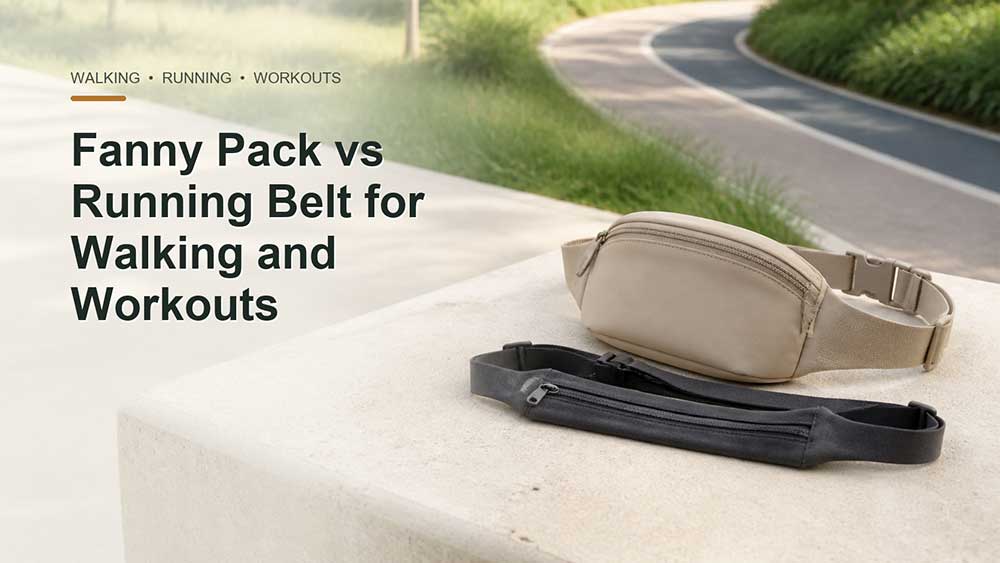
A fanny pack is usually better for walking, travel, errands, and everyday use because it offers more storage and easier access to your belongings. A running belt is usually better for running and high-movement workouts because it sits closer to the body and is designed to limit bouncing.
For gym sessions, a slim running belt works well when you only need a phone, key, and card. A fanny pack gives you more room, but a bulky pouch may get in the way during squats, floor exercises, or equipment-based training.
Here is the practical difference: choose a fanny pack when capacity and versatility matter most. Choose a running belt when stability and a low-profile fit matter more.
Fanny Pack vs Running Belt at a Glance
| Feature | Fanny Pack | Running Belt |
|---|---|---|
| Main purpose | Everyday hands-free storage | Carrying essentials during exercise |
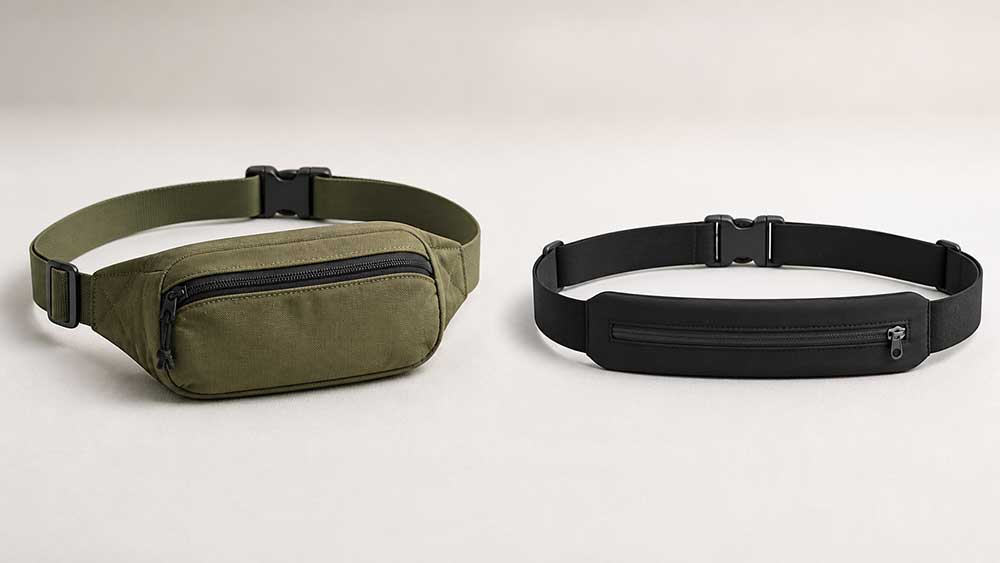
| Shape | Defined or semi-structured pouch | Slim, flat, or stretch-fit construction |
| Storage | Usually more capacity and organization | Usually limited to essential items |
| Stability | Depends on fit, strap, and load | Designed to reduce movement during running |
| Access | Easier to open while walking or standing | More secure but sometimes tighter to access |
| Strap system | Adjustable webbing strap and buckle | Elastic strap, stretch tube, or close-fitting band |
| Sweat management | Depends on the material and back panel | Often uses lightweight, fast-drying materials |
| Best for walking | Usually the better choice | Good for brisk or fitness walking |
| Best for running | Works only if it fits securely | Usually the better choice |
| Best for gym workouts | Useful between exercises | Better when worn during active movement |
| Everyday versatility | High | More performance-focused |
These are general tendencies, not fixed industry rules. A compact, well-fitted fanny pack may work for light jogging, while an overloaded or poorly sized running belt can still bounce.
What Is a Fanny Pack?
A fanny pack is a general-purpose pouch attached to an adjustable strap and worn around the waist or hips. Many modern designs can also be worn across the chest or over one shoulder, reflecting how the fanny pack has adapted to modern fashion.
Most fanny packs have a defined main compartment and may include front, back, or internal pockets. They are suitable for carrying items such as:
- Phone
- Wallet
- Keys
- Sunglasses
- Tissues
- Sunscreen
- Earphones
- Small snacks
- Portable charger
The extra room and organization make a fanny pack practical for walking, sightseeing, festivals, commuting, and errands. However, the larger pouch also makes it easier to overpack.
If the strap is loose or the contents can move freely inside, the bag may bounce, rotate, or pull away from the body during running.
What Is a Running Belt?
A running belt is designed to hold a smaller load close to the body during repetitive movement. It may use a narrow expandable pocket, a stretch tube that wraps around the waist, or a wider technical band with several low-profile pockets.
Common running-belt contents include:
- Phone
- House or car key
- ID or payment card
- Energy gels
- Earbuds
- Small soft flask on hydration-compatible designs
The belt should feel secure without digging into the waist. Many designs use stretch fabrics, elastic sections, low-profile buckles, or lightweight materials to reduce unnecessary movement and bulk.
Product names are not standardized. Brands may use “running belt,” “waist belt,” “waist pack,” or “hip pack” for products with similar functions. iRunFar’s running belt guide also notes that these terms are often used interchangeably. Look at the construction and intended use rather than relying on the product name alone.
How Their Designs Affect Movement
Stability and Bounce
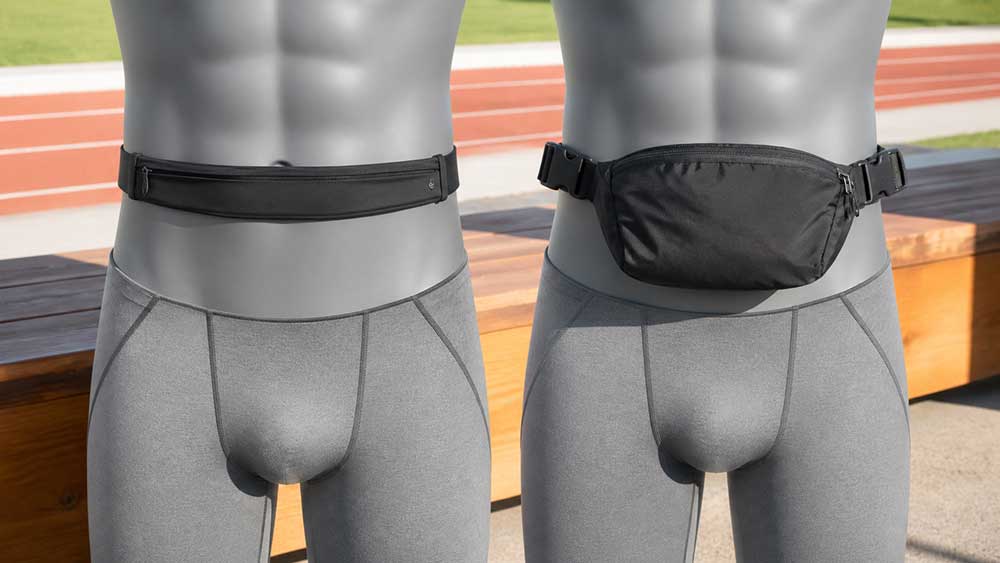
Running creates repeated vertical movement. If the pouch is loose or the items have room to move inside, the product may bounce with every stride.
Running belts usually control movement by:
- Holding items close to the waist
- Using stretch fabric around the contents
- Reducing unused space inside the pocket
- Keeping buckles and hardware lightweight
- Spreading the load across the waist on wider designs
A traditional fanny pack may leave more space between the contents and the body. This makes it easier to pack and access, but it can also allow a phone, wallet, or keys to move inside the compartment.
Walking produces less vertical impact, so a moderate amount of movement is usually less noticeable. The same fanny pack may feel comfortable during a long walk but distracting during a run.
Capacity and Organization
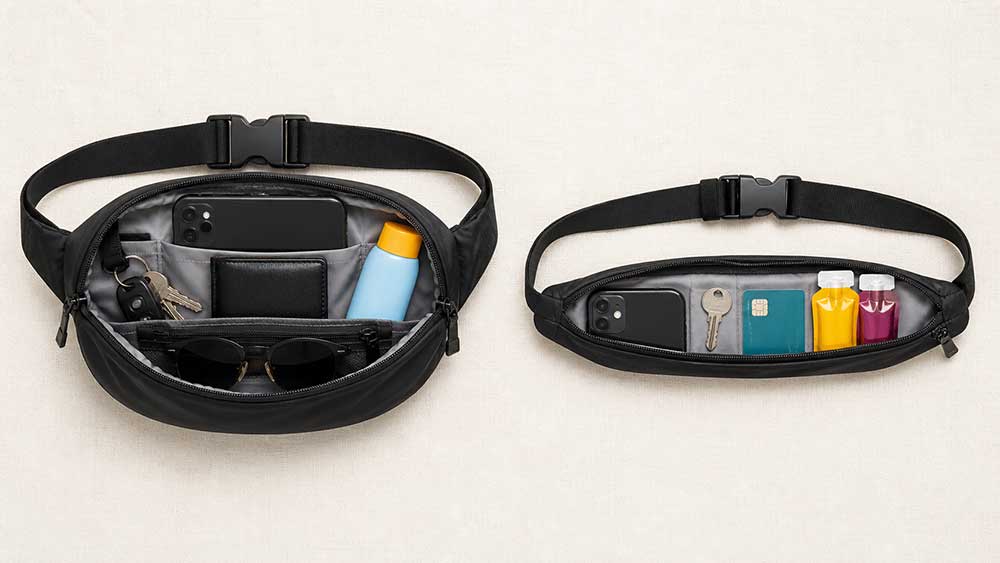
A fanny pack normally provides more space and clearer organization. Separate pockets can keep keys away from a phone, make cards easier to find, and prevent everything from collecting at the bottom of one compartment.
A running belt usually prioritizes a close fit over internal organization. Some have one stretch pocket, while others add small sections for keys, gels, or a soft flask.
More capacity is not automatically better. The more weight you place around the waist, the harder it becomes to keep the product stable. A belt that stays still with a phone and key may begin to bounce after you add a heavy wallet and water bottle.
Fit and Adjustment
Most fanny packs use a webbing strap, side-release buckle, and adjustment slider. This makes it easy to change between waist and crossbody wear. However, the strap can gradually loosen if the webbing and slider do not hold each other securely.
Running belts may use:
- Elastic straps
- Stretch fabric tubes
- Hook-and-loop adjustment
- Low-profile buckles
- Fixed sizes rather than one adjustable size
A good running belt should feel secure before you start moving, but it should not press uncomfortably into your abdomen when you bend or breathe deeply.
Body shape also affects fit. A design that stays in place on one person may ride up or slide down on another. Test it with the clothing and contents you will actually use.
Heat, Sweat, and Chafing
Any product worn closely around the waist can trap heat and moisture. This matters more during running and high-intensity exercise than during casual walking.
Running belts often use lightweight stretch materials and limited body coverage. Seam position is equally important. A rough binding edge, exposed seam, buckle, or zipper end may become uncomfortable when it repeatedly rubs the same area.
Fanny packs may use nylon, polyester, canvas, PU, or other structured materials. These can provide better shape and everyday durability but may feel warmer or stiffer during intense movement.
Water-resistant fabric does not make the entire product waterproof or sweatproof. Moisture can still enter through the zipper, seams, or back panel. If you expect heavy sweat or rain, protect moisture-sensitive items separately.
Which Is Better for Walking?
For most casual walks, a fanny pack is the more practical choice.
It provides enough room for a phone, wallet, keys, tissues, sunscreen, and other items needed for errands, dog walking, sightseeing, or a day out. You can also reposition the pouch or wear it crossbody when that feels more comfortable.
A running belt may be the better choice for:
- Brisk fitness walking
- Walk-and-run interval training
- Walking in workout clothing without secure pockets
- Carrying only a phone and key
- Hot conditions where you want less fabric coverage
If you are walking for several hours and need water, food, an extra layer, or other equipment, consider a larger technical hip pack or lightweight backpack rather than overloading either option.
Which Is Better for Running?
For regular running, a running belt is generally the better choice.
Its close-fitting construction is better suited to repeated movement, especially when you only carry a phone, key, card, and a small amount of fuel.
You can still run with a fanny pack, but check whether it:
- Sits close to the body
- Has a strap that stays adjusted
- Prevents the contents from moving around
- Avoids unnecessarily heavy hardware
- Does not rub the abdomen or lower back
- Remains stable at your normal running pace
Do not judge stability while the bag is empty. Load it with the actual phone, keys, and other items you plan to carry, then walk, jog, turn, and bend.
If you need to carry water on longer runs, choose a product specifically designed for hydration. A standard running belt may not have enough space or support, while forcing a bottle into a regular fanny pack may create uncomfortable movement.
Which Is Better for Gym Workouts?
A slim running belt works better when the storage must remain on your body during:
- Treadmill running
- Stair-climber sessions
- Walking lunges
- Outdoor circuits
- Light conditioning workouts
Its low-profile shape is less likely to swing or hit equipment.
A fanny pack can be useful when moving around a large gym, attending an outdoor class, or keeping several personal items together. However, it may interfere with:
- Barbell positioning
- Weight machines
- Deep squats
- Floor exercises
- Core training
- Exercises performed face down
When possible, leave larger belongings in a locker and carry only what you need. If the bag must remain on your body, choose the smallest design that holds those items securely.
Which One Fits Your Activity?
| Main activity | Better starting point | Why |
|---|---|---|
| Casual walking and errands | Fanny pack | More room and easier access |
| Sightseeing and travel | Fanny pack | Better organization for daily essentials |
| Brisk fitness walking | Either | Depends on load and preferred fit |
| Walk-and-run intervals | Running belt | Better control during the running sections |
| Regular road running | Running belt | Lower profile and less movement |
| Treadmill workout | Running belt | Stays closer to the body |
| Gym session with several personal items | Compact fanny pack | More capacity between exercises |
| Long run requiring water and fuel | Hydration belt or running vest | Designed for a larger performance load |
A Simple Fit Test Before You Buy
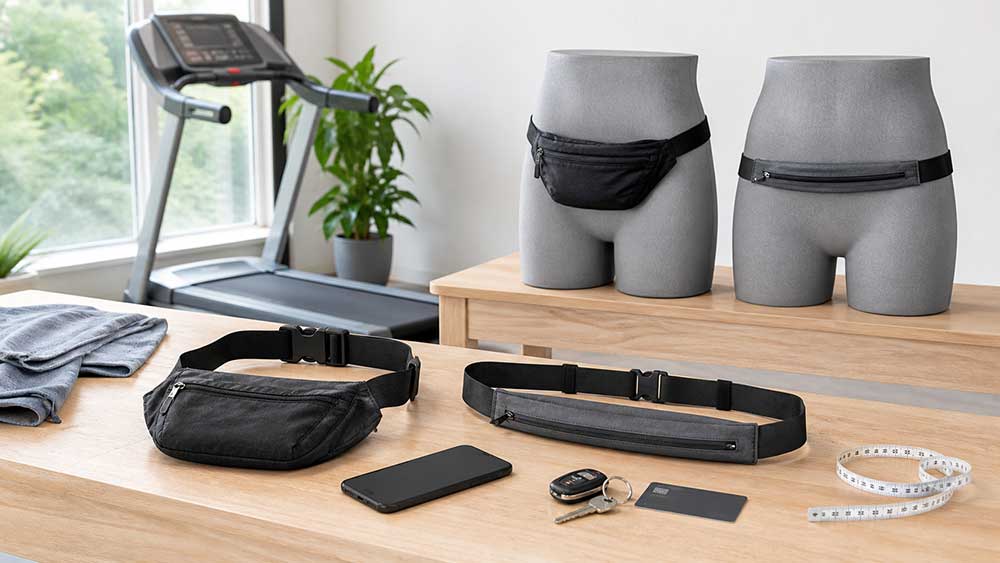
Independent running-belt reviews commonly evaluate fit, adjustability, storage, and bounce under realistic use. Runner’s World includes these factors when assessing running belts.
You can perform a simple practical check before committing to a product:
- Load the phone, keys, card, and workout items you intend to carry.
- Adjust the belt until it feels secure without digging into your waist.
- Walk normally and check whether it slides or rotates.
- Jog briefly and notice any vertical bounce.
- Turn, bend, and perform a few squats.
- Check whether a buckle, zipper, or seam creates pressure.
- Try to retrieve the item you will need most often.
- Check the adjustment again after moving for several minutes.
This is not a standardized laboratory test, but it can quickly reveal problems that are impossible to see when the product is empty on a table.
Common Mistakes to Avoid
Choosing Only by Product Name
A product called a “sports waist pack” may still be too bulky for running. A product marketed as a fanny pack may have a stable, low-profile construction. Check its dimensions, strap system, materials, and recommended use.
Buying More Capacity Than You Need
Extra space often encourages overpacking. During running, unused space also gives the contents more room to move.
Ignoring the Actual Phone Size
“Fits most phones” does not guarantee enough space for a large phone with a protective case. Compare the phone’s dimensions with the usable pocket size and zipper opening.
Assuming Every Running Belt Is Bounce-Free
Fit, body shape, load placement, fabric recovery, and strap construction all affect stability. No design can guarantee identical performance for every wearer.
Also check whether keys have a separate pocket or clip. Loose keys can scratch a phone and create an uncomfortable pressure point.
What Brands Should Check During Product Development
A lifestyle fanny pack and a performance running belt may be worn in the same place, but they need different development priorities.
For a general-purpose fanny pack, buyers may focus on:
- Capacity and pocket organization
- Shape retention
- Zipper access
- Strap adjustment range
- Crossbody compatibility
- Logo visibility
- Everyday fabric durability
For a running belt, development should pay closer attention to:
- Stability with a realistic load
- Fabric stretch and recovery
- Strap slippage
- Seam and binding placement
- Heat and moisture management
- Phone-pocket security
- Low-profile hardware
- Reflective details when required
- Comfort during repeated movement
Sample approval should include a loaded movement test, not only a visual inspection. A product can look correct while empty but still bounce, rotate, loosen, or create pressure during use.
Vancharli Outdoor supports custom fanny pack and waist-carry product development for lifestyle, travel, promotional, outdoor, and active-use markets. Materials, pockets, strap construction, hardware, logo methods, and packaging can be adjusted to match the intended use of the finished product.
Final Answer
Choose a fanny pack for walking, errands, travel, and everyday versatility. It normally provides more capacity, clearer organization, and easier access.
Choose a running belt for running, treadmill sessions, and high-movement workouts. Its closer fit and lower profile make it better suited to controlling unnecessary movement.
Either can work for brisk walking and light exercise. The deciding factors are what you carry, how closely the product fits, and how it performs when loaded—not simply what the brand calls it.
FAQ
Can You Run With a Regular Fanny Pack?
Yes, if it fits closely, stays adjusted, and does not bounce with your intended load. A compact design usually performs better than a large, loosely structured pouch.
How Tight Should a Running Belt Be?
It should be snug enough to resist sliding and bouncing but not so tight that it digs into your waist or becomes uncomfortable when you bend and breathe deeply.
Where Should You Wear a Running Belt?
Many people wear it around the natural waist or upper hips. The best position depends on body shape, clothing, pocket placement, and comfort. Test different positions before a longer workout.
Will a Running Belt Hold a Large Phone?
Some will, but phone size, case thickness, pocket stretch, and zipper-opening length all matter. Compare the actual phone dimensions with the belt’s usable pocket dimensions before buying.





Comments are closed