Top-Loading vs Panel-Loading Backpacks: Which Should You Choose?

Top-Loading vs Panel-Loading Backpacks: Which Should You Choose?

Top-loading and panel-loading backpacks differ mainly in how you reach the main compartment. A top-loader opens from above and usually suits hikers who value simple construction, flexible packing space, and fewer long zippers. A panel-loader opens through a large zippered section, making it easier to see and reach gear throughout the compartment. Neither design is...

Read More
Internal vs External Frame Backpacks: Which Should You Choose?

Internal vs External Frame Backpacks: Which Should You Choose?

Internal vs external frame backpacks differ in where their supporting structure sits and how they carry a load. An internal frame is built into the pack, giving it a closer, more streamlined fit. An external frame is visible outside the packbag and often provides more room to secure bulky or irregular equipment. For most hikers...

Read More

What Are the Loops on a Hiking Backpack For?

The loops on a hiking backpack are external attachment points for gear that is awkward, wet, or inconvenient to store inside the main compartment. Depending on their location and design, they may hold an ice axe, trekking poles, a sleeping pad, a helmet carrier, or small accessories. However, similar-looking loops do not always serve the...

Read More
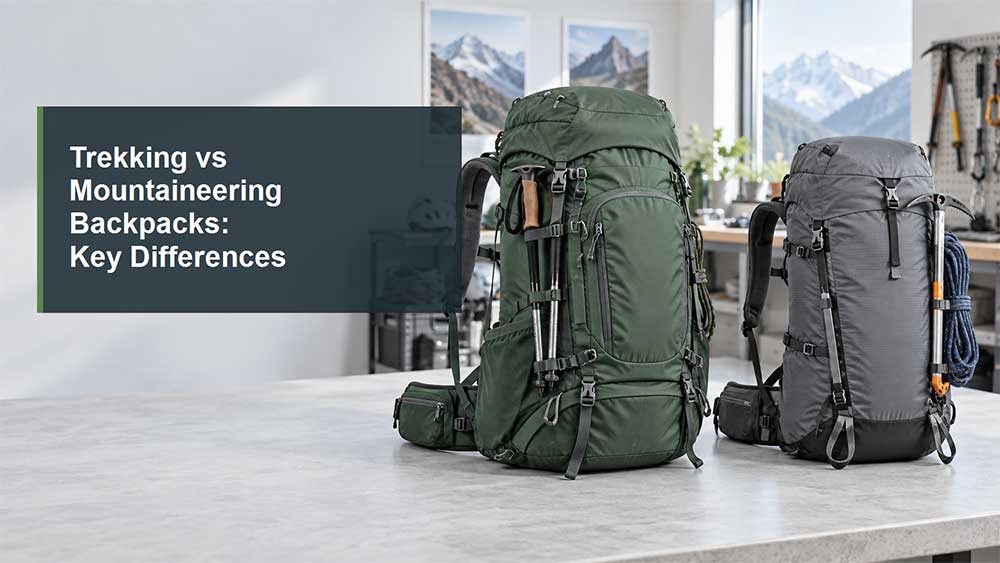
Trekking vs Mountaineering Backpacks: Key Differences

Trekking vs Mountaineering Backpacks: Key Differences

The main difference between trekking and mountaineering backpacks is what each pack needs to do. A trekking backpack is designed to carry supplies comfortably over long days, so it usually prioritizes load transfer, torso adjustment, ventilation, and accessible storage. A mountaineering backpack stays closer to the body for steep or technical terrain and favors stability,...

Read More
Can You Put Hot Food in a Cooler Bag?

Can You Put Hot Food in a Cooler Bag?

Yes, a cooler bag can carry hot food because its insulation slows heat transfer in both directions. However, the food should normally be placed in a sealed, heat-safe container rather than poured directly into the bag or placed against its liner. A cooler bag can slow heat loss, but it does not actively heat food....

Read More
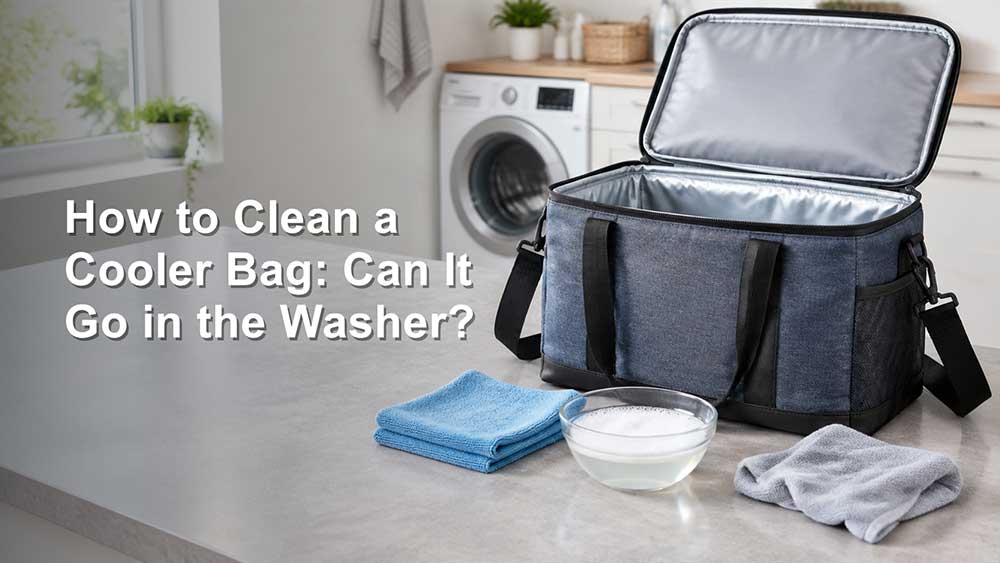
How to Clean a Cooler Bag: Can It Go in the Washer?

How to Clean a Cooler Bag: Can It Go in the Washer?

Most cooler bags should not go in the washing machine unless the care label specifically says the finished product is machine washable. A cooler bag is more than just its outer fabric. It may also contain insulation foam, a PEVA or aluminum-foil lining, coated materials, adhesives, reinforcement boards, zippers, and sewn or welded seams. Machine...

Read More
Cooler Bag Linings: PEVA vs Aluminum Foil vs PVC vs TPU

Cooler Bag Linings: PEVA vs Aluminum Foil vs PVC vs TPU

PEVA, aluminum foil, PVC, and TPU can all be used inside cooler bags, but they suit different products and manufacturing methods. For an ordinary sewn lunch bag or promotional cooler, PEVA and aluminum foil laminates are common choices. PVC may be used as a flexible film in sewn bags or as a coated fabric in...

Read More
How to Calculate Cooler Bag Capacity in Liters and Cans

How to Calculate Cooler Bag Capacity in Liters and Cans

Cooler bag capacity is usually shown in liters, quarts, or the number of cans the bag can hold. These figures are related, but they do not mean the same thing. A 20-liter rating describes internal volume, but it does not tell you exactly how many canned drinks will fit. Insulation thickness, rounded corners, zipper opening,...

Read More
How to Test Cooler Bag Handles and Straps Under Load

How to Test Cooler Bag Handles and Straps Under Load

A cooler bag may look strong when it is empty but fail after it is filled with drinks, food, and ice packs. The webbing itself is not always the problem. Failures often happen where the handle or strap connects to the bag. For OEM buyers, a good load test should answer three simple questions: For...

Read More
Custom Cooler Bag RFQ Checklist for OEM Buyers

Custom Cooler Bag RFQ Checklist for OEM Buyers

A useful custom cooler bag RFQ should tell the manufacturer what the bag must do, how it should be built, how many units are required, and what the quoted price must include. The most important early decision is whether you need a conventional sewn cooler bag or a radio-frequency (RF), also called high-frequency (HF), welded...

Read More