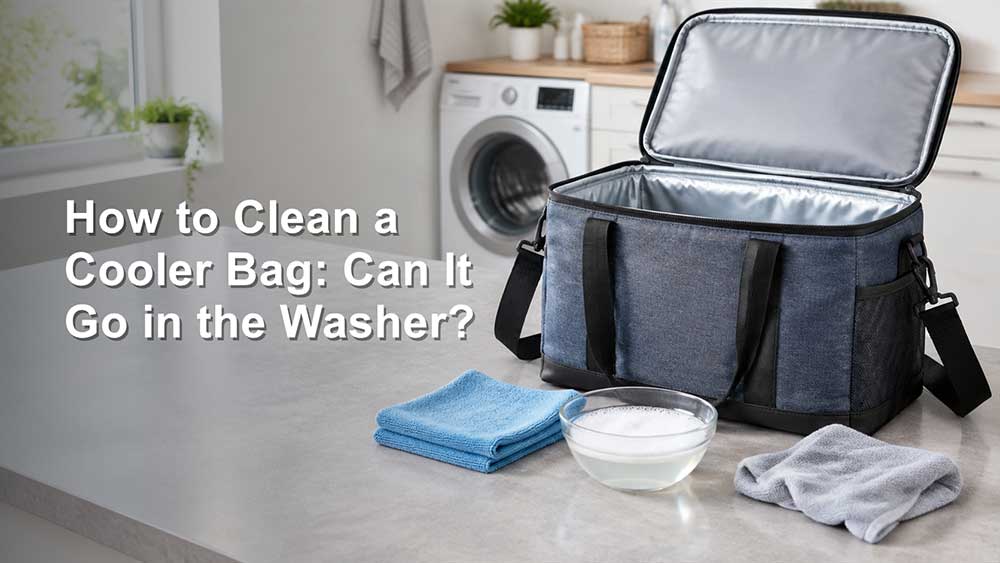
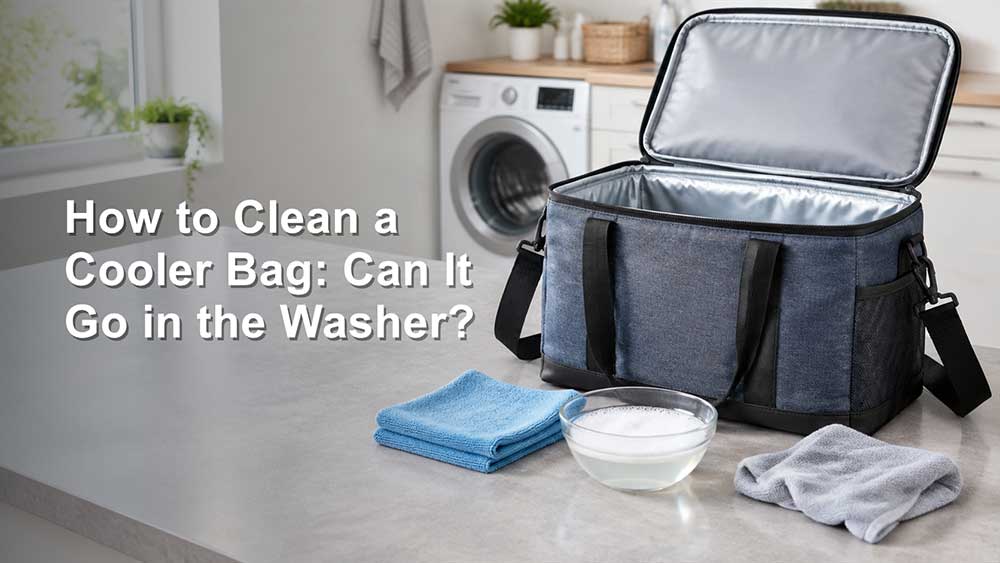
How to Clean a Cooler Bag: Can It Go in the Washer?
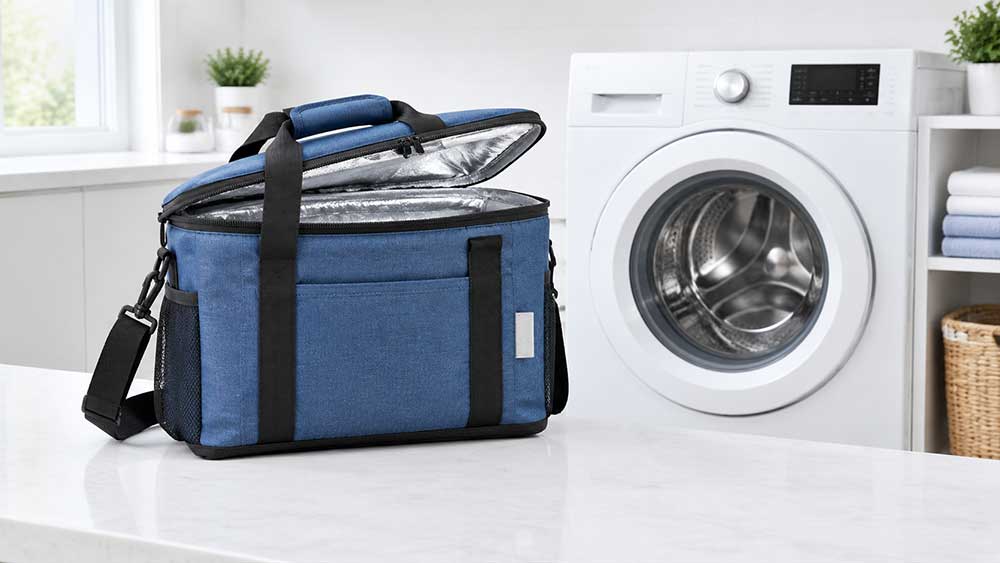
Most cooler bags should not go in the washing machine unless the care label specifically says the finished product is machine washable.
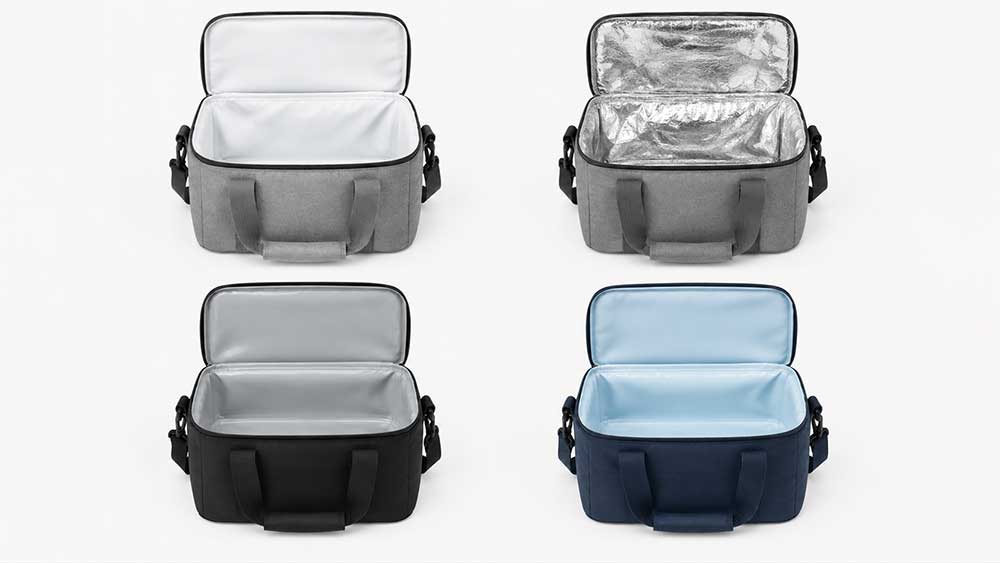
A cooler bag is more than just its outer fabric. It may also contain insulation foam, a PEVA or aluminum-foil lining, coated materials, adhesives, reinforcement boards, zippers, and sewn or welded seams. Machine agitation and high-speed spinning can damage these parts even when the outer polyester fabric itself is washable.
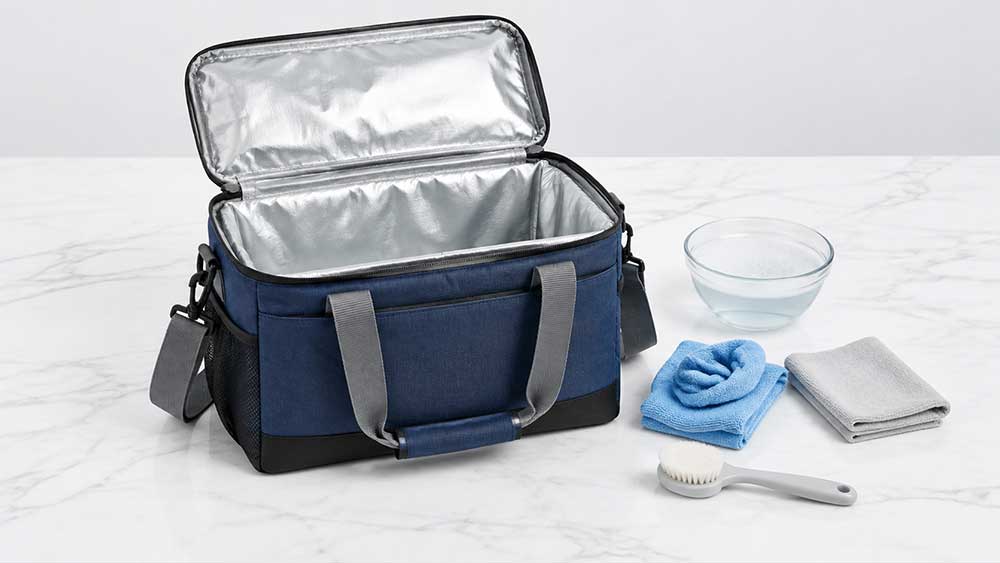
For most cooler bags, the safest method is to clean them by hand with mild soap, lukewarm water, and a soft cloth. After cleaning, leave the bag fully open until the lining, seams, pockets, and insulation are completely dry.
Wipe clean or rinse according to the product instructions
Usually no
Cooler with a removable liner
Remove and clean each part separately
Depends on the instructions for each part
Cooler with rigid inserts
Remove the inserts and clean the bag by hand
Usually no
If there is no care label, it is safer to treat the cooler bag as hand-wash only.
Waterproof does not mean machine washable. A cooler may have a waterproof shell or welded interior while still containing a zipper, foam layer, adhesive, hardware, or accessory that should not go through a wash cycle.
The same rule applies to dryers. Do not put a cooler bag in a clothes dryer unless the manufacturer specifically permits it.
Why Machine Washing Can Damage a Cooler Bag
A cooler bag is normally made from several layers that react differently to water, detergent, movement, and heat.
Machine washing may cause:
Insulation foam to shift, fold, or lose its shape
The lining to wrinkle, crack, or separate from the foam
Laminated materials to delaminate
Coated fabrics to peel or become cloudy
Water to enter sewn seams and remain trapped inside
Reinforcement boards to bend
Metal components to corrode
Colors to bleed between materials
Zippers to become distorted or difficult to operate
Printed logos to fade or peel
A polyester shell may be washable as an individual fabric, but that does not prove the complete cooler bag is machine washable. Cleaning instructions should be based on the finished product.
How to Clean a Cooler Bag by Hand
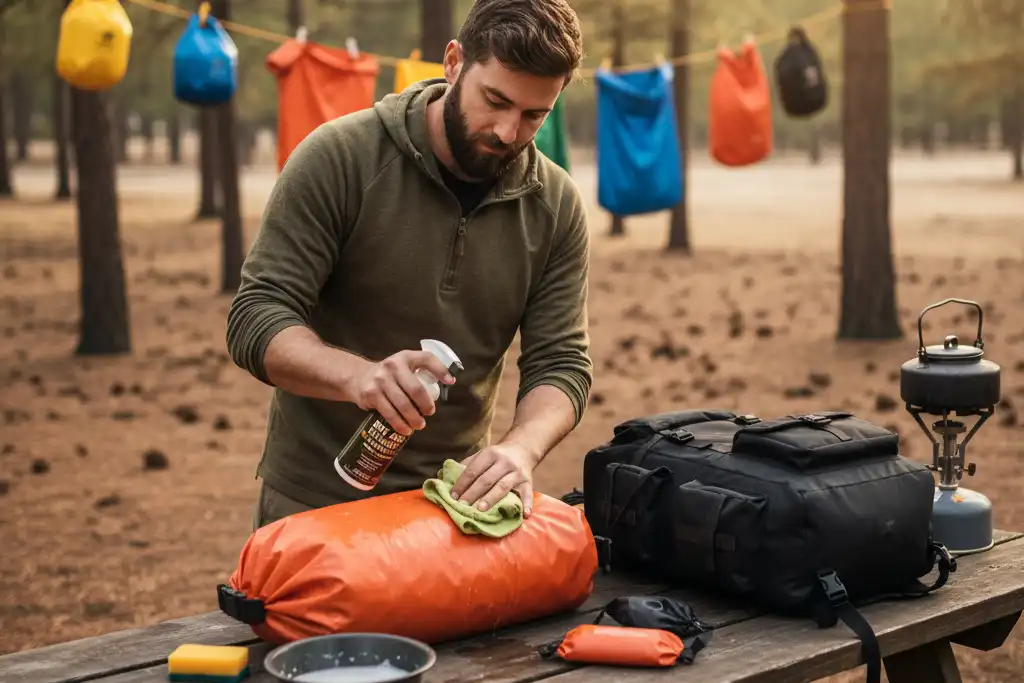
Hand cleaning is suitable for most sewn cooler bags and waterproof soft coolers.
1. Empty the Cooler Bag
Remove all food, drinks, ice packs, packaging, and loose accessories.
Open every pocket and shake out crumbs, sand, and dry dirt. A small handheld vacuum can help clean the corners, but avoid pulling aggressively on a thin lining.
If the bag has removable dividers, shoulder straps, or bottom boards, take them out and clean them separately according to their care instructions.
2. Read the Care Label
Check whether the manufacturer provides instructions for:
Hand washing
Machine washing
Water temperature
Bleach or other cleaners
Drying
Removable components
Zipper maintenance
The manufacturer’s instructions should take priority over general cleaning advice.
3. Prepare Mild Soapy Water
Mix a small amount of mild dish soap with lukewarm water.
Avoid very hot water, strong solvents, abrasive powders, and concentrated cleaning chemicals unless they have been approved for the specific bag.
Test the cleaning solution on a small, less visible area first. Check for discoloration, color transfer, coating damage, or surface softening.
4. Wipe the Interior
Dip a soft cloth or non-abrasive sponge into the soapy water and squeeze out the excess liquid.
Wipe the lining carefully, paying particular attention to:
Bottom corners
Seams and folds
Areas around the zipper
Divider attachment points
Places where melted ice or spilled drinks may collect
Use a soft-bristle brush for stubborn dirt, but do not scrub aggressively. Thin PEVA and aluminum-foil linings can be punctured or damaged by stiff brushes and sharp tools.
For a sewn cooler bag, avoid filling the interior with water. Water can pass through needle holes and become trapped in the foam.
5. Clean the Exterior
Wipe the outer fabric with the same mild soap solution.
Remove dried mud and sand before scrubbing. Hard particles can scratch coated fabrics when rubbed across the surface.
Pay attention to areas that receive frequent contact, including:
Handles
Shoulder straps
Shoulder pads
Webbing
Zipper pulls
The bottom panel
Do not soak leather patches, cardboard reinforcement, metal parts, or printed logos unless the care instructions allow it.
6. Remove the Soap
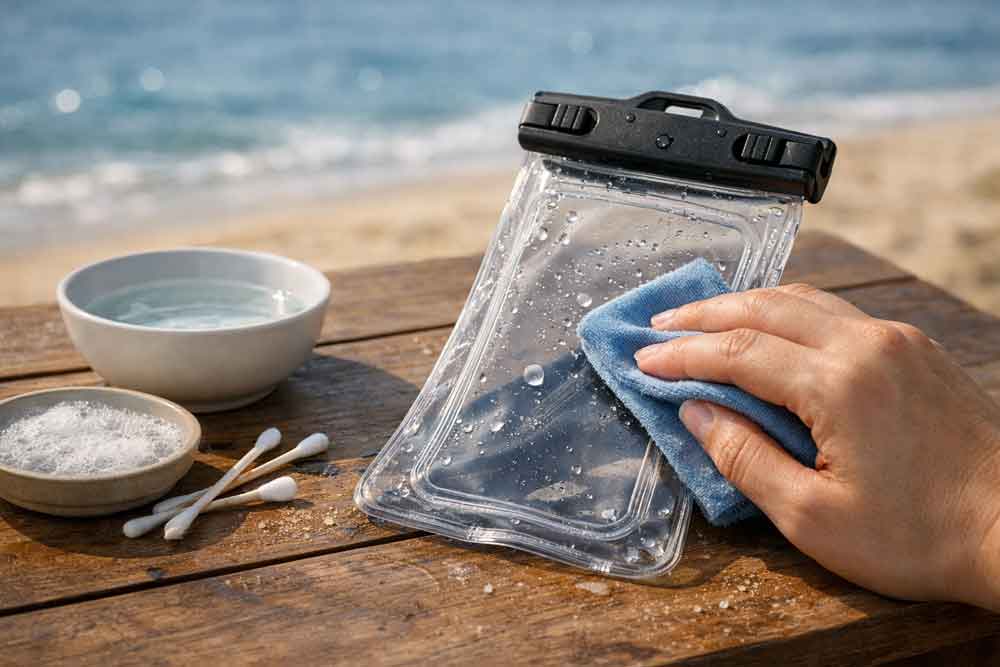
Use a separate cloth dampened with clean water to remove the soap residue.
Some RF-welded waterproof coolers can be rinsed with fresh water. However, do not assume that every waterproof cooler can be submerged or pressure washed. Water may still enter through the zipper, sewn pockets, valves, or other components.
If the zipper contains sand or dirt, clean it before opening and closing it repeatedly. Some airtight zipper systems also require a specific lubricant. Our guide to choosing a waterproof zipper for a soft cooler explains how zipper construction affects performance and maintenance.
7. Let the Bag Dry Completely
Wipe away visible water with a clean towel and leave the cooler bag fully open in a ventilated area.
Lift or remove dividers and bottom inserts so that air can reach the corners and lower seams.
Avoid using:
A clothes dryer
A hair dryer
An oven
A radiator
An open flame
Prolonged direct heat
Do not close, fold, or store the bag while it is still damp. Moisture trapped inside the seams or insulation can cause odors and mildew.
How to Clean Different Cooler Bag Linings
The lining material affects how the surface should be cleaned, but it does not determine the care method by itself. The foam, adhesive, seams, zipper, coating, and reinforcement must also be considered.
PEVA Lining
PEVA is commonly used in sewn lunch bags and promotional cooler bags.
Clean it with a soft cloth, mild soap, and lukewarm water. Avoid stiff brushes, sharp tools, wringing, and high heat. Thin PEVA may crease or puncture when handled roughly.
Because a sewn PEVA lining contains needle holes, it should not automatically be described as leakproof.
Aluminum-Foil Lining
Aluminum-foil lining is lightweight and easy to wipe, but it can crease, puncture, or separate from its backing.
Use a soft cloth with light pressure. Avoid abrasive pads, and do not fold or twist the lining while it is wet.
PVC Lining
PVC can provide a smooth, easy-to-wipe surface, but its compatibility with cleaning products depends on the material formulation and coating.
Start with mild soap. Unapproved solvents or strong cleaners may make the surface sticky, cloudy, brittle, or discolored.
TPU Lining
TPU is often used in higher-performance cooler bags and can be compatible with welded construction.
Clean it with mild soap and a soft cloth or sponge. A TPU lining does not automatically make the complete product machine washable. The other materials and components must still be considered.
Different spills require slightly different treatment, but mild soap should normally be the first option.
Juice, Soda, and Food Spills
Clean the spill as soon as possible.
Remove loose food, wipe the area with mild soapy water, and then remove the soap with a clean damp cloth. Check the corners and seams where sugary liquid may collect.
Grease and Oil
Apply a small amount of mild dish soap to a damp cloth and work gently on the stained area.
Repeat the process if necessary instead of using a strong solvent. Degreasers may damage the coating, printing, or laminated lining.
Fish and Seafood Odors
Remove all visible food residue first. Clean the interior with mild soap, wipe away the soap, and let the bag dry completely.
If an odor remains after drying, place an open container of baking soda inside the empty bag overnight. Keep the powder in its container so that it does not collect in the seams or zipper.
Mud and Sand
Allow heavy mud to dry and brush away as much loose material as possible before adding water.
Remove sand carefully from zipper teeth and sealing areas. Do not force the zipper while hard particles are trapped inside it.
Mold and Mildew
First determine whether the mold is limited to a surface that can be reached, cleaned, and dried.
Use only a cleaning product that is compatible with the lining and permitted by the care instructions. Follow the cleaner manufacturer’s directions and keep the area ventilated.
Never mix bleach with ammonia, vinegar, acids, or other cleaners. The U.S. Environmental Protection Agency warns that mixing chlorine bleach with ammonia-containing products can produce toxic fumes.
If mold has entered the foam, padding, binding, or other inaccessible layers, complete cleaning may not be possible. If mold or odor returns after cleaning and complete drying, replacing the bag may be safer, especially if contamination may have reached inaccessible foam, binding, or insulation.
Can You Use Bleach on a Cooler Bag?
Do not use bleach unless the care label or manufacturer specifically permits it.
Bleach may:
Fade the outer fabric
Damage printed logos
Discolor the lining
Affect coatings or adhesives
Corrode metal components
Weaken some materials
If sanitizing is necessary, use a product that is suitable for the lining and follow its label instructions. Remove visible dirt before sanitizing because cleaning and sanitizing are separate steps.
The USDA recommends keeping lunch boxes and coolers clean before packing food. Its food safety guidance recommends cleaning lunch boxes thoroughly with warm soapy water or a suitable disinfecting wipe.
Can a Waterproof Cooler Bag Be Submerged?
Not necessarily.
“Waterproof” may refer to the shell fabric, the main compartment, or the complete bag. These are different claims.
An RF-welded cooler body may resist water penetration but still include:
A non-submersible zipper
Sewn handles or pockets
Drain openings
Air valves
Metal hardware
Internal parts that are difficult to dry
Only submerge a cooler bag when the manufacturer confirms that the complete product is designed for submersion.
For ordinary cleaning, wiping or rinsing the surface is normally enough.
How Often Should a Cooler Bag Be Cleaned?
There is no single cleaning schedule for every cooler bag. Clean it according to how it is used.
Clean the bag immediately after:
Raw food leakage
Milk or dairy spills
Meat, fish, or seafood storage
Sugary drink spills
Melted ice mixed with food residue
Muddy or saltwater use
For normal use, empty the cooler after each trip, remove crumbs, wipe away visible moisture, and let the bag air out before storage.
Cleaning a fresh spill is much easier than removing a dried stain or established odor later.
Cooler Bag Cleaning Mistakes to Avoid
Common mistakes include:
Machine washing without checking the care label
Putting the cooler bag in a dryer
Using boiling or very hot water
Scrubbing a thin lining with a stiff brush
Soaking a sewn cooler bag
Using strong solvents on coated materials
Closing the bag while the inside is damp
Forcing a dirty or sandy zipper
Assuming that waterproof means machine washable
Mixing bleach with other cleaners
Cleaning Requirements for Custom Cooler Bags
For consumers, the care label provides the final instruction. For OEM buyers, however, that instruction must be supported by the materials, construction, and finished-product testing.
Cleanability should therefore be considered during product development rather than after the retail packaging has already been printed.
A requirement such as “easy to clean” is too general. The RFQ should define how the finished cooler bag should be cleaned.
Specify whether the bag should be:
Wipe-clean only
Hand washable
Rinseable with fresh water
Suitable for direct contact with loose ice
Machine washable under a defined wash cycle
Compatible with a specific cleaner or sanitizer
The expected care method can affect the selection of the lining, foam, adhesive, zipper, reinforcement, printing, and production method.
Our custom cooler bag RFQ checklist covers the other information buyers should confirm before requesting quotations and samples.
Do Not Base a Machine-Washable Claim on One Fabric
A supplier may describe the outer polyester fabric as washable. That does not prove the finished cooler bag can be safely machine washed.
Testing should be carried out on the completed sample and should check:
Dimensional changes
Foam movement
Lining cracks
Material delamination
Stitching damage
Weld separation
Coating appearance
Print adhesion
Color transfer
Metal corrosion
Zipper operation
Drying time
Odor after drying
Water resistance, when required
The specification should record the detergent, water temperature, wash cycle, number of cycles, drying method, and acceptance criteria.
Without a defined test method, “machine washable” is not a clear or repeatable product claim.
Cooler Bag Cleaning Test Checklist for OEM Buyers
The following information can be added to a product specification or sample approval form.
Product Information
Product name:
Style number:
Outer material:
Lining material:
Insulation material:
Closure type:
Construction:
Sewn cooler bag
RF-welded cooler bag
Other:
Intended Cleaning Method
Wipe clean
Hand wash
Rinse with fresh water
Machine wash
Cleaning product:
Water temperature:
Wash cycle, if applicable:
Drying method:
Required care-label wording:
Inspection After Cleaning
No visible lining damage
No coating separation
No foam movement
No unacceptable shrinkage
No color transfer
No print damage
No metal corrosion
Zipper operates normally
Handles and straps remain secure
Seams or welds remain intact
No trapped moisture
No persistent odor
Water-resistance test passed, if required
Develop a Cooler Bag That Is Easier to Clean
A daily lunch bag and an outdoor waterproof cooler do not need the same cleaning method.
A lightweight lunch bag may only need an easy-to-wipe lining. A cooler designed for fishing, boating, or direct ice may require welded construction, a rinseable surface, and a zipper that can tolerate sand, salt, and frequent outdoor use.
Vancharli Outdoor supports OEM and ODM development for both sewn insulated cooler bags and RF-welded waterproof soft coolers. Cleaning methods, lining materials, care-label instructions, and sample tests can be confirmed during product development.
What should I do if my cooler bag has no care label?
Clean it by hand with mild soap, lukewarm water, and a soft cloth. Avoid machine washing, soaking, bleach, and high heat unless the manufacturer confirms they are safe.
Is a polyester cooler bag machine washable?
Not necessarily. The polyester shell may be washable, but the foam, lining, adhesive, zipper, and reinforcement may not be. Check the care label for the finished product.
Can I put a cooler bag in the dryer?
Usually not. Dryer heat may deform the foam, damage coatings, and separate laminated layers. Air-dry the bag while it is fully open.
Can I wash a cooler bag in the dishwasher?
Do not put a cooler bag in a dishwasher unless the manufacturer specifically allows it. Dishwasher heat, detergent, and high-pressure water can damage insulated materials.
Can I soak a cooler bag in water?
Avoid soaking a sewn cooler bag because water may enter through needle holes and remain trapped in the insulation. Only submerge products specifically designed for it.
How can I stop my cooler bag from smelling?
Remove all food residue, clean the inside with mild soap, wipe away the soap, and let the bag dry completely. Check the seams and corners for trapped moisture or spills.
Does a waterproof cooler bag require less cleaning?
No. Melted ice, food residue, sand, and salt still need to be removed. A waterproof bag must also be completely dry before storage.
Should a new cooler bag be cleaned before first use?
Wipe the interior with a clean damp cloth and let it dry before use. Follow any first-use instructions supplied with the product.
How can an OEM buyer support a machine-washable claim?
Define the wash cycle and drying method, test completed samples, and inspect the lining, foam, seams, welds, coating, zipper, printing, and dimensions after washing.





Comments are closed