How to Package TPU and PVC Waterproof Bags for Export
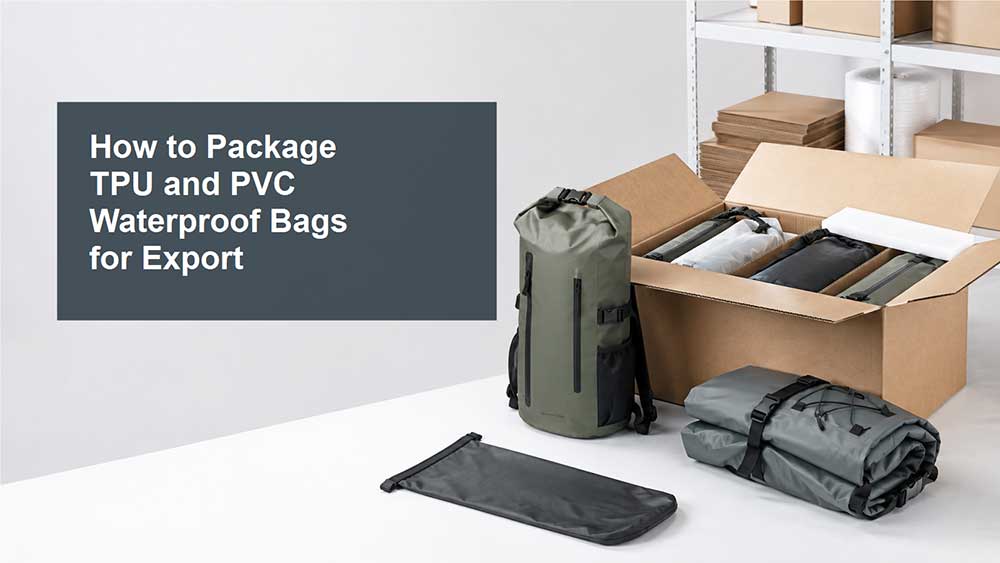
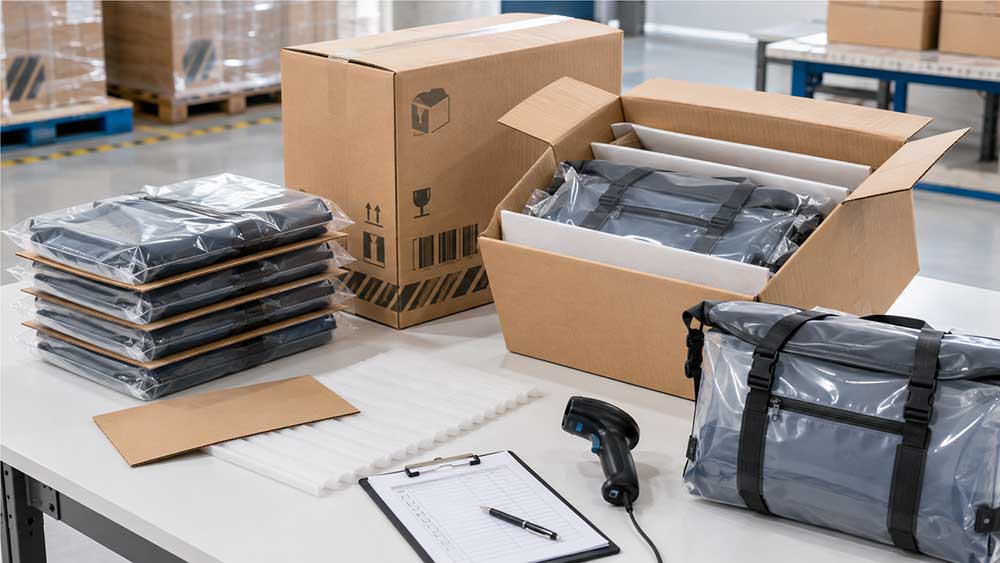
The right way to package TPU and PVC waterproof bags for export depends first on the size and structure of the product.
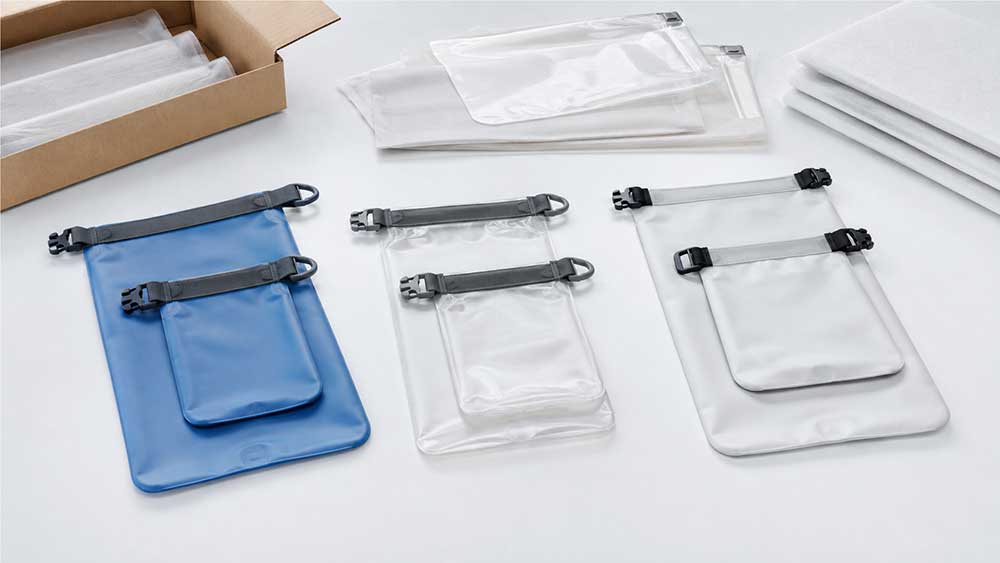
Small dry bags, including many 1L and 2L models, are normally packed flat without folding. Other small waterproof pouches can usually be packed the same way. Medium and large unstructured dry bags may need broad folds to fit the carton, while waterproof backpacks should not be folded because this can distort the back panel, shoulder straps, reinforcement areas, and overall bag shape.
Whatever the bag style, the packaging should protect its welded seams, coated surfaces, printing, closures, and hardware throughout storage and transport.
Product type
Recommended packing method
Main precaution
1L, 2L, and other small dry bags
Pack flat without folding
Keep buckles and webbing away from the bag body
Small waterproof pouches
Pack flat inside the individual package
Protect zippers, clear panels, and printing
Medium and large unstructured dry bags
Use broad folds only when necessary
Keep folds away from welded corners and rigid parts
Waterproof backpacks
Do not fold; maintain the original bag shape
Arrange straps carefully and use light support if needed
Structured waterproof duffels
Retain the shape wherever practical
Confirm any limited folding through a packing trial
“Packed without folding” does not mean that the product needs no packaging. Small bags may still require a protective sleeve, polybag, paper-based package, or retail box. They simply do not need to be folded to reduce their volume.
Packaging decisions should not be left until the end of production with instructions such as “pack normally” or “use an export carton.”
Before bulk packing begins, the buyer and manufacturer should agree on:
Whether the product will be laid flat, broadly folded, or supported to retain its shape
The direction in which the bag will be placed
The position of shoulder straps, webbing, buckles, zipper pulls, valves, and accessories
The individual packaging material and closure method
The number of units per master carton
Carton dimensions and any buyer weight limits
Barcode, labeling, carton-marking, and destination requirements
Whether the shipment will be palletized or floor-loaded
How the completed packaging will be checked
A short photo sequence is often clearer than written instructions alone. Keeping one approved packed sample also gives the packing line and final inspector a reliable reference.
Pack Only Clean, Dry, and Finished Products
Final packing should not begin while the bags are damp, contaminated, incompletely assembled, or waiting for another production process.
Before packing, check that:
The material, color, logo, and accessories match the approved specification
The bag is free from dust, oil, loose threads, and adhesive residue
Printing and bonded components have completed the required curing or setting time
Welded seams and closures have passed the agreed checks
The inside and outside of the bag are dry
Buckles, straps, valves, zipper pulls, and removable accessories are complete
Packaging should never be used to hide an existing product problem. If a welded edge is already lifting, carton pressure will not correct it. It may simply make the damage more difficult to identify before shipment.
For welded products, complete the relevant RF-welded seam inspection before approving the final packing method.
Pack Small Dry Bags Flat
Small dry bags generally do not need to be folded.
Many 1L and 2L models can be laid flat, with the buckle and webbing positioned so they do not press into the coated body. The bag can then be placed directly into its approved individual packaging.
The same approach works for many small waterproof pouches. Packing them flat reduces the risk of:
Unnecessary creases
Pressure marks from buckles or zipper pulls
Distortion around clear windows
Damage to printed logos
Stress around welded corners
If several small bags are stacked in the same carton, arrange bulky hardware so that buckles do not form one hard pressure column through the stack.
These bags still need protection against dust, rubbing, moisture, and incorrect labeling. They simply do not need to be folded to fit the carton.
Fold Larger Dry Bags Only When Necessary
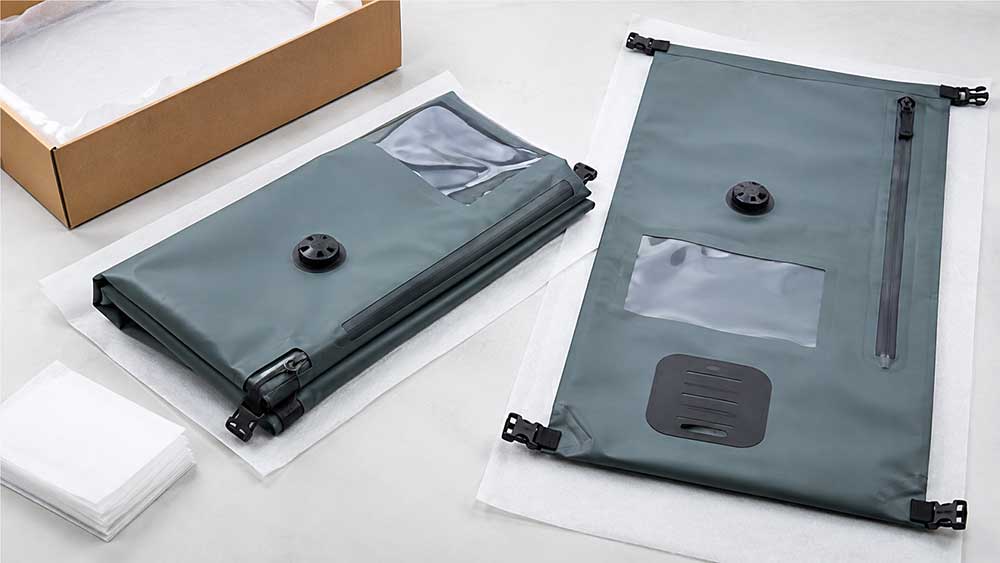
Medium and large unstructured dry bags may be too long or wide to pack flat. In this case, use a small number of broad, gentle folds.
Before deciding where to fold, lay the finished bag flat and identify sensitive areas such as:
Welded corners and seam intersections
Roll-top edges
Waterproof zipper tracks and zipper ends
Valves and molded components
Printed, glossy, or clear panels
Reinforcement patches
Buckles, hooks, clips, and metal fittings
Areas where several material layers meet
Whenever possible, place the fold across a broad, flexible body panel. Avoid tight creases across welded corners, zipper ends, valves, rigid fittings, or thick material transitions.
If a fold must cross a straight welded section, use a packing trial to confirm that the seam and surrounding material recover without cracking, lifting, or permanent distortion.
If a large dry bag cannot fit the proposed carton without several tight folds, using a larger carton may be safer than compressing the product further.
Do Not Fold Waterproof Backpacks
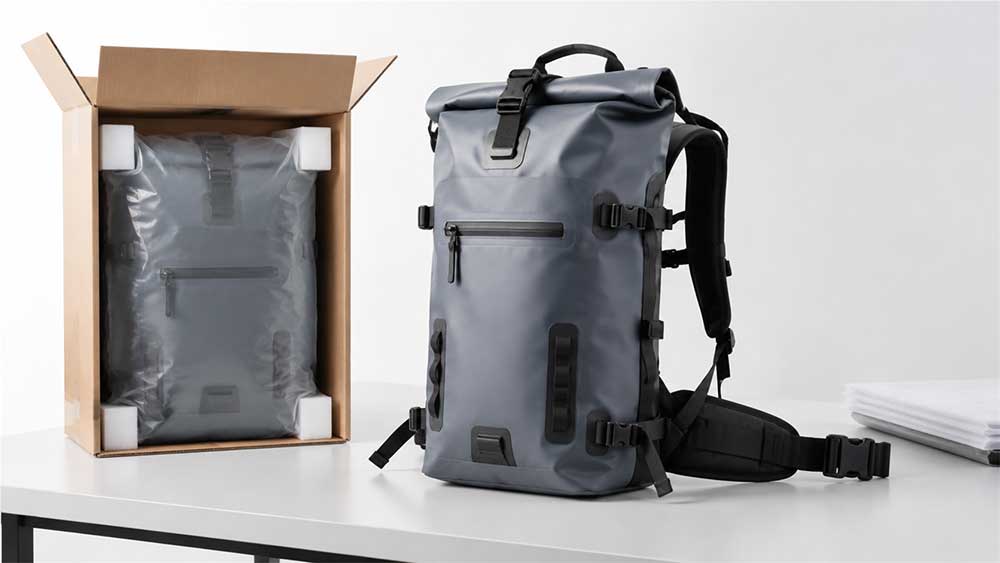
Waterproof backpacks should normally be packed in their original shape rather than folded.
Folding a backpack may deform:
The back panel
Shoulder straps
Padding
Reinforcement panels
Welded attachment areas
Front and side panels
Zipper openings
The overall silhouette
Arrange the shoulder straps and waist belt naturally against the back of the backpack. Do not push all the webbing and buckles into one area, where they can create a concentrated pressure point.
If the backpack needs support, use clean, lightweight filling or a suitable insert. It should help the bag retain its shape without stretching the seams or placing the coated panels under constant tension.
Structured waterproof duffels should be handled in a similar way. If limited folding is unavoidable, confirm the position and result through an actual packing trial.
Consider the Actual TPU or PVC Construction
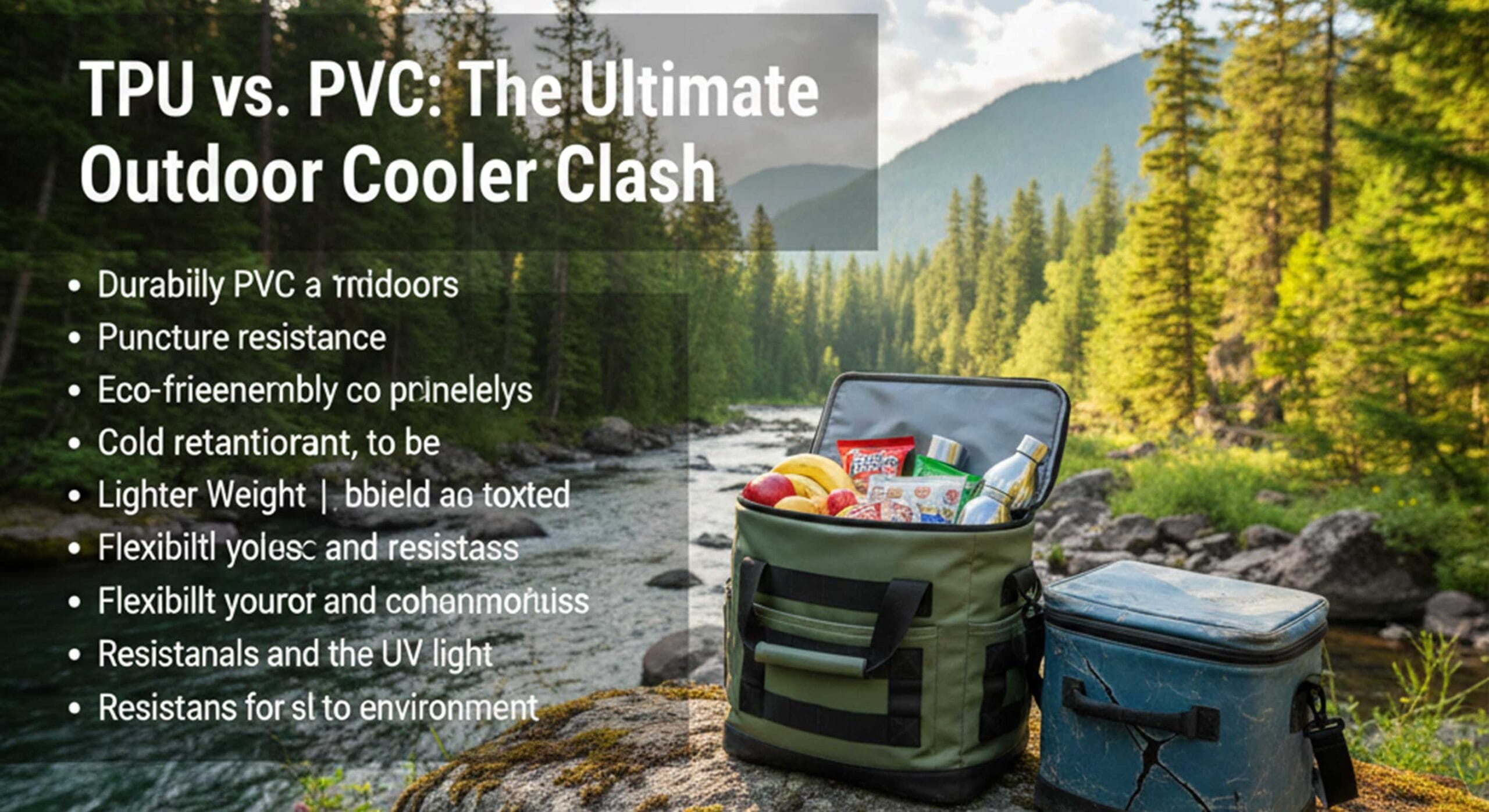
TPU and flexible PVC can respond differently to pressure, temperature, surface contact, and repeated folding. However, the material name alone does not determine the correct packaging method.
The result also depends on:
Material grade and formulation
Base fabric
Coating or film thickness
Surface texture and finish
Printing process
Laminate construction
Reinforcement layers
Expected transport temperature
A lightweight TPU laminate, a thick PVC-coated polyester fabric, and a transparent film product may all behave differently in the same carton.
The packaging trial should therefore use the material intended for bulk production, not a visually similar substitute. The differences between common constructions are explained in this waterproof bag material comparison.
If the shipment may experience unusually hot or cold conditions, include those conditions in the review. This guide to waterproof bags and temperature changes provides useful background, but the final decision should still be based on the material used for the order.
A practical review is to pack several finished bags in the proposed arrangement, place them under a stacking load that reflects the expected shipment, and then unpack them.
Look for:
Folds that recover too slowly or remain permanent
Whitening, cracking, or surface distortion
Sticking between adjacent surfaces
Transferred color or printing
Pressure marks from hardware
Changes around welded seams
Distorted closures or panels
There is no universal load or holding time for this check. The conditions should reflect the product, carton arrangement, shipping route, and expected storage period.
Prevent Hardware From Damaging the Bag
Many packaging problems occur because one part of the product presses against another during storage or transport.
A buckle can leave a mark on a coated panel. A zipper pull can scratch a clear window. A hook or valve can press into the next bag in the carton. Loose webbing may also rub against printing during transport.
Before placing each bag in its individual packaging:
Lay straps and webbing flat instead of bunching them into one pressure point.
Position zipper pulls where they cannot press into the bag body.
Wrap or separate metal parts, hooks, valves, and rigid fittings when necessary.
Prevent the hardware of one bag from contacting the coated surface of another.
Close buckles only when required by the approved packing arrangement.
Use clean, non-abrasive separators that are suitable for contact with the bag surface.
Avoid placing newspaper, heavily printed recycled paper, dirty cardboard, or unknown plastic directly against clear, light-colored, glossy, or printed panels. During a long shipment, unsuitable contact materials may leave marks, transfer color, stick to the surface, or reduce its gloss.
If two materials will remain in contact throughout transport, test that combination before bulk packing.
Define the Individual Packaging
Individual packaging protects the product from dust, surface contact, and uncontrolled accessory movement. It also affects how the product looks when the carton is opened.
Depending on the product and sales channel, it may be:
A protective sleeve
A polybag
A paper-based bag
A dust bag
A retail box
A shaped insert with an outer package
The packing specification should state:
Packaging material and dimensions
Closure method
Product orientation
Accessory position
Whether ventilation is needed
SKU, color, and size identification
Barcode requirements
Applicable warnings or recycling marks
Whether the product is laid flat, folded, or supported to retain its shape
Do not copy warnings or recycling marks from another order without checking them. Polybag warnings, retail labels, country-of-origin information, and recycling instructions should match the requirements of the destination market, importer, retailer, and product.
Be Careful With Vacuum Compression
Vacuum compression should not be the default packing method for TPU or PVC waterproof bags.
It can create sharp creases and concentrate pressure around welds, closures, reinforcement panels, printing, and hardware. Waterproof backpacks, structured bags, and products with clear panels may be especially sensitive to distortion or pressure marks.
Use vacuum packing only when the exact product and material have passed a packing trial and return to an acceptable condition after unpacking.
Select the Master Carton From the Actual Pack-Out
Choose the master carton after confirming the product’s final packed size, orientation, quantity, and weight.
Consider:
Gross carton weight
Carton dimensions
Number of units
Product orientation
Empty space inside the carton
Expected stacking conditions
Handling and distribution method
Transport duration
Humidity exposure
Palletized, floor-loaded, parcel, or mixed distribution
Descriptions such as “five-ply export carton” are not enough to approve a carton.
Board construction matters, but carton performance also depends on its dimensions, loading direction, closure, internal fit, stacking pattern, and transport environment.
Too much empty space allows products to move and may reduce carton stability. Overfilling creates outward pressure, makes the carton difficult to close, and may crush the bags inside.
The carton should close normally without forcing down the flaps. The contents should remain stable without being placed under unnecessary compression.
This is especially important for waterproof backpacks. Reducing carton height by folding or heavily compressing the backpacks may deform their shape and leave visible pressure marks.
If dividers, liners, void fill, or moisture barriers are required, include them in the approved specification. They are part of the packaging system and should not be changed during production without review.
Manage Moisture Without Relying Only on Desiccants
A waterproof bag does not make its shipping carton waterproof.
Moisture may enter the packaging system through:
A bag packed before it is fully dry
Damp cartons or pallets
A humid packing environment
Condensation caused by temperature changes
Water entering a truck or container
Prolonged storage in a wet location
Start with dry products, dry cartons, suitable storage, and a clean, dry, damage-free truck or container.
Desiccants and container moisture-control products may help on some routes, but they cannot compensate for damp products, wet pallets, damaged containers, or poor loading practices.
There is no universal desiccant quantity for every export shipment. The requirement depends on the route, season, transit time, packaging volume, barrier materials, container condition, and buyer instructions.
For shipments with a higher moisture risk, the packaging or logistics provider should calculate and document the moisture-control plan.
Check Carton Marks and Barcodes
Carton marks should allow the shipment to be identified without opening the carton.
Depending on the order, they may include:
Buyer or consignee
Purchase order number
Product description
SKU, color, and size
Quantity
Carton sequence
Net and gross weight
Carton dimensions
Country-of-origin information where applicable
Barcode and required handling symbols
Check that the information matches the purchase order and packing list.
A barcode that scans successfully but identifies the wrong SKU is still incorrect. Inspectors should check both scanability and the encoded information.
Prepare Pallets and Containers Properly
For palletized shipments, check that:
Cartons fit within the pallet footprint
The stacked load remains stable
Lower cartons are not being crushed
Edge protection is used where needed
Straps and stretch film do not damage the cartons
The pallet is suitable for the destination market
Solid-wood pallets, crates, and raw-wood dunnage used in international trade may be subject to ISPM 15 requirements. Processed wood materials such as qualifying plywood are treated differently, so confirm the actual packaging material and destination requirements.
For floor-loaded containers, do not focus only on filling the available space. Carton arrangement, weight distribution, movement prevention, and unloading safety should be planned together.
The IMO/ILO/UNECE CTU Code provides internationally recognized guidance on packing and securing cargo transport units.
Securing materials should stabilize the load without crushing the cartons or damaging the products inside. Over-tightening straps or forcing too many cartons into a restricted space may create the same pressure damage that the packaging is intended to prevent.
Test the Complete Packaging System
The bag, individual packaging, master carton, pallet, and loading arrangement need to work together as one packaging system.
Prepare a representative packed carton using:
Finished bags made with the intended production materials
The approved way of laying the products flat or folding them
Approved individual packaging
The planned number of units
Actual separators and protective materials
The proposed master carton and sealing tape
The checks should reflect the expected distribution risks. Depending on the route and sales channel, they may include:
Unpacking and appearance review after compression
Carton handling or drop checks
Vibration or movement checks
Carton stacking or compression evaluation
Barcode scanning
Carton weight and dimension verification
Pallet stability review
Trial container loading
Not every order needs every possible test. The purpose is to determine whether the proposed packaging can protect the product through its expected shipping and distribution route.
After the trial, unpack the bags and inspect:
Coated and clear surfaces
Folded areas on larger dry bags
Welded seams
Zippers and roll-top closures
Printing
Backpack panels and shoulder straps
Reinforcement areas
Hardware contact points
Overall product shape
A carton may look acceptable from the outside while the products inside have pressure marks, distorted panels, or permanent creases.
The approved packing record should show the packing method, individual packaging, units per carton, carton dimensions, protective materials, carton marks, loading arrangement, trial results, and reference photos.
Final inspection should take place after enough units have been packed using the approved method. It should cover carton assortment, quantities, marks, barcodes, packaging materials, and the condition of unpacked products.
Good export packaging does more than fit TPU and PVC waterproof bags into the smallest possible carton.
Small dry bags and small waterproof pouches should generally be packed flat without folding. Medium and large unstructured dry bags may be folded broadly when their size requires it. Waterproof backpacks should maintain their original shape and should not be folded.
The packaging must also protect coated surfaces, keep concentrated pressure away from welded seams and hardware, control movement and moisture, and allow the products to arrive in an acceptable condition.
The most reliable approach is to document the packing method, test it with actual production samples, and approve the complete packaging system before packing the full order.
For custom projects, an experienced waterproof bag manufacturer can review the product structure, packing method, individual packaging, carton configuration, and inspection requirements during sampling rather than leaving these decisions until shipment.
FAQ
Do 1L and 2L dry bags need to be folded for export?
Usually not. Many 1L and 2L dry bags can be laid flat inside their individual packaging. Position the buckle and webbing so they do not press into the coated body or create a hard pressure point through the stack.
Can TPU and PVC waterproof bags use the same packaging?
They may use the same basic packaging format, but this should not be assumed. Material construction, surface finish, printing, stiffness, hardware, clear panels, and expected temperatures can all affect the result. Test the actual production materials in the proposed packaging.
What should a buyer do if larger dry bags remain creased after unpacking?
Check whether the crease recovers within the agreed evaluation period. If it remains visible or affects the product’s shape, review the fold position, carton pressure, units per carton, and storage conditions. A broader fold or larger carton may be required.
How much desiccant should be placed in each export carton?
There is no reliable universal quantity. The amount depends on the shipping route, season, transit time, packaging volume, barrier materials, container condition, and buyer requirements. Higher-risk shipments should use a documented moisture-control plan.
When should the packing method be tested again?
Review or repeat the packing trial when the material, product dimensions, surface finish, printing, hardware, folding method, individual packaging, carton dimensions, units per carton, shipping route, or pallet arrangement changes.








Comments are closed