OEM vs ODM vs Private Label Bags: Which Is Right for Your Brand?
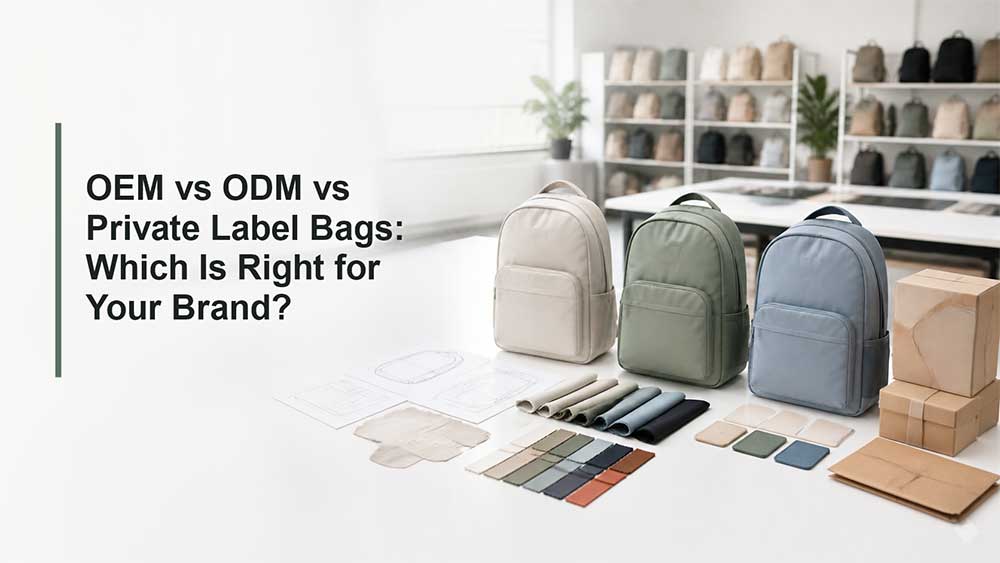
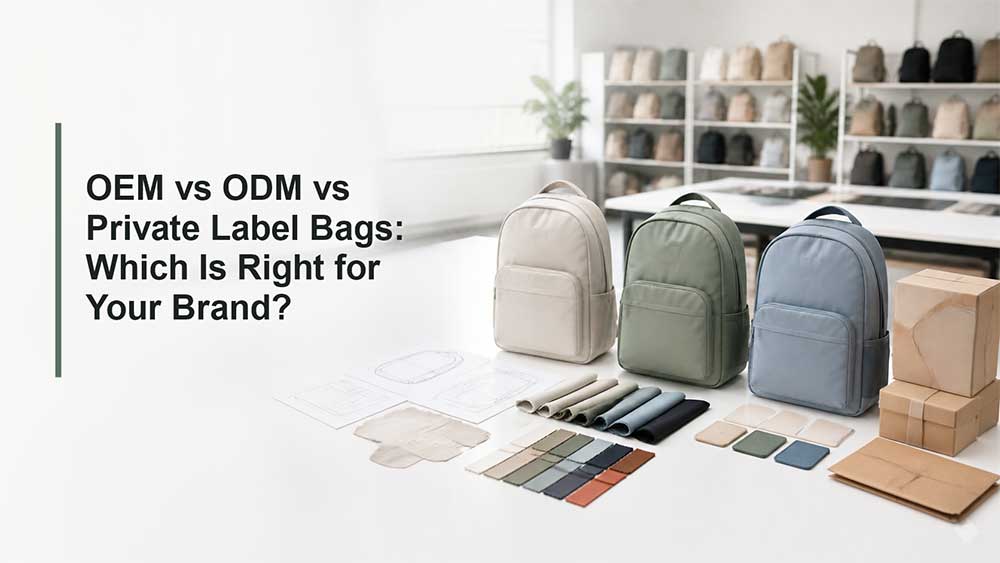
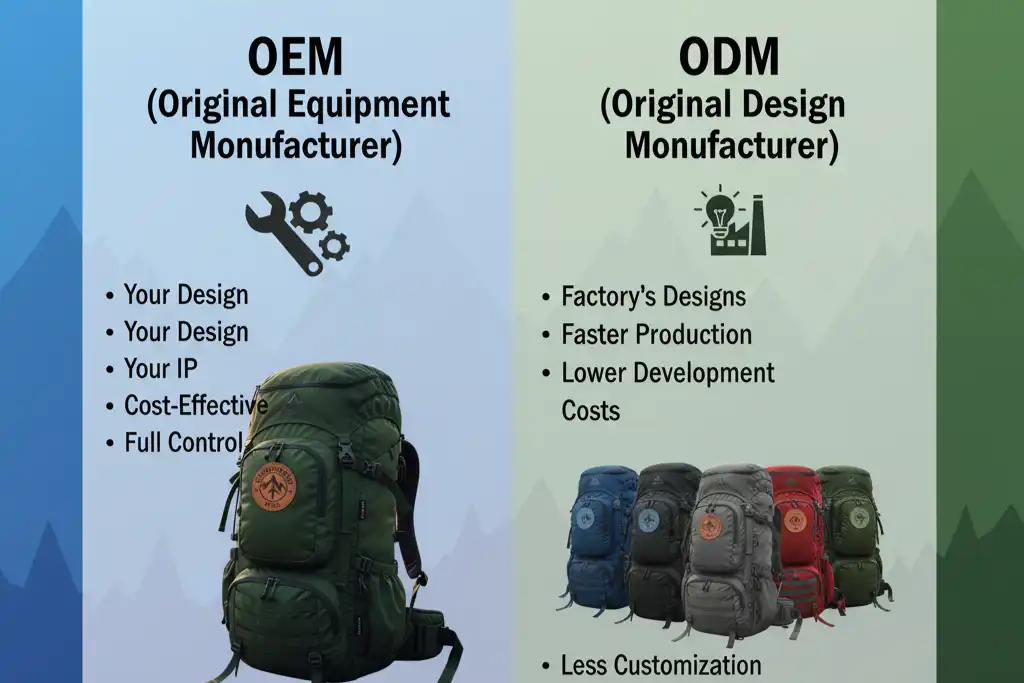
The simplest difference between OEM and ODM bag manufacturing is who provides the base design:
OEM: The customer provides the original design, and the factory develops and manufactures it.
ODM: The factory provides or leads the base design, and the customer selects or adapts it.
Private label: The customer adds branding to an existing or ready-to-produce bag with little or no structural change.
A factory can still help improve materials, construction, patterns, and manufacturability in an OEM project. Technical assistance from the factory does not automatically make the project ODM. The main question is where the base product design came from.
These terms are not used consistently by every supplier. Before choosing a manufacturing model, buyers should confirm what the factory will design, what the customer must provide, which details can change, and who controls the patterns, tooling, and final product specifications.
Tech Pack, drawing, reference sample, or original product brief
Product category, target market, functions, and style direction
Logo, label, packaging, and quantity
Factory’s main role
Engineering, pattern making, sampling, sourcing, and production
Product design, development, adaptation, and production
Branding, packaging, and supply
Structural customization
High
Moderate
Limited
Product differentiation
High
Moderate
Low
Development time
Usually longest
Usually shorter
Usually shortest
Development investment
Usually highest
Moderate
Usually lowest
Exclusivity
Must be agreed in writing
Often limited unless negotiated
Usually limited
Best suited to
Original and signature products
Brands needing design support or a faster starting point
Market tests, promotions, and supporting products
These are practical industry descriptions rather than universal legal definitions. The written project scope is more important than the name used in a supplier’s sales materials.
What Is OEM Bag Manufacturing?
OEM stands for Original Equipment Manufacturer.
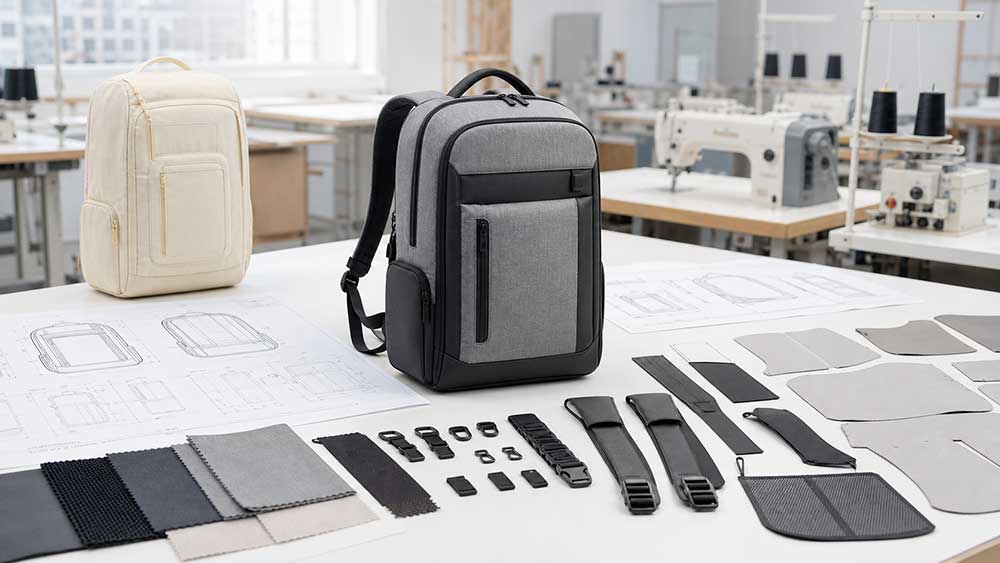
In a typical OEM bag project, the customer already has an original design or a clear product concept. The factory’s job is to turn that design into a product that can be sampled, tested, and manufactured consistently.
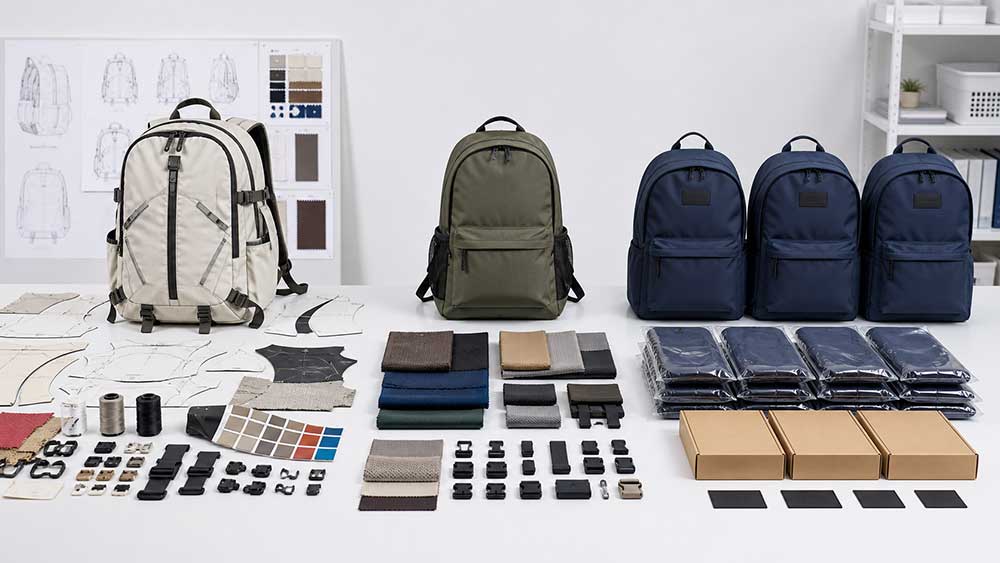
The customer may provide:
A complete Tech Pack
Technical drawings
A physical reference sample
Dimensioned sketches
An original functional brief
Material and component requirements
Branding and packaging instructions
Performance or testing requirements
The factory then supports work such as:
Reviewing technical feasibility
Developing or adjusting patterns
Recommending suitable materials
Making prototypes
Improving construction
Calculating material consumption and cost
Preparing the approved design for bulk production
Inspecting and packing the finished order
A clear example would be a brand that has designed its own business backpack, including the dimensions, pocket layout, laptop compartment, materials, carrying system, and logo position. The factory opens the patterns, makes samples, helps resolve production issues, and manufactures the approved product.
That is OEM:
The customer’s design, developed and manufactured by the factory.
Factory support does not turn OEM into ODM
An OEM factory does not have to follow a drawing blindly.
For example, the factory may notice that:
A zipper opening is too tight for reliable sewing
The selected fabric needs additional backing
A shoulder strap anchor requires reinforcement
A pocket cannot be assembled in the proposed order
A material choice conflicts with the target cost
A dimension needs adjustment after foam and binding are added
The factory can recommend solutions while the customer retains the original product direction. This is engineering and manufacturability support within an OEM project, not necessarily ODM.
OEM is usually appropriate when the product is a brand’s signature design, its structure creates a competitive advantage, or the customer needs specific dimensions, materials, functions, and performance.
What Is ODM Bag Manufacturing?
ODM stands for Original Design Manufacturer.
In a typical ODM project, the factory already has a design, product concept, pattern, or production-ready base style. The customer chooses that direction and adapts it for the target brand or market.
The customer may begin by telling the factory:
We need a professional commuter backpack for the European market. It should have a padded laptop compartment, a clean appearance, and space for daily work essentials.
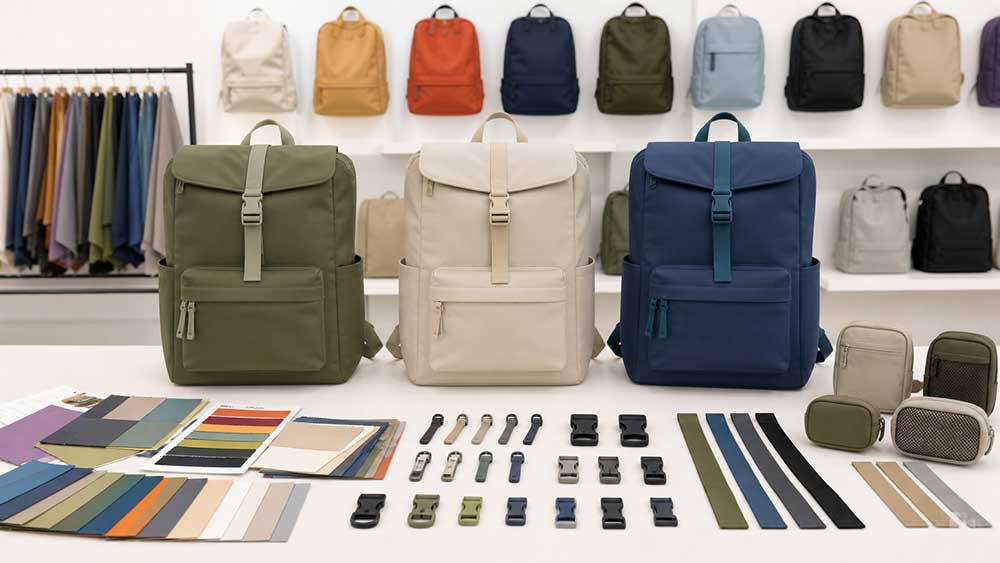
The factory can then propose existing or newly developed designs and help the customer select or modify:
Overall style
Fabric and color
Lining
Pocket organization
Straps and handles
Zippers and hardware
Logo method
Labels and packaging
Selected dimensions or functions
This is ODM:
The factory’s base design, selected or adapted by the customer.
ODM can help a brand move faster because the factory has already completed part of the design, pattern, sourcing, or production-development work.
However, the extent of customization matters. Changing only the color and logo is a relatively light modification. Changing the opening, dimensions, internal structure, carrying system, and major panels may require new patterns and several sample rounds. The project can then begin to operate more like OEM, even if the supplier continues to call it ODM.
Does ODM Mean the Factory Is More Capable?
Real ODM capability is a positive sign because it usually requires more than sewing capacity.
A factory that can genuinely develop its own bag designs may have:
Product designers
Pattern makers
A sample room
Material sourcing specialists
Costing and engineering staff
Product testing and evaluation processes
Experience converting ideas into production-ready products
This can be valuable for customers who do not have an internal product-development team.
However, a factory’s claim that it provides ODM does not automatically prove that it has these capabilities. Some suppliers use ODM to describe selecting a catalog style, changing the color, and adding a logo. The designs may come from an outside studio, a market sample, or another source rather than an in-house design team.
ODM capability also does not automatically mean the factory is stronger in every area. A factory may be good at developing new styles but weak in production control, delivery, or quality consistency. Another factory may have no internal product designer but be excellent at interpreting customer Tech Packs and producing complex OEM orders.
The two factories may simply have different strengths:
OEM strength: Accurately developing and producing the customer’s design
ODM strength: Creating or supplying a design direction and helping the customer develop it
How to verify real ODM capability
Ask the supplier:
Are the existing styles developed by your own team?
Do you have full-time product designers and pattern makers?
Can you develop a design from a written product brief?
Can you provide sketches, material proposals, and functional options?
Do you operate your own sample room?
Can the design be adjusted to meet a target cost?
How often do you develop new styles?
Are your base designs offered to multiple customers?
What level of exclusivity is available?
Who owns the final drawings, patterns, and tooling?
A genuine ODM supplier should be able to explain how a product moves from concept to drawing, pattern, sample, testing, costing, and bulk production—not simply show a catalog.
What Are Private Label Bags?
Private label bags are existing or ready-to-produce products sold under the customer’s brand.
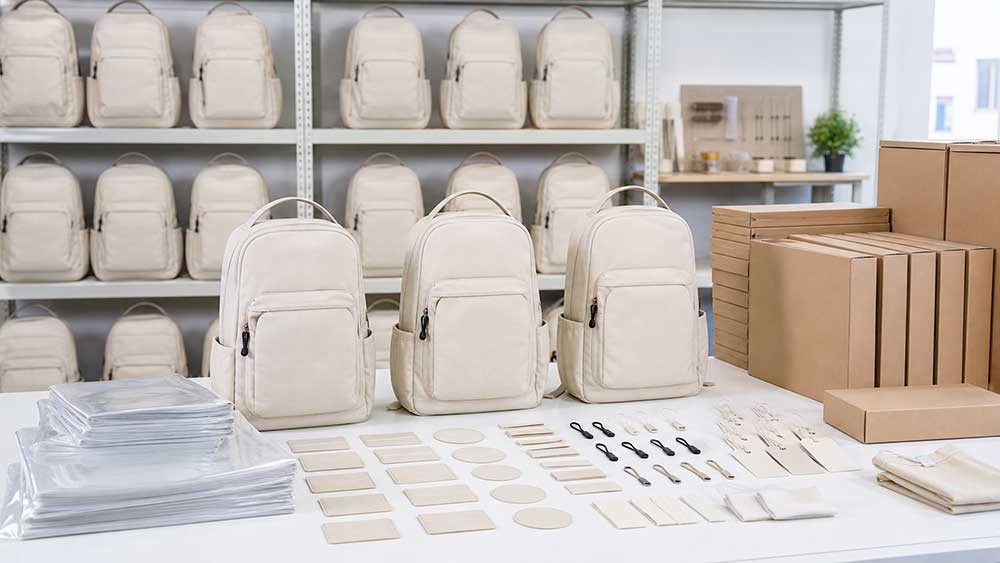
Customization usually focuses on:
Printed or embroidered logos
Woven labels
Rubber or PU patches
Branded zipper pulls
Hangtags
Barcode labels
Polybags or retail packaging
Carton marks
Some private label programs use finished stock. Others manufacture the selected style after the order is confirmed. This distinction affects MOQ, color availability, lead time, and the amount of customization available.
Private label works well when:
The brand wants to test a market
Speed is more important than structural uniqueness
The bag is a promotional or corporate gift item
The product supports a wider collection
An existing product already meets the intended use
The customer has limited development resources
The main trade-off is differentiation. Other brands may be able to purchase the same underlying product and apply their own logos.
Private label is not necessarily poor quality. It simply gives the customer less control over the product structure.
What If the Customer Has Only an Idea?
Not every project begins with a Tech Pack or finished design.
A customer may say:
We want a commuter bag that can carry both a laptop and gym clothing, but we do not yet have drawings.
There are several possible ways to proceed:
If the factory recommends an existing design and modifies it, the project is closer to ODM.
If the factory creates a new design from the customer’s original concept and retains the base design, it may also be treated as ODM.
If the factory provides a separate design service and the agreement states that the final design belongs to the customer, the project may proceed as design service plus OEM manufacturing.
The important questions are:
Is the design new or based on an existing factory style?
Who approves the product direction?
Who owns the final drawings and patterns?
Can the factory offer the design to other customers?
Is design work included in the sample fee or charged separately?
A customer does not need to force the project into a label before these questions are answered.
How to Choose the Right Model
Choose OEM when:
You already have an original design or clear product specification
The bag is a core or signature product
Structure and function differentiate your brand
You require specific materials, dimensions, or components
You are prepared for sampling and revisions
You expect repeat orders or a long-term product line
Choose ODM when:
You need the factory to provide or lead the design
You do not have a complete internal design team
A factory’s base style already meets most requirements
You want to launch faster than a fully original project allows
You need more differentiation than basic private labeling
You accept that the underlying design may not be fully exclusive
Choose private label when:
You mainly need a proven product with your branding
Speed and simplicity are priorities
You are testing demand or a new sales channel
The product is promotional or supports a larger collection
Structural uniqueness is not essential
You want to reduce initial development work
Compare MOQ, Cost, and Lead Time Carefully
OEM generally requires more development because it may involve pattern making, multiple samples, custom materials, special colors, tooling, or testing.
ODM can reduce some of this work by starting with an existing or factory-developed design. Private label can reduce development work further when the product and materials are already available.
However, no model guarantees a particular MOQ, cost, or lead time.
These may be influenced by:
Fabric supplier minimums
Custom colors and coatings
Zippers, webbing, and binding
Molded hardware
Logo methods
Packaging
Quantity per design and color
Factory production planning
Ask for the MOQ per style, color, material, and branding method. A low total MOQ may still hide a higher minimum for each custom fabric or color.
Brands comparing material options can review Vancharli Outdoor’s custom bag fabrics before deciding how much customization the project requires.
Manufacturing Model Does Not Determine Quality
OEM is not automatically high-quality, and ODM or private label is not automatically low-quality.
Quality depends on:
Product specifications
Materials and components
Construction
Workmanship standards
Approved samples
Production control
Testing
Inspection
Corrective action
A mature factory design with clear standards may be more reliable than an original OEM product with incomplete specifications.
Whenever a project changes materials, construction, branding, or packaging, the buyer should approve a physical sample and the supporting specifications before bulk production. Our guide to the bag sampling process explains how a product moves from the initial brief to a production-approved sample.
Design Ownership, Tooling, and Exclusivity
Do not assume that the words OEM or ODM automatically decide ownership.
The result may depend on:
Who created the original design
Who paid for the design and pattern work
Who paid for molds or tooling
What the manufacturing agreement says
Whether exclusivity was negotiated
Which jurisdiction applies
How confidential information is protected
Before development begins, consider documenting:
Ownership of drawings and Tech Packs
Ownership and access to patterns
Tooling ownership, storage, maintenance, and transfer
Use of trademarks and artwork
Treatment of factory-proposed improvements
Confidentiality obligations
Whether the product can be displayed or sold to others
What happens when the supplier relationship ends
The World Intellectual Property Organization explains that commercially valuable confidential information may qualify for trade-secret protection when access is limited and reasonable protection measures, such as confidentiality agreements, are used. Buyers can review the official WIPO guidance on trade secrets.
Legal protection varies by project and jurisdiction. Brands developing commercially important designs should obtain qualified legal advice rather than relying only on an OEM or ODM label.
A Brand Can Use More Than One Model
A company does not need to choose one model for its entire product range.
For example, a brand might use:
OEM for a signature backpack
ODM for coordinated travel accessories
Private label for promotional totes
A new brand may begin with ODM to test customer preferences and later develop an original OEM version based on sales and user feedback.
The right model depends on the role of each product, not whether the brand is new or established.
Questions to Ask Before Choosing a Supplier
Before accepting an OEM, ODM, or private label proposal, ask:
Who created the base design?
What design or product-development support will the factory provide?
Is the same design offered to other customers?
Which structural details can be changed?
Which changes require new patterns, tooling, or samples?
What is the MOQ per style, color, and material?
Who owns or can access the drawings, patterns, and tooling?
Which sample and specifications will control bulk production?
Can any part of the product be made exclusive?
How will confidential information and repeat orders be managed?
These answers are more useful than the OEM or ODM label shown on a supplier’s website.
Final Thoughts
The clearest distinction is simple:
OEM means the customer brings the base design and the factory develops and manufactures it. ODM means the factory brings or leads the base design and the customer selects or adapts it.
Private label requires the least product development and normally focuses on branding an existing product.
True ODM capability can indicate that a factory has stronger product-design and development resources. It does not automatically prove better manufacturing quality, capacity, or delivery performance. Those capabilities should be evaluated separately.
Vancharli Outdoor bags manufacturer supports both OEM and ODM projects. Customers can provide a Tech Pack, drawing, reference sample, or original product brief for OEM development. Buyers who need design support can also discuss suitable existing styles, functional requirements, target markets, materials, and branding with our product-development team to evaluate an ODM approach.
FAQ
Can an OEM factory help improve my design?
Yes. An OEM factory may recommend changes to materials, construction, reinforcement, patterns, and production methods. The project can still be OEM when the original product design and direction come from the customer.
Does ODM always mean the factory has an in-house design team?
No. Some factories use ODM to describe minor changes to existing catalog products. Ask whether the supplier has its own designers, pattern makers, sample room, and product-development process.
Is ODM better than OEM?
Neither is automatically better. OEM is more suitable when the customer already has a design and needs controlled manufacturing. ODM is more suitable when the customer needs the factory to provide or lead the design.
Can an ODM design be exclusive?
Possibly, but exclusivity is not automatic. It may apply to a particular modification, market, sales channel, or period. The scope should be negotiated and documented.
Is private label the same as ODM?
They can overlap, but private label usually involves less product modification. ODM normally includes more design selection, adaptation, or development, while private label focuses mainly on branding an existing product.
Who owns a bag design developed by the factory?
Ownership depends on the design source, payment arrangement, contract, and applicable law. It should be agreed in writing before commercially important development work begins.






Comments are closed