How to Pack a Hunting Backpack: A Practical Guide for Day and Multi-Day Hunts
Packing a hunting backpack is not only about fitting everything inside. A good packing system helps you move quietly, stay balanced, protect essential gear, and reach important items without emptying the whole pack in the field.
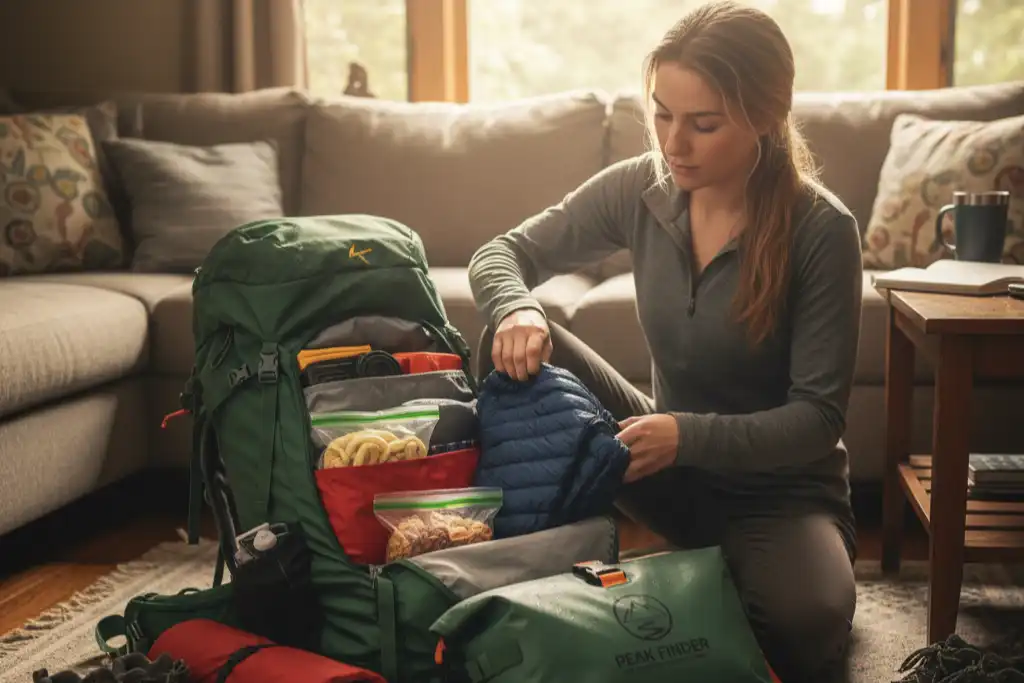
The best layout depends on your hunt length, terrain, weather, and hunting style. A short deer hunt from a stand does not require the same setup as a multi-day backcountry elk hunt. Still, the core principles are the same: keep weight close to your body, keep emergency items accessible, separate wet and dry gear, and avoid loose items that create noise.
This guide explains how to pack a hunting backpack by zones, what to keep within reach, how to adjust for day hunts versus multi-day hunts, and which backpack features make packing easier.
Before you pack, define the type of hunt you are preparing for. This prevents two common mistakes: carrying too much gear or leaving behind items you may need in changing conditions.
Ask yourself:
How many hours or days will I be out?
Will I return to a vehicle, cabin, or base camp?
Will I hike long distances or stay near one area?
Is the weather stable, cold, wet, or unpredictable?
Do I need space for meat, extra layers, or field dressing tools?
Will I carry a hydration bladder, water bottles, or a filter?
A day hunt usually needs water, food, clothing layers, safety gear, optics, field tools, and legal documents. A multi-day hunt adds shelter, sleep gear, cooking items, more food, extra insulation, and more careful load management.
If you are still building your basic setup, start with an essential hunting gear checklist before deciding how much space your backpack really needs.
Core Rules for Packing a Hunting Backpack
Keep Dense Weight Close to Your Back
Heavy and dense items should sit near your spine, not far away from your back panel. This helps the pack feel more stable and reduces the backward pull that makes your shoulders work harder. General backpack-loading guidance follows the same principle: heavy gear should be packed close to the back to create a more stable center of gravity.
For hunting, dense items may include:
Food bags
Water
Optics
Stove or cooking kit
Ammunition where legally carried
Compact tools
Meat load after a harvest
Avoid placing heavy gear at the very outside of the pack. That can make the backpack swing, pull backward, and feel heavier than it really is.
Put Soft and Light Gear Lower in the Pack
Soft items are useful for filling the bottom of the backpack and creating a stable base. These items do not need to be accessed every few minutes, so they can sit deeper in the pack.
Good bottom-zone items include:
Puffy jacket
Extra socks
Spare base layer
Sleeping bag for overnight hunts
Lightweight camp clothing
Compressible insulation layers
For a day hunt, the bottom zone can hold extra clothing or a packable insulation layer. For an overnight hunt, the sleeping bag and sleep clothing often go low in the pack.
Keep Must-Use Items Easy to Reach
Some gear should never be buried deep in the main compartment. If the weather changes, light fades, or someone gets injured, you need fast access.
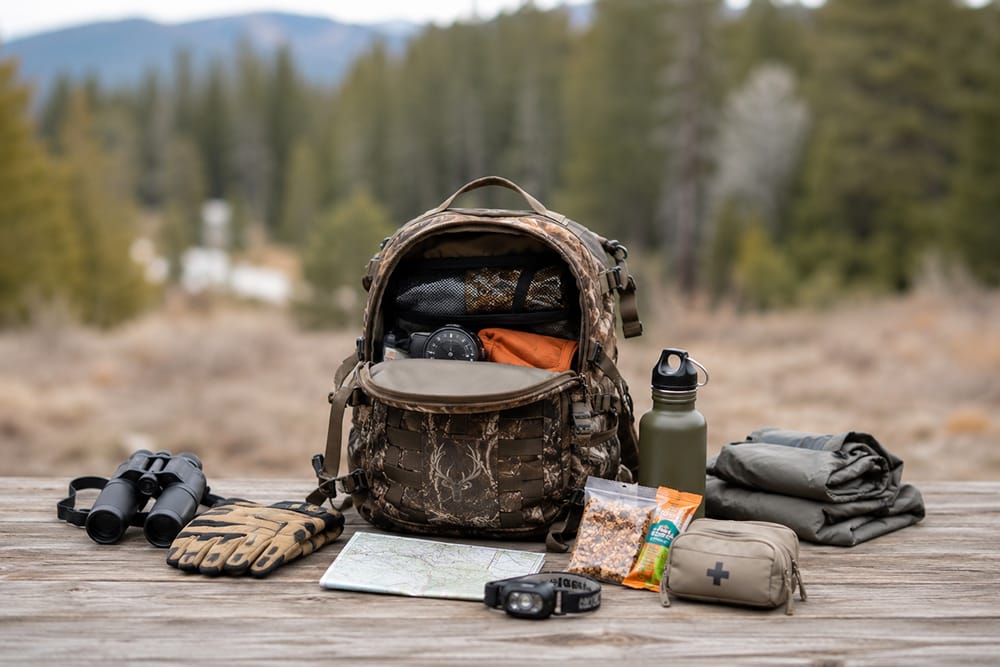
Keep these items near the top, in side pockets, hip belt pockets, or front pockets:
Rain shell
Headlamp
First aid kit
Gloves
Snacks
Map or GPS
License, tags, and permits
Rangefinder
Wind checker
Knife or multi-tool
Water filter or purification tablets
The Ten Essentials are a useful safety reference for outdoor trips because they cover core emergency categories such as navigation, illumination, first aid, insulation, fire, repair tools, nutrition, hydration, and emergency shelter.
Balance the Left and Right Sides
A hunting backpack should not pull harder on one shoulder. Balance side pockets and external attachments carefully. If one side holds a tripod, spotting scope, or water bottle, balance the other side with a similar weight when possible.
This matters more when walking over uneven ground, climbing slopes, crossing brush, or carrying meat after a harvest.
Reduce Noise Before You Leave
Hunting gear should be quiet. Metal, plastic, and loose tools can click against each other while walking. Before leaving, shake the pack lightly and listen.
To reduce noise:
Wrap metal tools in cloth or pouches.
Use small organizers for loose items.
Tighten compression straps.
Keep dangling straps secured.
Avoid hanging too much gear outside the pack.
Keep zippers fully closed and zipper pulls controlled.
A quiet pack is not only about fabric. It is also about how the gear is packed.
Keep Dry Gear Protected
Many hunting backpacks use water-resistant fabrics, but most are not fully waterproof unless designed with sealed construction. Use dry bags, zip bags, pack liners, or waterproof stuff sacks for items that must stay dry.
Protect:
Insulation layers
Sleeping bag
Fire starter
Electronics
First aid items
Extra socks
Paper documents
Emergency layers
A simple packing rule is to assume rain, wet grass, snow, or condensation may happen even if the forecast looks clear.
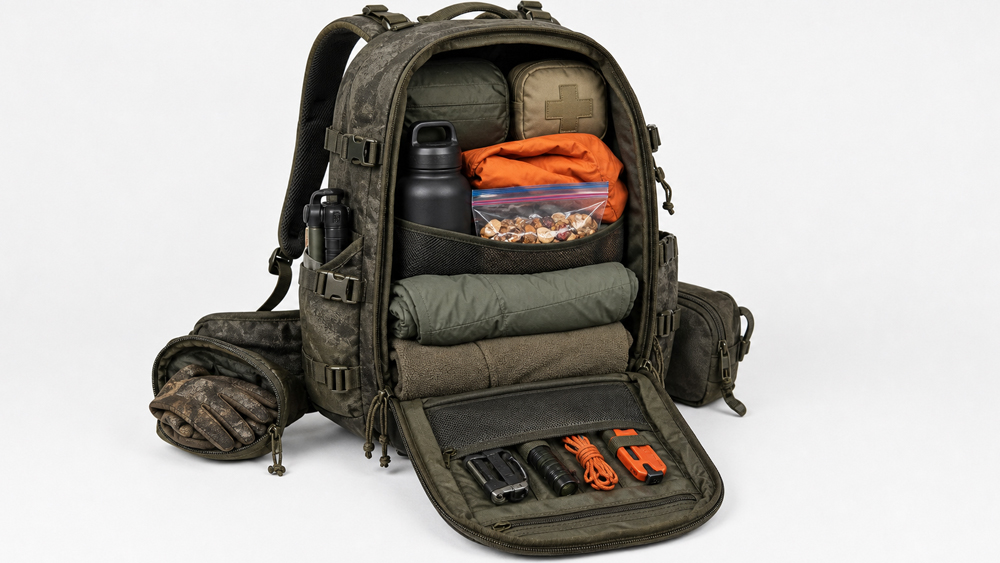
Hunting Backpack Packing Zones
A clear zone system makes packing easier and helps you remember where everything belongs.
Backpack Zone
What to Pack There
Why It Works
Bottom zone
Sleeping bag, extra clothing, soft insulation, spare socks
Soft items create a stable base and do not need constant access
Heavy items stay close to your spine for better balance
Front core zone
Mid-weight gear, kill kit, extra layers, camp items
Fills space without pulling the pack backward too much
Top zone
Rain shell, gloves, headlamp, snacks, map
Fast access without unpacking everything
Side pockets
Water bottle, tripod, trekking poles, filter
Useful for long items or items needed while moving
Hip belt pockets
Calls, wind checker, small snack, lip balm, small knife
Best for small items you use often
Front pocket
First aid, tags, gloves, emergency gear
Easy to find under pressure
Meat shelf or frame area
Game bags and meat load after harvest
Keeps dense weight closer to the frame and away from clean gear
This layout is flexible. The goal is not to follow one perfect formula, but to make the pack balanced, quiet, and easy to use.
How to Pack a Hunting Backpack for a Day Hunt
A day hunt usually requires a smaller and simpler setup. You do not need camp gear, but you still need safety items, weather protection, water, food, and enough space for field tools.
A practical day hunt layout looks like this:
Bottom of the Pack
Pack soft items that you may not need immediately:
Extra insulation layer
Spare socks
Lightweight gloves or beanie
Packable vest or jacket
Core Near Your Back
Pack heavier items close to your body:
Water bladder or water bottle
Food
Optics if not worn on a harness
Compact field tools
Small emergency kit
Top and Quick-Access Pockets
Keep frequently used gear where you can reach it quickly:
Rain shell
Headlamp
Snacks
First aid kit
Tags and license
Rangefinder
Wind checker
Calls
Gloves
Outside and Side Areas
Use external storage carefully:
Tripod or trekking poles
Water bottle
Packable seat pad
Light jacket if weather is stable
Avoid hanging too much gear outside the pack. External gear can catch on brush, shift your balance, and create noise.
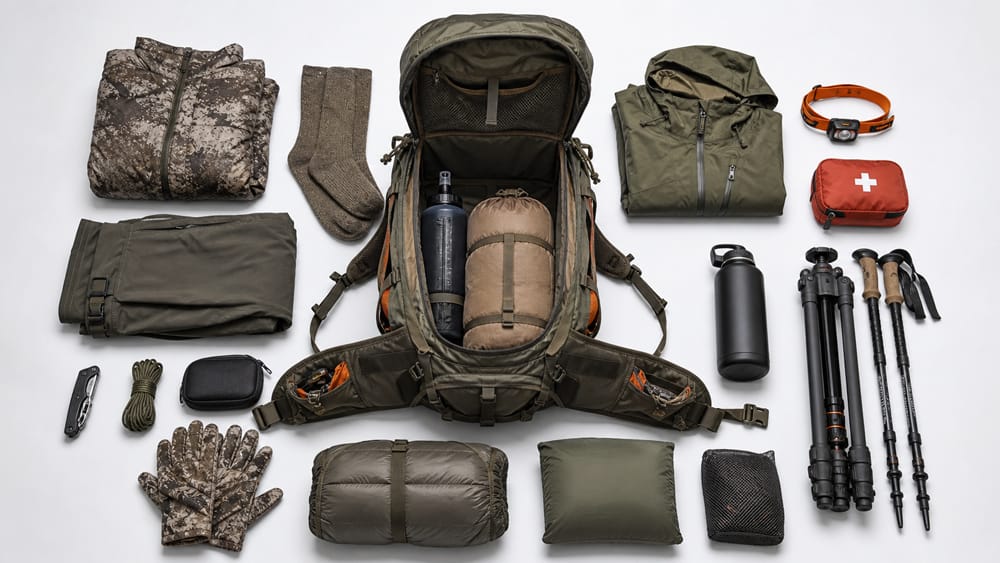
How to Pack for an Overnight or Multi-Day Hunt
A multi-day hunting backpack needs a more disciplined system because you are carrying camp, food, clothing, and hunting-specific gear at the same time.
Bottom Zone
Place soft camp items low:
Sleeping bag
Sleep clothing
Extra base layer
Puffy jacket if not needed while walking
Use a waterproof stuff sack or pack liner for the sleeping bag and clothing. Wet insulation can become a serious problem in cold conditions.
Core Zone
Keep dense items centered and close to your back:
Food bag
Water
Stove and fuel, packed safely and separated from food
Optics
Compact camp items
Dense tools
Food should be organized by day or meal type. Many hunters prefer to keep the current day’s food separate so they do not need to open the whole food bag during a break.
Top Zone
Keep weather and emergency gear easy to reach:
Rain shell
Warm hat
Gloves
Headlamp
First aid kit
Navigation tools
Water treatment
Emergency shelter or bivy
Exterior Storage
Use exterior storage for long or awkward items, but keep them secure:
Tripod
Trekking poles
Sleeping pad
Tent poles
Water bottle
Compress the pack after everything is loaded. A tight pack carries better, moves less, and makes less noise.
Where to Pack Hunting-Specific Gear
Optics
Binoculars are often carried on a chest harness, while spotting scopes and tripods may go inside or outside the backpack. If you pack optics inside, protect them with soft clothing and keep them away from hard tools.
Rangefinder and Calls
Small items used often should go in hip belt pockets, chest harness pockets, or a top pocket. Do not bury them in the main compartment.
Knife, Game Bags, and Kill Kit
A kill kit should be organized in one pouch so you do not search for separate items after a harvest. Common items may include a knife, replacement blades, game bags, gloves, cord, and small cleaning items. Keep this pouch accessible but protected from food and clean clothing.
License, Tags, and Documents
Keep legal documents in a waterproof sleeve or small zip bag. Store them in a pocket you can find quickly. Do not pack them loose at the bottom of the bag.
First Aid Kit
Your first aid kit should be easy to reach without unloading the entire backpack. For most hunters, a front pocket or top pocket works better than the bottom of the main compartment.
Rain Gear
Rain gear should be near the top of the pack or in a front pocket. If rain starts suddenly, you should not need to remove half your gear to reach your shell.
Water and Hydration
Water is heavy, so place it close to your back when possible. A hydration bladder works well when the backpack has a sleeve and hose routing. Bottles are easier to refill and monitor. Many hunters use both for longer trips.
For pack development, hydration-compatible pack design can make field movement easier by adding a bladder sleeve, hose port, stable routing, and enough structure to keep water from shifting.
How to Leave Space for Meat
If there is a real chance of packing out meat, do not fill every inch of your backpack at the start of the hunt. Leave usable space or use a pack with a frame, load shelf, or expandable structure.
After a harvest:
Keep meat in game bags.
Keep dense meat load close to the frame.
Separate meat from clean clothing, food, and sleep gear.
Use compression straps to stop shifting.
Rebalance side weight before hiking out.
Move nonessential soft items to the outside if needed.
Meat is dense and can change how the pack carries. Take time to repack carefully before the hike out.
What Backpack Features Make Packing Easier?
A good packing system depends partly on the backpack itself. Some designs are easier to organize, compress, and carry than others.
Useful hunting backpack features include:
Main compartment with enough depth for layers and food
Front pocket for first aid and emergency items
Hip belt pockets for small quick-access tools
Side pockets for bottles, tripod, or poles
Compression straps to reduce movement
Hydration sleeve and hose port
Quiet zipper pulls and low-noise fabric
Reinforced bottom panel
Stable shoulder straps, sternum strap, and waist belt
Load-support structure for heavier gear
For brands developing custom hunting backpacks, packing performance should be considered during the design stage, not only after the bag is finished. From an OEM/ODM manufacturing perspective, Vancharli Outdoor usually treats pocket layout, compression straps, hydration compatibility, quiet hardware, and reinforced load-bearing seams as key design details for hunting and tactical backpacks.
Many structural details used in a tactical backpack manufacturer project, such as reinforced stitching, MOLLE-style attachment areas, compression systems, and back panel support, can also improve hunting pack organization when applied carefully.
Common Hunting Backpack Packing Mistakes
Packing Too Much
Overpacking makes walking harder, increases fatigue, and leaves less room for meat or unexpected gear changes. Every item should have a clear job.
Burying Emergency Gear
A first aid kit, headlamp, rain shell, and navigation backup should not be at the bottom of the pack. These items are most useful when they are easy to reach.
Placing Heavy Items Too Far From the Back
Heavy items packed far away from your spine make the backpack feel unstable. Keep dense gear close to the back panel.
Letting Gear Hang Loose Outside
A few external items are fine, but too much dangling gear creates noise, catches brush, and affects balance.
Forgetting Weather Protection
Even a short hunt can become uncomfortable if insulation, socks, paper documents, or electronics get wet. Use waterproof storage for critical gear.
Not Practicing Before the Hunt
Pack the bag at home, wear it loaded, walk around, and adjust the layout. If something feels awkward at home, it will feel worse after several hours in the field.
Final Pre-Hunt Backpack Check
Before leaving, run through a simple check:
Is the pack balanced left to right?
Are heavy items close to your back?
Can you reach your rain shell quickly?
Can you reach your first aid kit quickly?
Is your headlamp accessible?
Are tags, license, and documents protected?
Are dry items protected from rain or moisture?
Are metal items quiet?
Are compression straps tightened?
Is there room for meat or extra layers if needed?
A well-packed hunting backpack should feel stable, quiet, and predictable. You should know where your key items are without digging through every pocket.
FAQ
What should go in a hunting backpack first?
Start with soft, low-priority items such as extra clothing, insulation, or a sleeping bag for overnight hunts. Then pack dense items close to your back, followed by quick-access items near the top or outside pockets.
Where should the heaviest items sit in a hunting pack?
The heaviest items should sit close to your back and near the center of the pack. This keeps the load more stable and reduces backward pull on your shoulders.
Should first aid gear be inside or outside the main compartment?
First aid gear should be protected but easy to reach. A top pocket, front pocket, or clearly marked internal pocket is better than the bottom of the main compartment.
Is it better to use a hydration bladder or water bottles?
Both can work. A hydration bladder allows drinking while moving, while bottles are easier to refill and check. For longer hunts, many people carry a bladder plus one bottle or a filter.
Should I hang gear outside my hunting backpack?
Only hang gear outside when necessary. External gear can make noise, catch on brush, and affect balance. Long items such as tripods, trekking poles, or sleeping pads should be tightly secured.
How much empty space should I leave in my pack?
Leave enough space for removed layers, food changes, or meat after a harvest. A pack that is completely full at the start of the hunt gives you less flexibility later.
How do I keep my hunting backpack quiet?
Use pouches for small tools, wrap metal items, tighten compression straps, secure loose webbing, and avoid dangling gear. Walk with the loaded pack before the hunt and listen for noise.
What changes for cold-weather hunting?
Cold-weather packing usually requires more insulation, extra gloves, a warm hat, dry socks, emergency shelter, and better moisture protection. Keep warm layers accessible so you can add them before you get too cold.






Comments are closed