Can Dogs Use Swim Buoys? Safety Limits & Alternatives
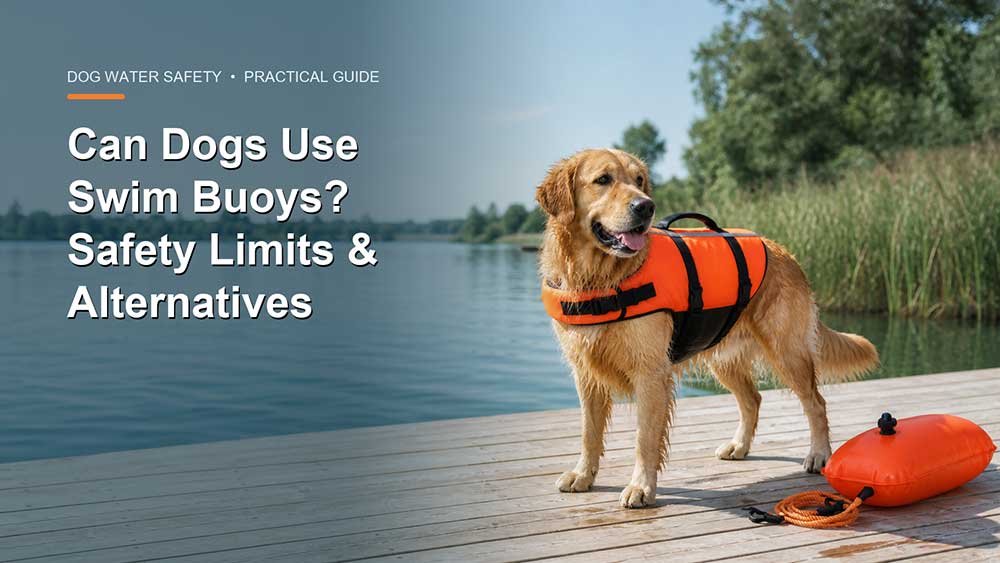
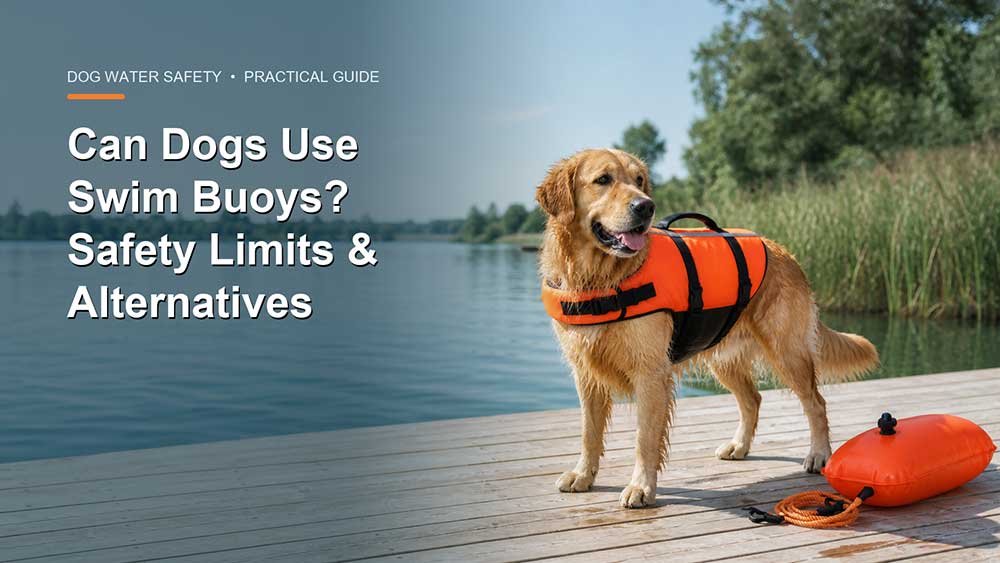
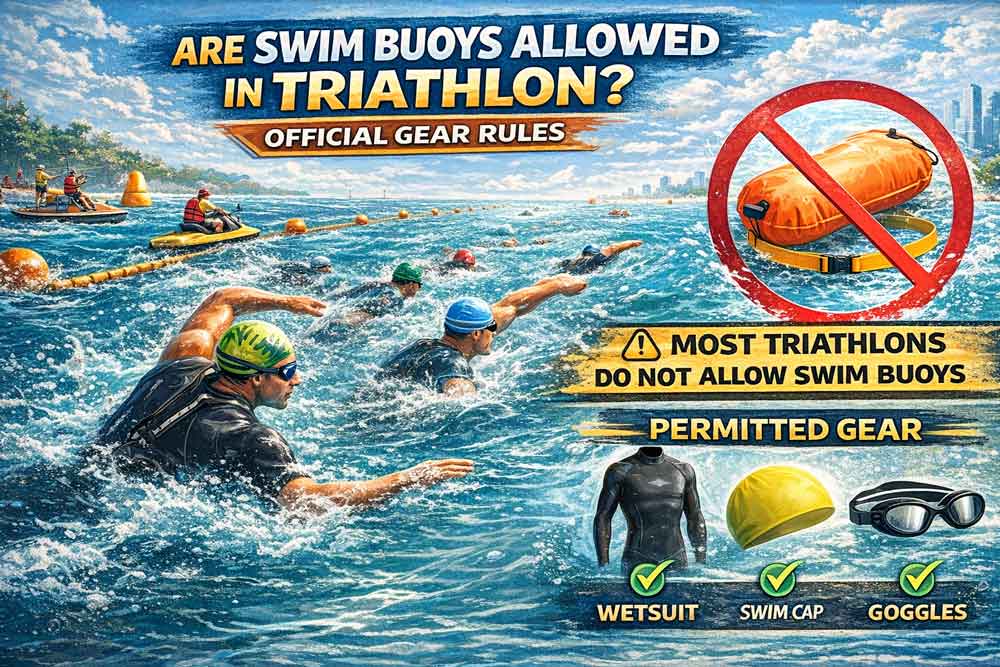
No—not as their primary flotation device. A standard open-water swim buoy is designed to trail behind a human swimmer for visibility, temporary support and sometimes storage. It is not shaped or fitted to support a dog’s body, so it should not be attached to a collar or harness or used instead of a canine life jacket.
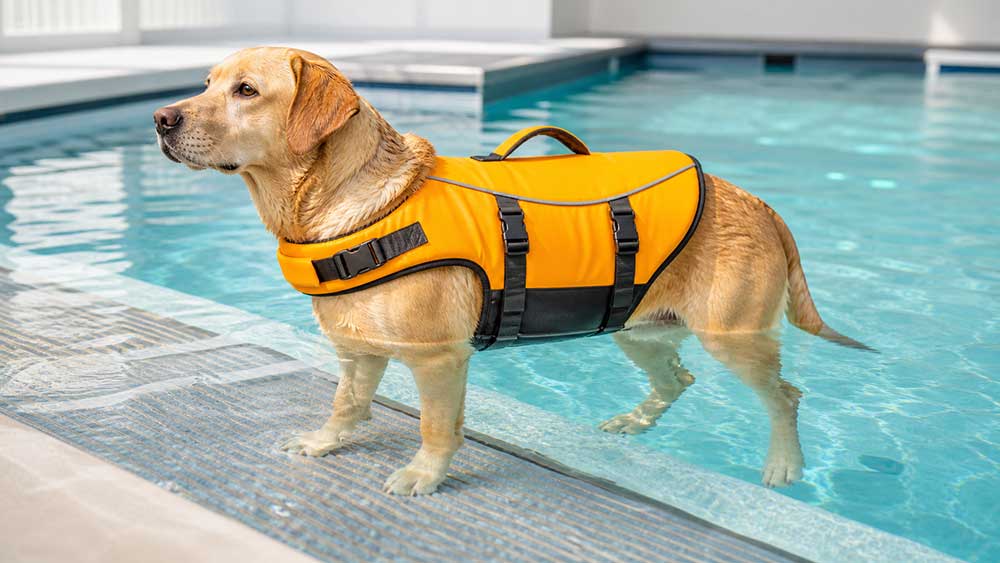
If your dog needs help staying afloat, a properly fitted dog life jacket is the safer wearable option. A stable, pet-specific pool float may give a confident swimmer somewhere to rest, but only in calm water and under constant supervision.
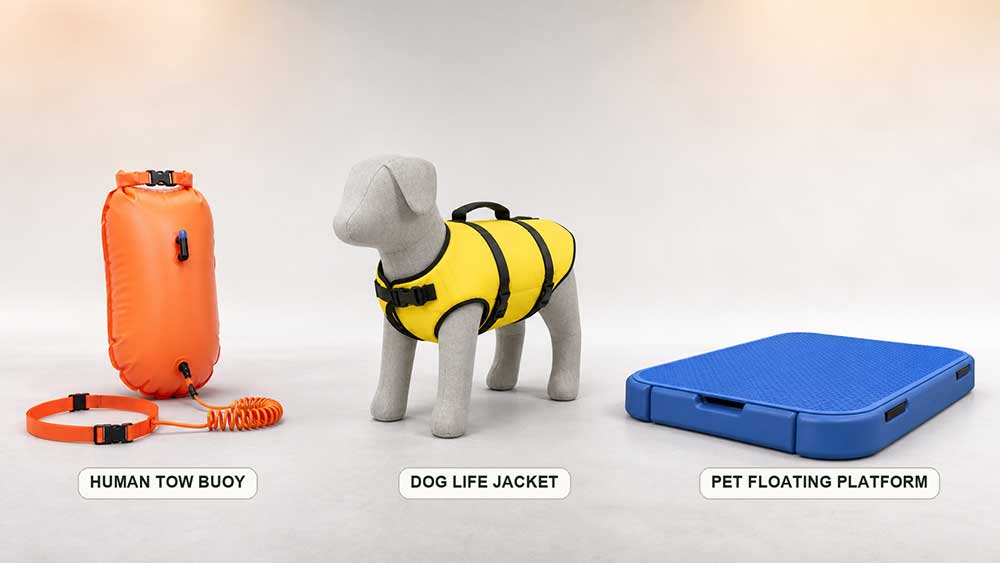
The term “swim buoy” is sometimes used loosely. It may refer to an open-water tow float, a canine flotation vest, a pool platform or even a floating toy. These products have very different purposes.
Product
Intended user
Main purpose
Suitable for a dog?
Open-water swim buoy or tow float
Human swimmer
Visibility, temporary support and optional storage
Not as a wearable dog flotation device
Canine life jacket
Dog
Wearable buoyancy, visibility and assisted lifting
Yes, when correctly sized and fitted
Pet-specific pool float
Dog
Supervised resting or lounging in calm water
Sometimes, but not as a life-saving device
Inflatable human pool float
Human
Recreation
Not a reliable safety product for dogs
Floating dog toy
Dog
Play and retrieval
Not for flotation or rescue
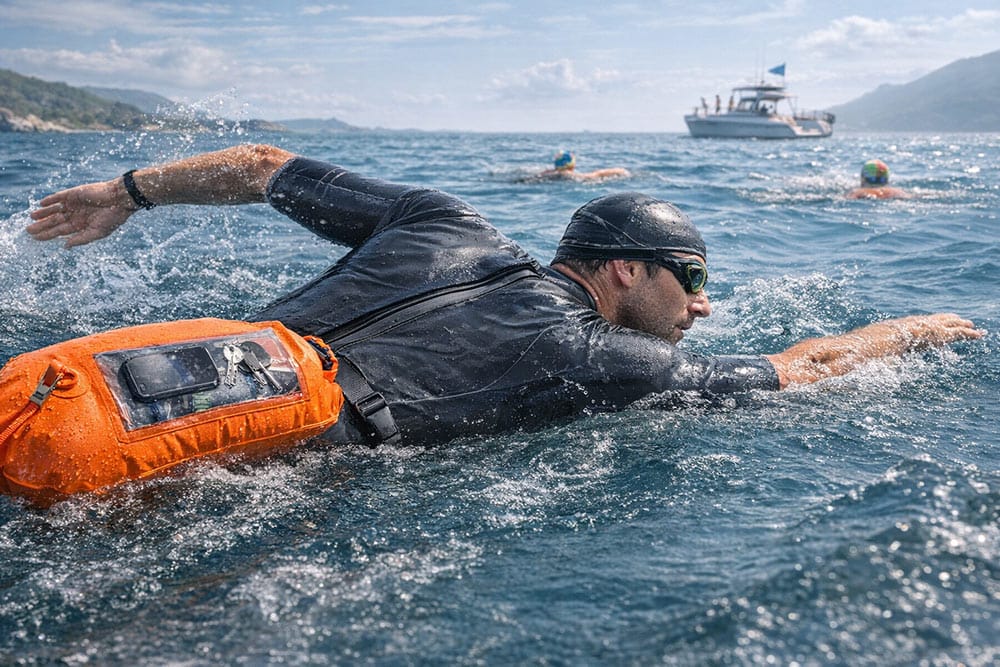
An open-water swim buoy usually attaches around a swimmer’s waist and trails behind the body. Its primary purpose is to make the swimmer easier to see. Some models also provide a place to pause briefly, but a swim buoy should not be treated as a life-saving device.
Why a Human Swim Buoy Is Not Suitable for a Dog
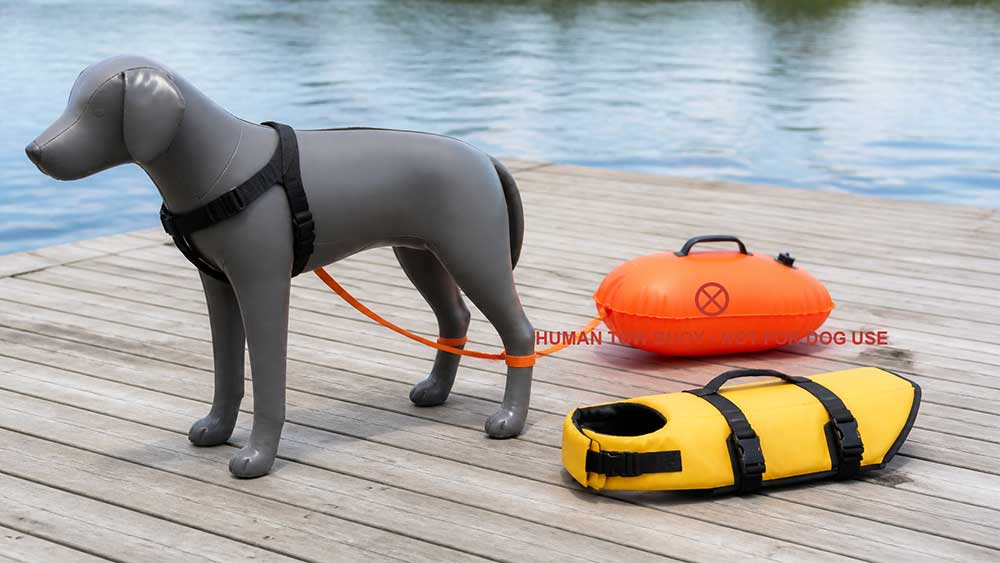
A tow float may look simple enough to connect to a dog’s collar or harness. However, its shape, attachment system and flotation position are designed around a human swimmer rather than a four-legged animal.
It does not support the dog’s body
A canine life jacket distributes buoyancy around the torso and moves with the dog. A tow float remains behind the swimmer on a line. It cannot control the dog’s swimming position or help support the chest and head in the same way.
Dogs turn quickly, swim toward their owners and paddle with all four legs. A loose tow line can pass beneath the body or around a leg. Weeds, branches, rocks, docks and other swimmers may create additional snagging hazards.
Do not improvise by attaching a human tow float to a dog’s collar, leash or harness unless the product has been specifically designed and tested for that use.
The belt is made for a human waist
The belt and tether position allow a buoy to trail behind a person without interfering with their swimming stroke. A dog has different body proportions and movement. A strap that appears secure on land may shift, tighten or restrict the dog after entering the water.
Claws and teeth can damage the air chamber
Inflatable tow floats are commonly made with welded PVC or TPU structures. These materials can be durable, but they are not automatically puncture-proof. A dog trying to climb onto a narrow buoy may scratch, bite or sharply fold the chamber in ways the product was not designed to withstand.
Can a Dog Sit or Lie on a Swim Buoy?
A standard tow float should not be used as a dog raft. Most are narrow, rounded and designed to move behind a swimmer. A dog’s weight may make the buoy roll, tip or slide away unexpectedly.
A pet-specific floating platform may be suitable for supervised recreation when:
It is designed for the dog’s size and weight;
The surface is stable and resistant to claw damage;
The dog can already swim and is comfortable in water;
An adult remains close enough to help immediately;
The dog has a clear and familiar way to leave the water;
A canine life jacket is used when the environment or the dog’s ability calls for one.
Even then, the platform is a resting surface—not protection against drowning. Dogs that cannot swim or are frightened of water should not be placed on a float and pushed away from the edge.
Can You Wear a Swim Buoy While Swimming With Your Dog?
You can use a tow float for your own visibility while swimming near your dog, but the buoy should remain attached to the person it was designed for.
Keep the dog away from the tow line, and avoid having several loose leashes or tethers in the water at the same time. This is easier to manage in calm, shallow water where both you and your dog can get out easily.
The situation becomes less predictable in:
Rivers with noticeable current;
Surf or changing tides;
Areas with weeds or submerged branches;
Crowded swimming locations;
Water shared with boats or personal watercraft.
The buoy may make you more visible, but it does not make your dog safe. Your dog still needs appropriate flotation, supervision and a reliable exit from the water.
A Dog Life Jacket Is the Better Wearable Option
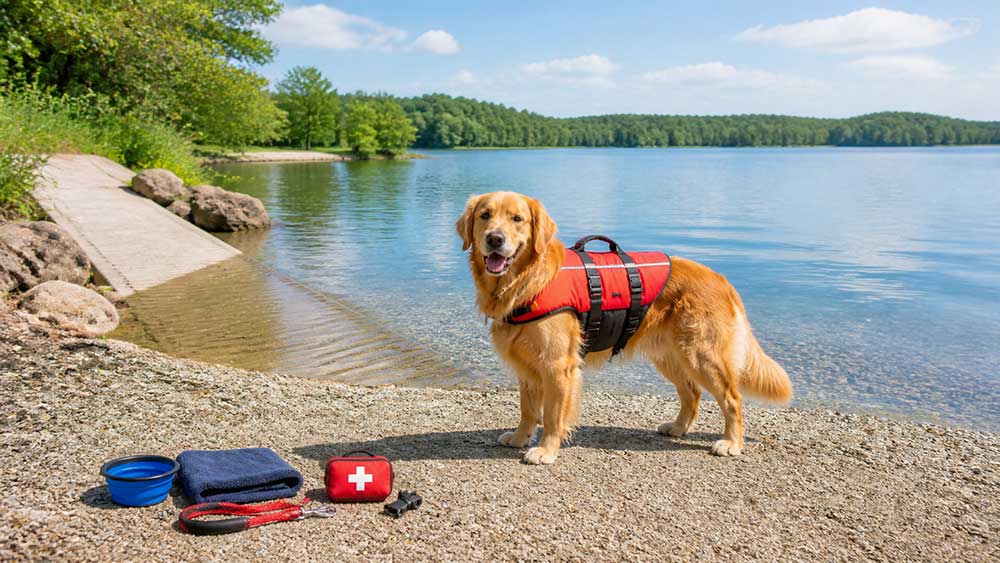
If your dog will be swimming in deep or open water, a properly fitted canine life jacket is usually the safer choice.
The jacket should be snug enough that the dog cannot slip out, but it should not restrict breathing, shoulder movement or the front legs. Follow the product’s measurement instructions instead of choosing only by breed or weight.
Test the fit after the jacket becomes wet, as straps and fabric can move differently in water.
Balanced flotation
Flotation should help the dog maintain a natural, mostly horizontal position. Some jackets include extra support around the chest or under the chin, which may help certain dogs keep their head in a better position.
A reinforced rescue handle
A top handle can help guide the dog toward an exit or lift it onto a boat, dock or pool edge. The handle and its attachment points should be strong enough for the dog’s wet weight.
Do not lift a heavy dog by the handle unless the product instructions confirm that it is designed for that purpose.
High-visibility colors
Bright colors and reflective details make a dog easier to see against dark water, waves or low-light backgrounds. Visibility is useful, but it does not replace proper flotation, fit or supervision.
Secure straps
Long, unsecured straps can catch on objects or interfere with movement. Adjust the jacket carefully and secure excess webbing according to the manufacturer’s instructions.
Before heading into deep water, test the complete setup in a controlled, shallow area.
Match the Safety Plan to the Water
Different environments create different risks.
Environment
Main concerns
Safer approach
Swimming pool
Unplanned entry, slippery edges and difficulty finding the exit
Teach the exit, use a ramp or steps where needed and supervise continuously
Lake
Fatigue, weeds, water quality and changing depth
Check local advisories, use a life jacket and stay near a safe exit
River
Current, rocks, branches and entanglement
Avoid strong flow and never attach an improvised tow system to the dog
Ocean
Waves, tides, saltwater ingestion and distance from shore
Stay close, provide fresh water and use suitable canine flotation
Boat or dock
Falling overboard and difficulty retrieving the dog
Use a fitted jacket with a strong handle and plan how the dog will be lifted out
Open water requires extra care because current, depth, debris and exit conditions may not be obvious from shore.
Check the Dog and the Water Before Swimming
Not every dog is a natural swimmer. Age, body shape, fitness, health, experience and confidence all affect how a dog behaves in water.
The American Animal Hospital Association’s water-safety guidance recommends introducing dogs gradually, supervising them closely and using properly fitted flotation equipment. Puppies, senior dogs, short-legged dogs, flat-faced breeds and dogs with health or mobility concerns may need additional precautions.
Before allowing your dog into the water:
Identify an easy entry and exit;
Check the current, weather and water temperature;
Look for weeds, sharp rocks, fishing lines and submerged debris;
Check local water-quality and swimming advisories;
Inspect the life jacket, straps, buckles and handle;
Bring clean drinking water;
Keep the first sessions short and close to shore.
Avoid water that looks discolored, scummy, foamy or unusually dirty. The CDC warns that harmful algal blooms can make dogs seriously ill. Dogs can be exposed by drinking contaminated water, swimming in it or licking contaminated material from their fur.
If you suspect an algal bloom, keep your dog out. If contact occurs, rinse the dog immediately with clean water and contact a veterinarian if symptoms appear.
Know When It Is Time to Get Out
Paddling does not always mean a dog is comfortable or in control. End the session if your dog:
Begins paddling frantically;
Holds its head unusually low;
Struggles to control its direction;
Repeatedly tries to climb onto you or a float;
Stops using its rear legs effectively;
Shivers or shows obvious fatigue;
Continually searches for an exit.
Never throw or drag a hesitant dog into the water. Let it enter gradually and leave whenever it wants.
After swimming, rinse away salt, pool chemicals, sand or questionable freshwater residue. Check the paws and skin for cuts or irritation and dry the dog thoroughly. Contact a veterinarian promptly after a near-drowning incident or if the dog shows unusual symptoms following possible exposure to contaminated water.
What Pet-Flotation Brands Should Consider
A canine flotation product should be treated as its own design category. Simply renaming a standard human tow float as a “dog swim buoy” does not address canine fit, swimming posture, claw resistance, lifting loads or escape risks.
Before developing a pet-specific product, brands should define:
Whether it will be worn or used as a floating platform;
The intended dog weight and body-size range;
The target water environment;
How buoyancy will be distributed;
The required strength of straps, handles and reinforcement points;
Resistance to claws, teeth, UV exposure and repeated water contact;
How owners will select the size and test the fit.
Vancharli Outdoor develops custom inflatable swim buoy structures using welded PVC and TPU materials. For a pet-specific concept, the intended use, load requirements and testing methods should be defined before adapting an existing human swim buoy design.
The Bottom Line
Dogs should not wear, tow or rely on standard human swim buoys. When a dog needs wearable flotation, use a properly fitted canine life jacket. Reserve pet-specific floating platforms for closely supervised recreation in calm water.
You may still wear an open-water swim buoy while swimming near your dog, but keep it correctly attached to yourself and keep the tow line away from the dog. Using each product for the person or animal it was designed for is the safest approach.
FAQ
Do strong swimming dogs still need life jackets?
A confident swimmer may not need a jacket during every controlled pool session. However, a fitted canine life jacket adds protection in deep water, around boats and in unfamiliar conditions. Strong swimming ability does not eliminate fatigue, current or accidental-entry risks.
Is it safe to connect a dog’s leash to a tow float?
Not unless the manufacturer specifically states that the system was designed for dogs. An improvised connection may change how the buoy tracks and create loose-line, snagging or entanglement risks.
Can a dog use a child’s pool float?
A child’s or adult’s recreational float should not be considered dog safety equipment. It may tip, puncture or allow the dog to slide into the water. Use only a stable pet-specific platform, and continue supervising the dog closely.
Will a swim buoy support a dog that becomes tired?
A dog may be able to lean against a floating object briefly, but a human tow buoy does not support the body like a fitted canine life jacket. Do not depend on it to keep a tired or distressed dog afloat.
Should a dog wear a life jacket on a pet float?
A life jacket may still be appropriate, especially in deeper water. The platform gives the dog somewhere to rest, while the jacket continues providing wearable buoyancy if the dog slips or jumps off.








Comments are closed