How to Build a Tactical Gear Product Line for Wholesale and Retail
A tactical gear product line does not fail only because the first product is bad. Many lines fail because they grow too fast, in too many directions, without a clear plan for wholesale buyers, retail customers, inventory, pricing, and repeat orders.
At the beginning, every product idea can look exciting. A tactical backpack, a plate carrier, a pouch system, a range bag, a sling bag, a hydration pack — all of them may seem worth developing. But if every item is treated as a separate project, the result is usually too many SKUs, scattered materials, inconsistent branding, and stock that becomes hard to manage.
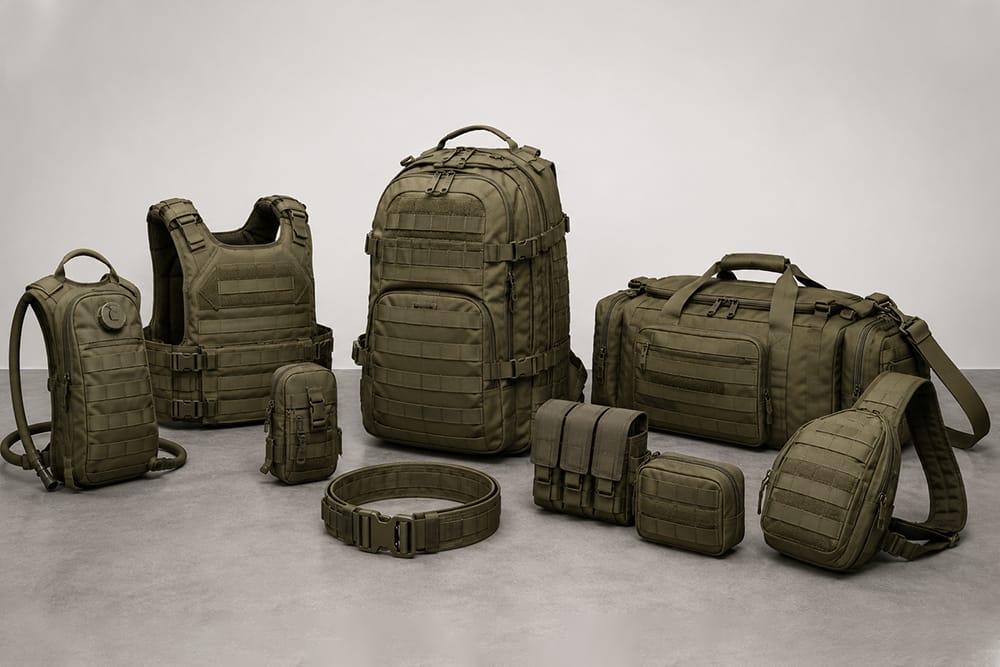
A strong tactical gear line should feel like a system. Each product should have a clear role. Some products bring attention. Some products create repeat orders. Some products increase basket value. Some products help retailers build a full wall display. The goal is not to sell everything at once. The goal is to build a product range that wholesale buyers can understand and retail customers can trust.
Quick Answer: What Makes a Strong Tactical Gear Product Line?
A strong tactical gear product line usually has five things:
A clear target user and market channel
A few strong core products
Supporting accessories that make sense together
Controlled materials, colors, hardware, and packaging
A wholesale-ready structure with clear pricing, MOQ, and reorder logic
For most new or growing tactical gear brands, the smartest move is not to launch 40 products at once. A better start is often a focused line with one or two hero products, several support products, and a small number of add-on accessories.
For example, a practical starting line might include:
Product Role
Example Products
Purpose
Hero product
Tactical backpack, plate carrier, range bag
Defines the brand and attracts buyers
Support product
MOLLE pouches, hydration pack, tactical belt
Builds a complete gear system
Add-on product
Organizers, patches, small utility pouches
Increases order value and retail display options
Premium product
Upgraded backpack, laser-cut vest, heavy-duty gun bag
Builds brand image and margin
Reorder product
Pouches, belts, small bags, accessories
Supports repeat wholesale orders
A product line should give buyers confidence. They should be able to see who the products are for, how the items work together, and why the line is easy to sell.
Start With the Market: Wholesale, Retail, or Both?
Before choosing products, decide where the line will be sold. Wholesale and retail are connected, but they do not work the same way.
A wholesale buyer is usually asking:
Can this product sell repeatedly?
Is the price margin healthy?
Is the MOQ realistic?
Can I reorder the same color and style later?
Is the packaging retail-ready?
Does the line look organized enough for my store?
Will the supplier keep the SKU stable?
A retail customer is asking something different:
Does this product solve my problem?
Does it look good?
Is the price reasonable?
Can I understand the features quickly?
Does it match my activity, style, or loadout?
Do I trust the brand?
This is why the same tactical gear line needs two layers of thinking. Wholesale needs stability. Retail needs clarity and appeal.
A wholesale product line should be easy to present, easy to price, and easy to reorder. A retail product line should be easy to understand, easy to compare, and easy to buy.
A tactical gear line does not need every category on day one. But it does need a clear category map.
Common tactical gear categories include:
Tactical Backpacks
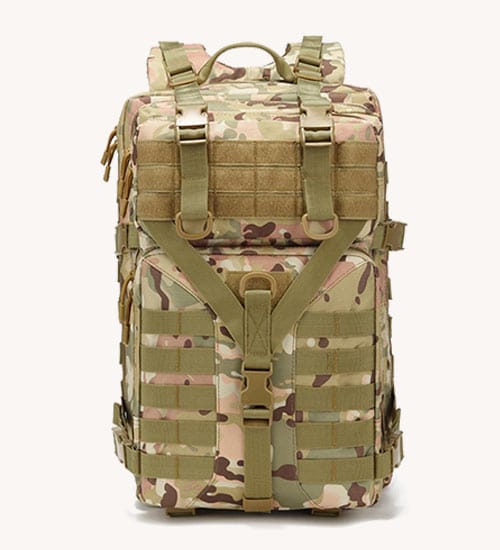
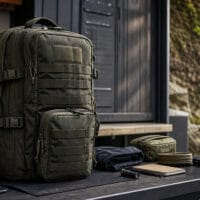
Tactical backpacks are often a strong starting point because they are useful across many markets: outdoor, range, duty, survival, EDC, airsoft, and travel. They also provide enough surface area for brand identity, materials, MOLLE layout, compartments, and comfort features.
For brands planning a bag-centered product line, tactical backpacks can work as hero products because they are visible, practical, and easier for customers to understand than more specialized tactical items.
Tactical Vests and Plate Carriers
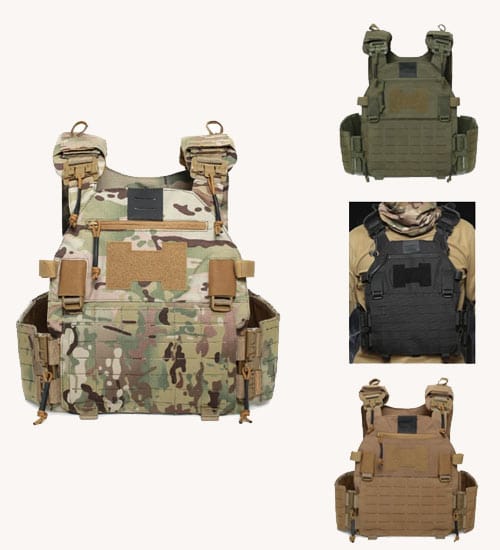
Tactical vests and plate carriers are more technical. They require better control over fit, stitching, load-bearing areas, pouch compatibility, cummerbund design, and material selection.
They can be excellent products for serious tactical markets, but they should not be treated as simple apparel. A vest line needs clear sizing, modular accessories, and reliable QC.
Tactical Pouches
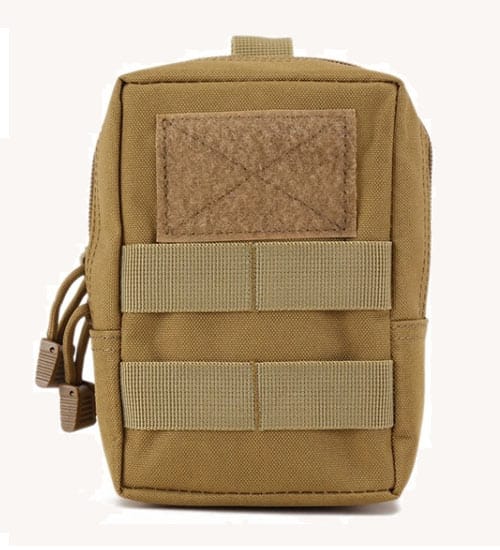
Pouches are small, but they are important. Magazine pouches, admin pouches, medical pouches, utility pouches, and radio pouches help turn a backpack or vest into a system.
Pouches are also useful for wholesale because they are easier to reorder and can be bundled with larger products.
Range Bags and Gun Bags
Range bags, pistol bags, rifle bags, and related storage products are practical categories for shooting, training, and outdoor retail channels. They often appeal to buyers who want clear use-case products rather than abstract tactical styling.
A range bag product family can include a main range bag, ammo pouch, pistol sleeve, cleaning kit pocket, and magazine organizer.
Hydration Packs
Hydration packs fit tactical, outdoor, hunting, hiking, and training markets. They can be sold as standalone products or as part of a wider tactical backpack or vest system.
A hydration pack can also support seasonal retail sales, especially for warm weather, field training, hiking, and outdoor events.
Sling Bags, Waist Bags, and EDC Bags
These products work well for retail because they are easy to understand and often have lower price barriers. They may not define the whole brand, but they can bring entry-level customers into the product line.
Duffel Bags and Deployment Bags
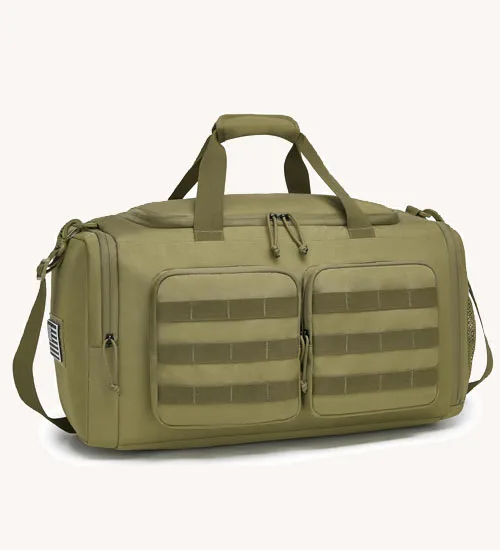
Duffel bags, deployment bags, and large gear bags are useful for military-style, outdoor, travel, gym, and team equipment markets. They often work well as higher-capacity support products.
Build Around Core Products First
One of the most common mistakes is trying to make a tactical gear brand look “complete” too early. A new line does not need to look like a large tactical retailer. It needs to look focused.
Start with three levels.
1. Hero Products
These are the products that define the line. They should be strong enough to represent the brand at a trade show, on a homepage, or in a wholesale catalog.
Examples:
35L tactical backpack
Lightweight plate carrier
Heavy-duty range bag
Tactical duffel bag
Modular hunting pack
A hero product should not be chosen only because it looks impressive. It should have clear market demand, enough margin, and room for accessories.
2. Support Products
Support products make the hero product more useful.
Examples:
MOLLE pouches
Admin pouch
Hydration bladder carrier
Tactical belt
Magazine pouch
Utility pouch
Insert organizer
Support products help buyers see the line as a system instead of a single item.
3. Add-On Products
Add-on products are small items that increase order value and help retail displays look fuller.
Examples:
Patches
Small organizers
Key clips
Velcro panels
Small tool pouches
Accessory straps
Add-ons are useful, but they should not distract from the core line. If the main products are weak, accessories will not save the brand.
Plan Wholesale SKUs Differently From Retail SKUs
Wholesale and retail SKUs should not always be identical.
Wholesale buyers usually prefer stable, repeatable products. They do not want a line that changes every few months. They want to know that the black backpack, coyote pouch, or ranger green vest they bought this season can still be reordered next season.
Retail customers may respond well to more visual variety: color drops, bundles, limited editions, seasonal kits, and online exclusives.
A simple way to separate them:
SKU Type
Wholesale Strategy
Retail Strategy
Core colors
Black, coyote, ranger green, camouflage
Same core colors plus seasonal colors
Product variants
Keep limited and reorderable
Add bundles or special editions
Packaging
Standardized and barcode-ready
More visual, story-driven, or display-friendly
Pricing
Clear wholesale price and MSRP
Promotional bundles and retail campaigns
Inventory
Stable replenishment
Test small drops before scaling
For wholesale, boring can be good. Stable colors, clear packaging, and predictable reorder terms matter more than having ten colorways.
For retail, the product still needs emotion. A customer should feel that the gear belongs to a real activity, not just a spreadsheet.
Use Good-Better-Best Price Tiers
A tactical gear product line should usually have price levels. If every product sits at the same price point, buyers have fewer ways to position the line.
A practical structure is:
Entry-Level
This is the accessible product. It should be functional, durable enough, and easy to sell at volume. It is not the cheapest possible product; it is the product that lowers the buying barrier.
Examples:
Basic tactical day pack
Standard utility pouch
Entry-level range bag
Mid-Range
This is often the main business. It should offer the best balance of material, features, price, and margin.
Examples:
35L tactical backpack with MOLLE and hydration compatibility
Modular range bag
Tactical sling bag with better organization
Standard plate carrier with upgraded stitching
Premium
Premium products help the brand look serious. They may not sell in the highest volume, but they can improve brand perception and margin.
Examples:
Laser-cut tactical vest
Heavy-duty rucksack
Premium gun bag
Advanced modular backpack system
The mistake is making the premium product first without a clear mid-range product to support the business. Most wholesale buyers still need products that can move consistently.
Create Product Families, Not Random Products
A tactical gear line becomes stronger when products belong together.
Instead of developing a backpack, pouch, and vest that look unrelated, build product families.
Backpack Family
Tactical backpack
Matching admin pouch
Hydration carrier
Waist bag
Packing organizer
Plate Carrier Family
Plate carrier
Cummerbund option
Magazine pouch
Medical pouch
Radio pouch
Shoulder pads
Range Bag Family
Main range bag
Pistol pouch
Ammo pouch
Magazine organizer
Cleaning kit pocket
Outdoor Tactical Family
Tactical day pack
Hydration pack
Sling bag
Utility pouch
Rain cover
Product families make wholesale selling easier. A retailer can buy a complete set instead of guessing which items belong together.
They also make retail storytelling easier. Customers can see the system and build their own setup over time.
Control Materials, Colors, and Hardware Across the Line
This is where many product lines quietly become expensive.
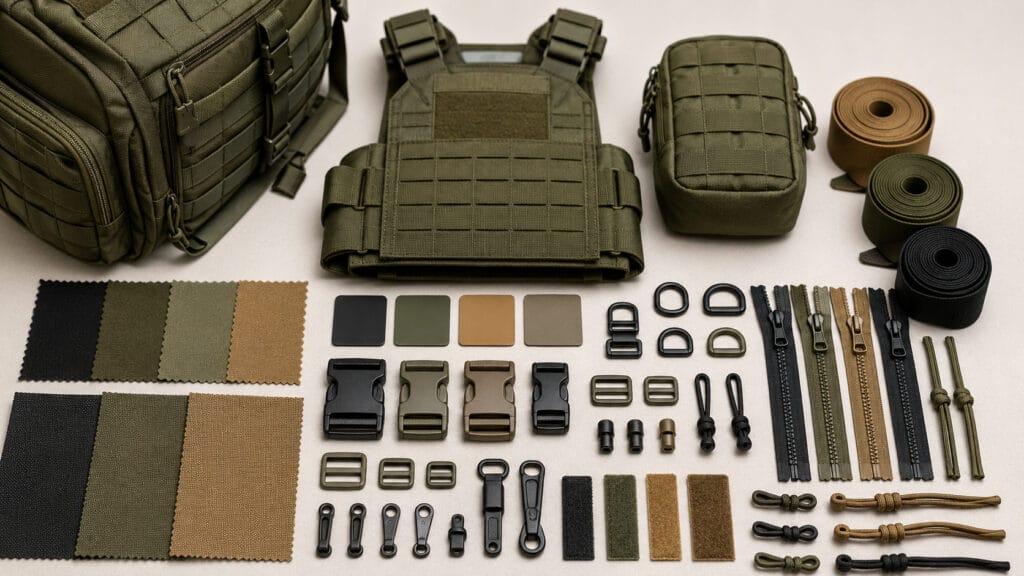
If every product uses a different fabric, zipper, buckle, webbing color, logo method, and packaging format, the line becomes hard to produce and hard to reorder.
A smarter approach is to standardize where possible:
Use shared fabric platforms
Limit core colors
Use consistent zipper grades
Use common buckle families
Standardize webbing width and color
Keep logo placement consistent
Use similar packaging formats
Build shared QC standards
This does not mean every product should look identical. It means the product line should feel related.
From a manufacturing perspective, material and hardware consistency can help reduce confusion during sampling, purchasing, production, inspection, and reorders. It can also make the final product line look more professional.
Design for Wholesale Bundles and Retail Displays
A tactical gear line should be easy to sell as individual products, but it should also be easy to group.
Wholesale buyers often think in assortments. Retail assortment strategy is commonly built around balancing breadth and depth — meaning the range of categories offered and the number of options within each category. Assortment strategy is not about adding endless SKUs; it is about choosing the right mix for the customer and the store.
For tactical gear, this can mean:
Starter Bundle
Good for new dealers or small retailers.
1 tactical backpack
2 utility pouches
1 sling bag
1 range pouch
Core colors only
Range Bundle
Good for shooting sports stores.
Range bag
Pistol pouch
Magazine pouch
Ammo pouch
Cleaning accessory pouch
Plate Carrier Bundle
Good for tactical shops or training markets.
Plate carrier
Admin pouch
Magazine pouch
Medical pouch
Radio pouch
Outdoor Tactical Bundle
Good for outdoor and survival retailers.
Tactical day pack
Hydration pack
Utility pouch
Waist bag
Rain cover
Bundles do not need to be fixed forever. They can act as buying guides. The goal is to help wholesale buyers make decisions faster.
Prepare a Line Sheet for Wholesale Buyers
If you want to sell wholesale, a product line needs more than nice photos. Buyers need clear information.
A wholesale line sheet is commonly used to show store owners or buyers your products, prices, and wholesale terms in a simple format.
For a tactical gear line, a good line sheet should include:
Product name
SKU number
Category
Product photo
Available colors
Size or capacity
Material
Key features
Wholesale price
MSRP
MOQ
Carton quantity
Packaging details
Lead time
Reorder terms
Barcode or labeling options
Contact information
Do not make the buyer ask basic questions. If they need to email you for every product detail, the line is not ready for wholesale.
A clean line sheet also forces the brand to organize the product line. If the line sheet looks confusing, the product strategy probably needs work.
Validate the Product Line Before Scaling
A product line should be tested before large-scale production. This is especially important in tactical gear because users notice weak stitching, uncomfortable straps, poor pouch fit, noisy hardware, and bad weight balance quickly.
Before scaling, validate:
Sample quality
Fit and comfort
Pouch compatibility
Zipper and buckle performance
Stitching strength
Packaging
Retail price acceptance
Dealer feedback
Reorder interest
Return reasons
Customer reviews
A small test order can save a brand from a much larger mistake. If customers complain that the backpack looks good but carries poorly, that is not a marketing problem. It is a product development problem.
Work With an OEM/ODM Tactical Gear Manufacturer
At a certain point, building a tactical gear line becomes more than choosing products. It becomes a manufacturing system.
A good tactical bag manufacturer can help brands think through material consistency, shared hardware, color planning, pouch compatibility, packaging, sampling, and production efficiency.
From an OEM/ODM manufacturing perspective, Vancharli Outdoor helps tactical gear brands build product families around shared materials, consistent hardware, coordinated colors, modular accessories, and wholesale-ready packaging instead of developing each item as an isolated product.
This matters because a product line is easier to scale when the factory understands how the pieces connect. A tactical backpack, pouch, hydration pack, and vest may be different products, but they should not feel like they came from four unrelated suppliers.
Common Product Line Mistakes
Starting With Too Many SKUs
More SKUs can make a brand look bigger, but they also increase MOQ, inventory pressure, quality control work, and cash flow risk.
Start focused. Expand after you know what sells.
Offering Too Many Colors
Color variety sounds attractive, but it can create slow-moving inventory. For wholesale, it is usually better to start with a few reliable colors.
Building Products That Do Not Belong Together
A tactical backpack, a gym bag, a random pouch, and a vest can all be good products individually. But if they do not share a design language or customer logic, they do not become a product line.
Ignoring Wholesale Margins
A product may look profitable at retail price but fail at wholesale price. Always calculate wholesale price, MSRP, margin, packaging, freight, and possible discounts early.
Designing Only for Appearance
Tactical gear needs to work. Good-looking MOLLE, aggressive shapes, and heavy-duty styling do not matter if the product is uncomfortable, poorly balanced, or difficult to use.
Forgetting Reorders
Wholesale is not only about the first order. The real value comes when buyers reorder. If materials, colors, or hardware cannot be repeated, the line becomes difficult to scale.
Skipping the Line Sheet
If you want wholesale buyers, you need wholesale tools. A line sheet makes the product line easier to understand and easier to buy.
Treating Every Product as a Separate Project
This is the quiet killer. Every new product should support the product line, not pull it in a random direction.
Final Recommendation
Build your tactical gear product line like a system.
Start with the market. Choose a few core categories. Build one or two hero products. Add support products that make sense. Keep colors and materials controlled. Create wholesale bundles. Prepare a clear line sheet. Test before scaling.
The best tactical gear line is not the one with the most products. It is the one buyers can understand, retailers can display, customers can use, and manufacturers can produce consistently.
FAQ
How many products should a tactical gear line start with?
A new tactical gear line can often start with 5–12 carefully selected SKUs. That may include one or two hero products, several support products, and a few add-on accessories. It is better to start focused than to launch too many weak SKUs.
What tactical gear sells well in wholesale markets?
Wholesale-friendly tactical gear usually includes backpacks, pouches, range bags, gun bags, hydration packs, tactical belts, sling bags, and plate carriers. The best products are easy to explain, easy to reorder, and suitable for clear retail display.
Should a new brand start with backpacks or accessories?
Backpacks are stronger hero products, while accessories are easier add-ons. A practical approach is to start with one main product, such as a tactical backpack or range bag, then add pouches and small accessories that support it.
How are wholesale SKUs different from retail SKUs?
Wholesale SKUs should be stable, repeatable, and easy to reorder. Retail SKUs can include more bundles, seasonal colors, limited drops, or online exclusives. Wholesale needs consistency; retail needs presentation and customer appeal.
What should be included in a tactical gear line sheet?
A tactical gear line sheet should include product photos, SKU numbers, colors, materials, sizes or capacities, wholesale price, MSRP, MOQ, packaging details, lead time, and ordering terms.
Is it better to launch a full tactical gear line or one product first?
For most new brands, it is better to launch a focused product family rather than a full line. One strong hero product with matching support items is usually easier to manage than a large scattered catalog.
How can a tactical gear brand reduce MOQ pressure?
Brands can reduce MOQ pressure by sharing materials, colors, buckles, zippers, webbing, logo methods, and packaging across multiple products. This makes production easier and keeps the line more consistent.
When should a brand work with an OEM/ODM manufacturer?
A brand should work with an OEM/ODM manufacturer when it needs custom structure, private label branding, material planning, coordinated product families, sample development, quality control, and wholesale-ready production.






Comments are closed