


Is American Tactical reliable or just cheap

American Tactical (ATI) is a budget-tier firearms brand that’s good for entry-level buyers, but reliability varies sharply by model. So, is American Tactical a good brand? The honest answer is yes—for the price. ATI sells AR-15s, 1911 pistols, .22 LR rifles, and shotguns, with many centerfire rifles retailing in the approximately $350–$550 range as of 2025. Its U.S.-assembled rifle lines, like the Alpha-15, earn the most owner trust, while imported pistols, shotguns, and rimfire guns carry the heaviest quality caveats.
So, is American Tactical a good brand? The honest answer for 2025,2026: yes, for what it’s.
ATI delivers entry-level guns that shoot reliably enough for casual range use and home defense, but you trade tighter tolerances, premium materials, and warranty polish for that lower price.
This guide breaks down where ATI earns its money, and where corners get cut. We’ll look at real owner reports, common failure points, model-by-model quality, and who should buy ATI versus who should spend more.
Quick Takeaways
- ATI rifles cost approximately $350–$550, ideal for budget-conscious entry-level shooters in 2025.
- U.S.-assembled lines like Alpha-15 and Omni Hybrid earn the most owner trust.
- Avoid imported ATI pistols, shotguns, and rimfire guns due to quality issues.
- Alpha-15 fired 140 rounds with zero malfunctions in independent testing.
- Choose ATI for casual range use and home defense, not premium performance.
Is American Tactical Reliable or Just Cheap — The Short Answer
American Tactical (ATI) is neither a premium maker nor outright junk. It’s a budget-tier brand whose reliability swings hard depending on which gun you buy. Some lines run clean out of the box.
Others ship with out-of-spec parts and finish flaws. So when people ask “Is American Tactical a good brand?”, the honest answer is: it depends entirely on the model.
ATI builds and imports low-cost AR-15s, 1911 pistols,.22 LR rifles, and shotguns, with many centerfire rifles selling in the approximately $350,$550 range as of 2024. Their U.S.-assembled rifle lines earn the most trust. Their imported pistols, shotguns, and rimfire guns carry the heaviest caveats.
Which Lines Earn Trust
- Alpha-15 — A lightweight 5.56 NATO AR at roughly $499 MSRP. Reviewers fired about 140 rounds with zero malfunctions in testing.
- Omni Hybrid — The polymer-lower AR has cycled hundreds of rounds without stoppages in independent tests.
- MilSport — A traditional aluminum-receiver AR often called a “solid budget” carbine.
Which Lines Carry Caveats
Imported semi-auto shotguns and budget rimfire rifles draw the most complaints. So do some lower receivers. Multiple firearm communities between 2020 and 2024 flagged ATI lowers as “frequently out-of-spec,” warning that saving approximately $10,$20 over Anderson or PSA raises the odds of quality-control problems.
Treat ATI as a model-by-model buy, not a brand-wide bet. The polymer Omni Hybrid is a fun range gun, fine for plinking, questionable as a duty rifle.
The lesson: research the exact SKU, read recent owner reports, and budget for a possible parts swap. We unpack why the brand can’t be judged as one unit in the next section.
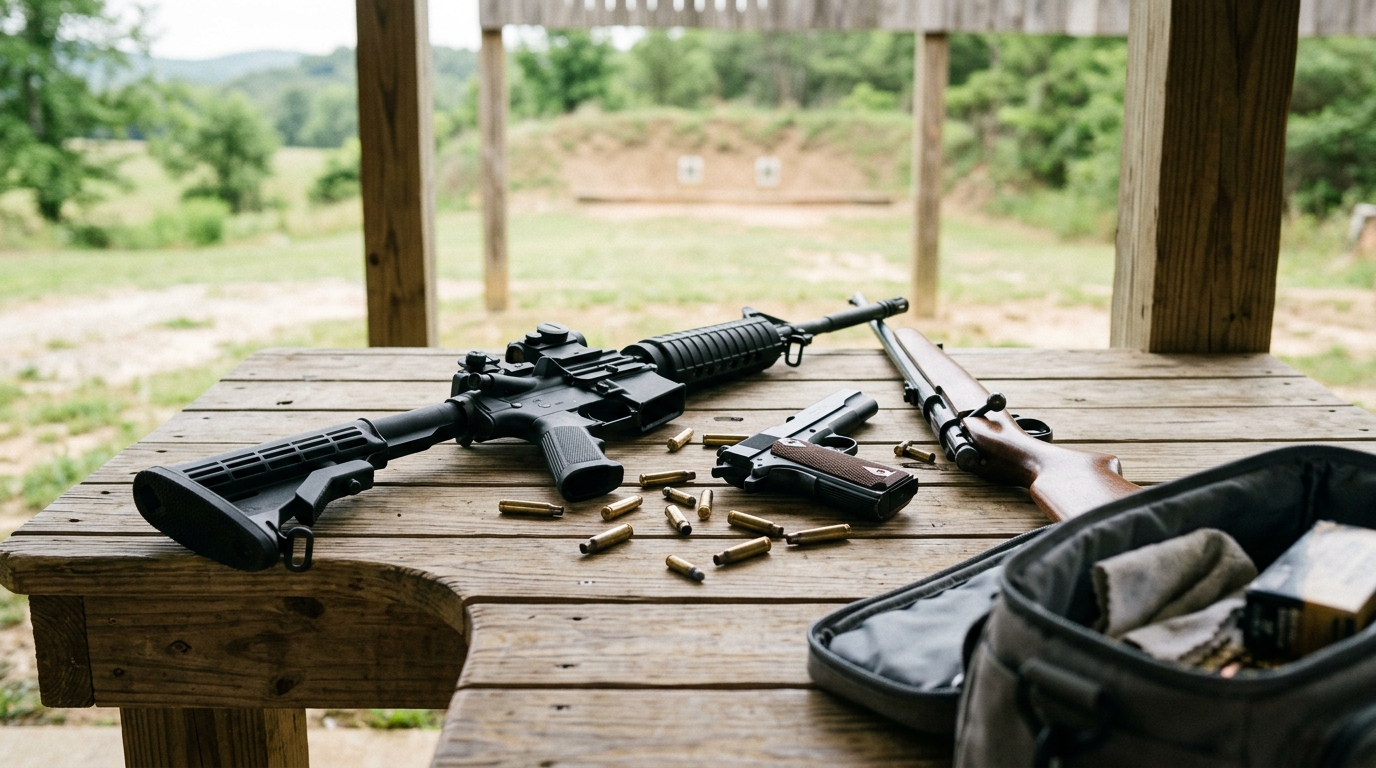
Why You Can’t Judge American Tactical as One Brand
Honestly, asking “Is American Tactical a good brand?” is kind of the wrong question to start with.
ATI actually runs two completely separate operations under one roof. It builds some guns right here in the United States, and it imports others from factories overseas.
So a verdict on one half tells you almost nothing about the other half.
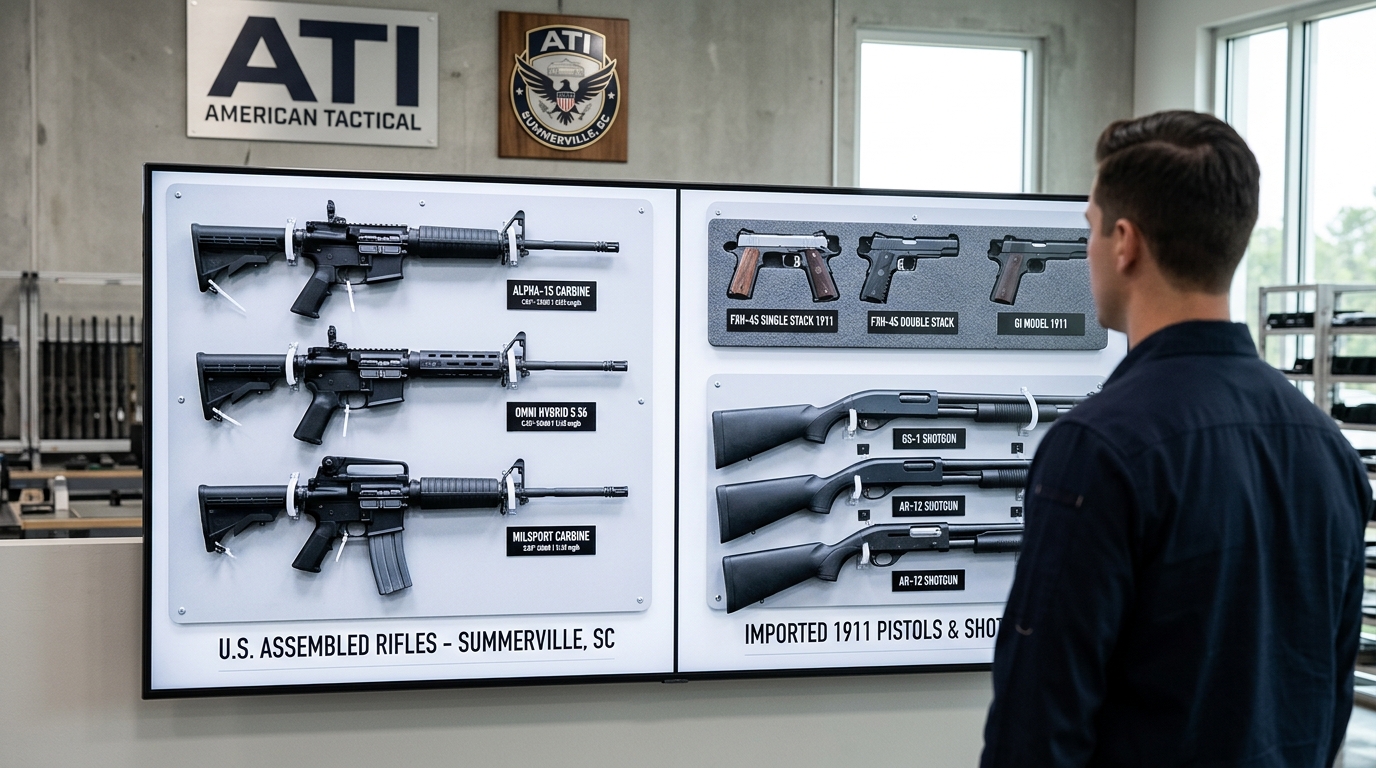
The U.S.-made side covers the AR-15 platform, which includes the Alpha-15, the Omni Hybrid, and the MilSport lines. All of these get put together at ATI’s facility in Summerville, South Carolina.
The imported side is really a different animal. You’ve got 1911-style pistols, both pump and semi-auto shotguns, and .22 LR rifles, which are the small rimfire kind. These come from European and Turkish makers, then they get branded and sold through ATI.
Why does this split matter for your wallet, though? Because quality control basically travels separately. A 2024 buyer’s guide flatly called ATI’s reputation “mixed,” telling shoppers to look at the company model-by-model instead of assuming one rating covers everything. That advice exists for a good reason.
Here is how the two halves actually break down:
| Product line | Origin | Category |
|---|---|---|
| Alpha-15 | U.S. assembled | Lightweight AR-15, 5.56 NATO |
| Omni Hybrid | U.S. assembled | Polymer-receiver AR-15 |
| MilSport | U.S. assembled | Aluminum-receiver AR-15 |
| 1911 pistols | Imported | .45 ACP handguns |
| Shotguns & rimfire | Imported | Sporting / entry-level |
Builds like the Omni Hybrid use a plastic lower part instead of the usual aluminum one. The lower, by the way, is the piece that holds the trigger and the magazine. That’s the spot where everything connects.
Using plastic cuts both the cost and the weight. But it also means the Omni performs differently from the aluminum MilSport, even though both of them wear the very same brand name.
So lumping a approximately $529 MilSport rifle, a approximately $375 polymer Omni, and an imported shotgun into one single score really misleads buyers badly. Judge the line, not the logo. The next sections grade each one on its own merits, and we’ll start with the Omni Hybrid’s torture-test record.
Omni Hybrid Polymer Lower Reliability and Torture-Test Data
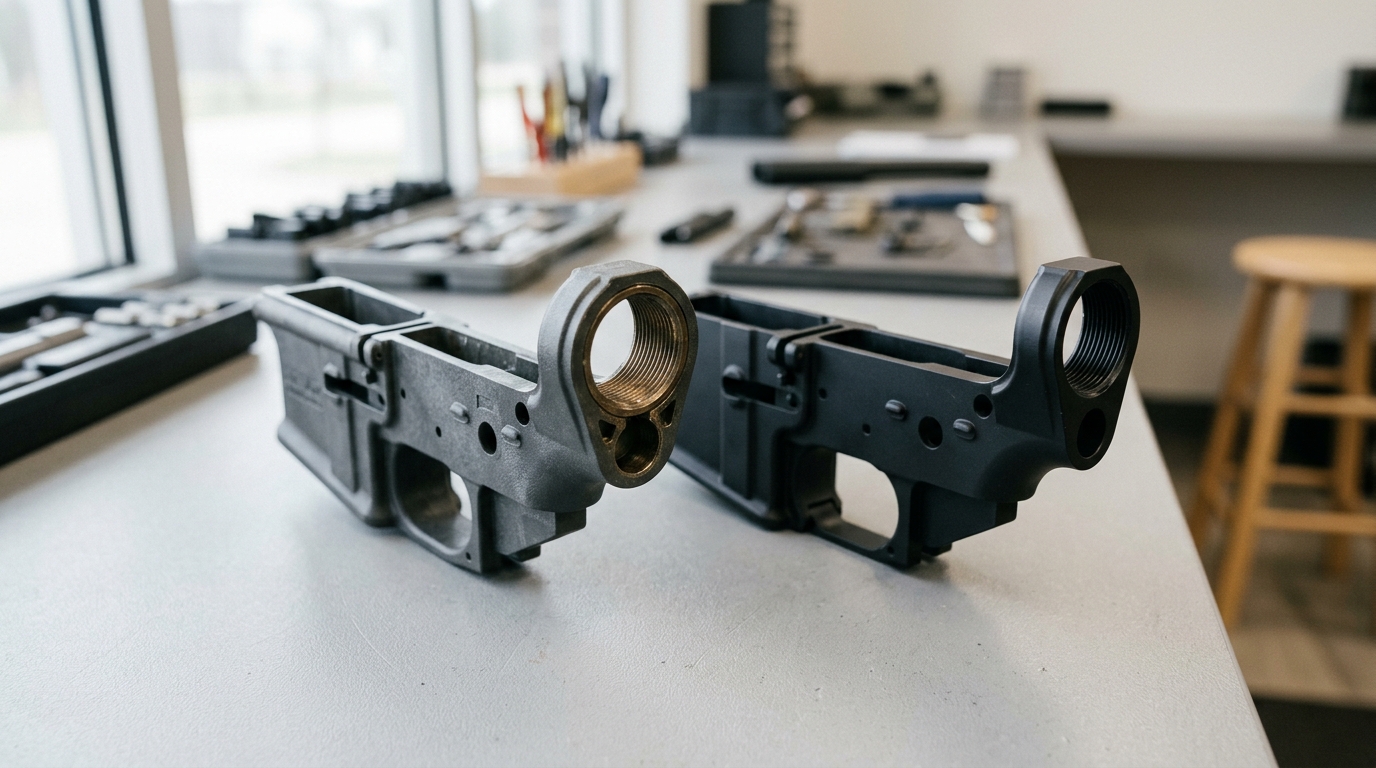
Will the Omni Hybrid’s polymer lower break? Probably not under normal range use, but it carries weak points that forged aluminum doesn’t. The receiver mates a polymer lower with a metal upper and steel reinforcement at high-stress zones.
Independent testers have run the Omni Hybrid through hundreds of rounds without a single malfunction, yet they still warn that polymer lacks the proven decades-long track record of aluminum.
The biggest concern lives at the buffer tower, the part that holds the recoil spring tube. On polymer lowers across the budget market, this is the documented failure point.
Drop a loaded rifle on hard concrete at the wrong angle, and a polymer buffer tower can crack where aluminum would only dent.
Heat is the second issue. Polymer softens long before metal does. ATI reinforces the threaded buffer extension area with metal inserts, which helps, but sustained rapid fire, say, dumping several mags back to back, builds heat that a forged 7075-T6 aluminum lower shrugs off.
Here is how the two stack up in practical terms:
| Factor | Omni Hybrid Polymer | Forged Aluminum |
|---|---|---|
| Round-count test results | Hundreds of rounds, no malfunctions reported | Tens of thousands documented across mil-spec builds |
| Drop resistance | Buffer tower crack risk on hard impact | Dents, rarely cracks |
| Sustained-fire heat | Softens faster; metal inserts mitigate | Handles heavy cyclic fire |
| Weight | Lighter | Heavier |
So is American Tactical a good brand for the Omni Hybrid specifically? For a range gun, plinker, or budget truck rifle, yes.
A 2023 head-to-head review still ranked the Radical RF-15 as the better first-AR budget pick, calling the Omni Hybrid more of a fun range gun than a duty rifle.
My practical advice: avoid the polymer lower if you plan rough field carry or high-volume training. The savings of approximately $10,$20 over an aluminum entry build don’t justify the buffer-tower gamble for hard use.
Alpha-15 and MilSport Performance Under Real Use
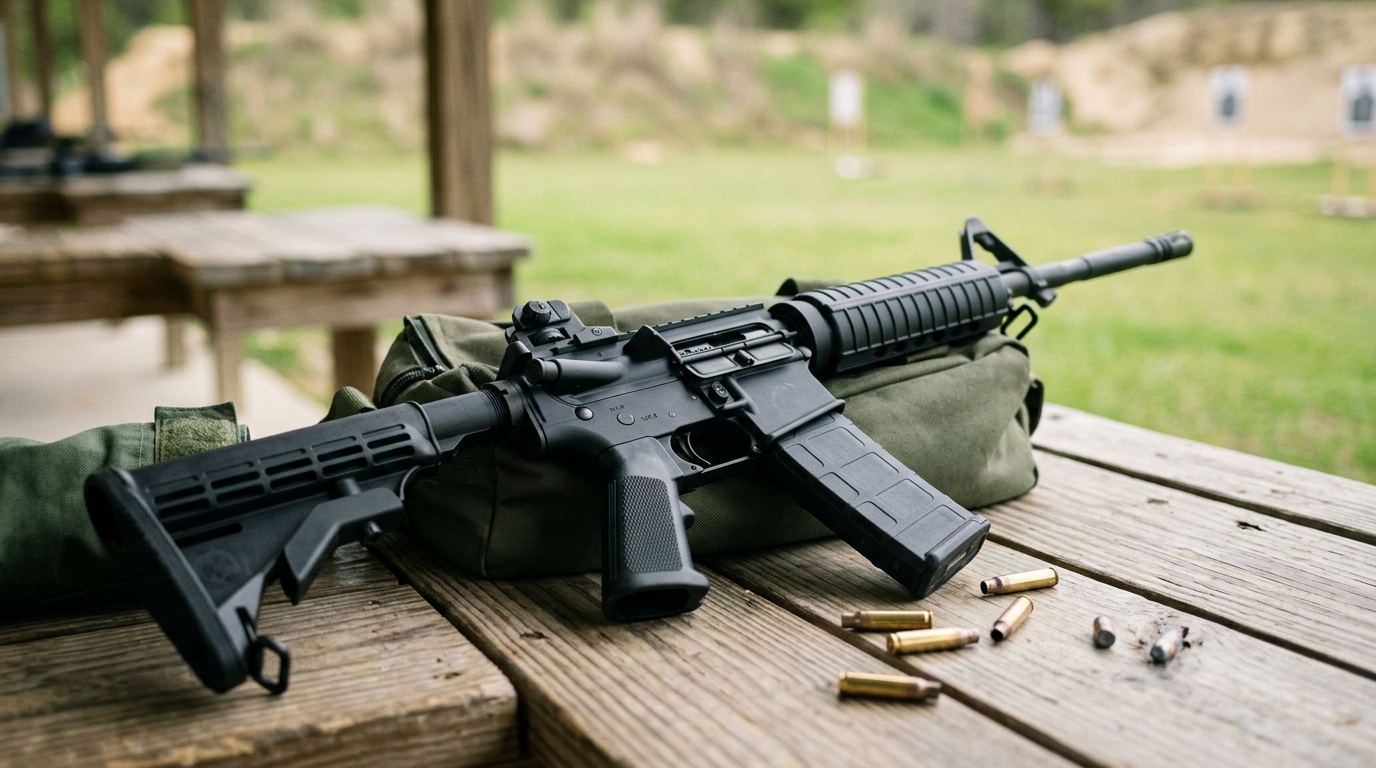
The Alpha-15 and MilSport are ATI’s all-aluminum AR-15 lines, and they shoot better than their bargain price suggests. Both feed and cycle reliably out of the box for most owners.
The catch? Quality control varies rifle to rifle, so you must inspect specific parts before trusting one for anything past casual range work.
The Alpha-15 weighs about 5.5 pounds and carries a approximately $499 MSRP, with street prices near $350,$375 in 2023,2024. An NRA-affiliated test by Shooting Illustrated ran roughly 140 rounds with zero malfunctions, calling it “worth your consideration” as a lightweight entry rifle, not a duty carbine.
Accuracy lands where you’d expect for the price: most owners report 2 to 3 MOA (minute of angle, a 2-inch group at 100 yards) with decent ammo. The gas system uses a carbine-length tube on most models.
That short gas tube runs slightly overpressured, which actually helps reliability with weak or dirty ammo, but it also increases bolt-carrier wear over time.
So is American Tactical a good brand for these aluminum AR builds? For range use, yes. For hard use, inspect first.
The MilSport carries a approximately $529.95 base MSRP, and a Guns.com review called it a “solid budget AR-15” with a limited lifetime warranty the reviewer had heard was being honored.
Common QC quirks owners report:
- Extraction stutters — usually a weak extractor spring; swap in an O-ring upgrade for under $5.
- Feeding hiccups — often the included polymer magazine, not the rifle. Test with quality mags first.
- Out-of-spec gas keys — check that the gas key screws are properly staked, since loose keys leak gas and cause short-stroking.
Skip the bundled magazine. Buy a known-good aftermarket mag and re-stake any loose gas key, and most early-round problems vanish.
Imported Pistols, Shotguns, and Rimfire — The Weak Link
So here’s the honest answer, plain and simple. The guns that ATI brings in from other countries are really kind of a coin flip. The ARs they build right here in the United States come off a tight, carefully controlled assembly line.
But the imported ones, which come from factories over in Turkey, Germany, and a few other places, show up with a much wider range in quality. Some of them are genuinely great.
And others arrive with feeding problems or a rough finish right out of the box.
Let’s start with the good news, though. The ATI M1911 chambered in .45 ACP gets steady praise from the people who own one, and they report that the parts fit together tightly and it feeds reliably for a starter-level price.
At a street price somewhere near $400, it comes in cheaper than most name-brand 1911s by approximately $200 or more. That’s a real bargain if you want a gun for the shooting range and you’re okay with basic military-style sights.
Now, shotguns are where things get a little murky. ATI imports both the semi-automatic and the pump-action models, and they’re built on Turkish actions.
These guns can run just fine with full-power ammunition, but a lot of owners report something called short-stroking, which is basically when the action doesn’t cycle all the way through, and it happens with the lighter target shells. The fix is pretty simple, really.
You just feed them the heavier loads during the break-in period, and then you test the light loads after about 200 rounds.
The .22 LR rimfire rifles, including the AR-style training guns, draw the most complaints by far. Rimfire ammunition is dirty and the power varies quite a bit from round to round.
The cheap bulk-pack stuff jams these guns up more than it really should. So stick to CCI Mini-Mag or something similar in a 40-grain copper-plated load, and the feeding problems drop off sharply.
| Import Category | Reliability Track Record | Best Use |
|---|---|---|
| M1911.45 ACP | Above its price point | Affordable range pistol |
| Turkish shotguns | Load-sensitive, break-in needed | Field/home defense with full loads |
| .22 LR rimfire | Ammo-picky, mixed reports | Plinking with premium ammo |
So, Is American Tactical a good brand for the imports? You really have to judge it by category and not just by the name on the box.
A 2024 buyer’s guide actually called ATI’s reputation “mixed” and they pushed for looking at it model by model. The 1911 punches above its weight.
But the rimfire stuff often disappoints. Generally, you want to buy the proven model and skip the gamble entirely.
Common American Tactical Problems Owners Actually Report
Most ATI complaints cluster around four issues: failure to feed, light primer strikes, magazine fit, and polymer wear. The good news?
⚠️ Common mistake: Assuming all ATI guns share the same quality because they share a brand name. This happens because ATI both builds U.S.-assembled rifles and imports pistols, shotguns, and rimfire guns from different sources. The fix: stick to U.S. lines like the Alpha-15—which ran 140 rounds with zero malfunctions—and skip the imported handguns and .22s.
Roughly half of these trace back to break-in or user error, not design defects. The bad news is that ATI’s quality control lets more out-of-spec parts through than competitors charging the same money.
Failure to feed (FTF) tops the list. On the Omni Hybrid and MilSport, owners report rounds nose-diving into the feed ramp during the first 100,200 rounds.
This is almost always a break-in issue. A stiff new extractor spring and a dry bolt carrier group (BCG) cause it.
Run a proper wet lube on the bolt rails and most FTFs vanish by round 250.
Light primer strikes are different, that one can be a genuine defect. The firing pin leaves a dent but the round won’t fire.
On budget ARs this usually means a weak hammer spring or a firing pin slightly short of spec. ATI lowers have shown this more often than aluminum competitors, which feeds the criticism in large firearm communities calling ATI lowers “out-of-spec” between 2020 and 2024.
Sorting Defects From User Error
- Magazine fit (user error mostly): Tight mag wells reject some aftermarket magazines. Try a Magpul PMAG GEN M3 before assuming the rifle is broken.
- Polymer wear (design trade-off): Takedown pin holes on the Omni Hybrid widen faster than aluminum. Minor cosmetic, rarely functional.
- Light primer strikes (real defect): Swap to a JP Enterprises or Sprinco hammer spring — about $15 — if dents are too shallow.
- Trigger grit: Mil-spec triggers ship gritty. Polish the engagement surfaces or drop in an aftermarket unit.
So is American Tactical a good brand if you expect zero tinkering? No. Their warranty does honor real defects, relevant in the next section. But a approximately $20 spring kit fixes more “ATI problems” than a return shipment ever will.
Warranty, Customer Service, and BBB Track Record
ATI backs its U.S.-built rifles with a limited lifetime warranty, and that warranty actually gets honored, though turnaround on defect claims runs slow, often three to six weeks. Imported guns get shorter coverage.
So the after-sale support depends entirely on which product you bought, the same model-by-model rule that defines the whole brand.
Here is what the warranty covers and what it skips. The lifetime warranty applies to defects in materials and workmanship on ATI-manufactured firearms.
It does not cover normal wear, unauthorized modifications, or handloaded ammunition damage. One reviewer on Guns.com noted the MilSport’s limited lifetime warranty was being honored in practice, not just on paper, a meaningful distinction with budget brands.
On the service side, the numbers tell a calmer story than forums suggest. ATI’s Summerville, South Carolina facility held an overall rating above 3 stars across roughly 30 consumer reviews on Yelp as of 2024.
That points to generally workable retail and repair interactions, not glowing, but not the disaster some Reddit threads imply.
What actually frustrates owners is communication, not refusal. The common complaint pattern looks like this:
- Slow phone response — expect to leave messages and wait days for callbacks
- RMA shipping on your dime for imported guns, unlike some competitors who send prepaid labels
- Parts-only fixes rather than full replacements, even when the part needs fitting
Practical tip: when filing a claim, email instead of calling, and attach round counts plus photos of the failure. A documented paper trail speeds approval and gives you use if the first response stalls.
Compare this to Ruger or PSA, who often ship prepaid return labels and resolve claims in two to three weeks. ATI’s support is functional but bare-bones.
So is American Tactical a good brand for buyers who value white-glove service? No, and the next section shows how that gap plays out against direct rivals.
ATI vs PSA, Anderson, and Ruger AR-556 at the Same Price
At the approximately $350,$500 tier, ATI’s Alpha-15 wins on weight and price, but Palmetto State Armory (PSA) and Ruger beat it on resale value and proven reliability records. Anderson sits right beside ATI as a bare-bones budget play.
If you want the cheapest shooter, ATI competes. If you want the safest bet to resell or run hard, spend approximately $50 more.
Here is how the four stack up on the metrics buyers actually weigh.
| Brand / Model | Typical Street Price (2025–26) | Reliability Reputation | Warranty | Resale Strength |
|---|---|---|---|---|
| ATI Alpha-15 | approximately $350–$400 | Mixed but improving; ~140 rounds no malfunctions in one Shooting Illustrated test | Limited lifetime | Weak — heavy depreciation |
| PSA PA-15 | approximately $400–$500 | Strong; huge sample size, well-documented | Limited lifetime | Moderate — known name |
| Anderson AM-15 | approximately $350–$430 | Plain but consistent mil-spec | Limited lifetime | Weak — generic OEM parts |
| Ruger AR-556 | approximately $650–$750 | Excellent; cold-hammer-forged barrel | No formal written warranty, but service is responsive | Strong — holds value |
ATI’s price edge is real but thin. Reddit threads from 2020,2024 warn that saving just $10,$20 over Anderson or PSA raises your odds of out-of-spec parts. That gap is too small to justify the extra quality-control risk for most first-time buyers.
Where ATI clearly wins: the Alpha-15 weighs about 5.5 pounds, lighter than a standard PSA carbine. For a truck gun or a youth shooter, that matters.
So is American Tactical a good brand against this field? On pure dollars, yes. On resale and track record, Ruger’s AR-556, though pricier, keeps more value at trade-in, which offsets its higher entry cost over time.
Who American Tactical Is Best For and Who Should Skip It
So, is American Tactical a good brand for you? It depends entirely on what you plan to do with the gun.
ATI fits budget buyers and casual range shooters well. It fits duty and defensive carry poorly.
Match your use case to the right line, or walk away, using the breakdown below.
Budget first-time AR buyers
Buy, pick the Alpha-15. At a street price near $350,$375 and just 5.5 pounds, the Alpha-15 earned a “worth your consideration” verdict from an NRA-affiliated reviewer for entry-level buyers. It’s light, cheap, and runs reliably out of the box.
Skip the polymer Omni Hybrid here unless you want a project gun.
Range plinkers and weekend shooters
Buy, the Omni Hybrid is genuinely fun. Independent testers cycled hundreds of rounds through it without a single malfunction. For tin cans and paper at the local range, the polymer lower saves money and weight.
The flex you feel under hand pressure doesn’t affect accuracy or function at plinking volume.
AR builders and tinkerers
Caution, verify spec first. Reddit communities between 2020 and 2024 repeatedly flagged ATI lowers as “frequently out-of-spec”. A receiver that runs approximately $10,$20 cheaper than Anderson can cost hours fitting parts. Builders chasing tight tolerances should buy a mil-spec forged lower instead.
Duty and defensive users
Skip it. A 2023 comparison steered first-AR defensive buyers toward the Radical RF-15 over the Omni Hybrid, calling ATI more of a fun range gun than a duty rifle. For carry or home defense, your life depends on the gun. Pay more.
Frequently Asked Questions About American Tactical
Quick answers to the questions buyers ask most before spending money. Each one ties back to the same theme: ATI quality depends on which model you pick, not the badge on the box.
Are ATI rifles reliable enough for self-defense?
The U.S.-built Alpha-15 and MilSport, yes, with one caveat. Run at least 200 rounds of your chosen defensive ammo through the gun first, with the magazines you plan to keep loaded.
One Shooting Illustrated test logged about 140 rounds through an Alpha-15 with zero malfunctions. That’s a clean range result, not a duty proof.
For a primary home-defense rifle, most experienced owners still rank a Ruger AR-556 or a vetted PSA build above ATI.
Is the Omni Hybrid lower safe to shoot?
Yes. The polymer lower carries no chamber pressure, that job belongs to the steel barrel and bolt.
The lower only holds the fire-control parts. Reviewers have cycled hundreds of rounds through Omni Hybrids without failures.
The real worry is long-term wear at the buffer-tube threads and takedown-pin holes, not a sudden break.
Where are American Tactical guns made?
It splits two ways. The Alpha-15, MilSport, and Omni Hybrid AR-15s are assembled in Summerville, South Carolina.
The pistols, shotguns, and.22 LR rifles are largely imported from European partners and rebranded. So “Is American Tactical a good brand?”
has no single answer, the South Carolina ARs and the imported guns are different operations.
How does the Alpha Maxx differ from the Alpha-15?
The Alpha-15 is the lightweight base AR at roughly 5.5 pounds. The Alpha Maxx line adds features like a free-float M-LOK handguard, an adjustable stock, and upgraded furniture, pushing price and weight up. Same core platform, the Maxx just trades the bare-bones build for more shooter-friendly hardware.
Final Verdict — Reliable Value or False Economy
So, is American Tactical a good brand? For its U.S.-built AR-15 lines, yes, it delivers real value.
For its imported pistols, shotguns, and rimfire guns, the answer leans toward false economy. The brand splits cleanly down the middle, and your dollar buys very different reliability depending on which side you pick.
Here is the line-by-line verdict in plain terms.
- Buy: The Alpha-15 and MilSport. Both are aluminum-receiver ARs that shoot well above their price. The Alpha-15 runs roughly 5.5 pounds at a approximately $499 MSRP, with street prices near $350–$375 — a strong lightweight entry carbine.
- Buy with eyes open: The Omni Hybrid polymer-lower AR. It cycles hundreds of rounds fine as a range gun, but polymer receivers lack the decade-long track record aluminum has. Skip it for duty use.
- Avoid: Most imported handguns, shotguns, and.22 LR rifles. These are the coin-flip products where reliability and finish complaints cluster.
The warranty matters here. ATI’s limited lifetime warranty on U.S.-built rifles gets honored in practice, which softens the risk on the Alpha-15 and MilSport. Imported guns rarely get that same backing, a key reason the value math falls apart on them.
Your concrete next step? If you’re torn between ATI and a rival budget brand, price out the exact two rifles side by side at a single retailer.
A 2023 head-to-head test rated the Radical Firearms RF-15 as the better first-AR pick over the Omni Hybrid. At the same shelf price, Palmetto State Armory and Anderson often edge out ATI on quality control.
But if the Alpha-15 sits approximately $40,$60 cheaper and you want the lightest rifle in the rack, ATI earns the buy.
Decide by model, not by logo. That single habit turns ATI from a gamble into a smart budget play.
Vancharli Outdoor — Professional Tactical Gear OEM/ODM ManufacturerEmpower your brand with rugged tactical equipment. Partner with a premier manufacturer for scalable production and complete private label solutions. ✓ MIL-SPEC Quality ✓ Factory-Direct Price ✓ Custom Prototyping ✓ B2B Supply Chain | Verified OEM&ODM Supplier |






Comments are closed