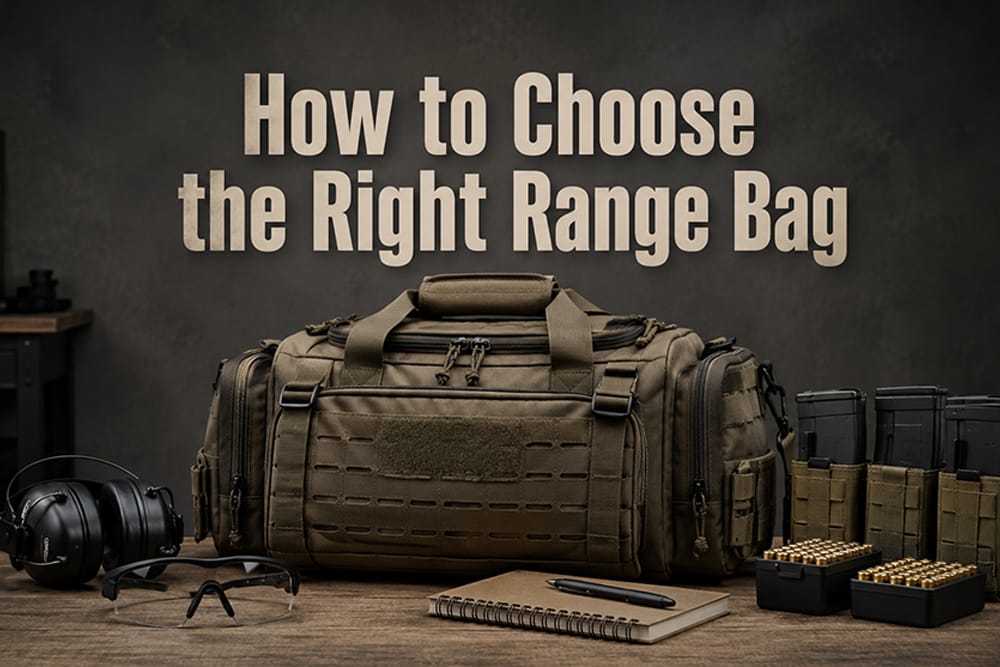
How to Choose the Right Range Bag for Shooting Gear
A good range bag does more than hold your shooting gear. It keeps your essentials organized, protects smaller items from damage, makes heavy gear easier to carry, and helps you avoid forgetting important accessories before you leave home.
For many shooters, the first range bag purchase starts with a simple question: “How much can it hold?” That matters, but it is not the only thing that matters. The right range bag should match what you carry, how often you go to the range, whether you shoot indoors or outdoors, and how much organization you need once the bag is opened.
This guide explains how to choose a range bag based on real use: size, compartments, materials, padding, zippers, carry comfort, and common buying mistakes.
A range bag is a purpose-built bag designed to carry shooting range gear in an organized way. Unlike a regular backpack or gym bag, a range bag usually includes dedicated compartments, padded sections, magazine storage, outer pockets, and reinforced construction for heavier equipment.
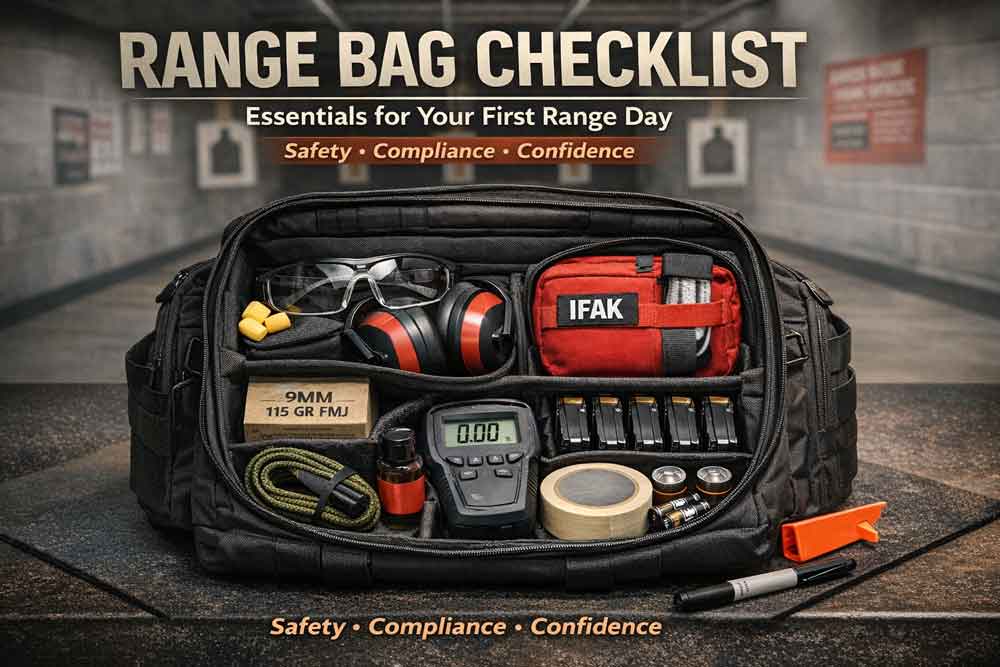
A typical range bag may carry:
Eye protection for safe range use
Ear protection, such as earmuffs or earplugs
Magazines and magazine pouches
Ammunition boxes
Cleaning tools and lubricant
Targets, tape, markers, and small accessories
Gloves, notebook, range card, ID, or membership card
A compact first-aid or trauma kit, depending on the user’s needs
Safety gear should be easy to reach. NSSF recommends protective shooting glasses and hearing protection while shooting, which makes dedicated storage for eye and ear protection especially useful in a range bag.
Start With What You Actually Carry
Before looking at bag size, fabric, or brand, start with your actual gear list. A person who brings one handgun, a few magazines, and basic safety gear does not need the same bag as someone who carries multiple handguns, extra ammunition, cleaning tools, targets, and training accessories.
Ask yourself:
Do I usually carry one firearm or multiple firearms?
Do I need space for bulky earmuffs?
How many magazines do I bring?
Do I carry ammunition in boxes or smaller containers?
Do I need room for tools, cleaning supplies, and spare parts?
Will I use the bag indoors, outdoors, or both?
Do I walk long distances from the car to the range?
This is where many buyers make their first mistake. They choose a bag that looks large enough online, but once safety gear, ammunition, tools, and accessories are added, the bag becomes crowded or poorly balanced. A good range bag should fit your regular loadout without forcing everything into one large messy compartment.
Choose the Right Size and Capacity
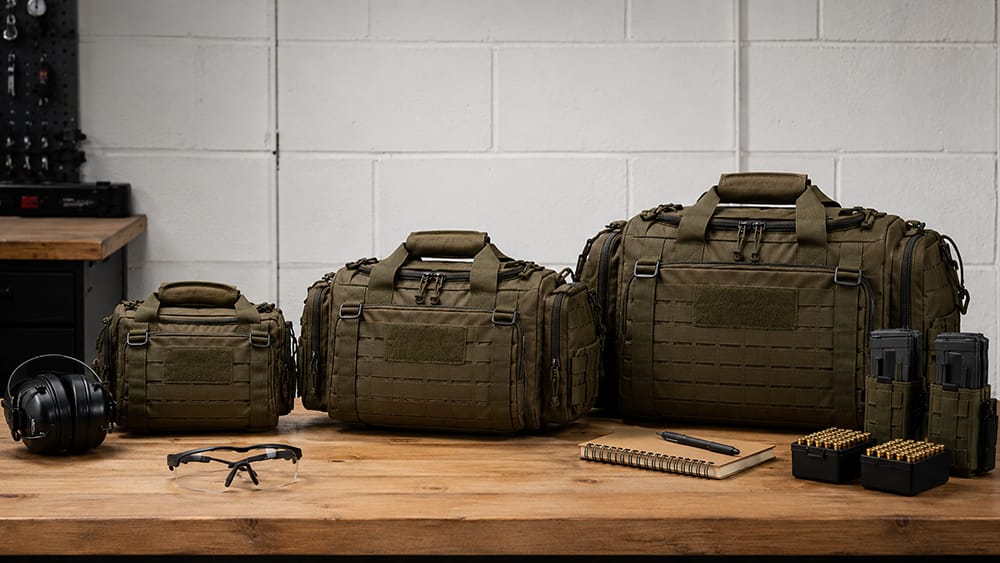
Bigger is not always better. A large range bag can carry more, but it can also become heavy, awkward, and difficult to organize. A smaller bag is easier to carry, but it may not leave enough room for safety gear, spare magazines, or other essentials.
Range bags do not have one universal industry size standard, so the dimensions below should be treated as common reference ranges rather than fixed rules. For example, 5.11 lists its Range Qualifier Bag at 18L with a main compartment around 13″ L × 10.25″ W × 8.75″ H, while larger range bags from the same category can reach much higher capacities depending on structure and intended use.
Range Bag Type
Approx. Common Size
Best For
Main Advantage
Possible Limitation
Compact range bag
12–15″ L × 8–10″ W × 8–10″ H
Light range trips, one handgun, basic safety gear
Easy to carry and store
Limited room for extra accessories
Medium range bag
16–19″ L × 9–13″ W × 8–11″ H
Regular range use, multiple accessories, several magazines
Balanced size and organization
May not fit larger training loadouts
Large range bag
20–22″ L × 12–15″ W × 10–12″ H
Frequent shooters, outdoor range use, heavier gear
More capacity and better separation
Can become heavy when fully packed
Range backpack
Around 18–30L capacity, varies by structure
Longer walks, hands-free carry, outdoor range use
Better weight distribution
Less convenient for wide-open access
Rolling range bag
Around 20–23″ L × 13–16″ W × 13–17″ H
Heavy loadouts or reduced carrying strain
Easier to move heavy gear
Less practical on rough outdoor surfaces
For most users, a medium range bag is the most practical starting point. It provides enough room for common essentials without becoming oversized. If you frequently carry heavier gear, choose a larger bag only if it has strong handles, a reinforced bottom, and a layout that keeps weight distributed.
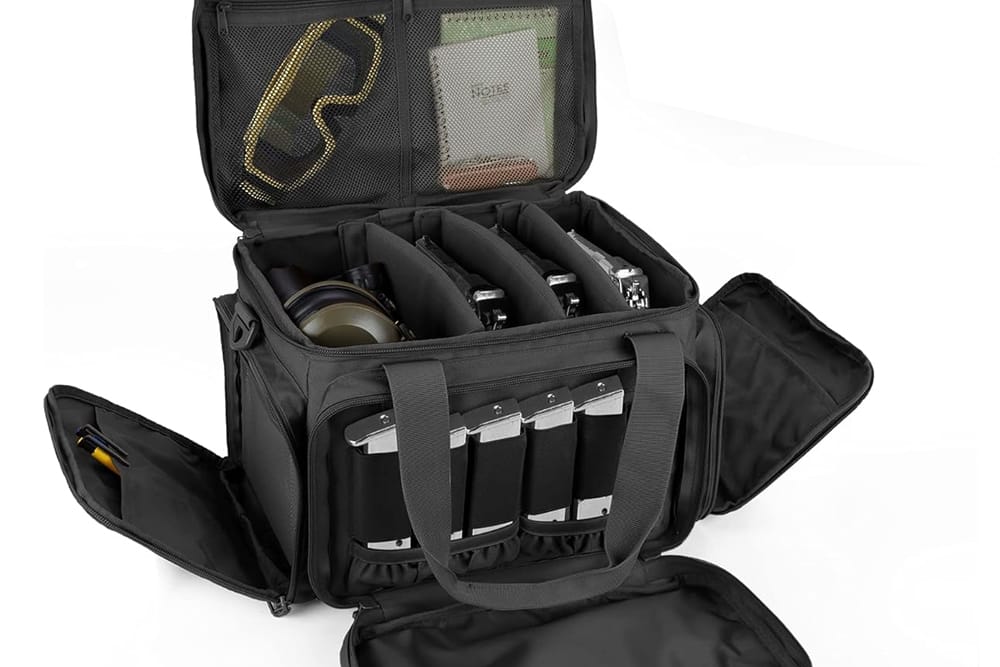
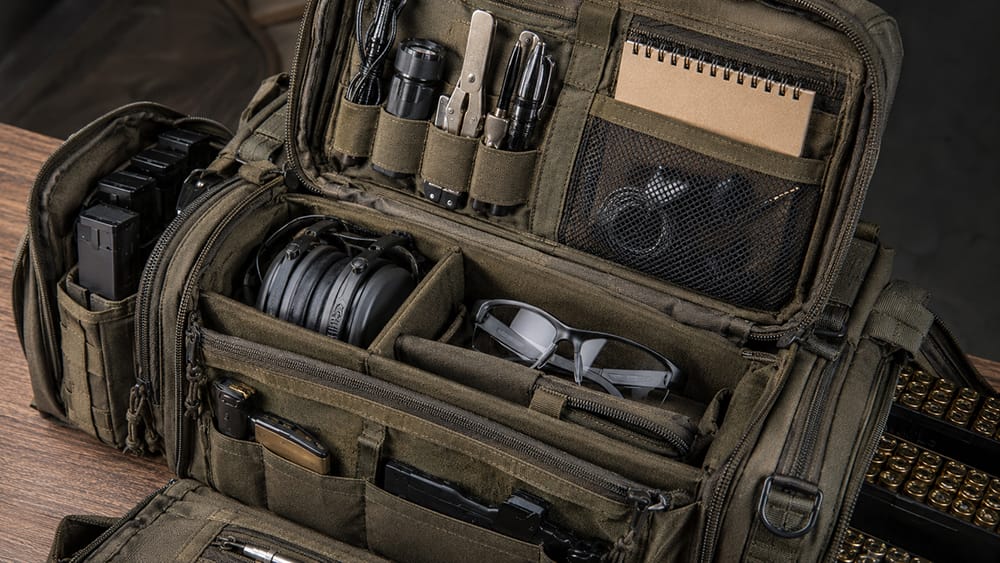
Compartment layout is one of the most important parts of a range bag. A bag with one large main compartment may look spacious, but it can become frustrating when small items sink to the bottom or heavier items press against delicate accessories.
A good range bag should help separate gear by function:
Gear Type
Recommended Storage Area
Why It Matters
Eye protection
Padded or separate pocket
Helps reduce scratches and damage
Ear protection
Easy-access outer or top pocket
Allows quick access before entering the range
Magazines
Elastic loops, sleeves, or divided pockets
Keeps magazines upright and easier to find
Ammunition
Reinforced lower compartment or side pocket
Keeps heavier weight low and stable
Tools and cleaning items
Small internal pockets or utility pouch
Prevents loose items from spreading
Targets and papers
Flat sleeve or rear compartment
Keeps paper items from bending
First-aid items
Clearly separated pocket
Makes emergency items easier to locate
A strong layout should make the bag easy to pack, easy to carry, and easy to use when opened. The best range bags are not just larger; they are better organized. Multiple inner compartments and outer pockets help keep important items separated, accessible, and secure during transport.
Look for Padding and Internal Protection
Padding is not only about comfort. It helps protect gear from impact, reduces internal movement, and gives the bag more structure. Without enough padding, a range bag may collapse when partially loaded or allow items to bump against each other during transport.
Useful protection features include:
Padded sidewalls to improve structure
A padded bottom panel to reduce impact
Removable dividers for flexible organization
Soft-lined pockets for glasses or delicate accessories
Reinforced compartments for heavier items
Stable internal panels to prevent the bag from sagging
If you carry items that can scratch, dent, or shift easily, padding becomes more important. A structured range bag is usually easier to use than a soft bag that folds inward when opened.
Compare Materials and Durability
A range bag should be built for repeated use. It may be placed on concrete benches, vehicle floors, outdoor ground, gravel, or dusty surfaces. It may also carry concentrated weight from ammunition, tools, and metal accessories.
Common material options include:
Material
Best Use
Notes
600D polyester
Entry-level or mid-range bags
Cost-effective and suitable for lighter use
900D polyester
Heavier-duty range bags
Better abrasion resistance and structure
Nylon
Higher-end tactical or outdoor bags
Strong, flexible, and durable
Cordura-style fabric
Premium rugged bags
Often used for abrasion-resistant tactical gear
Coated or water-repellent fabric
Outdoor or mixed-condition use
Helps resist light moisture and dirt
Outdoor Life notes that range bags often experience rough handling, spills, and frequent zipper use, so a strong build, padding, quality zippers, and durable materials such as Cordura or polyester are important.
For most users, a water-repellent finish is more realistic than a fully waterproof structure. Unless the bag uses sealed seams, waterproof zippers, or welded construction, it should not be treated as a fully waterproof bag. A water-repellent exterior can still be useful for light rain, outdoor benches, or dusty environments.
For readers comparing tactical fabrics more deeply, Vancharli Outdoor’s guide to 500D vs 1000D nylon for tactical bags offers a useful material reference.
Check the Zippers, Handles, and Stitching
Zippers, handles, and stitching are common failure points on heavily loaded bags. A range bag may look strong from the outside, but weak hardware or poor reinforcement can shorten its lifespan quickly.
Pay attention to these areas:
Zippers
The main zipper should open smoothly, feel stable, and avoid catching on fabric. Large zipper pulls are helpful when wearing gloves or opening the bag quickly at the range. Lockable zipper pulls may also be useful for users who want an added layer of control during transport, depending on local rules and personal storage habits.
Handles
Handles should feel firm and well anchored to the body of the bag. Look for reinforced stitching, wide webbing, and comfortable grip wraps. Thin handles may feel fine when the bag is empty but become uncomfortable once loaded.
Shoulder Strap
A removable padded shoulder strap is useful for medium and large bags. The attachment points should be reinforced, because loaded range bags can place heavy stress on D-rings, buckles, and side seams.
Bottom Panel
The bottom of the bag should be stronger than the side panels. A reinforced base helps the bag stay upright, carry weight more evenly, and resist wear when placed on rough surfaces.
Stitching
Box-X stitching, bar-tack reinforcement, and double stitching are all useful signs of better load-bearing construction. These details are especially important when the bag regularly carries dense items such as ammunition, tools, and metal accessories.
Choose a Carry Style That Fits Your Use
Range bags come in several carry styles. The best choice depends on how much gear you carry and how far you need to move it.
Duffle-Style Range Bag
A duffle-style range bag is the most common choice. It usually has a wide opening, multiple pockets, and enough room for regular range gear. It works well when you drive to the range and do not need to walk far.
Best for:
Indoor range trips
General range use
Users who want easy access
Medium to large loadouts
Range Backpack
A range backpack is better when you need hands-free carry or have to walk farther. It distributes weight across both shoulders, which can feel more comfortable than carrying a heavy shoulder bag.
Best for:
Outdoor ranges
Longer walks
Hands-free carry
Users who prefer vertical organization
Compact Pistol Range Bag
A compact pistol range bag is designed for lighter trips. It is easier to store and carry, but it may not fit bulky hearing protection, large ammunition boxes, or extra accessories.
Best for:
Short range visits
One-handgun loadouts
Minimal gear
Users who prefer a smaller footprint
Rolling Range Bag
A rolling range bag can reduce carrying strain, especially with heavy gear. However, wheels are not always practical on gravel, grass, uneven pavement, or outdoor range surfaces.
Best for:
Heavy indoor range loadouts
Users who want less shoulder strain
Smooth floors and paved surfaces
Think About Indoor vs Outdoor Range Use
Your range environment should influence your bag choice.
Indoor Range
For indoor range use, organization and compact size often matter most. You may not need a heavily weather-resistant exterior, but you will appreciate easy-access pockets, a clean layout, and a bag that does not take up too much bench space.
Look for:
Compact or medium size
Easy-access safety gear pocket
Good internal organization
Smooth zippers
Stable base
Outdoor Range
Outdoor range use usually places more stress on the bag. Dirt, dust, moisture, rough surfaces, and longer walks can make durability more important.
Look for:
Abrasion-resistant fabric
Water-repellent finish
Reinforced bottom
Comfortable shoulder strap or backpack straps
Easy-to-clean lining
Stronger zippers and hardware
If you use both indoor and outdoor ranges, a medium-to-large duffle range bag with a reinforced base is usually a versatile choice.
Do Not Ignore Weight Distribution
A range bag can become heavy quickly. Ammunition, tools, magazines, and accessories add weight faster than many buyers expect. If the bag is poorly designed, the weight may pull to one side, strain the shoulder strap, or make the bag uncomfortable to carry.
Good weight distribution means:
Heavy items sit low in the bag
Side pockets do not overload one side
The bottom panel holds shape
Handles are placed evenly
Shoulder strap attachment points are balanced
The bag does not collapse inward when partially loaded
A well-designed range bag should feel stable when carried and remain upright when placed on a bench or floor.
Look for Easy Cleaning and Maintenance
Range bags can collect dust, dirt, oil, residue, and small debris. A bag that is hard to clean may look worn quickly, especially if it has a light-colored lining or too many hard-to-reach corners.
Useful cleaning-friendly features include:
Dark or medium-colored lining
Smooth interior fabric
Removable dividers
Wide opening for easier access
Dirt-resistant bottom panel
Exterior fabric that can be wiped down
If you use the bag outdoors, avoid materials that absorb dirt easily or take too long to dry.
Common Mistakes When Buying a Range Bag
Mistake 1: Choosing Only by Capacity
A large bag is not automatically a better bag. If it lacks dividers, pockets, and structure, it can turn into one big storage box where small items disappear.
Mistake 2: Ignoring Safety Gear Storage
Eye and ear protection should be easy to reach. If you have to dig through the main compartment every time, the layout is not ideal.
Mistake 3: Buying a Bag That Is Too Soft
A soft bag may be lightweight, but it can collapse when opened. For range use, some structure is usually helpful.
Mistake 4: Overlooking the Bottom Panel
The bottom carries much of the weight. If it is thin or poorly reinforced, the bag may sag, wear out, or become unstable.
Mistake 5: Not Checking Zipper Quality
A range bag gets opened and closed often. Weak zippers can become one of the first parts to fail.
Mistake 6: Forgetting Carry Comfort
The bag may feel fine when empty, but once loaded, thin handles or an unpadded strap can become uncomfortable quickly.
Mistake 7: Buying for Looks Instead of Use
A clean design is nice, but function matters more. Choose based on what you carry, where you go, and how you use the bag.
Range Bag Buying Checklist
Before buying a range bag, use this quick checklist:
What to Check
What to Look For
Size
Enough room for your normal gear without becoming oversized
Main compartment
Wide opening and enough structure
Safety gear pocket
Easy access for eye and ear protection
Magazine storage
Elastic loops, sleeves, or organized pockets
Ammunition area
Strong lower compartment or separate pocket
Padding
Sidewalls, bottom panel, and soft accessory pockets
Fabric
Durable polyester, nylon, or Cordura-style material
Finish
Water-repellent or easy-clean exterior if used outdoors
Zippers
Smooth, strong, and easy to grip
Handles
Reinforced stitching and comfortable grip
Shoulder strap
Padded, adjustable, and securely attached
Bottom panel
Reinforced and stable
Cleaning
Easy-to-wipe interior and exterior
Carry style
Duffle, backpack, compact, or rolling based on your use
What Makes a Range Bag Good for Long-Term Use?
A good range bag should hold up after repeated trips, not just look good when new. Long-term use depends on the relationship between design, material, and construction.
The strongest bags usually share several traits:
The layout matches real gear habits
Heavy items are supported by reinforced areas
Zippers can handle frequent opening and closing
Handles and shoulder straps are built for loaded weight
The bottom panel resists abrasion
Pockets are useful, not just decorative
The bag remains stable when opened or placed down
Interior organization reduces clutter
If you are developing a product line or comparing custom range bag options, details such as material grade, compartment layout, reinforcement, zipper selection, and carry structure should be reviewed together rather than separately. Vancharli Outdoor’s custom range bag manufacturer page can be used as a related reference for product structure, wholesale programs, and OEM/ODM range bag development.
Final Takeaway
The right range bag is not simply the biggest or most expensive option. It is the bag that fits your actual gear, keeps everything organized, protects important accessories, and remains comfortable when fully loaded.
Start with what you carry. Then compare size, compartments, padding, material, zippers, handles, bottom reinforcement, and carry style. A good range bag should make every range trip easier, cleaner, and more organized.
FAQ
What size range bag should I buy?
Most users should start with a medium range bag, usually around 16–19 inches long. It offers enough room for safety gear, magazines, ammunition boxes, tools, and small accessories without becoming too bulky. Choose a larger bag only if you regularly carry heavier or more complex gear.
Is a regular backpack good enough for the range?
A regular backpack can work for light use, but it usually lacks the dedicated compartments, padding, magazine storage, reinforced bottom, and wide opening found in a purpose-built range bag.
What should I keep in my range bag?
Common items include eye protection, ear protection, magazines, ammunition, cleaning tools, targets, tape, markers, gloves, ID, range card, and a small first-aid kit. Always follow your range rules and local laws when packing and transporting gear.
Should I choose a range backpack or a duffle range bag?
Choose a range backpack if you walk longer distances or prefer hands-free carry. Choose a duffle-style range bag if you want easier access, a wider opening, and more horizontal organization.
Are range bags waterproof?
Most range bags are not fully waterproof. Many are water-repellent, which means they can resist light moisture but are not designed for full water exposure. For true waterproof performance, the bag would need special construction such as sealed seams or welded panels.
What material is best for a range bag?
600D polyester is suitable for lighter use and cost-effective bags. 900D polyester, nylon, and Cordura-style fabrics are better for heavier-duty use. The best choice depends on weight, durability, budget, and how often the bag will be used.
Why is bottom reinforcement important?
The bottom panel carries much of the bag’s loaded weight. A reinforced bottom helps the bag stay stable, resist abrasion, and reduce sagging when carrying ammunition, tools, and accessories.
How do I keep a range bag organized?
Separate gear by function. Keep safety gear easy to reach, store magazines in dedicated pockets, keep heavier items low, place tools in small pouches, and use removable dividers if your bag includes them.









Comments are closed