The best fishing dry bag keeps your gear safe from water, fits everything you need, and feels comfortable to carry. You want strong waterproof protection so your phone, clothes, and tackle stay dry. Bag size matters because you need space for your essentials but also want something easy to move. Think about where you fish and what you bring. Ask yourself if you need extra room or quick access for your favorite lures. Your perfect bag depends on your fishing style.
Pick a dry bag that uses strong materials like Cordura or ballistic nylon. These materials help keep water out.
Choose a dry bag size that fits your trip length and gear. This helps you stay comfortable and work better.
Find bags with roll-top closures. These closures keep water out. Always check the closure before you go fishing.
Think about features like padded straps and hip belts. These make carrying the bag easier and more comfortable.
Pack your dry bag by sorting gear into groups. Put things you use often where you can reach them quickly.
Waterproof Features for Fishing Dry Bags
Waterproof Materials and Ratings
When you pick a fishing dry bag, you want to make sure it uses the right materials. Some bags use basic polyester, while others use tough nylon or Cordura. These materials help keep your gear dry and safe. Take a look at this table to see how different materials compare:
Material Type
Description
Waterproof Rating
600D Polyester
Good for light use in freshwater.
Water-Resistant
1000D Cordura
Strong against scrapes and punctures.
Waterproof
1680D Ballistic Nylon
Built for heavy-duty fishing and rough trips.
Submersible
If you fish in places with lots of splashing or rain, you need a bag with a high waterproof rating. Some fishing dry bags have ratings like IPX7 or IP68. These ratings tell you how well the bag keeps water out, even if you drop it in the lake. For example, a bag with an IPX7 rating can stay underwater for up to 30 minutes at a depth of one meter. That means your phone and wallet stay dry, even if your boat tips over.
Product Name
Waterproof Rating
Submersion Capability
YETI Panga 28L Waterproof Backpack
IPX7
Submersible up to 1 meter for 30 minutes
Nite Ize RunOff Waterproof Hip Pack
IP67
Submersible to 1 meter for 30 minutes
Breakwater Supply Fogland Backpack
IP68
Continuous submersion under set conditions
GroundTruth 25L Roll-Top Dry Backpack
IP67
Handles serious water exposure
Tip: If you fish in saltwater, rinse your fishing dry bag with fresh water after each trip. Salt can damage the fabric and shorten the life of your bag.
Roll-Top Closures and Seals
You want a fishing dry bag that seals tight. Most anglers trust roll-top closures because they keep water out, even when you dunk the bag. Here’s how you use a roll-top closure:
Flatten the bag’s opening.
Roll the top edge down tightly two or three times.
Lock the sides with buckles.
This simple method creates a strong seal. You don’t have to worry about water sneaking in when you set your bag on a wet dock or drop it in the river. Some bags also use waterproof zippers for extra protection, but roll-tops are the most popular for fishing.
Note: Always check the closure before you head out. A loose roll or buckle can let water in and ruin your gear.
Durability for Frequent Use
Fishing trips can be tough on your gear. You open and close your fishing dry bag many times, toss it in boats, and drag it across rocks. You need a bag that stands up to all this action. Look for these features:
Rugged base made from abrasion-resistant material.
Multiple D-rings for attaching the bag to your boat or kayak.
Roll-down closure with a stiffener bar for extra security.
PVC and vinyl for easy cleaning and waterproofing.
Ripstop and reinforced seams to stop tears and leaks.
Heat-welded seams and waterproof zippers for extra peace of mind.
If you fish in saltwater, take care of your bag. Rinse it with fresh water after each trip. Wash it in cold water with a special detergent every few outings. Dry it completely before storing. These steps help your fishing dry bag last longer and keep working trip after trip.
Fishing dry bags get high marks from anglers. People like how these bags protect valuables, stay dry in wet conditions, and last for years. Many say they work better than regular waterproof bags, especially for boating and rough weather. You might pay more for a good fishing dry bag, but you save money by not having to replace ruined gear.
Pro Tip: Store your fishing dry bag in a cool, dry place. This keeps the waterproof coating strong and ready for your next adventure.
Choosing the Right Size Dry Bag
Matching Bag Size to Fishing Gear
Picking the right size dry bag can make your fishing trip much easier. You want a bag that holds all your gear but does not get in your way. Think about how long you plan to fish and what you need to bring. Here’s a quick guide to help you match your bag size to your trip:
Trip Duration
Recommended Dry Bag Size
Half-day trips
Smaller options like Patagonia’s Black Hole
One to two-day trips
Orvis Carry-It-All
Three-day trips
Orvis Carry-It-All
Longer trips
Suitcase options for more space
You can also look at the volume of your gear. Here’s another table to help you decide:
Dry Bag Size
Suitable Use
2–10L
Essentials and short activities
15–30L
Single-person day and weekend trips
40–60L
Multi-day adventures and camping
70L+
Expedition or group gear
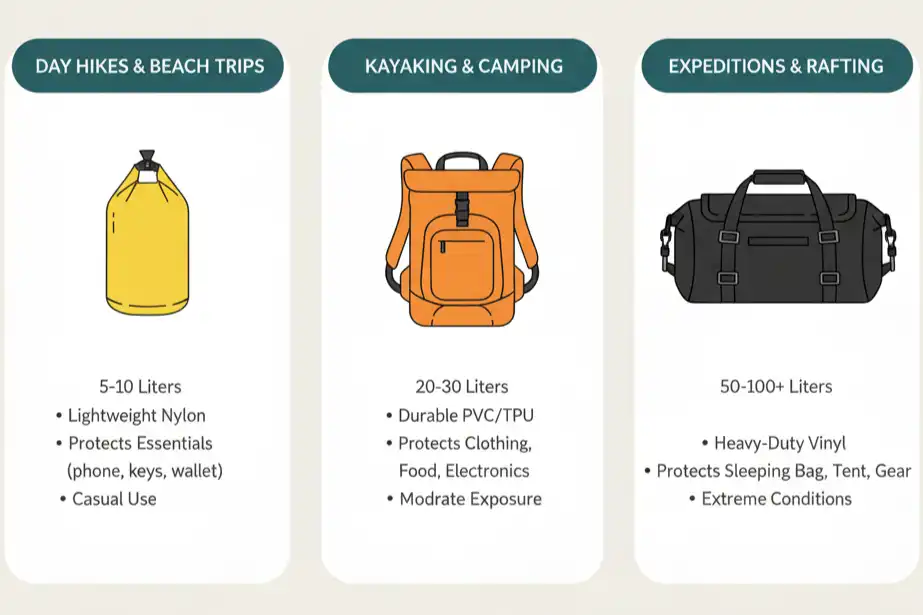
If you only need to keep your phone, wallet, and a snack dry, a 5L or 10L bag works well. For a full day on the water, you might want a 20L or 30L bag for extra clothes, lunch, and tackle. Multi-day trips call for bigger bags, like 40L or more, so you can pack everything you need.
Tip: Always choose a bag that is a little bigger than you think you need. It is better to have extra space than to run out of room for your gear.
Space Considerations for Boats and Shore
Space can get tight on a fishing boat, especially if you share it with friends or lots of gear. You need to think about where your dry bag will fit. Here are some things to keep in mind:
Space on a boat is limited, so you need to plan your storage.
Soft waterproof bags fit into awkward spaces, which makes them great for small boats.
A 60L duffel can hold a day’s worth of gear and slides under a seat.
A 90L bag works for longer trips, but you need to plan where to put it.
If you fish from shore, you have more freedom. You can use a bigger bag or even bring two smaller ones. Shore anglers often like tackle bags for easy access, while boat anglers may use rigid tackle boxes or kayak crates with rod holders to save space.
Use kayak crates or inset tackle boxes for small boats.
Waterproof duffels are great for wet environments and multi-day trips.
Match your storage to your fishing style. Shore anglers may want more flexible bags, while boat anglers need bags that fit tight spaces.
Note: Always check your boat or kayak before your trip. Make sure your fishing dry bag fits where you want it to go.
Packing Tips for Efficient Storage
How you pack your dry bag can make a big difference. Good packing keeps your gear safe, organized, and easy to reach. Try these tips to get the most out of your bag:
Set aside a dedicated tackle bag for each trip.
Sort your gear into categories: fishing gear, clothing, and comfort items.
Clean and check every piece of gear before you pack it.
Remove bulky packaging from new items to save space.
Make a list of items you need to replace or refill.
Choose gear that can do more than one job to pack lighter.
Use zippered dry bags for things you need often.
Use different colored bags for wet and dry items (blue for wet, green for dry).
Fill each dry bag only three-quarters full and squeeze out extra air before sealing.
Fold the top of each dry bag at least three times to keep water out.
Store wet gear in one section and dry items in another.
Always use a separate dry bag for electronics.
Efficient packing helps you find what you need fast and keeps your gear protected. Many fishing bags have smart compartments and tough fabrics. These features help you stay organized and keep your equipment safe from water and bumps. Comfortable straps also make it easier to carry your bag, even when it is full.
Pro Tip: Pack your most-used items on top or in outside pockets. This way, you do not have to dig through your whole bag to find your favorite lure or your lunch.
A well-packed fishing dry bag means less stress and more fun on your trip. You will spend less time searching for gear and more time fishing.
Carrying Comfort and Transport Options
Backpack Straps vs. Handles
When you pick a fishing dry bag, you want to think about how you will carry it. Backpack straps and handles each have their own benefits. Backpack straps let you carry your bag on your back, which keeps your hands free for fishing rods or paddles. Handles work well for short walks or quick moves from your car to the boat. Some anglers like bags with both options, so they can switch depending on the situation.
You might notice that comfort features matter more the longer you fish. Here are some things anglers have found:
Packs with hip belts can cut shoulder fatigue by 40% after six hours of fishing.
Padded shoulder straps and hip belts help most after four hours of use.
Handles are best for light loads or short trips.
If you plan to fish all day, backpack straps with padding and a hip belt will help you feel less tired.
Ergonomics and Weight Distribution
You want your fishing dry bag to feel good on your back, especially during long trips. Ergonomic features help spread the weight so you do not get sore. Take a look at this table to see what works best:
Ergonomic Feature
Description
Padded back panel
EVA foam or mesh keeps your back cool and stops hot spots
Load-bearing shoulder straps
Wide, shaped straps with a sternum strap spread weight evenly
Hip belt system
Moves weight from shoulders to hips, great for heavy loads
Adjustable torso length
Lets you fit the bag to your body so it sits right
Wader-compatible design
Straps and belts work with chest-high waders
Lumbar support
Adds comfort for long fishing sessions
Breathable mesh backing
Keeps you cool in hot weather
Proper sizing
Makes sure weight spreads out and you feel less tired
If you choose a bag with these features, you can fish longer without feeling worn out.
Quick Access Features for Anglers
You want to grab your gear fast when you need it. Quick access pockets and attachment points make this easy. Many fishing dry bags have special spots for your favorite lures, pliers, or snacks. Here is a table showing what anglers like most:
Feature
Importance
Quick access to essential gear
Helps you fish faster and stay organized
Lightweight design
Makes gear easy to reach
Perfect for fast adjustments
Lets you change setups quickly on the water
Attachment points and outside pockets add even more value. You can clip tools or extra gear right to your bag. This setup lets you customize your bag for each trip. You spend less time searching and more time fishing.
Tip: Choose a fishing dry bag with outside pockets and gear loops. You will find your tools faster and keep your hands free for casting.
You want your fishing trip to go smoothly, so pick a dry bag that keeps your gear safe and dry. Look for waterproof materials and strong seals. Choose a size that fits your equipment and matches your fishing style. Make sure your bag feels comfortable, especially if you walk long distances. Remember, anglers often forget to think about where they fish or how much gear they carry. Use these tips, check expert reviews, and you’ll find a dry bag that helps you focus on fishing, not on wet gear.
FAQ
How do I clean my fishing dry bag?
You can rinse your dry bag with fresh water after each trip. Use mild soap if it gets dirty. Let it air dry completely before storing. This keeps your bag in good shape for your next adventure.
Can I use one dry bag for all my fishing gear?
You can, but using several smaller bags helps you organize better. Try one for clothes, one for tackle, and one for snacks or electronics. This way, you find things faster and keep wet and dry items separate.
What should I do if my dry bag leaks?
First, check for holes or worn seams. If you find damage, patch it with a repair kit. Always test your bag before trips by filling it with air and squeezing gently. If you see bubbles, you need to fix it.
Are dry bags safe for electronics?
Yes, but always double-bag your electronics for extra safety. Place your phone or camera in a small waterproof pouch, then put it inside your dry bag. This gives you extra protection from water.
How do I pack my dry bag for quick access?
Pack items you use most on top or in outside pockets. Use different colored bags for wet and dry gear. Make a checklist before you leave. This helps you grab what you need fast and keeps your trip stress-free.








Comments are closed