




What Is a Floating Lid on a Backpack and Do You Need One?
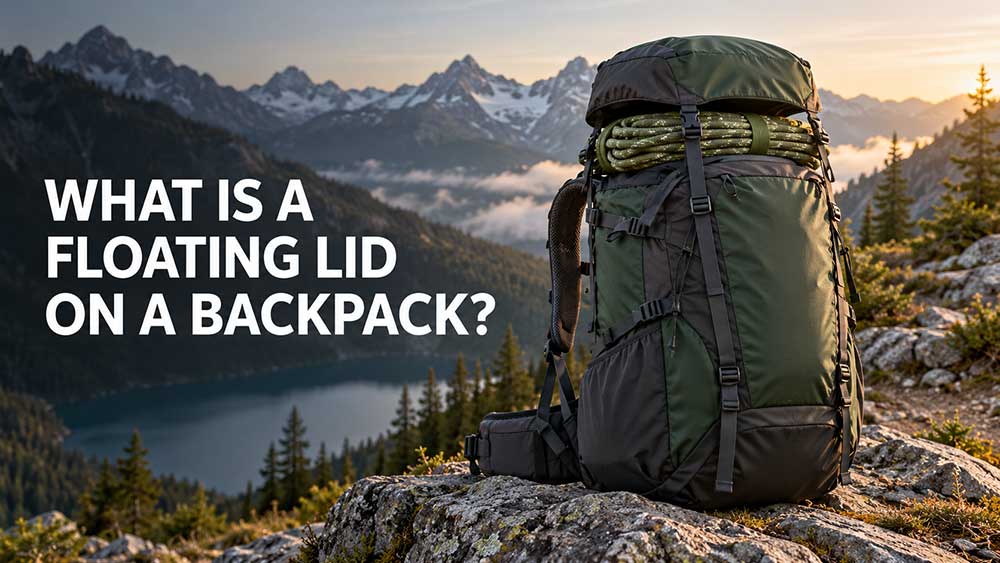
A floating lid is an adjustable top cover found mainly on trekking, backpacking, and mountaineering packs. Unlike a fixed lid, it can move higher or lower as the load changes. This allows it to cover an extended main compartment or secure bulky gear between the lid and the top of the backpack.
Many floating lids also contain zippered pockets for small items. Some can be removed or converted into a waist pack or small daypack, but removability is an additional feature—not what makes the lid “floating.”
A floating lid is useful for multi-day trips, climbing equipment, winter gear, and changing load volumes. For short hikes or lightweight packing, however, the extra fabric, straps, and buckles may not be necessary.
Floating Backpack Lid at a Glance
| Question | Short Answer |
|---|---|
| What makes the lid “floating”? | Adjustable straps let it move higher or lower |
| Where is it used? | Mostly on top-loading trekking and mountaineering packs |
| What does it do? | Covers the main opening, stores small items, and helps secure bulky gear |
| Is it always removable? | No. Floating and removable describe different functions |
| Does it add capacity? | It provides packing flexibility but does not increase the pack’s safe load limit |
| Who benefits most? | Multi-day hikers, trekkers, climbers, and winter users |
| Main drawback | Additional weight, straps, buckles, and adjustment |
Why Is It Called a Floating Lid?
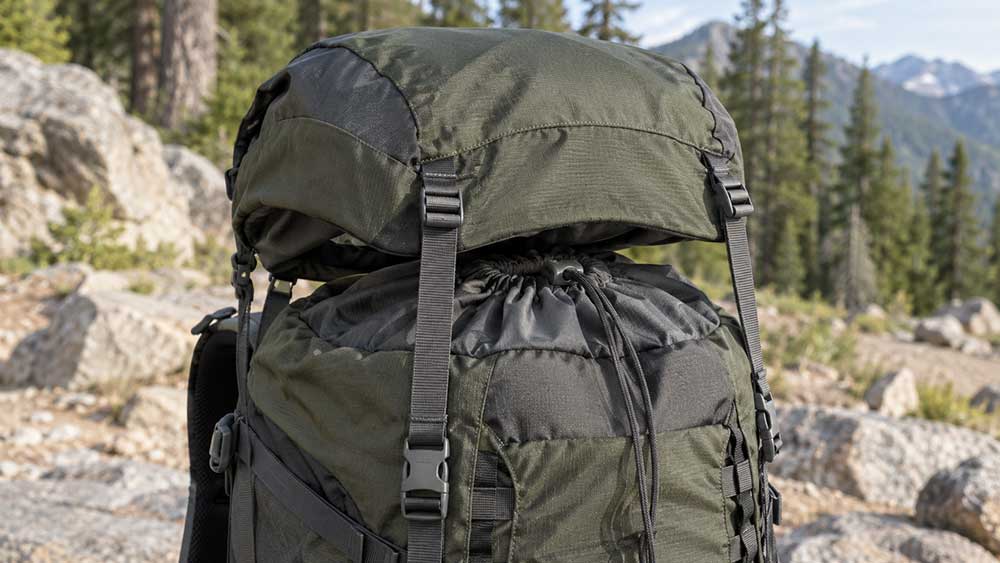
The lid does not literally float. The term describes how it sits above the main compartment on adjustable webbing straps instead of being sewn in one fixed position.
When the backpack is lightly packed, the straps can be shortened so the lid sits close to the top of the bag. When the extension collar is filled or bulky gear is placed above the main compartment, the straps can be lengthened so the lid rides higher.
This adjustable position allows the same lid to cover different load heights.
Floating lids are most often found on top-loading backpacks. These packs commonly use a drawcord closure at the top of the main compartment. The lid covers that opening and helps keep the upper load controlled.
Is a Floating Lid the Same as a Backpack Brain?
“Backpack brain” is an informal term commonly used for the pocketed lid on top of a hiking or mountaineering pack.
The terms overlap, but they are not always identical. A backpack brain may be fixed or adjustable, while a floating lid specifically refers to a lid that can move higher or lower with the load.
Product descriptions may also use terms such as:
- Floating top lid
- Floating top pocket
- Adjustable lid
- Removable top lid
- Convertible top pocket
The actual construction is more important than the name. Check how the lid attaches, how much adjustment it provides, and whether it can be completely removed.
What Does a Floating Lid Do?
A well-designed floating lid can perform several functions.
Covers the Main Opening
Many large trekking and mountaineering backpacks use a drawcord closure instead of a long main zipper. The lid sits above the drawcord opening and provides an additional barrier against dirt, snow, branches, and light rain.
The lid improves protection, but it does not make a sewn backpack waterproof. Water may still enter through seams, zippers, the extension collar, or gaps around the sides.
Adapts to Changing Load Height
Food, fuel, or shared equipment may make a backpack fuller at the beginning of a trip. As supplies are used, the load becomes smaller.
A floating lid can be raised for the larger starting load and lowered later to keep the pack compact. This is particularly useful on multi-day routes where the amount of gear changes during the trip.
Provides Quick-Access Storage
A floating lid often includes one or more zippered pockets. Depending on the design, there may be a pocket on top and another underneath the lid.
Suitable items include:
- Maps
- Gloves
- Headlamp
- Sunglasses
- Sunscreen
- First-aid supplies
- Small snacks
- Rain cover
- Keys and other small essentials
Heavy objects should not be concentrated in the lid. Too much weight at the top of the backpack can raise the center of gravity and make the load feel less stable.
Helps Secure Bulky Equipment
The space between the lid and the closed main compartment can hold equipment that does not fit comfortably inside the backpack.
Possible examples include:
- Climbing rope
- Lightweight jacket
- Tent body or fly
- Foam sleeping pad
- Helmet
- Crampons in a protective case
The item must be centered and firmly secured. Equipment that is too large, uneven, or loosely strapped can shift while walking and affect balance.
A floating lid should not replace a proper attachment system. Sharp tools and heavy equipment still require suitable straps, reinforced attachment points, and protection from exposed edges.
Floating Lid vs Fixed, Removable, and Convertible Lids
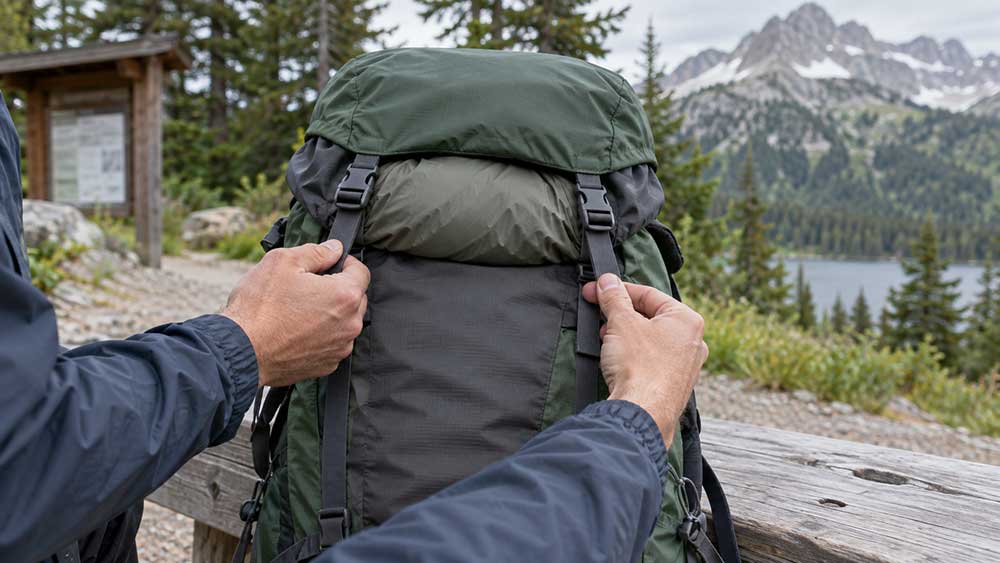
These terms describe different features and should not be used interchangeably.
| Lid Type | Meaning | Main Benefit | Possible Limitation |
|---|---|---|---|
| Fixed lid | Attached in a mostly fixed position | Simple and stable | Limited adjustment for taller loads |
| Floating lid | Moves higher or lower on adjustable straps | Adapts to changing load height | Adds straps and adjustment steps |
| Removable lid | Can be detached from the backpack | Saves weight when not needed | Removal may leave the top opening less protected |
| Convertible lid | Can become a waist pack, sling, or small daypack | Provides a secondary carrying option | Adds components and construction complexity |
A lid can belong to more than one category. For example, it may be both floating and removable, or floating, removable, and convertible.
The Osprey Exos 58, for example, describes its component as a removable floating lid with upper and lower zippered pockets. “Removable” is stated separately because adjustability alone does not guarantee that the lid can be detached.
How Is a Floating Lid Attached?
Most floating lids connect to the backpack through adjustable webbing positioned toward the front and rear of the pack. Buckles or other release points may allow the lid to be removed.
The exact construction varies. Some lids remain permanently connected on one side and adjust mainly through the other straps. Others use several detachable straps so the lid can be removed completely or converted into another carrying product.
A functional attachment system should:
- Keep the lid centered
- Provide enough adjustment for the extension collar
- Prevent the lid from sliding sideways
- Avoid contact with the back of the user’s head
- Maintain access to the lid pockets
- Reduce movement while walking or climbing
- Remain manageable while wearing gloves
Longer straps provide more flexibility, but excessive loose webbing should be controlled with elastic keepers or suitable routing.
How Should You Adjust a Floating Lid?
Start by packing the main compartment and closing its drawcord, roll-top, or other primary closure. The lid should not be expected to hold an open main compartment closed by itself.
Then adjust the lid as follows:
- Place the lid evenly over the top of the backpack.
- If carrying gear underneath it, center the item above the main compartment.
- Following the pack manufacturer’s instructions, adjust the straps nearest the back panel first.
- Balance and tighten the front straps gradually.
- Check that the lid does not lean to one side.
- Confirm that the load does not press against the back of your head.
- Lift or gently shake the pack to check whether the equipment moves.
- Retighten the straps after walking a short distance if necessary.
The lid should be snug, but the straps should not crush fragile gear or distort the top of the backpack.
If the lid shifts repeatedly, the load may be too large, the straps may be uneven, or the equipment may need a different attachment position.
Does a Floating Lid Increase Backpack Capacity?
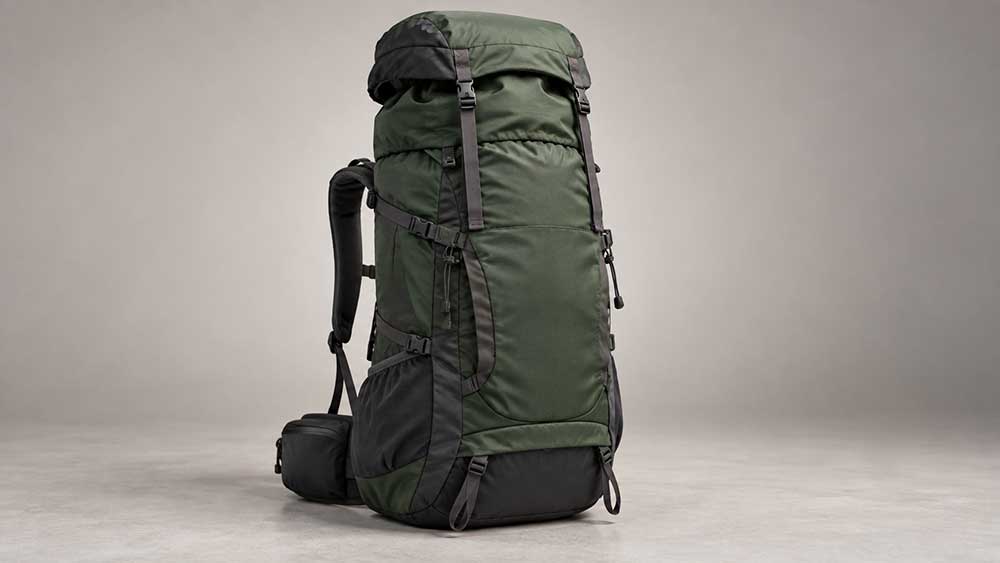
A floating lid provides additional packing flexibility, but it does not automatically increase the backpack’s stated capacity or safe carrying limit.
Raising the lid may allow the extension collar to be filled higher. The space beneath the lid can also hold an item outside the main compartment, while the lid pockets provide a small amount of additional storage.
However, adding gear above the main compartment can affect:
- Center of gravity
- Head clearance
- Load stability
- Shoulder and hip-belt comfort
- Frame performance
- Seam and strap stress
A backpack should still be loaded within the limits of its suspension, frame, materials, and attachment system. The ability to close the lid does not mean the pack can comfortably or safely carry unlimited extra weight.
What Are the Advantages and Drawbacks?
A floating lid can adapt to changing load volumes, cover an expandable extension collar, keep small items accessible, and secure selected bulky gear outside the main compartment. On compatible models, it may also be removed to reduce weight or converted into a small secondary bag.
These features are particularly useful when the same backpack must handle different trip lengths or seasonal equipment.
The design also has drawbacks:
- Additional weight
- More straps and buckles to manage
- Extra manufacturing complexity
- More time needed for adjustment
- A higher center of gravity when overloaded
- Movement if the lid is tightened unevenly
- Possible contact with the user’s head
- Reduced pocket access when bulky gear is stored underneath
Minimalist hikers may prefer a roll-top backpack without a lid. Day hikers may also find that a normal zippered pocket provides enough organization.
The decision should be based on actual carrying needs, not on whether a floating lid makes the backpack look more technical.
Who Needs a Floating Lid?
A floating lid is most useful for people who carry changing or irregular loads.
It may be a good choice for:
- Multi-day hikers carrying food and camping equipment
- Trekkers whose load becomes smaller during a trip
- Mountaineers carrying rope, helmets, or seasonal layers
- Winter users carrying bulky clothing or snow equipment
- Guides carrying shared group gear
- Travelers combining hiking with equipment transport
It may be unnecessary for short day hikes, lightweight summer trips, or users who rarely change their load volume. Backpacks with effective roll-top expansion may also provide enough flexibility without a separate lid.
The differences between trekking and mountaineering backpacks can also affect how useful a floating lid is. Trekking packs may use it for flexible storage and organization, while mountaineering packs may use it to control rope, climbing equipment, or changing alpine loads.
What Should You Check Before Buying?
A floating lid should be evaluated with the backpack loaded, not only while it is empty.
Check whether:
- The adjustment straps are long enough for the intended load
- The lid remains centered when raised
- The rear edge leaves enough head clearance
- The pockets remain usable at different heights
- Buckles can be operated with gloves
- Loose webbing can be secured
- The pack includes secondary coverage if the lid is removed
- Bulky gear can be secured without sliding sideways
- The extra load remains within the pack’s comfortable carrying range
Also check how the lid works with other components. It should not block hydration routing, load-lifter straps, rope straps, or the equipment loops on the backpack.
What Should Brands Check When Developing a Floating Lid?
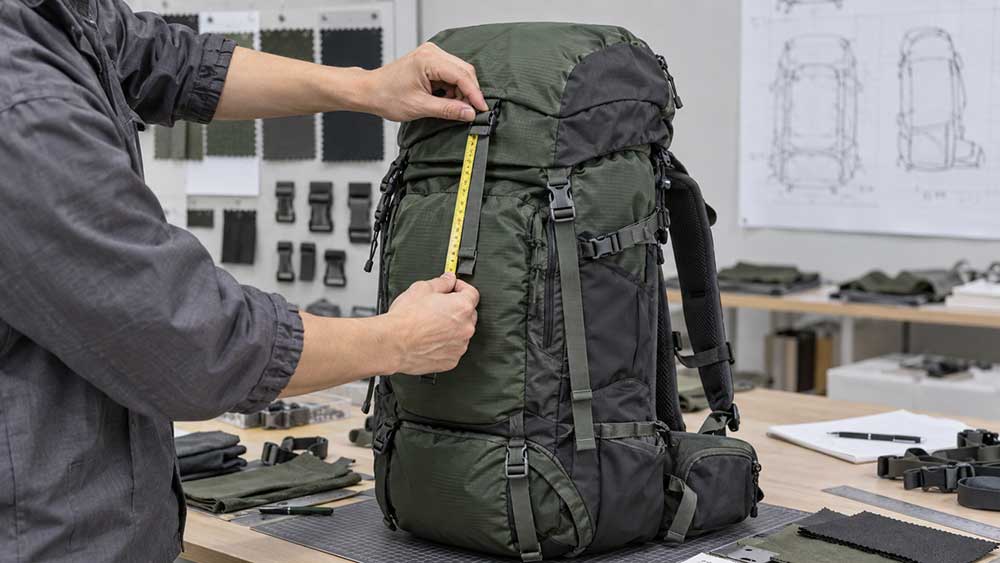
For brands and product development teams, a floating lid should be evaluated on a fully loaded sample—not only on an empty backpack.
The main points to confirm are:
- Adjustment range for different load heights
- Fixed, removable, or convertible construction
- Suitable webbing length and reinforced anchor points
- Pocket access when the main compartment is full
- Head clearance at the highest lid position
- Secondary coverage when the lid is removed
The lid should remain centered at different heights, and the webbing must provide enough adjustment without leaving excessive loose ends. Bulky gear placed underneath should stay stable without making the lid pockets difficult to use.
Founded in 1995, Vancharli Outdoor develops OEM and ODM backpacks for outdoor brands, wholesalers, importers, and purchasing teams. Our custom hiking backpack manufacturing services cover pack structure, lid design, suspension development, materials, sampling, and bulk-production quality control.
FAQ
Does every top-loading backpack have a floating lid?
No. Some top-loading backpacks have a fixed lid, while others use a roll-top, flap, or simple drawcord opening without a separate lid.
Is every floating lid removable?
No. “Floating” means the lid can move higher or lower. A manufacturer should state separately whether it can be completely detached.
Can a floating lid be used as a daypack?
Only if it is designed as a convertible lid and includes the necessary straps or harness. A standard removable lid may not be comfortable or secure enough to use as a separate bag.
Why does my backpack lid touch the back of my head?
The lid may be positioned too high, pulled too far toward the harness, unevenly adjusted, or loaded with too much gear. Repacking the top of the bag and balancing the adjustment straps may improve clearance.
Can I carry a climbing rope under the lid?
Yes, if the backpack is designed for it and the rope can be centered and secured without shifting. A dedicated rope strap may provide better control on technical packs.
Can I place a bear canister under a floating lid?
Some backpacks can secure certain bear canisters horizontally under the lid, but this depends on pack dimensions, strap length, stability, and the canister manufacturer’s instructions. A poorly secured canister can shift the center of gravity and should not be carried this way.
Should the lid straps be as tight as possible?
They should be tight enough to prevent movement, but not so tight that they damage the load, distort the backpack, or place unnecessary stress on the strap anchors.
Can I remove the lid to save weight?
Yes, if the lid is designed to be removable. Before removing it, check whether the backpack has another flap or closure to protect the main opening and whether you still have enough storage for frequently used items.




Comments are closed