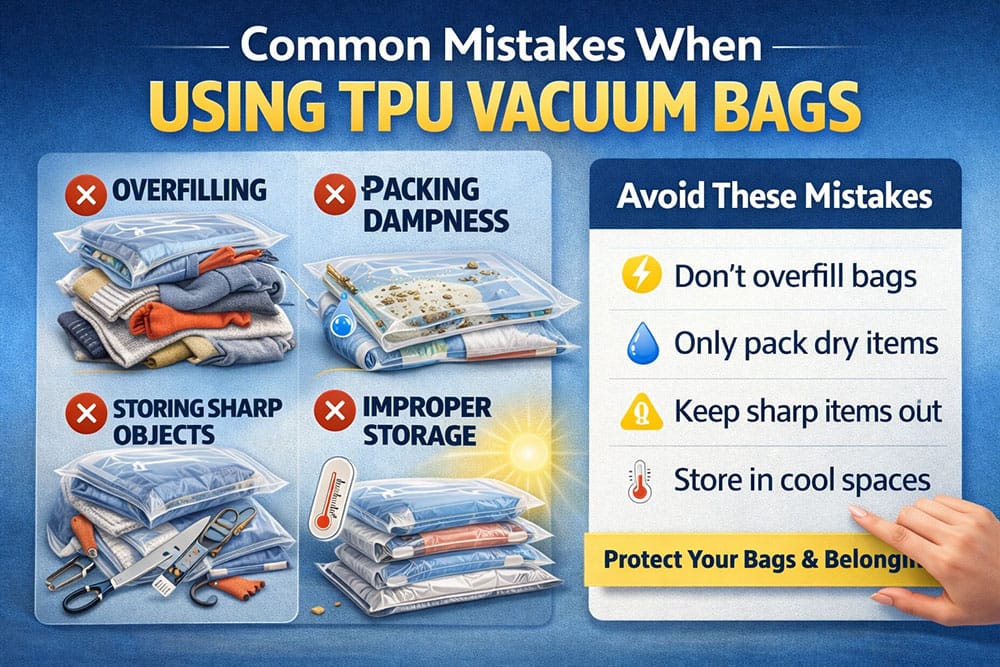
You want your storage to look tidy and be safe. However, using TPU vacuum bags incorrectly can lead to vacuum compression bag drawbacks. Small mistakes can cause leaks, wasting space or ruining clothes. Many people encounter issues when they overpack the bags. Packing wet items is also detrimental. Sharp objects can puncture holes in the bags, and storing them in hot places is not advisable. Forgetting to label the bags can create confusion. These mistakes contribute to the vacuum compression bag drawbacks that nobody wants to face. You can prevent these issues with some smart changes.
Choose high-quality TPU vacuum bags. Look for thicker material and strong zippers to prevent leaks and protect your items.
Avoid overfilling or underfilling your bags. Aim to fill them about 80% for optimal compression and to prevent damage.
Always pack dry items. Moisture can lead to mold and odors, ruining your belongings and the bag itself.
Keep sharp objects away from vacuum bags. Wrap them in soft fabric to prevent punctures and maintain the bag’s integrity.
Regularly check and clean your bags. Inspect for damage and wash them with mild soap to ensure they last longer and keep your items fresh.
Using The Wrong Bag
Poor-Quality Bag Issues
You might think all vacuum bags work the same, but that’s not true. Cheap bags often use thin TPU material. These bags tear easily and lose their seal after just a few uses. If you grab a poor-quality bag, you risk leaks and wasted effort. Your clothes or bedding could get exposed to air and moisture. That means you might find your items wrinkled or even musty when you open the bag again.
Tip: Always check the thickness and feel of the TPU before buying. A sturdy bag lasts longer and protects your things better.
Low-quality bags also have weak zippers. You may struggle to close them tightly. If the zipper fails, air sneaks in and ruins the compression. You end up with vacuum compression bag drawbacks like wasted space and damaged items.
Bag Size Mistakes
Choosing the wrong size bag causes problems you might not notice at first. If you pick a bag that’s too small, you can’t fit your items properly. You might try to squeeze everything in, but that puts stress on the seams and zippers. Overfilling leads to leaks and broken closures. Your bag may pop open or lose its vacuum seal.
On the other hand, a bag that’s too big leaves extra space inside. Air stays trapped, so you don’t get good compression. Your closet or suitcase looks messy, and you waste valuable storage space. Using an incorrectly sized TPU vacuum bag can compromise storage efficiency and the protection of items. Overfilling a bag can cause stress on seams and zippers, leading to leaks, while using a bag that is too small may not fit the items properly, resulting in wasted space and potential damage.
Here’s a quick guide to help you choose the right size:
Item Type
Suggested Bag Size
Sweaters
Medium
Blankets
Large
Pillows
Extra Large
Socks/Underwear
Small
Pick a bag that matches your items. You’ll get better results and avoid common vacuum compression bag drawbacks.
Overfilling And Underfilling
Overstuffing Risks
You might feel tempted to squeeze every last item into your TPU vacuum bag. Overfilling seems like a smart way to save space, but it actually causes more trouble than you think. When you stuff the bag too full, the TPU material stretches beyond its limit. This stretching can lead to leaks and weak spots. Zippers also struggle under the pressure. Handles on the bag can make things worse by pulling the zipper tape away from the sealing gasket. That extra force causes the zipper to fail much faster. Bags with fabric handles break down even quicker than those with molded plastic handles. If the zipper pops open, air rushes in and ruins your compression.
Here are some common problems you might face if you overfill your bag:
Tip: Leave a little room at the top of your bag. You’ll protect the zipper and keep your items safe.
Not Enough Compression
Underfilling your TPU vacuum bag creates a different set of problems. If you don’t put enough items inside, extra air stays trapped. That leftover air means your bag won’t shrink down as much as it should. You lose out on valuable storage space. The bag looks bulky and takes up more room than necessary. Lower-quality bags may let air sneak back in, making the problem even worse.
Note: For best results, fill your bag about 80%. This amount gives you strong compression without risking damage. Your closet or suitcase will look neat, and your items will stay protected.
Packing Damp Items
Mold And Odor Problems
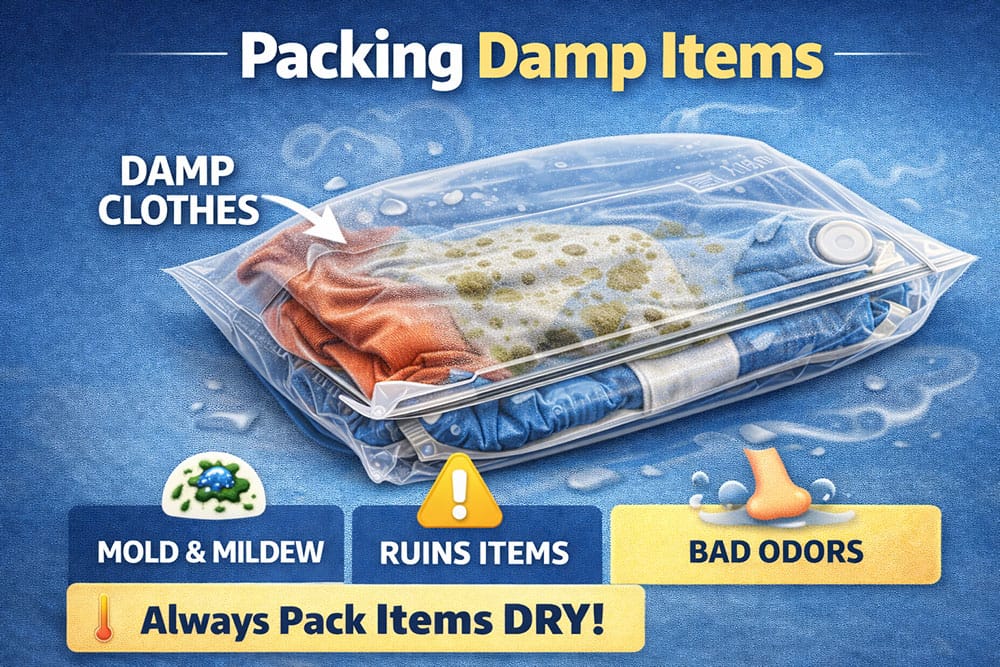
You might think it’s okay to pack clothes or bedding that feel a little damp. That’s a mistake you want to avoid. When you seal damp items inside a TPU vacuum bag, you create the perfect place for mold and mildew to grow. These fungi love moisture and dark, airtight spaces. Once mold starts, it spreads fast and ruins your stuff. You’ll notice a musty smell when you open the bag. Sometimes, the odor sticks to your clothes and is hard to remove. Moisture can also weaken the bag itself, making it more likely to tear or leak.
Here’s what can happen if you pack damp items:
Mold grows inside the bag and damages your belongings.
Mildew thrives in the sealed, moist environment.
Bad smells develop and linger on your clothes.
The bag material gets weaker and may break.
Tip: Always check that everything is completely dry before you pack it away.
Drying Tips
You want to keep your items fresh and safe. Drying them properly makes a big difference. If you’re packing things like clothes, bedding, or even 3D printing filaments, make sure they’re dry before you use a vacuum bag. You can use a dryer, hang items in the sun, or let them air out overnight. For special materials like TPU filaments, you can use a filament dryer or an oven set between 122°F and 140°F for 4 to 6 hours. This helps remove every bit of moisture.
Method
Temperature (°F)
Duration (hours)
Filament Dryer
122 – 140
4 – 6
Oven
122 – 140
4 – 6
After drying, store your items in a closed, dry place. You can add desiccants like silica gel to absorb any leftover moisture. If you use vacuum bags, make sure to extract as much air as possible. This keeps everything dry and prevents mold.
Note: Taking a few extra minutes to dry your items saves you from mold, odors, and ruined bags. Your storage will stay fresh and organized!
Ignoring Sharp Objects
Puncture And Tear Risks
You might not think twice about tossing your gear into a vacuum bag. Sharp objects can cause big problems, though. When you pack knives, metal carabiners, or anything with a hard edge, you risk puncturing the TPU fabric. Even a small hole lets air sneak in and ruins the vacuum seal. Your bag loses its compression, and your clothes or bedding get exposed to moisture and dust.
Here are some things that can damage your TPU vacuum bags:
Knives or scissors
Metal carabiners
Keys or tools with sharp edges
Jewelry with pointed parts
If you ignore these risks, you may find tears or holes in your bags. That means wasted space and ruined items. You want your storage to last, so it’s smart to keep sharp objects away from your vacuum bags.
Tip: Always check your items before packing. If you spot anything sharp, wrap it in soft fabric or store it separately.
Safe Packing Practices
You can avoid damage by following a few simple packing habits. Start by sorting your items. Vacuum bags work best for synthetics, down, or microfiber. For wool, silk, linen, cotton, or blends, use packing cubes instead. This keeps delicate fabrics safe and prevents strain on the bag.
Place heavy or rigid items, like shoes or hard toiletry kits, at the bottom of your suitcase—not inside the vacuum bag or cube.
Before you travel, pack your bag and carry it for five minutes. If you notice zippers straining or seams gaping, redistribute the weight using cubes instead of adding more vacuum pressure.
Packing smart helps you protect your TPU vacuum bags and keeps your belongings safe. You’ll get better results and avoid common mistakes that lead to tears or leaks.
Vacuum Compression Bag Drawbacks
Common Issues With TPU Bags
You might expect your vacuum bags to work perfectly every time. In reality, some problems pop up more often than you think. Here are the most common issues people report:
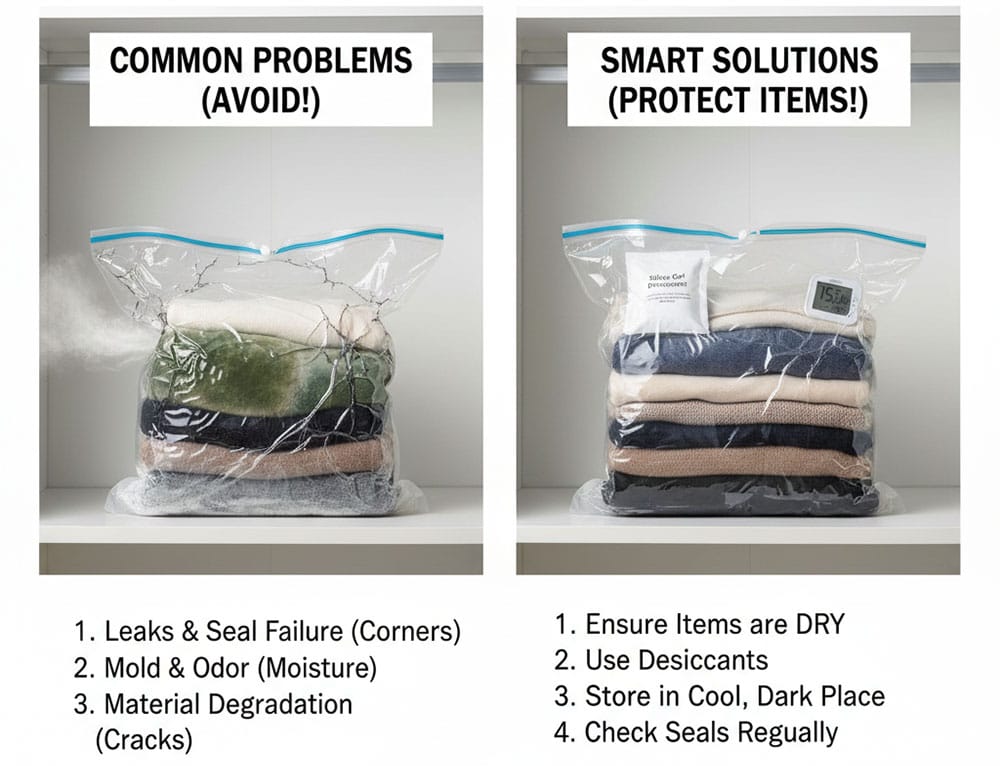
Seal Integrity Issues: Many users notice leaks, especially at the corners of the bag. The main seal usually holds, but the corners can let air in or out.
Moisture Absorption: Some TPU-polyester hybrid bags soak up moisture. This can make the inside of the bag damp and affect how well the adhesive sticks.
Performance in Humidity: If you travel to humid places or store high-moisture foods, you may see leaks. About 68% of travelers say their bags leaked in these conditions.
These vacuum compression bag drawbacks can leave your clothes or gear less protected. You might open a bag and find your items damp or the bag puffed up with air.
Tip: Always check your bags for leaks before you pack important items.
How To Minimize Drawbacks
You can avoid most vacuum compression bag drawbacks with a few smart habits. Try these strategies to keep your bags working well:
Dry your items completely before packing. Use a dryer, hang them in the sun, or air them out overnight.
Store sensitive items, like TPU filament, in airtight containers with silica gel packs.
Keep your bags in a cool, dark place. Avoid direct sunlight and extreme temperatures.
Use a filament dryer or oven set between 122°F and 140°F for 4 to 6 hours if you need to dry TPU filament.
Try humidity-controlled containers or add desiccants to absorb extra moisture.
Check the corners and seals of your bags before each use. Replace any bag that shows signs of wear or leaks.
Note: A little extra care goes a long way. You can make your vacuum bags last longer and keep your items safe.
By following these steps, you’ll reduce the risk of leaks, moisture problems, and wasted space. Your storage will stay neat, and your belongings will stay protected.
Reusing Single-Use Bags
Durability Concerns
You might feel tempted to reuse single-use TPU vacuum bags to save money or reduce waste. This sounds like a smart idea at first. However, these bags often lose strength after the first use. The material can stretch, thin out, or even develop tiny holes that you may not see right away. When you try to seal the bag again, it might not hold the vacuum as well as before. Air can sneak in, and your items lose protection.
If you used the bag for food, you face another problem. Leftover crumbs or moisture can stick inside the bag. This creates a perfect spot for bacteria or mold to grow. Even if you store clean clothes next time, you risk contamination. You want your things to stay fresh and safe, so always check the bag for damage before you use it again.
Tip: Always inspect the seams and zipper before reusing a bag. If you spot any tears or weak spots, it’s best to use a new one.
Safe Reuse Tips
You can reuse some single-use vacuum bags if you take extra care. Cleaning and drying the bag the right way helps you avoid mold, odors, and germs. Here are some easy steps you can follow:
Use mild soap for cleaning. Harsh detergents can weaken the TPU material.
Skip abrasive scrubbing. Gentle cleaning keeps the bag strong.
Dry bags completely before you pack anything inside. Damp bags can grow mold.
Use a bottle brush for narrow openings. This helps you reach every corner.
Note: If you notice any damage or if the bag does not seal tightly, it’s safer to recycle it and use a new one. Your items deserve the best protection!
By following these tips, you can sometimes get more life out of your vacuum bags. Just remember, safety and cleanliness always come first. 😊
Not Following Instructions
Overlooked Guidelines
You might feel excited to use your new TPU vacuum bags right away. Many people skip the instructions and jump straight in. This can cause problems that are easy to avoid. If you miss a step, you might not get a good seal. Air can sneak back in, and your items will not stay protected. You could also damage the bag or your belongings.
Manufacturers include important tips for a reason. These guidelines help you get the best results and avoid common vacuum compression bag drawbacks. Here are some simple steps you should always follow:
Clean the bag before each use. Use a mild, pH-neutral detergent with warm water. Stay away from harsh chemicals. Rinse well to remove all soap.
Dry the bag completely. Let it air dry in a well-ventilated spot. Never use a hair dryer or put it near a heater.
Store the bag in a cool, dry place. Keep it away from sunlight and sharp folds. This keeps the material strong and ready for next time.
Tip: Take a minute to read the instructions before you start. You will save time and avoid mistakes.
Benefits Of Proper Use
When you follow the instructions, you get the most out of your TPU vacuum bags. Your items stay safe, dry, and fresh. The bags last longer and work better. You will not have to worry about leaks or wasted space.
You also avoid the most common vacuum compression bag drawbacks. Your clothes will not smell musty. The zippers and seams stay strong. You will not find mold or damage when you open the bag again.
If you want your storage to stay neat and your things to last, always follow the guidelines. A little care goes a long way!
Improper Storage
Heat And Sunlight Damage
You might think your TPU vacuum bags can handle any environment. That’s not true. If you leave your bags in a hot car or near a sunny window, you risk damaging them. Heat and sunlight break down the TPU material. The bags start to look brittle and may change color. You might notice cracks or weak spots. These problems make the bags less effective. They can’t hold a seal as well, and your items lose protection.
When TPU gets too much heat, it loses its strength. Sunlight speeds up this process. The bags become stiff and fragile. You may see them turn yellow or cloudy. If you use a damaged bag, it might tear or leak. Your clothes or gear could get ruined. You want your bags to last, so keep them away from heat and sunlight.
Tip: Store your vacuum bags in a cool, dark place. This helps them stay strong and flexible.
Best Storage Practices
You can make your TPU vacuum bags last longer with a few smart habits. Try these easy steps:
Use airtight containers like plastic tubs with gaskets or vacuum-sealed bags.
Add desiccants, such as silica gel packets. Color-changing packets help you know when to replace them.
Monitor humidity with a hygrometer. Keep levels below 20% for most filaments.
Store bags in a cool, dark spot. Avoid places with direct sunlight or big temperature changes.
Use filament dryers for moisture-sensitive items like Nylon or PVA.
Vacuum sealing works well for long-term storage. When you remove air and seal the bag tightly, you keep moisture out. Many kits come with reusable bags and hand pumps. You save space and protect your items.
Note: A little care goes a long way. If you follow these steps, your TPU vacuum bags will stay in good shape and keep your things safe.
Here’s a quick table to help you remember:
Storage Tip
Why It Helps
Airtight containers
Blocks moisture and air
Silica gel packets
Absorbs leftover humidity
Cool, dark location
Prevents heat damage
Hygrometer
Tracks humidity levels
Keep your bags stored right, and you’ll avoid common problems. Your storage will stay neat, and your items will stay protected. 😊
Neglecting Maintenance
Checking For Damage
You want your TPU vacuum bags to last, so checking them for damage is a smart habit. Over time, bags can develop small tears or weak spots. Sometimes, you might not notice a problem until you see your bag losing air. Look closely at the seams and corners. These areas often show the first signs of wear. Run your fingers along the zipper to feel for gaps or rough spots. If you spot a hole or a stretched area, set that bag aside. Using a damaged bag can lead to leaks and wasted space.
A quick check before each use saves you trouble later. You can even make a simple checklist:
Inspect seams and corners for tears.
Test the zipper for smooth movement.
Look for cloudy or brittle spots on the material.
Squeeze the bag gently to check for air leaks.
Tip: Replace any bag that feels weak or does not seal tightly. Your items deserve the best protection!
Cleaning TPU Bags
Keeping your TPU vacuum bags clean helps them last longer and keeps your stored items fresh. You do not need fancy cleaners. A soft microfiber cloth with cool water and a little mild soap works well. Wipe the inside and outside of the bag. For seams and zippers, use a soft-bristled toothbrush to scrub gently. This helps remove dirt without damaging the material.
After cleaning, rinse your cloth and wipe the bag again to get rid of any soap. Let the bag air-dry fully. Unzip it and turn it inside out if possible. Leave it in a spot with indirect light for a day or more. Avoid bleach, vinegar, or steam cleaners. These can break down the vacuum barrier and shorten the life of your bag.
Note: Clean, dry bags keep your storage safe and odor-free. A little care goes a long way!
You’ve seen how small mistakes can lead to vacuum compression bag drawbacks. Overfilling, packing damp items, and ignoring sharp objects all cause trouble. If you want your bags to last, try these best practices:
Charge and clean your air pump often.
Check zipper seals before each use.
Wash TPU surfaces with mild soap.
Store bags in climate-controlled places.
Review your habits and make a few changes. You’ll keep your storage neat and your items safe. 😊
FAQ
How do I know if my TPU vacuum bag is sealed properly?
You should press on the bag and listen for air leaks. If you hear a hiss or see the bag puff up, the seal is not tight. Try resealing and check the zipper.
Can I store food in TPU vacuum bags?
You can store dry foods like grains or pasta. Avoid using these bags for wet or oily foods. Always check if the bag is labeled as food-safe before use.
What should I do if my bag develops a small hole?
You can patch tiny holes with clear packing tape as a quick fix. For best results, replace the bag. A damaged bag will not keep air out for long.
How often should I clean my TPU vacuum bags?
You should clean your bags after each use. Use mild soap and cool water. Let them air dry completely before storing anything inside.
Can I use a regular vacuum cleaner to remove air?
Yes, most vacuum cleaners work well. Attach the hose to the valve and turn it on. Watch the bag shrink and stop when it feels firm. Do not over-compress.









Comments are closed