



How to Use a Pull Buoy: Correct Technique & Common Mistakes
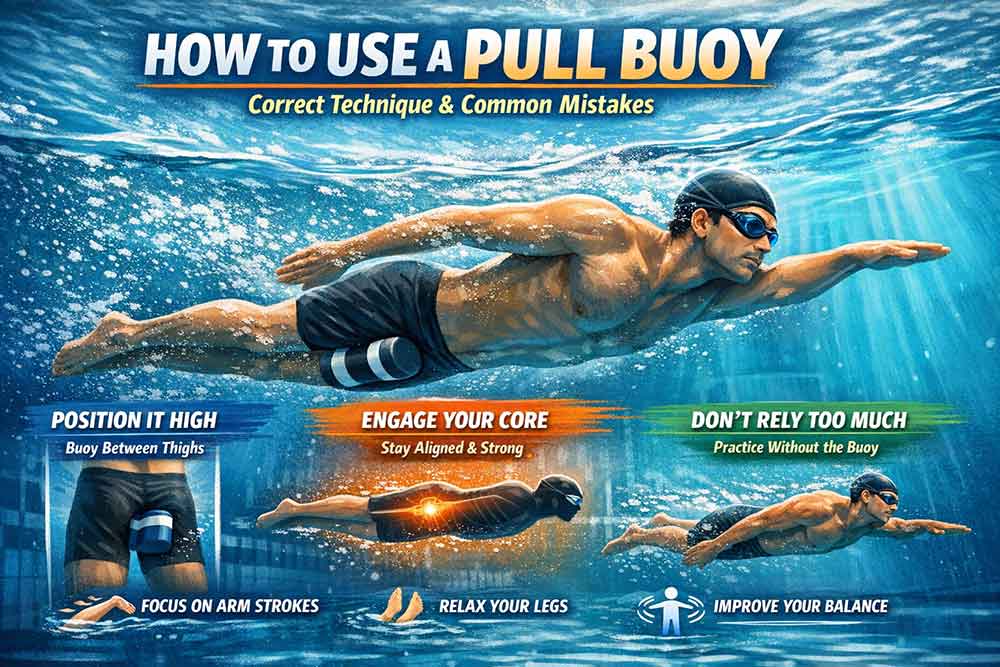
You want to get the most out of pull buoy training, so start by placing the buoy between your thighs or knees and let your legs float naturally. Relax your body and focus on keeping a straight line from head to toe. Many swimmers make mistakes like relying too much on the pull buoy, forgetting to activate their core, or missing out on practicing balance.
- Over-relying on the pull buoy can hurt your technique.
- Neglecting your core makes swimming less effective.
- Not practicing balance slows your progress.
Key Takeaways
- Put the pull buoy high up between your thighs. This helps keep your body straight and lowers drag.
- Let your legs relax and let the buoy hold up your hips. This lets you pay attention to your arm strokes.
- Use your core muscles to help you stay balanced. This stops you from depending too much on the buoy.
- Try switching between using the pull buoy and not using it. This helps you get stronger and swim better.
- Add pull buoy workouts to your practice. This makes your upper body stronger and helps you swim more easily.
What Is a Pull Buoy
Purpose in Swimming

A pull buoy is a simple tool that helps you focus on your upper body while you swim. You place it between your thighs or knees. It keeps your legs floating so you do not have to kick. This lets you work on your arm stroke and breathing without worrying about your legs sinking.
Most pull buoys are made from soft, buoyant materials. They feel comfortable and do not rub against your skin. The shape fits well between your legs and supports your lower body. You will notice that the buoy keeps your hips high in the water. This is different from swimming without equipment, where your legs might drop and create drag.
Tip: When you use a pull buoy, try to relax your legs and let the buoy do the work. This helps you keep a straight line in the water.
Benefits for Technique
Pull buoy training gives you several advantages. You can focus on your arm movements and breathing. Your legs stay still, so you do not get tired as quickly. Here are some key benefits:
- You improve your body position. The pull buoy lifts your legs and hips, helping you swim in a straight line.
- You can pay more attention to your arm stroke. You practice the catch, pull, and recovery without kicking.
- You build upper body endurance. Your arms and shoulders do all the work, making them stronger.
Studies show that using a pull buoy can help you swim faster. About 30-40% of the speed boost comes from less drag. The rest comes from better buoyancy and body position. This means you move through the water more easily and efficiently.
Pull buoy training is a great way to practice good habits in the pool. You learn how to keep your body straight and use your arms the right way. Over time, this makes you a stronger and more confident swimmer.
Pull Buoy Training: Correct Technique
Placement Options

You have a few choices when it comes to placing your pull buoy. Most swimmers get the best results by putting the buoy high between their upper thighs. This spot helps you keep a straight, streamlined body position and cuts down on drag. If you move the buoy closer to your knees, you might notice your legs start to separate or your hips drop. That can slow you down and make your stroke less effective.
Some swimmers like to experiment with the pull buoy between their calves or even ankles. These spots make it harder to keep your legs together and your body straight. You might feel your core working harder to stay balanced. For most people, the upper thigh position works best for pull buoy training. It gives you the right support and helps you focus on your arms.
Tip: Try adjusting the angle of the pull buoy if it feels awkward. A small twist can help it fit your body better and stay in place.
Body Position and Relaxation
When you use a pull buoy, you want your body to float in a straight line from head to toe. Let your hips stay high and your feet close to the surface. This position reduces drag and helps you move through the water with less effort. You should trust the pull buoy to hold your legs up. Relax your lower body and let your legs float along for the ride.
Here’s what you should focus on during pull buoy training:
- Keep the buoy snug between your thighs.
- Let your legs relax and drift behind you.
- Feel your core muscles working to keep you steady.
Relaxing your body is key. When you stay loose, you improve your balance and control. You also avoid cramps and make your stroke smoother. A relaxed body helps you learn the right position for regular swimming, not just when you use equipment.
Note: If you tense up or try to kick, you might lose the benefits of pull buoy training. Let the buoy do the work for your legs.
Arm Movement and Breathing
With your legs taken care of, you can put all your energy into your arms and breathing. Start each stroke with a strong catch, pulling the water back with your hand and forearm. Keep your elbows high and finish the stroke all the way past your hip. This builds strength and teaches you good habits for freestyle swimming.
Don’t forget about your breathing. Turn your head to the side, take a quick breath, and put your face back in the water. Try to keep your head low and your body flat. This helps you stay streamlined and avoid extra drag.
- Place the pull buoy high between your thighs.
- Trust the buoy and relax your legs.
- Focus on smooth, powerful arm strokes.
- Practice steady, calm breathing.
Pull buoy training gives you a chance to work on your upper body without distractions. You can build endurance, fix your technique, and swim longer without getting tired legs. Just remember, the pull buoy should not hide poor body position. Use it to learn good habits, not to cover up mistakes.
Callout: If you feel your hips sinking or your body twisting, check your position. Adjust the buoy and relax your legs again.
Common Mistakes to Avoid
Using a pull buoy can help you swim better, but only if you avoid some common mistakes. Let’s look at what can go wrong and how you can fix it.
Incorrect Placement
Placing the pull buoy in the wrong spot can mess up your body position. If you put it too close to your knees or ankles, your legs might drift apart and your hips could drop. This makes you work harder and slows you down. You might even start kicking, which defeats the purpose of pull buoy training.
Here’s how you can check and fix your placement:
- Put the pull buoy high between your thighs, not near your knees.
- Squeeze your legs gently to keep the buoy in place.
- Make sure your hips stay high and your body stays straight.
Tip: If you feel your legs sinking or your body twisting, stop and adjust the buoy. A small change can make a big difference.
A swimmer once shared that using the pull buoy incorrectly made them rely on it for support instead of using their core. When they tried to swim without the buoy, they struggled to keep good form. If you notice this happening, take a break from the buoy and practice swimming without it.
Over-Reliance on Pull Buoy
It’s easy to get comfortable with the pull buoy and use it as a crutch. If you use it all the time, you might forget to engage your core and lose the ability to balance your body without help. This can lead to bad habits and make it hard to swim well without equipment.
Here’s what you can do:
- Alternate between swimming with and without the pull buoy.
- After every 100 meters, take out the buoy and add some kicking to your stroke.
- Try drills like Single Arm Drill or Catch-Up Drill to build strength and technique.
Block Quote:
Swimming with the pull buoy at all times can limit your hip rotation and make you reliant on using it. After you go about 100 m (330 ft) with the pull buoy, take it out from between your legs and incorporate kicking back into your stroke.
Research shows that relying only on gear like paddles or pull buoys can slow down your progress. You need to practice swimming without equipment to improve your balance, stroke timing, and neuromuscular skills. Dedicated strength work and technique drills are more effective for building swimming-specific strength.
Poor Alignment
Poor alignment is another mistake that can hurt your swimming. If your head is too high or your hips and legs sink, you create drag and lose speed. Crossing your hands over the midline or entering the water too wide can also cause shoulder pain and make your stroke less efficient.
Common alignment errors include:
- Crossing over: Your hand enters the water past the center of your body.
- Wide entry: Your hand enters too far from your shoulder.
- Sinking hips: Your legs and hips drop below the surface.
| Common Injuries | Description |
|---|---|
| Shoulder impingement syndrome | Known as ‘swimmer’s shoulder’, a common issue. |
| Rotator cuff tendonitis or tears | Inflammation or tears in the shoulder tendons. |
| Breaststrokers’ knee | Pain in tendons and ligaments around the knee. |
| Tears in shoulder cartilage | Damage to the cartilage surrounding the shoulder. |
| Neck and low back pain | Discomfort in the neck and lower back regions. |
| Biceptendonitis | Inflammation of the bicep tendon causing pain. |
To fix alignment problems:
- Focus on engaging your core muscles.
- Practice hip rotation to keep your body straight.
- Try sculling drills with the pull buoy to improve your feel for the water and maintain alignment.
Note: Engaging your core and paying attention to your body position turns the pull buoy into a powerful tool for improving your swimming technique.
If you avoid these mistakes, you’ll get the most out of pull buoy training. You’ll swim faster, feel stronger, and reduce your risk of injury.
Integrating Pull Buoy Training
Sample Workouts

Ready to add pull buoy sets to your swim routine? You can start simple and build up as you get stronger. Pull buoy workouts help you focus on your arms and upper body, letting your legs rest while you practice technique. Here are some easy ways to get started:
- Swim 4 sets of 50 meters freestyle with a pull buoy between your thighs. Rest for 60 seconds after each set.
- Try 4 to 6 sets of 50 meters, focusing on smooth arm strokes and steady breathing.
- Warm up with 200 meters of regular swimming, then do 50 meters using only one arm at a time. This helps you isolate your stroke.
- For a main set, swim 300 meters with the pull buoy. Change your speed every 100 meters—start easy, then go medium, then finish fast. Take a 30-second break between sets.
- Mix in race pace work: swim 2 x 50 meters at your fastest speed, then recover with easy swimming.
Tip: Use equipment like a snorkel or paddles with your pull buoy to challenge yourself and keep things interesting.
Pull buoy training lets you work on technique and breathing rhythm. You can also try drills that reduce the number of strokes per length. This helps you swim more efficiently.
Progression Tips
As you get comfortable with pull buoy workouts, you can make things harder and more fun. Progression means changing your routine so you keep improving. Here’s how you can do it:
- Increase the distance of your sets. Try 100 or 200 meters instead of 50.
- Add more sets or reduce your rest time.
- Use the pull buoy at your ankles or calves to make your core work harder.
- Combine pull buoy training with other equipment, like parachutes or power towers, to boost your strength.
- Focus on keeping your body straight and your hips high. This builds good habits for regular swimming.
Note: Pull buoy workouts force you to rely on your arms for propulsion. This helps you fix problems like overusing your legs and improves your overall technique.
Keep changing your workouts and challenging yourself. You’ll build upper body strength, swim faster, and become a more skilled swimmer.
You can get the most out of your pull buoy by following a few simple steps:
- Place the buoy high between your thighs.
- Relax your legs and trust the buoy to lift your hips.
- Focus on your arm stroke and keep your body straight.
Pull buoy training makes swimming easier and helps you learn the right bodyline. It lets you work on your upper body without worrying about your kick. Here’s what you gain with regular practice:
| Benefit | Description |
|---|---|
| Focus on Technique | You improve your stroke and hand placement. |
| Strength Building | Your arms and shoulders get stronger. |
| Body Position Improvement | You keep your body level and swim more efficiently. |
Practice often and pay attention to your form. You’ll swim better and feel stronger every time you hit the pool! 🏊♂️
FAQ
How do I keep the pull buoy from slipping?
You should squeeze your thighs gently to hold the buoy in place. If it still slips, try adjusting its angle or use a pull buoy with a contoured shape. Some swimmers wear snug swimwear for extra grip.
Can I use a pull buoy for every swim workout?
You can use a pull buoy often, but don’t rely on it every time. Mix in regular swimming and kicking sets. This helps you build balanced strength and keeps your technique sharp.
Should my legs be completely still when using a pull buoy?
Yes, let your legs float and stay relaxed. Avoid kicking or moving them. The pull buoy supports your lower body, so you can focus on your arms and breathing.
Is it okay to use a pull buoy with other equipment?
You can combine a pull buoy with paddles or a snorkel for extra challenge. Just make sure you keep good form. Start simple, then add gear as you get more comfortable.
What size pull buoy should I choose?
Pick a pull buoy that fits comfortably between your thighs. Most standard sizes work for adults. If you have smaller legs, look for junior or smaller models. Try a few to see what feels best.
The Purpose of a Swim Buoy and its Safety Benefits
Why Every Traveler Needs a Vacuum Pack Backpack
Can You Float on a Swim Buoy? Buoyancy vs. Life Saving




Comments are closed