How to Choose Soccer Bags for Youth Teams and Football Clubs
Choosing soccer bags for one player is simple. Choosing soccer bags for an entire youth team or football club is harder.
A parent may only think about whether a bag can hold cleats, shin guards, socks, and a water bottle. A club manager has to think about much more: age groups, team colors, logo placement, player names, storage space, durability, budget, repeat orders, and whether the same bag design can work across multiple teams.
The right soccer bag should not only look good in a team photo. It should survive muddy fields, wet socks, crowded buses, school lockers, tournament weekends, and repeated use by players who may not always treat their gear gently.
For youth teams and football clubs, the best soccer bag is the one that fits the player, supports the team, and stays practical through a full season. In most cases, youth soccer teams should use backpacks for younger players, larger backpacks or duffel bags for older players, duffel bags for goalkeepers, and separate equipment bags for coaches or team managers.
Quick Answer: What Soccer Bags Do Youth Teams Need?
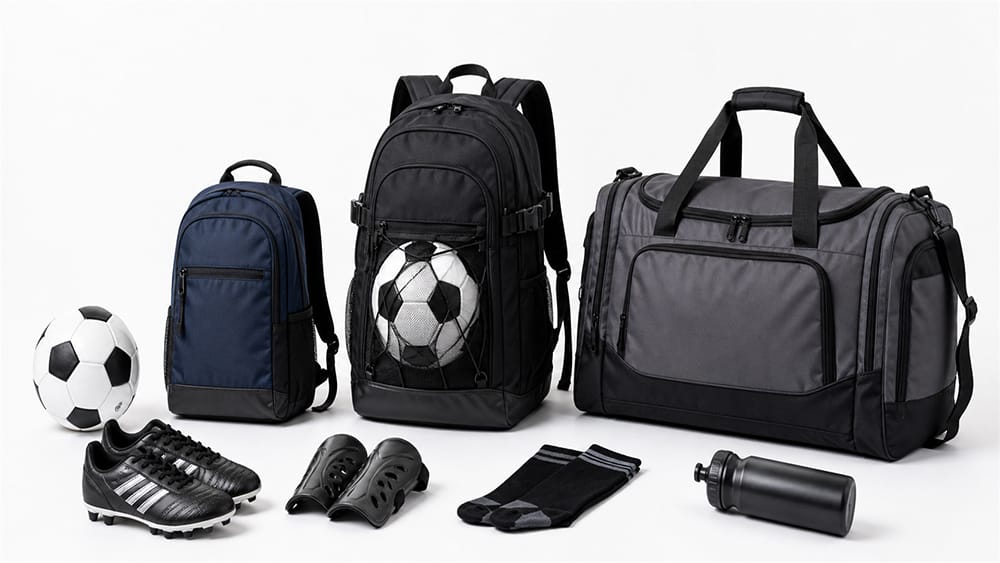
Most youth teams do not need only one type of soccer bag. A practical club setup usually includes different bags for different users.
User or Team Need
Best Bag Type
Why
Young youth players
Small soccer backpack
Easy to carry, keeps both hands free
U9–U12 players
Soccer backpack with ball holder
Fits cleats, shin guards, socks, water, and a ball
Older youth players
Larger backpack or duffel bag
More room for extra clothing and tournament gear
Goalkeepers
Soccer duffel bag
More space for gloves, padded gear, and towels
Coaches
Coach duffel or equipment bag
Better for documents, cones, pinnies, tape, and first aid
Team managers
Large team equipment bag
Holds shared balls, pumps, extra socks, and supplies
Clubs and retailers
Full soccer bag collection
Serves different ages, roles, and sales channels
For most football clubs, the smartest approach is to build a small soccer bag system instead of giving every player the exact same bag. Younger players may need backpacks. Older players may need duffels. Coaches need equipment bags. Goalkeepers usually need extra space.
Start With the Age Group
Age matters more than many clubs realize. A bag that works well for a 16-year-old player may be too large for an 8-year-old. A small backpack that works for young players may not hold enough gear for older travel teams.
U6–U8: Keep It Light and Simple
Very young players do not need a large soccer bag. At this age, the goal is simple: help the child carry basic gear without frustration.
A good bag for this age group should hold:
Cleats
Shin guards
Soccer socks
Small water bottle
Light snack
Optional small towel
Optional ball holder
A small soccer backpack or lightweight drawstring-style bag may be enough. The bag should not be so large that parents end up carrying it every time.
For this age group, comfort and simplicity matter more than maximum capacity.
U9–U12: Choose a Soccer Backpack With Better Organization
Players in this age range usually start carrying more gear. They may have team uniforms, training clothes, a water bottle, shin guards, cleats, snacks, and sometimes a ball.
A soccer backpack with a ball holder or cleat compartment is often the best choice.
Look for:
Separate shoe compartment
Side water bottle pocket
Front pocket for small items
Comfortable shoulder straps
Name label
Enough room for uniform and towel
Durable bottom panel
This is also the age when players should begin managing their own gear. A well-organized backpack helps them learn where everything belongs.
U13–U16: Add More Capacity
Older youth players often need more space. They may carry warm-up gear, extra socks, recovery items, slides, towels, and tournament supplies.
At this stage, clubs can choose between:
Larger soccer backpack
Medium soccer duffel bag
Backpack-duffel hybrid
Soccer bag with separate shoe compartment
If players travel for tournaments, a duffel bag may become more practical. If they walk between school, training, and fields, a backpack may still be better.
Older Players and Competitive Clubs
For older academy players, high school teams, and competitive football clubs, bag needs become more serious.
These players may need:
Extra training clothing
Travel clothing
Recovery items
Personal care items
Multiple pairs of socks
Slides or sandals
Wet gear storage
Larger water bottle
Team documents or player ID
A larger duffel bag or structured sports bag often works better here. The bag should feel more professional and should match the club’s visual identity.
Choose by User Role: Player, Goalkeeper, Coach, or Team Manager
A common mistake is giving everyone the same bag. A player, goalkeeper, coach, and team manager do not carry the same things.
Balls, pump, extra socks, first aid kit, team supplies
Parent volunteer
Tote or sideline bag
Water, snacks, weather items, emergency supplies
If a club only buys one bag type, someone will usually be underserved. The bag may be too big for young players, too small for goalkeepers, or too disorganized for coaches.
A better club system gives each role the right storage solution.
Soccer Backpack, Duffel Bag, or Team Equipment Bag?
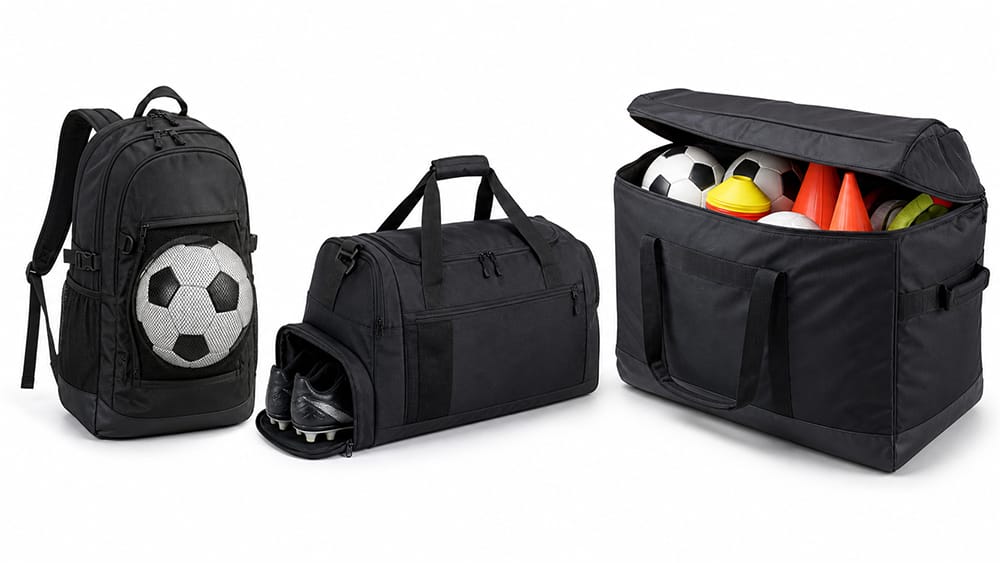
Different soccer bag types solve different problems.
Soccer Backpack
A soccer backpack is usually the best choice for younger players and daily training. It is easy to carry, keeps both hands free, and helps players organize their own gear.
Best for:
Youth players
School teams
Daily training
Players walking between fields
Light to medium gear loads
A backpack should not be too complicated. Young players need clear compartments, not ten hidden pockets.
Soccer Duffel Bag
A soccer duffel bag is better when players need more space. It works well for older players, goalkeepers, tournaments, and travel teams.
Best for:
Older youth players
Goalkeepers
Tournament days
Players carrying extra clothing
Multi-game weekends
A duffel bag should have enough organization to avoid becoming one large pile of gear. Shoe storage, wet/dry separation, and interior pockets are important.
Team Equipment Bag
A team equipment bag is not a player bag. It is for shared gear.
Best for:
Coaches
Clubs
Schools
Team managers
Tournament organizers
It may carry:
Soccer balls
Cones
Pinnies
Ball pump
First aid kit
Extra socks
Wet gear bags
Team documents
Training tools
A team equipment bag should be large, durable, and easy to open quickly.
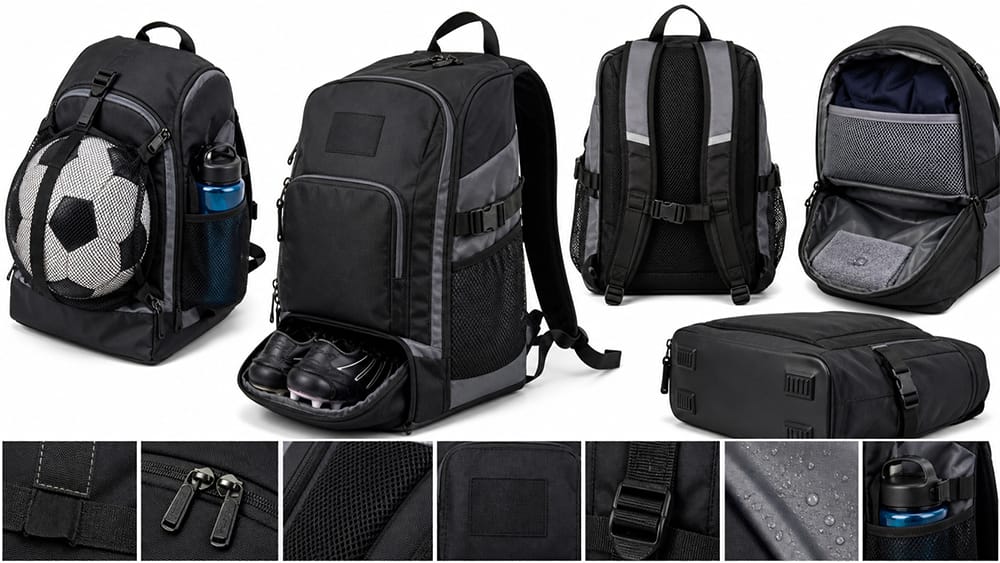
Key Features Youth Soccer Bags Should Have
The bag type matters, but the details matter more. A cheap-looking soccer bag can still work if it is well designed. A stylish bag can fail quickly if the structure is wrong.
Separate Shoe Compartment
Cleats carry mud, grass, rubber pellets, moisture, and odor. A separate shoe compartment keeps dirty footwear away from clean clothing and snacks.
For youth teams, this is one of the most important features. Young players often throw gear into the bag quickly after training. Without shoe separation, the whole bag becomes dirty.
Ball Holder or Ball Pocket
Younger players often need to carry their own soccer ball. A mesh ball holder or external ball pocket keeps the ball secure without taking up the entire main compartment.
For older players and club teams, not every player needs a ball pocket. The team may carry balls separately in a coach or equipment bag.
Water Bottle Pocket
A soccer bag should make hydration easy. A side water bottle pocket is especially useful for youth players.
The CDC’s guidance on heat and athletes reminds athletes to drink more water than usual and not wait until they feel thirsty, especially in hot conditions. For youth teams playing in summer tournaments, easy water access is not a small detail.
This helps keep clean gear separate from dirty gear.
Durable Bottom Panel
Youth soccer bags are placed on grass, turf, benches, locker room floors, buses, sidewalks, and wet fields. The bottom panel takes a lot of abuse.
Look for:
Reinforced bottom fabric
Water-resistant base
Strong stitching
Durable piping or binding
Easy-to-clean surface
A weak bottom panel is one of the first places a team bag starts to fail.
Comfortable Straps
Young players should be able to carry their own bag. If straps are too thin, too stiff, or poorly shaped, the bag becomes uncomfortable quickly.
For backpacks, look for padded shoulder straps. For duffel bags, look for strong handles and a comfortable shoulder strap.
Name Label or ID Window
Youth teams often have many similar-looking bags. A name label or ID window helps prevent mix-ups.
This is especially useful for:
School teams
Tournament travel
Club training nights
Locker rooms
Team buses
Team Logo Area
If the bag is for a club or school, logo placement matters. The logo should be visible but not placed where it will wrinkle, rub, or disappear when the bag is filled.
A good soccer bag should have a clean area for:
Club logo
Team name
Player number
Player name
Sponsor logo, if needed
What Clubs Should Consider Before Ordering Custom Soccer Bags
For clubs, schools, retailers, and sports brands developing custom soccer bags, the right design should match player age, team branding, gear volume, tournament use, and long-term reorder needs.
Before placing an order, confirm these points.
Bag Type
Do you need one bag or a full system?
Possible options include:
Youth soccer backpack
Player backpack with ball holder
Soccer duffel bag
Goalkeeper duffel
Coach bag
Team equipment bag
Soccer shoe bag
A club does not need every option at once, but it should choose based on real users.
Size and Capacity
Do not choose size only by appearance. Think about what the player will actually carry.
A youth backpack should not be too large. A goalkeeper duffel should not be too small. A coach bag should not make documents and medical supplies hard to find.
Logo Method
Common logo options include:
Embroidery
Screen printing
Heat transfer
Woven patch
Rubber patch
Velcro patch
The best method depends on fabric, budget, order quantity, logo complexity, and the look the club wants.
Color Matching
Team colors should be practical, not just attractive. Some colors show dirt more easily. Some materials have limited color availability. Some camouflage or bright colors may require higher minimums or longer lead times.
Before ordering, confirm fabric color, webbing color, zipper color, puller color, lining color, and logo color.
Player Names and Numbers
Personalization can make bags feel special, but it also adds complexity.
Clubs should decide:
Will every bag have a player name?
Will numbers be printed or embroidered?
Can names be changed in future seasons?
Will replacement bags be easy to order?
Will personalization affect lead time?
For large clubs, a name label or removable patch may be easier than fully personalized embroidery.
MOQ and Reorder Planning
The first order is important, but reorders matter more. Clubs should ask whether the same fabric, color, zipper, buckle, and logo method will be available later.
A soccer bag program is easier to manage when the design can be repeated season after season.
Sample Approval
Before confirming bulk production, clubs should test a real sample with actual gear inside. Put cleats into the shoe compartment, place a water bottle in the side pocket, check whether the logo stays visible when the bag is full, and make sure young players can carry the bag comfortably.
A soccer bag may look fine in a product photo but feel wrong once it is filled with cleats, socks, water, towels, and wet gear. Sample approval helps clubs avoid ordering bags that look good but fail in real team use.
How to Match Soccer Bags With Team Branding
A team bag should feel like part of the club identity. When players arrive at a tournament with matching bags, the team looks more organized and professional.
But branding should not make the bag less practical.
Keep the Logo Clear
The logo should be easy to see from a normal distance. Avoid placing it too close to seams, curved pockets, or compression zones.
Use Team Colors Carefully
A full-color bag can look strong, but it may also increase production complexity. Many clubs choose a neutral base color such as black or navy, then add team color through piping, zipper pulls, webbing, logo patches, or printed panels.
Add Player Identification
For youth teams, player identification is useful. It reduces lost bags and mix-ups.
Options include:
Name label
ID window
Printed number
Velcro name patch
Internal owner label
Consider Sponsor Placement
Some clubs may need sponsor logos. If so, the bag should have a clean secondary branding area that does not compete with the club logo.
Durability Matters More Than Looks for Youth Teams
Youth soccer bags are used hard. They are dropped, dragged, overpacked, kicked under benches, left on wet grass, and thrown into car trunks.
A good-looking bag is not enough. Durability matters.
Look for:
Strong zippers
Reinforced stitching
Durable fabric
Quality webbing
Strong buckles
Reinforced handles
Abrasion-resistant bottom
Easy-clean lining
Secure bottle pockets
Proper seam binding
The compulsory match gear may be simple — shirt, shorts, socks, shin guards, and footwear — but a youth soccer bag has to carry that gear repeatedly through real field conditions. IFAB’s player equipment rules are a useful reminder of the core items every player must be able to carry and protect.
A weak bag can make the club look less professional, even if the uniform looks great.
Budget Planning: Cheap Bags vs Long-Term Value
Budget matters. Youth teams and clubs often need to control costs. But the cheapest bag is not always the best value.
A low-cost soccer bag may work for one short season, but if zippers fail, straps tear, or the bottom wears through, the club may need replacements sooner than expected.
When comparing prices, consider:
Expected use frequency
Season length
Travel schedule
Player age
Fabric quality
Zipper quality
Strap reinforcement
Logo durability
Replacement cost
Reorder availability
A slightly better bag can be more cost-effective if it lasts longer and presents the club better.
For Retailers and Brands: Build a Soccer Bag Collection, Not One Bag
Retailers and sports brands should not treat soccer bags as one product. A stronger product line serves different users.
A practical soccer bag collection may include:
Small youth soccer backpack
Standard soccer backpack with ball holder
Soccer duffel bag with shoe compartment
Goalkeeper duffel bag
Soccer shoe bag
Coach bag
Team equipment bag
This type of collection lets retailers serve parents, youth players, older players, goalkeepers, coaches, and clubs.
From an OEM/ODM manufacturing perspective, Vancharli Outdoor helps sports brands, clubs, and retailers develop soccer bag collections around player age, gear capacity, team colors, logo placement, shoe storage, and reorder planning.
The best soccer bag collection is not built around one style. It is built around the way teams actually use bags.
Common Mistakes When Choosing Soccer Bags for Teams
Choosing One Size for Every Player
A U8 player and a U16 player do not need the same bag. Age and gear volume should guide size.
Ignoring Shoe Storage
Cleats need separation. Without a shoe compartment, the bag becomes dirty quickly.
Forgetting Name Labels
Youth teams have many similar bags. Name labels prevent confusion.
Making the Logo Area Too Small
If club branding matters, logo placement should be considered during design, not after the sample is finished.
Choosing Thin Material Only to Save Cost
Very thin fabric may reduce price, but it can shorten bag life.
Forgetting Coaches and Goalkeepers
A player backpack may work for field players, but coaches and goalkeepers usually need different bags.
Not Checking Samples Carefully
Before bulk production, clubs should check size, zipper quality, strap comfort, logo placement, shoe compartment, stitching, and real gear fit.
Ignoring Reorders
If a club wants the same bag next season, material and color availability should be confirmed before the first order.
Final Recommendation
Youth teams and football clubs should choose soccer bags based on age group, role, gear volume, branding needs, and real field use.
For younger players, choose small or medium soccer backpacks with comfortable straps, water bottle pockets, and simple organization. For older players, consider larger backpacks or duffel bags. For goalkeepers, choose larger duffels with extra space. For coaches and team managers, use dedicated equipment bags.
A good soccer bag should not only carry gear. It should help players stay organized, support team identity, reduce lost items, and last through a full season of training, travel, and tournament days.
FAQ
What type of soccer bag is best for youth teams?
For most youth teams, a soccer backpack is the best starting point because it is easy to carry and works well for basic gear. Older players and goalkeepers may need duffel bags, while coaches need team equipment bags.
Do young players need a soccer bag with a ball holder?
A ball holder is useful for younger players who bring their own ball to practice. For older club teams, balls may be carried in a separate team equipment bag.
Should a football club order the same bag for every age group?
Not always. Younger players need smaller, lighter bags. Older players may need larger backpacks or duffels. Coaches and goalkeepers usually need different storage.
What features are most important in a youth soccer bag?
Important features include a shoe compartment, water bottle pocket, easy-clean lining, comfortable straps, durable bottom panel, name label, and team logo area.
Are custom soccer bags worth it for clubs?
Yes, custom soccer bags can help clubs create a professional team image, reduce lost items, and match bags with team colors and logos. They are especially useful for clubs, schools, academies, and retail programs.
What logo method is best for soccer team bags?
It depends on the material, design, and budget. Embroidery looks premium, screen printing works well for simple logos, heat transfer can handle detailed designs, and patches can create a more flexible branding option.
How many soccer bags should a club order?
The order quantity depends on team size, age groups, replacement needs, and whether the club wants extra stock for new players. Clubs should also consider future reorders before finalizing the first order.
What is the difference between a player soccer bag and a team equipment bag?
A player soccer bag carries personal gear such as cleats, socks, shin guards, water, and a uniform. A team equipment bag carries shared items such as balls, cones, pinnies, pumps, first aid supplies, and documents.










Comments are closed