



Tactical Bag Hardware Guide: Buckles, Zippers, Webbing, and More
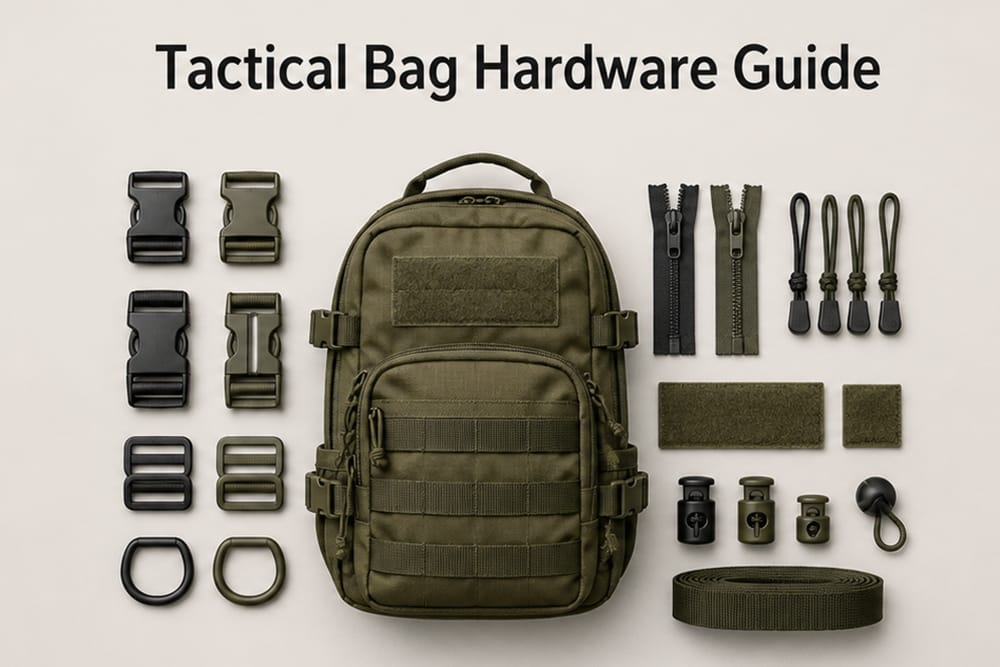
Hardware is one of the easiest parts of a tactical bag to overlook, but it is often one of the first things users notice when something goes wrong.
A zipper that jams, a buckle that cracks, a loose D-ring, a slipping strap adjuster, or weak hook-and-loop can make a tactical bag feel cheap even if the main fabric looks strong. For tactical backpacks, range bags, sling bags, pouches, hydration packs, duffel bags, and camera bags, hardware is not just decoration. It affects strength, access, load stability, comfort, durability, and brand reputation.
For OEM/ODM buyers, hardware selection should be discussed before sampling, not after the first prototype is finished. The right choice depends on the product type, target market, carry weight, weather exposure, price position, and expected use.
This guide explains the main types of tactical bag hardware, how they affect product performance, what buyers should specify in a tech pack, and which common mistakes to avoid before production.
What Counts as Tactical Bag Hardware?
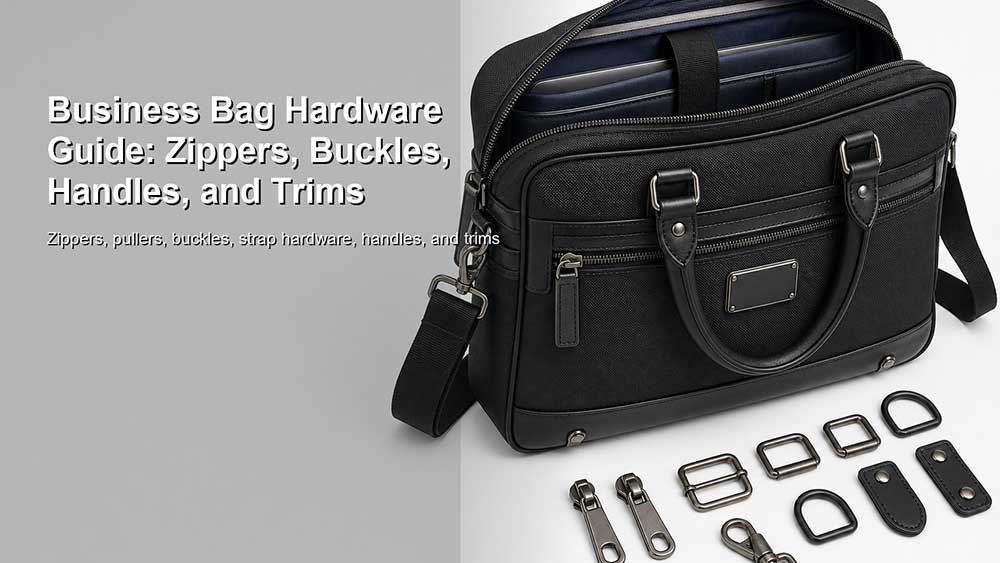
Tactical bag hardware includes the functional components used to open, close, adjust, attach, reinforce, and organize the bag.
It can include metal parts, plastic parts, textile-based components, and attachment systems. In a tactical bag project, hardware may include:
- buckles;
- side-release buckles;
- quick-release buckles;
- ladder locks;
- strap adjusters;
- D-rings and triangle rings;
- swivel hooks and snap hooks;
- zippers and sliders;
- zipper pullers;
- cord locks;
- grommets and eyelets;
- hook-and-loop panels;
- MOLLE clips and attachment parts;
- webbing;
- elastic loops;
- rivets and reinforcement parts;
- bag feet or bottom protection parts, when needed.
In fashion bags, hardware is often selected for appearance, finish, and brand image. In tactical bags, appearance still matters, but function comes first. The hardware must match the structure of the bag and the way the user will carry, open, adjust, and load it.
A tactical backpack needs different hardware from a range bag. A sling bag needs different hardware from a duffel bag. A pouch needs different hardware from a hydration pack. That is why buyers should not treat hardware as a standard accessory list.
Why Hardware Matters in Tactical Bags
Hardware affects how a tactical bag performs in real use. Even when the main fabric is strong, poor hardware can create weak points.
For buyers, hardware matters because it can affect:
- Load stability: Buckles, adjusters, and webbing help keep the bag secure when it is packed.
- Access speed: Zippers, pullers, and closures determine how quickly users can open pockets.
- Comfort: Strap adjusters, sternum buckles, and waist belt hardware affect fit and carry comfort.
- Durability: Cheap buckles, weak sliders, or poor zipper quality can fail before the fabric does.
- Weather performance: Zippers, coatings, hardware material, and closures can influence water resistance and corrosion risk.
- Modular function: MOLLE webbing, D-rings, clips, and attachment points support add-on pouches and accessories.
- Brand perception: Users often judge quality by touch points such as zipper smoothness, buckle feel, and strap adjustment.
For OEM/ODM projects, hardware is also a cost-control point. Better hardware can improve product reliability, but not every project needs the most expensive components. The goal is to match the hardware to the use case and target price.
Main Types of Tactical Bag Hardware
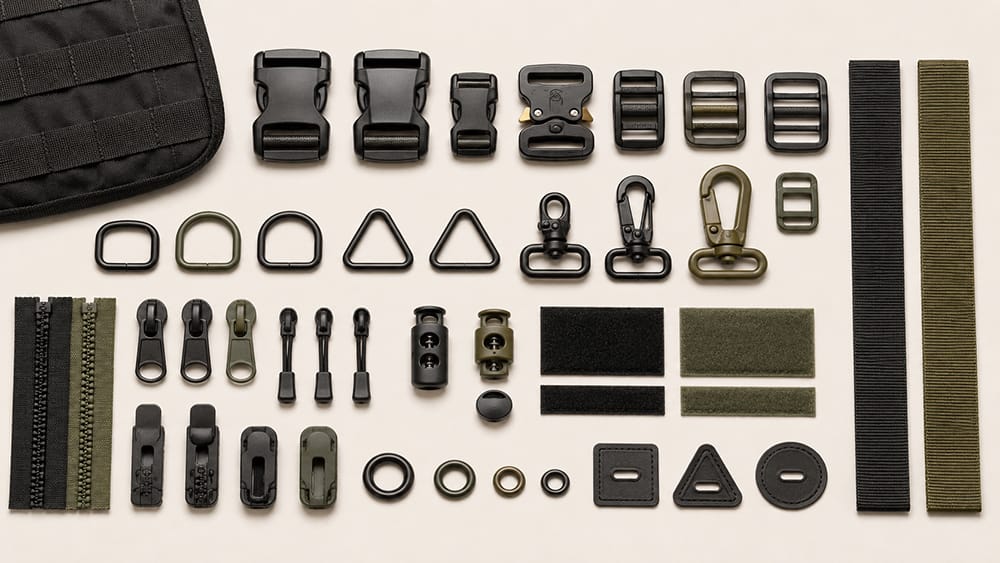
The table below gives buyers a practical overview of common tactical bag hardware and what to check during product development.
| Hardware Type | Common Use | Buyer Notes |
|---|---|---|
| Side-release buckles | Sternum straps, waist belts, compression straps, flap closures | Check strength, hand feel, one-hand operation, and webbing compatibility. |
| Quick-release buckles | Tactical belts, shoulder straps, fast-removal systems | Useful when fast release matters, but cost, weight, and application should be reviewed. |
| Ladder locks | Shoulder straps, compression straps, load adjusters | Check whether the webbing slides smoothly but does not slip under tension. |
| D-rings / Triangle rings | Shoulder strap anchors, accessory points, sling attachment | Choose shape, material, and size based on load direction and webbing width. |
| Swivel hooks / Snap hooks | Removable straps, sling bags, shoulder strap systems | Useful for detachable straps, but buyers should check rotation, noise, and strength. |
| Zippers | Main compartments, admin pockets, front pockets, side pockets | Check zipper type, size, slider quality, puller style, and smoothness after loading. |
| Pullers | Glove-friendly access, zipper extension, quick identification | Choose cord, plastic, rubber, metal, or custom pullers based on use and brand style. |
| Cord locks | Drawcord pockets, compression systems, hydration exits | Useful for lightweight adjustment and quick tightening. |
| Hook-and-loop | Patch panels, flap closures, name labels, modular panels | Check peel strength, noise level, abrasion resistance, and long-term bonding. |
| MOLLE webbing | Modular attachment, external pouch connection | Check spacing, bartack reinforcement, webbing strength, and layout accuracy. |
| Grommets / Eyelets | Drainage holes, cord exits, ventilation points | Reinforcement is important to avoid fabric tearing. |
| Bag feet / bottom studs | Bottom protection for structured bags or duffels | Optional for tactical duffels or equipment bags; less common on soft backpacks. |
A good hardware decision is rarely based on one feature. Buyers should consider strength, weight, cost, noise, corrosion, color matching, replacement availability, and production consistency.
Plastic Hardware vs. Metal Hardware
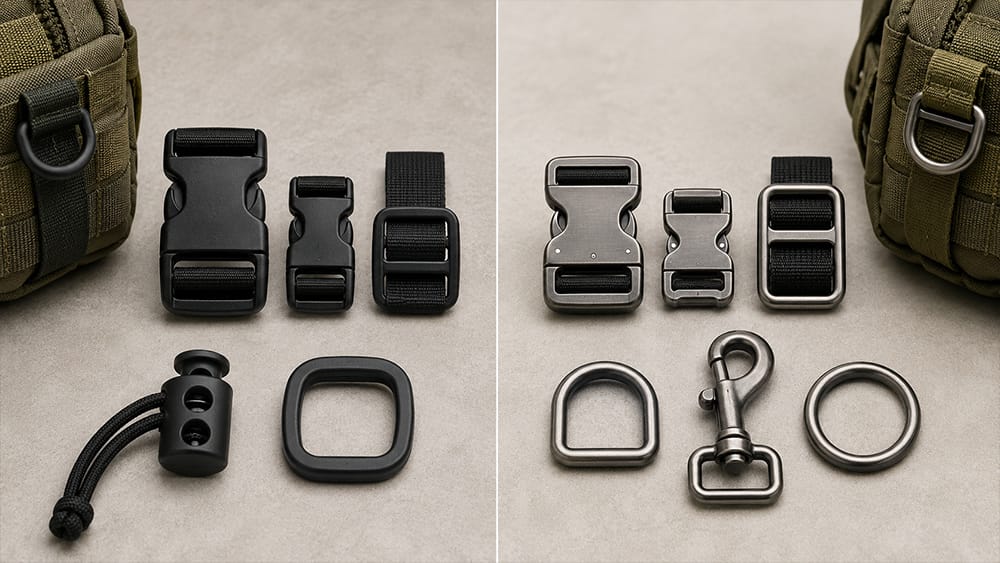
One common question in tactical bag development is whether plastic or metal hardware is better. The answer depends on the product.
Metal hardware can feel strong and premium. It may work well for heavy-duty shoulder straps, premium tactical duffels, camera bags, or high-end equipment bags. Metal D-rings, hooks, and buckles can create a stronger visual impression and may be preferred in certain load-bearing areas.
However, metal is not always the better option. It is heavier, can create noise, may scratch fabric, and can corrode if the material or finish is not suitable for the environment.
Plastic hardware is widely used in tactical backpacks and outdoor bags because it is lightweight, quiet, cost-effective, and resistant to rust. High-quality plastic buckles and adjusters can perform well when properly selected for the webbing width and load level.
| Hardware Material | Advantages | Limitations |
|---|---|---|
| Plastic | Lightweight, quiet, rust-free, cost-effective, suitable for backpacks and pouches | Lower-quality plastic may crack, deform, or lose strength in extreme conditions. |
| Metal | Strong feel, premium appearance, suitable for some heavy-duty or high-end applications | Heavier, noisier, may corrode, can scratch fabric, often increases cost. |
| Aluminum | Lighter than many metal options, strong appearance, useful for premium outdoor/tactical products | More expensive and may not be necessary for every product. |
| Stainless steel | Good corrosion resistance, strong, suitable for marine or wet environments | Heavy and often higher cost. |
| Zinc alloy | Common in bag hardware and fashion hardware | Heavier and finish quality must be controlled carefully. |
For most commercial tactical backpacks, high-quality plastic hardware is practical. For premium tactical duffels, equipment bags, or shoulder strap anchor points, metal hardware may be considered. For marine, fishing, or wet-use products, corrosion resistance should be reviewed carefully.
Zippers for Tactical Bags
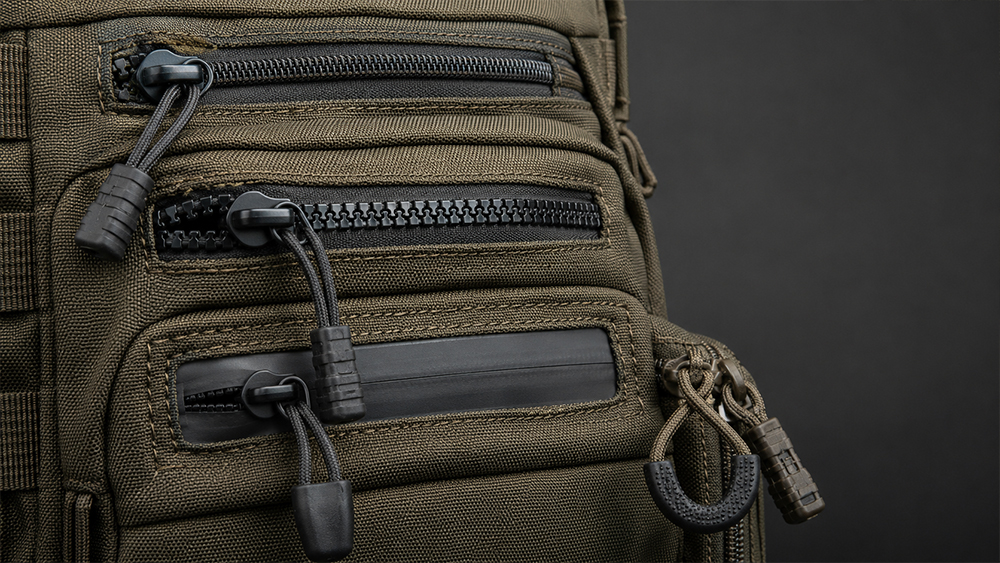
Zippers are one of the most important hardware decisions in a tactical bag. Users open and close them constantly, so zipper quality directly affects user experience.
A strong tactical bag can still feel unreliable if the zipper jams, separates, leaks, or breaks early.
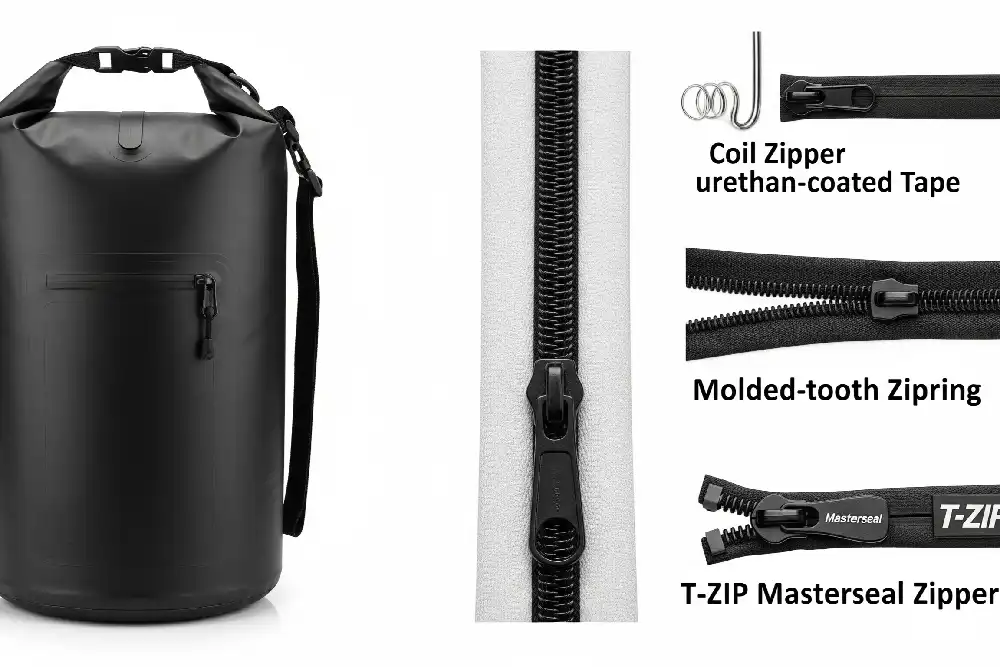
Coil Zippers
Coil zippers are flexible and commonly used in backpacks, pockets, curved openings, and lightweight compartments. They are suitable when the opening needs to bend around corners or follow a curved panel.
For tactical bags, coil zippers are often used on:
- front admin pockets;
- curved main compartments;
- accessory pockets;
- hydration compartments;
- EDC bags;
- sling bags.
Buyers should check zipper gauge, slider quality, sewing alignment, and whether the zipper remains smooth after the bag is loaded.
Molded Tooth Zippers
Molded tooth zippers have individual plastic teeth. They often look more rugged and can be suitable for larger openings, duffel bags, outdoor gear bags, and heavier compartments.
They may be a good option when the design calls for a stronger visual appearance or a larger zipper structure.
Metal Zippers
Metal zippers are less common on tactical backpacks but may be used for certain premium bags, fashion-tactical products, or small accessory pockets. They add weight and may not be ideal for harsh outdoor or wet-use environments unless carefully selected.
Water-Resistant Zippers
Water-resistant zippers can help improve weather protection, especially for bags marketed as outdoor, travel, or field-use products. For example, YKK describes AquaGuard as a water-resistant zipper created by laminating PU on the backside of a coil zipper.
However, buyers should be careful with wording. A water-resistant zipper does not automatically make the whole bag waterproof. The bag structure, seams, fabric coating, stitching, zipper ends, and opening design all affect water entry.
Better wording is often:
- water-resistant zipper;
- water-repellent zipper;
- weather-resistant opening;
- zipper with water-repellent coating.
Avoid calling a tactical bag waterproof unless the full product structure is designed and tested for that claim.
Buckles and Strap Adjusters
Buckles and strap adjusters affect fit, stability, and usability. On tactical backpacks, they are commonly used for sternum straps, waist belts, compression straps, flap closures, and removable attachment systems.
Side-Release Buckles
Side-release buckles are common because they are easy to operate, lightweight, and practical. They are often used on:
- sternum straps;
- waist belts;
- side compression straps;
- external pocket straps;
- flap closures;
- removable pouch systems.
Buyers should check whether the buckle is easy to open, secure when closed, and compatible with the webbing width.
Ladder Locks
Ladder locks adjust strap length and hold webbing in place. They are common on shoulder straps, load adjusters, waist belts, and compression straps.
The key issue is balance. The webbing should move smoothly during adjustment but should not slip during use.
Quick-Release Buckles
Quick-release buckles can be useful in some tactical products, but they should not be added just for appearance. They may increase cost and weight. Buyers should define whether fast release is truly needed.
Sternum Strap Buckles
Sternum strap buckles are small but important. They affect carry comfort and help stabilize shoulder straps. On tactical backpacks, adjustable sternum straps are often more useful than fixed ones because users have different body types and carry preferences.
D-Rings, Hooks, and Attachment Points
D-rings, triangle rings, O-rings, swivel hooks, and snap hooks are used to connect straps, accessories, and removable parts. They may look simple, but their placement affects load direction and comfort.
Common applications include:
- removable shoulder straps;
- sling bag strap systems;
- side attachment points;
- accessory connection points;
- tactical pouch anchors;
- camera bag strap points;
- duffel bag carry systems.
When choosing D-rings or hooks, buyers should check:
- material: plastic, metal, aluminum, or stainless steel;
- size and webbing compatibility;
- load direction;
- rotation and movement;
- noise level;
- surface finish;
- corrosion resistance;
- whether reinforcement is needed behind the attachment point.
A strong D-ring is not enough if the fabric behind it is weak. The attachment area should be reinforced with webbing, bartack stitching, backing fabric, or extra structure depending on the expected load.
Webbing, MOLLE, and Reinforcement
Webbing is one of the most important structural elements in tactical bags. It is used for shoulder straps, handles, MOLLE panels, compression straps, waist belts, and attachment points.
Common webbing materials include nylon, polyester, and polypropylene. Nylon is often known for strength and abrasion resistance, while polyester is often valued for lower water absorption and stronger baseline UV performance. A technical guide to webbing materials explains that polyester is hydrophobic and absorbs far less water than nylon, while also offering strong baseline performance under sunlight.
For tactical bags, buyers should consider:
- webbing width;
- thickness;
- tensile strength;
- hand feel;
- color matching;
- UV resistance;
- water absorption;
- abrasion resistance;
- edge finishing;
- compatibility with buckles and adjusters.
MOLLE Webbing
MOLLE systems are widely used in tactical bags because they allow users to attach pouches, tools, and accessories to compatible platforms. A tactical bag with MOLLE webbing should not only look correct; it must be usable.
Buyers should check:
- MOLLE row spacing;
- bartack location;
- webbing width;
- webbing stiffness;
- sewing accuracy;
- alignment across the front panel;
- compatibility with common pouch systems.
Poor MOLLE layout can make a bag look tactical but function poorly. This is why MOLLE details should be included clearly in the tech pack.
Hook-and-Loop Panels
Hook-and-loop panels are common on tactical bags. They are used for patch panels, name tapes, flap closures, modular labels, inner dividers, and removable accessories.
They are simple to use, but they can create problems if quality is poor.
Buyers should check:
- peel strength;
- cycle durability;
- stitching around the edge;
- backing material;
- noise level;
- color matching;
- performance after dust exposure;
- whether the panel curls after use.
For patch panels, appearance matters. For closures, holding strength matters. For internal dividers, repeated opening and closing matters. The buyer should define the actual use before choosing the hook-and-loop specification.
Hardware by Tactical Bag Type
Different tactical bags need different hardware priorities. The table below can help buyers think more clearly before sampling.
| Bag Type | Hardware Focus |
|---|---|
| Tactical backpack | Main zippers, sternum buckles, waist belt buckles, shoulder strap adjusters, MOLLE webbing, compression straps |
| Tactical sling bag | Swivel hooks, quick-adjust buckles, angled strap adjusters, glove-friendly pullers |
| Range bag | Heavy-duty zippers, D-rings, shoulder strap hooks, reinforced handles, internal dividers |
| Tactical duffel bag | Large zippers, shoulder strap hardware, compression straps, metal or reinforced D-rings, optional bottom protection |
| Tactical pouch | MOLLE straps, snap buttons, hook-and-loop, cord locks, small pullers |
| Hydration pack | Lightweight buckles, hose clips, zipper openings, webbing loops, elastic retainers |
| Tactical camera bag | Quiet zipper pullers, protective buckles, internal divider fasteners, padded compartment hardware |
| Medical bag | Quick-access zipper pullers, hook-and-loop panels, elastic loops, internal organization hardware |
| Helmet bag | Strong handles, zipper sliders, shoulder strap hooks, reinforced attachment points |
A good supplier should help the buyer adjust hardware based on the actual product type instead of using the same hardware package for every tactical bag.
Common Hardware Mistakes Buyers Should Avoid
Hardware mistakes can affect sampling, production, customer reviews, and return rates. Here are the most common issues buyers should avoid.
Choosing Hardware Only by Appearance
A buckle may look strong but perform poorly under tension. A zipper may look rugged but feel rough during use. A metal part may look premium but add too much weight.
Hardware should be judged by function, not only by appearance.
Using Cheap Zippers to Reduce Cost
Zippers are one of the most frequently used parts of a tactical bag. A low-quality zipper can make the whole product feel unreliable.
If the budget is limited, buyers should still protect the main compartment zipper quality first. Smaller internal pockets may have more flexibility, but main access points should not be weak.
Mismatching Webbing and Buckle Size
A 25mm buckle should match 25mm webbing. If the webbing is too thin, too thick, too soft, or too slippery, it may not adjust properly or may slip during use.
Webbing and buckle compatibility should be checked during sampling.
Adding Too Much Metal Hardware
Metal hardware can improve perceived strength, but too much metal can increase weight, noise, cost, and corrosion risk.
For tactical backpacks and pouches, good plastic hardware is often more practical.
Ignoring Reinforcement Behind Hardware
Hardware strength is only useful when the surrounding structure is strong enough. D-rings, buckles, handles, and strap anchors should be reinforced properly.
Buyers should review bartack stitching, backing material, seam allowance, and load direction.
Treating Sample Hardware and Bulk Hardware as Different
One serious production mistake is using better hardware on the sample and cheaper hardware in bulk production.
The approved sample should match the bulk production hardware. If any substitution is needed, the buyer should approve it before production.
What to Specify in a Tactical Bag Tech Pack
Hardware should be clearly defined in the tech pack. If the buyer only writes “strong buckle” or “good zipper,” the factory may interpret the requirement differently.
A practical tactical bag tech pack should include:
- buckle type;
- buckle size;
- buckle material;
- buckle color;
- zipper type;
- zipper size or gauge;
- zipper slider type;
- puller design;
- webbing width;
- webbing material;
- hook-and-loop size;
- D-ring or triangle ring material;
- snap hook type;
- cord lock type;
- MOLLE spacing;
- hardware brand or approved equivalent;
- reinforcement method;
- testing requirements;
- approved sample reference.
Buyers can also include photos or callouts for each hardware location. This helps the factory understand where each part should be used and avoids confusion between sample and production.
Hardware Testing Before Production
Before bulk production, hardware should be tested according to the product’s use case. Not every project needs laboratory-level testing, but every project should include basic functional checks.
Buyers may consider:
- buckle opening and closing tests;
- strap pull tests;
- zipper cycle tests;
- zipper smoothness checks;
- D-ring pull tests;
- seam strength checks around hardware;
- hook-and-loop open/close cycle tests;
- salt spray testing for metal hardware if needed;
- colorfastness checks for webbing;
- load testing for handles and shoulder straps.
For tactical bags, testing should focus on the parts users touch and stress most often: zippers, buckles, handles, shoulder straps, compression straps, and attachment points.
If the product will be marketed with rugged or field-use claims, the buyer should define testing before production rather than after a problem appears.
How a Supplier Can Support Better Hardware Decisions
A capable tactical bag supplier should not simply ask the buyer to choose hardware from a catalog. The supplier should help match hardware to the product’s purpose, structure, price range, and target user.
For OEM/ODM tactical bag projects, Vancharli Outdoor can support buyers with:
- buckle and zipper selection;
- D-ring and hook options;
- webbing width and material recommendations;
- MOLLE layout planning;
- hook-and-loop panel design;
- puller customization;
- hardware color matching;
- reinforcement planning;
- sample testing and revision;
- bulk production quality checks.
A professional custom tactical bag manufacturer should help buyers make hardware decisions early, because these choices affect pattern design, sewing construction, production cost, and final user experience.
For broader tactical product lines, buyers can also review product options through a tactical gear supplier before finalizing bag types and hardware requirements.
Final Thoughts
Tactical bag hardware may seem like a small detail, but it plays a major role in product performance.
Buckles control adjustment and stability. Zippers control access. Webbing supports load and modular function. D-rings and hooks connect straps and accessories. Hook-and-loop panels support patches, closures, and internal organization. Every part affects how the final product feels and performs.
For buyers, the best approach is simple:
Do not treat hardware as an afterthought.
Define the use case first. Match hardware to the bag type. Specify details in the tech pack. Test key parts before production. Make sure sample hardware and bulk hardware stay consistent.
A tactical bag does not become reliable because it looks rugged. It becomes reliable when fabric, structure, hardware, stitching, and quality control work together.
FAQ
1. What hardware is used in tactical bags?
Common tactical bag hardware includes buckles, zippers, D-rings, ladder locks, strap adjusters, pullers, cord locks, hook-and-loop panels, MOLLE webbing, grommets, snap hooks, and reinforcement parts.
2. Are metal buckles better than plastic buckles?
Not always. Metal buckles can feel strong and premium, but they are heavier and may create noise or corrosion risk. High-quality plastic buckles are often better for tactical backpacks, pouches, and outdoor bags because they are lightweight, quiet, and rust-free.
3. What zipper is best for tactical backpacks?
It depends on the design. Coil zippers work well for curved pockets and flexible openings. Molded tooth zippers can be useful for larger or more rugged openings. Water-resistant zippers may help with weather protection, but they do not automatically make the whole bag waterproof.
4. What is the difference between nylon and polyester webbing?
Nylon webbing is often valued for strength and abrasion resistance. Polyester webbing usually absorbs less water and has better baseline UV resistance. The right choice depends on the target use, weather exposure, cost, and required performance.
5. What is MOLLE webbing used for?
MOLLE webbing allows users to attach compatible pouches, tools, and accessories to tactical backpacks, vests, belts, and other load-bearing platforms. For bags, MOLLE spacing and stitching accuracy are important.
6. Should tactical bags use waterproof zippers?
Only if the product design truly requires it. Many tactical bags use water-resistant or water-repellent zippers instead. Buyers should avoid calling a bag waterproof unless the full structure, seams, fabric, and openings support that claim.
7. Can tactical bag hardware be customized?
Yes. OEM/ODM buyers can customize buckle type, zipper pullers, webbing color, D-rings, hook-and-loop panels, cord locks, logo pullers, and hardware finish depending on MOQ, budget, and supplier capability.
8. What causes hardware failure in tactical bags?
Common causes include low-quality plastic, poor zipper selection, mismatched webbing and buckles, weak stitching, lack of reinforcement, metal corrosion, poor plating, and using different hardware in bulk production than in the approved sample.
9. What should buyers include in a hardware tech pack?
Buyers should include hardware type, size, material, color, position, brand or approved equivalent, testing requirement, reinforcement method, and approved sample reference.
10. How can buyers reduce hardware problems before production?
Buyers should approve actual hardware samples, test key components, review attachment points, confirm webbing compatibility, check zipper smoothness, and make sure the factory uses the same hardware in bulk production.
Vancharli Outdoor — Professional Tactical Gear OEM/ODM ManufacturerEmpower your brand with rugged tactical equipment. Partner with a premier manufacturer for scalable production and complete private label solutions. ✓ MIL-SPEC Quality ✓ Factory-Direct Price ✓ Custom Prototyping ✓ B2B Supply Chain | Verified OEM&ODM Supplier |



Comments are closed