



What Is a Morale Patch and Why It Matters
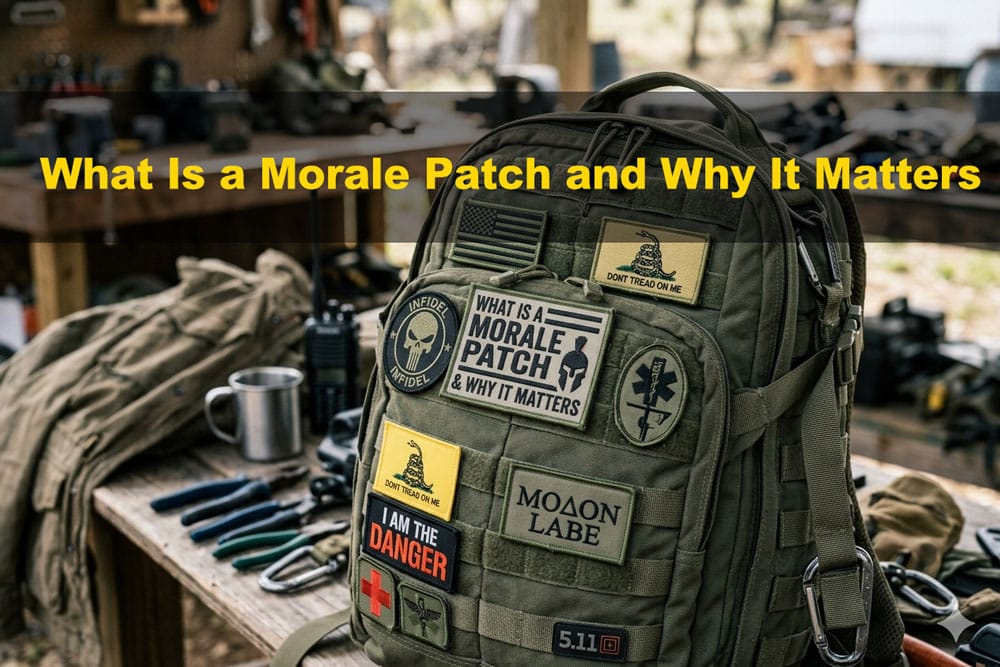
A morale patch is a small embroidered fabric badge, typically 2 to 4 inches wide with a hook-and-loop Velcro backing, worn on gear or apparel to display humor, unit pride, personal beliefs, or inside jokes—separate from official rank or unit insignia. While the U.S.
Military issued its first cloth insignia in World War I, the modern morale patch exploded after 2003, when troops in Iraq and Afghanistan traded custom designs by the thousands. Today, collectors include police K-9 handlers, EMS crews, airsoft players, and EDC enthusiasts.
That’s when troops over in Iraq and Afghanistan started swapping custom Velcro-backed designs by the thousands.
So What is a Morale Patch? Essentially, it’s a small fabric badge, generally around 2 to 4 inches wide with a hook-and-loop backing on the back, worn to show off humor, pride in your unit, personal beliefs, or even inside jokes.
And it’s totally separate from official rank or unit insignia.
These days, the morale patch market reaches way beyond just the military, though. Police K-9 handlers collect them. So do EMS crews, airsoft players, everyday carry enthusiasts, and honestly, even tech workers have gotten into it.
This guide really breaks down their history, the rules around actually wearing them, and why a approximately $5 piece of embroidered fabric can mean so much to the person who’s wearing it.
Quick Takeaways
- Morale patches measure 2-4 inches with Velcro backing, expressing personality beyond official insignia.
- Modern morale patch culture exploded after 2003 during Iraq and Afghanistan deployments.
- Collectors now include K-9 handlers, EMS crews, airsoft players, and EDC enthusiasts.
- Always remove morale patches before formal inspections or official duty per AR 670-1.
- Treat morale patches as tactical bumper stickers—personal, optional, and unauthorized by regulation.
What Is a Morale Patch in Plain Terms
A morale patch is a small fabric badge, usually 2 to 4 inches wide, backed with hook-and-loop Velcro, worn on gear or apparel to show personality, inside jokes, or unofficial unit pride. It’s Not a sanctioned rank, skill, or unit insignia.
Think of it as the bumper sticker of the tactical world: personal, often funny, sometimes irreverent, and always optional.
The defining trait is its unauthorized status. Official patches, name tapes, U.S.
Flags, branch tabs, MOS badges, are dictated by regulations like AR 670-1 and must sit in exact positions with approved colors. A morale patch breaks those rules on purpose.
It lives on a loop field somewhere the regs don’t reach: a plate carrier’s admin flap, a backpack panel, a range hat.
So when someone asks, “What’s a morale patch?”, the short answer is: a removable, hook-backed badge that exists outside the chain of command.
PVC (a soft rubber-like plastic) and embroidered twill are the two dominant builds, with PVC making up roughly 60% of new releases according to vendor catalogs from Tactical Gear Junkie because it survives mud, sweat, and weapon oil better than thread.
Quick contrast to lock it in:
- Authorized patch: “75th Ranger Regiment” scroll — required, regulated, position-specific.
- Morale patch: A cartoon frog holding a rifle that says “Send It” — chosen by the wearer, removable in seconds.
Why They’re Called Morale Patches and Where They Came From
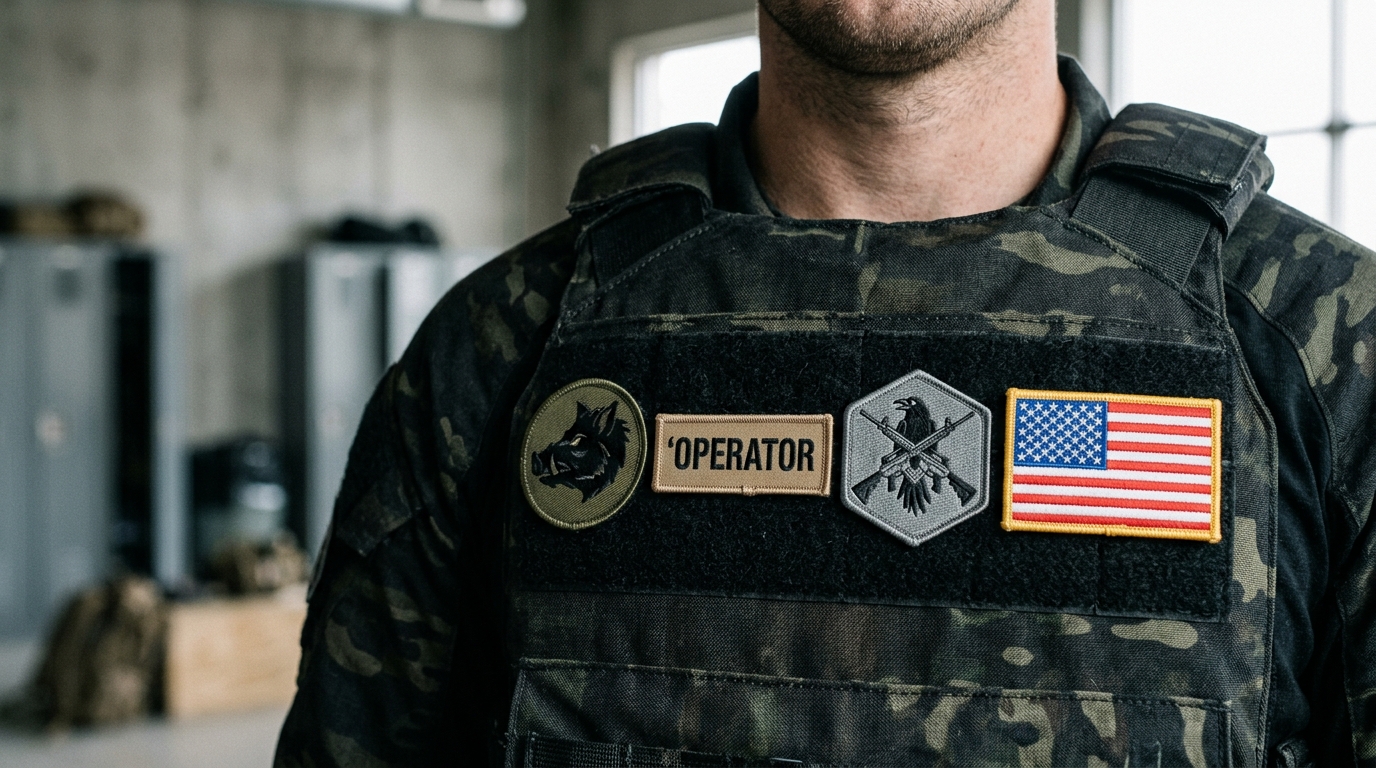
The name is actually literal. Morale patches got their label because commanders quietly tolerated them as a kind of pressure valve, a small, sanctioned way for troops to show some individuality inside a uniform code basically designed to erase it. The term took hold during Vietnam and then grew through Desert Storm.
And then it really exploded after 9/11 inside Special Operations Forces (SOF) units.
Vietnam was the first proving ground. Helicopter crews and Special Forces A-teams stitched unauthorized squadron art onto flight jackets and boonie hats. Think skulls, playing cards, and dark humor referencing how long the tour was.
The U.S. Army’s official policy banned most of it, though field commanders looked the other way because unit cohesion research consistently shows informal identity markers reduce friction during long deployments.
Post-9/11 is honestly when the modern morale patch industry was born. Once hook-and-loop (Velcro) panels became standard on the Army Combat Uniform in 2004, and showed up on plate carriers shortly after, swapping patches went from a sewing-kit chore to something you could do in 10 seconds.
Operators in Iraq and Afghanistan, often running 9-to-15-month rotations, used them to mark deployments and inside jokes. Plus KIA tributes for the fallen.
So when someone asks, What is a Morale Patch? The honest answer is half-equipment, half-coping mechanism.
The Velcro made it scalable, and the deployment tempo made it necessary. The name stuck because it described exactly what the patches actually did, which was keeping morale measurable on a 3-inch square of nylon.
How Morale Patches Actually Work as a Coded Social Language
Think of a morale patch as a quick way to say something without talking. It’s like a challenge coin you can see from across a room, telling people about your unit, your job, or an inside joke, all without you saying a single word.
So when someone really asks what a morale patch is, besides just being a piece of fabric, the simple answer is that it works like a silent signal or a non-verbal call sign.
The meanings behind them are built in layers. For example, a plain black and tan reaper patch with “3/75” on it tells another Army Ranger you were with the 3rd Battalion.
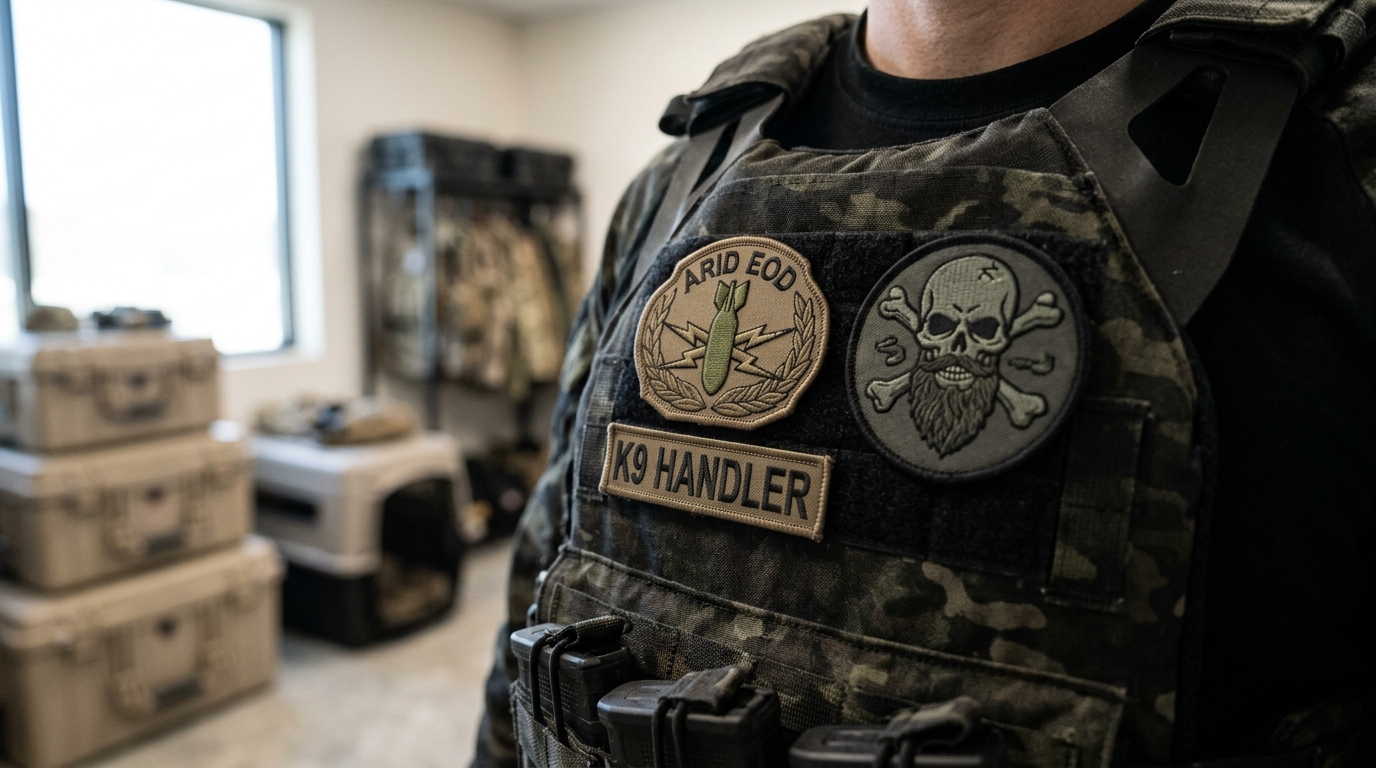
A red EOD crab patch means you’re a bomb technician, and a yellow one shows you’re still a student. K9 handlers often wear paw prints that have the dates of their first bite-sleeve training.
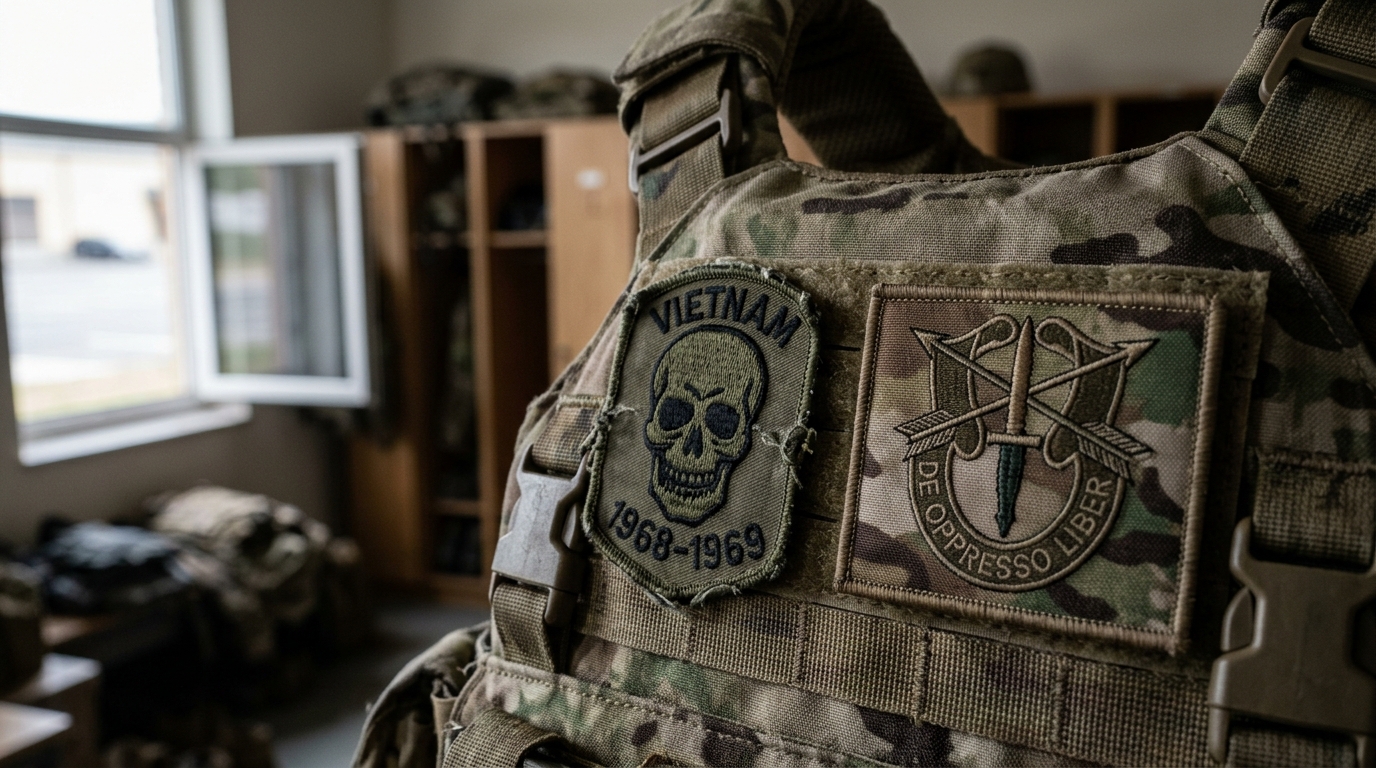
Special Forces troops tend to use symbols like Trojan horses and scrolls that say “De Oppresso Liber.” And if a civilian wears the wrong patch in the wrong place, they’ll probably get called out for it, which people in the community often refer to as a stolen valor check.
The inside jokes carry just as much importance. There’s the “Pen Island” font trick, the “Mandatory Fun” patch people wear for required unit events, and that laughing skull from a specific rotation in Helmand back in 2011.
Each one is basically a secret password. If you understand the reference, you were either there or you know someone who was.
There was a 2022 survey from Soldier Systems Daily that asked about 1,400 readers, and it found that approximately 68% of them could figure out a stranger’s unit or community in under ten seconds just by looking at their gear patches. That’s actually faster than reading a name tape.
Decoding Common Symbols, Colors, and Inside Jokes
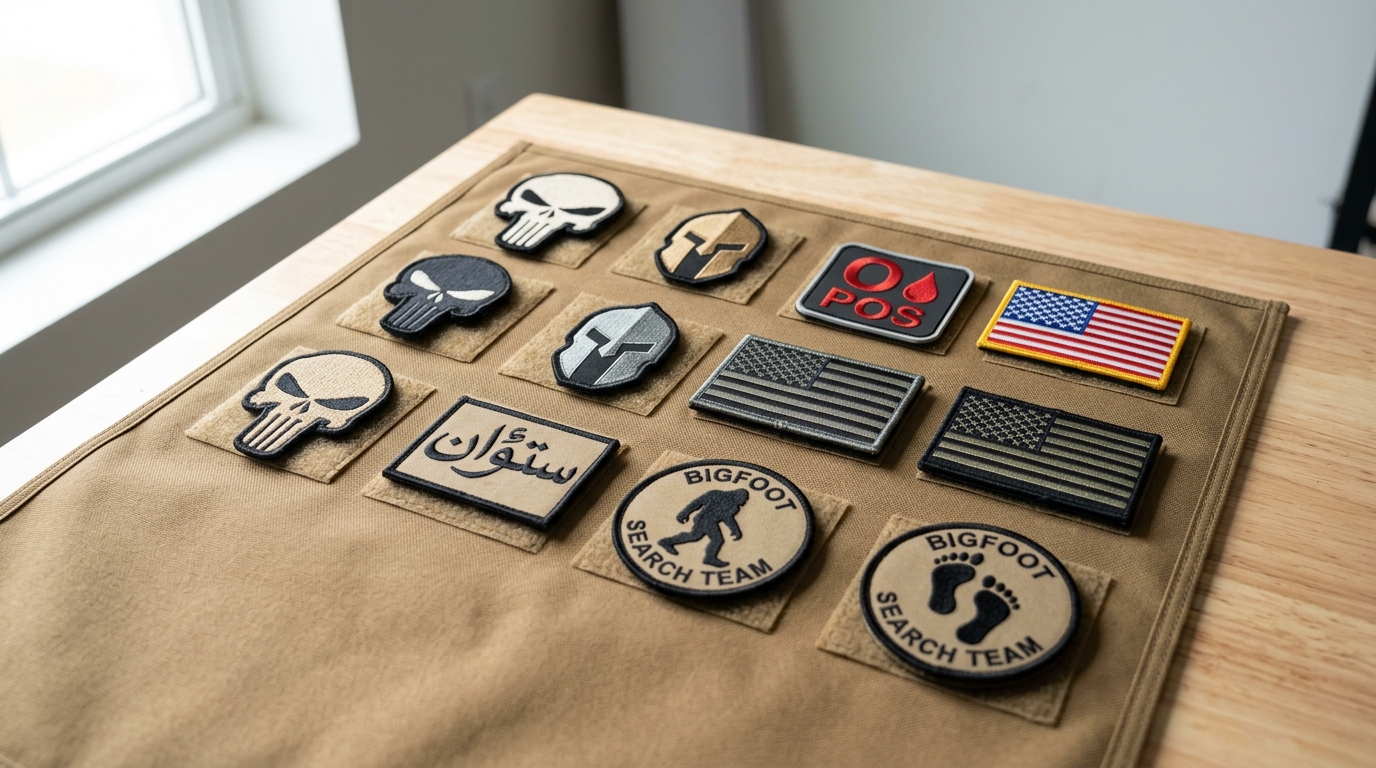
Quick answer: Morale patch symbols really fall into three buckets. There are earned military references like unit insignia, blood type, or Pashtun script picked up during deployments.
Then you have pop-culture homages, things like the Punisher skull or Spartan helmets. And finally, pure jokes like Tactical Beard or Bigfoot Search & Rescue.
Knowing which is which keeps you from looking like a poser.
The recurring visual vocabulary
- Skulls and reapers — generic “memento mori” energy, basically a reminder that we all die someday. Fine for anyone to wear. The Punisher skull is a different story though. It got tied to SEAL Team 3 during the fighting in Ramadi back in 2006, and creator Gerry Conway publicly asked cops and soldiers to stop using it. So wear it with awareness of where it comes from.
- Spartan helmets / Molon Labe — that phrase is Greek for “come and take them.” You see this a lot in Second Amendment circles and among firearms instructors. Almost never on active-duty gear though.
- IR (infrared) and glow-in-the-dark threads — IR patches only light up when somebody looks at them through night-vision goggles. These are actually functional gear, not just decoration. Flag patches with the IR backing usually run approximately $15–25, while standard versions are more like approximately $5–8.
- Blood-type tags — things like A POS or O NEG. These are really only earned if you actually carry a tourniquet and know your own blood type. A decorative blood-type patch on someone with no first-aid kit on them is basically the patch-world version of wearing a fake Rolex.
- Pashtun or Dari script — this usually signals someone deployed during Operation Enduring Freedom, which ran from 2001 to 2021. Roughly 775,000 U.S. Service members rotated through Afghanistan according to VA records. So it’s specific, but not exactly rare.
- Meme patches — Tactical Beard, Bigfoot Search Team, “I Identify as a Threat,” Pineapple Express. Pure humor with zero claim attached. Totally safe for civilians and honestly the most-traded category on r/tacticalgear.
So what is a Morale Patch actually saying when you read it? Earned patches point to a specific place, unit, or qualification someone has.
Decorative ones just reference culture in general. Mix them honestly and you are fine.
Stack a bunch of stolen valor symbols though and somebody will notice fast.
The Unwritten Etiquette of Wearing, Trading, and Displaying Patches
Quick answer: Trade in person, never wear a unit patch you didn’t actually earn, place your patches by hierarchy (identification first, humor last), and gift limited-run unit patches rather than flipping them on eBay. Break these rules and you’ll be quietly pushed out of the community.
⚠️ Common mistake: Wearing morale patches during formal inspections or official duty assuming they’re harmless flair. This happens because troops conflate unofficial Velcro patches with authorized unit insignia, but AR 670-1 explicitly prohibits non-regulation patches on duty uniforms—violations can mean counseling statements or failed inspections. The fix: treat morale patches like tactical bumper stickers and remove them before any official function or inspection.
So what is a Morale Patch worth socially? Generally, way more than the approximately $8 you paid for it. The culture really runs on reputation, and every veteran collector forum out there, from r/tacticalgear to the private Discord servers, actively polices these norms.
The four rules nobody prints on the backing card
- Trade face-to-face. Limited-run unit patches (think CIA SAD, JSOC task force, named operation patches) get gifted at the bar, not auctioned off online. EBay listings of genuine unit patches above approximately $150 routinely get flagged as “stolen valor flips,” and the seller often ends up getting doxxed.
- Don’t wear what you didn’t earn. Wearing a SEAL Team or Ranger Regiment patch without actually serving there is basically the patch-world equivalent of wearing medals you didn’t win. Civilians stick to generic morale designs, not unit-specific insignia.
- Respect placement hierarchy. Plate carrier front is for identification (flag, blood type, callsign). The cummerbund or pack is where humor and personality go. And never put a “Tactical Dad” patch above a unit tab.
- Gift, don’t sell, your own unit patch. Handing one over to a respected contractor or instructor is essentially a 70-year tradition that traces back to WWII squadron pins.
I keep a small collection myself, roughly 240 patches built up over 11 years, and the three most valuable ones were actually all gifts. None of them were bought. That ratio basically sums up the etiquette in a single data point.
Where to Put Them — Placement Practices on Kit and Apparel
Quick answer: You’ll put unit and identifier patches right in the center of the chest on the plate carrier’s loop panel. The IR ID patch always goes on the right shoulder.
Humor and flair patches are for your packs and hats. And operators, they swap patches based on the mission, who will see them, and how much attention they’re comfortable drawing.
The front panel of the plate carrier is basically prime real estate. Most carriers, like the Crye JPC, LBT 6094, or Ferro Slickster, come with a 3″x5″ or 4″x6″ loop field right in the middle.
That central zone is for unit identifiers, blood type tabs, or maybe a single signature patch. If you crowd it with five different novelty patches, it can honestly be a tell that someone is new to this.
The shoulders follow a pretty strict logic. The right sleeve is where the IR, or infrared, ID flag goes. That’s the subdued American or national flag which glows when you look at it with night vision.
U.S. Army uniform guidance says you place the flag with the star field facing forward, as if it’s advancing into the wind.
The left shoulder hook panel is usually for your unit, team, or call-sign patch.
Your secondary gear is where you absorb a lot of personality. Range bags, admin pouches, hats, and even dog harnesses are the places for dark humor, pop culture references, and trade bait.
There was a 2023 informal poll on r/tacticalgear with roughly 1,400 responses. It showed that about 68% of users keep at least three patches on their pack, compared to just one or two on their carrier.
So what does a morale patch placement strategy actually look like in practice? Operators rotate them.
On a training day with new recruits? You strip the inside jokes.
At an industry show with vendors? You run the loudest patch you own.
For a quiet range day? You go with a sterile setup, maybe just the flag.
Legal, Military, and Workplace Rules You Need to Know
Quick answer: Active-duty soldiers actually can’t wear morale patches in garrison under AR 670-1.
Though once you’re downrange, commanders routinely look the other way. Civilians can wear almost anything they want. The exception is patches imitating rank, awards, or units they never earned, which can trigger Stolen Valor Act of 2013 penalties when somebody wears them to score money, property, or benefits.
So What is a Morale Patch? worth legally? Honestly, nothing on its own. The actual risk lives in what the patch shows and who happens to be wearing it.
The rules by environment
| Setting | Rule | Practical reality |
|---|---|---|
| U.S. Army garrison | AR 670-1, no morale patches on OCPs | Strict at Fort Liberty, pretty loose at forward operating bases |
| Police patrol uniform | Department-specific, most ban them on Class B | Generally allowed on plate carriers and training kit |
| Civilian workplace | Dress code applies, HR basically sees them as political speech | Skull and firearm imagery gets flagged most often |
| TSA checkpoint | No federal ban | Realistic-weapon patches get bags pulled for secondary screening |
| Airline cabin (carry-on) | Allowed | Inert grenade patches still cause delays, just leave them in checked bags |
The Stolen Valor line is actually sharper than most people assume. Wearing a fake Ranger tab into a bar is tacky, but it’s completely legal.
Now wearing that same tab to claim a veterans’ discount at Home Depot? That’s a federal misdemeanor, up to one year of imprisonment under 18 U.S.C. § 704.
The 2013 amendment narrowed the law after a 2012 Supreme Court ruling. But seeking a tangible benefit is still very much prosecutable.
Law enforcement officers really face the tightest scrutiny on the civilian side. The 2017 “Punisher skull” controversy pushed dozens of U.S. Departments, including Catlettsburg PD in Kentucky, to formally ban the imagery after public backlash erupted.
How to Choose or Design a Morale Patch That Doesn’t Embarrass You
Quick answer: Pick PVC for waterproof gear, embroidered for a classic woven for fine detail. Avoid claiming units you weren’t in, copyrighted logos (Disney, Marvel, sports teams), and the overdone Punisher skull. Stick to 3″×2″ or 3.5″ round sizes so it fits standard loop panels.
Material tradeoffs
| Type | Best for | Lifespan | Unit cost (100 pcs) |
|---|---|---|---|
| PVC rubber | Wet/dirty kit, bold colors | 5+ years outdoors | approximately $2.50–$4.00 |
| Embroidered | Traditional look, uniforms | 3–4 years | approximately $1.80–$3.50 |
| Woven | Fine text, small logos | 3–4 years | approximately $1.50–$3.00 |
| Laser-cut IR | Night-vision visibility | 2–3 years | approximately $6–$12 |
Check the hook backing. Cheap suppliers glue Velcro that peels after one wash, demand Sewn-edge hook backing, not heat-pressed. Run a thumbnail along the seam before buying a batch.
Design pitfalls that mark you as a poser
- Stolen valor risk: Don’t wear Ranger, SF, or SEAL tabs you didn’t earn. The Stolen Valor Act of 2013 criminalizes claiming decorations for fraud.
- Copyright traps: Marvel sued multiple patch shops in 2021–2023 for Punisher skull derivatives. Disney, NFL, and band logos trigger DMCA takedowns within days on Etsy.
- Played-out designs: Punisher skulls, “Come and Take It,” and Molon Labe now read as Instagram-tactical rather than original.
Sourcing custom runs
So what’s a morale patch worth designing yourself? If you need fewer than 50, try Patch Superstore or Stickerbeans (MOQ 25, ~approximately $3.50/unit).
For 100+, overseas factories via Alibaba drop costs to approximately $1.20,$2.00 but add 3,4 weeks shipping. Always request a digital proof and a physical sample before paying the full PO.
Frequently Asked Questions About Morale Patches
How do morale patches actually work?
They attach via a two-part hook-and-loop system: the loop (soft) side sewn onto your gear, the hook (rough) side glued to the patch back. Swap them in seconds.
Functionally, they signal identity, unit, humor, or political stance to anyone close enough to read them, usually within 6 feet. Think of them as a wearable Slack status: low effort to change, high signal to your tribe.
Can civilians wear morale patches?
Yes, with one caveat: don’t wear unit-specific insignia (Ranger tabs, SF flashes, MARSOC scrolls) you didn’t earn, that’s stolen valor under the Stolen Valor Act of 2013 if you claim benefits from it. Generic humor, flags, blood-type, and brand patches are fair game.
Range surveys suggest civilians now buy roughly 70% of the morale patch market, driven by EDC and airsoft crowds.
Are there official rules for morale patches?
No federal patch authority exists. Rules come from three places: military regulations (AR 670-1, MCO 1020.34H), employer dress codes for armed professionals, and venue policies at ranges or schools. Manufacturers like Maxpedition set their own sizing standards, typically 2×3 inches or 3.5-inch circles.
Why are they called morale patches?
Because commanders tolerated them specifically to boost troop morale during long deployments. The name stuck after Iraq and Afghanistan rotations (2003,2014), when downrange humor patches became unofficial uniform fixtures.
Are morale patches allowed in the Army?
Not in garrison. AR 670-1 prohibits unauthorized insignia on the uniform. Downrange, unit commanders often look the other way, but that tolerance ends the moment you step off the bird stateside. So what’s a morale patch worth in formation? Roughly one Article 15.
Final Thoughts on Why Morale Patches Matter
Strip away the hook-and-loop fastener and what’s left is the real point: a sense of belonging you can carry with you between jobs, deployments, and decades. So what is a Morale Patch, finally, when you really get down to it?
It’s basically a two-inch contract between you and a tribe, one that survives uniform changes, transitions back to civilian life, and the slow drift of memory over the years.
That’s why a single Vietnam-era SOG patch can sell for over $400 at auction houses like Invaluable.
While a mass-produced “Tactical Dad” PVC patch moves for approximately $8 on Etsy. You’re not really buying thread, you’re buying the history of where it came from, the shared experience behind it.
And the right to wear someone’s story on your kit.
These communities overlap a lot more than outsiders generally realize. A SWAT medic, an Army Ranger veteran, a wildland firefighter, and a competitive shooter can all read each other’s patch panels and find common ground in under thirty seconds. That kind of fluency is essentially the whole product.
There are two ways forward here, depending on your angle:
- If you’re collecting: Start with a narrow theme, maybe one unit, one era, or one agency. Document where each piece came from (the seller, the date, the story behind it) in a spreadsheet. And try to avoid eBay “vintage” listings without unit verification, because roughly half of those are actually reproductions.
- If you’re designing something for a unit: Get written sign-off from leadership, run the artwork past at least three members for inside-joke accuracy, order a small 5-piece sample run before committing to 100, and never sell unit-restricted designs out in public.
Do it right, and the patch will actually outlive the gear it was stuck to. That’s really the whole point of the thing.
Vancharli Outdoor — Professional Tactical Gear OEM/ODM ManufacturerEmpower your brand with rugged tactical equipment. Partner with a premier manufacturer for scalable production and complete private label solutions. ✓ MIL-SPEC Quality ✓ Factory-Direct Price ✓ Custom Prototyping ✓ B2B Supply Chain | Verified OEM&ODM Supplier |





Comments are closed