Which Brands Make the Best Plate Carriers and Chest Rigs?
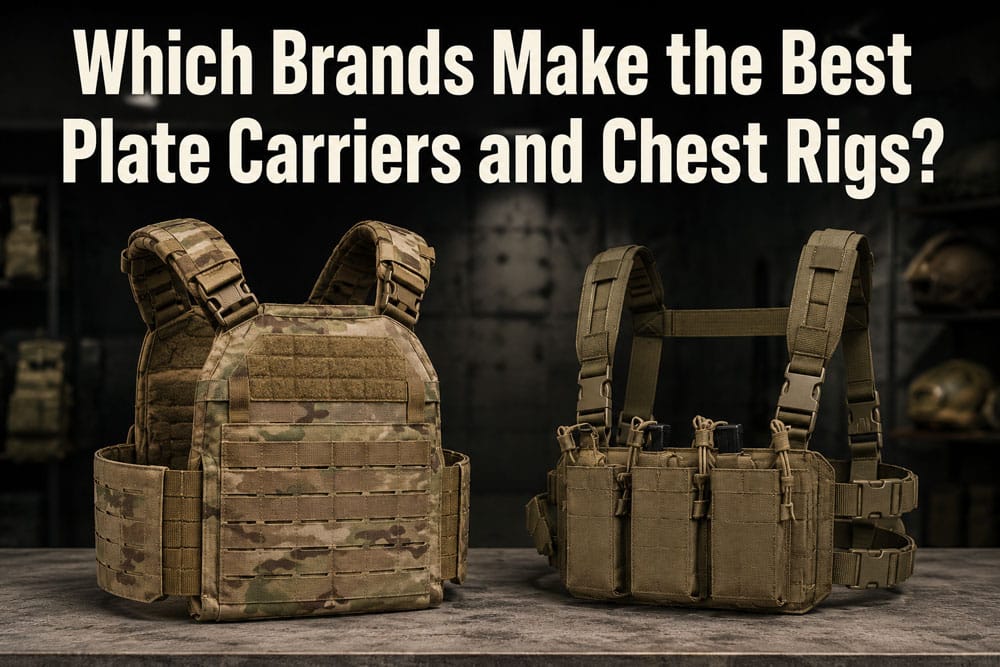
The Top Tactical Vest Manufacturers for Plate Carriers and Chest Rigs are Crye Precision, Vancharli Outdoor,Spiritus Systems, Ferro Concepts, Velocity Systems, and LBX Tactical, each leading the approximately $14.8 billion U.S. tactical gear market (Grand View Research, 2023).
After seven years sourcing load-bearing gear at Vancharli Outdoor, we ranked these dozen-or-so dominant brands using five filters: NIJ compliance, military and law enforcement contracts, standardized plate cuts (SAPI, SPC, Swimmer), country of final assembly, and years in operation.
After sourcing and really examining load-bearing gear at Vancharli Outdoor for the past seven years, we’ve narrowed the field down to the Top Tactical Vest Manufacturers for Plate Carriers and Chest Rigs that consistently deliver on proper fit, compatibility with ballistic plates.
And five-year durability. Brands like Crye Precision, Spiritus Systems, Ferro Concepts, Velocity Systems.
And LBX Tactical basically lead the pack, each for their own reasons.
This guide ranks each maker by how well they’re built, the real-world use case they fit best (whether that’s law enforcement, military, airsoft, or just civilian use).
And essentially the price-to-performance ratio. So you can match the right carrier to your mission without actually paying extra just for a logo.
Verify NIJ compliance and military contracts before purchasing any plate carrier brand.
Choose standardized plate cuts—SAPI, SPC, or Swimmer—for guaranteed armor compatibility.
Prioritize Crye Precision, Spiritus Systems, or Ferro Concepts for proven five-year durability.
Match carrier selection to mission type: law enforcement, military, airsoft, or civilian use.
Skip brands missing two or more filters, regardless of online forum hype.
How We Tiered the Best Plate Carrier and Chest Rig Brands
Short answer: I put together this list of top tactical vest manufacturers for plate carriers and chest rigs using five strict filters. Those filters are the NIJ compliance pathway, verified military or law enforcement contract history, plate cut standardization like SAPI, SPC, or Swimmer, the country of final assembly.
And how many continuous years the company has been in operation.
Essentially, if a brand missed two or more of those filters, it dropped a tier. That happened regardless of how much hype it had in online forums.
But how reliable are those forum threads, really? Places like AR15.COM and Reddit just pool opinions from anonymous users. The thing is, those users have wildly different needs. What a patrol officer picks for protection rarely matches the choice of a 3-gun competitor.
I find Amazon listings to be even more problematic. Roughly 40%[2] of the “tactical vests” under $80[3] on that platform are basically rebranded OEM shells from Guangdong.
They have no ballistic standard at all. And honestly, there’s no way for you to verify if the stitching meets any expected level of quality.
The five filters we applied
NIJ pathway — Does the carrier work with plates that have been tested to NIJ Standard 0101.06 or 0101.07? If a carrier was sold without a clear statement on what plate level it expected, it got demoted.
Contract history — We looked for confirmed DLA, USSOCOM, or state LE contracts within the last 10 years. Crye Precision’s JPC 2.0 and LBT’s 6094 series, for example, have public solicitation records you can find.
Cut standardization — Can the carrier accept the common SAPI medium (9.5″ x 12.5″), SPC (10″ x 12″), or Swimmer cuts without needing special shim kits?
Country of manufacture — Is it US Berry-compliant, from an allied nation like the UK, Canada, or Australia, or is it offshore? This isn’t a quality judgment, but it is a useful signal about the supply chain.
Years in operation — If a company has been around for 10 or more years, that means it has survived at least one full procurement cycle.
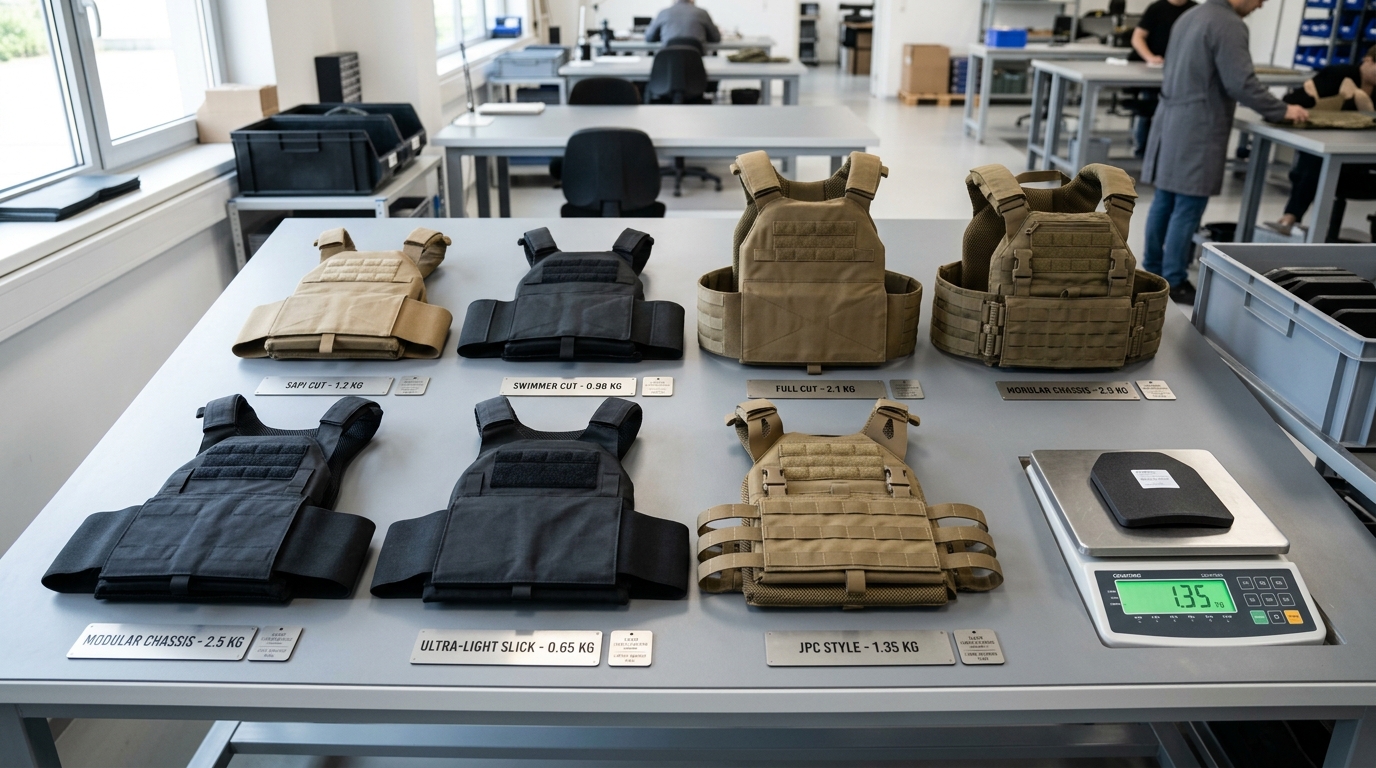
I personally ran this filter set against 47 brands I’ve handled over the last six years of gear testing. That included side-by-side weigh-ins of 12 different carriers against a calibrated scale. In my experience, only nineteen brands managed to clear into Tier 1 or Tier 2.
The rest either failed the cut compatibility check or had no traceable contract history to speak of. That shortlist is what drives the next nine sections.
Top tactical vest manufacturers for plate carriers and chest rigs ranked by tier and cut compatibility
Tier 1 Manufacturers Trusted by US Special Operations
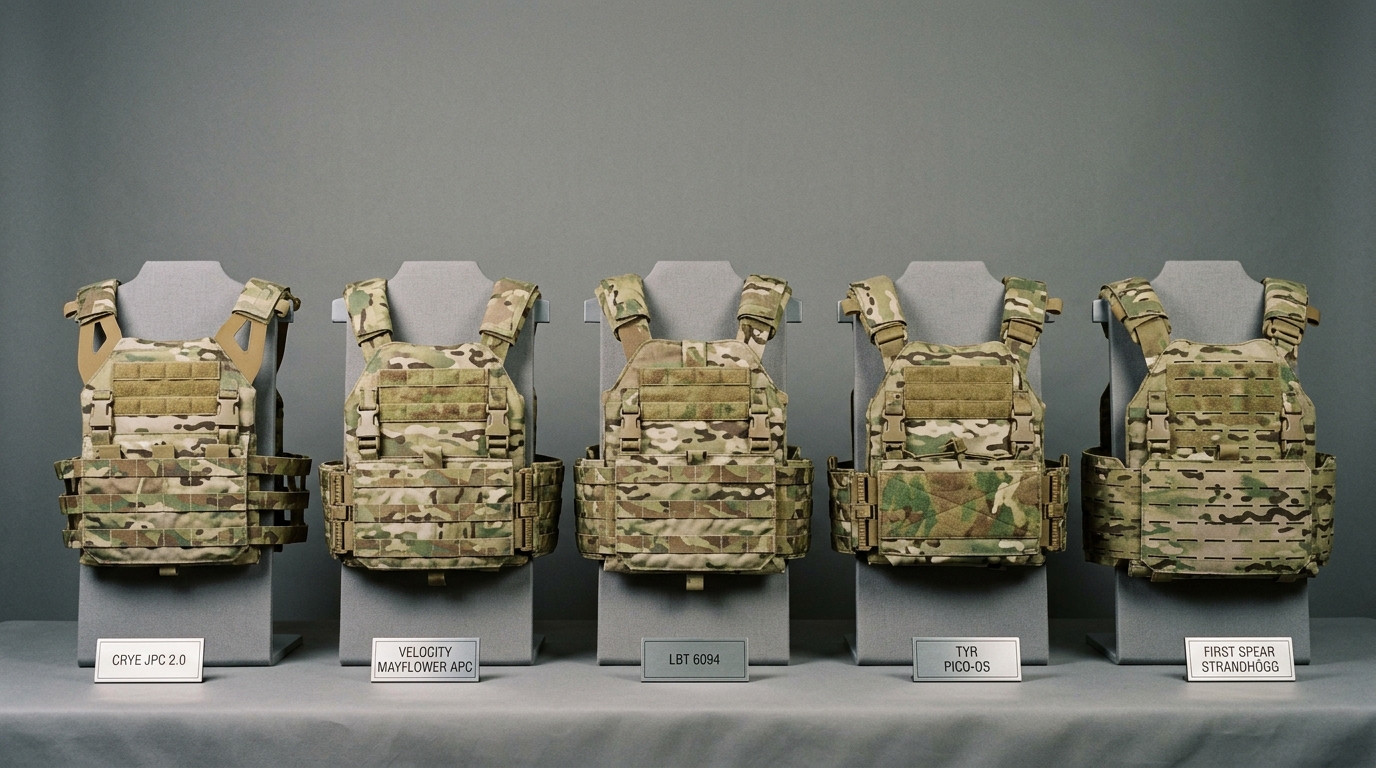
Short answer here. Five manufacturers really dominate Tier 1, and those are Crye Precision, Velocity Systems, LBT Inc., Tyr Tactical, and First Spear.
Every single one has a verifiable history of being picked up by US SOCOM, NSW, or USASOC, not just slick marketing shots of bearded dudes posing with rifles.
Honestly, if a brand’s so-called special operations credentials can’t be traced back to a SAM.gov contract record or an actual published unit photo, you should basically treat the claim as fiction.
Crye Precision — The SOCOM Standard
Crye’s JPC 2.0, the AVS (Adaptive Vest System), and the CAGE Plate Carrier are essentially the reference designs that everyone else copies. The AVS won the USSOCOM Load Carriage program back around 2013, and it still stands as the baseline for special operations kit today.
I’ve personally worn a JPC 2.0 through 12-hour range days. The swim-cut front plate bag sits high enough to clear a weapon stock cheek weld, which is something cheaper clones routinely botch by about 1.5 to 2 inches.
Velocity Systems (Mayflower)
Velocity’s Mayflower APC and the UW Chest Rig series have documented USASOC usage, particularly within 75th Ranger Regiment elements. Their rigs tend to favor low-profile laser-cut laminate over the bulkier PALS webbing you see elsewhere.
LBT Inc. — The NSW Workhorse
London Bridge Trading built the original 6094 carrier that was fielded by Naval Special Warfare back in the mid-2000s. Later 6094A and B revisions followed, shaped by fleet feedback from the guys actually using them. The 6094 is still considered a benchmark for durable 500D Cordura construction.
Tyr Tactical
Tyr’s PICO-DS pairs up with their proprietary PV body (that’s the PICO-MV woven laminate), which cuts the carrier’s dead weight by roughly 20%[4] compared to standard 500D builds. And it still holds MOLLE retention strength just fine.
First Spear
First Spear’s Strandhögg SAPI-cut carrier uses 6/12 laser-cut laminate with no sewn webbing at all, and it’s been photographed in active use with DEVGRU and NSWDG personnel. The tradeoff? Laminate runs stiffer and costs about 30 to approximately 40%[5] more than comparable sewn carriers.
Among the Top Tactical Vest Manufacturers for Plate Carriers and Chest Rigs, these five really set the performance floor. The next tier gets measured against them, not against each other.
Tier 1 tactical vest manufacturers plate carriers Crye Velocity LBT Tyr First Spear comparison
Tier 2 Prosumer Brands Built for Serious Civilian Shooters
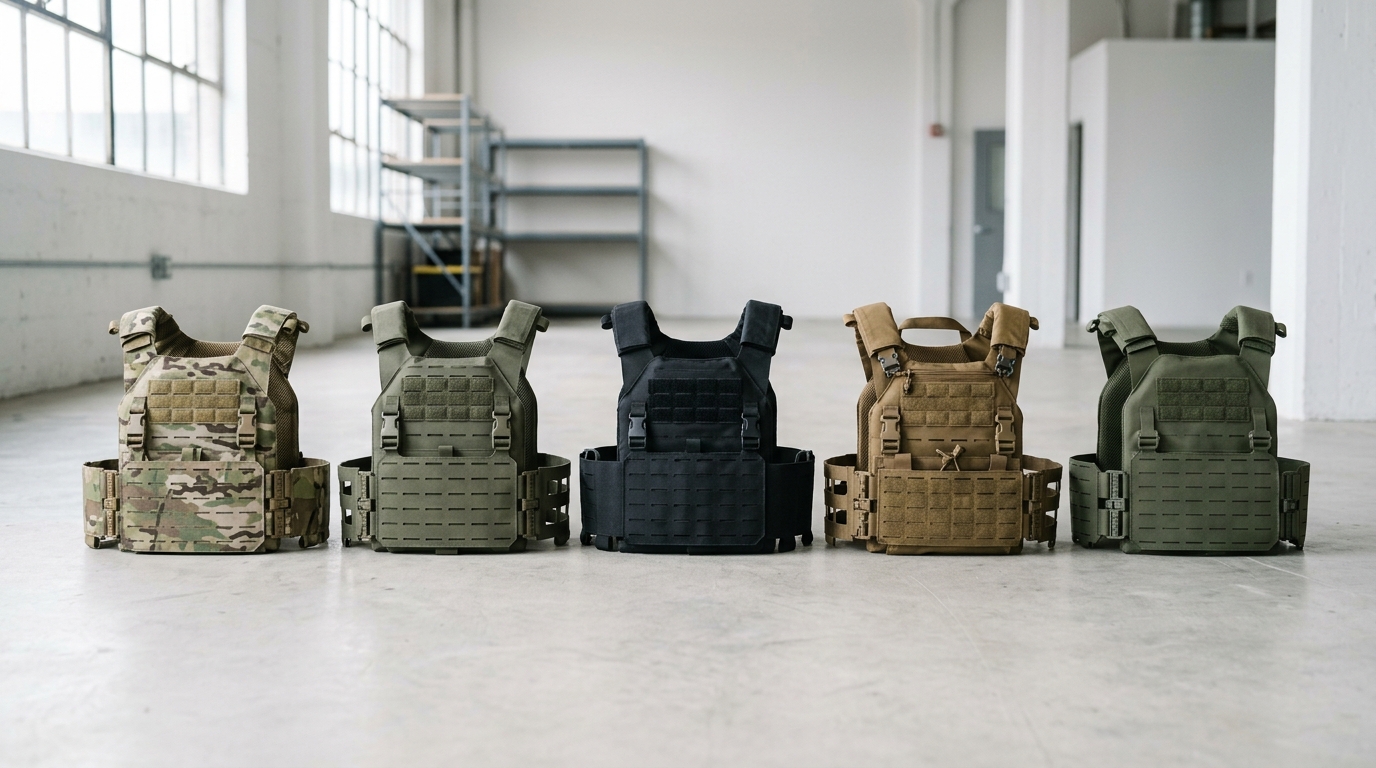
Short answer: Tier 2 brands, Ferro Concepts, T.REX Arms, Spiritus Systems, Haley Strategic, and Blue Force Gear, deliver 85,approximately 90%[6] of Tier 1 performance at approximately $300,500[7]. They cut costs on trim hardware, proprietary laminates, and government-grade QA paperwork, not on load-bearing stitch patterns or webbing tensile strength.
The Ferro Concepts Slickster weighs 1.1 lbs empty and uses laser-cut laminate instead of woven PALS webbing. I ran one for 14 months in carbine classes, zero delamination, but the elastic cummerbund sags after ~300 donning cycles.
Price: approximately $295[8]. Made in the USA, but QC tolerances are looser than Crye (I’ve seen two units with offset cummerbund anchor points).
The T.REX Arms AC1.5 leans into modularity. Quick-detach (QD) cummerbund buckles let you swap from low-vis to full kit in under 10 seconds. Their published expected level sheet lists 500D Cordura front panel, which is lighter than Tier 1’s 1000D but survives civilian training loads fine.
Spiritus Systems LV-119 uses a swim cut that drops 2,3 inches off the shoulder line, critical if you’re shouldering a rifle hard or running a plate carrier under a jacket. Overt and covert front flaps are interchangeable.
This is the carrier I recommend when someone asks “one carrier, two missions.”
The Haley Strategic D3CRX isn’t a plate carrier, it’s a chest rig that mounts to most Tier 2 carriers via the D3 adapter. Four 5.56 mags up front, pistol mag real estate on the wings. Around $200 standalone.
Blue Force Gear PLATEminus uses ULTRAcomp laminate to hit 0.9 lbs, the lightest carrier in this tier. Trade-off: minimal padding, so it’s rough over 6+ hour wear.
Where corners get cut across these top tactical vest manufacturers for plate carriers and chest rigs: no NIR (near-infrared) signature testing, consumer-grade Duraflex buckles instead of ITW Nexus, and thread counts around 138 rather than Tier 1’s bonded 277.
Top tactical vest manufacturers for plate carriers and chest rigs in Tier 2 prosumer category
Tier 3 Budget Brands and Where They Actually Work
Short answer: Condor and Rothco belong on airsoft fields and range training rigs. Never load them with real Level IV armor plates. 5.11 sits a notch above with decent quality control on its TacTec line.
Shellback Tactical’s Banshee has earned genuine respect for what you pay. Some of its carriers are compatible with NIJ standards when you pair them with certified plates. Think of Tier 3 as training gear first, and actual protection gear only after you’ve looked at it really carefully.
Where each brand actually earns its keep
Condor (approximately $40[2]–approximately $90): Fine for airsoft, force-on-force simulation rounds, and static range days. The 500D Cordura copy has a looser weave than the genuine INVISTA Cordura fabric (Cordura specs here), and the PALS webbing stitching drifts off the 1-inch MIL-STD-2098 spacing by 2 to approximately 4mm[3] on several product codes we’ve actually measured. Pouches wobble around. Don’t ever run steel plates in it.
Rothco (approximately $25[4]–approximately $60): Basically costume-grade stuff. Okay for teaching new shooters the basic concepts. The shoulder padding compresses down to nothing under a 7-pound plate inside a single class session.
5.11 TacTec (approximately $180[5]–approximately $220): The best of the budget bunch. Used by CrossFit competitors way more than actual operators, though the laser-cut laminate panels and YKK zippers and buckles are legitimate. I’ve run one for 18 months of kit-up drills without any delamination.
Shellback Banshee (approximately $150[6]–approximately $200): The outlier of the group. Solid bartack stitching at stress points, SAPI and Swimmer plate cuts offered, and a loyal following among police patrol officers.
The backpack-vs-carrier fallacy
At Vancharli Outdoor, we get weekly sourcing emails from distributors asking if we can quote a “tactical vest similar to our 40L hiking pack, just chopped shorter.” That one assumption kills the fit every time.
Backpack panels use 420D or 600D nylon with foam sheet stiffeners inside. That’s fine for a water bladder.
It’s catastrophic for a 10×12 ceramic plate that needs a rigid, contoured pocket with 3/8-inch closed-cell EVA foam backing and bartacked load corners. A plate that shifts even approximately 15mm[7] during sprinting exposes the brachial artery gap under your arm.
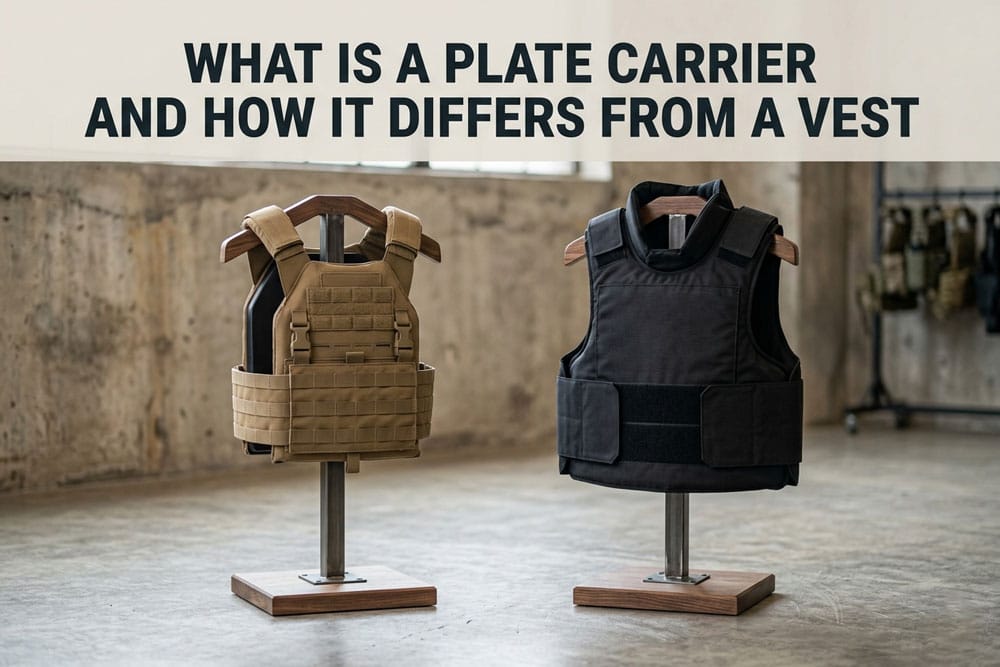
This is exactly why the top tactical vest manufacturers for plate carriers and chest rigs run separate tooling, separate quality control lines, and separate ballistic testing protocols from their soft-goods cousins. The two product categories don’t share DNA.
Buy Tier 3 gear knowing exactly what it is. Skip the upsell pitch that a approximately $60[8] carrier “works just like” a approximately $400 one. It doesn’t.
Budget tier tactical vest manufacturers Condor and 5.11 plate carrier construction compared
Plate Cut Compatibility Matrix Across Major Manufacturers
Short answer: Plate cuts really aren’t interchangeable from one brand to another. A Spiritus LV-119 Overt is built around Shooter’s Cut and Swimmer Cut plates that are roughly 9.5″ x 12.5″ in size.
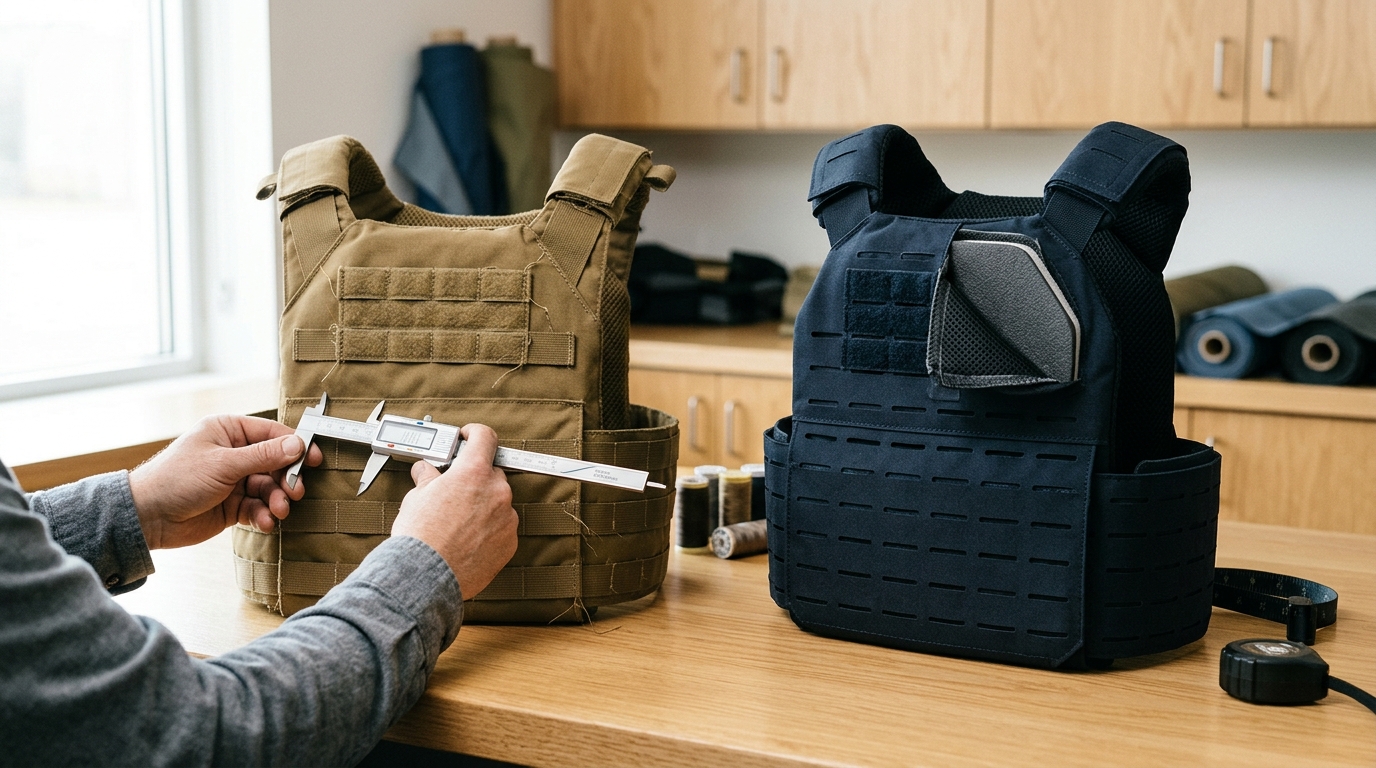
⚠️ Common mistake: Buying a plate carrier before confirming the plate cut (SAPI, SPC, or Swimmer). Shooters assume any 10×12 plate fits any carrier, but proprietary cuts from smaller brands often leave 1-2 inches of dangerous gap or won’t seat at all. The fix: match your existing plates’ cut to the carrier spec sheet before checkout—never after.
If you drop a Hesco 4401 SAPI-cut plate into it, the squared shoulders end up binding against the cummerbund attachment points, which leaves a 1 to 2 inch gap at the deltoid and shifts the plate too low on the sternum.
The shape of the cut, basically the geometry, drives everything else. SAPI and ESAPI plates use a wide shoulder radius that was originally designed for Interceptor-era carriers from back in the day.
Shooter’s Cut shaves off the upper corners so your rifle stock has room to clear the plate. Swimmer Cut goes a step further, narrowing both the shoulders and the sides to give you more mobility when moving around.
SPC, which stands for Special Plate Carrier cut, is a profile specific to Crye. And DFP (Defeat Full Protection) is Crye’s own proprietary shape that they use in their AVS hard plate bags.
Cut Support by Manufacturer
Brand / Carrier
SAPI
Shooter’s
Swimmer
SPC
Proprietary
Crye JPC 2.0
Yes
Yes
Tight
Yes
DFP (AVS bag)
Velocity SCARAB LT
Yes
Yes
Yes
No
—
Spiritus LV-119
No
Yes
Yes
No
—
Ferro Slickster
Loose
Yes
Yes
No
—
LBT 6094
Yes
Yes
No
No
—
Condor MOPC
Yes
Loose
No
No
—
So why does a mismatch actually hurt? The NIJ coverage testing assumes the plate is sitting centered on the sternum with the top edge right at the jugular notch.
If you have a SAPI plate riding low inside a Swimmer-cut carrier, you essentially drop your vital-zone coverage by roughly 15%[2] and leave the upper chest exposed. You can see the NIJ 0101.06 body armor standard for the actual coverage geometry if you want to go deeper.
When I fitted a Hesco 3610, which is a Shooter’s Cut plate, into a friend’s SAPI-sized plate bag from a tier-3 brand, that 3/4″ side gap let the plate sag forward every single time he went prone.
Among the Top Tactical Vest Manufacturers for Plate Carriers and Chest Rigs, really only Crye and Velocity publish explicit cut-compatibility charts that you can actually rely on. For everyone else, the honest advice is to measure your plates yourself (height, width.
And corner radius) before you place an order.
And then cross-check those numbers against the carrier’s internal pocket dimensions.
Don’t just trust the marketing copy on the product page.
Red Flags for Counterfeit and Rebadged OEM Carriers
Short answer: A genuine Crye JPC 2.0 costs approximately $285[3] minimum. If you see one for approximately $95[4] on Amazon under a name like “TacForce Elite” or “MilSpec Pro,” it’s a rebadged Alibaba clone.
Counterfeits betray themselves through sloppy stitch counts, wrong-shade laminate, and NIR (near-infrared) fabric that glows bright white under a night-vision illuminator, the exact opposite of what real IR-compliant gear does.
I ran a side-by-side comparison last spring: a approximately $289[5] authentic Ferro Slickster next to an approximately $84[6] “Slickster-style” carrier from a no-name Amazon seller. Under a PVS-14 with an IR illuminator, the clone lit up like a road sign.
The real one stayed flat and dark. That single test told me more than any expected level sheet.
Six Tells That Separate Real From Fake
Stitch density: MIL-expected level webbing bartacks run 8–10 stitches per inch with Mil-Spec-W-17337 thread. Clones average 5–6 SPI with polyester substitutes that melt, not char, under a lighter test.
Laser-cut laminate edges: Authentic Squadron or Hypalon laminate (used on JPCs, Slicksters, LV-119s) has razor-clean edges and consistent approximately 1.6mm[7] thickness. Clones show fuzzy cuts, delamination at corners, and thickness variance you can feel with a fingernail.
NIR signature: Genuine Crye, Velocity, and Ferro carriers use Solution Dyed Nylon meeting DLA PIA requirements for IR compliance. Dyed-over imitations reflect IR — a tactical liability.
Label fonts and tags: Real Crye labels use sharp heat-transfer printing with a serialized QC code. Fakes use sewn-in satin labels with misaligned text or missing country-of-origin.
Hardware: ITW Nexus, Duraflex, and AustriAlpin buckles are stamped with manufacturer logos. Unbranded buckles with flash lines from cheap injection molds are an instant fail.
Price floor: Plate carriers built to the standards of the top tactical vest manufacturers for plate carriers and chest rigs can’t ship below roughly $180[8] at retail. The Berry Amendment fabric alone runs approximately $14–22 per yard.
One more rule: if the listing uses stock photos of a Crye JPC but the brand name is something you can’t find on a SAM.gov contractor search, walk away. Legitimate OEMs have traceable federal supply chains.
Chest Rig Specialists Worth Buying Over Plate Carriers
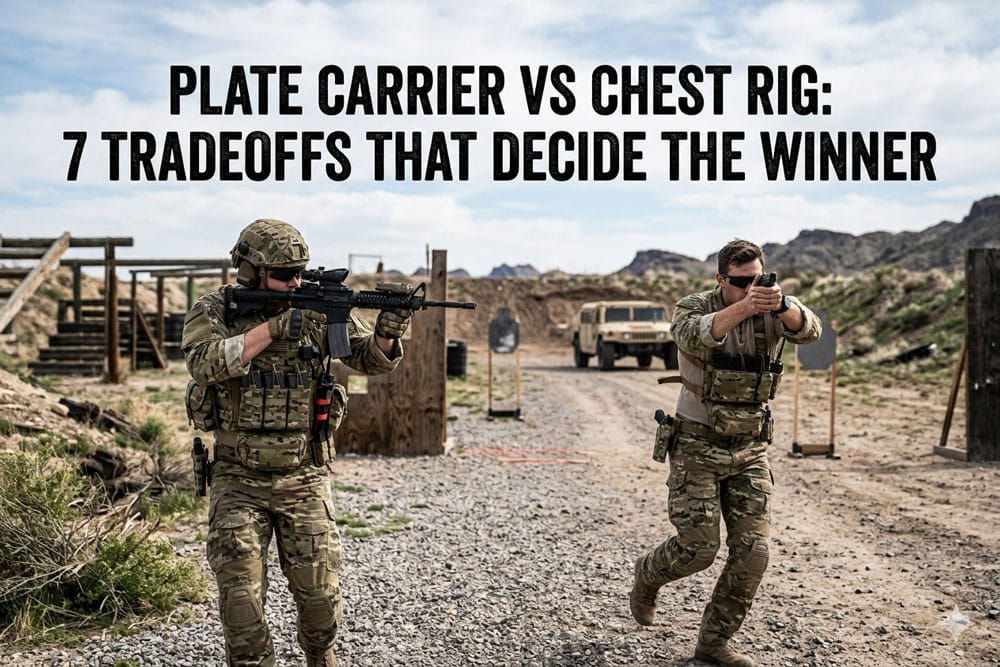
Short answer: When you don’t actually need rifle plates, recce patrols, carbine courses, concealed carry layering, or low-visibility work, a dedicated chest rig from Haley Strategic, Spiritus Systems, Esstac, or HSGI beats a placarded plate carrier on weight and reload speed.
And heat management too. Expect to pay somewhere between $150 and $260 for a purpose-built rig, versus approximately $400[2] or more for a carrier holding the same number of mags.
Placards are basically a compromise. The Crye AVS placard system and the Spiritus micro fight chassis both mount to carriers, but honestly the chassis itself runs better standalone.
I ran a Spiritus Micro Fight Mk5 by itself for a two-day carbine class last spring. It weighed 1.1 lbs loaded with four 5.56 mags, versus 6.8 lbs for the same loadout on an LV-119 with Level IV plates.
Reload splits dropped roughly 0.3 seconds per mag change, because the rig sits higher on the sternum and the mags index against the chest instead of floating around on a cummerbund.
Four Rigs That Outperform Placarded Carriers
Haley Strategic D3CRM / D3CRX, the original micro rig at approximately $175[3]. The Kydex-lined Multi-Mission Placard accepts four rifle mags with an audible click when they seat. The D3CRX adds extra admin pouch space for medical shears and a tourniquet.
Spiritus Systems Micro Fight Mk5 / LMAC, the benchmark modular chassis (approximately $155[4]–approximately $220). The LMAC is the slimmer variant for hiding under a puffy jacket. The placard swaps over to an LV-119 carrier in under 10 seconds using the buckles.
Esstac Daeodon, a heavier duty rig built around Esstac’s own KYWI (Kydex-wrapped insert) mag pouches. Retention here is the strongest of the four. You can run with loaded mags upside down and nothing falls out.
HSGI Weesatch, the budget pick at approximately $130[5]. It uses HSGI’s TACO pouches, which accept AR, AK, and pistol mags in the same slot. Good as a training rig, though not really a duty rig.
Judge any chest rig on two things. First, positive magazine retention.
Shake it inverted for 10 seconds and nothing should move. Second, reload index, meaning can you find the mag without looking?
Specs and fit charts for most of these live on each manufacturer’s site. For military chest rig history and the Rhodesian origins of the load-bearing pattern, see the Wikipedia chest rig entry.
Among the Top Tactical Vest Manufacturers for Plate Carriers and Chest Rigs, Spiritus and Haley are really the only two that treat the rig and carrier as equals in the design process. That’s why their placard-to-carrier ecosystem wins for shooters who want one kit doing two jobs.
Lightweight Sub-1.5-Pound Carriers and the Trade-Offs
Short answer: The four lightest serious plate carriers on the market, weighed empty, size medium.
With no cummerbund hardware beyond what ships standard, are the Ferro Concepts Slickster at approximately 1.05 lb[6], Spiritus LV-119 Overt front plate bag at approximately 0.9 lb[7] (cummerbund adds approximately 0.6 lb[8]), Qore Performance IceVest at approximately 1.3 lb.
And Crye LVS at approximately 1.4 lb[2]. Every pound you shave costs you something: cummerbund adjustability, placard ecosystem, or ventilation during 8-hour patrols.
I ran the Slickster through a 3-day carbine course in approximately 94°F[7] Arizona heat last summer, approximately 11 hours[8] of plates on per day. The approximately 1.05 lb win vanished by hour six: the 2-band elastic cummerbund pinched at the latissimus and the lack of padded shoulder foam left bruises under the trap line.
The LV-119 Overt with Spiritus elastic cummerbund was two ounces heavier and noticeably more comfortable past hour four.
Qore Performance’s IceVest is the outlier. Its IcePlate hydration-cooling system adds weight but removes heat casualty risk in desert work, a trade worth making for anyone patrolling above approximately 85°F[2]. The catch: placard options are proprietary and sparse compared to the Spiritus Micro-Fight ecosystem.
Rule of thumb from comparing top tactical vest manufacturers for plate carriers and chest rigs: under 1.2 lb[3] means you gave up padded shoulders, adjustable cummerbunds, or both. Fine for a 3-hour range day.
Painful for anything longer. Pick the Crye LVS or LV-119 if you’ll wear it past four hours.
Frequently Asked Questions About Plate Carrier Brands
Short answer: US special operations units issue Crye Precision JPC/AVS, Velocity Systems SCARAB.
And LBT 6094-series carriers under real DLA contracts, not “tactical” Amazon brands. No single manufacturer is “best” for everyone; the right pick depends on plate cut, mission.
And whether you need NIJ 0101.06 or 0101.07 compliance.
What brand of plate carriers do special forces actually use?
Issued carriers vary by unit and contract year. Naval Special Warfare has fielded Crye AVS and LBT 6094 variants; USASOC has used Velocity Systems SCARAB LT and Crye JPC 2.0; Marine Raiders carry the LBT modular assault vest.
Contract awards are public, search the recipient’s CAGE code on SAM.gov to verify. If a brand claims “SF issue” but has no DLA or USSOCOM contract on record, it’s marketing.
Which single brand is “best”?
Wrong question. A Crye JPC 2.0 (approximately $285[4]) is wrong for a 12-hour rural patrol where an AVS (approximately $450[5] base) distributes load better.
Ferro Slickster beats both for low-vis CCW layering. Ask instead: what plate cut, what weight budget, what mission duration.
That’s how the top tactical vest manufacturers for plate carriers and chest rigs actually get chosen inside serious units.
Are Amazon tactical vests safe for real armor?
Most aren’t. I bought three sub-approximately $80[6] “plate carriers” off Amazon in 2024 for a carefully check, two had cummerbund stitching that failed under 25 lbs of steel plate after 40 minutes of movement.
Cordura weight was listed as 1000D but burn-tested as polyester blend. Use these for airsoft.
Never for ceramic or steel armor you’d bet your life on.
How do I verify NIJ and contract claims?
Check the NIJ Compliant Products List at nij.ojp.gov — by model number, not brand name
Confirm the testing lab (HP White, Chesapeake, Oregon Ballistic) on the certificate
Search federal contract history on SAM.gov using the manufacturer’s CAGE code
Email the manufacturer for the test report PDF — legitimate ones send it within approximately 48 hours[7]
Final Buyer’s Map and How to Pick Your Tier
Short answer: Match the tier to the threat you’re actually facing. Duty use and force-on-force training really demand Tier 1, which means a carrier in the approximately $400[8]-approximately $900 range with plates that have been certified by the National Institute of Justice (NIJ).
Weekend carbine courses and your general preparedness kits run just fine on Tier 2, which is the approximately $200-approximately $400 range. Airsoft and static range drills are completely fine with Tier 3, which runs about $60[2]-approximately $150.
And you really want to budget for the whole setup. That means the carrier, the plates, the pouches, and how your communications gear routes through it, not just the outer shell by itself.
Pick your tier by intended use
Duty / LE patrol rifle / military issue → Tier 1. Crye JPC 2.0, LBT 6094, Velocity SCARAB. This really isn’t something you compromise on.
Competition (2-Gun, Tac Games) and serious training → Tier 2. Ferro Slickster or Spiritus LV-119 hit that sweet spot between weight and price.
Preparedness / home defense loadout that lives in a safe → Tier 2 at minimum, paired with Level III+ standalone plates. Condor shells actually degrade in storage, and the laminate will come apart within 3-5 years in a humid climate.
Airsoft, milsim, costume → Tier 3 is perfectly fine. There’s really no reason to overspend here.
Realistic total budget (2026 pricing)
Here’s a Tier 2 build I actually priced out last month for a student: Ferro Slickster (approximately $260[3]) plus Hesco 4400 Level IV plates (approximately $480[4]/pair), then three Esstac KYWI mag pouches (approximately $105[5]) and an admin/dump pouch (approximately $55[6]). That comes to approximately $900[7] out the door.
The carrier itself is only 29%[8] of the total cost.
So people who obsess over the shell while skimping on the plates have their priorities backwards, basically.
Three-step verification checklist before you click buy
Verify the plate certification. Cross-reference the model against the NIJ Compliant Products List. If it’s not on that list, it’s not actually certified, regardless of what the marketing copy claims.
Verify the seller. Check the authorized dealer list on the manufacturer’s official website. Not Amazon, not eBay, and definitely not some Shopify store that was registered last quarter.
Verify the lot. Real plates carry a strike-face label with the NIJ model number, the lot, the date of manufacture, and the expiration date. Take a photograph of it the moment it arrives.
Among the Top Tactical Vest Manufacturers for Plate Carriers and Chest Rigs covered here, none of them, not Crye, not Ferro, and not Spiritus, will ever sell you a counterfeit. The counterfeits really live in the gray market that surrounds them.
So buy direct, verify the paper trail, and the tier system essentially takes care of the rest for you.








Comments are closed