



Which Is More Suitable for Making Backpacks, Nylon or Polyester Fiber?

If you want a backpack that lasts long and keeps water out, nylon is the best choice. Makers use nylon more because it is waterproof, light, and strong. Lab tests show that 600D nylon is stronger and tougher than 600D polyester fiber. Polyester fiber takes in less water, so it works well when it is wet.
| Property | 600D Nylon | 600D Polyester | Units |
|---|---|---|---|
| Tensile Strength | 75 | 55 | MPa |
| Abrasion Resistance | High (20,000 rubs) | Moderate (15,000) | Martindale Rubs |
| Water Absorption | 4 – 8% | 0.4 – 0.8% | % weight gain |
Key Takeaways
- Nylon is the top pick for strength and lasting power. It can carry heavy things and does not wear out fast. This makes it great for outdoor trips.
- Polyester fiber is very good at keeping water out. It also protects well from the sun. It works well for daily use and sunny outdoor fun.
- Think about price when picking a material. Polyester usually costs less. This helps if you need to buy many items.
- Try to choose recycled polyester to help nature. It cuts down on plastic trash and lowers air pollution. It still lasts a long time.
- Always look at the waterproof rating before you buy. A higher rating means better rain protection. This keeps your stuff dry.
Key Differences
Comparison Table
When picking a backpack, you might wonder how nylon and polyester fiber are not the same. The table below shows the main chemical and physical things that matter for backpacks:
| Attribute | Nylon (Polyamide) | Polyester (PET) | Best Use Case |
|---|---|---|---|
| Durability & Strength | Excellent | Very Good | Nylon: Straps, tactical gear |
| Water Resistance | Moderate | Excellent | Polyester: Rainwear, outdoor covers |
| UV Resistance | Poor | Excellent | Polyester: Outdoor use |
| Cost | Higher | Lower | Polyester: Budget-friendly |
| Stretch & Elasticity | High | Low | Nylon: Flexible designs |
| Chemical Resistance | Good (alkalis/oils) | Excellent (acids/solvents) | Polyester: Lab and industrial use |
| Softness | Can be very soft | Generally less soft | Nylon: Linings, comfort-focused designs |
| Heat Resistance | Good (melts ~220°C) | Very Good (melts ~260°C) | Polyester: High-heat environments |
| Dyeability | Good (acid dyes) | Excellent (disperse dyes) | Polyester: Bright, lasting colors |
| Environmental Impact | Higher energy use | Lower energy use, better recycling | Polyester: More sustainable (especially rPET) |
Tip: If you want a backpack for outdoor trips, polyester fiber is great for water and UV resistance. If you need to carry heavy things or use your bag a lot, nylon is stronger.
Pros and Cons
Both nylon and polyester fiber have good and bad points. Here is a short list to help you pick:
Nylon
Pros:
- Very strong and lasts long. It is good for heavy things.
- Great at handling rubbing and scraping. It does not wear out fast.
- Stretches well. It bends without breaking.
- Feels soft. It is comfy for straps and inside parts.
Cons:
- Not good with sunlight. The sun can make it weaker.
- Costs more. You pay extra for better quality.
- Can rip more if poked. Small holes can get bigger fast.
- Colors can fade unless treated.
Polyester Fiber
Pros:
- Keeps water out very well. Your stuff stays dry in rain.
- Handles sunlight well. It does not get weak in the sun.
- Costs less. You save money, especially on big bags.
- Colors stay bright. They do not fade quickly.
- Dries fast. You do not wait long after washing.
Cons:
- Not as soft as nylon. It can feel stiff.
- Does not stretch much. It is less bendy.
- Can feel sticky when wet. Some people notice this in humid air.
- Might make static electricity.
Note: Many companies now use recycled polyester fiber to make backpacks better for the planet. This helps cut down on waste and saves energy.
Durability and Strength
Abrasion Resistance
When picking a backpack, you want it to last. Abrasion resistance means the fabric can handle rubbing. Both nylon and polyester fiber protect well, but nylon is better.
- Nylon 6,6 can handle over 50,000 Martindale cycles. You can drag a nylon backpack on rough ground, and it will last longer.
- Polyester fiber usually handles 30,000 to 45,000 cycles. It works well, but it may wear out sooner than nylon.
If you hike or go to school, nylon protects against scuffs and scratches. Polyester fiber is good for lighter use or if you want to save money.
Tear Resistance
Tear resistance shows how much force the fabric can take before ripping. Nylon is known for high tear strength. You can pack heavy books or gear, and it stretches without breaking. Polyester fiber does not stretch much, so it might rip if you put in too much.
Nylon backpacks can have problems like zippers wearing out and seams coming loose. You might see wear and tear if you do not clean your bag or carry too much. Polyester fiber backpacks have their own problems. They may not breathe well, can make static electricity, and do not handle heat well. Polyester fiber can melt if left near something hot.
If you want to fix your backpack, there are differences between the two materials. Here is a table that shows what you can expect:
| Aspect | Polyester | Nylon |
|---|---|---|
| Washing and Drying | Machine-safe on gentle cycle at ≤30 °C; dries in 2–3 hours indoors. | Hand-wash recommended; takes 4–6 hours to dry. |
| Stain Resistance | Low absorbency prevents deep stains; easy to blot spills. | Higher absorbency draws stains deeper; requires pre-wash treatment. |
| Reproofing | Retains sprays 20% longer. | Absorbs sprays deeply for longer-lasting protection. |
| DIY Repairs | Iron-on patches suitable. | Requires high-heat patches; follow instructions carefully. |
You can fix polyester fiber backpacks with iron-on patches. Nylon needs high-heat patches and you must follow instructions. Polyester fiber dries faster and resists stains better, but nylon holds sprays longer.
Outdoor Longevity
Outdoor use tests backpacks. You want a bag that lasts through rain, sun, and rough ground. Nylon backpacks can last for years if you take care of them. Clean them and do not overload to keep them strong. Polyester fiber backpacks may wear out faster, especially if you use them every day.
Nylon is durable, light, and dries quickly. It has high tear strength and abrasion resistance. But nylon does not like strong sunlight. UV rays can make nylon weak over time. Polyester fiber resists UV rays and dries fast. It also resists mildew better than nylon. New polyester blends are tougher and handle weather better.
Polyester webbing works in very hot or cold places. You can use it from -40°F to 257°F. It resists water, mildew, and UV light. Nylon melts at lower temperatures and does not handle heat as well.
Tip: If you want a backpack for outdoor trips, pick polyester fiber with strong webbing. If you need a bag for heavy things and rough use, nylon gives you more strength.
Water Resistance and UV Protection
Wet Weather Performance
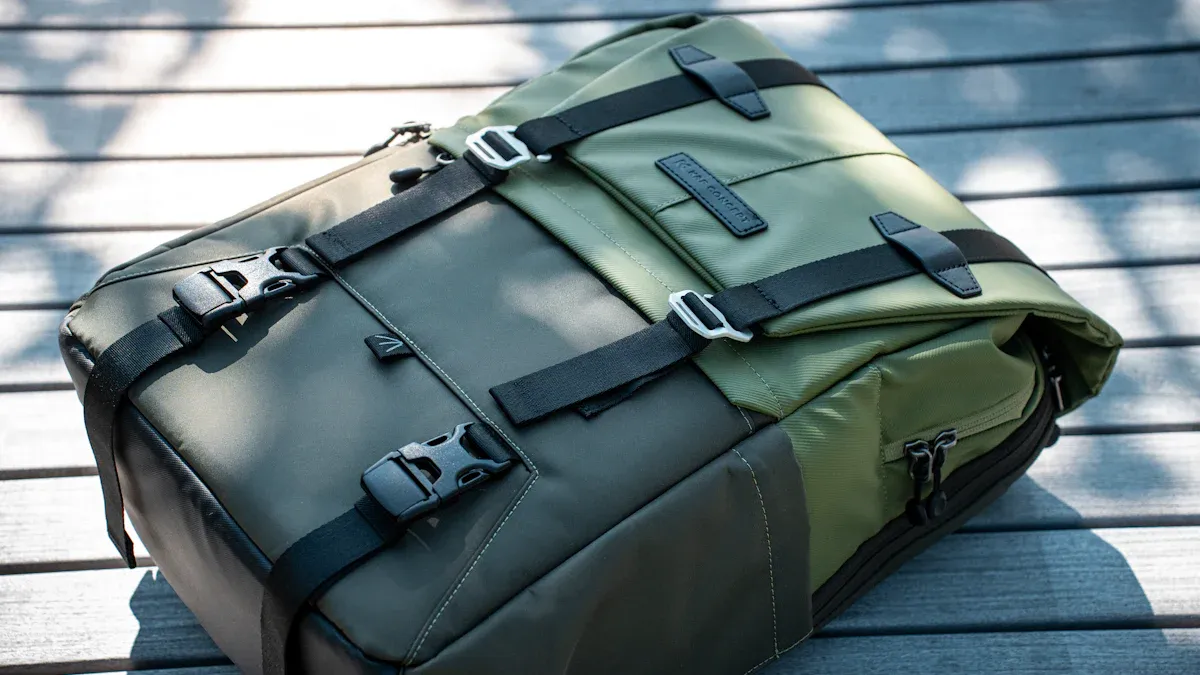
When you pick a backpack, you want your things to stay dry. Both nylon and polyester fiber can keep out water. Special coatings help them work better. Makers add layers like PU, TPU, or PVC to make backpacks more waterproof. The table below shows how each fabric and coating works:
| Fabric + Coating | Waterproof Rating (mm) | Performance Level |
|---|---|---|
| Nylon + PU (single layer) | 1000–2000 | Moderate rain protection |
| Polyester + PU | 800–1500 | Light rain; casual use |
| Nylon + TPU laminate | 3000–5000 | Fully waterproof |
| Polyester + PVC backing | 2000–3000 | Waterproof but less breathable |
Nylon with TPU laminate keeps water out the best. You can use it in heavy rain or on trips outside. Polyester fiber with PVC backing also blocks water well. But it can feel hot because air does not move through it. For daily use, polyester fiber with PU coating is fine for light rain.
Tip: Always look at the waterproof rating before buying. Bigger numbers mean better rain protection.
Sunlight Exposure
You may wonder what happens if your backpack sits in the sun. UV rays can hurt both nylon and polyester fiber. The damage depends on the fabric and coating. Here is what tests show:
- Polyester usually stands up to UV rays better than nylon, especially if the fabric is thick.
- UV rays can cause damage quickly. After one month, the fabric gets much weaker.
- Most fabrics lose more than half their strength after 100 days in the sun.
- Some polyester fabrics do worse than thin nylon, so results are not always the same.
- Coatings and fabric type change how well a backpack handles sunlight.
If you use your backpack outside a lot, pick one with UV-resistant coating. Polyester fiber is good for sunny days. Nylon can last too if it has the right treatment.
Note: Sunlight makes all fabrics weaker over time. Try to keep your backpack inside when you are not using it.
Weight and Comfort
Material Weight
When you look at backpack fabrics, you notice that weight matters. Lighter fabrics make your backpack easier to carry. Nylon and polyester fiber both come in many thicknesses. Most backpack makers use medium-weight fabrics, which range from 100 to 200 grams per square meter (GSM). You see this in the table below:
| Fabric Type | Weight (GSM) |
|---|---|
| Medium weight (100-200 g/m²) | 100-200 |
| 210D PU diamond ripstop polyester | 130 |
| 40D ripstop nylon TPU fabric | 140 |
| 70D Nylon TPU Ripstop Fabric | 150 |
| Durable Soft Mesh | 145 |
| Gridstop UHMWPE | ~150 |
Nylon and polyester fiber have similar weights when you compare fabrics with the same thickness. You find that 40D ripstop nylon and 210D polyester both weigh around 130–150 GSM. This means you can choose either material for a lightweight backpack. If you want a bag that feels light on your shoulders, both nylon and polyester fiber work well.
Tip: Check the GSM number on the label. Lower numbers mean lighter fabric, which helps if you want to carry less weight.
Packability
Packability shows how small you can fold or roll your backpack when you do not use it. Nylon stands out because it has a tighter weave and thinner fibers. You can compress a nylon backpack more easily. It fits into small spaces, so you can store it in a suitcase or drawer. Polyester fiber feels stiffer and holds its shape. When you try to fold a polyester backpack, it takes up more room.
You notice that nylon backpacks are lighter and less bulky. You can squeeze them into a pouch or pocket. Polyester fiber backpacks stay firm and do not flatten as much. If you want a backpack that packs down small, nylon gives you better results.
- Nylon: Compresses easily, fits in tight spaces, ideal for travel.
- Polyester fiber: Stiffer, keeps its shape, better for structure.
If you need a backpack for travel or outdoor trips, nylon helps you save space. Polyester fiber works well when you want your bag to hold its shape.
Polyester Fiber Performance
Drying and Dyeing
When you pick a backpack, you want it to dry fast. Polyester fiber dries quicker than nylon. You can hang a polyester fiber backpack inside. It will dry in a few hours. Nylon takes more time to dry. Sometimes, you must wait until the next day.
Color is important too. Polyester fiber keeps its color very well. The colors stay bright, even after many washes. Nylon can lose color over time. This happens more if you use your backpack outside a lot. The table below shows how well each keeps color:
| Feature | Nylon | Polyester |
|---|---|---|
| Color Retention | Can fade over time | Excellent |
If you want a backpack that stays bright and dries fast, polyester fiber is a good pick.
Cost and Sustainability
You may wonder which backpack costs less. Polyester fiber backpacks usually have a lower price. You save money, especially if you buy a big bag or need more than one.
- Nylon backpacks often cost more.
- Polyester backpacks are usually cheaper.
Many people care about the planet. Today, brands use recycled polyester fiber for backpacks. For example, Patagonia uses almost all recycled polyester in its bags. This helps cut down on plastic waste and saves resources.
Recycled polyester fiber is better for the environment than new nylon. You can see the differences in the table below:
| Aspect | Recycled Polyester | Virgin Nylon |
|---|---|---|
| Environmental Impact | Makes 79% less carbon emissions | Makes more emissions than recycled options |
| Resource Dependency | Uses fewer fossil fuels | Needs non-renewable resources |
| Waste Reduction | Uses old plastic bottles and fabric waste | Uses waste like old fishing nets |
| Durability | Strong and lasts long | Lasts about the same |
| Microplastic Pollution | Can make microplastic pollution | Also makes microplastic pollution |
Tip: Recycled polyester fiber helps cut plastic waste and greenhouse gases. It is strong, but does not break down in nature. Both recycled polyester and nylon can make microplastics, so wash backpacks with care.
When picking a backpack, think about what you want. Nylon is strong and light, so it is good for outdoor trips. Polyester is better for school or daily use because it keeps its shape and costs less.
- Hikers like nylon because it is tough and keeps water out.
- Some brands use ripstop and Cordura nylon to make backpacks last longer.
- People choose polyester for bright colors and cheaper prices.
| Feature | Nylon (Best for hiking) | Polyester (Best for daily use) |
|---|---|---|
| Durability | Very high, resists tears and abrasion | Good, keeps shape |
| Water Resistance | Needs treatment, then works well | Naturally repels water |
| Weight | Strong for its weight | Lighter, but less flexible |
Pick a backpack that fits what you need. If you want to help the planet, choose recycled nylon or polyester.
FAQ
What makes nylon stronger than polyester fiber?
Nylon has a tighter weave. Its polymer chains are longer. This helps nylon resist tearing and abrasion. Nylon is great for heavy-duty backpacks.
What is the best backpack material for rainy weather?
Polyester fiber works best when it is wet. It has excellent water resistance. Polyester dries fast and keeps your gear safe.
What is recycled polyester fiber?
Recycled polyester fiber comes from old bottles and fabric scraps. Using it helps reduce waste. It also lowers carbon emissions.
What should you check before buying a backpack?
Check the fabric type and waterproof rating. Look for UV protection too. Think about weight and comfort. Pick features that fit your needs.



Comments are closed