


What Are Tactical Pants And What Are 5.11 Pants Made Of
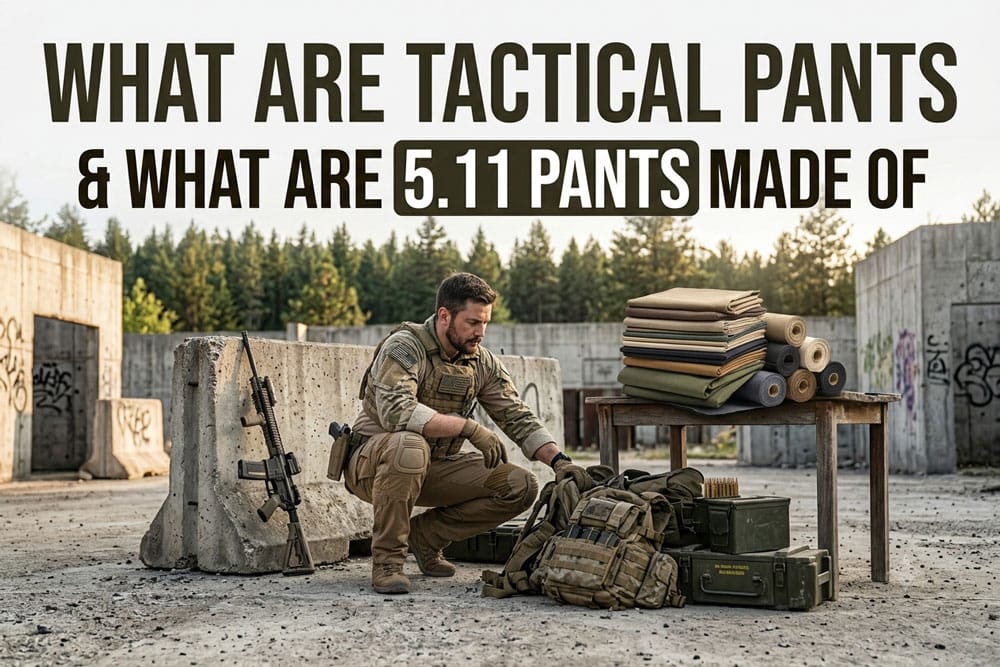
Tactical pants are reinforced, work-style trousers built for easy movement, gear-carrying, and heavy daily use that regular pants can’t withstand. Designed for EMTs, firefighters, police, security personnel, and military users, they resemble cargo pants but typically come in a single solid color.
Regarding what are tactical pants & what material is 5.11 tactical pants made of, 5.11’s main line uses a cotton-polyester canvas or ripstop blend—fabrics that resist tearing while staying flexible across their 2025 and 2026 product lines.
They’re actually pretty close to cargo pants, though they usually come in just one solid color (per Wikipedia, current as of 2024).
So when people come to me asking what are tactical pants & what material is 5.11 tactical pants made of?, here’s the quick version I usually give them. They’re really sturdy work-style trousers that are built so you can move around easily and carry your stuff.
And 5.11’s main line of pants is made from a cotton-polyester canvas, or sometimes a ripstop blend, which are fabrics that hold up against tearing while still staying nice and flexible.
In this guide I’m going to walk through the design features that actually make tactical pants different from your ordinary cargo pants. Then we’ll get into the exact fabric blends that 5.11 uses across their 2025 and 2026 product lines.
By the end you’ll understand why the choice of material really matters for how long the pants last, how comfortable they feel, and how well they keep going after months of being worn hard.
Quick Takeaways
- Tactical pants offer reinforced durability for movement, gear-carrying, and heavy daily abuse.
- ‘s main line uses cotton-polyester canvas or ripstop blends for tear resistance.
- Originally duty wear for police, EMTs, firefighters, and military, now everyday use.
- Solid colors and structural upgrades distinguish tactical pants from standard cargo pants.
- Choose your fabric blend based on durability, comfort, and long-term wear needs.
What Are Tactical Pants And What Makes Them Different
Tactical pants are reinforced trousers built for movement, gear-carrying, and abuse that regular pants can’t handle. They started as duty wear for law enforcement, EMTs, security guards, and military personnel, then crossed into everyday use.
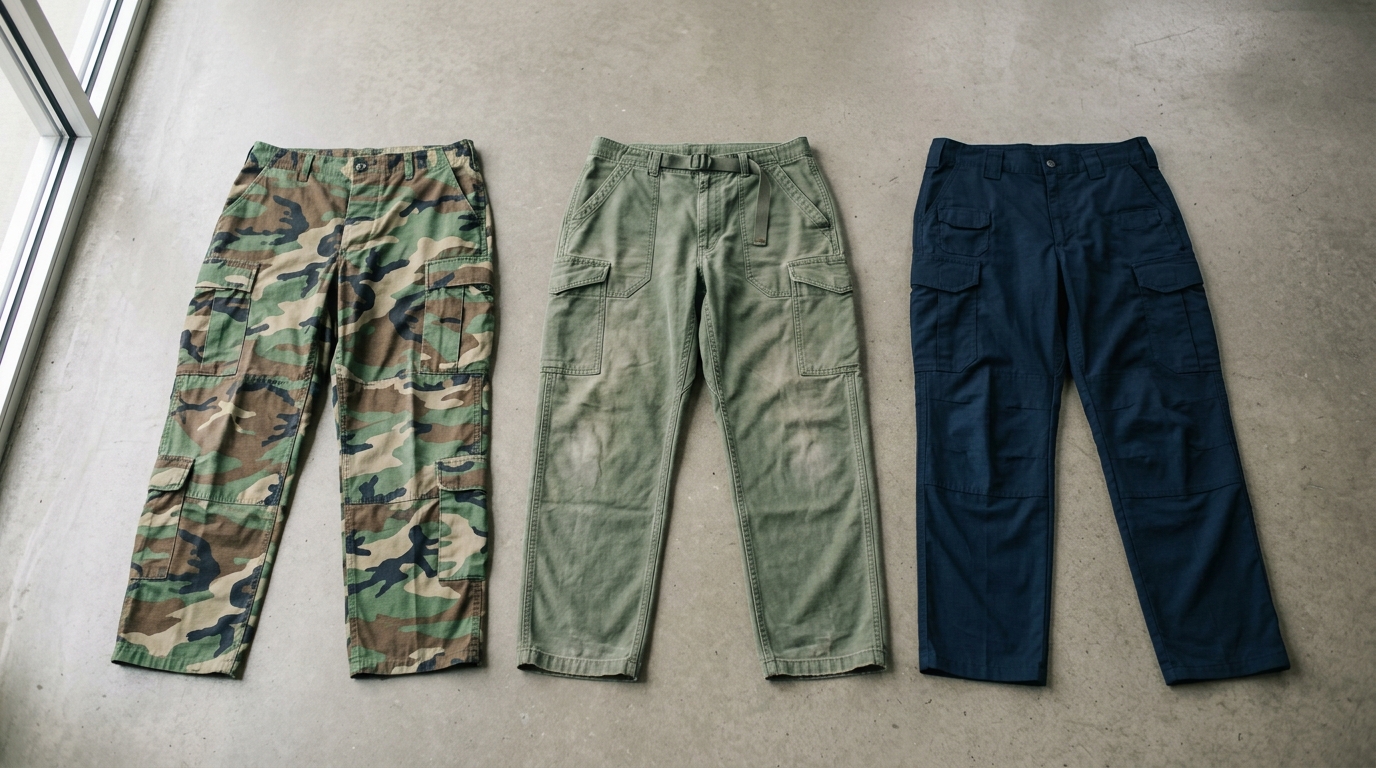
The category is closely related to cargo pants but stays solid in color and adds structural upgrades you won’t find on a weekend pair of khakis.
So what actually separates them from cargo, work, or hiking pants? It’s the engineering, not the look.
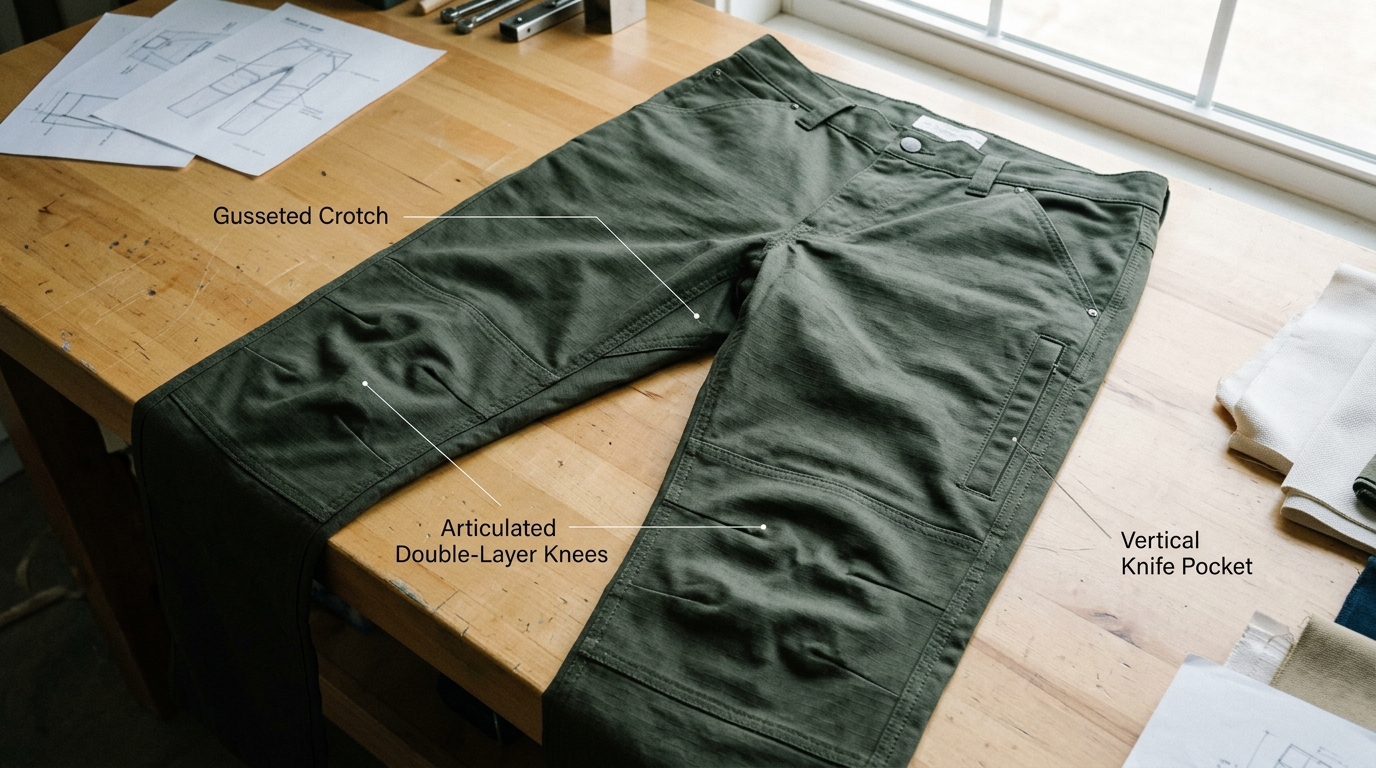
- Gusseted crotch — a diamond-shaped fabric panel sewn into the inseam. It removes the stress point that blows out most pants when you squat or lunge.
- Articulated knees — pre-bent knee panels so the fabric follows your leg instead of bunching when you kneel.
- Double-layer knees — extra fabric (often with internal pockets for foam pads) that survives crawling on concrete.
- Reinforced seams — bar-tacked or triple-stitched stress points at pockets and the seat.
- Dedicated knife and magazine pockets — narrow, vertical slots sized for a folding knife clip or a spare pistol mag, not loose change.
Here’s a pro tip most buyers miss: check the rear yoke. A true tactical pant uses a curved waistband that sits higher in back, so your shirt stays tucked when you bend.
Hiking pants skip this. The fabric matters too, most tactical lines use ripstop weaves and poly-cotton blends, which is exactly why people ask what 5.11 tactical pants are made of before buying.
How Tactical Pants Evolved From Military And Duty Wear
Tactical pants actually began as gear for soldiers and police, and then regular folks started wearing them too. The story runs from battlefield uniforms to climbing pants and finally to the everyday carry trousers people wear now.
5.11 is honestly the clearest example of this. Their very first pant was made for rock climbers, not for soldiers at all.
The roots really sit in military BDUs, which stands for Battle Dress Uniforms. These came with puffy cargo pockets, reinforced seats, and tough weaves built to survive crawling and dragging around on the ground.
Police duty pants borrowed that same thinking but added cleaner lines for undercover work. As one definition points out, tactical pants serve EMTs, fire service crews, security guards, and plainclothes law enforcement, and not just the military by itself.
Here is the part most buyers completely miss. The 5.11 name traces back to a climbing pant made by Royal Robbins for use in Yosemite.
Climbers needed deep pockets to stash their gear, plus a slash pocket sized just right for a knife. The “5.11” label actually refers to a rock-climbing difficulty rating.
That climbing pant got noticed over at the FBI Academy in Quantico, Virginia. Instructors really liked how durable it was and how the pockets worked for firearms training, so it spread through the federal trainees.
From that point, the design pivoted into a duty pant. The basic makeup stayed the same, though. A climbing cut, reinforced fabric, and pockets ready for gear.
This history explains why the modern versions blend toughness with the ability to move freely. Most use ripstop weaves and poly-cotton blends reinforced at the knees and the seat.
So when people ask what are tactical pants & What material is 5.11 tactical pants made of, the answer basically reflects this lineage of climbing flexibility mixed with duty-grade toughness.
What Fabric Is Used For Tactical Pants Across The Industry
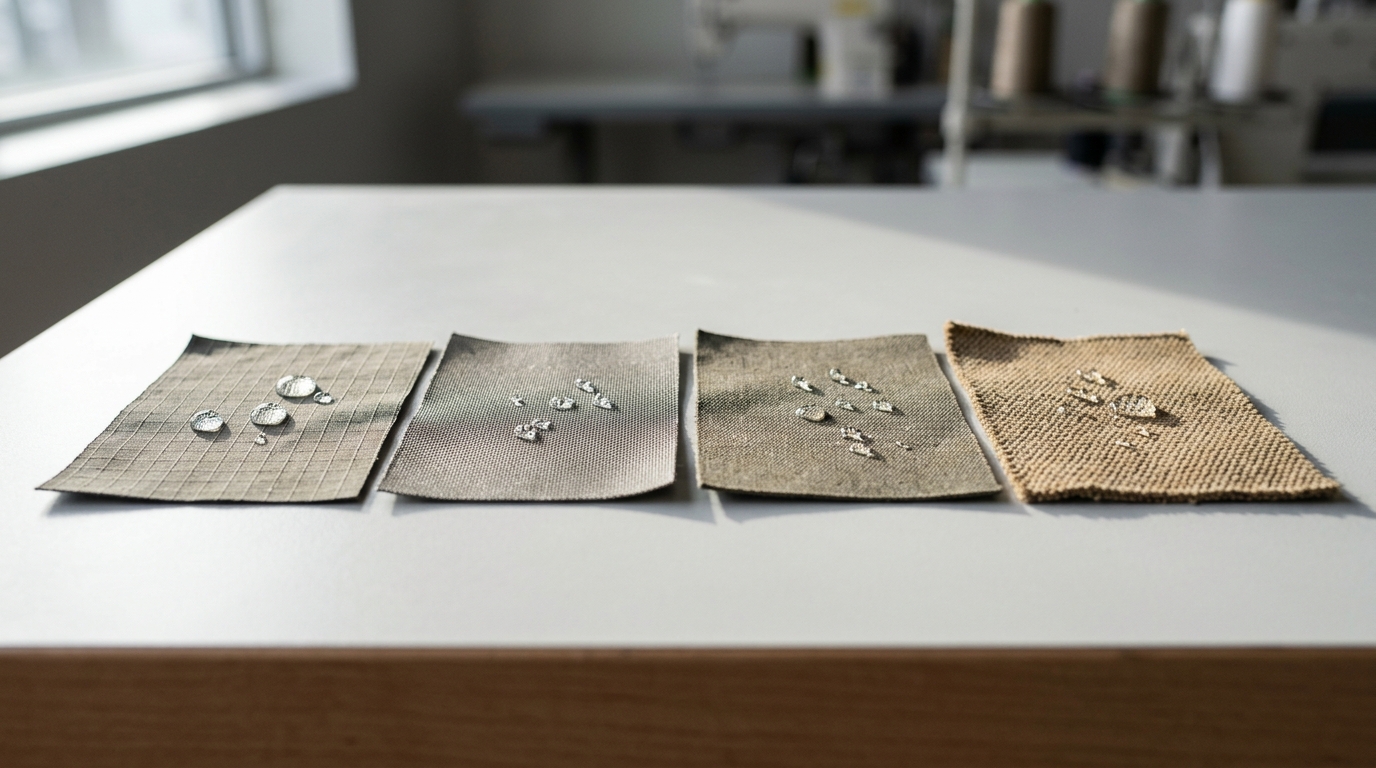
Four fabric families dominate the tactical pants market: ripstop nylon, poly-cotton blends, mechanical stretch fabrics, and cotton canvas. Each trades off durability, breathability, and dry time differently. There’s no single “best” material, the right pick depends on your climate and how hard you push the pants.
Ripstop is the workhorse. It uses a reinforcing grid weave, thicker threads crosshatched every few millimeters, so a small tear stops instead of running.
Industry fabric guides note that typical cotton-polyester blends for tactical pants range from about 50/50 to 65/35, with more polyester improving durability and drying speed, more cotton boosting comfort.
Denier (the weight of the yarn) tells you how tough the cloth is. A 70D ripstop feels light and packs small. A 500D Cordova-style nylon resists abrasion but breathes poorly and traps heat.
- Ripstop nylon: fast-drying, tear-resistant, light. Weaker against rough abrasion than canvas.
- Poly-cotton blends: balanced comfort and toughness; the category default.
- Mechanical stretch: woven to flex without spandex, giving 4-way movement.
- Cotton canvas: rugged and quiet, but heavy and slow to dry.
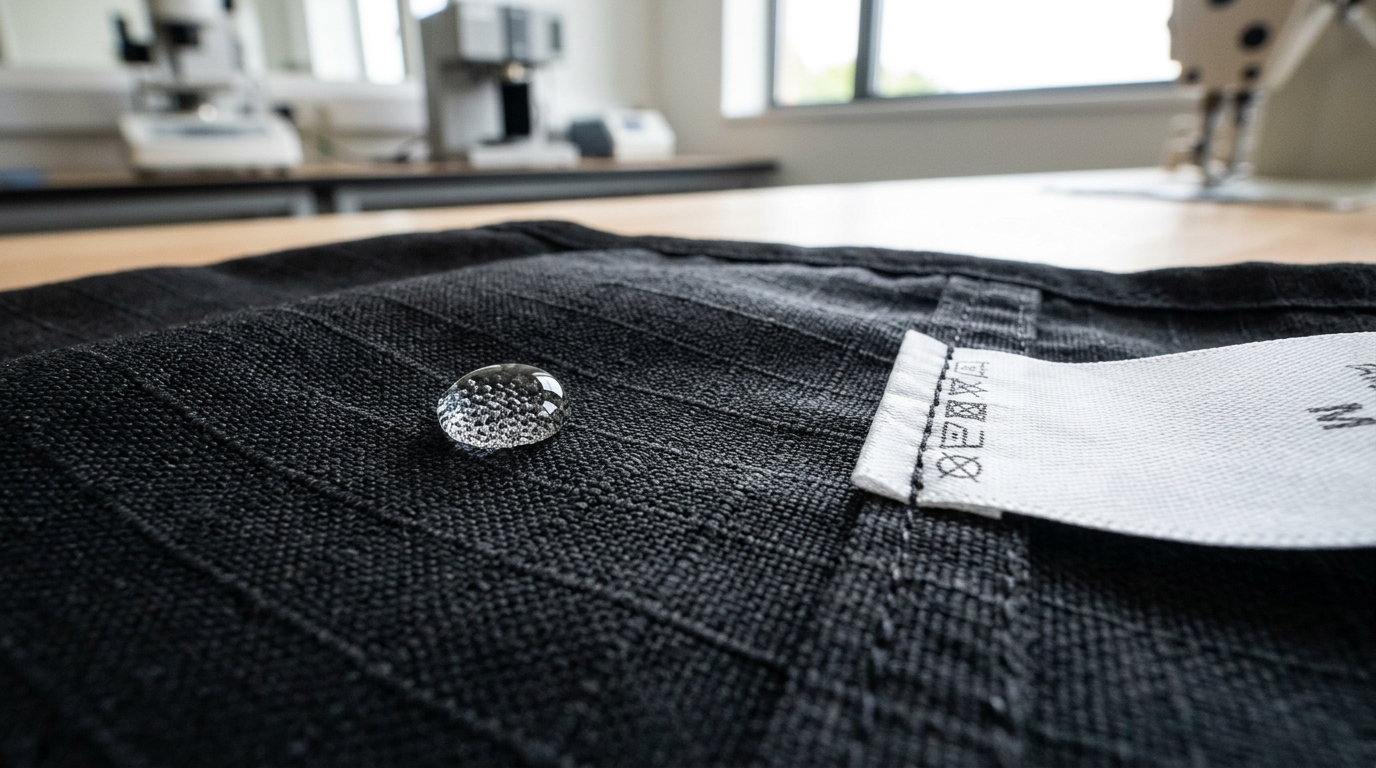
Most quality pants add a DWR finish, a durable water-repellent coating that makes drops bead off instead of soaking in. It wears down after roughly 20 to 30 washes, so reapply spray-on DWR once water stops beading. That single habit extends a pair’s useful weather resistance by months.
Understanding these fabrics sets up the next question: what material are 5.11 tactical pants made of, and how do they apply these weaves in practice?
What Material Are 5.11 Tactical Pants Made Of
5.11 makes its pants from three main fabric families. There is Flex-Tac ripstop, then poly-cotton canvas, and Defender-Flex mechanical stretch.
The exact mix shifts depending on which model you pick, though most of them land somewhere around the approximately 65% polyester / approximately 35% cotton range. Sometimes a small amount of elastane gets added too, basically to give the fabric a little stretch.
So what are tactical pants & What material is 5.11 tactical pants made of? Honestly, it really comes down to reading those three fabric names printed on the spec tag.
Flex-Tac ripstop is the weave 5.11 is known for. Ripstop just means the fabric has a grid of thicker reinforcement threads woven into it. So when a small tear starts, it stops spreading instead of running the whole length.
The flagship Taclite Pro Pant is built from a 65/35 poly-cotton ripstop treated with Teflon. That treatment helps the pants resist stains, dirt, and water.
The Teflon coating is what people call a DWR finish, which stands for durable water repellent. Essentially it makes liquids bead up and roll off the surface rather than soaking right through.
Poly-cotton canvas turns up in the heavier-duty models. Canvas uses a tight plain weave. It gives up a bit of flexibility in exchange for better resistance to scraping and rubbing. More polyester means the fabric dries faster, while more cotton makes it feel softer against your skin.
Defender-Flex and the related Flex-Tac stretch canvas both add mechanical 4-way stretch, meaning it gives in every direction. The 5.11 Apex Pant uses Flex-Tac mechanical stretch canvas. It is a cotton-polyester blend made to bend along with you, like when you are kneeling down or climbing up something.
Here is a field tip. Check the care tag for the elastane percentage.
Most stretch models sit around 2,approximately 4% spandex. Anything below approximately 2% and you can barely feel the give at all.
In my experience, if mobility really matters to you, just skip any pants that list no stretch fiber. The model-by-model fabric specs come up next.
5.11 Fabric Breakdown By Model With A Comparison Table
Want to see the exact fabric details laid out next to each other? Here they are.
The Stryke uses something called Flex-Tac ripstop, the Original runs a poly-cotton canvas, the Defender adds in some mechanical stretch, and the Apex leans on a Flex-Tac stretch canvas.
The amount of stretch and the way the threads are woven together really change how each pair of pants moves and how long it lasts.
The whole question of “what are tactical pants & What material is 5.11 tactical pants made of?” gets a little confusing, honestly, because no two of these models share the exact same blend of fabric.
Take the Apex Pant, for example. It uses 5.11’s Flex-Tac mechanical stretch canvas, which is basically a cotton-and-polyester mix that’s been built to stretch in all four directions.
And that stretch is woven right into the fabric itself, rather than being added in through some elastic fiber like elastane.
| Model | Fiber Blend | Stretch | Weave | Finish |
|---|---|---|---|---|
| Stryke | Poly-cotton Flex-Tac | 2-way mechanical | Ripstop | Teflon coating |
| Original | approximately 65% poly / approximately 35% cotton | None | Canvas twill | Untreated |
| Defender-Flex | Cotton/poly + approximately 2% elastane | 4-way elastane | Twill | Water-repellent |
| Apex | Flex-Tac stretch canvas | 4-way mechanical | Canvas | Teflon-treated |
So mechanical stretch, which is where the woven fabric itself bends rather than the fibers, generally lasts a good bit longer than elastane. That elastic stuff can actually lose its snap after you wash it over and over.
The Original’s untreated canvas breathes the best of the bunch, but it really soaks up water. I’d skip it if you live somewhere wet.
And if you want something that sheds stains, pick the Stryke or the Apex instead.
How 5.11 Material Choices Affect Durability Mobility And Comfort
Each 5.11 fabric trades off three things: how long it lasts, how freely you move, and how it feels in heat. Ripstop wins on tear resistance.
Poly-cotton canvas wins on abrasion. Flex-Tac mechanical stretch wins on range of motion.
No single fabric does all three best, that’s why model choice matters more than brand loyalty.
Ripstop’s grid weave is the key. Thicker reinforcement threads cross the fabric every few millimeters, so a small cut stops spreading instead of running into a long tear.
That’s why the Taclite Pro’s approximately 65% polyester / approximately 35% cotton ripstop survives brush and fence snags that would gut a plain weave.
Weight changes everything else. A lighter ripstop (around 4.5 oz) breathes better and dries faster after sweat or rain, useful in hot climates. Heavier poly-cotton canvas (closer to approximately 8 oz) resists scraping against concrete, vehicle steps, and gear, but holds heat and dries slower.
Where stretch and finishes come in
Flex-Tac stretch canvas adds 4-way stretch for squats, climbing, and deep lunges without seam blowouts. The poly-cotton ratio sets the tone: higher polyester pushes durability and quick-dry, higher cotton pushes softness.
- Teflon finish: beads water and blocks stains, but wears off over ~20–30 washes
- Higher polyester: faster dry time, better moisture wicking
- Higher cotton: cooler against skin, less plasticky feel
Understanding what tactical pants are made of tells you which 5.11 model fits your daily abuse, a question the next section’s common mistakes will sharpen further.
Common Mistakes When Choosing Tactical Pant Material
The biggest fabric mistakes come from gut assumptions that feel right but fail in the field. Heavier doesn’t mean tougher. Cotton does not always mean comfortable. And ripstop weave has nothing to do with stretch. Here are four errors I see most often, with the fix for each.
Thinking heavier fabric equals more durable
Weight measures mass, not abrasion resistance. A approximately 10 oz cotton canvas can wear through faster than a approximately 6.5 oz 65/35 poly-cotton ripstop because polyester fibers resist tearing better than thick cotton. Check the fabric content and weave, not just the ounce rating.
Ignoring DWR wear-off after washing
Durable Water Repellent (DWR) is a thin coating that beads off water. It isn’t permanent.
Most factory DWR and Teflon treatments fade after 20 to 30 wash cycles. The fix: re-apply a spray-on DWR after the water stops beading, or skip the dryer, since heat partly reactivates the coating.
Choosing canvas for hot climates
Cotton canvas holds sweat and dries slowly. In humid heat, that means a heavy, clammy fit all day. Pick ripstop with higher polyester content instead, since polyester pulls moisture to the surface and dries faster.
Buying ripstop expecting stretch
Ripstop is a grid weave that stops tears from spreading. It doesn’t flex unless elastane is added.
If you want give, look for the 2 to approximately 4% spandex blends or mechanical-stretch canvas. So when you ask what tactical pants are and what material 5.11 tactical pants are made of, read the spandex line, not just the weave name.
How To Choose The Right 5.11 Material For Your Climate And Use Case
Match the fabric to what you actually do. Pick Flex-Tac ripstop for active field work, poly-cotton canvas for everyday durability, and Defender-Flex stretch for desk-to-street comfort. That three-way split covers most people. Your climate and movement pattern decide the rest.
Work outdoors in heat? Skip heavy canvas.
Flex-Tac ripstop runs lighter and dries faster, which matters when you sweat through a shift. The 5.11 Apex uses Flex-Tac mechanical stretch canvas with 4-way stretch, good for climbing, squatting, and kneeling all day.
For cold or abrasive jobs, poly-cotton canvas takes more punishment without tearing.
Sit at a desk then head to the range after? Choose a Defender stretch fabric.
The small elastane content (usually 2,approximately 4%, per 5.11 fabric specs) gives flex without looking bulky. So when people ask what tactical pants are made of, the honest answer is: it depends on the job you’re buying them for.
Fit matters as much as fabric. 5.11 offers regular and slim cuts across men’s and women’s lines. Here’s a tip from sizing experience: tactical pants run snug at the waist because of the gusseted design, so order your true waist measurement in inches, not your jeans label.
- Hot/humid climate: Flex-Tac ripstop — light, quick-dry
- Heavy-duty fieldwork: poly-cotton canvas — abrasion-proof
- Office-to-field: Defender stretch — discreet, flexible
Use the brand’s size guide chart in both inches and centimeters before you buy.
Frequently Asked Questions About Tactical Pants And 5.11 Materials
Quick answers to the questions people actually search before buying. No fluff.
What material are 5.11 tactical pants made of?
Most use a poly-cotton ripstop blend. The Taclite Pro, for example, runs approximately 65% polyester / approximately 35% cotton ripstop treated with Teflon for stain and water resistance.
Stretch models like the Apex add a few percent elastane for a 4-way flex. So when you ask what tactical pants are and what material 5.11 tactical pants are made of, the short version is: tough woven blends, sometimes with spandex.
What fabric is used for tactical pants in general?
Across the category, makers stick to four families: ripstop nylon, poly-cotton blends, full cotton canvas, and stretch softshell. Blend ratios usually sit between 50/50 and 65/35 polyester-cotton. More polyester means faster drying and longer wear; more cotton means softer feel.
How do I read a 5.11 size guide?
5.11 lists pants by numeric waist (inches) and inseam, not alpha S/M/L. Measure your waist over a thin shirt, then your inseam from crotch to ankle. Buy your true waist number,5.11 pants run close to label. If you fall between sizes, size up; the gusseted crotch eats slack.
Are tactical pants water resistant?
Water resistant, not waterproof. A Teflon or DWR coating beads off light rain and spills, but it fades after roughly 20,30 washes. Reapply spray-on DWR to restore it.
Final Verdict On Tactical Pant Fabrics And Picking Your 5.11
Pick the fabric first, then the model. So what are tactical pants in the end?
They’re reinforced trousers built from one of three fabric logics: ripstop nylon blends for active field work, poly-cotton canvas for durability and comfort, and mechanical stretch canvas for mobility. The fabric drives the price, the feel, and the failure point.
Here is the simplest way to answer “what material is 5.11 tactical pants made of?” for your own buy.
Most flagship lines use a poly-cotton ripstop blend, commonly approximately 65% polyester / approximately 35% cotton with a Teflon finish for stain and water resistance. That ratio is the safe default for approximately 70% of buyers.
Match the model to who you’re:
- New buyer on a budget: Start with the Taclite Pro. The 65/35 ripstop dries fast and hides dirt.
- Heavy field or duty use: Go Stryke with Flex-Tac ripstop for abrasion resistance plus stretch.
- Office-to-trail crossover: Choose Flex-Tac mechanical stretch canvas (the Apex line) for 4-way stretch that looks like normal pants.
- Hot, humid climate: Lean toward higher-cotton canvas for breathability.
Before checkout, do three things. Pull the official size guide and measure your real waist and inseam in inches, not your jeans size.
Tactical fits run trim, so compare the regular versus relaxed fit options side by side. Then check store availability by zip code and watch the clearance section for last-season colors, which often drop approximately 30% to 40% off the original price.
One field tip pros use: order two waist sizes if you carry an inside-the-waistband holster or a belt rig. The loaded waistline eats an inch fast.
Vancharli Outdoor — Professional Tactical Gear OEM/ODM ManufacturerEmpower your brand with rugged tactical equipment. Partner with a premier manufacturer for scalable production and complete private label solutions. ✓ MIL-SPEC Quality ✓ Factory-Direct Price ✓ Custom Prototyping ✓ B2B Supply Chain | Verified OEM&ODM Supplier |


Comments are closed