



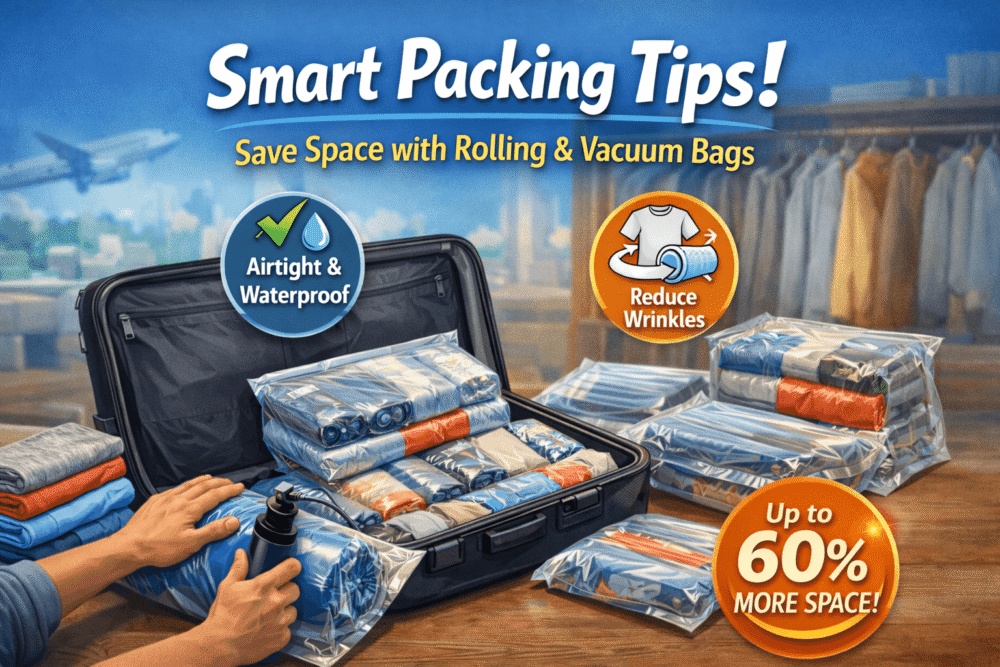
How to Vacuum Pack Clothes Effectively with TPU Bags
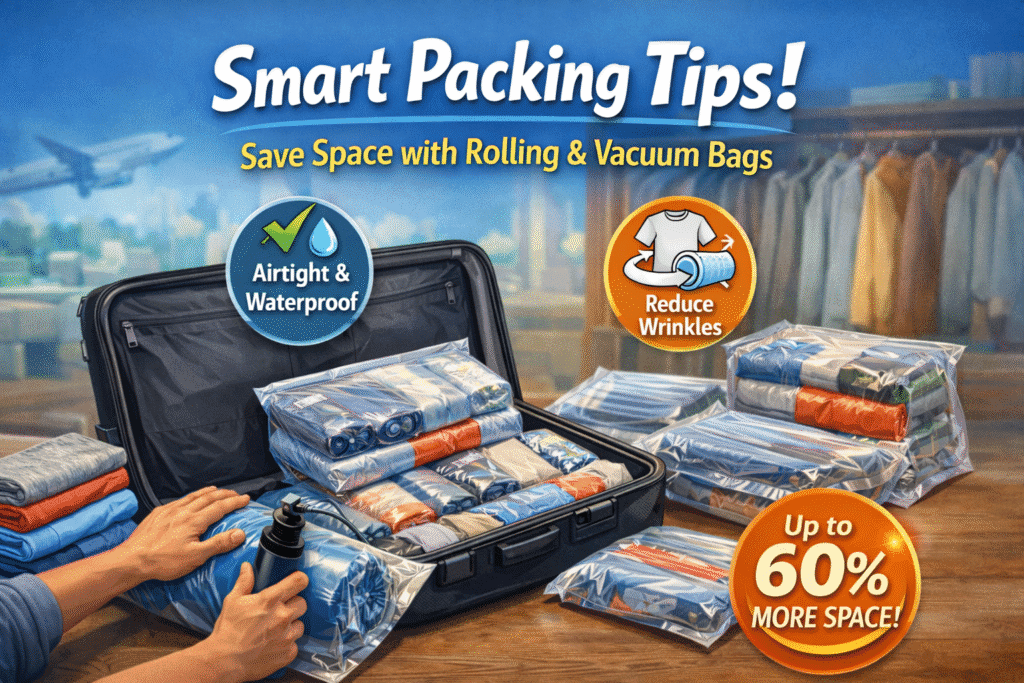
You want to fit more clothes in a small space. First, fold or roll your clothes before you put them in TPU bags.
Rolling clothes in your suitcase helps save space. It pushes air out from the folds. This lets you use all the space you have.
- Rolled clothes use less space than folded clothes. You can fit more things in your luggage.
- Rolling clothes can help stop wrinkles if you do it right.
Good TPU bags are strong and do not leak. They keep your clothes safe. Use these vacuum packing tips to make packing easy and worry-free.
Key Takeaways
- Rolling clothes saves space and reduces wrinkles. Use this method to maximize packing efficiency.
- Choose high-quality TPU bags for durability. They are waterproof, tear-resistant, and keep clothes safe.
- Always check the zipper and seams before packing. A good seal prevents leaks and keeps clothes fresh.
- Use a mix of folding and rolling for different clothing types. This helps fit more items in your bags.
- Regularly clean and inspect your TPU bags. Proper care extends their life and keeps your clothes fresh.
TPU Bags Overview
Features
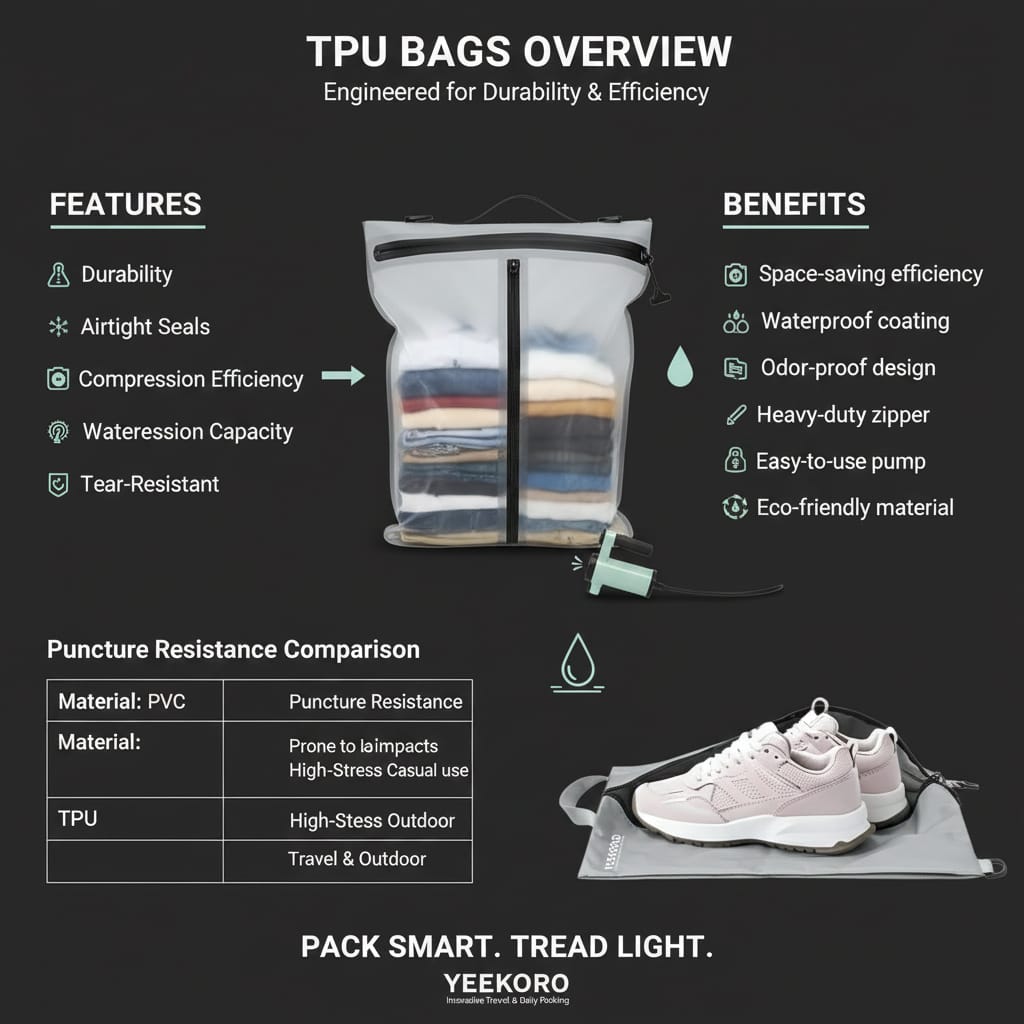
When you pick a vacuum bag for your clothes, you want something tough and reliable. TPU bags stand out because of their smart design and strong material. You get a bag that is waterproof, tear-resistant, and built to last. The manufacturing process uses heat and pressure to bond TPU to fabric, which makes these bags more durable than bags made with chemicals or solvents.
Here’s a quick look at what makes TPU bags special:
| Feature | Description |
|---|---|
| Durability | TPU bags resist tears and keep water out. |
| Airtight Seals | Your clothes stay fresh and dry. |
| Compression Efficiency | You can pack more clothes in less space. |
| Compression Capacity | Saves up to 60% packing space. |
| Waterproof Design | Protects clothes from water damage. |
| Tear-Resistant | Bags last longer and handle rough travel. |
TPU bags also beat PVC and PE bags when it comes to puncture resistance. You can see the difference below:
| Material | Puncture Resistance | Suitability for High-Stress Applications |
|---|---|---|
| PVC | Prone to tears | Casual use |
| TPU | Absorbs impacts | Great for travel and outdoor adventures |
Tip: If you travel a lot or need to pack heavy items, TPU bags give you peace of mind. You don’t have to worry about leaks or rips.
Benefits
You want your clothes to stay safe, clean, and organized. TPU bags help you do just that. Many users say these bags save space, sometimes cutting luggage bulk by half. You can fit more clothes in your suitcase and keep everything neat.
Here are some benefits you’ll notice:
- Space-saving efficiency lets you pack more for trips.
- Waterproof coating keeps clothes dry, even in wet weather.
- Odor-proof design is perfect for dirty laundry.
- Heavy-duty zipper keeps air out and clothes compressed.
- Easy-to-use pump means you don’t need a vacuum cleaner.
- Eco-friendly material breaks down faster and produces fewer toxins.
TPU bags also help the planet. They can be recycled up to 95%, and they break down in just a few years. You make a smart choice for your travel needs and for the environment.
Vacuum Packing Steps
Preparation
You want to start with clean, dry clothes. Dirt or moisture can cause mold or bad smells. Lay your clothes flat on a table or bed. Sort them by type—shirts, pants, jackets, and socks. This makes packing easier and helps you find things later.
Tip: Always check your TPU bags for any damage before you begin. A small tear can ruin your packing job.
Packing Clothes
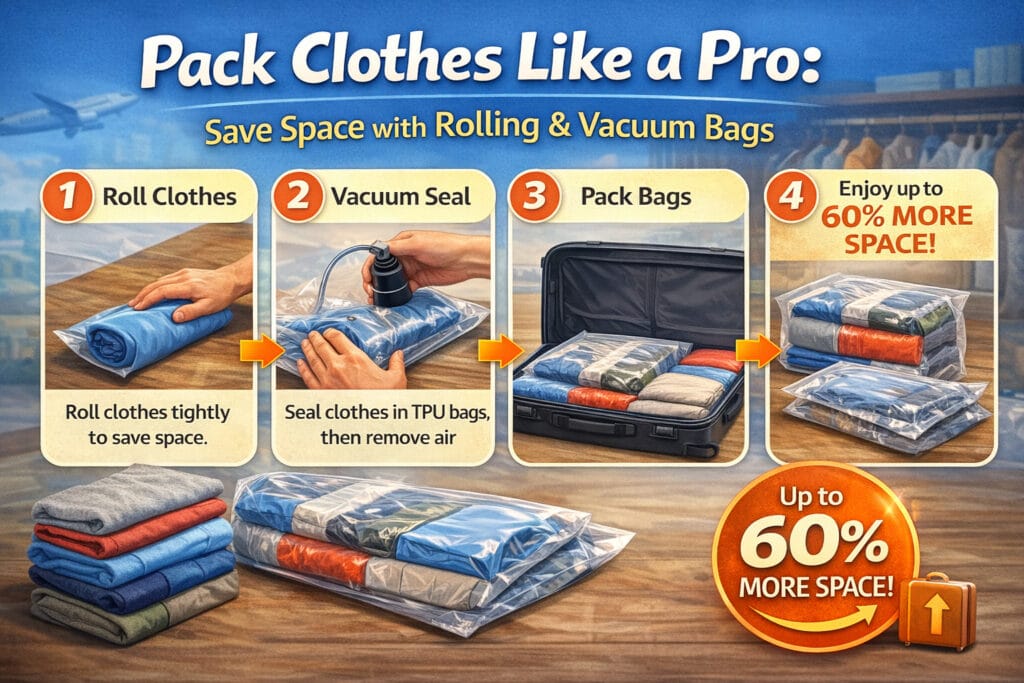
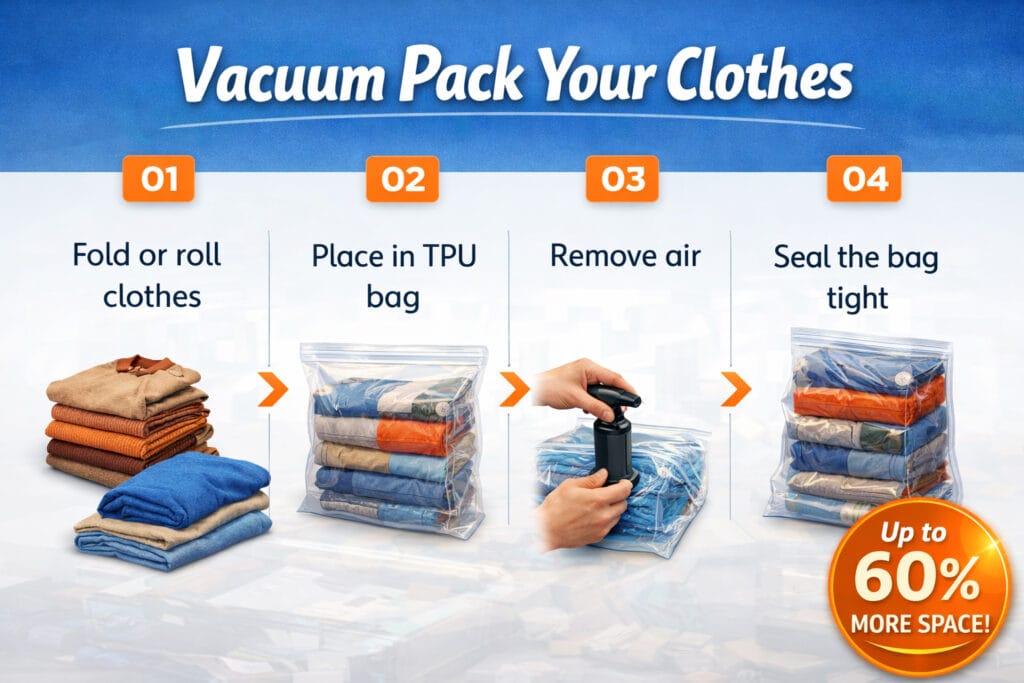
Folding or rolling your clothes is the secret to saving space. Rolling works best for t-shirts, jeans, and soft fabrics. Fold bulky items like sweaters or jackets. You can mix folding and rolling to fit everything snugly.
Here’s a simple way to pack your clothes:
- Fold or roll each item tightly.
- Place the clothes inside the TPU bag. Arrange them so they lie flat and fill the corners.
- Avoid stuffing the bag too full. Leave a little space near the zipper for a clean seal.
- Smooth out the clothes to push out extra air pockets.
Packing your clothes neatly helps you get up to 57% more space in your suitcase. That’s one of the best vacuum packing tips for travelers.
Sealing Bags
A good seal keeps air out and your clothes compressed. You need to close the zipper carefully.
- Align both sides of the zipper before you start.
- Slide the zipper slowly along the track. Don’t rush or you might snag the bag.
- Make sure the zipper is closed all the way to the end. Check for gaps.
- Look at both sides of the bag to confirm it’s sealed tight.
Note: Clean the zipper line before sealing. Dust or lint can cause leaks.
Removing Air
Now you’re ready to shrink the bag. You can use a vacuum cleaner, a hand pump, or even roll the bag to push air out. The eVacuum Kit works well for this step, especially if you want a double seal and moisture protection.
- Attach the vacuum hose to the small opening in the bag.
- Turn on the vacuum and watch the bag shrink as air leaves.
- When the bag is flat and tight, remove the hose and seal the opening quickly.
- If you use a hand pump, press down evenly to get the same effect.
Removing air is the key step. It keeps your clothes safe from moisture and pests. You’ll notice the bag gets much thinner, making it easy to stack.
Storage
You want to keep your vacuum-packed clothes in a cool, dry place. Stack the bags like thin panels in your closet, suitcase, or under your bed. Don’t drag the bags across the floor. That can damage the material and cause leaks.
Here are some storage tips:
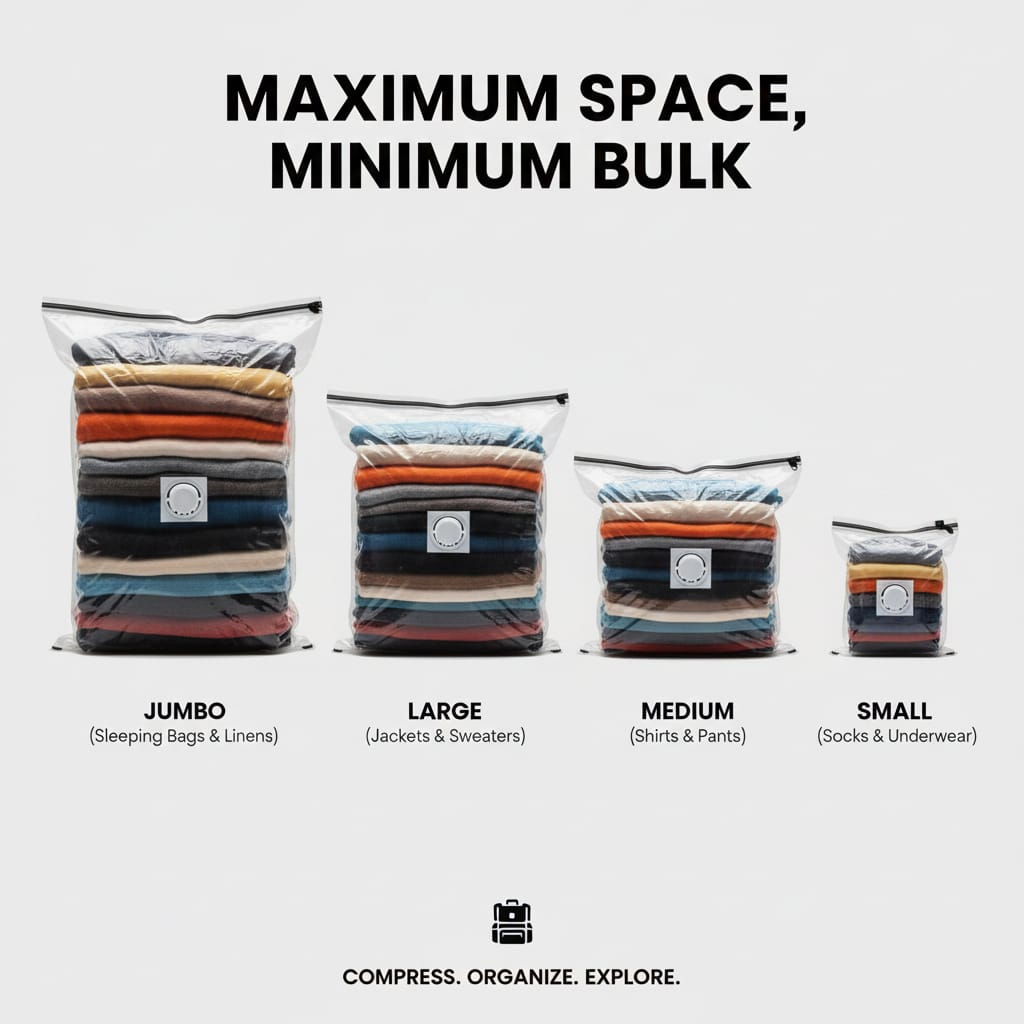
- Choose the right bag size for each type of clothing.
- Don’t overfill the bags. Use more bags if needed.
- Store only clothes that can handle compression, like cotton or polyester.
- Check the bags every few months for leaks. Refresh the seal if needed.
One of the most useful vacuum packing tips is to keep your bags away from sharp objects. This helps prevent tears and keeps your clothes safe.
You can use compression packing cubes for travel, breathable garment bags for seasonal storage, and vacuum-sealed bags for long-term packing. Each method helps you organize your clothes and save space.
Vacuum Packing Tips
Maximizing Space
You want to make the most of every inch in your suitcase. Try a mix of folding and rolling your clothes. Roll soft items like t-shirts and fold bulkier pieces like sweaters. Stack your rolled and folded clothes tightly in the bag. This method helps you fit more essentials and keeps things organized.
Here’s a quick look at how TPU bags help you save space:
| Feature | Description |
|---|---|
| Material Quality | 70D Polyester + TPU Lamination (No cracking) |
| Waterproof Rating | IPX8 Waterproof (Diving-grade seal) |
| Compression Hold Time | 72-Hour Compression Hold |
| Volume Reduction | Saves up to 57% of packing space |
Vacuum bags compress your clothes, so you can pack up to 57% more. That means you can bring extra outfits or souvenirs home. These vacuum packing tips work well for both travel and home storage.
Ensuring Seal
A strong seal keeps your clothes safe from air and moisture. Always check the zipper before you start. Use these steps to test your bag’s seal:
- Pinch the fabric. High-quality TPU feels soft and a bit rubbery.
- Try the ‘crinkle’ test. A good bag bends quietly.
- Check the zipper. An IPX8 zipper should feel tight and resist opening.
- Do the submersion test. Seal the bag and put it in water for one minute. If you see bubbles, the seal is not tight. If the inside stays dry, you have a great seal.
Tip: Clean the zipper area before sealing. Even a little dust can cause leaks.
Preventing Leaks
Leaks can ruin your packing job. Most leaks happen at the seams or zipper. Overfilling the bag puts pressure on these weak spots. Here’s a table to help you spot common causes:
| Cause | Explanation |
|---|---|
| Seam Failure | Overfilling stresses seams. Most leaks start here. |
| Zipper Design Flaws | Some zippers let air or water in, especially under pressure. |
| Vacuum-Sealed Issues | Vacuum pressure can make seams and zippers more likely to leak, especially with liquids. |
Choose high-quality TPU bags and avoid overpacking. These vacuum packing tips help you keep your clothes safe and dry every time.
Choosing TPU Bags
Size Selection
You want your clothes to fit perfectly in your TPU bags. Picking the right size makes packing easier and keeps your gear safe. Here are some things you should think about:
- Trip Duration: Short trips need small bags. Long vacations call for bigger bags.
- Type of Gear: Bulky items, like jackets or sleeping bags, need more space. Small things, like socks or toiletries, fit in tiny bags.
- Packing Style: If you like everything organized, use several small bags. One big bag works for simple packing.
- Load Volume and Frequency: Heavy or dense items do better in smaller bags. If you pack often, choose a size that matches your usual load.
- Available Space: Make sure your bag fits in your suitcase, backpack, or storage spot.
- Proper Sealing: Leave space at the top of your bag. This helps you seal it tight and keeps water out. Overpacking can cause leaks.
Tip: Always check your bag size before you start packing. A good fit saves time and keeps your clothes safe.
Bag Types
TPU bags come in different shapes and styles. Each type helps you pack in a special way. Take a look at this table to see how each bag works:
| Type of TPU Bag | Characteristics | Impact on Packing Efficiency |
|---|---|---|
| Flat | Waterproof, compact size | Efficient for minimal items |
| Cube | Organized compartments | Maximizes space utilization |
| Hanging | Easy access, visibility | Reduces time spent searching |
Flat bags work best for simple packing. Cube bags help you organize and use every inch of space. Hanging bags let you grab what you need fast.
Matching Bags to Clothes
You want your clothes to stay neat and easy to find. Match your bag type to your clothing:
- Use flat bags for t-shirts, underwear, and socks.
- Pack cube bags with sweaters, jeans, or bulkier items.
- Hang bags for dress shirts, blouses, or anything you want wrinkle-free.
Try mixing bag types for the best results. You can keep your suitcase tidy and make packing stress-free. If you travel often, you’ll notice how much easier it gets when you pick the right bag for each item.
Note: Test different bag sizes and styles at home before your trip. You’ll find your favorite way to pack in no time!
Troubleshooting
Fixing Leaks
Leaks can ruin your packing plans, but you can fix most problems with a few simple steps. If you notice air escaping or moisture inside your TPU bag, try this process:
- Inspect the bag first: Hold your bag up to a bright light. Look for tiny holes, frayed stitching, or cloudy spots. If you spot any damage, it’s best to replace the bag.
- Test every bottle cap: If you pack bottles, fill each one a quarter full with water. Seal tightly, then turn it upside down and hold it sideways for a minute. Watch for leaks.
- Use secondary containment: Place each bottle inside a small, heavy-duty resealable bag before putting it in your TPU bag. This adds extra protection.
- Layer strategically: Put the heaviest bottles at the bottom and lighter items on top. Lay everything flat to spread out the pressure.
- Zip with purpose: Try closing the empty bag first. Make sure the zipper slides smoothly. If it sticks or feels rough, swap out the bag.
- Add a pressure buffer: Slip a folded microfiber towel or silicone mat between bottles. This helps absorb bumps and keeps the bag safe.
- Store upright post-travel: After your trip, hang the bag open in a dry spot for a day before packing it away.
Tip: Always check your bags before each use. A quick inspection saves you from leaks and messes later.
Cleaning & Reuse
Keeping your TPU bags clean helps them last longer and keeps your clothes fresh. You don’t need fancy cleaners or tools. Just follow these steps:
- Rinse your bag with cold water right after you unpack. This removes sticky stuff like sugar or salt.
- Wash by hand once a week using pH-neutral dish soap and a soft brush.
- Skip hot water, rough scrubbers, and dishwashers. These can damage the bag.
- Let your bag air-dry upside-down on a clean rack. Don’t fold or stuff it while drying.
- Store your bag only when it’s completely dry. Damp bags can grow mold.
- Avoid vinegar soaks. Vinegar can break down the silicone seals.
- Never put your TPU bag in the microwave.
Note: Clean bags work better and last longer. Regular care means you can reuse your bags for many trips.
You can pack clothes like a pro with TPU bags. Start by folding or rolling your clothes, then seal them in high-quality bags with strong zippers. Here’s what works best:
- TPU-laminated bags keep air out and protect against moisture, dust, and insects.
- IPX8-rated zippers and one-way valves help maintain compression for days.
- Packing cubes and different bag sizes make organizing easy and save space.
Try new packing methods and bag sizes. You’ll find what fits your travel style and keeps your clothes fresh.
FAQ
How do you clean TPU vacuum bags?
You can rinse your bag with cold water and mild soap. Use a soft brush for tough spots. Let the bag air-dry upside down. Never use hot water or put the bag in the dishwasher.
Can you reuse TPU bags for packing clothes?
Yes! You can reuse TPU bags many times. Just make sure the bag is clean and dry before packing. Check for holes or weak spots each time.
What clothes work best in vacuum bags?
You get the best results with cotton, polyester, and denim. Avoid packing delicate fabrics like silk or leather. These materials can wrinkle or get damaged when compressed.
Do you need a vacuum cleaner to remove air?
No, you don’t always need a vacuum. You can use a hand pump or roll the bag to push air out. Both methods work well for travel and home storage.
How do you stop leaks in TPU bags?
Check the zipper and seams before packing. Don’t overfill the bag. Clean the zipper area to keep the seal strong. If you find a leak, replace the bag or patch it with TPU tape.
How to Prevent Fish Smell in Your Waterproof Fishing Bag
Top 15 Essentials for Your Boat Trip Dry Bag
Comments are closed