



How to Choose the Best Carry-On Luggage for Your 2026 Travels

Choosing the best carry-on luggage for 2026 means you need a bag that follows airline rules. It should last for many trips. It should also help you pack easily. Your luggage must fit the size limits. It should be made from strong materials. Spinner wheels help it move smoothly. Smart features like charging ports or GPS tracking make things easier. Trusted brands help you feel sure about your choice. If you want the best carry-on luggage for 2026, look at these important things:
- Fits airline size rules
- Gives you lots of space to pack
- Made with strong and bendy materials
- Feels light and is simple to move
- Has smart tech features
Key Takeaways
- Pick carry-on luggage that fits airline size rules. This helps you avoid extra fees and makes travel easier. – Choose strong materials like polycarbonate or ballistic nylon. These materials keep your things safe for a long time. – Find smart features like USB charging ports and GPS tracking. These features make your trip better. – Think about expandable luggage for more options. You can pack less or make room for souvenirs. – Use packing cubes to stay organized and follow TSA rules. This makes security checks faster and easier.
Durability and Materials
Luggage Material Types
The material of your luggage is very important. You need a bag that can handle bumps and drops. Some materials are better than others.
- Aluminum is very strong. It protects your things well. It is heavier than other choices.
- Polycarbonate is tough and light. It bends if pushed hard. It helps you avoid extra fees. It may get marks after a few trips.
- ABS is light and cheap. It is good for saving money. It can break more easily.
- Ballistic Nylon lasts a long time. It keeps water out. Softside bags made from it are strong.
- Polyester is cheap and light. It does not last as long. It may not protect your things well.
Here is a table to show how these materials compare:
| Material | Durability Rating | Weight Characteristics |
|---|---|---|
| Aluminum | Most Durable | Heavier than plastic-based alternatives |
| Polycarbonate | High Durability | Lightweight, impact-resistant |
| Ballistic Nylon | Strong Softside | Durable, water-resistant, flexible |
| ABS | Budget-Friendly | Lightweight but less durable |
| Polyester | Least Durable | Cheap, lightweight, susceptible to wear |
Durability Features
You want your bag to last a long time. Look for strong corners and tough zippers. Handles should be sturdy. Brands like Briggs & Riley, Rimowa, and Tumi make good bags. They care about small details. Their bags last longer. Polycarbonate shells, like on the Gregory Quadro Pro Hardcase 28, protect your things. Ballistic nylon, like on the North Face Base Camp Rolling Thunder 28, does not wear out fast.
Tip: Look for seams that are double-stitched. Wheels should roll smoothly. These things help your bag last longer.
Warranty and Support
A good warranty helps you feel safe. Top brands will help if your bag breaks. Here is a table to show how some brands handle warranties:
| Brand | Warranty Type | Coverage Details |
|---|---|---|
| LEVEL8 | Lifetime (conditional) | Covers defects at discretion; limited coverage beyond warranty period. |
| Bric’s | Varies by product line | Lifetime for top line; 5 years for non-wheeled bags; 2 years for casual items. |
| Patagonia | Lifetime (with limits) | Covers defects only; normal wear and tear excluded. |
| Rimowa | Lifetime | Covers all functional damage. |
| Briggs & Riley | Lifetime | Guaranteed for life; clear repair policy. |
| Osprey Packs | All Mighty Guarantee | Covers defects; personal experience of replacement provided. |
| Eagle Creek | No Matter What | Covers repairs and replacements; personal experience of service provided. |
If you want the best carry-on luggage for 2026, pick a bag with a good warranty. You will feel better knowing you can get help if your bag breaks.
Size Compliance
Standard Carry-On Dimensions
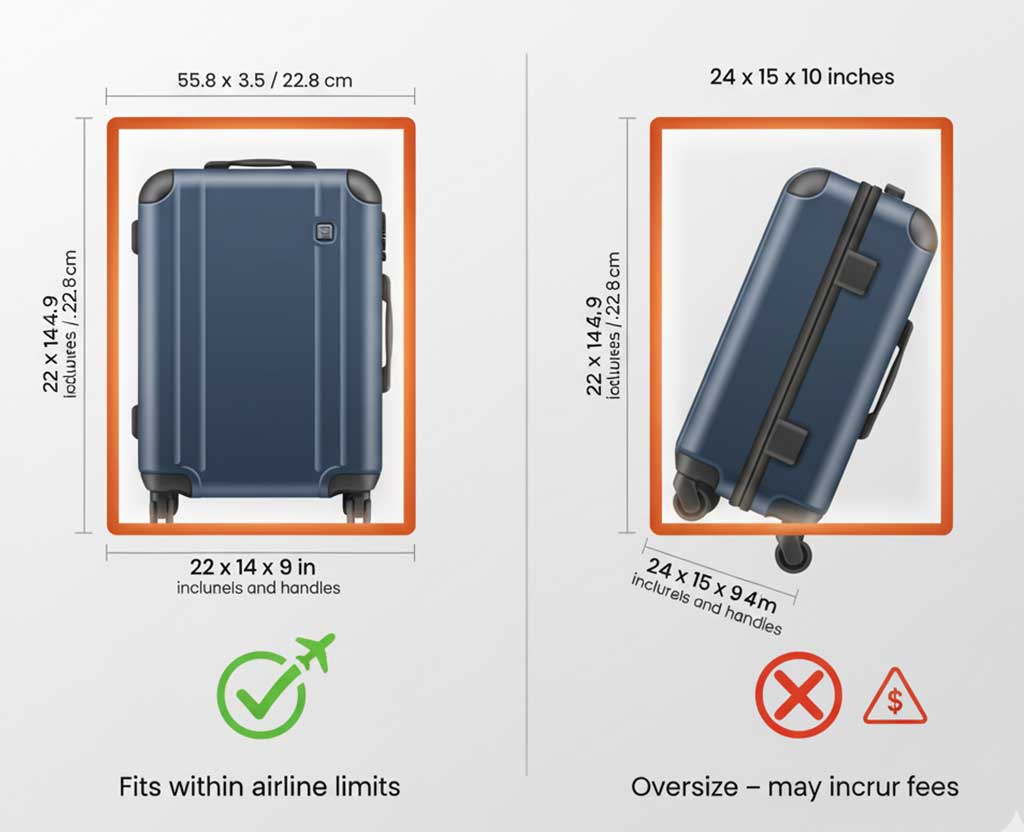
You want your bag to fit in the overhead bin every time. Most airlines stick to similar size rules, but small differences can trip you up. Here’s a quick look at the most common limits:
| Airline Type | Maximum Dimensions (cm) | Maximum Dimensions (inches) |
|---|---|---|
| Major Airlines | 56 x 40 x 23 | 22 x 14 x 9 |
Most U.S. carriers let you bring a bag up to 22 x 14 x 9 inches, including the handles and wheels. If you’re shopping for the best carry-on luggage for 2026, check these numbers first. You don’t want surprises at the gate.
Checking Airline Rules
Airlines love to change their policies. You need to double-check before every trip. Here’s a simple way to make sure your bag meets the rules:
- Measure your bag, including the wheels and handles.
- Weigh your packed bag at home with a luggage scale.
- Visit your airline’s website and look up their baggage policy.
- Pick a bag that’s a little smaller than the max size. This helps if the airline’s sizer is tight.
- If you use a duffel or soft-sided bag, watch out for overpacking. It can make your bag too big.
Tip: American Airlines and United Airlines let you bring a carry-on and a personal item. British Airways gives you a generous weight limit on some routes. Emirates offers big checked bag allowances, but carry-on rules still matter.
Avoiding Size Issues
You don’t want to pay extra fees or get stuck checking your bag. Here are some common problems and how to dodge them:
- Always include wheels and handles when you measure your bag.
- Don’t overpack. Stuffing your bag can make it bulge past the limit.
- Some airlines have smaller sizers than the bags you see in stores.
- Even a tiny difference can mean extra charges.
- Airline rules change by fare class and route. This can be confusing.
If you want smooth travels, pick a bag that fits the strictest airline you’ll use. Stay alert for rule changes. That way, your carry-on always makes the cut.
Best Carry-On Luggage for 2026: Top Picks

Leading Brands Overview
You want a carry-on that is easy to use. You also want it to last a long time. Many people pick trusted brands for the best carry-on luggage for 2025 or 2026. Some brands are popular because they use strong materials and smooth wheels. They also have smart designs.
Here are the top-rated brands for 2026:
- Away
- Briggs & Riley
- Samsonite
- Tumi
- Rimowa
Away and Briggs & Riley get the best reviews from travel magazines and surveys. People like how strong they are and how easy they roll in airports. Samsonite, Tumi, and Rimowa have many fans too. These brands care about style, comfort, and smart features.
Tip: If you want the best carry-on luggage for 2026, check out these brands first. They have a good history and many happy buyers.
Model Comparisons
Each brand has something special to offer. You might want a bag that looks cool, holds a lot, or rolls easily. Let’s look at some top models so you can choose the right one for your trips.
| Brand | Model Name | Key Features | Performance Highlights | Pros | Cons |
|---|---|---|---|---|---|
| Samsonite | Freeform | Polypropylene shell, sleek design, pliable, tough | Durable and stylish | Affordable, strong shell, easy to clean | Not as many smart features |
| Away | The Carry-On | Compact, easy to maneuver, smart interior, laundry bag | Functional and attractive | Built-in charger, great storage, smooth wheels | Can scratch, charger adds weight |
| Tumi | 19 Degree | Large double wheels, user-friendly, easy to transport | High maneuverability and comfort | Premium look, easy to roll, sturdy handle | Higher price, heavier than others |
| Rimowa | Original Cabin | All-aluminum, riveted exterior, luxurious design | Premium build quality and prestige | Very strong, stylish, status symbol | Expensive, can dent, heavier |
| Briggs & Riley | Baseline Essential Spinner | Unique packing system, tri-fold garment envelope, one-touch compression tool | Innovative packing and ease of use | Lifetime warranty, packs a lot, easy to use | Simple look, higher price |
You can see each model has good and bad points. Samsonite Freeform is strong and costs less. Away Carry-On has smart features like a charger and laundry bag. Tumi 19 Degree rolls well and feels nice to use. Rimowa Original Cabin looks fancy and is very solid. Briggs & Riley Baseline Essential Spinner helps you pack more and has a lifetime warranty.
If you want the best carry-on luggage for 2026, think about what you need most. Do you want a phone charger? Do you need more space for clothes? Do you care about how it looks or the price? Pick the model that matches your travel needs.
Note: Away and Briggs & Riley are the best for durability and easy rolling. Many travelers say these brands make travel easier and less stressful.
Smart Features
Tech Enhancements
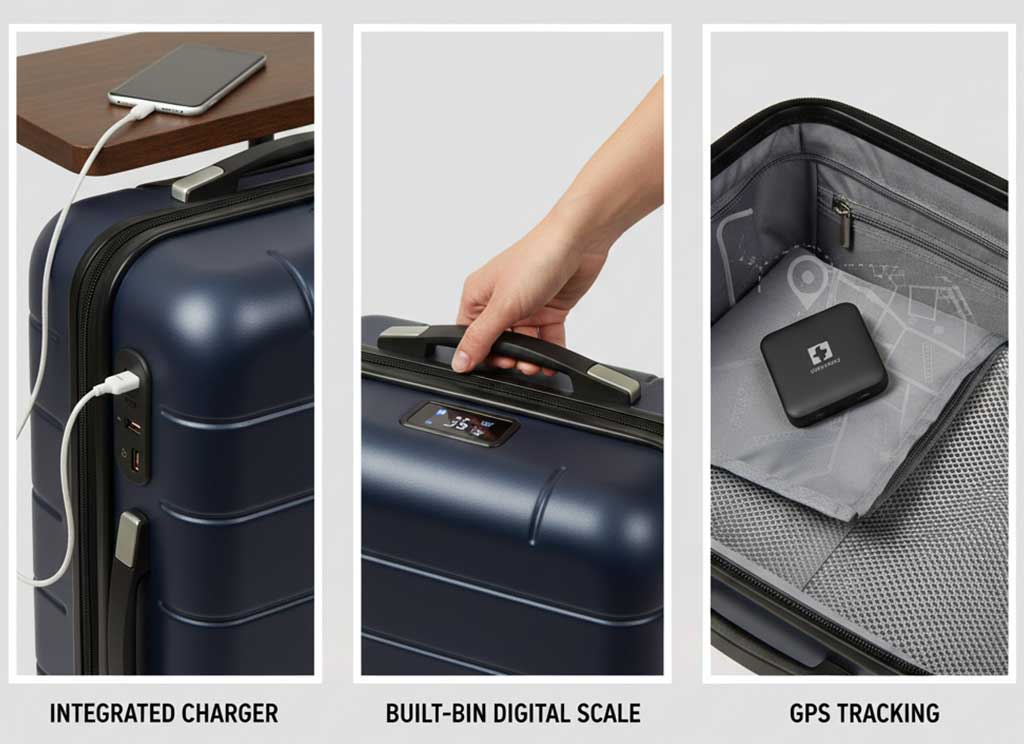
You want your carry-on to do more than just hold your clothes. Today’s best luggage comes packed with smart tech that makes travel easier. Some bags have built-in USB charging ports. You can charge your phone or tablet while you wait at the gate. You might see GPS tracking in newer models. If your bag gets lost, you can find it with an app on your phone. Some brands offer Bluetooth tags that help you keep track of your luggage in busy airports.
Double-coil zippers make it harder for thieves to break in. You get peace of mind when you know your things are safe. Some carry-ons even have biometric locks. These locks use your fingerprint to open the bag. Only you can unlock it. That’s a big step up in security.
Tip: If you travel often, pick a bag with a charging port and GPS tracking. You will never worry about a dead phone or lost luggage.
Customization Options
You want your luggage to match your style and keep your things safe. Many brands let you choose colors, patterns, and even your initials. Custom designs help you spot your bag fast at baggage claim. You can add expandable sections to fit more clothes or souvenirs. TSA-approved locks keep your stuff secure but let agents check your bag without breaking anything.
Here’s a quick look at how customization features help you:
| Feature | Benefit |
|---|---|
| Customizable Designs | Reflect personal taste and make luggage easily identifiable. |
| Expandable Sections | Improve packing efficiency and convenience for travelers. |
| TSA Locks | Secure belongings while allowing for inspections without damage. |
| Biometric Locks | Provide tailored security that opens only for authorized users, enhancing overall safety. |
| Unique Patterns | Help in quick identification at baggage claim, reducing hassle. |
- TSA locks let agents inspect your bag without breaking the lock.
- Double-coil zippers keep thieves out.
- Biometric locks use your fingerprint for extra safety.
You get more control over how your bag looks and works. You also get better security. Pick the options that fit your travel style. Your carry-on will feel like it was made just for you.
Hard-Shell vs Soft-Shell

Hard-Shell Pros and Cons
When you pick a carry-on, you might wonder about hard-shell luggage. Many travelers like it because it feels strong and safe. You get better protection for your things, especially if you pack fragile items. Hard-shell bags also keep water out and look clean after a quick wipe. Some models have built-in locks and security features.
Here’s a simple table to help you see the main pros and cons:
| 😊 Advantages | 😕 Disadvantages |
|---|---|
| Durable and resistant to damage | Less flexible for tight spaces |
| Water-resistant | Can be heavier than soft-sided luggage |
| Easy to clean | Less space for overpacking |
| Better protection for fragile items | More expensive than soft-sided luggage |
| Built-in security features | Can crack or dent if mishandled |
| Fewer external pockets |
Tip: If you want your electronics or souvenirs to stay safe, hard-shell luggage gives you peace of mind.
Soft-Shell Pros and Cons
Soft-shell luggage feels lighter and easier to carry. You can squeeze it into tight spots, like crowded overhead bins. The fabric stretches a little, so you can fit in extra clothes or gifts. Many soft-shell bags have outside pockets for quick access to snacks or travel papers.
Soft-shell bags handle bumps well, but they don’t protect fragile items as much as hard-shell ones. You might need to clean them more often, especially after rainy trips. They can last a long time if you treat them well.
Note: Soft-shell luggage gives you more packing room and flexibility. You can grab things from outside pockets fast.
Suitability by Travel Style
Your travel style helps you choose the right bag. If you want a light carry-on, soft-shell luggage works best. You get more space for shopping trips or family vacations. If you travel to rough places or need to protect breakable things, hard-shell luggage is a smart pick.
Here’s a quick look at which type fits your trip:
| Type of Luggage | Best For | Not Ideal For |
|---|---|---|
| Soft-Shell | Light packing, easy access, flexible trips | Heavy protection needs |
| Hard-Shell | Fragile items, rugged travel, rainy weather | Overpacking, tight spaces |
- Travelers who want lightweight bags often choose soft-shell.
- If you plan to shop or pack extra, soft-shell gives you more room.
- For safaris or adventure trips, hard-shell keeps your gear safe.
Choosing the right shell makes your trip smoother. Think about where you’re going and what you need to pack.
Expandable Luggage
Benefits of Expandability
Expandable carry-on luggage gives you more freedom when you travel. You can pack light for a short trip or open up extra space for souvenirs and gifts. You do not need to buy different bags for every trip. One expandable suitcase works for many situations. You can keep your clothes neat and avoid stuffing everything into a tight space. You get better organization and less wrinkling. More room means you can separate shoes, toiletries, and clean clothes. You also find it easier to get through security checks because you have fewer bags to manage.
- Flexibility lets you adjust your packing for any trip length.
- Extra space helps you organize your things and keep clothes crease-free.
- Convenience means you carry fewer items and move faster at the airport.
Tip: Expandable luggage adapts to your changing plans. You can zip it up or expand it as needed.
Drawbacks and Considerations
Expandable luggage sounds great, but you should know about a few downsides. When you expand your suitcase, it gets heavier. You might go over the airline’s weight limit if you pack too much. Some airlines, especially budget ones, have strict size rules. If your bag gets too big, you may have to check it or pay extra fees. Expanded bags sometimes do not fit in overhead bins.
- Expanded bags can weigh more and may exceed airline limits.
- Some airlines do not allow larger bags, even if they are only a little bigger.
Note: Always check your airline’s rules before you expand your luggage. You do not want surprises at the gate.
Choosing Expandable Options
You want the best expandable carry-on for your trip. Look for a bag that is strong and easy to use. Hard-sided luggage lasts longer and protects your things. Soft-sided bags give you more pockets for quick access. Lightweight bags help you avoid extra fees. Wheels matter too. Two-wheeled bags roll better on rough ground. Four-wheeled bags glide smoothly on flat floors. Pick a design that helps you pack smart and find your things fast.
| Criteria | Description |
|---|---|
| Durability | Hard-sided luggage stands up to rough handling. |
| Functionality | Soft-sided bags offer extra compartments for essentials. |
| Weight | Lighter bags make travel easier and help you stay under limits. |
| Organizational Design | Smart layouts let you pack efficiently and grab items quickly. |
| Ease of Use | Two-wheeled bags work well on uneven surfaces; four-wheeled bags roll easily on smooth floors. |
If you travel often, choose a bag that matches your style and needs. Expandable luggage makes every trip simpler.
Packing Strategies
Space-Saving Tips
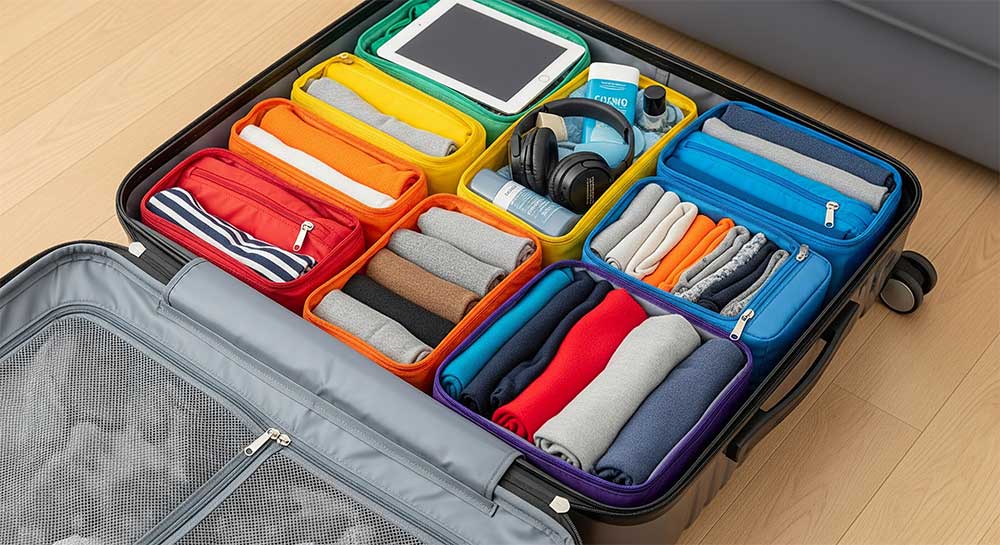
You want to fit everything you need into your carry-on without making it heavy or messy. Start by laying out your clothes and removing anything you do not truly need. Rolling your t-shirts and underwear saves space and keeps wrinkles away. You can pack socks and underwear inside your shoes. This trick uses every inch of your bag. Packing cubes help you organize and compress your items. You can mix and match outfits so you need fewer clothes for your trip.
Here’s a quick table with space-saving strategies:
| Strategy | Description |
|---|---|
| Reduce clothing | Take only what you need. Leave extras at home. |
| Use packing cubes | Organize and compress clothes for easy packing and unpacking. |
| Roll clothes | Save space and keep clothes wrinkle-free. |
| Pack inside shoes | Fill shoes with socks or underwear to use all available space. |
| Combine outfits | Create more looks with fewer items. |
Tip: Keep your carry-on light. You will find it easier to lift into the overhead bin.
Staying Organized
You want to find your things quickly and keep your bag tidy. Packing cubes separate shirts, pants, and socks. A toiletry bag keeps your shampoo and toothbrush together. You can use a packing list to make sure you do not forget anything. Staying organized helps you pack and unpack fast, especially if you move between hotels. You feel less stressed when you know where everything is.
- Packing cubes keep clothes sorted and neat.
- A toiletry bag stores all your bathroom items in one place.
- A packing list helps you remember important things.
Staying organized saves time and makes travel easier.
TSA Packing Compliance
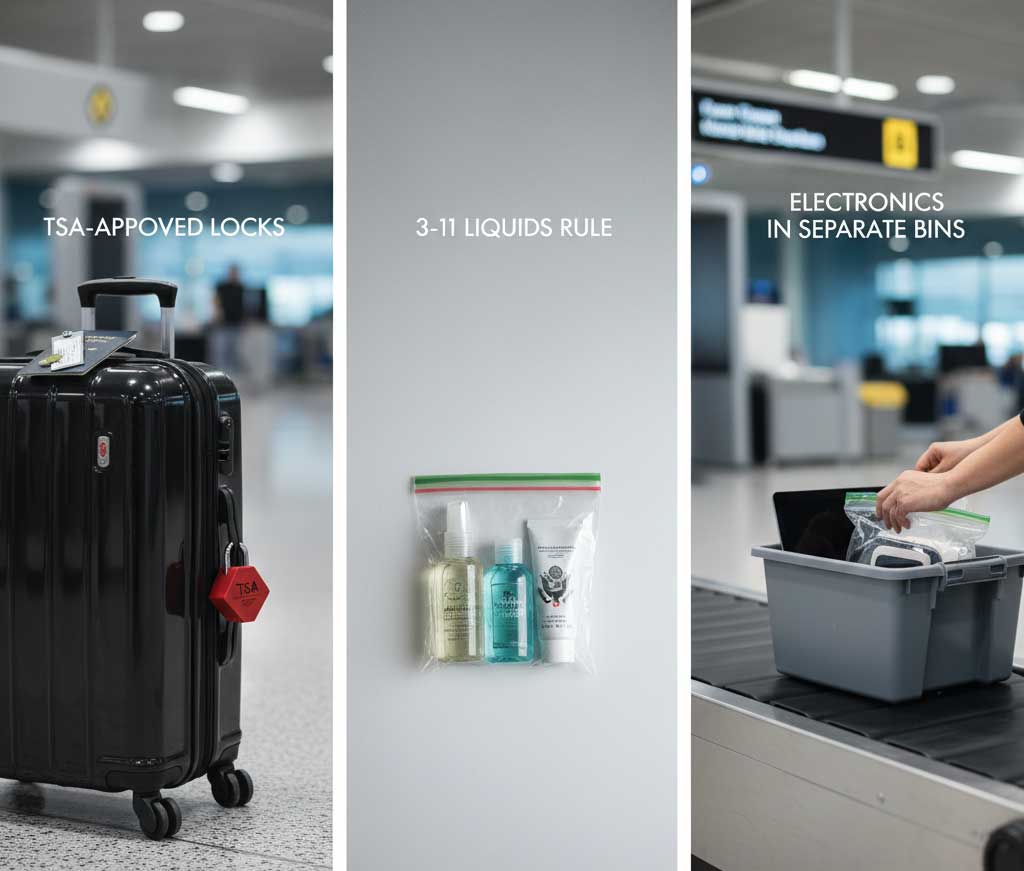
You want to get through security without trouble. The TSA 3-1-1 rule says you can bring liquids, gels, and aerosols in containers of 3.4 ounces or less. Put them all in one quart-size clear plastic zip-top bag. You get one bag per person. For electronics, you need to remove anything bigger than a cell phone for screening. Pack laptops and tablets on top so you can grab them fast.
| Rule | Details |
|---|---|
| Liquids, Gels, Aerosols | 3.4 oz or less per container, 1 quart-size clear bag, 1 bag per passenger |
| Electronics Screening | Remove devices larger than a cell phone for separate screening; pack on top for access |
Tip: Keep your liquids and electronics easy to reach. You will move through security faster.
TSA Rules
3-1-1 Liquid Rule
You want to breeze through airport security. The TSA 3-1-1 liquid rule helps you do just that. This rule limits the amount of liquids, gels, and aerosols you can bring in your carry-on. Here’s how you can follow it without stress:
- Choose travel-sized bottles for your liquids. Each one must hold no more than 3.4 ounces (100 milliliters).
- Place all your bottles in a single quart-sized, clear, resealable bag. Make sure the bag opens and closes easily.
- Only pack the liquids you really need for your trip. Less is better.
- Buy travel-sized toiletries or use reusable containers that fit the rule.
- Pack your liquids bag last. This way, you can grab it quickly at security.
- Check the TSA website or app before you fly. Sometimes, the rules change.
Tip: Keep your liquids bag at the top of your suitcase. You will save time and avoid digging through your things at the checkpoint.
Security Tips
You can make your trip smoother by following a few simple security tips. These steps help you get through TSA checkpoints faster and with less hassle:
- Pack smart. Keep your electronics and liquids where you can reach them.
- Wear clothes and shoes that are easy to take off and put back on.
- Have your boarding pass and ID ready before you get in line.
- Sign up for TSA PreCheck if you travel often. It makes security much faster.
- Learn the TSA rules before you go. Surprises slow you down.
- Arrive at the airport early. You will have time for any delays.
- Pick the right security lane. Look for PreCheck or family lanes if you qualify.
- Stay calm and polite with TSA staff. A smile goes a long way.
- Be ready for extra screening. Sometimes, it happens to anyone.
- Try to travel during less busy times. Lines are shorter and you move faster.
Note: When you know what to expect, you feel more relaxed. You can focus on your trip, not the security line.
You want to pick the best carry-on luggage for 2025 by checking the airline’s size rules first. Choose a bag with strong materials and smart features like four wheels for easy movement. Soft suitcases fit better in overhead bins, and bright colors help you spot your bag fast. Avoid common mistakes like overpacking or ignoring TSA rules. Leave space for souvenirs and keep valuables with you. Trusted brands make travel smoother and less stressful.
About Vancharli — OEM/ODM Travel & Outdoor Bag Manufacturer
If your brand is also developing travel backpacks, duffel bags, waterproof dry bags, or technical outdoor gear, Vancharli is one of China’s Top 10 manufacturers with over 30 years of experience and production facilities in Vietnam, Myanmar, and Indonesia.
We specialize in OEM/ODM development, custom materials, and small-to-large production runs for travel and outdoor brands worldwide.
Feel free to reach out if you need support with custom bag projects.
FAQ
What size carry-on should you buy for most airlines?
You want a bag that measures 22 x 14 x 9 inches, including wheels and handles. This size fits most airline rules. Always check your airline’s website before you fly.
How do you clean your carry-on luggage?
Use a damp cloth for hard-shell bags. For soft-shell luggage, spot clean with mild soap and water. Let your bag air dry. Avoid harsh chemicals.
Can you bring a power bank in your carry-on?
Yes, you can pack a power bank in your carry-on. Keep it in your bag, not checked luggage. Make sure it meets airline watt-hour limits. Check your airline’s rules for details.
What’s the best way to keep your carry-on organized?
Try packing cubes or small bags. Roll your clothes to save space. Use outside pockets for items you need quickly. Make a packing list so you don’t forget anything.
See Also
Understanding Body Bags for Professional and Personal Use
Insulated Bags Versus Coolers Which Is Better for Your Needs
Comments are closed